2027 What Requirements Do You Need for an Online Web Design Bachelor's Degree? Admission Rules, Credits & Eligibility

Co-Founder and Chief Data Scientist
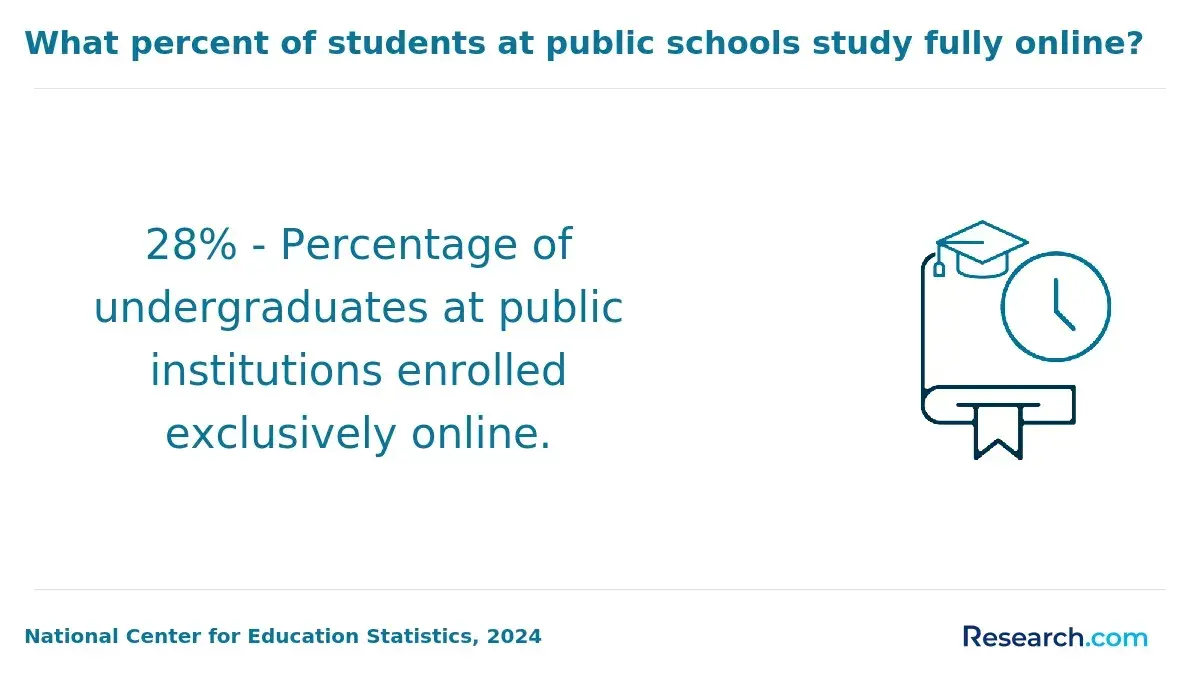
Many prospective students face uncertainty about the specific admission rules, required credits, and eligibility criteria for online web design bachelor's degree programs. This can delay or disrupt their plans to enter a growing industry where creative and technical skills blend. According to the National Center for Education Statistics, enrollment in online bachelor's programs grew by 18% over the past five years, highlighting increasing demand for flexible learning paths.
This article clarifies the foundational requirements for these programs, helping readers navigate application prerequisites, credit expectations, and essential eligibility factors to successfully pursue their online web design degrees.
Key Benefits of Preparing for Online Web Design Bachelor's Degree Requirements
- Choosing the right online web design degree requires evaluating program accreditation, curriculum relevance, and career support to ensure alignment with industry standards and job market demands.
- Maximizing transfer credits from prior coursework can reduce time and cost, with 70% of programs accepting at least 30 credits toward degree completion.
- Completing an accredited bachelor's degree in web design significantly improves employability, with graduates seeing a 25% higher likelihood of securing roles in creative digital industries.
What are the basic eligibility requirements to apply for an online web design bachelor's degree?
Eligibility in the context of undergraduate online admissions refers to the basic qualifications a prospective student must have to apply, distinct from acceptance-the institution's decision after reviewing applications-and enrollment, the process of registering for courses post-acceptance.
Most accredited programs require applicants to meet foundational standards set by academic and legal guidelines. According to the U.S. Department of Education and various university admission offices, these eligibility criteria help ensure students are prepared for college-level work and meet residency requirements.
When applying to online web design bachelor's degree programs, it's vital to understand policies around minimum GPA and test score requirements, as these vary between institutions. Credit transfer and accreditation criteria also impact eligibility and can influence the speed and affordability of degree completion.
Applicants should gather necessary documents and questions for admissions offices to clarify their standing. For those seeking affordable pathways in technology fields, exploring options such as online degrees in AI may offer additional insights into cost-effective learning.
- High School Diploma or GED Equivalent: Proof of secondary education completion is standard to verify academic readiness in literacy, math, and critical thinking.
- Minimum Age Requirements: Typically set at 18 years, some programs admit younger students with demonstrated academic ability or parental consent.
- Citizenship or Residency Status: Applicants must generally be U.S. citizens, permanent residents, or hold valid study visas compliant with institutional regulations.
- English Language Proficiency: Non-native speakers usually need scores from TOEFL or IELTS to confirm their ability to succeed in English-taught courses.
- Submission of Required Documents: Transcripts, test scores, identification, and sometimes letters of recommendation or personal statements are essential for comprehensive eligibility review.
What is the minimum GPA required for admission to an online web design bachelor's degree program?
Minimum GPA requirements for admission to an online web design bachelor's degree program vary widely by institution. Many schools accept applicants with a cumulative high school GPA as low as 2.0, while more selective programs often require a 2.5 GPA or higher. This variability reflects different admission standards, making it important to understand the required GPA standards for web design degree programs at each school of interest.
GPA is usually part of a holistic admissions process where schools also evaluate class rank, standardized test scores, extracurricular activities, and letters of recommendation. Some programs weigh portfolios or relevant work experience in web design heavily, which can help offset a lower GPA. Additionally, institutions may differentiate between weighted and unweighted GPAs, with weighted GPAs accounting for the difficulty of honors or AP courses.
Applicants with borderline GPAs may still qualify through conditional or probationary admission, allowing them to demonstrate academic progress once enrolled. Prospective students should calculate or self-report their GPA carefully, requesting official transcripts early and using online GPA calculators to ensure accuracy. Confirming whether a school prefers weighted or unweighted GPAs can also strengthen an application.
Beyond GPA considerations, exploring financial aid options and transfer credit policies can help chart an affordable, credit-efficient path. For those also exploring graduate opportunities, comparing costs for a master's in library science online cost might offer useful perspective on advanced study expenses.
- Varied GPA Standards: Minimum GPAs required for online web design bachelor's admission differ greatly; some schools accept 2.0 while others require 2.5 or above, reflecting varying selectivity and competitiveness.
- Holistic Admissions: Admissions consider multiple factors beyond GPA, including class rank, test scores, recommendations, and relevant work experience, providing a rounded evaluation of candidates.
- Weighted vs. Unweighted GPA: Some schools use weighted GPAs that account for course difficulty to better assess academic rigor, which benefits applicants with advanced coursework.
- Conditional Admission Options: Students with marginal GPAs can qualify via probationary admission, offering a second chance to prove academic readiness during their freshman year.
- Accurate GPA Reporting: Early transcript requests and using GPA calculators help applicants report their GPAs correctly, while confirming the institution's preference for weighted or unweighted GPA prevents errors.
2026 Update: Online Learning and Software Readiness Requirements
This 2026 update adds a practical readiness check for students applying to online web design bachelor’s programs, focusing on the technology and learning conditions needed to complete coursework successfully.
- Confirm the computer specifications needed for design, coding, and multimedia courses.
- Check whether required software is included, discounted, or purchased separately.
- Review internet speed expectations for live sessions, file uploads, and project critiques.
- Ask if courses require webcams, microphones, drawing tablets, or external storage.
- Verify platform access for coding labs, design tools, portfolio systems, and discussion boards.
- Look for technical support hours that match your study schedule and time zone.
Checking these requirements before applying helps students avoid unexpected costs, prevent course access problems, and choose an online web design program they are ready to complete.
Do online web design bachelor's degree programs require SAT or ACT test scores?
Many online bachelor's programs, particularly those tailored to adult learners, have eliminated the requirement for SAT or ACT test scores. This shift reflects efforts to make admissions more accessible, especially for those with prior college experience or work backgrounds. Yet, some programs still request standardized test results for specific purposes such as eligibility for merit scholarships, entrance into honors tracks, or admission to highly selective web design concentrations within broader digital or computer science fields.
Typical benchmark scores cited by accredited institutions generally range from 1050 to 1250 on the SAT or composite ACT scores between 20 and 27. These figures serve as rough guidelines and vary widely depending on each school's competitiveness and selectivity. Given the ongoing changes in admissions policies since 2020, applicants should review each web design program's official admissions page regularly to understand current requirements.
- Test-Optional Policies: Increasingly common among online bachelor's programs, test-optional approaches reduce barriers for applicants, especially adult learners and transfer students.
- Scholarship And Honors Eligibility: Strong test scores often remain important for qualifying for merit-based financial aid or placement in competitive honors programs.
- Score Benchmarks: Generally accepted SAT scores fall between 1050 and 1250, with ACT composites from 20 to 27, though schools vary widely in expectations.
- Policy Variability: Individual institutions maintain distinct rules that continue to evolve, making direct consultation of program websites essential before applying.
- Rising Test-Optional Adoption: Over 1,600 U.S. colleges allow applications without SAT or ACT as of 2023, streamlining access for many students.
A professional who pursued an online web design bachelor's degree shared that navigating admissions was unexpectedly smooth without needing to submit standardized test scores. He recalled feeling relieved since his previous academic record was older and somewhat patchy. "Not having to stress about SAT or ACT scores allowed me to focus on assembling a strong portfolio and crafting a compelling personal statement," he explained.
Despite some moments of uncertainty about financial aid eligibility without test scores, he found admissions counselors to be responsive and helpful. Overall, the flexibility of test-optional policies made returning to school less intimidating and more accessible for someone balancing work and family commitments.
How many total credit hours are needed to complete an online web design bachelor's degree?
Most accredited bachelor's programs in web design require around 120 semester credit hours (SCH), though some specialized tracks may demand up to 128 or 130 credits. These totals combine general education, core major courses, electives, and a final capstone or practicum to ensure both breadth and practical expertise. Understanding the total credit hour requirements for online web design programs helps students plan their academic journey effectively.
Credit categories usually include general education covering foundational subjects like English, math, and social sciences, which total roughly 30-40 credits. Major-specific coursework focuses on web design principles, coding, and digital media, often ranging between 40 and 60 credits. Electives give students room to explore related fields or deepen skills, while capstone projects provide real-world application and typically account for 3-6 credits.
Programs follow semester or quarter systems, with one SCH roughly equal to 1.5 quarter credit hours (QCH). Students on quarter calendars should verify credit conversions with their institutions. Additionally, prior learning through AP exams, CLEP, or transfer credits can shorten the pathway by substituting for some course requirements, lowering needed credit accumulation.
- General Education Credits: Foundational studies in writing, math, and social sciences make up about 25%-35% of the degree, building essential academic skills.
- Major-Specific Coursework: These courses teach web design fundamentals and technical skills critical for a career in the field.
- Electives and Flexibility: Electives let students broaden or specialize their knowledge, often including marketing or computer science topics.
- Capstone and Practicum: Culminating projects offer hands-on experience applying learned skills in real-world or simulated environments.
- Credit Conversion and Prior Learning: Semester versus quarter credit differences and prior learning assessments can reduce the total classes required, helping students save time and expense.
Those interested may compare requirements with degrees like the bachelor of business administration online to understand transfer potential and course structures across disciplines.
What high school courses or prerequisites are required before enrolling in an online web design bachelor's degree?
Many online web design bachelor's programs require students to complete specific high school courses before enrolling. Essential prerequisites usually include English composition or advanced English classes to develop strong writing and communication skills.
Math classes focused on algebra or basic statistics are common, as they enhance analytical thinking needed for coding and design logic. Some programs also expect or suggest introductory computer science or technology courses that familiarize students with programming basics and digital tools.
Recommended classes often involve art, graphic design, or multimedia, which help build creativity and a solid understanding of design principles but are generally optional. Coursework in social studies or humanities may improve cultural awareness and research abilities, useful in user-centered design projects.
High school students who complete dual enrollment or community college courses can typically use those credits to satisfy prerequisite requirements, potentially easing the transition into the bachelor's program and shortening degree completion time. Additionally, some online programs provide bridge or remedial classes to help students lacking certain prerequisites, though these can extend the overall duration of the degree.
- Core English Requirements: Completion of English composition or equivalent courses ensures proficiency in writing, a skill critical for assignments and communication.
- Mathematical Foundations: Algebra or similar math courses build logical problem-solving skills necessary for technical aspects of web design.
- Creative Coursework: Art and graphic design classes enhance visual and creative thinking but are usually recommended rather than required.
- Dual Enrollment Credits: College-level courses taken during high school may fulfill prerequisites and help accelerate degree progress.
- Remedial Support: Bridge courses address missing prerequisites but can lengthen the time needed to graduate.
A professional who built her career after completing an online web design bachelor's reflected on her early challenges, noting how initially struggling with some technical concepts made remedial courses invaluable. She appreciated that these bridge classes allowed her to catch up without feeling left behind, despite adding some months to her timeline.
Over time, mastering foundational subjects like math and writing boosted her confidence and directly contributed to her success both during and after the program. She advised prospective students to proactively review high school transcripts and ask admissions about prerequisite waivers or support options to plan their path efficiently.
Can transfer credits count toward an online web design bachelor's degree, and how many are accepted?
Most accredited colleges and universities typically allow students to transfer between 60 and 90 credits toward an online web design bachelor's degree. However, the exact number varies significantly depending on each institution's policies and program requirements.
Schools with transfer-friendly policies often have formal 2+2 articulation agreements with community colleges, simplifying credit transfer for students completing an associate degree. Conversely, some institutions enforce tighter restrictions, accepting fewer transfer credits and requiring more coursework to be done directly within their programs.
When a student submits past transcripts, the registrar's office conducts a transfer credit evaluation. This involves verifying completed courses, grade quality, and alignment with the school's web design curriculum.
Credits that don't match the program's specific courses-especially specialized technical or portfolio-based classes-may be denied transfer. Conversely, general education or elective credits are more frequently accepted across institutions.
It's important for students to request an official transfer credit evaluation early in their application process. This helps clarify exactly which credits will count toward their degree, allowing better planning of remaining coursework.
According to the National Student Clearinghouse Research Center (2023), around 66% of transfer students successfully move credits between schools, underscoring the value of understanding transfer policies in advance.
- Transfer Credit Limits: Most institutions approve 60-90 credits, but policies vary widely by school and degree program specifics.
- Articulation Agreements: Transfer-friendly colleges partner with community colleges to ensure smoother credit acceptance via formal agreements.
- Transcript Evaluation: Registrars review course content and grades for equivalency, often excluding non-matching or highly specialized courses.
- Official Review Recommended: Early formal evaluation during admissions reveals the exact amount of transferable credits for the web design degree.
Does accreditation status affect admission requirements for an online web design bachelor's degree?
Accreditation plays a vital role in shaping the admission requirements and overall value of an online web design bachelor's degree. It ensures that the institution or program meets recognized academic standards and provides assurance of quality to prospective students and employers.
- Institutional Accreditation: Given by regional or national agencies recognized by the Council for Higher Education Accreditation (CHEA) or the U.S. Department of Education, this type of accreditation affects how credits transfer between schools and how employers view the degree. Schools with regional accreditation are generally preferred as they enable smoother credit transfers and are better regarded by graduate programs.
- Programmatic Accreditation: Certain web design programs may hold additional, discipline-specific accreditations that enforce stricter admission standards and ensure the curriculum aligns with current industry expectations. This can be especially important for students who want professional recognition in specialized areas.
- Credit Transferability: Attending an accredited institution increases the likelihood of previously earned credits being accepted when transferring schools, which can shorten the path to graduation and reduce tuition costs.
- Employer Recognition: Graduates from accredited programs tend to have greater job prospects and earning potential, as employers often see accredited degrees as indicators of comprehensive, trustworthy education.
- Graduate School Admission: Advanced studies usually require a degree from an accredited institution. Those with unaccredited degrees may face obstacles in pursuing postgraduate education or professional licensing.
- Research Before Applying: Verifying a school's accreditation status through official databases is essential. This helps avoid programs lacking proper recognition and informs students about financial aid eligibility and accurate admission policies.
According to a recent National Center for Education Statistics report, over 85% of online bachelor's students enroll in regionally accredited schools, highlighting the importance of accreditation in educational and career outcomes.
What documents do you need to apply for an online web design bachelor's degree program?
Official Transcripts: Submit official high school transcripts as proof of graduation. If you attended college before, official college transcripts are often necessary to evaluate transfer credits, a key factor in managing credit efficiency for online web design bachelor's degree admission.
Government-Issued ID: A valid passport, driver's license, or other government-issued photo ID is required to verify your identity during admission and enrollment processes.
Application Essays: Many programs request personal statements or essays that highlight your motivation for choosing the web design field, career goals, and relevant experience.
Portfolio: Selective web design programs might require a portfolio showcasing your skills in graphic design, coding, or digital art, which strengthens your application by demonstrating creativity and technical ability.
Letters of Recommendation: Some schools ask for letters from teachers, employers, or mentors who can attest to your academic abilities and professional work ethic.
Résumé: Include an up-to-date résumé detailing your educational background, work experience, and relevant web design technical skills to enhance your application.
Official vs. Unofficial Documents: Official documents are typically sent directly from institutions or authorized entities, but unofficial copies may be accepted for initial review; these must be replaced with official ones before enrollment.
Certified Translations: International students applying to U.S.-based online programs should provide certified translations of transcripts and other documents if they are not in English to ensure proper evaluation standards are met, especially in federally accredited education pathways.
Begin gathering your documents at least two to three months before application deadlines. This preparation helps manage rolling admissions or semester-based deadlines and reduces last-minute stress.
For those comparing options, understanding required application documents for online web design bachelor's degree admission is essential. To explore alternative degrees, consider a sports degree online that may suit your career goals as well.
Are there English language proficiency requirements for non-native speakers applying to an online web design bachelor's degree?
Most accredited U.S. online bachelor's degree programs in web design require non-native English speakers to demonstrate English proficiency to ensure academic success. This typically involves standardized test scores from the TOEFL iBT, IELTS Academic, or Duolingo English Test, each with specific minimum thresholds set by institutions.
- Standardized Tests: TOEFL iBT scores between 61 and 80 are common minimums for undergraduate admission, while IELTS Academic bands usually range from 6.0 to 6.5. The Duolingo English Test, an increasingly accepted alternative, often requires scores around 90 to 100 for online web design bachelor's degree programs.
- Exemptions: Applicants from English-speaking countries or those who have completed several years of academic study in English-medium institutions may qualify for waivers. These exemptions acknowledge proven English language competence without standardized testing.
- Conditional Admission: Some programs offer conditional admission, permitting students to enroll in an ESL bridge program if they fall short of proficiency requirements. This pathway helps improve language skills before full acceptance into the web design curriculum.
- Verification Process: Schools usually require official score reports sent directly from testing agencies. Prospective students should verify the required minimum scores for their chosen program, as these can vary significantly across institutions.
Prospective students should also explore transfer credit policies and financial aid opportunities to find the most affordable, credit-efficient route to their degree. Preparing early for English language tests and consulting with admissions offices about possible exemptions or conditional offers will help streamline enrollment. For those curious about career outcomes after graduation, resources like how much do historians make can provide useful insights, showing the value of specialized education paths including web design.
Do online web design bachelor's degree programs accept clep exams or prior learning credits?
The College-Level Examination Program (CLEP) allows students to earn college credit by passing standardized tests. A passing score of 50, as advised by the American Council on Education (ACE), can grant undergraduate credit at more than 2,900 colleges nationwide.
Acceptance of CLEP credits varies by institution; some online web design bachelor's programs broadly accept these credits, while others restrict them to general education requirements.
- CLEP Credit Acceptance: Policies differ between schools. While some programs allow CLEP exams to fulfill major coursework, many only recognize them for general education classes.
- Other Credit Options: Prior learning assessments also include DANTES/DSST exams, portfolio evaluations, and credits for relevant certifications or military service related to web design or related areas.
- Portfolio and Experience: Certain programs review professional portfolios or work history to assign academic credit, acknowledging skills acquired outside formal classes.
- Early Contact Advisable: Reach out to admissions or the registrar's office early to understand which prior learning credits apply. Doing so can reduce both the duration and cost of earning a web design degree.
Are there residency or in-state tuition requirements that affect enrollment in an online web design bachelor's degree?
Many public universities allow online students to pay in-state tuition rates regardless of where they live, often through participation in the State Authorization Reciprocity Agreement (SARA). SARA is a national system that lets accredited colleges in member states offer online programs to students residing in other member states without needing separate state permissions. This arrangement reduces barriers for cross-state enrollment and ensures compliance with education regulations.
However, some schools still charge out-of-state tuition for their online programs. Prospective students should carefully review each institution's tuition policy before enrolling in an online web design bachelor's degree to avoid unexpected fees.
- SARA Membership: Schools that participate in SARA can enroll students from other member states at in-state rates or simplified tuition structures, promoting more affordable access to online education.
- Out-of-State Tuition: Institutions outside SARA or with distinct policies may require higher tuition from non-residents, making it essential to confirm fees ahead of time.
- Residency Documentation: Students seeking in-state rates often need to provide proof of residence, such as utility bills, voter registration, or a driver's license, to verify their local status.
- Financial Planning: Knowing tuition distinctions in advance helps manage your budget, so proactively communicate with admissions and financial aid offices to understand cost and eligibility.
What Graduates Say About Preparing for the Online Web Design Bachelor's Degree Requirements
- Heidi: "Knowing the exact admission requirements before applying to my online web design bachelor's degree program saved me a lot of stress and last-minute scrambling. I appreciated how clear understanding the credit policies helped me transfer previous coursework seamlessly, allowing me to finish ahead of schedule. This program truly gave me the professional edge I needed to break into the digital creative industry with confidence."
- Adrian: "Reflecting on my journey, I realize how crucial it was to grasp the eligibility criteria right away. It ensured I picked the right online web design degree program that aligned perfectly with my skills and aspirations. The structured credit system and transparent admission process made the entire experience straightforward, which ultimately strengthened my career prospects in a competitive market."
- Faye: "From a professional standpoint, the most valuable part of pursuing an online web design bachelor's degree was understanding admission requirements and credit policies upfront. This clarity helped me plan my studies efficiently and avoid unnecessary hurdles. Because of that, I earned a credential that not only boosted my resume but also opened doors to new leadership roles in tech design."
Other Things You Should Know About Web Design Degrees
In 2027, students can access federal financial aid such as Pell Grants and loans, as well as scholarships from universities and private organizations specifically for online web design programs. State aid and employer tuition reimbursement programs might also be available.
Completion time for an online web design bachelor's degree usually ranges from three to four years for full-time students. Part-time students or those transferring credits from previous college coursework may take longer. Accelerated programs can shorten this period, but they require a heavier course load. Always check with the institution about credit transfer policies and program pacing options.
Students typically need a reliable computer capable of running graphic design and web development software such as Adobe Creative Suite, HTML editors, and coding platforms. A fast internet connection is essential for accessing lectures, submitting assignments, and participating in virtual discussions. Some programs may specify system requirements related to operating system, RAM, and storage to ensure compatibility with learning tools.
Many programs offer flexible admission policies for adult learners and working professionals, sometimes waiving standardized test requirements like the SAT or ACT. Prior work experience in related fields can enhance admission chances and may allow for credit through experiential learning assessments. Part-time enrollment and asynchronous course options are commonly available to accommodate busy schedules.
References
- Do you have to go to college/courses to become a web pro designer? https://programming.comp.narkive.com/JZfCoesF/do-you-have-to-go-to-college-courses-to-become-a-web-pro-designer
- Communication Design, B.S. (Web Design Concentration) https://uninedu.com/courses/835
- Study Web Design: Bachelors, Associates & Online Degree Info https://learningpath.org/articles/Study_Web_Design_Bachelors_Associates_Online_Degree_Info.html
- How to Become a Web Designer (Education, Careers & Salary) https://www.allartschools.com/web-design/
- Bachelor of Applied Science in Web Design and Development - Program Requirements - 2025-2026 Undergraduate & Graduate Catalog https://www.gvsu.edu/catalog/program/bachelor-of-applied-science-in-web-design-and-development.htm
- Language requirements - SWPS University https://english.swps.pl/programs/apply/language-requirements
- Online Web Design Programs https://mycollegeguide.org/online-web-design-degrees/
- English language requirements - International applications | UWE Bristol https://www.uwe.ac.uk/courses/applying/international-applications/english-language-requirements
- Do I Need A Degree To Be A Web Developer? - KM Hosting https://kmhosting.co.za/website-design/do-i-need-a-degree-to-be-a-web-developer/