2027 Self-Paced Online Web Design Bachelor's Degree Programs

Co-Founder and Chief Data Scientist
Many working professionals with degrees in unrelated fields struggle to pivot careers due to rigid class schedules and limited program options. Self-paced online web design bachelor's degree programs offer flexibility, enabling learners to balance education with jobs or family commitments.
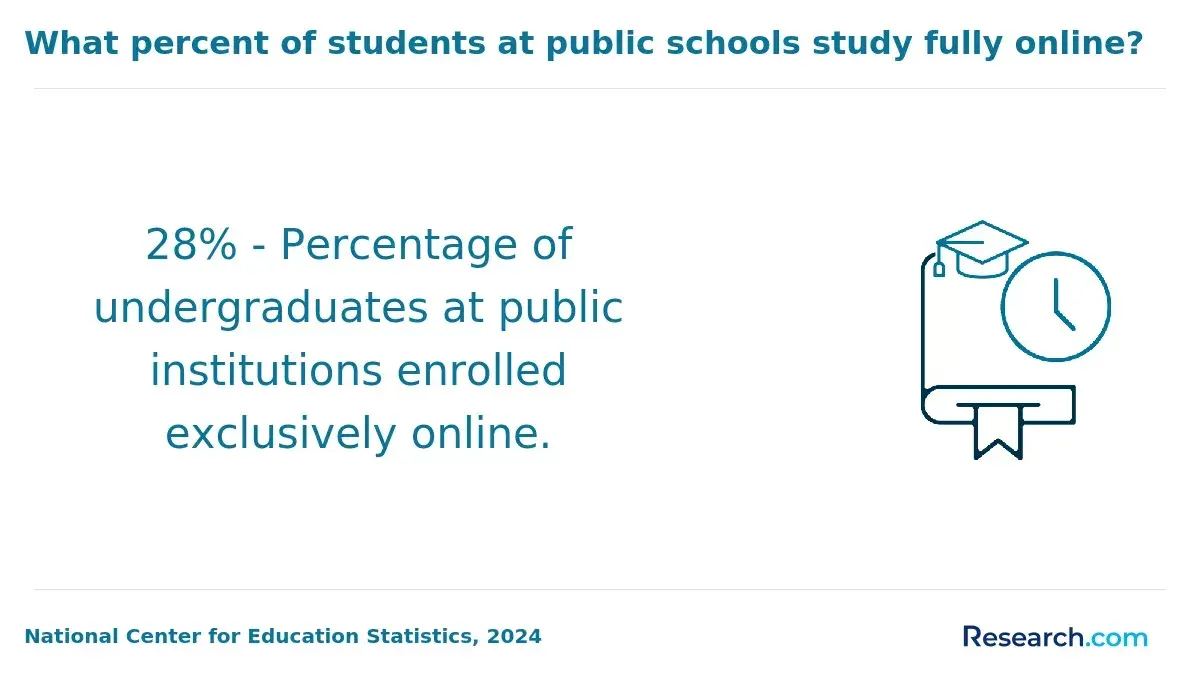
According to the National Center for Education Statistics, over 35% of undergraduate online students enroll in self-paced formats to accommodate varied schedules. This article explores the benefits, challenges, and accreditation factors of self-paced online web design bachelor's degrees, providing guidance to help prospective students select programs that align with their career goals and lifestyle.
Key Benefits of Self-Paced Online Web Design Bachelor's Degree Programs
- Self-paced online web design bachelor's programs offer flexibility for working professionals, allowing them to balance studies with full-time employment and personal commitments effectively.
- Students can accelerate skill acquisition by progressing through competency-based modules at their own pace, reducing time to degree completion compared to traditional formats.
- These programs provide cost-effective pathways to accredited credentials, often incorporating transfer credits and prior learning assessments to minimize tuition expenses while maintaining quality standards.
What Are Self-Paced Online Web Design Bachelor's Degree Programs, and How Do They Differ From Traditional Online Formats?
Self-paced learning in online higher education allows students to progress independently through coursework without fixed start dates or weekly deadlines. This model contrasts with cohort-based and asynchronous-but-scheduled formats, offering greater flexibility for learners balancing work and personal commitments.
Self-paced online web design degree programs typically use competency-based education models, enabling students to demonstrate mastery before advancing, which supports individualized pacing and skill development.
Key structural features of self-paced web design bachelor's programs include open enrollment, flexible timelines, and milestone-based progression. Students start whenever they choose, avoiding delays common in traditional term-based courses.
They set their own speed while meeting overall program deadlines, advancing by completing projects and demonstrating required skills rather than following rigid weekly schedules. This autonomy requires strong self-motivation and effective time management.
Compared to traditional online degree formats, self-paced programs emphasize learner control. Faculty interaction is usually asynchronous and available on demand rather than through scheduled live sessions, and there are fewer structured peer group interactions. Students must remain accountable for managing their progress independently.
Such programs may also accept transfer credits and prior learning assessments, helping career changers maximize previously earned credits.
Who benefits most from self-paced online web design degree programs? Working professionals, non-traditional students, and first-time enrollees seeking maximum flexibility find this approach ideal for integrating education with other responsibilities.
The format's adaptability to diverse learning styles is fostering its growing popularity in web design education. For those exploring flexible degree options, reviewing accredited offerings alongside financial aid and credit transfer policies is crucial. Interested learners can also explore related online college degrees for broader educational opportunities.
- Open Enrollment: Students can begin their studies anytime, eliminating delays typical in cohort-based programs and allowing immediate engagement with coursework.
- Flexible Timelines: Learners set their own pace, which supports balancing education with other responsibilities and adjusting study intensity as needed.
- Milestone-Based Progression: Advancement depends on demonstrated skills and completed assignments instead of fixed schedules, enabling mastery-focused learning.
- Faculty Interaction: Communication with instructors is usually asynchronous and on-demand, contrasting with regularly scheduled sessions in traditional online courses.
- Student Accountability: High self-motivation is required since learners manage deadlines and progress independently without a structured cohort environment.
Which Accredited Institutions Offer Self-Paced Online Web Design Bachelor's Degree Programs?
Several accredited institutions currently provide top flexible online web design degree institutions with self-paced learning pathways, ideal for working professionals and non-traditional students. These programs often use competency-based education models that allow learners to advance by demonstrating skills rather than following a fixed schedule.
- Western Governors University: Offering a competency-based bachelor's in web design and development, this university charges tuition per term, enabling students to complete as many courses as possible each period. It holds regional accreditation from the Northwest Commission on Colleges and Universities (NWCCU) and typically takes between 2 and 4 years to finish depending on individual pace.
- Capella University: Capella's FlexPath option delivers a self-paced bachelor's in web design using a subscription tuition model. Accredited by the Higher Learning Commission (HLC), FlexPath emphasizes competency demonstration, often shortening completion times compared to traditional degree paths.
- Southern New Hampshire University (SNHU): SNHU's fully online web design bachelor's degree features flexible pacing with a per-credit tuition model and generous transfer credit acceptance. The New England Commission of Higher Education (NECHE) accredits SNHU, with typical completion times around 3 to 4 years.
- Purdue University Global: With a competency-based bachelor's in web design and development, Purdue Global charges tuition per six-week term to encourage acceleration. Accredited by the Higher Learning Commission (HLC), the program's length depends on student progress and transfer credits.
- Thomas Edison State University: Specializing in adult learners, Thomas Edison offers a self-paced bachelor's in web design, accepting broad transfer and prior learning credits. This MSCHE-accredited university uses a per-credit tuition system and generally allows completion within 3 to 5 years.
Choosing among these accredited self-paced online web design bachelor's programs requires reviewing transfer credit policies, financial aid eligibility, and competency exam options. Prospective students seeking flexible education models should consider tuition structures carefully-especially given differences like term-based subscription models versus per-credit pricing.
For those comparing educational investments, examining the online executive MBA cost landscape can offer useful insights into managing program expenses and financial planning within flexible degree structures.
2026 Update: Portfolio Readiness in Self-Paced Web Design Programs
For this 2026 update, we reviewed how self-paced online web design bachelor’s programs help students build a job-ready portfolio while studying independently and without weekly class meetings.
- Whether major assignments can be added to a professional portfolio after instructor review
- How often students receive design feedback on usability, layout, accessibility, and responsiveness
- Whether coursework includes current tools used for prototyping, visual design, and front-end production
- If projects show a range of skills, such as branding, interface design, coding, and user experience
- Whether the program includes a capstone, client-style project, or final portfolio review
- How students document process work, revisions, and design decisions for employers
Checking these details helps students choose a flexible program that does more than award credits—it also supports the practical evidence needed to pursue web design roles after graduation.
How Long Does It Take to Complete a Self-Paced Online Web Design Bachelor's Degree?
The duration to finish a self-paced online web design bachelor's degree can vary from as quickly as one year to the traditional four years or more. According to National Center for Education Statistics (NCES) data, a typical bachelor's degree takes roughly 4.5 years on average, but flexible programs enable students to speed up or extend their timelines according to individual needs.
- Prior Credits and Transfers: Students who transfer relevant coursework or previously earned credits can significantly cut down their time to graduation by avoiding redundant classes.
- Weekly Time Commitment: The pace depends greatly on how many hours a student dedicates each week. Full-time study accelerates completion, while balancing work or family responsibilities may slow progress.
- Prior Learning Assessments: Credit awarded for existing knowledge-demonstrated through exams or portfolios-allows experienced learners to bypass foundational courses and move forward faster.
- Competency-Based Advancement: Mastery-focused education models let students progress by demonstrating skill proficiency rather than following fixed schedules, often speeding degree completion for motivated individuals.
- Support Systems: Access to academic advising, tutoring, and time management tools helps learners create realistic plans and remain accountable throughout the program.
A professional enrolled in a self-paced online web design program shared that managing his time was the biggest challenge. He appreciated the ability to accelerate during less busy months but admitted some semesters required slowing down to focus on work projects.
"It wasn't a set timeframe-I had to learn to adjust my study hours weekly," he explained. The flexibility helped him maintain motivation despite setbacks, and using advisor guidance was key to setting achievable goals. For him, completing the degree felt like a personalized journey shaped by both ambition and real-life demands.
What Are the Admission Requirements for Self-Paced Online Web Design Bachelor's Degree Programs?
Admission criteria for self-paced online web design bachelor's degree programs generally include consistent academic prerequisites while accommodating flexible entry paths. Many programs require a high school diploma or GED to demonstrate baseline readiness, though some waive this for applicants with relevant work experience or through open-enrollment options designed to support non-traditional and returning students.
- GPA Requirements: Traditional programs may ask for a minimum GPA, typically between 2.5 and 3.0 on a 4.0 scale, to ensure preparedness. Self-paced courses often relax these standards to increase accessibility for working professionals.
- Prerequisite Courses: Programs sometimes request prior coursework in areas like basic computing, design principles, or math. However, many competency-based models allow students to test out of these requirements, aligning with flexible transfer credit policies for web design bachelor's programs.
- Rolling Admissions: Open-enrollment and rolling admissions policies let students begin coursework year-round without strict deadlines, benefiting those balancing work or family commitments.
- Selective vs. Open Access: Selective programs usually offer more academic advising and structured support, while open-access models prioritize flexibility with less direct guidance. Choosing between them depends on a student's preferred learning environment and need for mentorship.
- Enhancing Applications: If minimum standards aren't met, applicants can boost their profile by submitting portfolios, earning relevant certifications, or taking preparatory classes to showcase skills and motivation.
Those exploring options should compare programs carefully and consider how their unique circumstances align with program policies and support structures, especially when evaluating financial aid eligibility or competency-based education models. For those interested in related educational paths with accelerated options, the accelerated MBA programs overview may provide helpful insights.
How Much Does a Self-Paced Online Web Design Bachelor's Degree Cost, and What Affects Tuition?
Tuition for self-paced online web design bachelor's degrees typically varies from $300 to $700 per credit hour, with a full degree requiring about 120 credits. This means total tuition can range between $36,000 and $84,000. Some schools offer a flat-rate model charging monthly fees between $1,000 and $2,000, which grants unlimited course access and can reduce expenses if a student progresses quickly.
Additional costs often include technology fees for platform use, usually a few hundred dollars per term, and exam proctoring fees that can amount to $30 to $60 per test. Students may also need to budget for digital course materials and software subscriptions critical to web design, potentially adding several hundred dollars yearly.
The decision between choosing a lower upfront cost or minimizing total spend hinges on how quickly a student completes courses. Flat-rate subscriptions benefit those who finish rapidly but may inflate costs for longer durations. Programs that accept transfer credits or prior learning assessments can decrease tuition by lowering required credits.
- Per-Credit Tuition: Charges vary from $300 to $700 per credit, contributing to a broad total tuition range depending on program length.
- Flat-Rate Subscription: Monthly fees of $1,000 to $2,000 offer unlimited courses, favoring accelerated students but potentially increasing costs for slower progression.
- Additional Fees: Technology, testing proctoring, and software subscriptions add several hundred dollars annually beyond base tuition.
- Transfer Credits & Assessments: Recognizing prior learning can reduce degree length and lower overall tuition expense.
I spoke with a professional who completed a self-paced online web design bachelor's program and shared that managing pacing was the biggest challenge. She emphasized how the flat-rate subscription motivated her to accelerate her studies, yet balancing work commitments sometimes forced slower semesters, which affected costs.
She reflected, "It wasn't just tuition-I had to factor in software tools and occasional proctoring fees that weren't obvious upfront." Her experience showed that thoughtful planning and understanding program requirements were key to controlling expenses while advancing her career.
What Financial Aid Options Are Available for Self-Paced Online Web Design Bachelor's Programs?
Federal, state, and institutional aid options are available to students pursuing self-paced and competency-based online web design bachelor's programs, though unique considerations apply. Competency-based education (CBE) models often use skill demonstrations rather than credit hours, which can influence FAFSA eligibility depending on how these competencies convert to credit-hour equivalents.
This affects both the amount and timing of aid disbursements for students.
Pell Grants and Direct Loans continue to be the primary federal assistance sources, with data from Federal Student Aid showing that online learners can qualify for similar aid levels as traditional students when programs meet accreditation and credit criteria. State-funded grant programs or tuition waivers exist but differ significantly across states, making it critical for students to check their state's specific offerings and eligibility rules.
Some professional associations within the web design and digital arts fields provide scholarships aimed at students in these disciplines. Organizations such as the International Web Association and Adobe Education Exchange offer targeted financial awards that can supplement federal and state aid sources.
Prospective students should also factor in that the flexible pacing of self-directed programs may delay when funds are distributed compared to semester-based schedules.
According to recent reports, approximately 40% of distance education postsecondary students receive federal financial aid, demonstrating sustained aid availability despite the rise in alternative learning formats. Confirming financial aid details directly with an institution's financial aid office before enrolling is essential to understand how self-paced formats impact funding timelines.
- Federal Aid Eligibility: Pell Grants and Direct Loans depend on how competency units align with credit hours, influencing funding levels and release schedules.
- State Grant Variances: Financial aid programs differ widely by state, so verifying local availability and requirements is necessary.
- Institutional Assistance: Schools may offer scholarships or payment plans tailored for self-paced learners; direct confirmation is advised.
- Discipline-Specific Scholarships: Web design associations provide scholarships targeted to this field, adding financial support options.
- Funding Timing: Flexible program structures may shift when aid disbursements occur, requiring proactive planning.
How Do Competency-Based Education (CBE) Models Work in Self-Paced Online Web Design Programs?
Competency-based education (CBE) models in self-paced online Web Design bachelor's degree programs focus on mastery rather than hours spent in class. Students demonstrate their proficiency by completing assessments such as projects, exams, or practical tasks that validate their understanding of specific Web Design concepts.
This approach allows learners to progress as soon as they master the material, offering flexibility ideal for working professionals or those returning to education with prior experience.
For financial aid, many CBE programs convert demonstrated competencies into credit-hour equivalents to qualify students for federal aid, despite their non-traditional formats. However, direct assessment CBE programs differ by relying solely on assessments without assigning credit hours.
This distinction affects transferability and financial aid eligibility, making it crucial for prospective students to research carefully.
Leading examples of self-paced online Web Design bachelor's programs using CBE include Western Governors University (WGU), Southern New Hampshire University (SNHU), and Capella University. WGU centers on project-based evaluations supported by extensive faculty mentorship.
SNHU administers milestone exams tailored to Web Design skills and provides robust online support. Capella's FlexPath option enables learners to submit coursework for evaluation on their schedule, assisted by faculty coaches. Accredited programs like these are increasingly valued by employers for their practical skill focus, enhancing graduate job readiness.
A 2023 survey found that 67% of employers view competency-based graduates as well-prepared for technology roles, reflecting growing recognition of CBE's effectiveness. Students, however, should assess their ability to maintain self-discipline since CBE demands consistent self-paced progress without scheduled classes.
- Mastery Over Time: CBE emphasizes proficiency through assessments instead of fixed seat time, allowing accelerated or personalized pacing.
- Financial Aid Translation: Many programs map competencies to credit-hour equivalents for aid eligibility, though direct assessment models vary widely.
- Program Examples: WGU, SNHU, and Capella offer online Web Design degrees with project-focused assessments and strong faculty mentorship.
- Employer Recognition: Accredited CBE programs are increasingly respected for cultivating practical skills that enhance employability.
- Self-Discipline Required: Success depends on learners' motivation and time-management, as progress is self-directed without fixed schedules.
What Accreditation Should a Self-Paced Online Web Design Bachelor's Program Hold?
Accreditation status is vital when selecting self-paced online web design bachelor's programs in the US, as it influences the value of the degree for employers and further education. The top-tier recognition comes from regional accrediting bodies, which assess entire institutions for academic quality and institutional integrity.
The U.S. Department of Education recognizes six main regional agencies: Middle States Commission on Higher Education (MSCHE), New England Commission of Higher Education (NECHE), Higher Learning Commission (HLC), Northwest Commission on Colleges and Universities (NWCCU), Southern Association of Colleges and Schools Commission on Colleges (SACSCOC), and WASC Senior College and University Commission (WSCUC).
Degrees from regionally accredited schools typically carry more weight in the web design field and related disciplines.
National accreditation, often awarded to career-focused or vocational schools, tends to hold less prestige. Programs with only national accreditation, or no accreditation at all, may limit students' ability to transfer credit easily or pursue advanced degrees. Some self-paced online web design programs also hold programmatic accreditation, which targets specific fields like IT or design; while valuable, this should supplement, not replace, regional accreditation.
For working professionals seeking flexible, accredited online web design programs, it is essential to verify accreditation status through reliable tools such as the U.S. Department of Education's accreditation database and the Council for Higher Education Accreditation (CHEA) directory before enrollment. Doing so helps ensure degrees meet standards important for career advancement or graduate study.
Along with accreditation, prospective students should consider program features like competency-based education, transfer credit policies, and financial aid eligibility to find the best fit. Additionally, exploring options such as online masters in mental health counseling may offer alternative pathways for career growth.
- Regional Accreditation: Recognized by the U.S. Department of Education, regional accreditation covers entire institutions and is the most respected by employers and graduate schools in web design and allied fields.
- National Accreditation: Applies mostly to career-oriented schools and carries less recognition, which can restrict credit transfer and options for graduate study.
- Programmatic Accreditation: Specialized accreditation focused on web design or IT programs can enhance credibility but should not replace regional institutional accreditation.
- Transfer Risks: Degrees from nationally accredited or non-accredited programs often encounter obstacles when transferring credits to other institutions, limiting educational mobility.
- Career Impact: Employers typically prioritize degrees from regionally accredited schools, and may question the legitimacy of nationally accredited or non-accredited programs, affecting salary and hiring prospects.
- Verification Resources: Prospective students should consult the U.S. Department of Education's accreditation database and CHEA's directory to confirm a program's legitimacy before enrolling.
How Many Transfer Credits Can Be Applied Toward a Self-Paced Online Web Design Bachelor's Degree?
Transfer credits accepted for self-paced online web design degrees vary widely, with institutions considering course content relevance, accreditation status of the previous school, and when credits were earned. These criteria ensure incoming credits fit the program's learning outcomes and degree framework.
Many programs offering an online web design bachelor's allow a substantial number of transfer credits, providing accelerated completion and often lowering overall costs.
Programs with the most flexible policies accept up to 90 transfer credits toward the typical 120-credit bachelor's degree. Military training credits, evaluated and recommended by the American Council on Education (ACE), are broadly accepted, giving veterans added opportunities to earn credit.
Articulation agreements with community colleges create clear pathways for those applying previous college credits to online web design bachelor's programs, smoothing transitions and credit recognition. Before enrollment, prospective students should always request a formal transfer credit evaluation to understand their actual credit burden and financial commitments more accurately.
For those researching flexible online options, comparing approved course equivalencies and transfer limits at various colleges is recommended. Those interested in expanding their knowledge beyond web design might also explore related fields at graphic design schools online, where similar transfer provisions often apply.
- Maximum Transfer Limits: Most institutions limit transfers to between 75 and 90 credits, allowing students to retain a significant portion of credits before enrollment in the program.
- ACE Military Credits: Military training credits endorsed by ACE are widely accepted, streamlining degree progress for veterans.
- Articulation Agreements: Formal pathways with community colleges help students apply existing credits toward their bachelor's degrees, ensuring smooth credit transition.
- Credit Evaluation Process: Requesting a detailed transfer credit review before enrollment clarifies applicable credits, reducing costs and time to graduation.
- Course Content Alignment: Transfer credits are carefully assessed to verify curriculum relevance and equivalency to the receiving program's requirements.
Can Students Earn Credit Through Prior Learning Assessment in Self-Paced Online Web Design Programs?
Prior Learning Assessment (PLA) enables students in self-paced online web design bachelor's programs to earn credits from professional experience, military training, industry certifications, and self-directed study. Many institutions evaluate prior learning through portfolio submissions, challenge exams, or standardized tests like CLEP and DSST, providing flexible routes to shorten degree completion time.
The American Council on Education (ACE) plays a crucial role by recommending credit values for various military and professional training programs, an important advantage for service members and working adults.
Among affordable self-paced web design programs, some accept up to 30 PLA credits, emphasizing straightforward submission processes such as digital portfolio uploads and documented verification of certifications or work experience. Credit limits typically range between 25 and 30 to preserve academic standards while recognizing prior learning.
Students should carefully compile clear evidence-like detailed project samples, training records, or certification documents to optimize credit awards.
Recent studies show that over 60% of adult learners in online degree programs now benefit from PLA, reflecting rising acceptance and demand for this pathway. Comparing how programs assess and credit prior learning helps prospective students find options that best suit their backgrounds and goals.
- Portfolio Submission: Detailed samples of relevant work assessed by faculty demonstrate competencies for credit evaluation.
- Standardized Exams: CLEP and DSST tests provide a credit option through proficiency validation without classroom attendance.
- ACE Credit Recommendations: These streamline credit transfer for military and professional training, supporting working professionals.
- Credit Caps: Most programs limit PLA credits to 25-30 to maintain degree integrity while honoring experience.
- Documentation Tips: Well-organized portfolios and certified training records improve chances of maximizing PLA credits.
What Concentrations or Specializations Are Available in Self-Paced Online Web Design Bachelor's Programs?
Self-paced online Web Design bachelor's degree programs often feature multiple concentration options tailored to career goals and industry needs. Selecting the right focus can impact program length, as some tracks demand more rigorous coursework or practical experience than others.
- User Experience (UX) Design: Concentrating on user behavior and interface psychology, this track leads to roles like UX designer or researcher. Median earnings are about $77,200, and although licensure isn't typically required, certifications in UX tools may improve job prospects.
- Front-End Development: Focused on coding languages such as HTML, CSS, and JavaScript, this specialization prepares students to become front-end developers with median wages near $79,000. Some programs require internships, which can extend the time needed to graduate.
- Graphic and Visual Design: Emphasizing visual communication through digital media, graduates often pursue graphic designer roles earning a median salary around $53,380. Certification is optional, but a strong portfolio is essential for employment. Project workload varies by program.
- Interaction Design and Web Accessibility: This track targets accessible and inclusive website creation, aligning with careers in accessibility consulting or compliance. Additional certifications may be needed in certain states, and specialized training can lengthen program duration.
- Digital Marketing and Content Strategy: Combining design with marketing, this concentration prepares students for positions like content strategist, with median salaries near $65,810. Strategic project requirements may influence total coursework time.
Choosing a concentration that reflects both individual interests and current job market trends helps students balance program duration with career readiness. Self-paced formats allow flexibility to accelerate or extend study time depending on course demands and experiential learning requirements.
What Graduates Say About Self-Paced Online Web Design Bachelor's Degree Programs
- Jayce: "I chose a self-paced online web design bachelor's degree because balancing work and study on my own terms was crucial for me. The program's affordability made a big difference, allowing me to invest wisely without incurring significant debt. Since graduating, I've landed a role at a top creative agency-proof that this flexible path truly bolsters your career prospects."
- Kaizen: "Reflecting on my experience, the freedom to progress at my own speed was what initially drew me to the self-paced online web design program. The cost was reasonable compared to traditional degrees, easing my financial worries. Now, having expanded my skillset and portfolio, I confidently contribute to major projects in a competitive industry, reaffirming my decision was the right one."
- Dominic: "Professionally, the self-paced online web design bachelor's degree was a strategic choice that aligned perfectly with my need for flexibility and budget-conscious education. The manageable costs allowed me to avoid unnecessary expenses while gaining comprehensive training. This education opened doors to freelance opportunities and full-time positions-helping me build a sustainable career in a fast-evolving field."
Other Things You Should Know About Web Design Degrees
In 2027, self-paced online web design bachelor's programs typically incorporate platforms like Adobe Creative Cloud, Figma for design, WordPress for web development, and learning management systems like Canvas or Blackboard, offering flexibility and an up-to-date technological framework suitable for aspiring web designers.
These programs offer flexible scheduling, allowing students to learn at their own pace and balance coursework with work and family commitments. Many include asynchronous lectures and assignments, removing the need for fixed class times. Support services often include academic advising, career counseling, and technical help tailored specifically for online learners. Additionally, options for credit transfer and prior learning assessment help non-traditional students accelerate degree completion.
The return on investment (ROI) for self-paced online web design degrees is often higher due to lower tuition costs and reduced expenses for commuting or housing. Online learners save money by studying remotely and can continue working during their studies, reducing lost income. Completion times can be shortened thanks to competency-based models, allowing faster entry or re-entry into the workforce. However, prospective students should evaluate accreditation and program reputation to ensure their degree holds equal value in the job market.
References
- Live vs. Self-Paced Learning: Which Online Course Format Works Better? https://skillup.online/blog/live-vs-self-paced-learning-which-online-course-format-works-better/
- Can I transfer credits from other courses towards the Level 4 Diploma in IT – Web Design qualification? https://www.lsib.co.uk/2022/answers.aspx
- How to Get Financial Aid for Web-Based Degrees in 2026 https://collegeandtuition.com/how-to-get-financial-aid-for-web-based-degrees-in-2026/
- Which web design course https://d-fsl.org/blog/which-web-design-course-15/amp/
- Self-Taught Vs. Formal Web Design Education | Maven https://mavenmarketinggroup.com/blog/web-design-education/
- Average Cost of Online College [2025]: Yearly Tuition + Fees https://educationdata.org/average-cost-of-online-college
- Learn Web Design Online with Premier Experts Today https://premiermarketingus.com/blog/benefits-of-learning-through-an-online-course-web-design-platform/
- How Long Do Web Development Courses Take? https://www.nobledesktop.com/learn/web-development/how-long-do-web-development-courses-take
- Credit for Prior Learning | UMGC https://www.umgc.edu/transfers-and-credits/fast-paths-to-credit/prior-learning