2027 Online Music Business Degree Programs With No Letters of Recommendation Required

Co-Founder and Chief Data Scientist
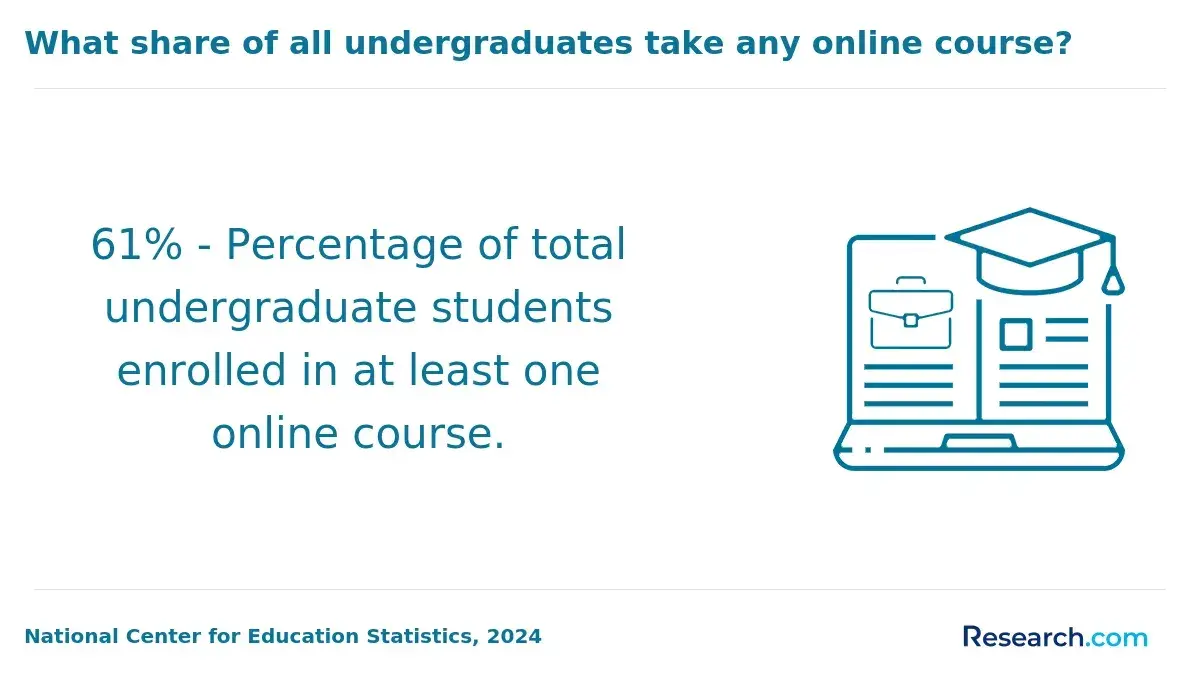
Finding an online Music Business degree can be difficult when an application asks for academic references you do not have. Programs with no required recommendation letters can reduce that barrier while still reviewing transcripts, essays, and career goals. This matters as online learning remains mainstream: the National Center for Education Statistics reported that 53.5% of U.S. postsecondary students took at least one distance education course in fall 2022.
This guide helps prospective undergraduates identify no-recommendation options, verify requirements, compare value, and apply with confidence.
Key Things You Should Know
- "No letters of recommendation required" means the published application for the specific online Music Business program does not require references; it does not mean admission is automatic or that transcripts, a personal statement, and identity documents are waived.
- Several online undergraduate options, including programs at Berklee Online, Full Sail University, and Southern New Hampshire University, have historically used streamlined applications without required recommendation letters, but applicants should confirm the current term's checklist directly with admissions.
- Compare accreditation, total program cost, transfer-credit policies, music-industry curriculum, and career support - not just admissions convenience. For context, College Board reported average 2024-25 published tuition and fees of $11,610 at public four-year in-state institutions and $43,350 at private nonprofit four-year institutions.
Which Online Music Business Degree Programs Require No Letters of Recommendation?
Most clearly documented no-recommendation options are undergraduate programs. Schools can change application policies by degree level, start date, and applicant type, so a program listed below should be treated as a starting point rather than a permanent guarantee.
The following examples have published streamlined undergraduate admissions processes that do not ordinarily list recommendation letters among standard application materials. Confirm both the institutional application page and the program-specific page before paying an application fee.
| School and online program | Typical credential | Published application approach | What to confirm |
| Berklee Online Music Business | Bachelor of Professional Studies | Application and prior-school records; recommendation letters are not generally listed as a standard undergraduate requirement | Transfer evaluation, English-language requirements, and whether a statement is requested |
| Full Sail University Music Business | Bachelor of Science | Application and academic records; recommendation letters are not generally listed in standard admissions materials | Program start dates, technology needs, and all tuition-related charges |
| Southern New Hampshire University Music Business | Bachelor of Arts | Online undergraduate application and transcripts; recommendation letters are not generally listed as required | Current program availability, transfer terms, and any placement or course prerequisites |
"Not listed" is different from "optional." A truly no-letter program will state no recommendations are required in the application checklist or admissions portal. An optional-letter policy permits them but does not require them; a conditional waiver may apply only to applicants with a certain GPA, degree, or amount of work experience.
Applicants considering adjacent careers may also compare an online degree social media marketing option. Marketing programs can be relevant for artist promotion, audience development, digital campaigns, and label-side communications, but they may offer less music-industry-specific instruction than a Music Business curriculum.
What Are the Admission Requirements for Online Music Business Degree Programs With No Recommendation Letters?
Removing recommendation letters usually simplifies one part of the application rather than lowering the academic review. Undergraduate Music Business programs commonly assess whether an applicant has completed secondary education or transferable college coursework and can succeed in online classes.
Applicants should expect some combination of the following materials. The exact list varies by school, applicant age, transfer status, and whether the program is a bachelor's, certificate, or master's degree.
- Completed online application and any required application fee
- Official or unofficial high school transcript, GED record, or prior college transcripts
- Minimum GPA review, when the school publishes one or uses holistic review
- Personal statement, short admissions essay, or career-goals response
- Resume documenting music, business, creative, technical, or work experience when requested
- Proof of English proficiency for applicants whose prior education does not meet the school's language policy
- Identification, residency, immunization, or financial-aid documents required by the institution
Standardized tests are often optional or not required for online undergraduate admission, but applicants should not assume that policy extends to graduate programs. Online master's programs in music business, arts administration, or entertainment management may still require a résumé, statement of purpose, writing sample, interview, portfolio, or recommendations.
Before submitting, save a dated copy or screenshot of the school's admissions checklist and ask an admissions representative: "For the online Music Business bachelor's program and my intended start term, are letters of recommendation required, optional, or waived?" Request the answer in writing if the portal language is unclear.
Are Online Music Business Programs With No Letters of Recommendation Easier to Get Into?
They may be easier to apply to, but they are not necessarily easier to enter or complete. Recommendation letters provide third-party context about an applicant's preparation, so schools that do not use them commonly rely more heavily on transcripts, prior credits, written responses, and basic eligibility checks.
A streamlined process can be especially useful for working adults, career changers, home-schooled students, military-affiliated learners, and applicants who have been away from school long enough that academic references are difficult to obtain. It is less useful if a student chooses a program solely because the form is short while ignoring price, course quality, or graduation support.
Music Business is an interdisciplinary field. Coursework may cover copyright, publishing, licensing, artist management, concert promotion, contracts, marketing, accounting, entrepreneurship, and digital distribution. Students should be prepared for business and communication work as well as music-related topics; a performance audition is not usually the central admissions measure for a Music Business degree.
For employment context, the U.S. Bureau of Labor Statistics projects 7% growth in employment for agents and business managers of artists, performers, and athletes from 2023 to 2033. That occupation is only one possible path and often depends on relationships and experience, but the projection suggests continuing demand for business support around creative talent rather than a guaranteed outcome for degree holders.
Applicants should be cautious when a school uses phrases such as "easy acceptance," "guaranteed admission," or "graduate quickly" without clearly publishing academic standards, tuition, and support services. Legitimate access-oriented programs explain who is eligible and what students must do after enrollment.
What Do Online Music Business Programs Evaluate Instead of Letters of Recommendation?
Without letters, admissions teams need other evidence of readiness, motivation, and fit. The strongest applications connect an applicant's documented academic history or professional experience to a realistic Music Business goal, such as artist management, publishing administration, venue operations, music marketing, licensing, or label coordination.
This comparison shows what common substitutes can demonstrate and how applicants can use them responsibly.
| Alternative material | What it can show | Helpful applicant approach |
| Transcript and GPA | Academic preparation and completion of prior coursework | Explain unusual grades briefly if the application permits, without making unsupported excuses |
| Personal statement | Career direction, motivation, and writing ability | Identify a specific music-industry interest and explain how the curriculum supports it |
| Résumé | Work habits and relevant experience | Include internships, event work, retail, customer service, social media, studio assistance, or self-directed projects |
| Portfolio or project links | Practical work and initiative when accepted by the school | Use only materials the school requests or permits, such as campaign samples or event plans |
| Interview or admissions call | Communication and understanding of the online format | Prepare concise questions about courses, costs, and career services |
A strong statement should not try to replace a recommendation with exaggerated claims. Instead, it should accurately explain relevant experience, name the skills the applicant needs to build, and show awareness that music careers often require networking, business judgment, and project management.
Applicants who want a broader behavior-and-audience perspective may find that an accelerated bachelor's degree in psychology develops transferable insight into motivation and consumer behavior. It is a different academic path, however, and does not replace specialized coursework in licensing, publishing, or music-industry contracts.
How Can You Tell if an Online Music Business Degree With No Recommendation Requirement Is Accredited and Legitimate?
A no-recommendation policy does not indicate whether a school is credible. Accreditation and transparent institutional practices matter more because they affect transferability, federal financial-aid eligibility, employer confidence, and whether another school may recognize the credential.
Use these steps to verify a program before enrolling. They help distinguish a straightforward admissions process from a program that provides too little information for an informed decision.
- Check that the institution holds institutional accreditation recognized by the U.S. Department of Education or the Council for Higher Education Accreditation.
- Confirm that the accreditation applies to the degree-granting institution, not only to a partner platform, association, or individual course.
- Read the curriculum and identify courses in music publishing, copyright, licensing, accounting, marketing, contracts, artist management, and digital distribution that match your intended role.
- Review faculty biographies for relevant teaching and industry experience, then examine how students access advising, library services, tutoring, disability accommodations, and technical support online.
- Calculate the full cost using tuition, mandatory fees, course materials, software, equipment, and any residency or travel requirement.
- Ask for the current catalog, withdrawal policy, transfer-credit policy, and complaint-resolution information before signing an enrollment agreement.
Be wary of schools that cannot identify an accreditor, pressure applicants to enroll immediately, make unqualified salary promises, or will not provide a clear curriculum and total-cost estimate. Programmatic accreditation is not standard for Music Business in the way it is for some licensed professions, so institutional accreditation and curriculum quality are particularly important.
Employers generally focus on the awarding institution, relevant skills, work samples, internship experience, and professional network - not whether the school collected recommendation letters at admission. A degree can support career development, but it does not substitute for hands-on experience in a relationship-driven industry.
How Much Do Online Music Business Degree Programs With No Letters of Recommendation Cost?
Admissions requirements do not determine tuition. An online Music Business degree may charge per credit, per term, or a flat program rate, and the total depends heavily on transfer credit, attendance pace, institutional sector, and required technology.
College Board's 2024-25 national averages for published tuition and fees were $11,610 for in-state students at public four-year institutions and $43,350 at private nonprofit four-year institutions. These are broad campus-sector benchmarks rather than Music Business online prices, but they illustrate why applicants should compare a school's own net cost instead of assuming online delivery is automatically inexpensive.
Use the school's official estimate to identify the cost categories that affect your personal budget.
| Cost factor | Why it changes the total | What to check |
| Tuition rate | Schools may charge by credit or term | Rate for online undergraduate Music Business courses and annual increases |
| Transfer credits | Accepted credits can reduce remaining courses | Maximum transfer limit and equivalency decisions in writing |
| Fees and materials | Technology, platform, books, and course materials may be separate | Mandatory fees and estimated annual materials cost |
| Equipment | Some courses may require a computer, audio software, or recording tools | Minimum hardware, software, and internet specifications |
| Attendance pace | Part-time enrollment can extend total time and indirect costs | Course-load options, term calendar, and billing schedule |
Compare net price after grants and scholarships, not sticker price alone. Also consider opportunity cost: an affordable program with weak course access, limited advising, or no relevant internship pathway may not provide the same value as a higher-cost option with stronger support.
Students seeking a graduate-level alternative should compare published costs across affordable online master's programs. A master's degree is typically appropriate after a bachelor's degree or significant professional experience and may have different admissions requirements, including recommendations.
Can You Get Financial Aid for an Online Music Business Degree With Streamlined Admissions?
Yes. If an online program is offered by an eligible institution, students may qualify for federal aid based on their financial circumstances and enrollment status; the absence of recommendation letters does not itself affect aid eligibility. Applicants should submit the Free Application for Federal Student Aid (FAFSA) as early as practical and review the aid offer carefully.
For the 2024-25 award year, the maximum Federal Pell Grant was $7,395. The actual amount depends on factors such as Student Aid Index, cost of attendance, enrollment intensity, and program length, so it should be viewed as a ceiling rather than an amount every student receives.
Students should evaluate aid in this order before borrowing heavily:
- Submit the FAFSA and resolve any verification requests promptly.
- Ask the school whether online Music Business students qualify for institutional scholarships, talent awards, transfer scholarships, or employer-partnership discounts.
- Review grants and scholarships first, then compare federal work-study availability if it fits the online format.
- Read federal loan terms, annual limits, interest, and repayment obligations before accepting loans.
- Decline or reduce private loans until you have compared their rates, protections, and repayment terms with federal options.
Ask financial-aid staff whether the program is fully eligible for the aid being offered, whether repeated courses affect eligibility, and how dropping a course changes billing or aid. Keep in mind that scholarships may require satisfactory academic progress after enrollment even when admission is streamlined.
Those exploring helping-profession careers instead of entertainment business may also review MSW programs online. Social work is a separate, licensure-regulated field, so students should verify state-specific licensing requirements and practicum expectations rather than assuming an online format has identical rules.
How Long Does an Online Music Business Degree With No Letters of Recommendation Take to Complete?
A bachelor's degree commonly requires about 120 credits, which often takes roughly four years of full-time study. Online programs may offer multiple start dates, shorter terms, asynchronous classes, or accelerated schedules, but the number of required credits and a student's available study time still determine completion time.
Transfer credits can shorten the timeline substantially if they satisfy degree requirements. A student who works full time, needs foundational courses, or takes classes part time may need longer than the catalog estimate. Conversely, compressed terms can increase weekly reading, project, and group-work demands; they are not automatically easier.
Music Business programs may include projects such as marketing plans, release strategies, contract analysis, event budgets, royalty exercises, or artist-development proposals. Before choosing an accelerated format, ask how often courses run, whether group projects require live meetings, and whether internships or capstones have fixed deadlines.
Choose the pace that supports consistent learning and manageable borrowing. Finishing one term sooner has limited value if an overloaded schedule leads to withdrawals, lower grades, or loss of financial-aid eligibility.
Can You Transfer Credits Into an Online Music Business Degree Program With No Recommendation Letters?
Many online bachelor's programs accept transfer credits, but admission without recommendations does not guarantee that prior coursework will apply toward the Music Business major. Schools typically evaluate transferability separately after reviewing official transcripts, course descriptions, grades, accreditation status, and credit age where applicable.
General education courses - such as English composition, college algebra, economics, communications, and introductory business - often have the clearest transfer potential. Specialized music-industry courses may require a syllabus or portfolio of prior work to determine equivalency.
Take these steps before making a final enrollment decision:
- Send official transcripts for a preliminary or formal transfer evaluation before enrolling whenever possible.
- Request a written degree plan showing accepted credits, remaining credits, and the estimated completion path.
- Ask whether credits apply to general education, free electives, or required Music Business courses; these categories affect time to degree differently.
- Keep syllabi, catalogs, assignments, and course descriptions for specialized business, audio, law, and music courses.
- Verify residency requirements, meaning the minimum number of credits that must be completed through the new institution.
A common mistake is comparing schools by their maximum transfer-credit number alone. The more meaningful question is how many of your credits will count toward required courses and reduce the number of courses you must pay for.
Students changing direction entirely might consider how an architect degree online pathway differs: architecture education can involve sequenced design studios and professional-accreditation considerations that do not generally apply to Music Business. Transfer rules should always be reviewed at the program level.
How Should You Compare Online Music Business Degree Programs That Do Not Require Letters of Recommendation?
Start with career fit, then assess admissions convenience. A student interested in publishing and royalty administration may need different courses and internship connections than someone planning to promote live events, manage artists, or work in digital music marketing.
Use this comparison framework to narrow your choices. It emphasizes evidence a school should be able to provide before you commit time, financial aid, or loans.
| Comparison area | What a strong answer looks like | Potential concern |
| Admissions policy | The current checklist explicitly states whether recommendations are not required, optional, or conditionally waived | Staff give inconsistent answers or requirements are not published |
| Accreditation | Recognized institutional accreditation is easy to verify | The school relies on vague affiliations or does not identify its accreditor |
| Curriculum | Required courses align with your target area, including licensing, publishing, marketing, finance, or management | Course titles are vague and detailed descriptions are unavailable |
| Online learning design | Clear expectations for live sessions, group work, software, projects, and instructor access | "100% online" is used without explaining how learning works |
| Career development | Specific internship, mentoring, portfolio, networking, or career-services information | Only broad employment promises without concrete support |
| Total cost | Written estimate covering tuition, fees, materials, and transfer-credit impact | Pressure to enroll before costs or aid are explained |
Before applying, contact two or three schools with the same short set of questions: Are recommendation letters required for my start term? What is the total estimated cost after my transfer evaluation? Which courses cover copyright and music publishing? Are internships supported for online students? What career services remain available after graduation?
A no-recommendation online Music Business degree is most suitable for students who want a legitimate, flexible route into the business side of music and are ready to evaluate quality carefully. It may be a poor fit for someone seeking intensive conservatory performance training, guaranteed industry placement, or a program that can replace the networking and practical experience needed to build a music career.
Other Things You Should Know About Music Business
Usually, Music Business programs focus on business and industry preparation rather than performance ability, so an audition is often not required. However, a school may request a portfolio, interview, or background information for certain tracks, scholarships, or related music-production programs.
It can provide useful context, especially in programs using holistic review. Event work, artist promotion, customer service, social media campaigns, studio support, and entrepreneurship can strengthen a résumé or statement, but they do not automatically override a school's stated academic requirements.
Possible entry-level directions include artist-management assistance, venue or event coordination, music marketing, licensing support, publishing administration, royalty processing, label operations, and audience-development roles. Job titles, hiring standards, and advancement vary widely, and internships and professional relationships are often important.
Apply early enough to complete transcript requests, transfer evaluation, financial-aid steps, and any technology preparation before the intended start date. Online schools may have several annual starts, but application and aid deadlines can differ, so verify the calendar for the exact program and term.
References
- Music Business Online - The Los Angeles Film School https://www.lafilm.edu/programs/entertainment-business-online/music-business/
- Music Business | UCLA Extension https://www.uclaextension.edu/entertainment/music/certificate/music-business
- Can You Jump Straight to Music Grad School After a Non-Music Bachelor's? - Songtive Blog https://www.songtive.com/blog/can-you-jump-straight-to-music-grad-school-after-a-non-music-bachelors/
- 7 Best Music Business Degree Programs https://www.careersinmusic.com/music-business-degree/
- How to Choose the Best Music Business Program https://blog.trevecca.edu/thehill/how-to-choose-the-best-music-business-program
- Online Music Programs: Earn Your Music Degree Online | MI https://www.mi.edu/mi-online/
- Careers for Music Business Majors https://majoringinmusic.com/careers-for-music-business-majors/
- Is the Cost of a Music Degree Ethical? https://www.schmopera.com/is-the-cost-of-a-music-degree-ethical/
- Online Master's in English Programs No GRE Required (Master of Arts) https://www.mastersincommunications.com/faqs/online-masters-in-english-gre-requirements
- 2025 Most Affordable Online Degrees in Music https://www.onlineu.com/most-affordable-colleges/music-degrees