2027 Online Music Business Degree Programs With No Personal Statement or Admissions Essay Required

Co-Founder and Chief Data Scientist
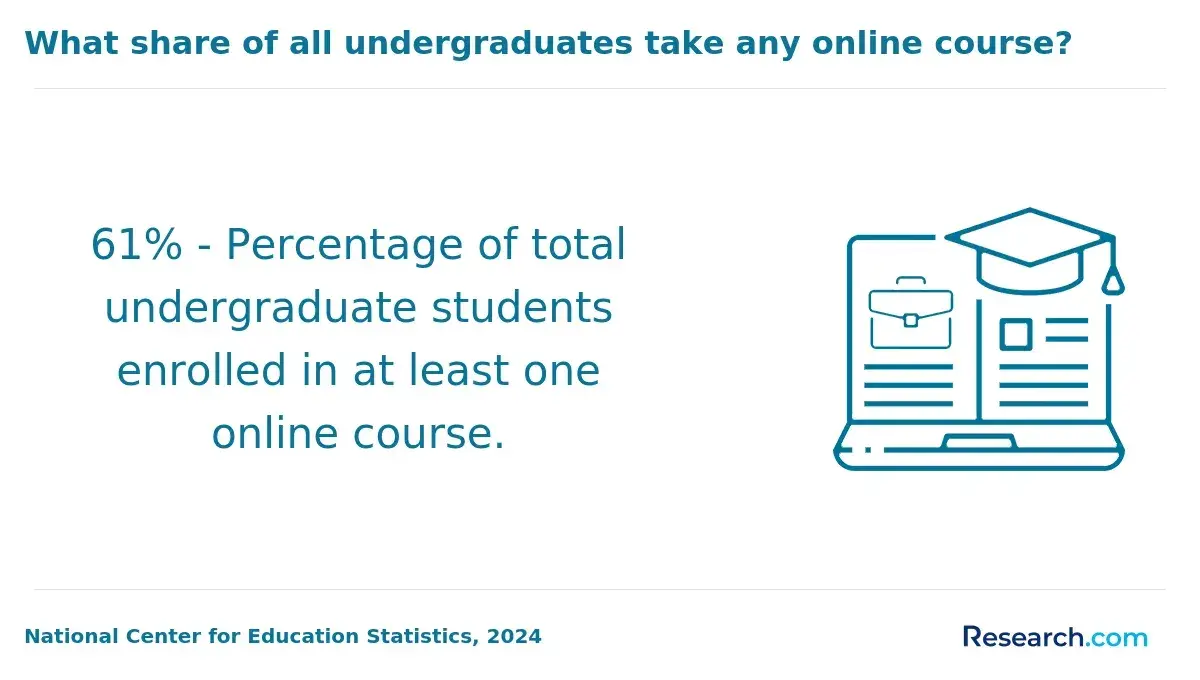
An online music business degree can be appealing if you want to study artist management, copyright, marketing, licensing, and entertainment entrepreneurship without writing an admissions essay. NCES reported in its 2024 Digest that 53% of U.S. undergraduate students took at least one distance education course in fall 2022.
"No essay required" usually means the standard application omits a personal statement, not that the school has removed transcripts, GPA review, prerequisites, or financial-aid documentation. This guide helps applicants identify genuine no-essay policies, compare program quality, and avoid treating a simpler application as a shortcut to a better degree.
Key Things You Should Know
- A true no-essay online music business program does not require a personal statement for standard admission, but it may still evaluate official transcripts, cumulative GPA, prior coursework, identity documents, and transfer-credit eligibility.
- U.S. undergraduates took at least one distance education course in fall 2022, making it especially important to compare online delivery, student support, accreditation, and career preparation rather than application length alone.
- "Essay-optional" means a student may submit writing to add context, while "essay-waived" often means a requirement was removed for a particular term or applicant group. Honors programs, scholarships, and special consideration can still require essays.
What Does No Personal Statement or Admissions Essay Required Mean for Online Music Business Degree Programs?
For an online music business degree, "no personal statement or admissions essay required" generally means the institution does not ask applicants to submit a written narrative about their goals, experiences, strengths, or reasons for enrolling as part of its standard admission file. The application may instead rely primarily on objective academic records and eligibility documents.
This policy applies to admission into the degree program, not necessarily every opportunity connected to it. A school may still request written information if an applicant has an unusual academic record, seeks an exception to a requirement, applies to an honors track, or competes for a scholarship. Some music business programs also use separate materials for internships, capstone placements, or study-away opportunities after enrollment.
Music business degrees may be offered as associate, bachelor's, or master's programs. Coursework commonly addresses recording-industry operations, publishing, copyright, contracts, live-event promotion, digital distribution, audience development, finance, and artist or venue management. A simplified admissions process does not change the academic expectations once students begin these courses.
Applicants considering adjacent fields may find that business-facing digital skills matter across several creative industries. For example, an online degree social media marketing can be worth comparing when your goal is primarily audience growth, campaign strategy, or digital brand work rather than the legal and commercial systems of the music industry.
What Admissions Requirements Do Online Music Business Degree Programs Use Instead of an Essay?
Removing an essay changes how a school collects context; it does not eliminate admissions review. Requirements vary by institution, degree level, and applicant type, so applicants should read the requirements for their exact online program rather than relying on a general college admissions page.
The following table shows common substitutes for an admissions essay and what each item helps an admissions office evaluate.
| Requirement | What the school reviews | Why it matters |
| Official transcripts | Completed courses, grades, credential earned, and academic trends | Transcripts often determine basic admission and transfer-credit decisions. |
| Minimum GPA | Overall or transferable-college GPA | A published threshold may be a baseline, not a guarantee of admission. |
| High school completion or equivalent | Diploma, GED, or recognized equivalent for undergraduate applicants | This is commonly required when an applicant has limited college credit. |
| Prerequisite coursework | English, math, business, or general-education preparation | Missing prerequisites can lead to additional courses or conditional admission. |
| Test scores, if applicable | SAT, ACT, placement testing, or English-language proficiency results | Many schools are test-optional, but placement or international-language requirements may remain. |
| Recommendations or résumé | Professional preparation, work history, or readiness for graduate study | These are more common for selective, graduate, or portfolio-oriented options. |
Before paying an application fee, ask whether the program requires a separate departmental application. A general university application may have no essay while a music, business, or graduate department asks for a résumé, statement of purpose, interview, or supplemental response.
Students exploring other helping-profession pathways should also expect admissions requirements to differ substantially by field and degree level. For instance, MSW programs online commonly evaluate preparation for professional practice more directly than an undergraduate music business application.
Who Is a Good Fit for Online Music Business Degree Programs With No Admissions Essay?
A no-essay pathway can fit applicants whose academic record already communicates their readiness and who want a more direct process. This includes working adults, transfer students with clear college transcripts, recent high school graduates who meet published criteria, and applicants returning to school after a break who prefer not to explain their history in a personal narrative.
It is often a practical option for a student who has industry experience but does not need that experience to compensate for weak academic indicators. A no-essay application may also reduce barriers for applicants who are uncomfortable with admissions writing, have limited time, or want to apply to several properly vetted programs.
It may be less suitable when an essay could clarify an important part of your profile. Consider an essay-required or essay-optional program if you need to explain a long enrollment gap, a low GPA caused by documented circumstances, a change in direction, strong music-industry experience not evident on a transcript, or a specific career plan that aligns closely with a specialized program.
Do not select a degree only because it has fewer writing requirements. Music business students still need communication, negotiation, project management, marketing, analytical thinking, and an understanding of intellectual-property and contract concepts. Coursework may require presentations, business plans, licensing analyses, campaign briefs, and written reports even when admission does not.
What Is the Difference Between No-Essay, Essay-Optional, and Essay-Waived Music Business Degree Admissions?
These labels can sound interchangeable, but they create different applicant choices. Confirm the policy in writing for the intended term because institutions can change application requirements or use different rules for first-year, transfer, online, and graduate applicants.
The comparison below helps applicants determine whether submitting writing is prohibited, optional, temporarily removed, or still required under another name.
| Policy | Meaning for standard admission | Applicant decision |
| No essay required | No personal statement or admissions essay is part of the standard application. | Submit required records and do not assume scholarships use the same policy. |
| Essay-optional | The school accepts an essay but does not require one. | Submit a focused essay only if it adds useful context or evidence of fit. |
| Essay-waived | An essay normally required has been removed for a defined group, term, or pathway. | Check who qualifies and whether the waiver remains active when you apply. |
| Essay required | A written response is part of the complete application. | Plan time for revision and address the prompt directly. |
An optional essay can be valuable when it meaningfully explains circumstances that grades alone cannot show. However, a weak, generic submission can add little. If the school says "optional," ask an admissions counselor whether the essay is reviewed for admission, scholarship consideration, or both.
This distinction matters for students comparing degree paths with different professional goals. An accelerated bachelor's degree in psychology, for example, may have a different application structure and prerequisite pattern from a music business program even when both are delivered online.
Are Online Music Business Degree Programs With No Admissions Essay Easier to Get Into?
A no-essay policy reduces one application task, but selectivity depends on the school's capacity, minimum standards, applicant pool, transfer-credit rules, and departmental requirements. A program can omit essays while maintaining GPA thresholds, requiring official transcripts, limiting enrollment, or denying applicants who do not meet prerequisites.
"No essay" also differs from open admission. Open-admission institutions generally admit applicants who meet broad eligibility criteria, while a no-essay institution may still make individualized admissions decisions using academic records. Read the language carefully: "eligible to apply," "meets minimum requirements," and "admitted" do not mean the same thing.
Applicants should be cautious about two assumptions: that an easier application means lower academic quality, or that a more demanding application means a better career outcome. Neither follows automatically. The more useful questions are whether the program has credible accreditation, relevant curriculum, qualified faculty, accessible advising, clear tuition disclosures, and opportunities to build industry-relevant work samples.
Music business is a relationship-driven field, so students should assess how an online program supports networking. Look for virtual guest speakers, industry projects, internship guidance, alumni access, career coaching, and courses that address current revenue models such as streaming, direct-to-fan marketing, licensing, and live events.
How Can You Verify Accreditation and Quality in No-Essay Online Music Business Degree Programs?
Start with institutional accreditation. In the United States, institutional accreditation is the key quality indicator for broad academic oversight and is generally important for federal financial-aid eligibility and transfer-credit review.
Verify the institution through the U.S. Department of Education's Database of Accredited Postsecondary Institutions and Programs or the school's recognized accreditor, rather than relying solely on promotional language.
Music business programs do not all hold specialized programmatic accreditation, and the absence of one does not automatically make a program poor. Instead, examine evidence that the curriculum is current and professionally relevant. A strong online option should explain required courses, faculty backgrounds, assessment methods, technology needs, internship or experiential-learning support, and how students access academic services at a distance.
Use the following checks before applying. They help separate a simplified admissions policy from a weak or unclear academic offering:
- Confirm the institution's current accreditation status and whether the online degree is awarded by that accredited institution.
- Read the full degree plan, including general education, business, music-industry, copyright, accounting, marketing, and capstone requirements.
- Ask whether courses are synchronous, asynchronous, or mixed, and whether participation times fit your schedule and time zone.
- Request the total estimated cost, including technology, course-material, graduation, and residency-related fees where applicable.
- Ask how the school supports internships, career preparation, networking, and access to instructors for online students.
- Check how credits may transfer into or out of the program before enrolling.
A red flag is a school that emphasizes instant admission but cannot clearly identify its accreditor, degree requirements, faculty, refund policy, or total cost. Another is an institution that makes broad employment claims without explaining the job titles, locations, time frames, or methodology behind them.
When evaluating online professional programs in unrelated fields, apply the same principle: admissions convenience is separate from academic recognition. Students researching an architect degree online should be particularly careful to distinguish a degree's academic delivery from the education and licensure requirements that may apply to architectural practice.
How Does the Application Process Work for Online Music Business Degree Programs With No Personal Statement?
The process is usually shorter because applicants do not draft a personal statement, but it still requires careful document collection and deadline tracking. Some institutions offer rolling admission; others have fixed start dates, priority deadlines, or separate deadlines for aid and scholarships.
A practical application sequence is outlined below. Completing these steps in order reduces the chance that a missing transcript or misunderstood requirement delays a decision:
- Locate the exact online music business program page and confirm that the no-essay policy applies to your degree level, term, and applicant category.
- Review minimum GPA, prerequisite, transfer-credit, residency, and technology requirements before beginning the application.
- Create the application account and provide accurate personal, educational, and residency information.
- Request official transcripts early from every previously attended high school or college, following the institution's submission instructions.
- Submit required supplemental records, such as proof of graduation, placement information, résumé, or recommendations, if the program lists them.
- Complete financial-aid steps separately, including the FAFSA when eligible, and review scholarship requirements.
- Monitor the applicant portal and respond promptly if admissions requests clarification or additional documentation.
- After admission, compare the final aid offer, transfer evaluation, academic plan, and enrollment agreement before committing.
Keep copies of policy pages and email confirmations. If an admissions representative says an essay is not required, ask whether that statement applies to admissions only or also to scholarships, departmental review, and conditional-admission appeals.
Can Transfer and Adult Students Apply to Online Music Business Degree Programs Without an Essay?
Many can, but transfer and adult applicants often face additional record-review steps. A college may waive the personal statement for standard admission while requiring official transcripts from every institution attended, even if no credit will transfer. It may also require course descriptions or syllabi when evaluating specialized business, music, technology, or general-education credit.
Adult learners should ask whether professional experience can produce credit through prior-learning assessment, standardized exams, military credit, or portfolio review. Those options can reduce duplicate coursework, but they are separate from admission and may involve fees, evaluation standards, or written documentation.
Do not assume work in venues, recording, artist promotion, retail, events, or digital marketing will automatically convert into academic credit.
Transfer applicants should confirm these details before enrolling:
- The minimum number of transferable credits, if any, needed for upper-division or degree-completion entry.
- Whether the published GPA requirement applies to all attempted credits, transferable credits, or only the most recent coursework.
- How many credits the institution will accept and how many must be completed through that school.
- Whether prior courses satisfy specific music business requirements or only elective credit.
- Whether an essay-free policy changes for applicants seeking readmission after academic dismissal or a long interruption.
A transparent transfer evaluation is more valuable than a fast admission decision. Ask for a written preliminary or official credit evaluation and compare the remaining courses, expected completion time, and total tuition before accepting an offer.
Do No-Essay Online Music Business Degree Programs Affect Tuition, Financial Aid, or Scholarships?
No-essay admission itself does not determine tuition, federal aid eligibility, or degree value. Tuition is set by the institution and can vary by residency, undergraduate versus graduate status, credit load, program format, and mandatory fees. A school may have a simple application but a higher total cost than a program with a more extensive admissions process.
Federal student aid eligibility is generally based on factors such as enrollment, satisfactory academic progress, citizenship or eligible noncitizen status, and FAFSA information - not whether an admissions essay was required. Students should submit the FAFSA as early as appropriate for their enrollment period and review each school's aid offer for grants, loans, work-study, and out-of-pocket costs.
Scholarships are the major exception. Institutional, private, departmental, and talent-based awards may request essays, short answers, recommendation letters, auditions, creative materials, or evidence of leadership. A scholarship essay requirement does not mean the degree program's no-essay admission claim is inaccurate; it means admission and funding are separate processes.
When comparing costs, examine the financial picture rather than a single tuition rate.
| Cost or aid item | What to confirm | Why it affects the decision |
| Tuition rate | Per-credit or flat-rate pricing and whether online students pay a different rate | A lower per-credit figure may not mean a lower total program cost. |
| Required fees | Technology, learning-platform, course-material, graduation, and service fees | Fees can materially change the amount billed each term. |
| Transfer credit | Accepted credits and remaining required credits | More applicable transfer credit can reduce time and total tuition. |
| Institutional grants | Renewal conditions, enrollment requirements, and whether funds are need- or merit-based | An initial award may not continue if conditions are not met. |
| Loans | Annual limits, interest, repayment terms, and total borrowing need | Borrowing should be considered against realistic completion and career plans. |
For graduate study after a bachelor's degree, compare total tuition and required credits across institutions rather than assuming the least demanding application is the most economical. Resources on affordable online master's programs can help frame that cost comparison across fields.
How Should You Compare Online Music Business Degree Programs With No Admissions Essay?
Compare programs using the criteria that will shape your education and career preparation after admission. Start by deciding whether you need a broad business degree with music-industry coursework, a dedicated music business major, or a related program in entertainment management, marketing, communications, audio production, or entrepreneurship.
The following comparison framework focuses on decision factors that matter more than an omitted essay.
| Comparison factor | Questions to ask | Strong sign |
| Accreditation and institution | Is the degree awarded by an accredited institution? Is the program information clear? | Current accreditation and transparent policies are easy to verify. |
| Curriculum | Are copyright, licensing, publishing, marketing, finance, contracts, and digital distribution included? | Coursework connects business fundamentals to current music-industry practice. |
| Online experience | How are classes delivered? What support is available outside business hours? | Format, instructor access, and technical expectations are clearly stated. |
| Career preparation | Are internships, portfolio projects, networking events, or career services available online? | Students can build evidence of skills and industry connections. |
| Transfer and completion path | Which credits apply, and how long will the remaining program take? | A written evaluation and realistic academic plan are provided. |
| Total cost and aid | What will you pay after grants, fees, and transfer credit? | The school provides a clear, itemized estimate without pressure. |
| Admissions policy | Does "no essay" apply to you, your start term, and scholarship applications? | The policy is documented and confirmed by admissions. |
Make a short list of two to four programs, then contact each admissions office with the same questions. Ask for the degree map, sample course schedule, total-cost estimate, transfer process, student-support details, and a written confirmation of the essay policy. This gives you comparable information instead of relying on marketing language.
The best no-essay online music business program is one whose admissions process matches your situation and whose curriculum, affordability, delivery model, and industry preparation support your longer-term plan. If an essay-optional school offers substantially better fit, submitting a thoughtful optional statement may be a worthwhile trade-off.
Other Things You Should Know About Music Business Programs
Not always. A policy may differ for first-year, transfer, international, graduate, readmission, or conditional-admission applicants. Confirm the requirement for your exact applicant type and intended start term.
Yes. An admissions office may request clarification about academic history, eligibility, disciplinary disclosures, or an exception request. This does not necessarily change the standard policy, but you should respond by the stated deadline.
Yes. Scholarship applications often have separate selection criteria and may request essays, short responses, recommendations, financial information, or creative and leadership evidence. Review scholarship rules independently from degree-admission requirements.
Usually, the focus is on the commercial side of music rather than performance training. Students may study artist management, promotion, licensing, publishing, copyright, entrepreneurship, and event operations. Review course titles carefully if you also want intensive performance, production, or audio-engineering instruction.
References
- Business/Music Personal Statement Example https://www.studential.com/personal-statement-examples/businessmusic-personal-statement
- Essays, Personal Statements, and Résumés for Music Students https://majoringinmusic.com/essays-personal-statements-and-resumes-for-music-students/
- World's Largest platform as University Common Application https://www.planstudyabroad.uniagents.com/course-details.php
- How to Apply https://www.curtis.edu/apply/applying/
- How to know if online music certifications are right for you https://www.interlochen.org/stories/how-to-know-if-online-music-certifications-are-right-for-you
- Essay & Personal Statement Review https://theglobalconservatory.com/pages/essay-review
- How to Write a Music Personal Statement for 2026 https://www.lccm.ac.uk/blog/how-to-write-a-music-personal-statement-for-2026/
- Bachelor of Classical Music (Hons.) https://www.ucsiuniversity.edu.my/programmes/bachelor-classical-music-hons