2027 Online Music Business Degree Programs With Monthly Tuition Payment Plans

Co-Founder and Chief Data Scientist
Paying several thousand dollars at the start of a term can put an online Music Business degree out of reach even when its total tuition fits a student's long-term budget. Monthly tuition plans divide an institutional balance into scheduled installments, usually within one academic term. For context, the College Board reported average published tuition and fees of $11,610 at public four-year institutions for 2024-25.
This guide helps prospective Music Business students compare installment options, upfront costs, financial-aid timing, and alternatives before choosing a program.
Key Things to Know About Music Business Programs with Monthly Tuition Payments
- Online Music Business students may find monthly payment plans at schools such as Southern New Hampshire University, Berklee Online, and Full Sail University, but availability, due dates, and installment counts can vary by term and student account.
- A payment plan usually spreads the remaining term balance after financial aid across two to six installments; it is not the same as a student loan and generally must be repaid before the term ends.
- At a published rate of $330 per credit, a 3-credit course costs $990 in tuition before fees; dividing that balance into three equal payments would be about $330 monthly, plus any enrollment or late fees.
Which online Music Business degree programs have monthly tuition payment plans?
Several institutions with online Music Business-related bachelor's programs publicly describe tuition installment arrangements or use payment-plan administrators. A plan is typically offered through the student billing portal after registration, rather than being embedded in the degree curriculum. Students should confirm current availability with the bursar or student financial services office before relying on it, because a plan can depend on the term, account balance, and enrollment date.
The following comparison identifies programs worth investigating and the payment-plan question to ask. It is not a guarantee that every applicant will receive the listed arrangement.
| Institution and online program | Published tuition approach | Monthly-payment planning consideration |
| Southern New Hampshire University, BA Music Business | Per-credit undergraduate tuition | Ask whether the remaining session balance can be split through the school's current tuition payment plan. |
| Berklee Online, Bachelor of Professional Studies in Music Business | Per-course and per-credit pricing | Confirm installment availability for the specific online semester and whether a down payment is due at enrollment. |
| Full Sail University, BS in Music Business | Programmatic tuition and monthly academic schedule | Request a written breakdown of monthly charges, financing options, and charges due before the start date. |
Program content matters alongside the billing structure. For example, prospective students comparing promotion, audience development, and digital strategy may also find an online degree social media marketing useful as an alternative or complementary path, but should compare its curriculum and tuition separately.
When contacting a school, ask for the plan's name, number of installments, first due date, enrollment deadline, nonrefundable fee, and consequence of a missed payment. Get the answer in writing through the billing portal or an official email, not solely from a general admissions conversation.
How much do online Music Business degree programs typically cost?
Total cost depends primarily on credit requirements, transfer credits, residency rules where applicable, and mandatory institutional charges. A bachelor's degree commonly requires about 120 credits, but students who transfer approved coursework may pay for substantially fewer credits. Tuition is only one part of the cost: technology, course materials, graduation, and optional travel or networking expenses can change the final amount.
Published per-credit tuition provides a practical way to estimate a starting budget. The examples below use tuition figures and simple installment illustrations; they are not quotes and exclude fees, aid, and future tuition changes.
| Planning example | Tuition calculation | Illustrative monthly amount |
| One 3-credit course at $330 per credit | $990 tuition | $330 across three equal installments |
| Two 3-credit courses at $330 per credit | $1,980 tuition | $660 across three equal installments |
| 120-credit degree at $330 per credit | $39,600 tuition | Not a monthly plan quote; actual installments are normally set term by term |
Southern New Hampshire University lists online undergraduate tuition at $330 per credit for the 2024-25 academic year. That figure is useful as a transparent benchmark, but it does not establish an average price for all online Music Business degrees. Specialized private music schools can use very different pricing models, and a student's actual bill can be lower after transfer credit or grants.
Students considering graduate study after a bachelor's degree should separately compare affordable online master's programs. A lower monthly undergraduate payment does not by itself indicate the lowest total educational cost.
How common are monthly tuition payment plans among Music Business programs?
Monthly payment plans are common enough across U.S. higher education that many colleges use third-party billing platforms or internal installment systems, but there is no national count specifically for online Music Business programs. Schools usually offer plans at the institutional level, so Music Business students may be eligible when their online division and account balance qualify.
Availability is less predictable than program admission. A school may offer a plan only for fall and spring terms, cap the number of installments after classes begin, exclude students with past-due balances, or require automatic payments. This is why "monthly payments available" should be treated as a billing feature to verify, not a permanent feature of the degree.
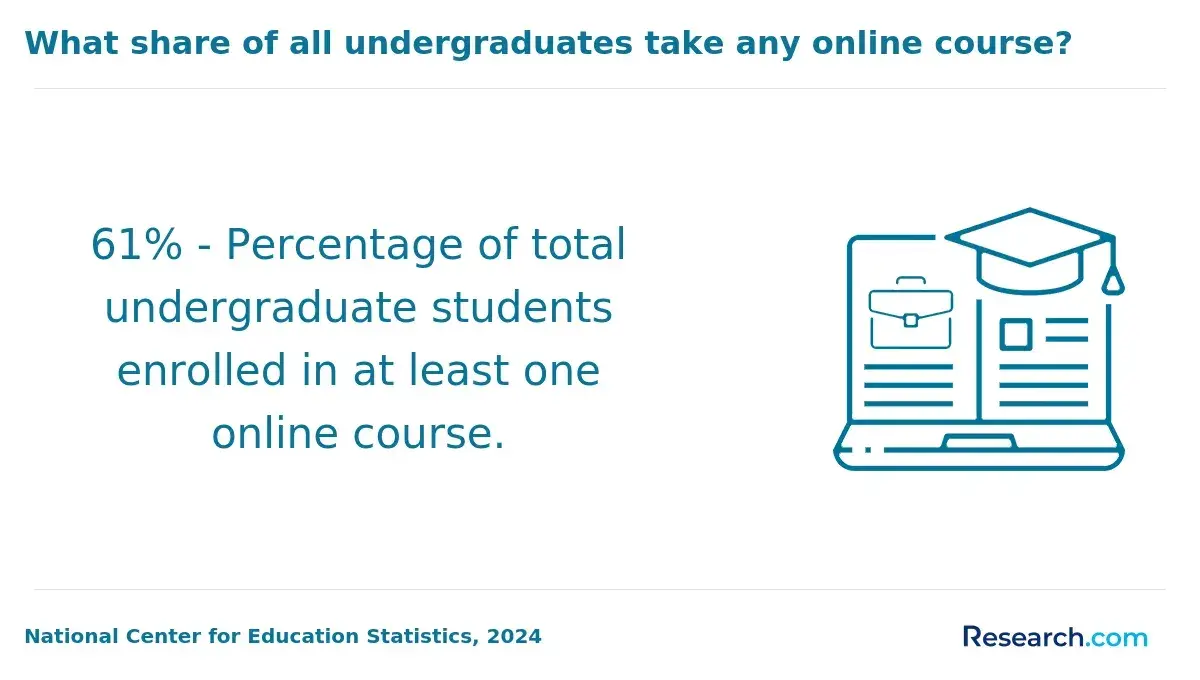
The National Center for Education Statistics reported that 7.5 million undergraduate students took at least one distance-education course in fall 2022, the latest broadly reported national enrollment measure available in recent federal releases. Large online enrollment helps explain why institutions increasingly use online self-service billing, but the figure does not show how many students use installment plans or study Music Business.
Do not assume a school without a prominently advertised plan has none. Ask the billing office whether there is an installment option for fully online students, whether it applies to tuition and fees, and whether the plan is available before or after aid is disbursed.
Can monthly tuition plans make paying for Music Business degrees more attainable?
Yes, a short-term payment plan can make a term bill easier to budget because it replaces one large due date with smaller scheduled payments. It is most useful for students with predictable income, employer assistance that arrives during the term, or savings that can cover the full balance over several months without borrowing.
A plan does not reduce tuition or create additional aid. It merely changes the timing of payment. Students whose cash flow cannot cover the full term balance by the final installment date may need to combine a plan with grants, scholarships, employer tuition benefits, federal aid, or a carefully evaluated loan.
The comparison below highlights the trade-off between a payment plan and common alternatives.
| Option | Usually best for | Main trade-off |
| Monthly tuition plan | Students able to pay the term balance within a few months | May include enrollment and late fees; missed payments can affect registration |
| Paying upfront | Students with available savings and no cash-flow strain | Requires a larger immediate payment but may avoid plan fees |
| Federal student aid or loan | Eligible students needing financing beyond the term | Loans can carry interest and repayment obligations after enrollment |
| Employer tuition reimbursement | Working students whose employer has a qualifying benefit | Reimbursement may arrive after tuition is due and may require grades or continued employment |
Before using an installment plan to bridge employer reimbursement, confirm the reimbursement date and whether the employer covers a Music Business major. Students exploring other career-focused degrees can apply the same comparison to an MSW programs online search, where tuition schedules and employer benefits may differ materially.
A payment plan is a poor fit when each installment would compete with rent, food, insurance, or emergency savings. In that situation, reducing course load, postponing a course, seeking additional aid, or selecting a lower-cost accredited option may be safer than repeatedly incurring late charges.
Does monthly payment plans have an effect on the overall cost of Music Business degrees?
Monthly payment plans generally do not change the published tuition rate or number of credits required. They can, however, increase the amount paid through nonrefundable enrollment fees, returned-payment fees, late fees, or finance charges if the school applies them. A no-interest plan with a modest administrative fee is usually less costly than borrowing solely to cover a short tuition gap, but readers should compare the actual figures rather than assume.
Calculate the full payment-plan cost before enrolling. These steps reveal whether convenience is worth the added charge.
- Start with the term bill after confirmed grants, scholarships, employer payments, and accepted aid are applied.
- Add the plan enrollment fee, required down payment, and any card-processing fee disclosed by the school.
- Divide the remaining balance by the number of installments, then compare the payment dates with dependable income dates.
- Read the late-payment, returned-payment, cancellation, and collection provisions before authorizing automatic withdrawals.
A longer installment schedule can lower each payment while creating more opportunities for fees or overlapping balances. It may also delay a hold on the account rather than solve an affordability problem. By contrast, upfront payment can be less expensive when a school waives a plan fee, but it should not deplete emergency funds.
For perspective, federal student loans operate differently: interest may accrue depending on the loan type and borrower status, and repayment can extend beyond the academic term. A tuition plan normally has a shorter horizon, so it is better viewed as a cash-flow tool than long-term financing.
Do monthly payment plans affect your financial aid eligibility for Music Business programs?
Enrolling in a school payment plan does not ordinarily determine eligibility for federal financial aid. Eligibility is based on factors such as a completed FAFSA, enrollment status, satisfactory academic progress, cost of attendance, and program eligibility. The plan matters because it determines how the balance left after aid is applied must be paid.
The U.S. Department of Education's Federal Student Aid office reported that the maximum Federal Pell Grant for the 2024-25 award year was $7,395. Eligible students may use grants to reduce their billed balance, but the actual award depends on individual circumstances and may not cover all tuition, fees, and living expenses.
Timing is the most important issue. Financial aid may disburse after a payment-plan enrollment deadline, and a school may require a temporary down payment while it verifies aid. Ask whether anticipated aid can be included as a pending credit, what happens if aid is reduced, and whether the plan is recalculated after disbursement.
Students should avoid accepting a payment plan based on aid that has not been awarded or verified. If eligibility changes because of withdrawal, a course-load change, or unmet documentation requirements, the student may become responsible for a larger balance immediately.
Financial-aid rules also vary by credential and enrollment pattern. Someone weighing a faster route in another field should compare the calendar and aid consequences of an accelerated bachelor's degree in psychology with those of a standard Music Business term.
Is there a deposit required before starting Music Business monthly payment plans?
Often, yes. Schools may require a down payment, first installment, or plan-enrollment fee when a student activates the plan. The amount is not standardized: it may be a fixed administrative charge, a percentage of the outstanding balance, or the first scheduled installment. Some institutions allow a $0 down payment early in the enrollment cycle but require more upfront as the term start date approaches.
The distinction between a deposit and a payment is important. A true deposit may reserve a seat or be partly nonrefundable, while a down payment reduces the amount still owed. Ask the billing office to label each charge clearly and explain its refundability if you drop, withdraw, or receive additional aid.
Before giving payment details, obtain answers to these specific questions.
- What amount is due today, and how much of it is refundable?
- Does the required upfront amount include tuition, fees, or only the payment-plan enrollment charge?
- Will anticipated grants, scholarships, military benefits, or employer payments reduce the deposit requirement?
- What is the final date to enroll in the plan without increasing the down payment or reducing the number of installments?
Do not confuse a payment-plan deposit with an admissions deposit. They can be separate charges with different deadlines and refund rules.
Are there fees not covered by monthly tuition payment plans for Music Business programs?
Yes. Plans often cover a defined student-account balance, not every expense connected with earning the degree. Music Business students may also face course materials, software, equipment, optional professional-development travel, or costs associated with internships and events. Whether institutional fees are included varies by school and plan.
This table separates charges that are commonly included from expenses students should verify independently.
| Charge category | Often included in a plan? | What to verify |
| Base tuition | Usually | Whether the plan covers the full term balance or only selected charges |
| Mandatory institutional fees | Sometimes | Technology, student-service, graduation, and distance-learning fee treatment |
| Payment-plan enrollment fee | No | Amount, refund policy, and whether it is charged each term |
| Books, software, recording tools, and equipment | Usually no | Required course materials and separate vendor charges |
| Late, returned-payment, and collection charges | No | Fee schedule, grace period, account hold, and reinstatement rules |
Read the program's course requirements as carefully as its tuition page. A lower monthly tuition installment can be misleading if essential production software, headphones, a computer upgrade, or travel to a networking event is billed separately.
What should you look for in payment plan terms for Music Business programs?
Compare written plan terms rather than comparing only the advertised monthly figure. The smallest installment is not necessarily the best value if it requires a large deposit, excludes fees, or includes strict default penalties. Tuition policies can change by academic year, so review the version attached to the term in which you will enroll.
Use the following checklist to compare two schools or two term plans on the same basis.
- Total amount financed by the plan after confirmed aid and credits
- Required down payment, enrollment fee, and payment-method fee
- Number of installments, exact due dates, and whether payments align with paydays
- Interest or finance-charge policy, including whether the plan is explicitly interest-free
- Late fee, returned-payment fee, grace period, and account-hold consequences
- Cancellation, withdrawal, and refund rules if you change courses or leave the program
- Whether automatic payment is mandatory and how to update an expired card or bank account
Red flags include unclear wording about fees, a promise of "low monthly payments" without a total-cost disclosure, no explanation of what happens after a missed payment, and verbal terms that differ from the billing agreement. Keep a copy of the agreement, billing statement, and payment confirmations.
Accreditation and outcomes deserve equal attention. Billing flexibility cannot compensate for a program that does not fit your goals in artist management, live events, licensing, publishing, marketing, or entrepreneurship. Applicants interested in creative-industry education may also compare the online-format and project requirements of an architect degree online, while recognizing that architecture has distinct professional and licensure considerations.
How do you know if online Music Business degrees with monthly payments are right for you?
A monthly payment plan is right for you when it makes an otherwise affordable term manageable without forcing you to miss essential expenses or rely on high-cost borrowing. It works best when you have a realistic cash-flow plan for every installment, understand all fees, and have confirmed how financial aid will apply.
It may be a strong fit if you have steady income, a short gap before employer reimbursement, or enough savings to cover the full term but prefer to preserve monthly liquidity. It is less suitable if your income is unpredictable, your budget already has no margin, or you would need to use credit cards each month to make the installment.
Make a final enrollment decision using these practical checks.
- Confirm that the institution is appropriately accredited and that the Music Business curriculum supports your intended career direction.
- Request an itemized first-term bill showing tuition, mandatory fees, anticipated aid, and any charges outside the payment plan.
- Compare the full plan cost with paying upfront, federal aid eligibility, employer benefits, and a reduced course load.
- Set aside the first payment and a small buffer before enrolling, rather than assuming future income will arrive on time.
- Choose the plan only if every due date remains workable after housing, food, transportation, insurance, and emergency expenses.
The best option is usually the one with the lowest manageable total cost, not the lowest first payment. If the plan makes a high-quality program feasible without creating recurring payment stress, it can be a useful budgeting tool. If it only delays an unaffordable balance, reconsider the course load, school, or timing of enrollment.
Other Things You Should Know About Music Business
Possibly. Payment-plan eligibility is usually based on the school's billing policies and your account balance, not solely on degree status. Ask whether nondegree, certificate, and part-time online students can enroll and whether the same installment schedule applies.
Many schools accept credit cards, but some charge a processing fee or restrict payment methods for installment plans. Using a card can also create interest costs that exceed the plan fee if you do not pay the card balance promptly.
Your balance may be recalculated under the school's refund schedule. You could receive a lower balance, a refund, or still owe money if the withdrawal occurs after a refund deadline. Contact student accounts and financial aid immediately before assuming a scheduled payment will disappear.
No. Institutional tuition plans generally apply only to charges billed by the school. Housing, food, internet service, transportation, and personal equipment usually require a separate budget.
References
- Are Payment Plans Part of Your School's Marketing? - FACTS Management https://factsmgt.com/blog/payment-plans-part-schools-marketing/
- How Money Matters: Education Funding and Student Outcomes https://learningpolicyinstitute.org/product/how-money-matters-factsheet
- The Rise of Installments: Transforming Education Payment Options - Splitit https://www.splitit.com/blog/payment-solutions-technology/the-rise-of-installments-transforming-education-payment-options/
- Join Our Music Business Program Online | Musicians Institute https://www.mi.edu/music-business/
- Music Business Bachelor's https://www.fullsail.edu/degrees/music-business-bachelor-degree-program
- Types of Student Financial Aid https://www.mefa.org/article/types-of-financial-aid/
- Types of Financial Aid https://www.hhloans.com/types-of-financial-aid/
- 2025 Most Affordable Online Degrees in Music https://www.onlineu.com/most-affordable-colleges/music-degrees
- Student Loans vs. Payment Plans: Which Is Right for Your Students? | Climb Credit https://climbcredit.com/resources/partners/student-loan-payment-plan-for-students/