2027 Best Online Music Business Degree Programs at Nonprofit Universities

Co-Founder and Chief Data Scientist
Choosing an online music business degree means weighing creative-industry training against cost, flexibility, and career value. This matters because the U.S. Bureau of Labor Statistics projects 5% employment growth for producers and directors from 2023 to 2033, with opportunities shaped by digital distribution, live events, licensing, and content creation. This guide helps prospective students compare nonprofit online programs, verify quality, estimate costs, and select a degree level that fits their schedule and music-industry goals.
Key Things You Should Know
- The strongest online music business option is not automatically the lowest-priced or best-known nonprofit: prioritize institutional accreditation, music-industry curriculum, total cost, transfer policy, and access to internships or career coaching.
- A bachelor's degree is usually the practical entry point for aspiring artist managers, promoters, label staff, licensing coordinators, and digital marketing professionals; a master's is better suited to students who already hold a bachelor's degree and want advanced management or entrepreneurship preparation.
- For career context, producers and directors had a $83,480 median annual wage in May 2024, according to the U.S. Bureau of Labor Statistics, but music-business roles vary widely by market, employer, freelance status, experience, and revenue source.
What Makes an Online Music Business Degree Program at a Nonprofit University Different?
An online music business degree combines business education with music-industry subjects such as copyright, publishing, artist development, concert promotion, contracts, marketing, distribution, royalties, and entrepreneurship. Nonprofit universities include public institutions and private nonprofit institutions. Their nonprofit status means surplus revenue is generally reinvested in the institution rather than distributed to owners, but it does not by itself establish program quality, affordability, or career outcomes.
The best programs connect business fundamentals to how recorded music, live entertainment, publishing, streaming platforms, and brand partnerships operate. A career-focused program may emphasize applied projects, release campaigns, event budgets, and portfolio development. A more academic program may place greater weight on musicology, research, theory, or leadership.
Students comparing adjacent digital-marketing pathways may also find an online degree social media marketing useful when their main objective is audience development, content strategy, or brand work rather than music-specific rights and operations.
| Program type | Best fit | Typical focus | Potential trade-off |
| Associate degree | Students seeking a lower-cost start or transfer pathway | General education, introductory business, basic music-industry concepts | May not meet employers' preference for a bachelor's degree |
| Bachelor's degree | Career changers and first-time degree seekers | Business core, music business, marketing, law, projects, internships | Usually requires about four years without substantial transfer credit |
| Master's degree | Students with a bachelor's degree seeking leadership or specialization | Strategy, management, entrepreneurship, analytics, advanced industry study | Higher cost and not always necessary for entry-level roles |
| Certificate or individual courses | Working professionals who need focused skills | Publishing, licensing, artist management, music marketing | Usually does not provide the breadth of a degree |
This comparison shows why degree level should follow the job target. A student seeking a first professional role generally needs broad business and communication preparation, while an experienced professional may gain more from a focused graduate credential or certificate.
How Can Students Verify Accreditation for an Online Music Business Degree at a Nonprofit University?
Start with institutional accreditation. This confirms that the university meets standards reviewed by an accrediting agency recognized by the U.S. Department of Education or the Council for Higher Education Accreditation. Accreditation affects federal financial-aid eligibility, credit transfer, employer confidence, and admission to many graduate programs.
Music business programs do not always hold specialized accreditation, and specialized accreditation is not necessarily required for a credible degree. The more important questions are whether the institution is accredited, whether the degree is officially awarded by that institution, and whether the curriculum fits your intended work.
Use the following verification process before applying. It helps prevent confusion between university-wide accreditation, marketing claims, and approvals that may apply only to a different campus or program.
- Search the university and accreditor in the U.S. Department of Education accreditation database.
- Confirm that the exact online degree appears in the current academic catalog.
- Ask whether the online and campus versions award the same credential and are covered by the same institutional accreditation.
- Check whether transfer institutions and prospective graduate schools will accept the credits.
- Review state authorization information if you will study from a state other than the university's home state.
A common mistake is assuming that "licensed," "approved," or "recognized" means accredited. Those terms can describe different regulatory processes. Ask admissions staff to identify the accreditor, the institution's current status, and the date of the next review.
How Rigorous Are Online Music Business Degree Programs at Nonprofit Universities?
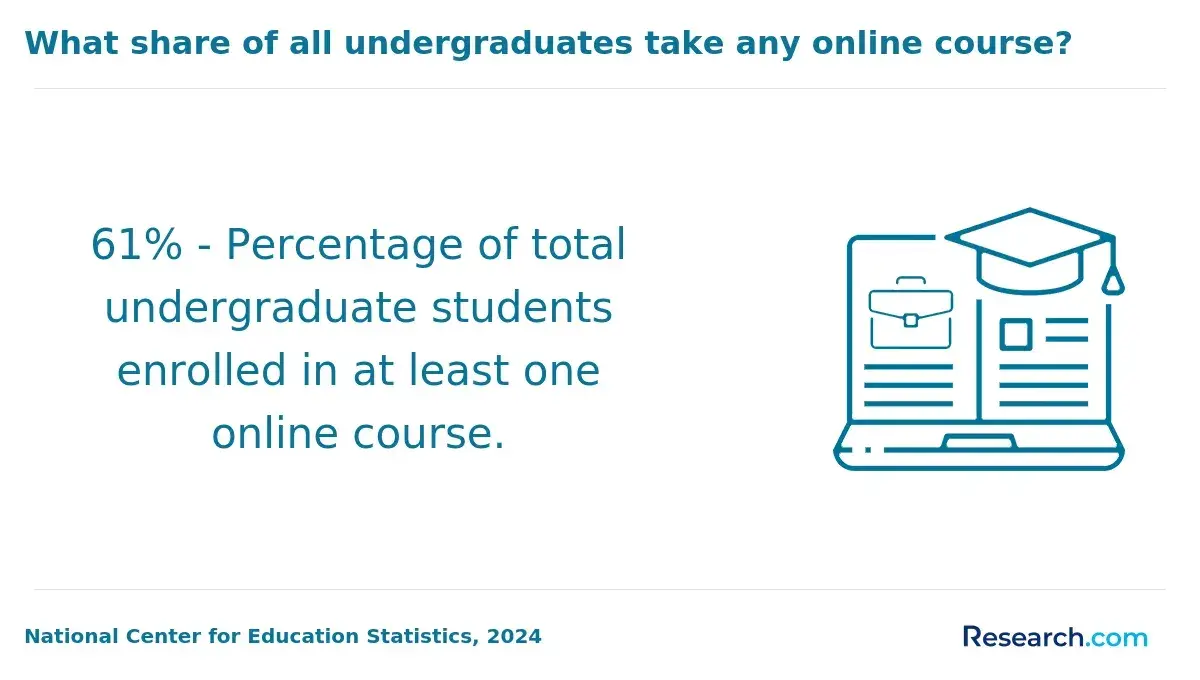
Rigorous online programs require the same level of purposeful study as campus programs, but the work is delivered through learning platforms, recorded lectures, discussion boards, live sessions, collaborative projects, exams, and applied assignments. Students may analyze contracts, develop marketing plans, calculate royalty splits, build event budgets, or critique real-world distribution strategies.
Course rigor depends more on curriculum design, faculty expectations, feedback, and assessment than on whether a program is online. Look for instructors with relevant academic credentials and current or recent industry experience. Also review whether students produce practical work that can become part of a professional portfolio.
| Curriculum feature | Why it matters | What to check |
| Business foundation | Supports budgeting, management, accounting, and entrepreneurship | Required courses in finance, marketing, management, and communications |
| Music law and rights | Rights knowledge is central to publishing and recorded-music work | Copyright, licensing, contracts, royalties, and intellectual property coverage |
| Digital distribution and analytics | Music promotion increasingly depends on platform and audience data | Streaming economics, audience analysis, digital campaigns, and data literacy |
| Experiential learning | Creates evidence of applied skill | Internship, practicum, capstone, client project, or simulated label/event work |
| Faculty interaction | Improves feedback and networking opportunities | Office hours, response expectations, mentoring, and live class access |
The table highlights a useful distinction: a program can be academically demanding yet poorly aligned with your goals. Students seeking artist-management or label roles should favor courses in contracts, promotion, rights, and project execution; students targeting leadership may want more strategy, finance, and organizational management.
Do not assume accelerated terms are easier. They cover similar content in less time and can be demanding for students working full time. A traditional pace is often the safer choice when you need time for internships, performances, family obligations, or careful portfolio development.
How Much Does an Online Music Business Degree Cost at a Nonprofit University?
Total price matters more than advertised tuition per credit. Costs can include tuition, mandatory fees, technology charges, books, software, recording equipment, travel for optional or required residencies, and reduced earnings if you cut work hours. Public nonprofit universities may offer lower in-state tuition, while private nonprofit universities often charge one online rate regardless of residence and may provide institutional scholarships.
For broad context, College Board reported average published tuition and fees of $11,610 for in-state students at public four-year institutions and $43,350 at private nonprofit four-year institutions for 2024-25. These averages are not music-business program prices and do not account for grants, transfer credits, or online-specific rates, so use them only as a starting point for comparison.
| Cost item | How to compare it | Why it changes value |
| Per-credit tuition | Multiply by required credits after confirmed transfer credit | A low rate can still produce a high total if few credits transfer |
| Mandatory fees | Ask whether they apply each term, course, or year | Fees can materially change the final budget |
| Transfer credit | Request a preliminary evaluation in writing | More accepted credits can shorten completion time and reduce cost |
| Course materials | Identify required software, subscriptions, and equipment | Music and media courses can have specialized technology costs |
| Experiential requirements | Confirm internship, residency, and travel expectations | Required participation may create transportation or lost-wage expenses |
A low-cost program is not automatically the best return on investment if it lacks relevant coursework, support, or opportunities to build experience. Conversely, a higher-cost program should show a clear advantage through curriculum, mentoring, alumni access, experiential learning, or a schedule that lets you keep working.
Students who already hold a bachelor's degree and are comparing advanced credentials can use affordable online master's programs as a broader cost benchmark before committing to a specialized music-business master's degree.
What Financial Aid Is Available for an Online Music Business Degree at a Nonprofit University?
Eligible students at accredited nonprofit universities may use federal financial aid, including grants, Direct Loans, and work-study opportunities where available. Eligibility depends on factors such as enrollment status, satisfactory academic progress, citizenship or eligible noncitizen status, and completion of the Free Application for Federal Student Aid.
Financial aid can reduce net cost, but loans must be repaid with interest. Build a funding plan around grants and scholarships first, then evaluate federal loans, employer tuition assistance, payment plans, and private loans only after understanding repayment terms.
Ask the financial-aid office for a personalized estimate that separates gift aid from borrowing. The following questions make the offer easier to evaluate.
- Which scholarships are available specifically to online, transfer, adult, or music students?
- Is institutional aid renewable, and what GPA or enrollment level is required to keep it?
- Will part-time enrollment change grant eligibility or expected completion time?
- Are summer terms covered by the same aid package?
- What is the estimated amount of federal borrowing needed for the full degree after transfer credit?
Do not compare aid offers by the headline award alone. Compare net price, renewal conditions, expected borrowing, and the number of terms required to graduate. An award that looks large may include loans or may apply only to the first year.
How Flexible Are Online Music Business Degree Programs at Nonprofit Universities?
Online delivery can make a music business degree more accessible, but "online" does not always mean fully self-paced. Programs may be asynchronous, synchronous, or hybrid. Asynchronous courses let students complete work within weekly deadlines; synchronous courses require attendance at scheduled live sessions; hybrid programs can include short residencies, networking events, or internships.
Working adults often benefit from asynchronous courses and multiple start dates. Students who need accountability, immediate feedback, and peer collaboration may prefer scheduled live classes. Neither format is inherently better; the right option matches your work schedule, time zone, learning preferences, and ability to manage deadlines independently.
| Format | Schedule pattern | Best for | Confirm before enrolling |
| Asynchronous online | Weekly deadlines with no regular live class | Students with variable work or caregiving schedules | Group-project demands, exam windows, and instructor response times |
| Synchronous online | Live classes at set times | Students who value real-time interaction and structure | Time-zone requirements and attendance rules |
| Hybrid or low-residency | Mostly online with periodic in-person work | Students seeking networking or hands-on experiences | Travel cost, location, frequency, and whether attendance is mandatory |
| Accelerated online | Shorter terms and more concentrated work | Organized students ready for intensive pacing | Weekly workload and whether courses can be taken one at a time |
Students considering a faster undergraduate path outside the music field can compare the workload model of an accelerated bachelor's degree in psychology. The important lesson is that acceleration changes pacing, not the need for sustained reading, assignments, and assessment.
Before selecting a program, request a sample course schedule and ask whether internships can be completed where you live. A program with excellent flexibility on paper may still be difficult if it requires daytime group meetings or a placement that conflicts with employment.
What Student Support Services Do Nonprofit Universities Provide for Online Music Business Degree Students?
Online students should expect more than a login and recorded lectures. Strong nonprofit universities typically provide academic advising, financial-aid counseling, library access, tutoring, disability accommodations, technical support, and career services. The depth of those services varies by institution and sometimes by online division.
Music business students benefit especially from career support that goes beyond general résumé review. Useful services include internship guidance, portfolio feedback, virtual employer events, alumni networking, interview practice, and help translating creative projects into business-focused accomplishments.
Evaluate support by asking for specifics rather than accepting general statements. The services below have the greatest practical impact on online students.
- Dedicated advisor access and a clear process for course planning, transfer evaluation, and graduation checks
- Career staff familiar with entertainment, marketing, events, publishing, or entrepreneurial career paths
- Online library databases and research support for copyright, contracts, marketing, and industry analysis
- Technology help available during the hours when online students are most likely to study
- Internship support that accommodates students who live outside the university's local market
A red flag is a school that cannot explain how online learners access support or whether career services are available after graduation. Support is particularly important in music business because professional relationships and demonstrable work can matter as much as coursework.
Do Online Music Business Degree Programs at Nonprofit Universities Prepare Graduates for In-Demand Careers?
An online music business degree can prepare graduates for roles in artist management, music publishing, licensing, digital marketing, live-event promotion, venue operations, label administration, music merchandising, audience development, and independent music entrepreneurship. It is not a guaranteed route to a particular job or income because hiring in music and entertainment is competitive and many roles depend on location, network, portfolio, and practical experience.
The U.S. Bureau of Labor Statistics reported a $83,480 median annual wage for producers and directors in May 2024. This occupation is only one reference point, not a standard salary for music business graduates: producers and directors may work in film, television, digital media, advertising, or other sectors, and many music-business jobs have different titles and pay structures.
| Career direction | Relevant degree skills | Experience that strengthens preparation |
| Artist management | Negotiation, promotion, budgeting, contracts, relationship management | Managing releases, booking local events, assisting an artist or manager |
| Music publishing and licensing | Copyright, royalty administration, catalog management, research | Rights research, metadata projects, publishing internships |
| Digital music marketing | Audience analysis, campaign planning, content strategy, branding | Running release campaigns and documenting results in a portfolio |
| Live events and venues | Event operations, sponsorship, budgeting, promotion, logistics | Volunteer or paid work with venues, festivals, promoters, or campus events |
| Independent entrepreneurship | Business planning, revenue strategy, accounting, distribution | Operating a small label, service business, event series, or artist project |
The most employable graduates usually pair the degree with evidence of work. Prioritize programs that help students complete internships, client projects, release plans, event plans, or rights-management assignments. AI tools are also changing content workflows and audience analysis, so students should seek curriculum that addresses ethical technology use, data literacy, intellectual property, and human relationship skills rather than treating automation as a substitute for industry judgment.
Students interested in the built environments where performances and cultural events occur may also explore an architect degree online, although architecture has a separate, more regulated professional education and licensure path.
Can an Online Music Business Degree From a Nonprofit University Prepare Students for Graduate School?
Yes, an accredited online bachelor's degree can prepare students for graduate school when it includes a recognized undergraduate credential, a solid academic record, relevant prerequisites, and faculty who can provide informed recommendations. Graduate admissions policies vary, so students should check requirements early rather than assume every music business master's program accepts every business or music-related major.
A bachelor's degree is generally the appropriate next step for students without a four-year degree. A master's degree makes more sense for professionals seeking advanced leadership, industry specialization, research preparation, or a structured career pivot. Doctoral study is usually best for students pursuing research, higher education teaching, or advanced scholarship rather than standard industry entry roles.
Students who may apply to graduate school should select electives strategically. Courses in research methods, accounting, economics, marketing analytics, intellectual property, leadership, and writing can strengthen preparation for music business, arts administration, entertainment management, MBA, communications, or related graduate programs.
Before enrolling, contact several prospective graduate programs and confirm minimum GPA expectations, prerequisite coursework, whether online undergraduate credits are accepted, standardized-test policies if applicable, and required writing samples or portfolios. Keep syllabi and major project documentation; they can help explain your academic preparation later.
How Should Students Compare the Best Online Music Business Degree Programs at Nonprofit Universities?
The best online music business degree is the one that meets your career objective at a manageable net cost and offers a format you can actually complete. Build a shortlist of accredited nonprofit universities, then compare the exact degree rather than relying on institutional reputation, nonprofit status, or a general ranking.
Begin with a written priority list. A future publishing professional may prioritize copyright and royalty coursework; an aspiring promoter may prioritize event operations and internships; a working adult may put asynchronous scheduling and transfer acceptance first.
| Comparison criterion | Strong evidence | Red flag |
| Accreditation | Current institutional accreditation verified through an official database | Vague claims without an identified accreditor |
| Curriculum | Published course sequence covering business, rights, marketing, and applied work | Few music-industry courses or no detailed catalog |
| Total cost | Written estimate including tuition, fees, materials, and transfer credit | Only a per-credit price with no completion estimate |
| Flexibility | Clear information on live meetings, deadlines, residencies, and internships | "Flexible" marketing with no schedule details |
| Career preparation | Internship support, portfolio projects, alumni access, and industry-relevant advising | Generic career claims without examples of support |
| Transfer policy | Preliminary evaluation and transparent maximum-credit rules | Unwillingness to estimate accepted transfer coursework |
Once you narrow the choices, take these steps before submitting a deposit.
- Confirm institutional accreditation and that the exact degree is available fully online in your state.
- Request the complete curriculum, course descriptions, academic calendar, and sample weekly workload.
- Ask for a written transfer-credit evaluation and a personalized estimate of credits remaining.
- Compare net cost after grants and scholarships, then estimate likely borrowing for the full degree.
- Ask whether internships, projects, or residencies are required and how online students secure them.
- Speak with an advisor or faculty member about your intended role and the courses that support it.
- Choose the program that offers the clearest fit across academics, affordability, schedule, and career preparation.
Students should avoid choosing solely on tuition, a celebrity association, or the word "nonprofit." The practical test is whether the degree delivers credible education, usable skills, manageable debt, and a realistic pathway toward the work you want to pursue.
Other Things You Should Know About Music Business
No. Music business programs are designed for people interested in the commercial, operational, legal, marketing, and management sides of music. Musical performance experience can be helpful in some roles, but it is not usually required for admissions or success in business-focused positions.
Employers typically focus on the institution's legitimacy, your skills, experience, portfolio, and professional communication. An accredited degree from a nonprofit university can be credible, but internships, project work, and networking are especially important in entertainment-related hiring.
Useful skills can include spreadsheet software, presentation tools, customer relationship management platforms, social media analytics, digital advertising tools, project-management systems, and basic content-production platforms. Requirements vary by role, so review job postings in your preferred career area.
Many online programs are designed for working adults, especially those with asynchronous coursework. Before enrolling, verify weekly workload, live-session requirements, group projects, internship expectations, and whether part-time enrollment is available.
References
- A Guide to Music Business Careers https://www.belmont.edu/stories/articles/2026/guide-to-music-business-careers.html
- How to Choose the Best Music Business Program https://blog.trevecca.edu/thehill/how-to-choose-the-best-music-business-program
- 7 Best Music Business Degree Programs https://www.careersinmusic.com/music-business-degree/
- BA, Music Business https://www.catawba.edu/musicbusiness/
- Top 25 Colleges with the Best Financial Aid Packages in 2025 https://www.edvisorly.com/student-guides/colleges-with-the-best-financial-aid
- Music Business Bachelor's https://www.fullsail.edu/degrees/music-business-bachelor-degree-program
- 19 great internships for students https://www.citizensbank.com/student/articles/best-internships-for-college-students.aspx
- Internships Program | INROADS https://inroads.org/internships-program/
- R&D WORKFORCE TRAINING: FEDERAL AGENCIES' STEM INTERNSHIPS, SCHOLARSHIPS, AND TRAINING OPPORTUNITIES https://www.nitrd.gov/stem4all/
- Supporting Win-Win Internship Opportunities in Southern Virginia https://www.ialr.org/supporting-internships/