2027 Online Computer Science Bachelor's Degree Programs With Open Enrollment

Co-Founder and Chief Data Scientist
Choosing an online computer science bachelor's degree with open enrollment is often a timing decision as much as an academic one. You may be ready to start now, but traditional admissions can require fixed deadlines, prerequisite reviews, test scores, or long waits before the next term begins. Open enrollment programs are designed to reduce those barriers for students who need a more flexible path into a computing degree.
These programs can be especially useful for working adults, career changers, military learners, parents, and students returning to college after time away. Over 40% of online higher education programs now offer open enrollment, reflecting a broader shift toward access, flexibility, and faster entry points for nontraditional students.
This guide explains who qualifies, how open enrollment differs from rolling admission, what documents you may need, what types of computer science programs are commonly available, how costs work, and what trade-offs to consider before enrolling.
Key Benefits of Online Computer Science Bachelor's Degree Programs With Open Enrollment
- Flexible start dates allow students to begin their studies at multiple points throughout the year, accommodating diverse schedules and promoting timely degree completion.
- Accessible admissions pathways reduce barriers with no strict GPA or standardized test requirements, making education attainable for nontraditional and returning students.
- Online formats provide convenience for working students by enabling asynchronous learning, which supports balancing employment, family, and academic commitments effectively.
Who Qualifies for an Online Computer Science Bachelor's Degree With Open Enrollment?
Most online computer science bachelor's degree programs with open enrollment are built for students who meet baseline eligibility requirements rather than competitive admission standards. In practical terms, this usually means applicants need proof of high school completion or an equivalent credential, along with the ability to complete online coursework. Nearly 38% of undergraduate students enroll part-time, which helps explain why flexible admission pathways are important for learners balancing school with work, family, or military obligations.
Common groups that may qualify include:
- Recent high school graduates: Students who want to begin college without navigating highly selective admissions may use open enrollment as a direct entry point into a computing major.
- Working adults: Professionals seeking a career change or promotion can often enroll without leaving their jobs, especially when programs offer asynchronous classes or part-time pacing.
- Nontraditional students: Learners returning after a long break from school may benefit from policies that focus on current readiness rather than a traditional academic profile.
- Students with prior college credits: Applicants who started college but did not finish can often submit transcripts for transfer review and continue toward a bachelor's degree.
- Military personnel and veterans: Active-duty service members and veterans may find open enrollment helpful because it can better accommodate deployments, relocations, and changing schedules.
Open enrollment does not mean every applicant is automatically ready for a computer science curriculum. Students should still consider their comfort with math, logic, online learning tools, and sustained independent study. If cost is a major concern, comparing online colleges that offer financial aid can help identify programs that combine access with realistic affordability.
What Is the Difference Between Open Enrollment and Rolling Admission in an Online Computer Science Bachelor's Degree?
Open enrollment and rolling admission both offer more flexibility than a single annual application deadline, but they are not the same. More than 60% of online degrees use flexible admission options, so understanding the distinction can help you choose the right path and avoid assuming that “flexible” means “guaranteed.”
Open Enrollment
Open enrollment generally means the school accepts applicants who satisfy basic eligibility requirements. The review process is usually less competitive and focuses on whether you have the required educational background and documentation.
- Access: Admission is typically broad for applicants who meet minimum requirements.
- Timing: Applications may be accepted throughout much of the year, depending on the school calendar.
- Review process: Schools usually verify eligibility, transcripts, identity, and readiness rather than ranking applicants against one another.
- Best fit: Students who want a faster, less selective path into a degree program and are prepared to manage online coursework independently.
Rolling Admission
Rolling admission means a school reviews applications as they arrive instead of waiting for one fixed deadline. However, applicants may still be evaluated competitively, and space may close once a program or start term reaches capacity.
- Access: Admission is not necessarily guaranteed, even if the application window remains open.
- Timing: Students can apply during an extended period, but earlier applications may have an advantage.
- Review process: Schools may still consider grades, prior coursework, essays, recommendations, or program capacity.
- Best fit: Students with stronger academic records who want flexibility but are comfortable with a selective review.
For a computer science bachelor's degree, the difference matters because course sequencing, transfer credit, and start dates can affect how quickly you progress. Students comparing future graduate options may also want to review affordable masters degrees to understand how flexible admissions models appear at higher degree levels.
What Are the Admission Requirements for an Online Computer Science Bachelor's Degree With Open Enrollment?
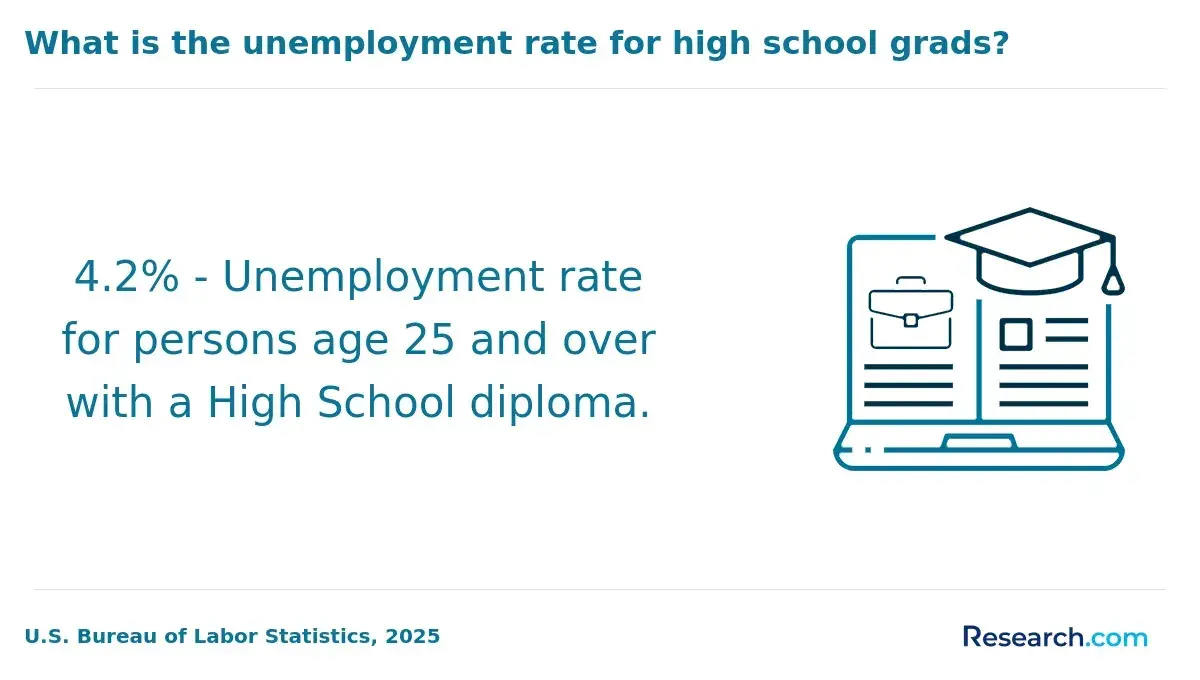
Open enrollment programs usually have fewer competitive barriers, but they still require formal admission steps. About 40% of online degree programs in the U.S. have adopted nonselective admission policies, yet schools must still confirm that students are eligible, properly documented, and able to participate in an online learning environment.
Typical requirements include:
- Proof of prior education: Applicants are commonly asked to submit a high school diploma, GED certificate, or equivalent documentation. Students with prior college work should be ready to provide official transcripts.
- Completed application: The application usually asks for personal information, academic history, intended program, and preferred start term.
- Identity verification: Online programs often require identity checks to satisfy institutional and federal compliance expectations.
- Technology readiness: Some schools use orientations, self-assessments, or advising sessions to confirm that students understand online learning platforms and basic technical expectations.
- Transfer credit review: Applicants with previous college credits, military training, certifications, or relevant professional experience may be asked for documentation so the school can determine what may apply toward the degree.
The most common mistake is assuming that open enrollment eliminates paperwork. It does not. Missing transcripts, incomplete forms, or delayed identity verification can postpone your start date even when the program is nonselective.
A current student described the process as straightforward but still structured. He said the orientation helped him understand what online learning would require, especially because he had not taken remote classes before. His experience highlights a key point: open enrollment can make access easier, but students still need to be organized before classes begin.
Which Online Computer Science Bachelor's Degree Programs Have Open Enrollment?
Open enrollment is more common in online programs that are designed for broad access and adult learners. More than 70% of U.S. schools now offer some form of online program with open enrollment policies, and computer science-related majors often appear in that mix because demand for technical skills remains strong across industries.
Common open enrollment pathways include:
- Software development: This track emphasizes programming, application design, debugging, databases, and software project work. It may fit students who want roles involving coding, web development, or application maintenance.
- Data science and analytics: Students focus on data management, statistical thinking, programming, and tools used to interpret large datasets. This option is often a good match for learners who enjoy patterns, problem-solving, and evidence-based decision-making.
- Cybersecurity: Cybersecurity programs cover networks, risk management, secure systems, ethical hacking concepts, and incident response. Students should expect technical coursework and a strong emphasis on responsible handling of information systems.
- Information systems management: This option blends computing with business operations. It may suit students who want to manage technology projects, support enterprise systems, or move toward IT leadership.
When comparing programs, look beyond the open enrollment label. Review accreditation, curriculum depth, faculty support, transfer credit policies, career services, and whether the program teaches current programming and systems concepts. Students who are prioritizing price should also compare affordable online computer science degrees before committing to a school.
Students interested in adjacent creative technology fields can also explore options such as a game design degree online, especially if their goals involve interactive media, graphics, or game development rather than a traditional computer science curriculum.
How Do I Apply to an Online Computer Science Bachelor's Degree With Open Enrollment?
Applying to an open enrollment online computer science bachelor's degree is usually simpler than applying to a selective program, but it still requires accuracy and follow-through. Treat the process like a checklist: the faster you submit complete documents, the sooner the school can confirm your eligibility and help you register.
- Create an application account: Start through the university's online application portal. Use an email address you check regularly because schools often send document requests, advising instructions, and enrollment updates there.
- Complete the application form: Enter your personal details, educational history, intended major, and preferred enrollment status. Confirm that you selected the correct online computer science bachelor's program before submitting.
- Upload or request documents: Submit high school transcripts, GED documentation, previous college transcripts, identification, or residency materials if required. Official transcripts may need to be sent directly by prior schools.
- Review tuition and start options: Before confirming enrollment, check tuition, fees, course load, transfer credit estimates, and whether you plan to study full-time or part-time.
- Complete orientation and advising: After admission, you may need to complete an online orientation, meet with an advisor, choose courses, and learn how to use the learning management system.
A graduate of an open enrollment online computer science program said the process was less stressful than expected, but organization mattered. She noted that missing one document could delay her start, even in a flexible program. Her advice is practical: keep copies of every submission, monitor your portal, and respond quickly to school requests.
Can I Start an Online Computer Science Bachelor's Degree at Any Time?
Sometimes, but not always. Many open enrollment online computer science bachelor's programs offer several start dates each year, and around 60% of these programs provide several start dates annually. However, “open enrollment” does not automatically mean you can begin a course the same day you apply.
Your actual start date depends on the program model:
- Continuous enrollment: Some programs allow students to begin soon after admission, especially if courses are self-paced or competency-based.
- Multiple start dates: Many schools use monthly, quarterly, tri-semester, or accelerated term calendars rather than one traditional fall start.
- Self-paced formats: These programs may let students move through material at their own speed, although assessments, advising, and financial aid rules can still create structure.
- Administrative processing: Even flexible programs need time to review documents, verify identity, evaluate transfer credits, and register students for courses.
- Course sequencing: Some required computer science courses depend on prerequisites. Starting at the wrong point in the sequence may affect how quickly you complete the degree.
Before applying, ask the admissions office for the next available start date, the deadline for submitting transcripts, and whether all first-term courses will be available when you begin. This prevents a common frustration: being admitted quickly but waiting for the right course to open.
Is It Easier to Get Into an Online Computer Science Bachelor's Degree With Open Enrollment?
Yes, it is usually easier to gain admission to an online computer science bachelor's degree with open enrollment than to a selective program. Applicants are typically not competing against one another based on GPA, test scores, essays, or limited cohort seats. Data from the National Center for Education Statistics shows that about 37% of institutions offering online programs have nonselective admissions policies, reflecting a broader effort to widen access.
However, easier admission should not be confused with easier coursework. Computer science degrees can be demanding because they often include programming, discrete logic, algorithms, systems concepts, databases, and technical problem-solving. Students who enter through open enrollment may need extra preparation in math, coding fundamentals, or academic writing.
Before enrolling, evaluate your readiness honestly. Ask whether the program offers tutoring, programming labs, faculty access, academic advising, and early-alert support for struggling students. A strong support system can matter as much as an easy application process.
How Much Does an Online Computer Science Bachelor's Degree With Open Enrollment Cost?
The cost of an online computer science bachelor's degree with open enrollment varies by institution, tuition model, residency policy, fees, transfer credits, and course load. Average tuition rates in the U.S. for online bachelor's degrees typically range from $300 to $600 per credit hour, though some programs may fall outside this range.
Key cost categories include:
- Tuition per credit: Many schools charge by the credit hour. Public institutions may be less expensive than private schools, but online tuition policies vary widely.
- Technology fees: Online learning platforms, help desk access, software systems, and digital services may be covered through required technology fees. These fees can range from a few hundred to over a thousand dollars across the duration of the program.
- Course materials: Students may need textbooks, e-books, software licenses, coding environments, cloud tools, or lab platforms.
- Administrative fees: Application, registration, transcript evaluation, graduation, or term-based fees can add to the total cost.
- Lab and proctoring fees: Some technical courses may require virtual labs or online exam proctoring, especially in programming, systems, or cybersecurity subjects.
To estimate your real cost, ask for a full program cost breakdown rather than only the tuition rate. Also ask how many credits may transfer, whether tuition differs by residency, and whether part-time enrollment affects fees or financial aid eligibility.
Students comparing flexible online education models in other fields may also encounter options such as an mba online no gmat, but computer science students should focus first on technical curriculum quality, accreditation, and total degree cost.
Are There Disadvantages to Open Enrollment Online Computer Science Bachelor's Degrees?
Yes. Open enrollment can make college more accessible, but it also creates trade-offs students should understand before committing. Nearly 40% of students in fully online programs do not complete their degrees, which makes fit, support, and self-management especially important.
- Wide range of academic preparation: Because open enrollment programs admit students from varied backgrounds, classmates may enter with different levels of math, writing, and technology readiness.
- Higher responsibility for self-direction: Flexible online formats require students to plan their weeks, keep up with assignments, troubleshoot technology issues, and ask for help early.
- Less built-in peer interaction: Some programs have limited live class meetings or cohort structures, which can make networking and collaboration harder.
- Potentially uneven support services: Not every online program offers the same level of tutoring, career advising, faculty access, or technical help.
- Course sequencing challenges: If programming or math courses are not offered every term, a delayed or failed prerequisite can slow progress toward graduation.
- Risk of choosing access over quality: Students may focus on easy admission and overlook accreditation, curriculum rigor, graduation support, or employer recognition.
The best way to reduce these risks is to ask specific questions before enrolling: Who teaches the courses? How quickly do instructors respond? What tutoring is available for programming? What happens if you fall behind? What career support is available for online students?
Students who need convenience and lower costs can also review cheap online degrees fast, but speed should not come at the expense of program quality or long-term career value.
How Do I Manage Time in an Open Enrollment Online Computer Science Bachelor's Degree?
Time management is one of the most important success factors in an open enrollment online computer science program. A 2023 study from the Online Learning Consortium found that students adhering to consistent study routines were 30% more likely to finish their courses on time. That matters because programming assignments, debugging, labs, and projects often take longer than students expect.
Use these strategies to stay on track:
- Build a weekly study schedule: Reserve regular blocks for lectures, reading, coding practice, assignments, and review. Treat these blocks like work shifts rather than optional study time.
- Start technical assignments early: Coding errors, software setup issues, and unclear requirements can consume time. Starting early gives you room to troubleshoot and ask questions.
- Prioritize prerequisite-heavy courses: Programming, math, and systems courses often build on one another. Falling behind in these areas can affect later classes.
- Use a task tracker: Keep a visible list of due dates, exams, discussion posts, labs, and project milestones. Review it at the start and end of each week.
- Limit distractions during coding work: Turn off nonessential notifications and work in a focused environment. Deep concentration is especially important when debugging or learning new concepts.
- Ask for help before you are stuck for too long: Contact instructors, tutors, or classmates when you hit a blocker. Waiting until the deadline can turn a small issue into a missed assignment.
Open enrollment gives you flexibility, but flexibility only helps if you create structure. The strongest students usually combine independence with consistent routines and early communication.
What Graduates Say About Online Computer Science Bachelor's Degree Programs With Open Enrollment
- Tucker: "Choosing an online computer science bachelor's degree with open enrollment was a game-changer for me because it allowed immediate access without the stress of traditional admission cycles. Balancing work and study was tough, especially managing deadlines independently, but the flexibility made it possible. Since graduating, I've secured a role in software development faster than I anticipated, which I credit to the practical, up-to-date curriculum."
- Robin: "Reflecting on my journey, the open enrollment aspect of the online computer science program meant I could start exactly when I was ready, which reduced a lot of initial anxiety. The challenge came in maintaining motivation without the physical classroom environment; however, the supportive online community helped bridge that gap. Professionally, the degree has expanded my career opportunities and given me confidence to pursue advanced projects in data analysis."
- Zeke: "My main reason for selecting an open enrollment online computer science bachelor's was the ability to progress at my own pace without waiting for semester start dates. One of the biggest hurdles was staying disciplined with coursework amidst personal obligations, but the structure of the program encouraged strong time management skills. Earning this degree has been instrumental in advancing my career into IT management, where I now lead a diverse team effectively."
Other Things You Should Know About Computer Science Degrees
In 2027, online computer science programs with open enrollment often incorporate virtual labs, coding projects, and partnerships with tech companies for internships. These provide students practical skills and firsthand experience in the tech industry, supporting both academic growth and career readiness.
Yes, many online computer science bachelor's degree programs with open enrollment accept transfer credits from regionally accredited institutions. The number of transferable credits varies by school but can significantly reduce the time and cost required to complete the degree. Students should verify transfer policies with each program prior to applying.
Students enrolled in open enrollment online computer science programs often have access to academic advising, tutoring, technical support, and career services. These resources help students stay on track and navigate challenges related to coursework and job placement. Availability of services varies by institution but is crucial to student success in fully online formats.
References
- Computer Science Degree Specializations & Concentrations https://www.hakia.com/degrees/computer-science/specializations/
- How to get your computer science degree online https://www.infoworld.com/article/2337944/how-to-get-your-computer-science-degree-online.html
- Is Rolling Admissions the Right Choice for You? https://www.tun.com/blog/is-rolling-admissions-the-right-choice-for-you/
- Computer science - WSEI University https://www.wsei.pl/en/admission/engineer-degree/computer-science-bachelor-degree/
- Bachelor studies - Politechnika Wrocławska - Rekrutacja https://rekrutacja.pwr.edu.pl/en/for-foreigners/fee-paying-basis-of-studies-and-scholarship-holders/admission/bachelor-studies/
- 5 Reasons Why You Should Earn Your Bachelor’s Degree Online https://www.pointloma.edu/resources/accelerated-undergraduate/5-reasons-why-you-should-earn-your-bachelors-degree-online
- Rolling Admission and Why It Matters - OnToCollege https://www.ontocollege.com/rolling-admission/
- Computer science, Bachelor's degree using distance learning methods and techniques - Polish-Japanese Academy of Information Technology https://pja.edu.pl/en/informatyka/studia-i-stopnia-z-wykorzystaniem-metod-i-technik-ksztalcenia-na-odleglosc/
- Computer Science https://catalog.skagit.edu/preview_entity.php
- Online Computer Science Degree https://boards.straightdope.com/t/online-computer-science-degree/757576