2027 Online Child Psychology Doctorate Programs with Strong Student Support: Advising, Writing Help, and Career Services
Audited and Verified:
Our Editorial and Data Verification Process
Research.com uses government datasets, official education statistics and primary institutional information to support its career and degree guides. Our review process checks factual accuracy, occupational definitions, source dates and the requirements associated with the credentials discussed.
How This Article Was Fact-Checked
Our editorial team verifies salary estimates, employment projections, education requirements and program information against original data providers and official organizations. Salary figures are checked against the relevant occupational definitions and reporting periods. Information about licensure, accreditation and required in-person training is reviewed separately.
Fact-checked and verified on:

Co-Founder and Chief Data Scientist
Choosing an online child psychology doctorate is not just about curriculum or tuition; it is about whether the program can support you through years of research, writing, practicum planning, and career decisions. The U.S. Bureau of Labor Statistics projects psychologist employment to grow 7% from 2023 to 2033, making preparation and specialization increasingly important.
This guide is for prospective doctoral students comparing online options and explains how advising, dissertation help, faculty access, and career services can affect persistence, fit, and long-term value.
Key Things You Should Know
- Strong online child psychology doctorate programs usually combine academic advising, faculty mentoring, doctoral writing support, research and statistics help, technology assistance, accessibility services, and career coaching designed for remote doctoral students.
- The most meaningful differences are not whether services exist, but how they work: dedicated advisor versus general help desk, live appointments versus self-service materials, documented response times versus vague access, and doctoral career coaching versus a basic job board.
- Career planning matters because BLS data projects 7% growth for psychologists from 2023 to 2033, but licensure, supervised experience, accreditation, and specialization in child, adolescent, school, developmental, or clinical psychology vary by state and program type.
What Student Support Services Should Strong Online Child Psychology Doctorate Programs Provide?
A strong online child psychology doctorate program should offer more than recorded lectures and a learning management system. For doctoral students, student support means coordinated academic, research, writing, clinical or fieldwork, technology, wellness, and career services that are available to distance learners, not just campus-based students.
Child psychology doctorate programs may be structured as PhD, PsyD, EdD, school psychology, developmental psychology, counseling psychology, or clinical psychology pathways with a child and adolescent focus. Some are designed for licensure preparation, while others are research, education, consulting, or leadership degrees. Students who are still choosing their graduate pathway may also compare child psychology master's programs before committing to a doctoral track.
The table below summarizes the support areas that matter most when comparing online doctorate programs and explains what "strong" support looks like in practice.
| Support area | What strong online doctoral support looks like | Why it matters for child psychology students |
| Academic advising | A named advisor, degree plan, milestone tracking, and scheduled check-ins | Helps students sequence advanced courses, practicum requirements, residencies, and dissertation milestones |
| Faculty mentoring | Access to faculty with child, adolescent, developmental, school, or clinical research experience | Improves fit between student goals and dissertation, practicum, or research interests |
| Writing and dissertation support | Doctoral writing consultations, proposal feedback, APA style support, and dissertation milestone coaching | Reduces isolation during the longest and most independent phase of the degree |
| Research and statistics help | Methodology advising, statistics tutoring, database access, and librarian consultations | Supports evidence-based research involving children, families, schools, assessment, or intervention outcomes |
| Career services | Doctoral-level coaching, CV review, internship or practicum guidance, interview preparation, and networking | Connects the doctorate to licensure, academic, clinical, school-based, policy, or consulting goals |
| Technology and accessibility | Remote tech support, accommodations, assistive technology, and orientation for online tools | Allows working adults and distance learners to participate consistently |
The common mistake is assuming that a school's general student services automatically meet doctoral needs. Before enrolling, ask whether each service is specifically available to fully online doctoral students, whether appointments are offered outside standard business hours, and whether the program publishes realistic response-time expectations.
How Does Academic Advising Work in Online Child Psychology Doctorate Programs?
Academic advising in an online doctorate should help you plan the entire degree, not just register for the next term. A good advisor helps students understand course sequencing, residency requirements, transfer credit limits, comprehensive exams, dissertation milestones, practicum or internship expectations, and policies that may affect licensure or graduation timing.
The best advising models are proactive. Instead of waiting for students to ask for help after a missed milestone, proactive advising uses planned check-ins, degree audits, and progress alerts to identify problems early. This is especially important for working adults, parents, school professionals, and clinicians who may be balancing doctoral study with full-time responsibilities.
When comparing advising models, look for specific evidence rather than broad promises. The following features are useful because they show whether advising is structured, accessible, and accountable for online doctoral students:
- Dedicated doctoral advisor: You know who to contact for degree planning, policy questions, and milestone tracking instead of being routed through a general call center.
- Documented advising schedule: The program requires check-ins at key points such as enrollment, candidacy, dissertation proposal, comprehensive exams, and practicum planning.
- Clear response-time expectations: The school states how quickly advisors typically respond to email, portal messages, or appointment requests.
- Licensure-aware guidance: Advisors explain that licensing requirements vary by state and help students identify the right board or agency to contact.
- Online access parity: Remote students can use the same advising, registration, academic appeal, and graduation planning services as campus students.
A red flag is a program that separates admissions advising from academic advising but cannot explain what support begins after you enroll. Admissions counselors can answer entry questions, but doctoral students need long-term academic guidance from people who understand the curriculum, dissertation process, and professional standards in psychology.
What Dissertation Mentoring and Committee Support Should Online Child Psychology Doctoral Students Expect?
Dissertation support is one of the biggest differences between a low-touch and high-support online doctorate. In child psychology, dissertation topics may involve child development, trauma, learning, assessment, parenting, school mental health, adolescent behavior, neurodevelopmental concerns, intervention outcomes, or family systems. These topics require careful research design, ethics review, and faculty expertise.
Strong programs make the dissertation process visible from the beginning. Students should know when they choose a chair, how committee members are assigned, what each milestone requires, and how often they can expect feedback. Programs should also explain whether faculty research interests align with child and adolescent psychology rather than simply listing broad psychology faculty credentials.
The table below shows how dissertation support can differ across online doctorate programs. Use it to identify whether a program has a structured mentoring process or expects students to navigate most of the dissertation independently.
| Dissertation feature | Higher-support model | Lower-support model |
| Chair selection | Students receive guidance matching topic interests with faculty expertise | Students are told to find a chair with limited program assistance |
| Committee expectations | Roles, timelines, and feedback responsibilities are explained in writing | Committee process is unclear until late in the program |
| Milestone tracking | Proposal, IRB, data collection, analysis, and defense are tracked through a formal system | Students rely mostly on informal reminders |
| Feedback process | Students know expected turnaround times for chapter review | Feedback timing depends heavily on individual faculty availability |
| Online defense support | Virtual defense procedures, technology checks, and presentation expectations are provided | Students receive minimal guidance on remote defense logistics |
Students should also ask about dissertation continuation fees, leave-of-absence policies, and maximum time-to-degree rules. These policies can matter as much as tuition because dissertation delays can add cost and extend completion time without adding new coursework.
Doctoral writing support should be more advanced than general grammar help. Online child psychology doctoral students need assistance with scholarly argumentation, literature reviews, APA style, synthesis of research, qualitative or quantitative methods sections, IRB documentation, and revision strategies after committee feedback.
Students entering from related fields may also compare pathways such as forensic psychology master's programs before moving into doctoral work, especially if their interests involve child custody, juvenile justice, trauma, or assessment. Whatever the background, the key question is whether the doctorate offers writing support that understands psychology research and dissertation standards.
Look for writing help that is live, recurring, and doctoral-specific. A resource library is useful, but it should not be the only support available when you are drafting a proposal or responding to committee comments.
- One-on-one doctoral writing consultations: Students can meet virtually with a writing specialist who understands scholarly research, not only undergraduate essays.
- Dissertation chapter support: The writing center can help with literature review organization, methods clarity, transitions, and revision plans without writing the dissertation for the student.
- APA and citation assistance: Support includes formatting, source integration, ethical citation practices, and reference management tools.
- Workshops for common dissertation stages: Programs offer sessions on problem statements, research questions, proposal defense preparation, IRB writing, and final defense slides.
- Support for multilingual and returning adult learners: Services are designed for students who may be strong professionals but need to rebuild academic writing confidence.
A common mistake is waiting until the dissertation phase to use writing services. Strong students often use the writing center early in the program to improve literature synthesis, source evaluation, and academic voice before the dissertation begins.
Yes, strong programs provide research support, but the depth varies widely. Child psychology doctoral students often need help locating peer-reviewed studies, choosing appropriate methods, understanding statistics software, designing ethically sound research involving minors or families, and preparing IRB materials.
Research support should come from multiple sources: faculty mentors, research methods instructors, librarians, statistics tutors, and sometimes peer research groups. Because online students may not be near campus, access to digital databases, virtual librarian appointments, and remote statistics support is especially important.
The following resources are worth verifying before enrollment because they can make the difference between independent struggle and structured doctoral progress:
- Psychology database access: Students should have remote access to major scholarly databases, journals, dissertations, and test or measurement resources when available through the institution.
- Embedded librarian support: A librarian can help refine search strategies, identify child development literature, and manage systematic or scoping reviews.
- Statistics tutoring or consultation: Support is available for research design, statistical assumptions, software use, qualitative coding, or mixed-methods planning.
- IRB preparation help: Students receive guidance on consent, assent, privacy, risk, and recruitment issues that are especially sensitive in child-focused research.
- Research software access: The school explains whether students receive licenses, discounts, or training for tools used in analysis, citation management, survey design, or transcription.
Artificial intelligence is also changing doctoral research support. Programs should have clear policies on acceptable AI use for brainstorming, editing, coding assistance, literature mapping, or statistical support. A strong policy teaches ethical use and disclosure rather than simply banning tools or leaving students to guess.
Doctoral career services should be tailored to advanced psychology pathways, not limited to résumé templates and job postings. Depending on the degree type and accreditation status, graduates may pursue clinical training, school psychology roles, teaching, research, program evaluation, consulting, policy, nonprofit leadership, or child and family services administration.
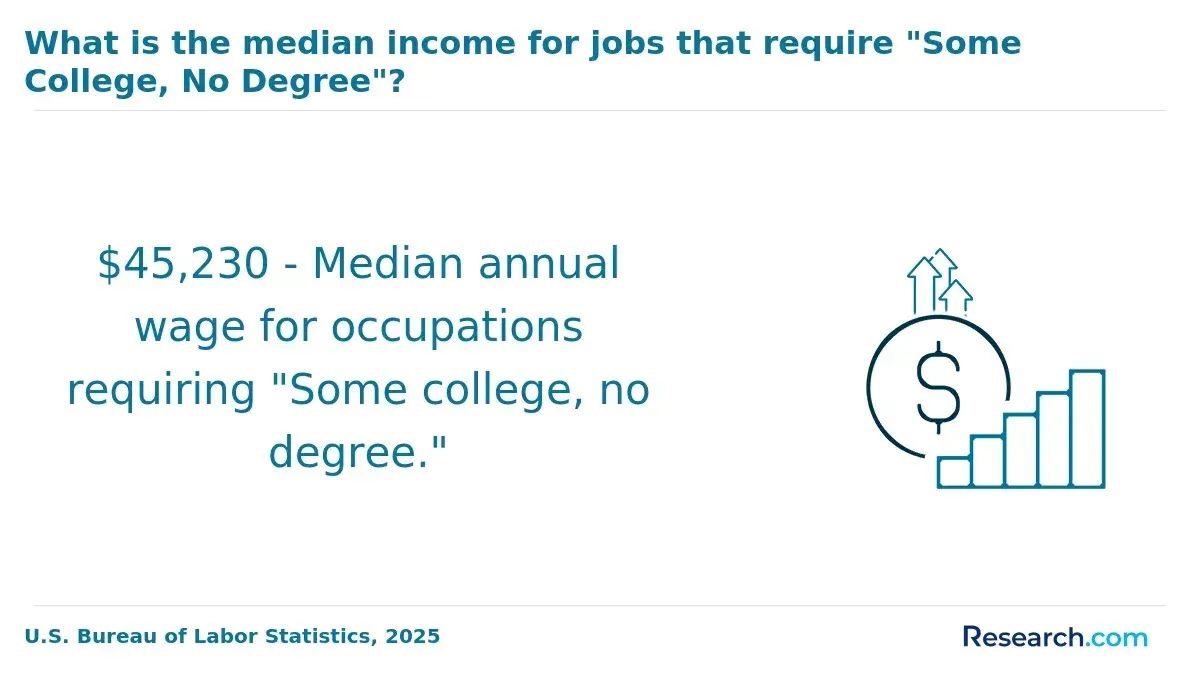
The labor market makes careful career planning important. The U.S. Bureau of Labor Statistics lists the median annual pay for psychologists at $92,740, but pay varies by role, state, employer, license status, and specialization. That figure should be used as context, not as a promise of earnings from any specific program.
Students considering clinical preparation may compare online clinical psychology masters options as part of a longer education plan, but doctoral-level career support should go further by helping students understand licensure, supervised experience, internship competitiveness, research identity, and professional networking.
The table below outlines career support features that are especially valuable for online child psychology doctoral students:
| Career service | What to look for | Why it helps |
| Doctoral career coaching | Advisors understand psychology doctorates, licensure pathways, CVs, and academic or clinical job markets | Helps students translate the degree into realistic next steps |
| Practicum or internship guidance | Program staff explain placement expectations, site approval, documentation, and state-specific considerations | Supports students in programs with supervised fieldwork requirements |
| CV and professional portfolio review | Services address teaching, publications, presentations, supervision, assessment, and intervention experience | Better fits doctoral-level roles than a standard résumé review |
| Licensure planning | The program clarifies that boards set requirements and helps students identify the correct state agency | Reduces the risk of choosing a program that does not match a student's intended jurisdiction |
| Networking and alumni access | Students can connect with faculty, alumni, professional associations, and possible supervisors | Helps online students build professional relationships despite distance |
A red flag is career support that is advertised broadly but cannot answer doctoral-specific questions. Ask whether career coaches have experience with psychology licensure, academic CVs, clinical documentation, school-based credentials, or child and family services employers.
Faculty and staff accessibility is one of the clearest indicators of support quality. Online doctoral students need predictable access to instructors, advisors, dissertation chairs, librarians, technology staff, and career coaches. Access does not require 24/7 faculty availability, but it does require clear expectations and multiple communication channels.
Strong programs publish or clearly explain communication norms. Students should know whether faculty hold virtual office hours, whether appointments are available in different time zones, how quickly messages are usually answered, and what to do if a dissertation chair or advisor becomes unavailable.
When speaking with admissions staff or current students, ask questions that reveal how access works after enrollment. These questions help separate polished marketing from the real student experience:
- Who is my primary contact after I enroll, and does that person remain with me throughout the program?
- How often do online doctoral students meet with faculty advisors or dissertation chairs?
- Are virtual office hours offered during evenings or weekends for working professionals?
- What is the expected response time for faculty, advisors, writing support, and technical support?
- What happens if a faculty mentor leaves, goes on sabbatical, or no longer fits my research topic?
- Can I speak with a current online doctoral student or recent graduate about support quality?
One practical way to test responsiveness is to ask admissions for written documentation, not just verbal assurance. If a program cannot describe how online students reach faculty, resolve problems, or escalate concerns, support may depend too heavily on individual effort.
Online doctoral study can feel isolating if the program does not intentionally create community. Peer and cohort support helps students exchange feedback, discuss research barriers, prepare for milestones, and stay connected during independent dissertation work.
Strong community support is structured rather than accidental. Discussion boards alone rarely create deep doctoral relationships. Better programs use cohort launches, synchronous seminars, research groups, writing groups, peer mentoring, faculty-led colloquia, and online residencies to create meaningful academic connections.
The most useful peer and mentoring features are the ones tied to doctoral progress. Look for community structures that help students produce work, receive feedback, and build professional identity.
- Cohort orientation: New students meet peers, faculty, advisors, and support staff before coursework becomes demanding.
- Research interest groups: Students connect around child development, trauma, school mental health, assessment, parenting, or adolescent intervention topics.
- Doctoral writing groups: Students meet regularly to set goals, discuss obstacles, and maintain dissertation momentum.
- Peer mentoring: Advanced students help newer students understand exams, proposal development, residency expectations, and time management.
- Virtual colloquia or speaker events: Programs expose students to researchers, clinicians, school professionals, and child advocacy leaders.
A common mistake is assuming that flexibility means studying alone. The strongest online doctorate programs balance independence with planned academic interaction, especially during the dissertation and professional identity-building stages.
Technology, accessibility, and wellness support are not side benefits in an online doctorate; they are core infrastructure. If the platform is unreliable, accommodations are hard to arrange, or wellness resources are difficult to access, students may struggle even when the academic program is strong.
At minimum, online doctoral students should receive orientation to the learning platform, library systems, video conferencing tools, digital submission requirements, and academic integrity policies. Programs should also explain whether technical support is available outside regular business hours, especially for students attending evening classes, submitting assignments near deadlines, or joining virtual defenses.
Accessibility and wellness services should be clearly available to online students. The following areas are worth checking before you commit to a program:
- Disability accommodations: Students can request accommodations for coursework, exams, residencies, fieldwork documentation, and online meetings through a defined process.
- Assistive technology support: The school helps students use captions, screen readers, accessible documents, note-taking tools, or alternative formats when approved.
- Remote technical support: Help is available for login problems, learning platform issues, video conferencing, library access, and dissertation defense technology.
- Online student orientation: The program teaches students how to navigate doctoral expectations, academic policies, support services, and communication norms.
- Wellness and counseling resources: Students can access mental health referrals, wellness programming, crisis information, or student assistance resources appropriate for distance learners.
Students should be especially cautious if a program requires short residencies, intensives, or field experiences but does not explain accessibility, travel, lodging, emergency, or accommodation procedures. For working adults and caregivers, these details can determine whether the program is realistically manageable.
How Can You Compare Online Child Psychology Doctorate Programs Based on Student Support Quality?
The best way to compare programs is to evaluate support as a measurable part of program quality, not as a marketing claim. Tuition, accreditation, faculty expertise, licensure alignment, online format, and student services all matter, but support quality determines how well those pieces work together for a distance learner.
Use a structured comparison process before applying. If your interests overlap with law, juvenile behavior, custody evaluation, or correctional settings, resources explaining how much do forensic psychologists make can provide salary context, but doctoral program choice should still start with accreditation, licensure fit, mentoring, and support access.
The table below gives you a practical scoring framework. It is not a ranking system, but it can help you compare programs consistently and identify which schools deserve follow-up questions.
| Comparison factor | Strong evidence | Red flag |
| Accreditation and licensure fit | The program clearly states institutional accreditation, programmatic accreditation when relevant, and licensure limitations by state | Staff imply that the online format automatically meets licensure requirements everywhere |
| Advising | Named advisor, degree plan, milestone tracking, and documented check-ins | Support is described only as "available when needed" |
| Dissertation mentoring | Clear chair selection process, committee expectations, and feedback timelines | Students must find mentors without meaningful guidance |
| Writing support | Doctoral writing consultations, APA help, proposal workshops, and dissertation-stage support | Only generic writing handouts or undergraduate tutoring are available |
| Career services | Doctoral coaching, licensure guidance, CV review, placement support, and networking | Career support is limited to job listings |
| Online access | Services are available virtually, with clear hours and response expectations | Most services are designed around campus availability |
| Total cost clarity | The school explains tuition, fees, residencies, technology costs, dissertation continuation, and financial aid options | Costs beyond tuition are hard to find |
After narrowing your list, take these steps before enrolling. They help you verify whether the support model matches your learning style, schedule, and professional goals.
- Confirm whether the doctorate is licensure-oriented, research-oriented, school-focused, or leadership-focused, and compare that purpose with your career goal.
- Ask for written details about advising, dissertation chair assignment, writing support, faculty office hours, career services, and technology help.
- Request examples of dissertation milestones, residency requirements, practicum expectations, and typical communication timelines.
- Speak with a current online doctoral student or recent graduate about advisor access, writing support, faculty responsiveness, and dissertation progress.
- Compare total cost, including tuition, fees, books, software, travel, residencies, background checks, internship expenses, and dissertation continuation charges.
- Check state licensing board requirements yourself if you plan to become licensed, because schools can provide guidance but licensing boards make final determinations.
Stronger support may justify a higher price if it reduces confusion, improves access to faculty, helps you stay on track, and aligns with your career path. However, support should never be evaluated separately from accreditation, licensure fit, program outcomes, faculty expertise, and total cost.
Other Things You Should Know About Child Psychology
It depends on the program, accreditation, supervised experience, internship requirements, and your state licensing board. Many licensure-oriented psychology doctorates require in-person practica, internships, residencies, or supervised clinical training even when coursework is online. Always verify requirements directly with the licensing board in the state where you plan to practice.
A PhD is often more research-focused, while a PsyD is typically more practice-focused, but actual curricula vary. Choose based on your goal: research and academia, clinical practice, school-based services, assessment, leadership, or program evaluation. Faculty expertise and licensure alignment matter more than the degree label alone.
Many do, especially programs with clinical, school psychology, or professional practice components. Residencies may involve skill assessment, research seminars, clinical training, dissertation work, or professional networking. Ask how often residencies occur, where they are held, what they cost, and whether accommodations are available.
Requirements vary by school. Some programs require a psychology-related master's degree, while others admit students with a bachelor's degree and include master's-level coursework along the way. Common requirements include transcripts, recommendations, a statement of purpose, research interests, writing samples, and relevant academic or professional experience.
- Best Online Counseling Psychology Ph.D. Programs https://www.psychology.org/rankings/best-counseling-psychology-doctorate-programs/
- Graduate Programs in Developmental Psychology https://www.apadivisions.org/division-7/students-careers/graduate-programs
- Advising as a Strategy for Achieving Equitable Student Outcomes | MDRC https://www.mdrc.org/work/publications/advising-strategy-achieving-equitable-student-outcomes
- List of APA-Accredited Counseling Psychology PhD and PsyD Program https://www.div17.org/list-of-apa-accredited-counseling-psychology-phd-and-psyd-programs
- International Journal of Doctoral Studies (IJDS) https://www.informingscience.org/Journals/ijds/Articles
- Writing Resources & Tutors https://www.pacifica.edu/student-services/writing-resources-tutors/
- Affordable Psychology Dissertation Help & Writing Service https://www.researchprospect.com/psychology-dissertation-writing/
- Online and Hybrid PhD & PsyD Programs in Psychology https://www.psychologist-license.com/phd/
- College student satisfaction and academic advising: What do the national data tell us? https://www.ruffalonl.com/college-student-satisfaction-and-academic-advising-what-do-the-national-data-tell-us/
- Dissertation Help for Parents: How to Finish Your Doctorate While Raising Kids https://realprofessors.org/dissertation-help-for-parents/