2027 Online Child Psychology Doctorate Programs with One-on-One Faculty Mentorship

Co-Founder and Chief Data Scientist
Choosing an online child psychology doctorate is really a decision about support: who will guide your research, supervise applied work, and help you finish. The Bureau of Labor Statistics projects psychologist employment to grow 6% from 2024 to 2034, which keeps advanced training relevant for clinical, developmental, school, and research-focused careers.
This guide is for working adults, master's graduates, and career changers comparing online or hybrid doctoral options. You will learn how mentorship models work, how to judge whether they are meaningful, and when individualized faculty access is worth the cost.
Key Things You Should Know
- One-on-one mentorship matters most when your doctorate includes a dissertation, applied research project, practicum planning, or a specialized child and adolescent psychology focus that requires close faculty fit.
- Fully online child psychology doctorates are usually research, developmental, educational, or applied psychology degrees; licensure-focused clinical psychology doctorates often require in-person practica, internship training, and state-specific approval.
- Cost should be weighed against usable support: federal graduate Direct Unsubsidized Loans carried an 8.08% interest rate for 2024-2025, so paying more for mentorship only makes sense if faculty access is frequent, expert, and tied to completion or career goals.
How Does One-on-One Faculty Mentorship Work in Online Child Psychology Doctorate Programs?
One-on-one faculty mentorship in an online child psychology doctorate means a named faculty member works directly with a student beyond routine course instruction. In strong programs, the mentor helps shape the student's research agenda, reviews dissertation or capstone work, provides methodological feedback, and may connect the student with professional opportunities in child development, youth mental health, assessment, education, or family systems.
This is different from academic advising. An advisor usually helps with registration, degree planning, and policy questions, while a faculty mentor should have subject-matter expertise that aligns with the student's doctoral goals. Students entering from child psychology master's programs should pay special attention to whether the doctoral mentor can extend their prior research or applied interests rather than simply approve course selections.
The table below shows the common parts of a mentorship model and why each one affects the student experience.
| Mentorship element | What it should include | Why it matters |
| Faculty assignment | A named mentor, dissertation chair, or research supervisor | Students know who is responsible for individualized guidance |
| Communication cadence | Scheduled video meetings, written feedback, office hours, or research check-ins | Regular contact reduces ambiguity during independent doctoral work |
| Research alignment | Faculty expertise in child development, adolescent behavior, assessment, trauma, learning, family systems, or prevention | Better alignment usually leads to more useful feedback and a stronger project scope |
| Dissertation or capstone support | Topic refinement, literature review guidance, methodology review, and milestone tracking | The mentor helps convert broad interests into an approved, finishable project |
| Career guidance | Publication advice, conference planning, applied project framing, or professional networking | Mentorship becomes more valuable when it supports post-degree goals, not just coursework |
Before enrolling, ask the school to explain the difference between faculty mentorship, dissertation chair support, student success coaching, and technical support. A common mistake is assuming that "personalized support" means frequent one-on-one meetings with a doctoral faculty member; in some programs, it may only mean access to a general advisor.
Which Online Child Psychology Doctorate Programs Offer the Strongest Faculty Mentorship?
The strongest online child psychology doctorate option is not necessarily the program with the most polished mentorship language. It is the program where students can verify faculty availability, topic fit, response expectations, dissertation support, and continuity from admission through completion.
The examples below represent types of online or largely online doctoral programs that students commonly compare when looking for child, adolescent, developmental, educational, or applied psychology mentorship. Program details can change, so applicants should confirm current format, accreditation, faculty assignments, and dissertation requirements directly with each institution.
| Program type or example | Typical child psychology relevance | Mentorship strength to verify | Best fit |
| National University online PhD in Psychology with child and adolescent development focus | Developmental and applied child/adolescent topics | Whether the one-to-one model includes doctoral research mentoring, not only course support | Students who want individualized online doctoral study with a child development research direction |
| Walden University PhD in Developmental Psychology with child and adolescent specialization options | Child development, lifespan development, family, education, and community topics | Faculty match, dissertation chair availability, and residency or intensive requirements | Working adults seeking a structured online doctoral path with specialization coursework |
| Capella University online PhD or PsyD psychology pathways with developmental or educationally relevant options | Child and adolescent learning, development, behavior, or applied psychology depending on specialization | Frequency of faculty feedback, dissertation committee structure, and milestone pacing | Students who value competency-based or flexible online doctoral formats |
| Liberty University online PhD in Psychology with developmental psychology emphasis | Human development, family, learning, and lifespan behavior | Mentor expertise in child-specific topics and expectations for dissertation interaction | Students seeking a faith-informed university environment and online flexibility |
| Hybrid clinical psychology doctorates with child-focused faculty | Clinical assessment, intervention, practicum, internship, and possible licensure preparation | APA accreditation status, in-person training expectations, clinical supervision, and child practicum access | Students whose goal is licensed clinical practice with children or adolescents |
A useful shortcut is to look for three forms of proof: published faculty bios that match your interests, a clear dissertation or applied-project sequence, and direct confirmation that students meet individually with faculty at defined points. If a program cannot explain who mentors doctoral students, how often meetings occur, or how mentor changes are handled, treat that as a red flag.
How Does Faculty Mentorship Support Dissertation or Applied Research in an Online Child Psychology Doctorate?
Faculty mentorship is most valuable during the dissertation, doctoral project, or applied research phase because that is where students move from consuming research to producing original or practice-informed work. In child psychology, this may involve topics such as early childhood development, adolescent risk behavior, school-based intervention, parenting programs, trauma-informed care, developmental assessment, or youth mental health access.
The table below summarizes how a strong mentor supports each research stage without doing the work for the student.
| Research stage | Faculty mentor's role | What students should expect |
| Topic selection | Helps narrow a broad interest into a feasible doctoral question | Feedback on scope, originality, ethical concerns, and relevance to child psychology |
| Literature review | Guides students toward current, peer-reviewed research and major theoretical frameworks | Comments on gaps, organization, and whether sources support the argument |
| Methodology | Reviews design, sampling, measurement, and analysis plans | Advice on whether the project can realistically be completed online or in a local setting |
| Ethics and approval | Helps prepare for institutional review board expectations | Careful attention to minors, consent, confidentiality, and vulnerable populations |
| Final defense or presentation | Prepares students to explain findings and limitations | Revision guidance and coaching on professional communication |
Students should avoid choosing a dissertation topic before confirming that the program has faculty who can support it. Child-focused research can involve sensitive populations, school access, caregiver consent, and strict ethical review, so a mentor with relevant experience can prevent delays caused by an unrealistic design.
Before committing to a program, ask these questions about research mentorship:
- Can students review potential dissertation chairs before enrollment or only after completing coursework?
- How many doctoral students does each faculty member typically chair or advise at one time?
- Are meetings scheduled at milestone points, or must students request them individually?
- What is the expected turnaround time for dissertation chapter feedback?
- What happens if a faculty mentor leaves the university or becomes unavailable?
One-on-one mentorship can support progress by helping students make decisions faster, especially when they are choosing a research topic, interpreting feedback, or navigating institutional review. It does not, however, guarantee faster completion. Doctoral timelines still depend on transfer credits, course load, dissertation scope, family and work obligations, research access, and the student's ability to revise independently.
The most useful mentorship models reduce three common causes of doctoral slowdown: unclear expectations, weak research design, and delayed feedback. Students should look for programs that define milestones in writing rather than relying on informal promises of faculty availability.
These steps can help students use mentorship to stay on track:
- Request a sample degree plan that shows when mentoring begins and how it changes during coursework, comprehensive exams, and dissertation work.
- Ask whether the program uses required research milestones, such as concept paper approval, proposal approval, institutional review approval, and final defense deadlines.
- Clarify whether mentor meetings are synchronous video sessions, asynchronous written feedback, or a mix of both.
- Keep a written record of mentor feedback, revision deadlines, and next steps after every meeting.
- Choose a dissertation topic that fits your available data access, time, budget, and ethical constraints.
A major red flag is a program that heavily markets flexibility but provides little structure for doctoral research. Flexibility helps working adults, but too much independence without faculty checkpoints can make the dissertation stage feel open-ended.
Online child psychology doctorate programs use different support models. Some emphasize one-on-one mentoring, others rely on cohorts, and many combine individual dissertation supervision with group seminars or residencies. The best model depends on how much structure, peer interaction, and faculty access a student needs.
The comparison below helps clarify which mentoring model may provide the best fit for different learning styles and career goals.
| Mentorship model | How it works | Advantages | Limitations | Best fit |
| Individual faculty mentorship | Students work directly with a faculty mentor, chair, or supervisor | Strong topic fit, individualized feedback, and better support for specialized research | Quality depends heavily on faculty availability and mentor-student match | Self-directed students with a defined child psychology interest |
| Cohort-based support | Students move through courses or milestones with a group | Peer accountability, predictable pacing, and shared discussion | Less individualized attention unless paired with faculty advising | Students who benefit from structure and community |
| Committee-based dissertation mentoring | A chair and committee members review research milestones | Multiple perspectives on theory, method, and practice | Feedback may take longer if roles are unclear | Students pursuing complex or interdisciplinary research |
| Residency-enhanced mentoring | Online coursework is combined with in-person or virtual intensives | Deeper faculty interaction and networking during concentrated sessions | Travel, scheduling, or residency fees may add cost | Students who want online flexibility but need periodic live engagement |
| Student success coaching plus faculty advising | Staff coaches handle logistics while faculty focus on academic questions | Good administrative support and faster answers to policy questions | May be mistaken for subject-matter mentorship | Students who need help balancing academic planning and research support |
A cohort-based program can be better than a one-on-one model if the individual mentor is hard to reach or does not specialize in the student's topic. Conversely, a highly individualized program can be worth more for students pursuing niche child psychology research, such as foster care transitions, adolescent trauma, neurodevelopmental assessment, or culturally responsive family intervention.
Faculty mentorship can shape career opportunities by helping doctoral students translate academic work into professional evidence. A mentor may suggest conferences, advise on manuscripts, review a curriculum vitae, recommend applied project settings, or help students frame their expertise for roles in research, education, program evaluation, nonprofit leadership, policy, or behavioral health organizations.
The career value of mentorship is strongest when the faculty member understands the student's intended setting. For example, a student interested in juvenile justice, child custody evaluation support, or trauma-informed work with court-involved youth may compare doctoral options with forensic psychology master's programs to understand whether their background is better suited to clinical, developmental, or forensic pathways.
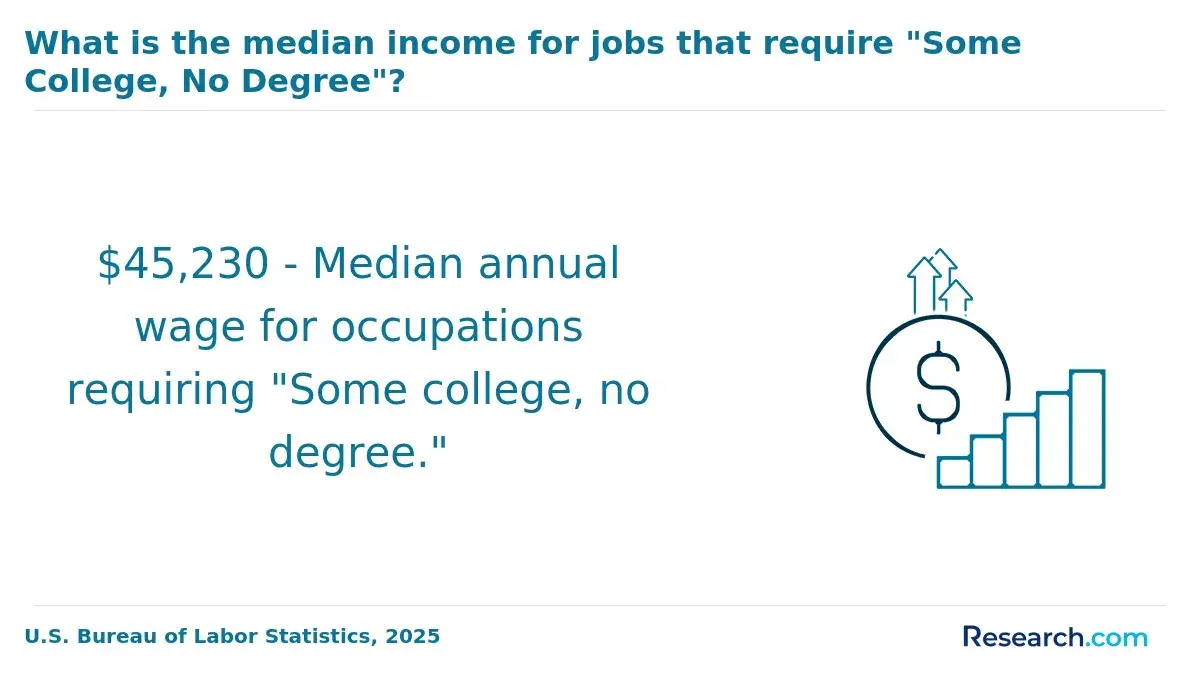
According to the Bureau of Labor Statistics, the median annual wage for psychologists was $94,310 in 2024. That figure is a broad benchmark, not a promise for child psychology doctorate graduates, because pay varies by license status, employer, state, specialization, and whether the role is clinical, academic, administrative, or research-focused.
Students should ask whether faculty mentorship includes career-facing support such as:
- Guidance on presenting dissertation or applied-project findings to professional audiences
- Feedback on publishing or co-authoring opportunities
- Advice on practicum, internship, or field experience planning when relevant
- Introductions to professional associations, research groups, or community partners
- Support in translating doctoral research into a portfolio, writing sample, or job interview narrative
A common mistake is assuming that faculty mentorship automatically includes job placement. It may not. Students should verify whether career services, alumni networks, practicum placement support, and faculty networking are formal parts of the program or informal benefits that depend on individual relationships.
A strong online child psychology doctorate mentor should have more than general psychology teaching experience. The best fit is usually a faculty member whose scholarship, clinical background, school-based work, policy experience, or applied research connects directly to children, adolescents, families, learning environments, or youth-serving systems.
For students considering clinical or assessment-oriented careers, it is especially important to distinguish between developmental psychology expertise and licensure-focused clinical training. Applicants who are still comparing graduate pathways may find it useful to review how online clinical psychology masters options differ from doctoral study before assuming that any psychology doctorate will meet clinical career requirements.
Look for mentors with qualifications that match your goal. The following criteria are especially important when the doctorate involves child or adolescent populations:
- Doctoral training in psychology, developmental science, clinical psychology, school psychology, counseling psychology, educational psychology, or a closely related field
- Recent scholarship, grants, professional practice, or applied projects involving children, adolescents, families, schools, or youth-serving organizations
- Experience chairing dissertations, supervising doctoral research, or guiding applied doctoral projects
- Knowledge of research ethics involving minors, caregiver consent, confidentiality, and mandated reporting considerations
- Licensure or supervised practice experience when the student's goal involves clinical assessment, therapy, or health service psychology
Faculty titles can be misleading if students do not read bios carefully. A professor may teach child development but publish mainly on adult learning, or may be a strong researcher but unavailable for dissertation supervision. The key question is not "Is this faculty member impressive?" but "Can this person realistically guide my specific doctoral goal?"
One-on-one faculty mentorship can increase the value of an online child psychology doctorate, but only when it reduces wasted time, improves research quality, or strengthens career positioning. It may also be built into tuition rather than listed as a separate fee, so students must compare total program cost, expected time to completion, transfer credit policies, dissertation continuation fees, residency costs, and loan interest.
Federal borrowing costs make this evaluation more important. For the 2024-2025 academic year, graduate Direct Unsubsidized Loans carried an 8.08% fixed interest rate and Grad PLUS Loans carried a 9.08% fixed interest rate. Higher borrowing costs mean students should be cautious about paying premium tuition for mentorship unless the program can show how faculty access is structured and sustained.
- Graduate Direct Unsubsidized Loan interest rate for 2024-2025: 8.08%
- Graduate PLUS Loan interest rate for 2024-2025: 9.08%
When comparing value, do not focus only on the advertised per-credit tuition. A lower-cost program with weak dissertation support may become expensive if students pay for extra terms, while a higher-cost program may be more reasonable if it offers strong mentor continuity, efficient milestone review, and relevant faculty expertise.
Students considering child psychology work in legal or court-adjacent settings should also compare the doctorate's cost with realistic career routes and salary context. Resources on how much do forensic psychologists make can help applicants decide whether a child-focused doctorate, forensic pathway, or clinical licensure route better matches their financial goals.
Use this cost-value checklist before enrolling:
- Calculate total tuition using the full number of required credits, not just the per-credit rate.
- Ask whether dissertation, continuation, residency, technology, assessment, or graduation fees are separate.
- Confirm whether mentor access continues during dissertation extension terms.
- Estimate how many terms you can realistically complete while working.
- Compare the program's mentorship model with your target outcome, such as research, teaching, program leadership, clinical licensure, or applied child development work.
Students benefit most from one-on-one mentorship when their doctoral goals are specialized, research-heavy, or tied to populations that require careful ethical and methodological planning. Child psychology is a broad field, so individualized guidance can help students avoid vague projects and build a coherent professional identity.
This model is especially useful for students who:
- Already have a focused interest, such as adolescent trauma, early intervention, autism support, school-based mental health, parenting programs, or youth risk prevention
- Plan to complete a dissertation or applied project involving children, caregivers, schools, clinics, or community agencies
- Need help connecting prior professional experience to doctoral research
- Are working adults who need efficient feedback because they cannot afford repeated delays
- Want to build a research, teaching, consulting, policy, or leadership profile around child and adolescent development
One-on-one mentorship may be less important for students who mainly want a broad psychology credential, are unsure of their research interests, or prefer highly structured weekly cohorts. It may also be the wrong priority for students seeking clinical licensure if the program lacks required accreditation, supervised training, practicum access, or state approval.
If you cannot maximize mentorship, flexibility, and low cost at the same time, start with your nonnegotiable outcome. Licensure-focused students should prioritize accreditation and supervised training. Research-focused students should prioritize faculty fit and dissertation support. Working professionals who need the lowest financial risk may prioritize cost and transfer credits, then choose the strongest mentorship available within that budget.
How Should Students Evaluate Faculty Mentorship Before Choosing an Online Child Psychology Doctorate?
Students should evaluate faculty mentorship before choosing an online child psychology doctorate, not after enrollment. The goal is to verify whether individualized support is formal, frequent, relevant, and durable enough to justify the program's cost and time commitment.
Use the following process to compare programs in a practical way:
- Identify your goal first: clinical licensure, research, teaching, program leadership, policy, consulting, or applied child development work.
- Confirm accreditation and licensure relevance, especially if you want to practice as a psychologist with children or adolescents.
- Review faculty bios and list at least three potential mentors whose work aligns with your interests.
- Ask admissions how mentors are assigned, whether students can request a mentor, and when the relationship begins.
- Request details on meeting frequency, response times, dissertation chair selection, and feedback expectations.
- Ask how many doctoral students each faculty member typically supervises.
- Speak with current students or alumni about whether faculty access matches what the program advertises.
- Compare total cost, transfer credits, residency requirements, dissertation fees, and expected completion timeline.
- Ask what happens if a mentor leaves, changes roles, or cannot support your topic.
- Choose the program that best aligns mentorship quality, credential requirements, affordability, and your realistic schedule.
Important admissions factors also deserve attention. Most child psychology doctorate programs require a bachelor's or master's degree, transcripts, letters of recommendation, a statement of purpose, and sometimes prior coursework in psychology or research methods. Some doctoral programs accept bachelor's-prepared students, while others are designed for master's-prepared applicants and may allow transfer credits.
The strongest final question to ask is simple: "Can you show me exactly how faculty mentorship works from the first term through dissertation completion?" If the answer is vague, compare other programs before committing.
Other Things You Should Know About Child Psychology
No. Child psychology usually focuses on behavior, emotions, cognition, assessment, mental health, and development from infancy through adolescence. Developmental psychology is broader and may study change across the entire lifespan, including adulthood and aging.
Yes, but the role matters. Bachelor's and master's graduates may work in case management, youth services, behavioral support, research assistance, program coordination, or education-related roles. Independent clinical diagnosis and treatment usually require a license, and requirements vary by state.
Psychology is the most direct major, but human development, education, social work, neuroscience, sociology, or family studies can also be relevant. Students should complete coursework in statistics, research methods, abnormal psychology, developmental psychology, and child or adolescent development when possible.
No. Child psychology professionals may work in schools, hospitals, universities, research centers, nonprofits, community mental health agencies, government programs, pediatric settings, or policy organizations. The available roles depend heavily on degree level, license status, supervised experience, and specialization.
- Psychology Ph.D. & Psy.D.: Costs, Requirements, And Careers https://www.psychology.org/degrees/phd/
- 25 Psychology Ph.D. Programs Online | GradSchoolHub.com https://www.gradschoolhub.com/best/doctoral-programs-in-psychology/
- 2025's Most Affordable Online Master’s Degrees in Psychology https://www.onlinemastersdegrees.org/most-affordable/psychology-programs/
- How to Apply to Clinical Psychology PhD Programs — TAP Magazine https://tapmagazine.org/all-articles/how-to-apply-to-clinical-psychology-phd-programs
- Faculty-Student Mentoring in Online Higher Education https://www.facultyfocus.com/articles/online-education/online-assessment-grading-and-feedback/faculty-student-mentoring-in-online-higher-education/
- 2025 Most Affordable Online Colleges for a PhD in Psychology https://www.onlineu.com/most-affordable-colleges/psychology-doctoral-degrees
- Our mentoring model — Ph.D. in Industrial-Organizational Psychology at Baruch College, CUNY https://www.iopsych-baruch.com/our-mentoring-model
- Online and Hybrid PhD & PsyD Programs in Psychology https://www.psychologist-license.com/phd/
- PhD in Clinical Psychology https://www.fielding.edu/school-of-psychology/phd-in-clinical-psychology/