2027 Online Agriculture Bachelor's Degree Completion Programs for Working Adults

Co-Founder and Chief Data Scientist
Working adults pursuing an agriculture bachelor's degree often face the challenge of balancing job demands with academic progress. Many have accumulated some college credits but struggle with program flexibility and transfer policies. Recent data shows that 65% of online agriculture degree completion programs report increased enrollment from mid-career professionals seeking career advancement. This trend highlights the need for tailored programs that accommodate complex schedules and prior learning. This article analyzes program structures, accreditation, tuition, transfer credits, and career outcomes to help readers select an online agriculture degree completion program that aligns with their professional and financial goals.
Key Benefits of Online Agriculture Bachelor's Degree Completion Programs for Working Adults
- Programs offer flexible scheduling options, allowing working professionals to balance studies with full-time employment without disrupting their careers.
- Fully asynchronous coursework enables students to study anytime, reducing conflicts with demanding work hours while maintaining steady income.
- Degree completion programs accelerate graduation timelines by credit transfer and focused curricula, avoiding the need to restart a traditional four-year degree.
What Are Online Agriculture Bachelor's Degree Completion Programs, and Who Are They Designed For?
Online agriculture bachelor's degree completion programs are tailored for adults who have previously earned some college credits but did not receive a bachelor's degree. Unlike the traditional four-year bachelor's programs that start with freshman-level courses, these completion programs provide a focused pathway to finish the remaining credits, often allowing students to build on prior learning and coursework. According to the National Center for Education Statistics (NCES), millions of Americans hold some college experience without a credential. These programs address this gap by offering flexible, accelerated options that fit the lives of working adults.
These programs are characterized by several key features:
- Accelerated Format: Courses are often condensed into shorter terms, enabling faster completion while maintaining academic quality.
- High Transfer Credit Acceptance: They typically accept a large portion of previously earned credits, allowing students to concentrate on upper-division agriculture coursework.
- Online or Hybrid Delivery: Flexible options accommodate working professionals, military veterans, and those with family obligations.
- Designed Around Professional Schedules: Class schedules and deadlines are tailored to minimize conflicts with employment or other responsibilities.
With growing demand for bachelor's degrees in roles that once had fewer educational requirements, these programs offer an efficient route for career advancement. Whether you are seeking the best online agriculture degree programs for career advancement or considering further education options, some students explore PhD programs as a next step after completion.
How Do Online Agriculture Degree Completion Programs Differ From Traditional Four-Year Agriculture Bachelor's Degrees?
Completion programs for online agriculture degrees are tailored to students transferring 60 or more credits, offering a distinct structure compared to traditional four-year bachelor's degrees. These programs require fewer total credits, as they accept large transfer credit amounts, often 60 or more, which contrasts with traditional programs requiring around 120 to 130 total credits starting from fewer transfer credits.
- Credit Requirements: Completion programs generally reduce total credits by leveraging generous transfer policies and prior learning assessments, making them ideal for community college transfers or military veterans.
- Curriculum Sequencing: Unlike traditional programs with fixed semester-by-semester progressions, completion programs employ a curriculum-mapping approach that replaces many general education courses with competency-based or life-experience modules to fit adult learners' needs. This flexibility helps students balance career and family while completing their degrees.
- Time to Completion: With fewer credits and adaptable pacing, completion students typically finish in 18 to 24 months, while traditional students spend around four years enrolled full time.
- Cost Per Credit Hour: According to IPEDS data, the cost per credit hour may be comparable or slightly higher in completion programs due to their delivery methods, but overall expenses are generally lower since fewer credits are required.
- Practical Trade-offs: Completion programs focus on accelerated timelines and flexibility but may offer fewer electives and less campus engagement than traditional pathways, which provide a broader academic experience but demand a longer commitment.
For an example of accelerated online degree options in other fields, consider exploring the accelerated masters in social work. Understanding different degree structures can guide you in choosing the best fit that aligns with your schedule, budget, and career goals in the evolving field of agriculture.
2026 Update: Checking Hands-On and Field Experience Requirements
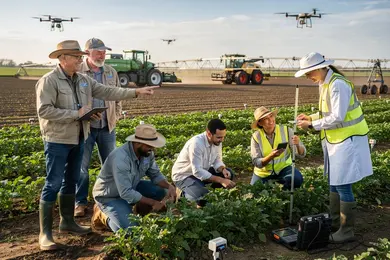
This 2026 update adds a closer look at how online agriculture completion programs handle practical learning, since many working adults need to finish coursework without relocating or leaving their current jobs.
- Whether labs, fieldwork, or applied projects can be completed near your home or workplace
- If your current farm, agribusiness, agency, or employer site can be approved for experiential learning
- Any required campus visits, weekend intensives, or in-person demonstrations
- How seasonal agricultural work may affect project deadlines and course sequencing
- What equipment, software, or field documentation tools are required for remote assignments
- Whether faculty provide local placement support for internships or capstone projects
Reviewing these requirements early helps students choose a program that fits their location, work calendar, and career goals—not just their transfer credits or tuition budget.
Which Accredited Universities Offer the Most Affordable Online Agriculture Bachelor's Degree Completion Programs?
Programs with flat-rate tuition, like Fort Hays State and Mississippi State, offer simplicity and cost predictability for online students, especially those living out-of-state. Such institutions commonly accept a broad range of transfer credits and assess prior learning to help expedite degrees. Mid-tier programs with residency-based rates often provide more specialized tracks but may result in higher costs or less flexible offerings.
- Fort Hays State University: Based in Kansas, this university offers a Bachelor of Science in agriculture with a uniform online tuition rate of $218 per credit hour, available to all students regardless of residency. Fort Hays holds regional accreditation from the Higher Learning Commission (HLC) and emphasizes industry-relevant coursework. The program supports transfer credits and prior learning assessment, making it accessible to working adults aiming to finish their degree efficiently.
- Valdosta State University: Located in Georgia and accredited by the Southern Association of Colleges and Schools Commission on Colleges (SACSCOC), Valdosta State charges $272 per credit hour for residents and $835 for out-of-state students. Their online agriculture degree completion program offers flexible scheduling and specialized tracks in agribusiness and crop science, tailoring education to specific career paths.
- Southeast Missouri State University: This Missouri school's agriculture bachelor's degree costs $293 per credit hour for in-state learners and $414 for those out-of-state. Accredited by the HLC and recognized by the Association to Advance Collegiate Schools of Agriculture (AASA), the program is designed for flexibility and features an online format suited for working professionals.
- Mississippi State University: Offering a flat rate of $460 per credit hour for both in-state and out-of-state students, Mississippi State is accredited by SACS. The online agriculture completion program emphasizes applied science and leadership development and accommodates transfer students, providing practical pathways toward degree completion.
- University of Arkansas: This program charges $383 per credit hour for residents and $1,162 for non-residents. The University of Arkansas's online agribusiness degree is accredited by HLC and integrates management skills alongside connections to local agricultural industries. Military veterans benefit from transfer-friendly policies.
When asked about his experience, a professional who completed an online agriculture bachelor's degree shared that balancing coursework with full-time employment was challenging but manageable due to the program's flexible design. He appreciated how previous work and military experience translated into course credits, which shortened his time to graduation. "Navigating the transfer process was initially confusing," he said, "but the university's support made it smoother than expected. The online format really allowed me to keep advancing my career while finishing my degree." This flexibility and recognition of prior learning proved essential in helping him establish a solid foundation in his agriculture career.
How Many Transfer Credits Can Working Adults Apply Toward an Online Agriculture Degree Completion Program?
Most online agriculture bachelor's degree completion programs allow working adults to transfer between 60 and 90 semester hours, significantly reducing the time needed to graduate. Transfer credit policies include a careful equivalency evaluation to verify that previous coursework aligns with agriculture-specific curricula and academic standards.
- Credit Caps: Institutions limit transferable credits, typically capping them between 60 and 90 semester hours, ensuring students complete core requirements within the degree-granting program.
- Equivalency Assessment: Transfer credits undergo comprehensive review for content relevance and academic quality to maintain program integrity and degree value.
- Articulation Agreements: Partnerships between community colleges and universities simplify credit transfers, offering structured pathways for students moving into agriculture bachelor's degree completion programs.
- Credit Loss Rate: The U.S. Department of Education reports an average loss of 40% of credits during transfer, emphasizing the advantage of choosing institutions with transparent and supportive transfer policies.
- Military and Professional Credits: Some programs incorporate ACE-recommended military training and professional certifications, awarding credit for applicable real-world experience.
- Transcript Evaluation: Prospective students should request an official transcript evaluation to understand exact credit transferability before enrolling.
For those searching for the best alignment with previous credits and quicker degree completion, exploring the best online MFT programs may provide helpful insights into transfer-friendly academic structures and credit policies.
What Are the Typical Admission Requirements for Online Agriculture Bachelor's Degree Completion Programs?
Most programs require at least 24 to 60 credit hours from accredited colleges to be eligible for transfer. This prerequisite confirms that students possess a solid academic foundation before tackling advanced agriculture coursework. Requirements also include:
- GPA Requirements: A minimum cumulative GPA, typically ranging from 2.0 to 2.5 on a 4.0 scale, is standard. More competitive programs may insist on higher GPAs to ensure academic excellence and rigor.
- Documentation Needs: Applicants must provide official transcripts as proof of prior coursework. Some schools also seek letters of recommendation, personal essays, or resumes highlighting relevant agriculture-related experience.
- Prerequisite Coursework: Completion of introductory courses such as soil science, crop science, or animal science is frequently expected. Students lacking these may need to complete them prior to gaining full admission.
- Admission Types: Open-admission programs offer greater flexibility and easier access but may provide less individualized academic support. In contrast, selective programs require stronger academic credentials and often deliver more targeted resources and recognition.
- Provisional Admission: Some institutions allow conditional entry for students who fall just short of requirements, giving them a chance to prove capability through early coursework or assessments.
- Application Enhancement: Strengthening an application by taking prerequisite classes at community colleges or accumulating relevant work experience can boost acceptance odds. Gathering comprehensive and pertinent documentation is also advantageous.
A professional who completed an online agriculture bachelor's degree described the admissions phase as a "steep learning curve" requiring meticulous preparation. She recalled how juggling work with prerequisite coursework, alongside gathering transcripts and references, felt challenging but ultimately rewarding. "The provisional admission option was a lifeline that let me start while I filled gaps," she reflected. Her experience underscores how perseverance and strategic planning during admission can lead to successful degree completion and career advancement.
How Long Does It Take to Complete an Online Agriculture Bachelor's Degree Completion Program as a Working Adult?
Completion time for an online agriculture bachelor's degree as a working adult varies mainly by the number of transfer credits, enrollment intensity, and program format. Typically, 120 total credits are required. Students transferring 30 credits have roughly 90 credits left to complete, those with 60 transfers need about 60 credits, and with 90 transfers only around 30 credits remain.
Many working professionals opt for part-time enrollment, often taking 6 credits (two courses) per semester. At this pace, a student with 60 remaining credits might expect about five years to graduate, considering only fall and spring semesters. Enrolling full-time with 12 or more credits can reduce completion to two or three years, especially when combined with summer terms.
Programs offering eight-week accelerated sessions enable students to finish courses faster than traditional 16-week semesters. This format suits those balancing work and family by allowing year-round study or focusing on fewer courses at a time. Additionally, competency-based education lets students advance by demonstrating mastery, which benefits learners with relevant experience by shortening the degree timeline.
Taking summer courses is another effective strategy to accelerate progress, potentially trimming several months to a year off completion time. However, planning should realistically account for job demands, family responsibilities, and whether employers provide tuition assistance or flexible scheduling.
Recent data from the National Center for Education Statistics reveals that over 40% of bachelor's degree graduates in 2022 earned their degrees fully or partially online, illustrating the growing acceptance of flexible, remote learning formats.
What Financial Aid, Grants, and Employer Tuition Assistance Options Are Available for Online Agriculture Completion Students?
Adult learners completing an online agriculture bachelor's degree have access to various financial aid options designed to ease the cost burden. Federal Pell Grants remain available to many eligible students returning to school, offering essential need-based support. The U.S. Department of Education's Direct Loans program provides subsidized and unsubsidized loans that help bridge tuition gaps without immediate repayment pressure. State-specific grants aimed at adult returners can provide additional financial assistance; since these vary by state, investigating your state's higher education agency is crucial.
Colleges often offer institutional scholarships tailored for non-traditional and online agriculture students, considering factors such as professional experience, academic history, and financial need. Employer tuition assistance programs are a valuable resource, with IRS Section 127 allowing employers to contribute up to $5,250 annually tax-free toward undergraduate education, significantly lowering out-of-pocket costs.
Scholarships and fellowships specifically for adult learners in agriculture may also be available through agricultural organizations, foundations, or professional associations dedicated to workforce development in this field.
How Does Per-Credit-Hour Tuition for Online Agriculture Completion Programs Compare Across Accredited Institutions?
Per-credit tuition rates for online agriculture degree programs vary widely among accredited institutions, reflecting diverse program designs, regional cost differences, and institutional priorities. According to NCES and IPEDS data, the national average per-credit cost for online agriculture bachelor's completion programs is about $450. This benchmark helps students estimate tuition expenses when comparing accredited online agriculture bachelor's program costs across institutions.
Programs requiring 60 transfer credits typically have tuition costs ranging between $20,000 and $35,000. Those demanding up to 90 post-transfer credits may exceed $40,000. Additional fees such as technology charges, graduation fees, proctoring costs, and textbooks can increase the total cost by 10%-20%, making it essential to consider these ancillary fees when evaluating affordability. These hidden costs often create a gap between advertised prices and the real financial commitment.
When assessing per-credit tuition rates, working adults should note that lower rates do not always translate to lower overall costs. Programs with more extensive credit requirements can be pricier despite cheaper per-credit fees. Conversely, institutions offering generous transfer credit policies or acceptance of prior learning assessments can reduce the total number of credits needed, delivering better value.
For those thinking ahead about continuing education, it's worth noting that some may explore related fields, such as a masters in human resource management, to complement their agriculture background and expand career opportunities.
What Prior Learning Assessment and Credit-by-Exam Options Exist in Online Agriculture Degree Completion Programs?
Prior Learning Assessment (PLA) options enable working adults to leverage their existing knowledge and experiences to earn academic credit and accelerate degree completion in online agriculture bachelor's programs. These assessments typically include CLEP and DSST credit-by-exam policies, portfolio evaluations, and military training credit evaluated through the American Council on Education (ACE). Embracing PLA can significantly shorten the time to graduation by recognizing competencies gained outside the traditional classroom setting.
Many leading online Agriculture completion programs offer expansive and flexible PLA policies. Some institutions accept up to 90 credits via PLA, acknowledging exam scores, detailed portfolios, and verified training from military and corporate programs. Portfolio reviews often allow diverse evidence such as work samples, certifications, reflective essays, and professional licenses that demonstrate mastery of agriculture-related competencies. Programs with the broadest PLA options tend to have streamlined submission processes and dedicated advisors to assist with documenting and preparing prior learning materials for institutional credit evaluation.
- Credit-by-Exam Options: CLEP and DSST exams are widely accepted, allowing students to earn credit for foundational and specialized agriculture coursework by demonstrating proficiency through standardized tests.
- Portfolio Assessment: Students compile evidence of experiential learning, including work projects and certifications. Institutions with generous policies accept portfolios that cover both technical skills and applied knowledge in Agriculture.
- ACE Evaluations: Military service members and corporate trainees benefit from credit recommendations by ACE, which translate military courses and trainings into college credit. This is especially relevant for veterans pursuing an online agriculture degree completion path.
- Documentation Guidance: Effective submission requires organized portfolios with clear evidence aligned to course outcomes. Advisors often assist in preparing narratives and proof of competencies to ensure credits are awarded.
Each program's prior learning assessment policies vary, so it's critical to review transfer credit options and credit-by-exam policies in online agriculture bachelor's programs carefully. Detailed information about program structures and employer outcomes can be found by exploring resources like the online interdisciplinary studies degree career outcomes. This helps prospective students select top-ranked institutions that align with their schedules, budgets, and professional goals.
How Do Asynchronous Schedules in Online Agriculture Programs Accommodate Full-Time Working Professionals?
- Fully Asynchronous Delivery: Courses are designed so assignments, discussions, and assessments can be completed anytime, accommodating all time zones and varying work schedules. This flexibility allows students to progress without live sessions or fixed deadlines.
- Synchronous vs. Hybrid Formats: Synchronous programs require attendance at scheduled live classes, which may challenge shift workers and travelers. Hybrid models combine real-time and on-demand elements, offering some flexibility but less than fully asynchronous formats.
- Eight-Week Terms: Some institutions organize courses into eight-week sessions, enabling students to concentrate on fewer subjects simultaneously. This structure helps balance academic work with professional and personal duties more effectively.
- Time Management Strategies: Successful students often use detailed planners and set consistent weekly goals to stay on track. Breaking tasks into smaller steps and prioritizing assignments helps manage workloads efficiently.
- Digital Tools: Commonly used tools include calendar apps, task management software, and note-taking platforms, which support organization and deadline tracking. Reliable internet access and a quiet study environment also improve focus and productivity.
What Concentrations and Career Tracks Are Available Within Online Agriculture Degree Completion Programs?
Online agriculture bachelor's degree completion programs commonly offer concentration options embedded within the standard 120-credit curriculum, ensuring no extra credits extend the timeline or increase tuition significantly. This structure benefits working adults by maintaining predictable schedules and costs.
- Crops and Plant Science: Emphasizes crop production, plant genetics, and sustainable methods. Graduates often become agronomists or crop consultants, earning median salaries around $68,000 according to BLS data, reflecting steady demand in agricultural technology and farm management.
- Animal Science and Production: Covers livestock care, health, and nutrition. Career paths include animal scientists and livestock managers, with median wages near $65,000, driven by ongoing needs in food supply industries.
- Agricultural Business and Economics: Focuses on farm finance, marketing, and policy. Graduates typically fill roles such as agricultural economists, earning median incomes close to $71,000, underscoring demand for skilled agribusiness professionals.
- Agricultural Engineering Technology: Blends engineering principles with agriculture, addressing machinery and irrigation. Median salaries approach $80,000, often enabling graduates to pursue certifications like the Certified Crop Adviser (CCA).
- Natural Resources and Environmental Science: Highlights sustainable resource management and environmental compliance. Careers like conservation scientists offer median pay near $63,000, reflecting strong growth in ecological stewardship roles.
Selecting a concentration should balance your interests with market demand and certification opportunities. Many schools accept transfer credits and prior learning assessments, shortening degree completion and enhancing career advancement potential in specialized fields.
What Graduates Say About Online Agriculture Bachelor's Degree Completion Programs for Working Adults
- Shane: "I appreciated how the program's clear structure and accreditation reassured me that my degree would be respected by employers nationwide. The seamless transfer credit policies meant that my previous coursework was fully acknowledged, which made finishing the program much faster and more affordable. Earning my online agriculture degree has already opened doors in the industry that I previously thought were out of reach."
- Emiliano: "The option to apply prior learning credits really highlighted this program's flexibility and respect for real-world experience. The tuition model was straightforward and competitive, which allowed me to plan my finances without surprises. Reflecting on my career progress, the degree has boosted my confidence and credibility in agricultural management roles."
- Samuel: "From a professional standpoint, this online agriculture degree met high standards with its accreditation, giving me peace of mind about the quality of education. Transfer credit acceptance was critical, as it recognized the value of my previous college work and shortened my path to graduation. Since completing the program, I've seen tangible improvements in job opportunities and employer recognition."
Other Things You Should Know About Agriculture Degrees
In 2027, online agriculture bachelor's degree completion programs generally offer a variety of tuition models, including per-credit rates and package deals for full-time enrollment. However, flat-rate or subscription-based tuition models are not widely available and may vary by institution, requiring prospective students to verify specific options.
Most online agriculture bachelor's degree completion programs offer dedicated academic advising tailored to transfer students and working adults. Support services often include tutoring, writing assistance, and technical help for navigating online platforms. Career services typically feature resume workshops, networking opportunities in agriculture industries, and access to job databases focused on agricultural careers.
Completing an online agriculture bachelor's degree generally results in higher earning potential and greater career advancement opportunities compared to stopping at some college. Graduates gain specialized knowledge in areas like plant science, soil management, or agricultural technology, which employers seek. Additionally, degree completion often opens doors to leadership roles that require a bachelor's credential.
References
- Cost of Online Education vs. Traditional Education [2025]: Comparison https://educationdata.org/cost-of-online-education-vs-traditional-education
- Admission & Registration / University of Agriculture in Krakow https://urk.edu.pl/en/study/study-in-english/bachelor-studies/admission-registration
- Pursuing an Online Agriculture Degree: Opportunities for International Students | Cademix Institute of Technology https://www.cademix.org/pursuing-an-online-agriculture-degree/
- hort https://journals.ashs.org/downloadpdf/view/journals/horttech/26/5/article-p584.pdf
- Prior Learning Assessment (PLA) https://www.gsw.edu/academic-resources/pla/
- Online Agriculture Degrees - Degrees & Guides https://www.academicinfo.net/agriculture
- Online or Distance Learning Programs in Agriculture https://ijoear.com/online-or-distance-learning-programs-in-agriculture
- The Ultimate Guide to Online Agriculture Courses: Compare and Choose Wisely – British Academy For Training & Development https://batdacademy.com/en/post/the-ultimate-guide-to-online-agriculture-courses-compare-and-choose-wisely
- Graduate Prior Learning Information - Credit for Prior Learning https://www.gvsu.edu/priorlearning/graduate-prior-learning-information-6
- Benefits of Sustainable Agriculture https://online.maryville.edu/online-bachelors-degrees/sustainability/careers/benefits-of-sustainable-agriculture/