2027 Is an Online Exercise & Sports Science Bachelor's Degree Worth It?

Co-Founder and Chief Data Scientist
Facing a career pivot into exercise & sports science while balancing work and personal commitments poses a real challenge. Traditional programs often demand on-campus attendance, limiting flexibility for working adults. Online exercise & sports science bachelor's degrees offer a scalable solution-flexible scheduling and remote learning-making education more attainable.
According to recent research, enrollment in accredited online sports science programs has increased by 35% over the past five years, reflecting growing demand. This article analyzes the value of these degrees, exploring employment outcomes, program quality, and cost-effectiveness to help readers decide if this path aligns with their professional goals.
Key Things to Know About the Value of an Online Exercise & Sports Science Bachelor's Degree
- Online exercise & sports science degrees offer flexible paths to align with life goals-ideal for working parents, veterans, and professionals balancing education with other responsibilities.
- Accredited programs typically deliver strong return on investment, with median salaries post-graduation ranging from $45,000 to $60,000, supporting long-term financial stability.
- Graduates often find diverse career opportunities in fitness, rehabilitation, and sports management-employers value the accredited online degree's rigor and relevant transferable credits.
What Are the Real Costs of Earning an Online Exercise & Sports Science Bachelor's Degree, and How Do They Compare to On-Campus Programs?
Online exercise & sports science bachelor's programs generally offer lower tuition rates compared to traditional on-campus options, according to IPEDS data and the College Board's Trends in College Pricing report. Tuition per credit hour for online programs usually ranges from $300 to $450, while on-campus in-state tuition often falls between $400 and $600 per credit. Out-of-state tuition for campus programs can exceed $700 per credit.
- Fees: Online students typically avoid campus-based fees like parking but may pay technology fees, platform access charges, and course material costs, which add up to $200-$800 annually.
- Required Technology: Online learners must budget for a reliable computer, high-speed internet, and sometimes specialized software-these upfront costs range from $800 to $1,200.
- Indirect Costs: Although commuting and campus housing might be unnecessary, expenses such as textbooks, certification exam fees, and travel for practicums or internships remain relevant when evaluating the cost comparison of online exercise & sports science bachelor's degrees versus on-campus programs.
Several accredited schools stand out for affordability, including Arizona State University, University of Florida, Oregon State University, and University of North Carolina at Wilmington-all priced below the national average for online bachelor's degrees in exercise & sports science.
- Net Price vs. Sticker Price: The sticker price is the full published cost of the degree, but financial aid-scholarships, grants, and other assistance-can substantially reduce the actual financial investment. Prospective students should carefully analyze aid offers to understand true costs and explore policies like transfer credit acceptance, which affects total expenses and program duration.
These considerations are crucial for working parents, military veterans, or mid-career professionals weighing how employer perceptions and graduate school compatibility align with their educational investment. For example, those interested in programs without clinical requirements might explore options like RN to BSN with no clinical hours for insight into related credential pathways.
What Is the Return on Investment (ROI) of an Online Exercise & Sports Science Bachelor's Degree Over a Career Lifetime?
Return on investment (ROI) in higher education measures the financial benefits gained from earning a degree compared to the total costs incurred. For an online Exercise & Sports Science bachelor's degree, this means weighing tuition, fees, and other expenses against career lifetime earnings of an online exercise & sports science bachelor's degree in related fields. The Georgetown University Center on Education and the Workforce offers valuable ROI methodology, incorporating expected salaries, employment rates, and career length to determine a degree's worth. The PayScale College ROI Report adds specificity by comparing particular disciplines against national averages, providing clearer insight into this discipline's financial outcomes.
To calculate ROI, sum the total cost of the online degree-often lower due to fewer campus fees and flexible pacing-and estimate career earnings from typical roles such as physical therapists, sports coaches, or fitness instructors. When viewed over a 10-year period, low-cost online exercise & sports science programs often show competitive returns compared to the national average for all bachelor's degrees. Over 20 years, ROI generally improves as graduates advance in specialization or pursue certifications and graduate studies.
- Cost Efficiency: Online programs frequently offer quality education at reduced overall cost, boosting ROI versus traditional degrees.
- Earnings Potential: Initial salaries may be modest, but career growth in specialized roles often enhances long-term financial rewards.
- Employment Stability: Strong industry demand for health, fitness, and rehabilitation roles supports sustained career prospects, positively impacting ROI.
Beyond monetary returns, non-financial benefits also matter. Graduates note increased job satisfaction through meaningful work in health and wellness, greater career mobility across various professional roles, and enhanced professional credibility from accredited online programs recognized by employers and graduate schools. These factors contribute significantly to overall long-term return on investment for online Exercise & Sports Science graduates. Prospective students should also consider institutional policies on transfer credits and available financial aid strategies to maximize ROI and career outcomes.
For those exploring advanced pathways, related fields such as MSN to DNP programs offer further specialization options that may amplify career earnings and professional growth.
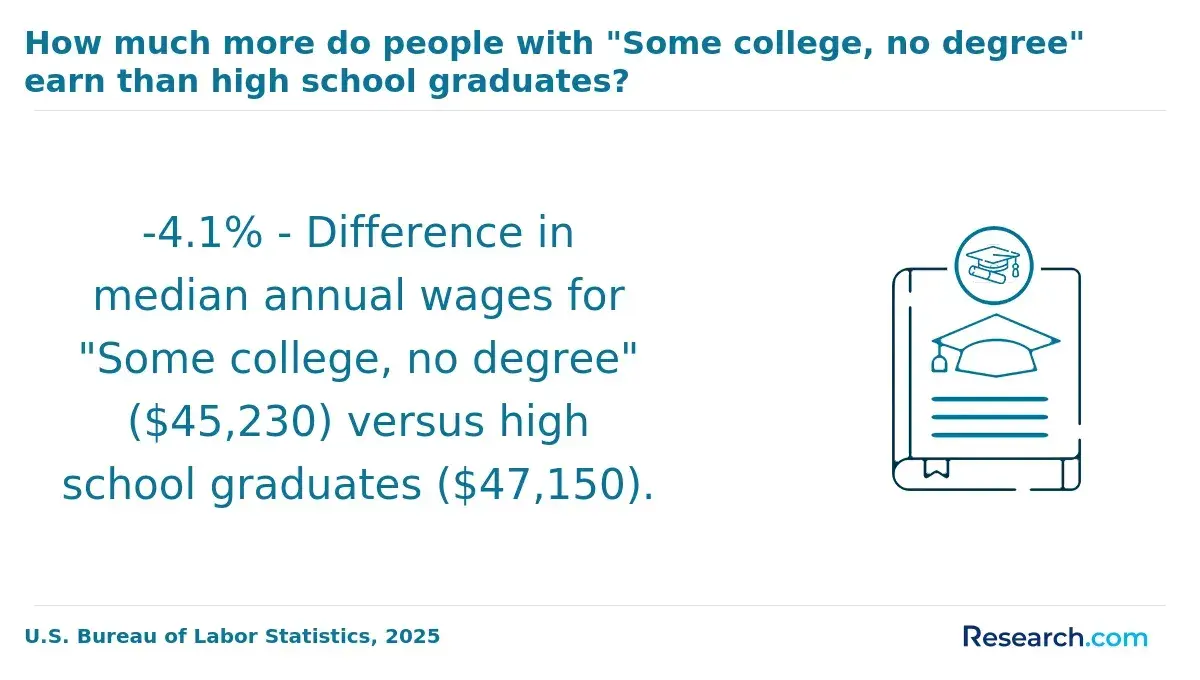
How Do the Salary Outcomes for Online Exercise & Sports Science Bachelor's Graduates Compare to Those With Traditional Degrees?
Data from the Bureau of Labor Statistics, PayScale, and LinkedIn Salary Insights indicate that median starting salaries for online exercise & sports science bachelor's degree holders closely align with those from traditional on-campus programs. Institutional prestige, geographic location, and professional experience play larger roles in determining earnings than whether the degree was earned online or in person. Mid-career specialists-particularly in niches like sports performance or rehabilitation-tend to see higher salary growth.
- Starting Salary: Entry-level graduates from online programs typically earn between $38,000 and $45,000 annually, a range comparable to their on-campus peers attending similar institutions in similar regions.
- Mid-Career Earnings: Professionals with roughly 5 to 10 years of experience may expect salaries from $55,000 to $70,000, reflecting increases tied to gained expertise and industry demand.
- Institutional Outcomes: According to select IPEDS data, employment rates for graduates of accredited online exercise & sports science programs hover between 75% and 85% within six months post-graduation, pointing to strong market acceptance of online credentials.
One professional who completed his online exercise & sports science bachelor's degree recalled facing initial doubts about employer perceptions and balancing work with coursework. "The hardest part was managing my time while working full-time and keeping up with assignments," he said. However, receiving timely faculty feedback and leveraging online networking opportunities helped him gain confidence. He appreciates that his degree enabled him to transition into a stronger career path without sacrificing income during his studies. "Ultimately, the online format suited my schedule without limiting my job prospects," he reflected.
What Career Paths and Job Opportunities Are Available to Online Exercise & Sports Science Bachelor's Degree Graduates?
Graduates with an online exercise and sports science degree have diverse career options in health, fitness, and rehabilitation fields. Many positions require only a bachelor's degree, while some call for certifications or advanced education. This flexibility opens doors for those exploring jobs in sports science and exercise physiology for graduates.
- Fitness Trainer and Instructor: Professionals design tailored exercise routines for clients or groups, usually needing certification but not necessarily graduate degrees. The Bureau of Labor Statistics projects employment growth of around 15% through 2032, driven by rising public interest in health and wellness.
- Physical Therapy Aide: These assistants support physical therapists in healthcare settings, typically requiring a bachelor's degree plus practical training. A 12% growth rate reflects an aging population and increasing rehabilitative care needs.
- Exercise Physiologist: Specialists evaluate patient fitness and create recovery plans, often requiring licensure or certification beyond the bachelor's degree. O*NET data anticipates about 11% growth as chronic disease management expands.
- Sports Coach or Scout: Coaches develop athlete skills and game strategies, while scouts assess talent. Although a degree helps, extensive experience or certification can also suffice. The field is expected to grow steadily at roughly 7%.
- Health Promotion Specialist: Professionals design initiatives supporting healthy lifestyles in community or corporate environments. Bachelor's degrees are commonly sufficient, with a 13% growth projection as wellness programs become more widespread.
Specializing in concentrations such as rehabilitation, nutrition, or athletic training within an online exercise and sports science program can deepen expertise and enhance qualification for certifications or graduate study. This flexibility supports a tailored career path with improved job prospects and adaptability.
For those seeking flexible enrollment options while advancing their education, exploring online colleges with open enrollment and no application fee can be a strategic step toward achieving career goals in this dynamic field.
What Student Support Services Do Online Exercise & Sports Science Bachelor's Programs Provide to Promote Success and Retention?
Student success in online degree programs often depends on the quality and accessibility of support services available beyond the classroom. Institutions typically offer a range of resources designed to help learners stay engaged, overcome challenges, and achieve their academic goals. These services play a key role in improving retention, satisfaction, and overall outcomes in flexible learning environments.
- Academic Advising: Personalized advising guides students through course selection, degree requirements, and transfer credit evaluations. This tailored support helps maintain academic progress and address unique educational needs.
- Tutoring Centers: Access to expert tutors in areas like exercise science, anatomy, and physiology enables students to tackle difficult subjects. Flexible scheduling accommodates students juggling work and family obligations.
- Writing Labs: Virtual writing assistance enhances students' ability to compose clear and effective scientific papers. Improving academic writing skills is critical for succeeding in advanced coursework.
- Mental Health Counseling: Telehealth counseling offers resources for managing stress, time, and personal challenges. Studies from the National Survey of Student Engagement (NSSE) link these services to higher retention and student well-being.
- Career Services: Comprehensive career support often includes internship placement, job search assistance, and resume development designed for careers in exercise & sports science. Notable programs may provide alumni mentorship networks connecting students with industry professionals for advice and networking. Employer partnerships that promote recruitment and hands-on learning opportunities.
One professional who earned her degree online shared how crucial these resources were. Balancing parenthood and a full-time job, she found academic advising invaluable for mapping out a realistic course plan. When she struggled with complex physiology concepts, tutoring sessions clarified the material just when she needed them most. She noted, "The writing lab was a lifesaver for my research papers, especially since I wasn't confident in scientific writing."
The availability of mental health counseling helped her manage stress during peak periods. Career services connected her to an internship that led directly to her current role. Reflecting on her journey, she emphasized that these supports transformed what could have been an overwhelming experience into achievable milestones, ultimately fueling both her academic success and career growth.
Is an Online Exercise & Sports Science Bachelor's Degree Respected by Employers and Recognized Across Industries?
Recent surveys by the Society for Human Resource Management (SHRM) indicate that over 75% of HR professionals consider online exercise & sports science degrees from accredited institutions as equivalent to traditional campus-based credentials. Gallup's employer data aligns with this, emphasizing that a candidate's skills and knowledge are more decisive than the program delivery format when hiring.
In careers like fitness training, athletic coaching, and wellness coordination, online degrees are widely accepted. Large organizations such as the YMCA and Equinox actively recruit graduates from reputable online programs, valuing accredited degrees combined with relevant certifications and internship experience. This trend reflects growing employer confidence in online education within practical, industry-focused roles.
However, some specialized positions-especially in clinical exercise physiology or physical therapy-may favor on-campus degrees due to the necessity for hands-on clinical hours and licensing requirements. Graduate programs in exercise science also often prefer traditional formats, though many are increasingly accommodating hybrid or in-person practicum components to broaden access.
Prospective students should research employer preferences in their intended field to understand how online degrees are perceived. Factors like program accreditation, curriculum rigor, and opportunities for practical experience typically carry more weight than whether the degree was earned online or on campus.
- Employer Acceptance: Accredited online exercise & sports science degrees are widely respected by most employers, especially in fitness and wellness industries.
- Field Differences: Coaching and wellness professions readily accept online credentials, whereas clinical and therapeutic roles often require additional in-person training or prefer traditional degrees.
- Recruitment Practices: Major employers like YMCA actively hire graduates from online programs that include practical certifications and internship experience.
- Graduate Education: Many graduate schools still favor campus-based education but are increasingly adopting hybrid models that include practical training.
- Informed Choices: Understanding specific employer expectations and accreditation standards is crucial for aligning an online degree with career goals.
What Accreditation Standards Should an Online Exercise & Sports Science Bachelor's Program Meet to Be Considered Legitimate?
Accreditation plays a critical role in assessing the quality and credibility of online exercise & sports science bachelor's programs. Regional accreditation typically provides greater benefits than national accreditation, including stronger transferability of credits, higher employer acceptance, and improved eligibility for graduate schools specializing in exercise & sports science and related fields.
The six regional accrediting bodies recognized by the U.S. Department of Education are:
- HLC: Higher Learning Commission, covering institutions in the central U.S.
- SACSCOC: Southern Association of Colleges and Schools Commission on Colleges, mainly in the southern U.S.
- NECHE: New England Commission of Higher Education, for northeastern states.
- MSCHE: Middle States Commission on Higher Education, overseeing schools in mid-Atlantic regions.
- NWCCU: Northwest Commission on Colleges and Universities, focusing on the northwest U.S.
- WSCUC: Western Association of Schools and Colleges Senior College and University Commission, serving California and Hawaii.
Students can verify a program's accreditation status through the Council for Higher Education Accreditation (CHEA) or U.S. Department of Education (ED) online databases, ensuring up-to-date and official information.
Specialized programmatic accreditation is also available for exercise & sports science programs-for example, from the Commission on Accreditation of Allied Health Education Programs (CAAHEP). This type of accreditation signals adherence to industry-specific standards, which can enhance employment prospects and support professional licensure.
Attending unaccredited or lapsed-accreditation programs poses significant risks-students may lose eligibility for federal financial aid, find their credits are not transferable, and face skepticism from employers regarding their degree's legitimacy. Graduate schools often require degrees from accredited institutions as well.
Over 90% of employers now verify accreditation when reviewing applicants' credentials, highlighting the essential value of accredited degrees for advancing careers in health-related fields.
How Long Does It Take to Complete an Online Exercise & Sports Science Bachelor's Degree, and What Factors Affect the Timeline?
Most online exercise & sports science bachelor's degree programs require about 120 credits and are structured for completion in roughly four years of full-time study. However, how long to complete an online exercise & sports science bachelor's degree depends on several factors, including course format, enrollment options, and transfer credit policies. Many institutions now offer accelerated eight-week courses instead of the traditional 16-week semesters, allowing students to take more classes annually and shorten their time to graduation.
Competency-based education (CBE) programs enable students to progress by demonstrating mastery of material rather than following a fixed schedule. This flexibility benefits military veterans and working adults who can leverage prior knowledge to earn credits faster. Year-round enrollment-including summer and winter sessions-also speeds up completion. For instance, Southern New Hampshire University reports average degree completion in about three years, while Liberty University offers a CBE format that lets some students graduate in under three years.
Transfer credit acceptance, including military training and previous college coursework, can significantly affect the timeline, but requires careful review to ensure credits transfer. Faster completion not only lowers tuition costs but also reduces the opportunity cost linked to delayed full-time employment, improving overall return on investment. For those evaluating their options, understanding these factors alongside program accreditation and career outcomes is essential.
Students interested in career prospects should also consider the financial aspects of their education in relation to potential earnings, such as the medical coding jobs salary, which can provide a comparable perspective on industry pay scales.
- Standard Credit Requirements: Typically, 120 credits are needed, with the curriculum designed for four years full-time study, establishing a baseline timeline.
- Accelerated Course Formats: Eight-week sessions and year-round enrollment allow faster course completion than traditional semesters.
- Competency-Based Education: CBE enables students to advance by demonstrating skills, benefiting those with prior experience or knowledge.
- Transfer Credits: Evaluating transfer policies carefully can shorten degree paths using military or previous college credits.
- Cost and Opportunity Savings: Shortening completion time lowers tuition and minimizes lost income, enhancing return on investment.
What Financial Aid, Scholarships, and Tuition Assistance Are Available for Online Exercise & Sports Science Bachelor's Students?
Students pursuing an online exercise & sports science bachelor's degree can access various types of financial aid to make their education more affordable. The Free Application for Federal Student Aid (FAFSA) plays a critical role in determining eligibility for federal grants, loans, and work-study options. Applying early in the award cycle is essential, as funds are limited and distributed on a first-come, first-served basis.
- Federal Pell Grants: Need-based grants that do not require repayment. Pell Grants provide up to several thousand dollars annually based on financial need and cost of attendance.
- Direct Subsidized and Unsubsidized Loans: Subsidized loans-need-based-have interest covered by the government while in school. Unsubsidized loans begin accruing interest immediately. Both require FAFSA submission and must be repaid after graduation or dropping below half-time enrollment.
- Institution-Specific Scholarships: Many schools offering online exercise & sports science programs provide scholarships based on academic merit, financial need, military service, or intended major.
- State Grant Programs: States often offer grants or tuition aid for residents pursuing higher education, including online courses; eligibility and awards vary by state.
There are scholarships specifically for online exercise & sports science students, such as the National Strength and Conditioning Association Scholarship offering up to $5,000 annually for academic achievement and leadership; the American Kinesiology Association Scholarship, which typically requires membership and a brief essay; and the ACE Fitness Foundation Scholarship, supporting students preparing for fitness certifications alongside their degree. Eligibility often includes enrollment in an accredited program and community involvement.
To minimize out-of-pocket expenses, students should strategically layer multiple aid sources. For instance, federal grants can cover tuition gaps while scholarships provide funding for books or technology. Employer tuition reimbursement programs benefit working students, and veterans can apply military benefits. Federal work-study offers part-time jobs, either on campus or remote, to help cover living costs. Combining these resources builds a comprehensive financial aid package tailored to those seeking financial aid options for online exercise & sports science bachelor's programs in the US.
Students interested in accelerating their education might also explore options like the 1 year post master's FNP online, which can complement their career advancement alongside an exercise & sports science degree.
What Are the Admission Requirements for Online Exercise & Sports Science Bachelor's Degree Programs?
- High School Diploma or GED: All applicants must hold a high school diploma or equivalent credential to demonstrate foundational education.
- GPA Requirements: Competitive programs often set minimum GPA thresholds around 2.5 to 3.0 on a 4.0 scale, while open-access schools may have no strict GPA requirement, favoring broader accessibility.
- Standardized Test Policies: Many programs have adopted test-optional policies, eliminating the need for SAT or ACT scores, especially for those with relevant college credits or work experience; however, some selective institutions may still request these scores.
- Prerequisite Coursework: Foundational courses in biology, chemistry, or physical education are typically required. Selective programs often require completing these before or early in the degree, whereas open-enrollment schools allow concurrent completion.
- Admissions Timing: Rolling or continuous admissions are common, reducing pressure by enabling applications at any time during the year-beneficial for working adults and career changers.
- Enhancing Applications: Applicants falling below minimum criteria can improve competitiveness by completing related community college courses, earning fitness or wellness certifications, or submitting strong recommendation letters that emphasize experience and motivation.
How Should Prospective Students Evaluate and Choose the Right Online Exercise & Sports Science Bachelor's Degree Program for Their Goals?
Choosing the right online degree program requires careful consideration of multiple factors that align with a student’s personal, academic, and career goals. With so many options available, it’s important to assess each program’s structure, quality, and support offerings. Taking a thoughtful approach can help ensure a better fit and a more successful educational experience.
- Accreditation: Verify that the program possesses regional accreditation acknowledged by the U.S. Department of Education or CHEA. Additional specialty accreditation, such as from the Commission on Accreditation of Allied Health Education Programs (CAAHEP), strengthens program credibility and influences licensure and graduate study eligibility.
- Cost and ROI: Investigate all expenses beyond tuition, including technology fees, proctored exam charges, textbooks, and mandatory residency requirements. Utilize resources like the College Scorecard, IPEDS Data Center, and school-specific net price calculators to compare total costs and post-graduate salary data for assessing long-term value.
- Program Format and Flexibility: Evaluate course schedules, the balance between synchronous and asynchronous lessons, and part-time enrollment options. Flexibility benefits working parents, veterans, and mid-career individuals managing competing responsibilities.
- Career Outcomes Data: Seek published statistics on graduate employment rates, typical career trajectories, and collaborations with employers. Data on alumni earnings and graduate school placements provide additional insight into program effectiveness.
- Student Support Services: Confirm availability of academic advising, tutoring, career counseling, technical support, and access to digital libraries, as strong support increases chances of program completion and academic success.
- Transfer Credit Policies: Understand credit transfer limits, recognition of military or professional experience, and articulation agreements to minimize redundant coursework and shorten time to degree.
Next Steps to Enrollment:
- Schedule Informational Interviews: Engage with admissions personnel to clarify program details and available career resources.
- Request Net Price Estimates: Obtain personalized cost breakdowns considering your financial aid options.
- Review Financial Aid Deadlines: Track application periods for scholarships, grants, and loans to maximize funding.
- Audit Existing Transfer Credits: Submit transcripts early for evaluation to reduce unnecessary courses.
- Set a Target Enrollment Date: Plan a realistic start date to organize your personal and professional commitments.
What Graduates Say About the Value of Their Online Exercise & Sports Science Bachelor's Degree
- Lennon: "Choosing the online exercise & sports science bachelor's degree program was a strategic decision for me-I needed flexibility while working full-time. The cost was surprisingly affordable compared to traditional programs, and the return on investment became clear as I quickly secured a promotion in my fitness career. This program truly balanced convenience, quality education, and career advancement in a way that fit my busy lifestyle."
- Forest: "Reflecting on my journey, the online exercise & sports science degree offered me more than knowledge-it reshaped my professional approach. Although it required commitment, the program's cost was reasonable, and the expertise I gained profoundly impacted my ability to work with diverse clients. This degree provided both the academic foundation and practical skills to elevate my credibility in the health industry."
- Leo: "From a professional standpoint, pursuing the online exercise & sports science bachelor's degree was a game-changer-opening doors I hadn't imagined. I chose it for its modern curriculum and cost-effectiveness, which made earning the degree feasible without sacrificing financial stability. The career benefits have been tangible, with enhanced job prospects and confidence in my field that have exceeded my expectations."
Other Things You Should Know About Exercise & Sports Science Degrees
Online exercise & sports science bachelor's programs typically use a mix of video lectures, readings, virtual labs, and discussion boards to deliver coursework. Students can access materials asynchronously, which allows flexibility in managing study around personal and professional commitments. However, some programs may require occasional live sessions or in-person practical components to complete hands-on skill development.
Many online exercise & sports science degrees offer concentrations such as kinesiology, sports nutrition, fitness training, or athletic training. These specializations enable students to tailor their education to specific career goals, whether aiming for rehabilitation, coaching, wellness, or sports performance enhancement. Availability of these options varies by institution, so prospective students should verify program specifics before enrolling.
An online exercise & sports science bachelor's degree from an accredited institution is generally accepted by graduate schools, provided the program meets academic standards. It prepares students for advanced degrees such as master's or doctorate programs in physical therapy, sports medicine, or exercise physiology. Prospective graduate students should confirm specific admission requirements with their target programs to ensure compatibility.
References
- Bachelor of Sport and Exercise Science https://www.unisc.edu.au/study/courses-and-programs/bachelor-degrees-undergraduate-programs/bachelor-of-sport-and-exercise-science
- 446 Bachelor Degree Sports Science Scholarships available https://www.hotcoursesabroad.com/study/international-scholarships/all/bachelor-degree/sports-science/cid/124/b9/scholarship.html
- Exercise science program accredited by national organization | Lipscomb University https://lipscomb.edu/news/exercise-science-program-accredited-national-organization
- How Many Years is a Bachelor's Degree? https://www.snhu.edu/about-us/newsroom/education/how-long-does-it-take-to-get-a-bachelors-degree
- What Jobs Can You Do With Sports Science? | Oxford College https://www.oxfordcollege.ac/news/what-jobs-can-you-do-with-sports-science/
- Online Exercise Science Program https://stmary.edu/online-programs/exercise-science.html
- Is a Sport and Exercise Science degree worth it? https://www.salford.ac.uk/school-health-society/is-a-sport-and-exercise-science-degree-worth-it
- Exercise Science Standards and Course Development https://essa.secure-platform.com/course-accreditation/
- What Can I Do with an Exercise Science Degree? https://online.maryville.edu/online-bachelors-degrees/exercise-science/careers/what-can-i-do-with-an-exercise-science-degree/