2027 Is a BS in Business Administration Useful for Running A Software Consulting Business? Degree Fit and Opportunity Cost
Audited and Verified:
Our Editorial and Data Verification Process
Research.com uses government datasets, official education statistics and primary institutional information to support its career and degree guides. Our review process checks factual accuracy, occupational definitions, source dates and the requirements associated with the credentials discussed.
How This Article Was Fact-Checked
Our editorial team verifies salary estimates, employment projections, education requirements and program information against original data providers and official organizations. Salary figures are checked against the relevant occupational definitions and reporting periods. Information about licensure, accreditation and required in-person training is reviewed separately.
Fact-checked and verified on:

Co-Founder and Chief Data Scientist
Running a software consulting business requires more than delivering working code. You also have to price projects, manage cash flow, define client expectations, and decide which work is profitable. A BS in Business Administration can strengthen those skills, but completing one may cost time and money you could invest in technical training or client experience.
This guide is for aspiring owners and working consultants weighing that trade-off. It explains where the degree helps, what it cannot replace, and how to choose a path that fits the services you plan to sell.
Key Things You Should Know
- Best fit: A business administration BS is most useful when you already have credible software-delivery skills and need stronger pricing, finance, sales, and operations skills.
- Biggest limitation: The degree does not establish technical competence or win clients by itself; a technical degree, focused training, or supervised project work may be more urgent.
- Financial test: Compare the degree's remaining tuition and time commitment with the work it may displace. The $101,860 May 2025 median for management analysts describes employees across that occupation, not a software consulting owner's expected income.
Is a BS in Business Administration useful for running a software consulting business?
Yes, when the owner's main gap is running the business rather than performing the technical work. A BS in Business Administration generally combines accounting, finance, marketing, management, operations, and quantitative coursework. Those subjects can help a consultant distinguish a profitable fixed-price project from one that merely generates revenue, plan for uneven payments, and build a repeatable sales process.
The degree has less immediate value if you cannot yet assess a client's software problem or deliver the proposed solution. Clients typically need evidence of relevant work, sound judgment, and reliable delivery; a general business degree does not substitute for those. Likewise, graduating does not confer managerial experience or make a new firm viable.
For an established developer moving into ownership, the degree may fill several connected gaps at once. If the need is narrower—such as learning to supervise a small team—compare the BS with employer training, mentorship, and shorter organizational leadership bachelor's programs. Check the actual credits and calendar required before treating any program as the quicker option.
What skills does a software consulting business owner need beyond a business degree?
The owner needs enough technical judgment to scope work, evaluate risks, and recognize when a proposed solution is outside the firm's expertise. That may mean hands-on ability in software development, systems integration, cloud operations, cybersecurity, or another defined service—not shallow familiarity with every technology.
Commercial delivery requires a different set of abilities: discovering the client's problem, writing a precise statement of work, estimating labor, handling changes, testing and documenting deliverables, and communicating delays early. Financial literacy matters at the project level, too. Revenue from an invoice is not profit, and an apparently profitable contract can create a cash shortage if payment arrives well after payroll or subcontractor bills are due.
Domain knowledge can be a competitive advantage. A consultant implementing inventory or enterprise systems, for example, needs to understand the client's purchasing and fulfillment processes as well as the software. For that niche, compare relevant work experience or study in supply chain management—including supply chain bachelor's programs with compressed schedules—against a general business degree. Neither option replaces experience with the systems you intend to implement.
Should you choose business administration or computer science for software consulting?
Choose based on the work you will personally be responsible for. The comparison below distinguishes preparation for owning a firm from preparation for delivering its core technical service; neither degree is a universal requirement for self-employment.
| Path | Strongest fit | Important gap to fill |
| BS in Business Administration | Technically experienced consultant who needs broader finance, sales, and operations preparation | Software architecture, implementation, and technical credibility |
| Computer science degree | Prospective consultant who expects to design or build software and needs deeper computing foundations | Pricing, contracts, cash-flow planning, and client acquisition |
| Targeted courses plus relevant work | Experienced professional with specific gaps who does not need another bachelor's credential | A coherent learning plan and credible evidence of delivery |
If you plan to lead implementations rather than write software, a project-management study may be another option; compare its curriculum and transfer rules with colleges accepting coursework toward project management bachelor's study. A project management degree still does not establish software expertise. If you already hold a bachelor's degree, check second-degree policies before committing to another: a small set of business courses may address the ownership gap more directly.
Managerial accounting, finance, operations, and project management are especially relevant. Managerial accounting helps you estimate the full cost of a project, including subcontractors and overhead. Finance supports cash-flow planning. Operations and project-management courses can help you schedule work, track capacity, and identify the effect of scope changes. Marketing and professional communication help you define a target client and present a credible proposal.
Look beyond course titles to the assignments. A useful program might let you build a clearly labeled hypothetical project budget, compare fixed-price and time-based proposals, or analyze the cash-flow effect of delayed payment. A classroom estimate is practice, not a validated consulting rate or a proven client result. If you want to use a real employer or client project, obtain the required academic approval and permission to use its data.
Curricula differ, and an elective is not automatically a formal concentration. Before choosing courses, check prerequisites and sequencing; college coursework required for business administration entry can be different from the upper-level courses you most want to take.
There is no single US occupational license or mandatory degree for everyone operating a software consulting business. That does not eliminate other obligations: business registration, local or state requirements, taxes, and rules tied to a specific service or client contract must be checked for the location and work involved. Handling regulated data or providing a specialized service may create additional requirements.
Vendor and project-management certifications are separate from a BS. They can help demonstrate competence in a particular platform or method when clients value them, but each issuer sets its own eligibility and renewal rules. Institutional accreditation, meanwhile, concerns the college—not authorization to practice consulting.
If you are comparing a degree with a project-management credential or program, budget for them separately. Guidance on undergraduate project management grants and scholarship planning can inform the degree side of that comparison; do not assume college financial aid pays for a separate certification exam.
Online delivery does not, by itself, make a degree less credible. Evaluate the institution's recognized accreditation, the curriculum, the work you will produce, and whether the format lets you complete it while serving clients. An online course may still require live meetings, group presentations, proctored exams, or deadlines that conflict with project launches.
Ask how team projects are scheduled, whether courses are offered when you need them, and whether a capstone may use a consulting-related topic. Check rules before using client information: permission to discuss a project is not necessarily permission to submit its code, financial records, or customer data. For a working owner, degree options for working business administration students are a starting point for comparing schedules, not proof that every course is self-paced.
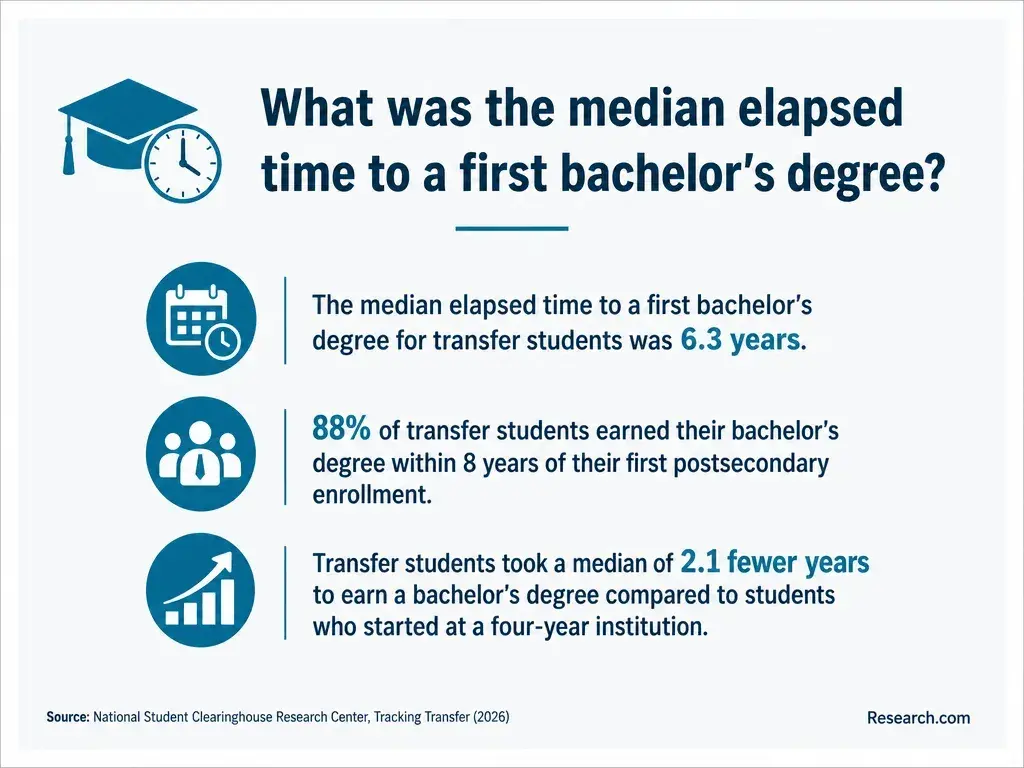
A full-time bachelor's path is commonly planned over four academic years, but the time you would actually need depends on accepted credits, which credits satisfy requirements, course availability, and whether you study part-time. A returning student should request an official degree audit: accepted electives may not replace required accounting, statistics, or upper-level business courses.
There is no reliable single price for this decision. Compare each school's tuition basis, required fees, books and software, remaining credits, and likely terms of enrollment. Then include the opportunity cost of client work you would decline or delay. If you employ others, consider whether coursework would reduce the time available to supervise delivery. Aid, employer benefits, and tax treatment depend on individual eligibility; do not count on them before confirmation.
Make the comparison against a concrete alternative. Estimate the total cost and weekly commitment of completing the BS, then compare them with a smaller set of business courses plus a technical or client-facing project. Fast-track business degree options may shorten the calendar, but verify whether their pace actually fits billable work and whether acceleration changes total cost.
Seek roles that expose you to both delivery and client decisions. A developer or systems analyst can build technical depth; an implementation specialist can learn deployment and user adoption; a project coordinator can practice scheduling, issue tracking, and stakeholder updates. An account or solutions role can develop discovery and proposal skills. The useful experience is responsibility you can describe accurately, not a particular job title.
Choose experience aligned with the service you hope to sell. Someone planning to consult on HR software, for example, benefits from learning HR workflows and data-handling expectations alongside the platform. Human resources bachelor's credit transfer options may be relevant if that domain requires substantial study, but a second degree is not the default route to HR-systems competence.
Before going independent, try to document a complete cycle of work: diagnosing a need, agreeing on scope, delivering or coordinating the solution, resolving changes, and handing it over. Share only work samples you have permission to disclose; redact confidential material and avoid presenting a team's outcome as your sole accomplishment.
There is no dependable salary figure for "software consulting business owner." Owners' income depends on collected revenue minus business expenses, taxes, and reinvestment; billable rates alone do not show take-home pay. Unbilled sales work, gaps between contracts, subcontractors, insurance, and delayed client payments can materially change the result.
For employment context, the US Bureau of Labor Statistics reports a $101,860 median annual wage for management analysts in May 2025. Some consultants fall within that occupation, but it spans industries and experience levels. Its employee wage median is neither an entry-level software consulting salary nor a forecast of an owner's profit.
If you are weighing self-employment against a salaried sector-specific role, compare compensation for the actual job you could obtain, not an unrelated manager's wage. For instance, affordable supply chain programs and salary outlook may inform a separate choice about operations-focused work, but those figures should not be used to predict software consulting income. For the business itself, build a conservative forecast using plausible billable time, collection timing, and documented costs.
How do you choose an accredited business administration program for consulting?
First, confirm that the institution holds recognized institutional accreditation and that the degree offered is the one you intend to earn. Then check whether any advertised AACSB, ACBSP, or IACBE business accreditation covers the relevant school or program; these are distinct from institutional accreditation and from a consultant's professional credentials.
Request the current catalog and an individualized degree audit before comparing completion time or price. Check which prior credits meet business-core requirements, what remains, when required courses run, and whether you can take useful electives in entrepreneurship, information systems, or project management. Ask to see capstone requirements and whether client-related work can be proposed without exposing confidential data.
Finally, compare the program's remaining total cost and actual weekly obligations with your alternative learning plan. Lists of accelerated online bachelor's programs can help identify candidates, but only the school can confirm your credit evaluation, schedule, and graduation requirements. Enroll if the verified program closes important business gaps at a cost and pace you can justify—not merely because the degree sounds relevant to entrepreneurship.
Other Things You Should Know About Business Administration
Yes, if you can competently deliver the services you offer and meet applicable business and contractual requirements. Keep the scope within your expertise and assess whether coursework would strengthen the business as it grows.
Entity choice affects administration, taxes, and potential liability, but an LLC does not replace sound contracts or insurance. Discuss your location, services, and risk with a qualified legal or tax adviser before choosing a structure.
Depending on the work, a client may request professional liability, cyber liability, or general liability coverage. Check the contract's limits and terms with an insurance professional before agreeing; policies differ in what they cover.
Ownership and usage rights depend on the contract and applicable law. Agree in writing on deliverables, pre-existing tools, third-party components, and portfolio use before work begins; do not assume payment alone resolves every intellectual-property question.
- Manage your business - Small Business Administration https://www.sba.gov/counseling/manage-your-business/
- Top 5 Skills That Management Consultants Need | Edgewood College https://online.edgewood.edu/blog/what-skills-do-management-consultants-need/
- 6 BS in Business Skills Employers Seek | University of Bridgeport https://www.bridgeport.edu/news/bs-in-business-administration-skills-employers-seek/
- Online Bachelor's Degree in Business Administration | Purdue Global https://www.purdueglobal.edu/degree-programs/business/bachelor-business-administration/
- What Can You Do With a Business Administration Degree? | American Military University https://www.amu.apus.edu/area-of-study/business-administration-and-management/resources/what-can-you-do-with-a-business-administration-degree-exploring-options/
- Understanding the Role and Value of Consultants in Business | Rollins College https://crummer.rollins.edu/resources/clone-me-2/
- Understanding Opportunity Cost of Attending College | University of Phoenix https://www.phoenix.edu/blog/understanding-opportunity-cost-of-attending-college.html
- Business Degrees Tuition and Fees | Western Governors University https://www.wgu.edu/financial-aid-tuition/tuition-business-degrees.html
- Who Is a Good Fit for a Bachelor's in Business Administration? | UNC Charlotte Online https://online.charlotte.edu/who-is-a-good-fit-for-a-bachelors-in-business-administration/
- Consulting as a Career path: What is it, and how do I do it? | Olin College of Engineering https://www.olin.edu/blogs/consulting-career-path-what-it-and-how-do-i-do-it