2027 Hybrid vs Fully Online Illustration Bachelor's Degree Programs

Co-Founder and Chief Data Scientist
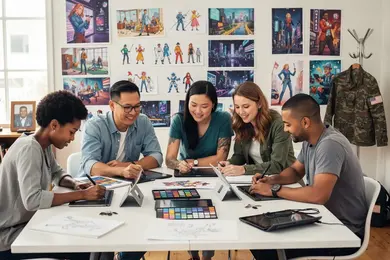
Facing a demanding work schedule while pursuing creative ambitions, a weekend artist living far from campus contemplates whether to attend Illustration classes fully online or enroll in a hybrid program with some on-site studio sessions. Balancing the desire for flexible access with the need for hands-on learning and face-to-face networking reveals the core challenge. With 65% of illustration graduates securing employment within six months of completing online programs, choosing the right format impacts career outcomes as well as lifestyle. This article explores the differences between hybrid and fully online Illustration bachelor's degree programs to guide prospective students in finding the best fit for their goals and constraints.
Key Benefits of Hybrid vs Fully Online Illustration Bachelor's Degree Programs
- Hybrid programs offer greater learning flexibility by combining online coursework with scheduled in-person sessions, allowing students to engage directly with instructors and peers for enhanced skill development.
- Fully online programs provide minimal in-person interaction, relying on virtual collaboration tools, which suits students who prioritize remote learning environments and self-paced study.
- Hybrid formats better support balancing education with work or family commitments by enabling face-to-face feedback while maintaining substantial online content accessible anytime, whereas fully online programs offer maximum scheduling freedom.
What Is a Hybrid vs Fully Online Illustration Bachelor's Degree?
Hybrid and fully online illustration bachelor's degree programs differ primarily in course delivery, interaction levels, and learning structures. According to the National Center for Education Statistics, about 35% of undergraduates engaged in some form of distance education, showing an increasing shift toward flexible learning models. These distinctions are important to consider when comparing hybrid vs fully online illustration degree programs and choosing the suitable format.
Hybrid Programs
- Coursework is divided between in-person sessions and online activities, balancing face-to-face learning with digital content.
- Scheduled on-campus attendance is required for hands-on workshops, critiques, and collaborative tasks.
- Students benefit from direct faculty interaction and access to campus resources during contact days.
- This format supports learners who prefer structured guidance alongside some flexibility in their schedule.
- Hybrid programs often foster in-person networking and team-based projects, enhancing peer collaboration.
Fully Online Programs
- All lectures, assignments, and critiques are delivered through virtual platforms without the need for campus visits.
- Scheduling offers greater flexibility, allowing students to complete coursework at their own pace from any location.
- Interaction occurs mainly through digital tools such as discussion boards, video calls, and online critiques.
- This format suits students who require maximum scheduling freedom and prefer independent learning.
- Fully online programs are ideal for those balancing education with personal or professional commitments.
Exploring these options helps prospective learners align their preferences with the educational experience they seek in an online illustration bachelor's degree format. For those interested in related fields, exploring affordable phd programs can offer additional pathways to advance academic goals.
How Does a Hybrid vs Fully Online Illustration Bachelor's Degree Program Work?
Hybrid and fully online illustration bachelor's degree programs provide structured academic pathways aimed at developing artistic skills and conceptual knowledge. They differ mainly in how coursework is delivered and how students interact with instructors and peers. According to the National Center for Education Statistics (NCES), over 40% of U.S. undergraduates recently took at least one online course, highlighting the growth of virtual learning options. The following comparison explains how each program format operates.
Hybrid Programs
- Scheduled on-campus sessions include hands-on activities, critiques, and collaborative projects that enhance direct learning experiences.
- Course materials such as lectures and assignments are accessible online through learning management systems (LMS), enabling hybrid illustration bachelor's degree program structure flexibility.
- Class participation requires attending in-person sessions alongside active involvement in online forums and video calls.
- Scheduling balances fixed campus days with flexible online deadlines to create a semi-structured learning rhythm.
- Communication with instructors and peers takes place through face-to-face meetings, email, video conferencing, and discussion boards.
Fully Online Programs
- All course content, including lectures, readings, and assignments, is available online, supporting fully online illustration bachelor's program flexibility.
- Participation occurs mainly through discussion boards, video chats, and collaborative software tools without campus attendance.
- Scheduling generally revolves around asynchronous classes, allowing students to access materials and submit work on their own time, though some live sessions may be required.
- Communication is maintained via email, LMS messaging, video conferences, and chat platforms.
- Studio critiques and feedback are delivered virtually through video calls or digital portfolio submissions.
Students exploring degree options may also consider programs with varied costs and formats; information on the cheapest engineering degree online can provide insight into affordable online education choices.
Are Admission Requirements Different for Hybrid and Fully Online Illustration Bachelor's Degrees?
Admission requirements for hybrid and fully online illustration bachelor's degree programs generally share many similarities but can differ slightly depending on each school's policies and how the program is delivered. While both usually ask for a high school diploma or equivalent and a portfolio showcasing artistic ability, there are key distinctions worth noting. Below are some important differences prospective students should consider.
- In-Person Versus Virtual Evaluations: Hybrid programs may require applicants to attend on-campus auditions, interviews, or portfolio reviews, necessitating physical presence at specific locations. Conversely, fully online programs typically conduct these assessments remotely through virtual meetings or digital submissions, catering to students unable to visit campus.
- Technical Requirements: Fully online illustration degrees often specify minimum computer specifications, software, and reliable internet access to support participating in virtual studios or critiques. Hybrid programs might have less stringent technical demands since some face-to-face instruction reduces reliance on technology.
- Program-Specific Prerequisites: Certain hybrid programs could require prior experience using campus-based resources like studios or workshops, while online formats often adjust these prerequisites by providing virtual substitutes that allow different forms of readiness to be demonstrated.
- Application Materials: Online programs usually request digital portfolio submissions exclusively, whereas hybrid tracks may ask for physical portfolios or live presentations during on-site visits, which impacts preparation and presentation methods.
- Application Deadlines and Cycles: Some schools adopt separate timelines for hybrid and fully online program applications to accommodate logistics around in-person components, affecting when and how candidates apply.
When speaking with a student enrolled in a fully online illustration bachelor's program about the differences in admission requirements, she reflected on her experience submitting a digital portfolio and participating in a virtual interview. "It was reassuring to handle everything from home, but I did worry whether my tech setup met all the specs," she shared. "The school was clear about requirements, and even offered a pre-admission tech check, which eased my concerns." She also mentioned that navigating the entire process remotely felt both convenient and challenging, especially when adapting her portfolio presentation to a digital format rather than a physical one. Overall, she found the remote admission experience well-organized and supportive despite the unique hurdles it presented.
Is the Learning Experience Better in Hybrid vs Online Illustration Bachelor's Degrees?
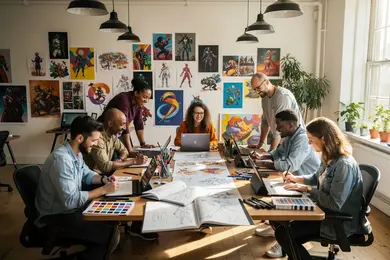
Hybrid illustration bachelor's degree programs blend in-person and online learning, offering students the advantage of direct interaction with instructors and classmates during campus sessions. This face-to-face time can boost collaboration and provide immediate feedback, which is especially important in practice-based fields like illustration. Students benefit from access to physical resources such as studios and specialized equipment that may be difficult to replicate virtually. The combination of scheduled classroom activities and flexible online coursework helps accommodate different learning preferences while promoting motivation through ongoing social contact. Yet, the necessity to be on campus can create scheduling conflicts for those managing work or personal commitments.
Fully online illustration programs prioritize flexibility, allowing learners to study from any location and often at a self-directed pace, ideal for individuals with busy lives or distant residences. However, the lack of in-person engagement may reduce spontaneous creative interactions and limit immediate instructor support, potentially affecting overall participation. To compensate, these programs often use video calls, forums, and collaborative software, although these tools might not completely replace face-to-face critiques essential in illustration training. While online students often have access to expansive digital libraries and software, the absence of hands-on studio time could hinder mastery of some traditional techniques. Ultimately, online formats focus on independence and convenience but can feel less immersive for certain learners.
Which Is More Flexible: Hybrid or Fully Online Illustration Bachelor's Degree?
Hybrid illustration bachelor's degree programs offer a blend of online and face-to-face learning, requiring students to attend certain classes, labs, or critiques on campus according to a fixed schedule. This in-person element creates some constraints on flexibility, especially for those juggling work, family, or other commitments. However, the inclusion of online coursework allows students to complete parts of their education remotely, providing a compromise between hands-on learning and convenience. These programs demand strong time management skills to balance the structured on-campus sessions with independent online study. Hybrid formats present flexible learning options for illustration bachelor's programs but with more scheduling restrictions than fully online alternatives.
Fully online illustration degrees stand out for their high level of flexibility, as they eliminate the need for physical attendance and let students access all materials remotely. The asynchronous format commonly lets learners engage with lectures and assignments at times that suit their individual rhythms, supporting those who need autonomy over their study schedule. This ability to self-manage study time is a major benefit, explaining why about 63% of online students select such programs for their flexibility. For many, fully online paths offer the most adaptable approach to earning an illustration degree. Students researching the best fit may explore options at most popular online colleges known for online program availability.
What Is the Workload for Hybrid vs Fully Online Illustration Bachelor's Degrees?
While hybrid and fully online illustration bachelor's degree programs generally meet comparable academic criteria, the scheduling and delivery methods shape the pacing and time commitments in different ways. Research from the Online Learning Consortium reveals that around 60% of students in online settings report dedicating more study time than those in traditional classrooms, underscoring the importance of time management and self-discipline across all formats. This insight sets the stage for examining how workload varies between these two approaches.
In hybrid illustration programs, students split their efforts between on-campus sessions and online coursework. Regularly scheduled face-to-face classes provide opportunities for direct feedback, group critiques, and hands-on activities, which can anchor the weekly schedule and foster accountability. Meanwhile, online components like video lessons and assignments require careful planning to meet deadlines. This combination demands balancing synchronous participation with asynchronous work, encouraging students to manage both collaborative studio time and independent tasks effectively.
Fully online illustration degrees rely heavily on asynchronous learning, offering flexibility in when and how students engage with course materials. Without fixed class times or in-person reminders, students must self-motivate to keep up with digital submissions, peer critiques, and project work. The workload centers on developing a personal routine for sketching and design assignments while maintaining steady progress. While this format suits learners with strong discipline and time management, it may pose challenges for those who thrive on structured interaction and direct supervision.
How Does Tuition Compare for Hybrid vs Online Illustration Bachelor's Degrees?
Tuition costs for hybrid and fully online illustration bachelor's degree programs vary widely, influenced by delivery format, institutional policies, credit requirements, and additional fees charged to students. According to data from the National Center for Education Statistics, online programs usually feature slightly lower per-credit tuition rates than hybrid ones, reflecting cost savings from reduced campus facility use.
- Per-Credit Tuition: Fully online programs often charge lower or similar per-credit tuition fees because they avoid expenses related to physical classrooms and campus amenities. Hybrid programs may have higher rates due to maintaining both in-person and digital infrastructure.
- Technology and Campus Fees: Hybrid students typically pay extra fees for campus access and technology support, which may include lab or studio usage. These fees tend to be lower or absent in fully online programs, where support is virtual.
- Residency or Facility Charges: Since hybrid students are required to make periodic campus visits, additional charges like parking permits or rented studio space often apply. Fully online students generally do not encounter these extra costs.
- Credit Load Flexibility: Online programs may offer more adaptable payment plans tied to credit load variations each term, giving students greater control over managing tuition expenses. Hybrid formats sometimes have more rigid structures.
- Additional Support Services: Access to both online and in-person student services in hybrid programs can increase costs, whereas online students usually utilize only virtual resources, which can be less expensive.
Discussing how tuition compares for hybrid vs online illustration bachelor's degrees, a graduate of a hybrid program shared that balancing the mixed format required careful financial planning. He recalled, "The unexpected fees for parking and lab supplies caught me off guard, and I had to adjust my budget mid-year." Despite these challenges, he valued the in-person studio time but acknowledged, "If cost was my main concern, the online route with its simpler fee structure would have been easier to manage." This perspective highlights the nuanced financial considerations prospective students should weigh when choosing their program format.
Do Employers Prefer Hybrid or Fully Online Illustration Bachelor's Degrees?
Employer perceptions of hybrid and fully online illustration bachelor degrees have improved significantly as online education platforms have become more widely accepted in higher education. According to a National Association of Colleges and Employers survey, 85% of employers now consider degrees earned online to be on par with those earned on campus. This shift reflects a growing recognition of online and hybrid formats, especially in creative and technology-driven areas. Below is a comparison of employer preferences between these two formats.
- Hands-On Experience: Hybrid degrees often incorporate face-to-face sessions, allowing students to develop practical skills and receive direct feedback, which employers find valuable for illustration portfolios and real-world preparation. Fully online degrees may lack this in-person interaction, sometimes causing concerns about hands-on proficiency.
- Flexibility and Accessibility: Fully online illustration degrees offer unmatched flexibility, making them attractive for students balancing other commitments. Employers increasingly value this adaptability, recognizing that essential skills can be cultivated outside traditional classrooms.
- Networking Opportunities: Hybrid students benefit from stronger connections with faculty and peers through on-campus events, enhancing professional relationships. Fully online students must be proactive in building networks virtually or via internships, which some employers may view as a challenge.
- Focus on Outcomes: Many employers prioritize a candidate's portfolio, creativity, and technical skills over the format of the degree. While hybrid programs ease doubts about rigor, fully online degrees are gaining parity as long as students demonstrate strong work samples and relevant experience.
This evolving perspective affects how hybrid and fully online illustration degree holders fare in the job market, making it important for prospective students to consider which format best aligns with their lifestyle and career goals. For those researching affordable options in related fields, such as business, exploring the best online mba under 35k can provide insight into value-driven online education programs.
Who Should Choose a Hybrid vs Fully Online Illustration Bachelor's Degree?
Choosing between a hybrid and a fully online illustration bachelor's degree depends on personal learning preferences, schedule flexibility, and lifestyle needs. Each format offers distinct advantages suited to different kinds of students. Understanding these differences helps prospective students decide which method aligns best with their individual circumstances and goals.
- Hands-On Learners: Students who benefit from hands-on, studio-based instruction and direct critique often thrive in hybrid learning environments where they can engage face-to-face with instructors and peers.
- Working Students: A hybrid illustration bachelor's degree for working students provides a structured schedule with periodic campus visits, balancing practical engagement and flexibility to fit around professional commitments.
- Remote Residents: Fully online illustration programs with flexible schedules are ideal for students living far from campus or in remote areas, offering access to coursework without travel demands.
- Independent Learners: Those who are self-motivated and prefer studying at their own pace often excel in fully online programs, which allow for greater control over when and how they learn.
- Family Caregivers: Students with family or caregiving responsibilities benefit from the flexibility of online study, freeing them from the need to attend in-person classes and enabling better balance between obligations.
- Campus Resource Access: Students who want access to campus resources like labs or art studios but still need some flexibility may find hybrid programs offer the best of both worlds.
For students exploring career pathways beyond illustration, examining what you can do with an environmental science degree can provide insights into how flexible degree formats serve diverse fields of study and professional needs.
How Can I Succeed in a Hybrid vs Fully Online Illustration Bachelor's Degree Program?
Success in hybrid and fully online illustration bachelor's degree programs requires tailored strategies because their formats differ significantly in interaction and structure. Hybrid students balance in-person and online activities, while fully online students engage exclusively through digital platforms. The following strategies address these differences to help learners thrive in either setting.
- Time Management: Hybrid students need to coordinate campus attendance with remote deadlines, creating a weekly rhythm that balances both environments. Fully online learners benefit from setting strict daily schedules to maintain focus without on-site cues.
- Workspace Setup: Fully online students should establish a quiet, distraction-free area for studio work and virtual critiques. Hybrid students may alternate between home workspaces and on-campus studios, requiring flexible environments.
- Digital Tool Mastery: Both groups must become proficient with essential software for sketching, animation, and design. Hybrid learners have the advantage of direct instructor support, while online students often rely on self-guided troubleshooting and digital tutorials.
- Peer Interaction: Hybrid students take advantage of face-to-face networking during classes and studios. In contrast, fully online students should actively participate in forums and live video sessions to build community and collaboration.
- Communication Skills: Hybrid learners clarify instructions through in-person dialogue, whereas online students must express questions clearly in writing or via video to bridge physical distance.
What Graduates Say About Hybrid vs Fully Online Illustration Bachelor's Degree Programs
- Lennon: "Choosing a fully online illustration program was essential for me because I needed the flexibility to balance work and study. The ability to learn at my own pace while still accessing quality resources helped me stay motivated throughout the course. Now, as a freelance illustrator, I credit my online degree with providing real-world skills that translated immediately into my career."
- Forest: "I opted for a hybrid illustration bachelor's degree to combine the best of both worlds: face-to-face guidance and online convenience. Navigating the blend of live workshops and virtual lectures challenged me to become highly organized, but it fostered a deep discipline in my creative practice. This program sharpened not only my artistic skills but also my ability to adapt in an evolving creative industry."
- Leo: "Enrolling in an online illustration program was a practical choice due to geographic and time constraints. While the experience was different from traditional study, it offered a unique digital community that broadened my artistic network globally. Earning my degree online proved to be a valuable stepping stone that opened doors to collaborative projects and remote professional opportunities."
Other Things You Should Know About Illustration Degrees
In 2027, hybrid illustration programs offer enhanced networking due to in-person interactions with peers, faculty, and industry guests. Meanwhile, fully online programs leverage digital platforms for global connections. Each format provides distinct advantages, depending on students' preferences for physical presence or virtual networking reach.
Students in hybrid illustration programs often have on-campus access to specialized studios, art labs, and equipment, enhancing hands-on learning. Fully online students typically rely on digital tools and software provided through their program, which can be effective but may not replicate the full range of physical resources. Some online programs loan equipment or offer virtual labs to bridge this gap.
In hybrid programs, critiques and portfolio reviews frequently occur in person, allowing for immediate feedback and detailed visual demonstrations. Fully online programs use video conferencing and digital submissions to conduct reviews, which can be effective but might lack the immediacy and nuance of face-to-face interactions. Both formats aim to support student growth through constructive critique.
Hybrid programs often provide on-campus career services, including job fairs and direct employer contacts, which can benefit students seeking local opportunities. Fully online programs typically offer virtual career services, such as resume workshops and remote internship listings, which can be valuable but may require more self-direction. The effectiveness of support can vary widely depending on the school's resources.
References
- Illustration and Design BA (Hons) https://ezyapply.net/program/detail/20374
- What is an Online Hybrid Course? Understanding the Blend of Learning Modalities https://tevello.com/blogs/online-courses/what-is-an-online-hybrid-course-understanding-the-blend-of-learning-modalities
- Online Illustration Degrees | Sessions College https://www.sessions.edu/illustration-info/
- Hybrid College Classes: What They Are & How They Work https://beal.edu/what-are-hybrid-college-classes/
- Online vs. Hybrid | Teaching, Learning & Digital Transformation https://innovationtest.utsa.edu/tldt/faculty-resources/academic-technologies/digital-tools/online-vs-hybrid.html
- BFA/BA in Graphic design but also want to learn basic drawing. Is it possible? | MacRumors Forums https://forums.macrumors.com/threads/bfa-ba-in-graphic-design-but-also-want-to-learn-basic-drawing-is-it-possible.1604186/
- The Best of Both Worlds: Exploring the Benefits and Challenges of Hybrid Education https://www.facultyfocus.com/articles/online-education/online-course-delivery-and-instruction/the-best-of-both-worlds-exploring-the-benefits-and-challenges-of-hybrid-education/
- What is the Difference Between an Online Class and a Hybrid Class? https://www.top10onlinecolleges.org/faq/what-is-the-difference-between-an-online-college-class-and-a-hybrid-class/
- 2025 Graphic Design Tuition - Online https://www.collegetuitioncompare.com/majors/50.0409/graphic-design/
- Hybrid Online College Models: The Future of Flexible Higher Education https://preview.bravebitsglobal.com/news/hybrid-online-college-models--the-future-of-flexible-higher-education