2027 How to Become a Release of Information Specialist With a Healthcare Administration BS

Co-Founder and Chief Data Scientist
A healthcare administration bachelor's degree can prepare you to handle medical-record requests, but it is not the only route into release of information (ROI) work—and it may not be the most direct one. If you are choosing a degree or already have one, the important question is whether you can demonstrate privacy knowledge, accurate records handling, and experience with health information systems.
This guide explains the job, compares education paths, and shows how to evaluate programs, credentials, costs, and employment prospects before committing to more schooling.
Key Things You Should Know
- A healthcare administration BS can qualify you to apply for ROI specialist jobs, but employers may also accept an associate degree, relevant experience, or a health information management credential.
- Prioritize HIPAA training, electronic health record experience, and practice reviewing authorizations; a general administration degree alone does not establish those skills.
- A bachelor's degree typically takes about four years of full-time study. If ROI is your immediate goal, compare its total cost with shorter health information management or employer-training routes before enrolling.
What does a release of information specialist do in healthcare?
An ROI specialist processes requests to access or disclose protected health information. Requests may come from patients, authorized representatives, insurers, attorneys, or other healthcare organizations. The specialist verifies identity and authority, checks the applicable rules and organizational policy, locates the correct records, and documents what was released.
The distinction between a patient's right to access their own records and a third party's request matters: the paperwork, permitted scope, and deadlines can differ. ROI staff also need to recognize when a request requires escalation—for example, when an authorization is incomplete or a record contains specially protected information. They do not make clinical decisions. For a closer look at how degree emphases differ, see the healthcare administration and health information management program comparison on education portals.
What education is required to become a release of information specialist?
There is no single nationwide degree requirement for an ROI specialist. Job postings may ask for a high school diploma and healthcare records experience, an associate degree, or a bachelor's degree. Employers commonly value familiarity with HIPAA, electronic health records, document quality checks, and customer service more than a particular degree title.
A healthcare administration BS offers broad preparation, while a health information management (HIM) program generally provides more focused study of records, data standards, and information governance. If you want ROI work now and HIM credential options later, review accredited online health information management programs and verify the accreditation status of the specific program before applying.
Can a healthcare administration bachelor's degree prepare you for this career?
Yes—particularly if you choose privacy, health information, and records-related coursework and obtain practical experience. Healthcare administration teaches how organizations operate; ROI work requires applying detailed disclosure procedures to individual requests. That gap makes an internship, records-office job, or supervised practicum especially useful.
If you already hold the BS, start by comparing local ROI postings with your transcript and work history. Seek training for the missing tasks rather than assuming you need another degree. A master's in health administration is aimed more at organizational leadership than entry-level disclosure work; programs to consider for an MHA career change are relevant only if your longer-term goal extends beyond ROI operations.
Curricula vary, but commonly include healthcare systems, medical terminology, health law and ethics, organizational management, finance, and information systems. For ROI preparation, look beyond course titles: a useful privacy course should address patient access, authorizations, permitted disclosures, and secure handling of records. A practical information-systems course should expose you to record retrieval and documentation workflows, not just general technology management.
Ask whether students can complete a placement or project with a HIM department. Advanced leadership study serves a different purpose; healthcare administration doctorate pacing and completion factors matter later if you pursue senior administration or research, not as preparation for an initial ROI role.
They can be, provided the program teaches applicable privacy and information-system skills and you can obtain hands-on experience. Check whether classes are asynchronous, whether live meetings are required, and whether an internship can be completed near home. Online delivery alone does not mean a placement is optional or that an employer will provide one.
Verify the institution's recognized accreditation, transfer-credit policy, and career support. If your primary objective is ROI, compare the online BS with a more focused HIM route before choosing on convenience alone. Online options also exist at later career stages, but evaluating faster healthcare leadership doctorate pathways addresses a different goal from learning day-to-day disclosure work.
A bachelor's degree commonly takes about four years of full-time study; transfer credits, part-time enrollment, and course availability can change the timeline. Published tuition is not the full price. Compare required credits, tuition and mandatory fees, books or software, placement costs, and any remaining expenses after grants or employer assistance. Borrowing also adds financing costs.
Ask each school for a degree audit and an estimated total cost based on your transfer credits—not only an advertised per-credit rate. If a BS would require substantial new borrowing solely to enter ROI work, compare affordable college options for aspiring healthcare administrators with shorter, job-focused training and local employer requirements.
Bachelor's admission rules depend on the school and whether you apply as a first-year or transfer student. Schools may request prior transcripts, proof of high school completion or an equivalent credential, and documentation for transfer credit. A clinical license is generally not inherent to healthcare administration study, but individual placements may impose background-check or health-clearance requirements.
Before applying, confirm admission requirements, the minimum grades accepted for transfer, and whether your intended internship has separate conditions. Do not confuse these rules with graduate admissions: comparing universities offering an online MHA is useful for a later management decision, not for determining eligibility for a bachelor's program or an ROI job.
Employers may value formal HIM credentials, but check eligibility before paying for exam preparation. AHIMA's Registered Health Information Technician (RHIT) and Registered Health Information Administrator (RHIA) credentials have specific qualifying education pathways; a general healthcare administration BS does not automatically make you eligible. Privacy-focused credentials may also have education or experience requirements. Employer-provided HIPAA training is important, but a generic "HIPAA certification" should not be mistaken for a federally required ROI license.
Choose a credential that matches the jobs you want and a pathway for which you qualify. A doctorate is not a substitute for records-handling competence; healthcare administration doctorate fees and completion costs belong in a separate, later decision about advanced leadership education.
Hospitals, physician practices, health systems, insurers, records-service vendors, and other organizations handling medical information employ people in ROI-related roles. Job titles can include ROI specialist, medical records specialist, or HIM technician; read the duties rather than relying on the title alone. A vendor role may emphasize request volume and turnaround, while a provider-based role may offer broader exposure to the organization's HIM operations.
With experience, an ROI specialist may move into quality review, privacy operations, HIM supervision, or other administrative work. Those transitions usually require additional responsibility and skills, not merely degree completion. If broader advancement is the goal, planning a career in healthcare administration can help distinguish operational roles from management paths.
What salary and job outlook can release of information specialists expect?
There is no reliable national wage figure that isolates ROI specialists across every employer and job title. The Bureau of Labor Statistics' medical records specialist category offers a broader labor-market reference, but its pay and projections should not be presented as ROI-specific. Compare current local postings by employer, experience requirement, and whether the role includes supervision or specialized privacy duties.
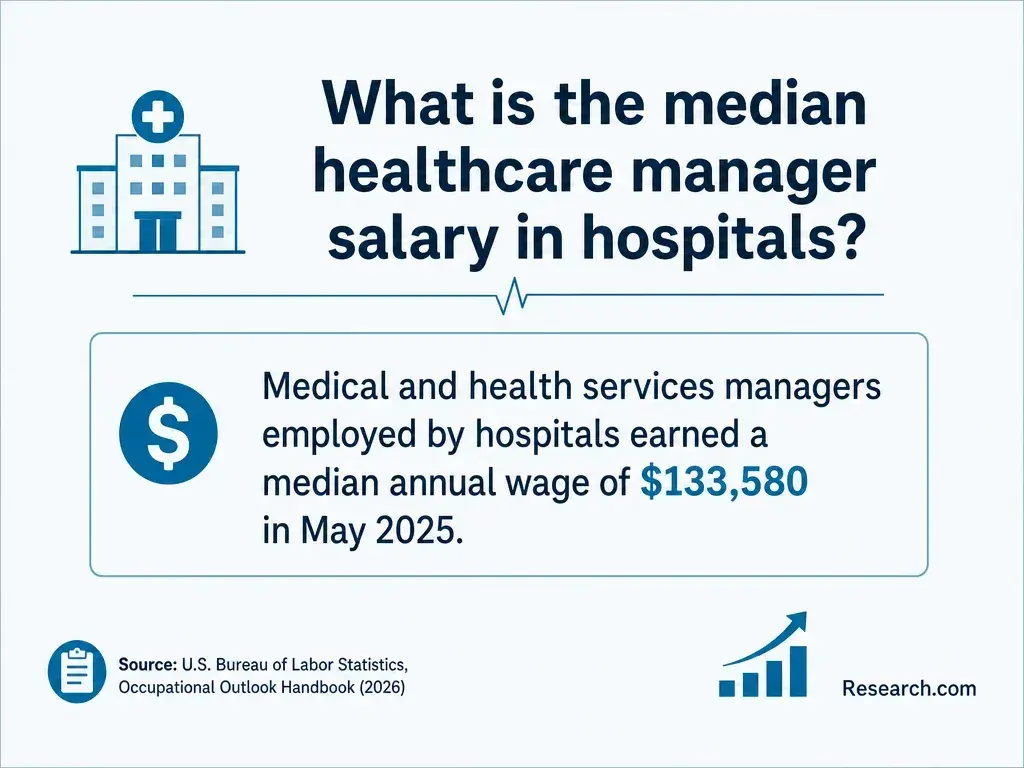
Management pay is a particularly poor proxy for an entry-level ROI salary. The BLS reported a $126,520 median annual wage for all management occupations in May 2025; that figure describes a different workforce and does not predict what an ROI specialist—or a BS graduate—will earn. If you eventually consider executive study, universities offering online healthcare management doctorates should be evaluated against a specific leadership goal, not this management-wide median.
Other Things You Should Know About Healthcare Administration
Some employers offer remote or hybrid roles, but access controls, training, location restrictions, and experience requirements vary. Confirm the arrangement in the specific posting.
Yes. Under HIPAA, patients generally have a right to request an amendment. The organization reviews the request under its procedures; ROI staff should route it to the responsible team rather than changing clinical documentation themselves.
Follow your employer's verification and escalation procedures. Do not release records based on an assumption about the requester's identity, authority, or intended scope.
No. ROI focuses on appropriate access to and disclosure of records. Coding assigns standardized codes to documented diagnoses and services; some HIM departments employ both specialists, but the work and training differ.
- Summary of the HIPAA Privacy Rule | hhs.gov https://www.hhs.gov/hipaa/for-professionals/privacy/laws-regulations/index.html
- Which HIM Certification Is Right for You? | UW Online Collaboratives https://uwex.wisconsin.edu/stories-news/which-him-certification/
- ROI Medical Records Specialists: How to Become One | Franklin University https://www.franklin.edu/career-guide/medical-records-specialists/how-to-become-roi-medical-records-specialists
- 6 High-Paying Healthcare Administration Degree Jobs & Careers | Southwest Minnesota State University https://online.smsu.edu/resources/article/healthcare-administration-degree-jobs/
- Bachelor of Science in Healthcare Administration | NU.edu https://www.nu.edu/degrees/healthcare-leadership/programs/bachelor-science-healthcare-administration/
- Release of Information Specialist II | hopkinsmedicine.org https://jobs.hopkinsmedicine.org/job/102682/release-of-information-specialist-ii-healthcare-operations-us-md-baltimore-johns-hopkins-health-system/
- ROI Medical Records Specialist - Remote - Myworkdayjobs.com https://sharecare.wd1.myworkdayjobs.com/en-US/Sharecare_Careers/job/ROI-Medical-Records-Specialist---Remote_R-102102-1
- Medical Records Specialist Job Description | LHH https://www.lhh.com/en-us/insights/job-descriptions/medical-records-specialist
- Release Of Information Specialist in Torrance, California, USA | TEKsystems Careers https://careers.teksystems.com/us/en/job/JP-006349951/Release-Of-Information-Specialist
- Release of Information Specialist | MyAHIMA https://my.ahima.org/careermap