2027 Data Science Master's Financial Planning for Parents with Childcare Costs

Co-Founder and Chief Data Scientist
For a parent, the cost of a data science master's is not just the tuition bill. Class schedules may change childcare needs, and study time may reduce paid work. This guide helps you compare programs on a consistent basis, build a budget that can withstand a childcare disruption, and decide whether the degree fits your finances and career goals.
Key Things You Should Know
- Compare the full cost of attendance - not just tuition - including required fees, childcare changes, materials, travel, financing costs, and any income you would give up.
- Ask each school whether documented dependent-care expenses can be included in your individual aid budget; inclusion may increase borrowing eligibility, but it is not a grant.
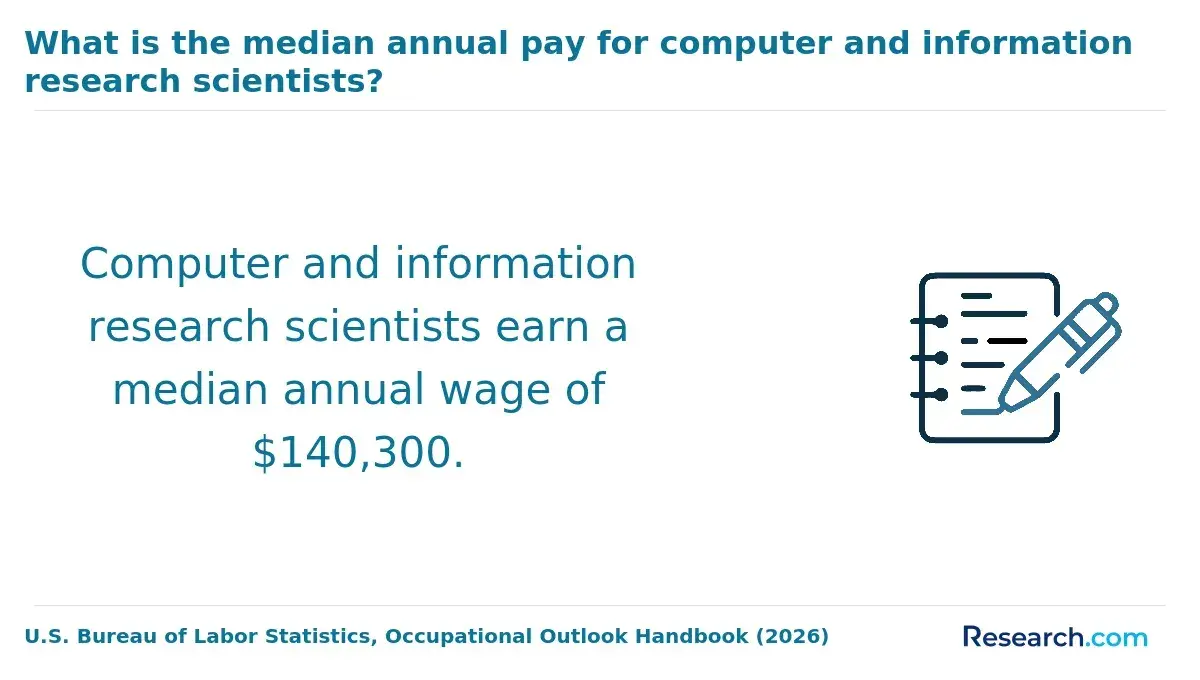
- Use career earnings cautiously: the U.S. median annual wage for data scientists was $120,230 in May 2025, not a forecast of what a new graduate or career changer will earn.
What Does a Data Science Master's Degree Cost for Parents with Childcare Expenses?
The relevant price is the change in your household's finances from enrolling. A lower-tuition program can cost more overall if it requires unpaid time off, frequent campus visits, or childcare during inflexible evening sessions. Published tuition also may not include fees or account for how long you take to finish.
This breakdown separates school charges from costs that depend on your family and schedule. Use the same categories for every program you compare.
| Cost category | What to include | Why it matters for parents |
| Tuition | Required credits at the applicable rate, including any rate changes you need to plan for | A slower pace can spread payments out without reducing total tuition. |
| Mandatory fees | Technology, student, course, and graduation fees where applicable | Some are charged each term, making extra terms consequential. |
| Childcare | Care needed for class, focused study, exams, travel, and schedule gaps | Existing care costs count only to the extent enrollment changes them. |
| Materials and technology | Required software, books, equipment, and reliable internet | Check what the school provides before budgeting for purchases. |
| Travel and living costs | Campus visits or commuting, plus any change in household expenses | Do not count ordinary living expenses twice when comparing options. |
| Financing and opportunity costs | Loan interest and fees, plus wages or benefits you would forgo | These may outweigh a difference in advertised tuition. |
Request a term-by-term tuition and mandatory-fee estimate based on your proposed course load. If you are open to a different technical focus, a comparison of ML master's degrees with tuition and fees below $20,000 can help you identify options to investigate - but confirm current charges and whether the curriculum meets your goal.
How Can Parents Budget for Tuition, Childcare, and Living Costs During Graduate School?
Build a budget by academic term and by month. Tuition may arrive in large installments, while childcare and rent continue between payment dates. Your baseline should be what the household would spend and earn without school; add only changes caused by enrollment.
Use the following sequence to test whether the plan works in both an ordinary month and a disrupted one.
- Map every required course, likely term of enrollment, tuition due date, and known break in the academic calendar.
- Block class, commute, group-work, and realistic study hours on the family calendar; price the childcare those blocks require, including backup care if available.
- Subtract confirmed grants and employer payments from school charges; keep uncertain awards out of the base case.
- Compare monthly household income with living costs, added childcare, and school payments; separately record any wages or benefits lost because of reduced work.
- Stress-test a delayed course, a childcare closure, and a term with less income. Identify which expense you could reduce or how you would cover a shortfall before enrolling.
A useful calculation is school charges + enrollment-related childcare and other added expenses + forgone earnings − confirmed non-loan support. Keep loan proceeds out of the subtraction: borrowing changes when you pay, not what the education costs. If the plan works only with the maximum available loan or uninterrupted childcare, consider fewer courses or a later start.
What Financial Aid and Tax Benefits Can Help Parents Fund a Data Science Master's?
Start with the program's financial aid office, not its tuition page. Ask about institutional scholarships, assistantships, employer tuition assistance, federal aid eligibility, and the school's current graduate-loan rules. Federal aid begins with the FAFSA, but an aid offer is not the same as a grant: loans must be repaid, generally with interest.
Parents should ask specifically about a dependent-care allowance in the cost of attendance. Federal aid rules permit schools to account for reasonable dependent-care expenses during periods of study, but the school determines the documented amount under its policy. An adjustment may permit additional eligible aid, often borrowing; it does not automatically provide cash or cover every childcare bill.
Tax provisions require a separate check. The Lifetime Learning Credit may apply to eligible graduate tuition and required educational expenses, subject to income and other eligibility rules. Employer educational assistance may receive favorable tax treatment under applicable rules. Childcare-related tax benefits have different work-related eligibility tests; do not assume that enrolling in graduate school alone makes care expenses eligible. A qualified tax adviser or current IRS guidance can help you avoid claiming the same expense twice.
Before accepting aid, ask when funds disburse, which charges the school pays first, and whether an employer reimbursement arrives only after a passing grade. Those timing details determine whether you need money available for childcare before reimbursement or aid reaches your account.
Are Online Data Science Master's Programs Better for Parents with Childcare Needs?
Online study can remove commuting, but it does not remove the need for uninterrupted work time. An asynchronous program may let a parent study around school pickup; a synchronous program may be easier to follow if predictable live meetings provide structure. Neither format is automatically cheaper once childcare is counted.
Choose based on the schedule you can actually sustain. Ask for the next term's typical meeting times, time-zone policy, exam windows, group-project expectations, and any required campus visit. Also check whether courses are offered often enough to maintain your preferred pace. A flexible course interface is of limited value if a required class runs only when your family calendar cannot accommodate it.
If online study is central to your plan, review how data career preparation through online degrees connects coursework to practical projects. For parents, the strongest fit pairs that career relevance with a schedule that leaves protected study time.
What Courses Do Data Science Master's Programs Typically Include?
Typical curricula combine statistics, programming, data management, machine learning, and applied work such as a project or capstone. Course names alone do not establish depth: one program may require substantial modeling and software work, while another emphasizes interpretation and business decisions.
Read course descriptions and project requirements against your intended job. If you want to build predictive systems, look for evidence of coding, model evaluation, and deployment or implementation work. If you want an analytics role, communication, experimental reasoning, and organizational decision-making may deserve more weight. A guide to data analytics master's programs can help you assess that adjacent path without assuming the two degree titles are interchangeable.
For budgeting, find out whether prerequisites or bridge courses carry additional tuition and whether project courses demand scheduled collaboration or outside data access. These details affect both completion time and childcare hours.
What Are the Admission Requirements for a Data Science Master's Program?
Requirements vary by school. Programs commonly evaluate an applicant's bachelor's-level preparation and readiness for quantitative and programming coursework, but specific prerequisite courses, tests, work-experience expectations, and application materials must be checked in each program's current admissions policy.
Identify gaps before paying an application fee. Ask whether prior coursework or professional work meets a prerequisite, whether a bridge course is required, and whether that course counts toward the degree. For a parent, a missing prerequisite is more than an admissions issue: it can add a term of tuition and childcare or delay entry into the courses needed for a career change.
How Long Does a Data Science Master's Take to Complete Part Time?
There is no single part-time completion time. It depends on required credits, course availability, prerequisites, the number of courses you can take per term, and the school's maximum time-to-degree policy. A published timeline may assume continuous enrollment that does not fit a parent's childcare or work schedule.
Ask an adviser to map a completion plan at your intended pace, including any courses offered infrequently. Then ask what happens if you skip a term, reduce your course load, or need a formal leave. Part-time study can preserve earnings and reduce weekly childcare pressure, but extra terms may add recurring fees and delay a career move. Compare both the total cost and the monthly strain.
How Can Parents Compare Accredited Data Science Master's Programs?
Check the institution's current accreditation status with the institution and its recognized accreditor; do not assume a program has separate programmatic accreditation because the university is accredited. If you will study across state lines, confirm that the institution can enroll students where you live and that any required in-person activity is feasible.
Make a short list using the same evidence for each program: required credits and fees, a workable course sequence, childcare-compatible meeting times, prerequisite costs, available support, and project fit. Request written clarification when a website does not answer a consequential question. A ranking or low advertised price cannot substitute for a viable household schedule.
If data science programs remain unaffordable, lower-cost artificial intelligence master's options may be worth comparing. Treat AI as an alternative only if its required courses serve your intended work; compare total charges and scheduling on the same basis.
What Careers and Salaries Can Data Science Master's Graduates Expect?
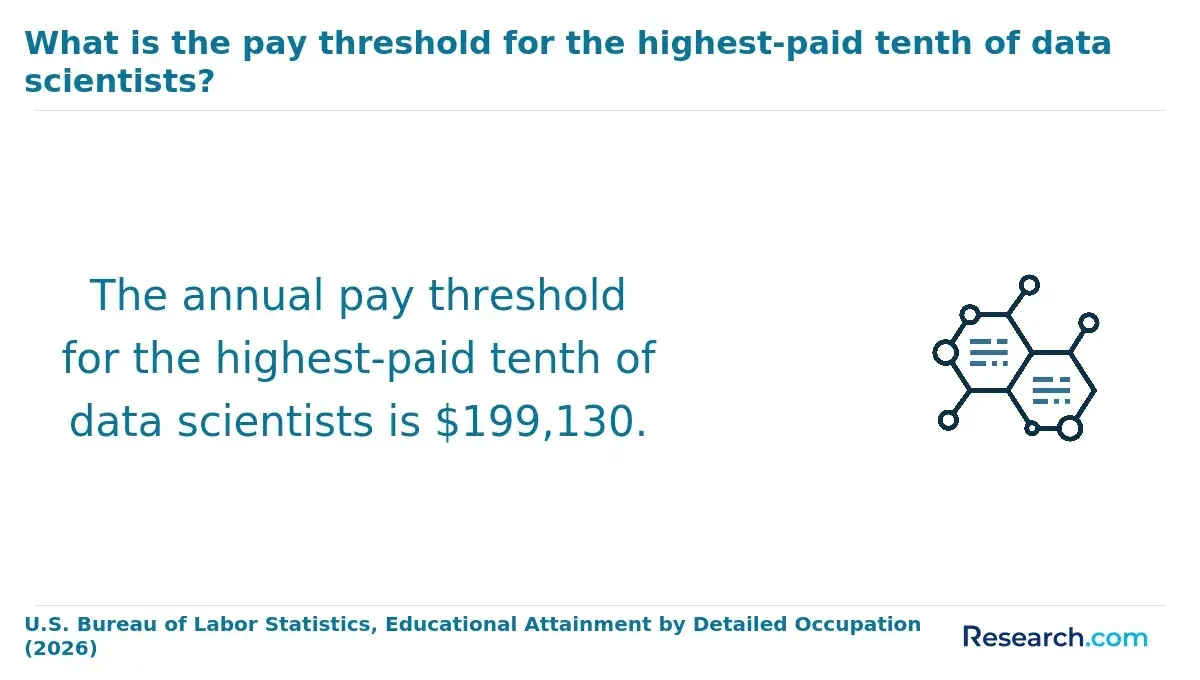
A master's may support a move into data science, machine learning, or adjacent analytics work, but the realistic target depends on your prior experience, technical skills, projects, industry, and local opportunities. The U.S. Bureau of Labor Statistics reports a $120,230 median annual wage for data scientists in May 2025. That figure covers workers across experience levels; it is not an entry-level offer or evidence that the degree causes a particular raise.
For a personal return-on-investment test, compare your plausible change in earnings with the full education cost, lost income, and loan repayment - not with the national median. Review relevant job postings for their skill requirements, and ask programs for outcomes that distinguish career changers from experienced data professionals. Industry can also shape compensation; research on where data science graduates earn more is useful context, not a substitute for offers in your target market.
What Certifications or Licenses Do Data Scientists Need?
Data scientist is not generally a state-licensed occupation in the United States. Employers may value particular software, cloud-platform, or analytics certifications, but requirements differ by role. A certification can demonstrate familiarity with a tool; it does not replace evidence that you can frame a problem, work with data, evaluate results, and explain limitations.
Before paying for an optional credential alongside graduate school, check target job postings. If they consistently request a specific tool, compare the certification's cost and preparation time with what your degree already teaches. Parents with limited study hours may get more value from a strong, relevant project than from collecting credentials without a clear hiring purpose.
Other Things You Should Know About Data Science
Possibly, but deferral is program-specific and may not preserve a scholarship or tuition rate. Request the policy and any deadline in writing before accepting an offer.
If the school offers childcare and permits prospective students to apply, ask about eligibility and timing early. A place on a waitlist is not a confirmed care arrangement.
Tuition refunds, aid adjustments, and satisfactory academic progress rules can all be affected. Check the applicable deadlines with the registrar and financial aid office before withdrawing.
Some schools allow nondegree enrollment, but admission to the degree and transfer of that course's credits may not be automatic. Confirm both policies, the course price, and aid eligibility first.
References
- How Financial Aid Is Calculated | studentaid.gov https://studentaid.gov/complete-aid-process/how-calculated
- Tax benefits for education: Information center | Internal Revenue Service https://www.irs.gov/newsroom/tax-benefits-for-education-information-center
- Cost of Attendance (Budget) | 2025-2026 Federal Student Aid Handbook https://fsapartners.ed.gov/knowledge-center/fsa-handbook/2025-2026/vol3/ch2-cost-attendance-budget
- MS Data Science - Notre Dame financial aid https://financialaid.nd.edu/apply-or-renew/graduate-students/graduate-program-costs/ms-data-science/
- Master's in Data Science: Financial Aid & Scholarships | nyu.edu https://cds.nyu.edu/masters-in-data-science-financial-aid-fellowships/
- Tuition & Expenses | Student Financial Services https://financialaid.wsu.edu/tuition-and-expenses/
- Program Fees | Master of Science in Data Science | University of Connecticut https://masters.datascience.uconn.edu/program-fees/
- Tuition, Fees, & Aid - UChicago Data Science Institute https://datascience.uchicago.edu/education/tuition-fees-aid/