
2027 Master's in Data Science vs. Master's in Autonomous Systems: Choosing Your Graduate Path

Co-Founder and Chief Data Scientist
A master's in data science and a master's in autonomous systems can both involve AI, but they prepare students to solve different problems. If you are weighing these degrees, the deciding factor is whether you want to extract insight from data across many settings or develop systems that perceive, decide, and act in the physical world.
This comparison explains how to assess curricula, projects, costs, and career evidence so you can choose a program that fits your intended work.
Key Things You Should Know
- Choose data science for a broader range of data-focused roles; choose autonomous systems when robotics, sensing, control, or real-world deployment is central to your goal.
- Program titles are not enough: compare required courses and projects, especially how much hands-on hardware or simulation work an autonomous systems degree includes.
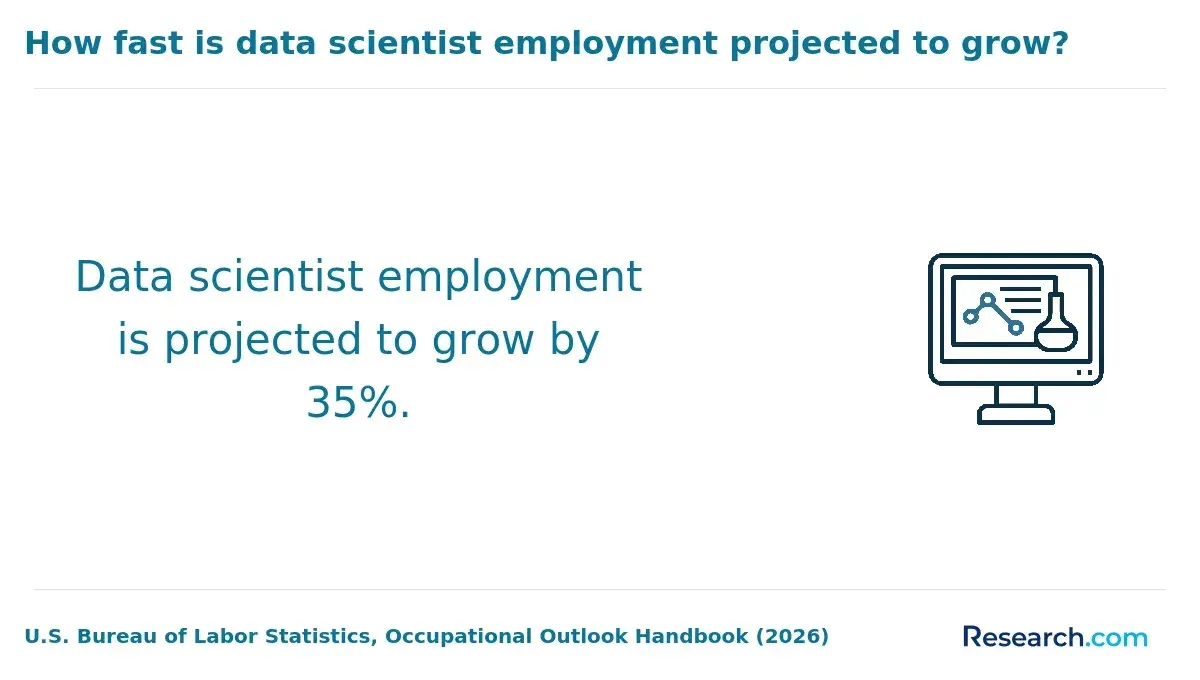
- The U.S. Bureau of Labor Statistics projects 35% employment growth for data scientists from 2025 to 2035; that occupation-wide forecast does not predict outcomes for either degree's graduates.
What is the difference between a master's in data science and autonomous systems?
A data science master's generally centers on collecting, managing, analyzing, and modeling data to support predictions or decisions. An autonomous systems master's generally centers on systems that sense their environment and act with some independence, such as robots or unmanned vehicles. Both may teach machine learning, but autonomous systems work must also account for issues such as sensors, motion, control, and operation outside a clean dataset.
The distinction is not absolute. One school's data science program may offer computer vision or robotics electives, while another school's autonomous systems degree may emphasize software and simulation rather than physical devices. Compare what students must do, not just what the program says they can study.
If your primary interest is building AI models rather than analyzing business data or integrating systems with physical environments, an AI-focused degree may also deserve consideration. The better choice depends on the problems represented by its required courses and final projects.
Which career paths can each master's degree prepare you for?
The degrees point toward overlapping but distinct job searches. These are potential directions, not positions a credential alone qualifies someone to hold.
| Degree emphasis | Roles to investigate | Evidence employers may want to see |
| Data science | Data scientist, machine learning practitioner, analytics specialist, or data-focused product researcher | Well-evaluated models, reproducible analysis, data engineering, and clear communication of findings |
| Autonomous systems | Robotics software, perception, autonomy, controls, or systems engineering roles | Testing in simulation or on hardware, sensor integration, control or planning work, and documented system performance |
Some employers hire for skills that cross this boundary: perception teams, for example, may need strong statistical modeling and experience with sensors. If you want flexibility across data-heavy industries, review choosing a data science degree for data career opportunities alongside actual job postings. If your target postings repeatedly require robotics software, control, or embedded-system experience, a general data science curriculum may leave important gaps.
How do data science and autonomous systems master's curricula compare?
Look first at required coursework, then at electives and the final project. The comparison below describes common emphases, not requirements shared by every school.
| Curriculum question | Data science emphasis | Autonomous systems emphasis |
| Mathematical foundation | Statistics, probability, and optimization for inference and prediction | Mathematics for estimation, control, planning, and system behavior |
| Computing | Programming, data pipelines, databases, and model evaluation | Programming, perception, robotics software, simulation, and sometimes embedded computing |
| Applied work | Analyzing and communicating results from datasets | Integrating components and testing how a system behaves in changing conditions |
| Possible specialization | Advanced analytics, machine learning, or application-specific electives | Robotics, computer vision, controls, or autonomous navigation |
A course title cannot establish depth. Check syllabi and project descriptions: Does "robotics" require implementing and testing a system, or only discussing applications? Does "machine learning" include rigorous evaluation and deployment? If your interests lean toward analysis and decision support but not necessarily a data scientist role, a data analytics graduate degree guide offers another comparison point.
What are the admission requirements for each master's program?
Requirements vary by institution. Both paths may expect programming and quantitative preparation; autonomous systems programs may place greater weight on engineering, physics, controls, or robotics preparation, while data science programs may emphasize statistics and work with data. None of those tendencies substitutes for a program's published prerequisite list.
Applicants changing fields should distinguish formal admission requirements from skills that would help them succeed after admission. A portfolio or self-study may show readiness without fulfilling a required for-credit course. Ask admissions staff whether prerequisite courses can be completed before enrollment, alongside graduate classes, or not at all.
If you have substantial quantitative or professional experience but no computer science degree, compare published policies rather than ruling yourself out. Graduate AI options for career changers without a CS degree can provide additional alternatives if your goal is AI work rather than a specific robotics credential.
How do online and campus-based programs compare for these degrees?
Online delivery can suit data science work when courses provide access to computing resources, feedback, and collaborative projects. For autonomous systems, delivery format deserves closer inspection: simulation can support substantial learning, but it is not identical to working with sensors, hardware, and physical testing constraints.
Ask what equipment students can access, whether campus visits are required, and how remote students complete team projects. Also check live-session schedules and whether a thesis, lab, or capstone is available in the format you would enroll in. A campus program is not automatically more hands-on; the published project arrangements matter more than the label.
If speed and online access are your overriding priorities, shorter pathways to an artificial intelligence master's may be worth comparing. Verify that a shorter AI curriculum actually covers your intended work before treating it as a substitute for autonomous systems training.
How long do these master's programs take, and what do they cost?
There is no reliable degree-wide duration or price that applies to either path. Credit requirements, full-time or part-time enrollment, thesis work, tuition policies, and fees differ by school. A program that costs less per credit can cost more overall if it requires more credits or substantial travel.
For a fair comparison, calculate each school's published total tuition for the required credits, then add mandatory fees and any disclosed costs for equipment, software, campus visits, or extended enrollment. Consider income you may forgo if one format prevents you from working. Request a written cost estimate for your residency and enrollment status, and confirm which charges may change.
Employer benefits, scholarships, assistantships, and federal aid may affect what you pay, but eligibility and availability vary. Use financial support for data science graduate students as a starting point, then verify funding directly with each institution. Do not choose based on advertised tuition alone.
What salaries and job outlooks can graduates expect?
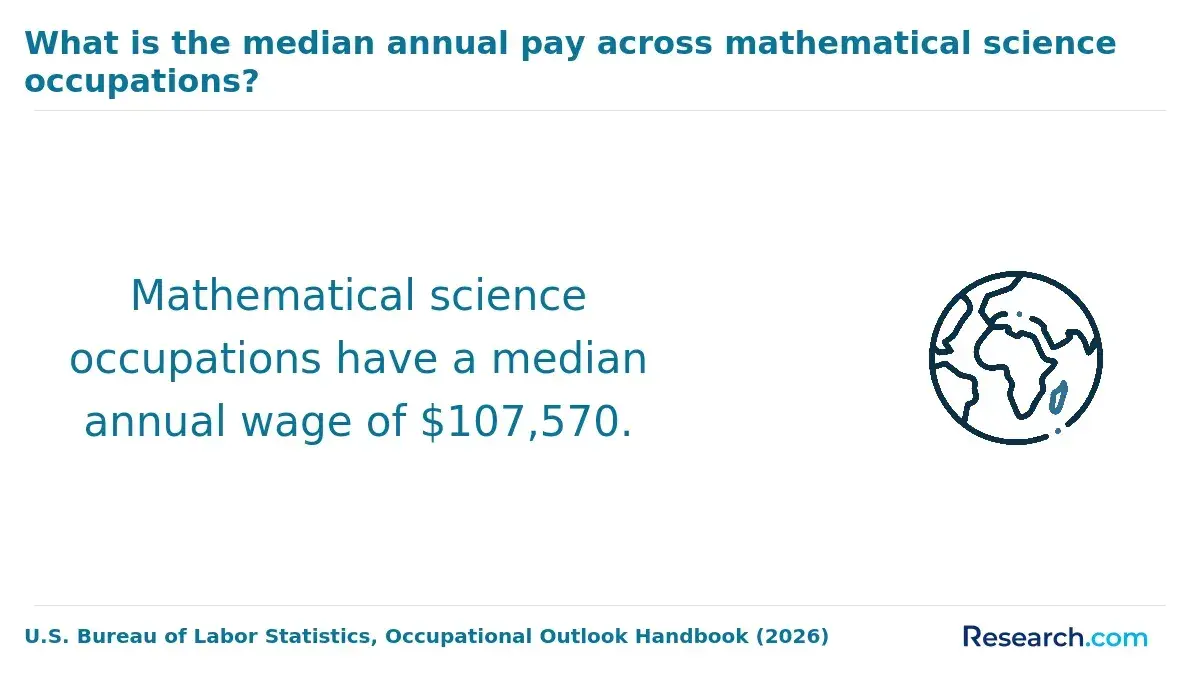
The U.S. Bureau of Labor Statistics reports a $120,230 median annual wage for data scientists in May 2025. That is an occupation-wide figure, not a starting salary or a measured outcome for master's graduates. The same agency projects 35% growth in data scientist employment from 2025 to 2035, indicating demand for that occupation without guaranteeing that any applicant will secure a job.
Autonomous systems does not map neatly onto one occupation with one defensible salary or growth rate. Graduates may pursue roles classified across software and engineering occupations, depending on their work. To compare prospects, collect salary ranges from postings for the same role, location, and experience level, then check whether each degree's projects build the stated skills. Be wary of comparing the data scientist median with an unrelated engineering figure and calling the difference a return on either degree.
Do these careers require professional licenses or certifications?
Data scientist roles generally do not have a single profession-wide license. Autonomous systems roles also do not share one universal license, but particular engineering responsibilities or regulated applications can be subject to state, employer, or industry requirements. If a target role involves licensed engineering practice, verify the relevant state board's rules rather than assuming a master's degree alone qualifies you.
Vendor or technical certifications can demonstrate familiarity with a tool, but they are not substitutes for the degree requirements or project experience an employer specifies. Check target job descriptions before paying for one.
How does accreditation affect the value of each master's degree?
Verify that the institution holds recognized institutional accreditation; this is a basic check of the school, not proof that a particular curriculum matches your goals. Also check whether a program claims specialized accreditation and what, precisely, that accreditation covers. Do not assume that every data science or autonomous systems master's has - or needs - the same program-specific accreditor.
If licensure might matter later, ask the relevant licensing board whether your intended program and prior education meet its rules. Accreditation cannot establish that a degree provides the lab access, projects, or employer connections you need; evaluate those separately.
How should you choose a reputable program for your career goals?
Start with a target role rather than a degree title. Then use the same checks for each school so a compelling course description or headline tuition figure does not dominate the decision.
Work through these questions before applying or paying a deposit:
- Which skills recur in current postings for your target role, and which required courses - not just electives - teach them?
- Can you inspect recent project examples and see how students evaluate results, whether on datasets, in simulation, or with hardware?
- Are the format, prerequisites, total estimated charges, and expected time to completion workable for your circumstances?
- What does the school actually report about graduates, and do those figures identify the population, time period, and response rate?
Choose data science if you want data analysis and modeling to remain your main work across possible industries. Choose autonomous systems if your goal requires integrating perception, planning, or control into systems that act. If you want both, favor a program whose required courses and accessible projects demonstrably cover the overlap. A common mistake is selecting the more exciting-sounding title while assuming missing technical experience can be picked up through electives that may not run regularly.
Other Things You Should Know About Data Science
Yes, depending on the role and demonstrated skills. A move toward perception or model development may be closer than one toward controls or hardware integration. Review job requirements and build projects that address the specific gaps.
No. Simulation can help you test planning or perception ideas before you have hardware access. Document what the simulation measures - and which real-world conditions it cannot establish.
A thesis can provide evidence of sustained research, but doctoral admissions policies vary. Compare research supervision, opportunities to publish or present work, and the requirements of prospective doctoral programs.
It may help communicate your focus, but titles vary across schools. For a specific vacancy, the required skills, relevant projects, and prior experience provide a more useful basis for judging fit.
References
- What You Can Do with a Master's in Data Science and Artificial Intelligence | Harvard Extension School https://extension.harvard.edu/blog/what-you-can-do-with-a-masters-in-data-science-and-artificial-intelligence/
- Career Outlook | wisc.edu https://datascience.psych.wisc.edu/careers/
- How to Become a Data Scientist | Harvard SEAS https://seas.harvard.edu/news/how-become-data-scientist
- Data Science vs. AI: How They Overlap and Where They Differ | Syracuse University https://ischool.syracuse.edu/data-science-vs-ai/
- Job Forecast for Data Scientists Still Bright | virginia.edu https://datascience.virginia.edu/news/job-forecast-data-scientists-still-bright
- Master's in Robotics and Autonomous Systems | Robotics @ UCF https://robotics.cecs.ucf.edu/academics/masters-in-robotics-and-autonomous-systems/
- Robotics and Autonomous Systems, Master of Science | Johns Hopkins University Academic Catalogue https://e-catalogue.jhu.edu/engineering/engineering-professionals/robotics-autonomous-systems/robotics-autonomous-systems-master-science/
- Robotics and Autonomous Systems (Artificial Intelligence), MS | ASU Degree Search https://degrees.asu.edu/masters-phd/major/ASU00/ESRASAIMS/robotics-and-autonomous-systems-artificial-intelligence-ms


