2027 Changing Fields from a PhD to a Professional Data Science Master's

Co-Founder and Chief Data Scientist
Changing fields after a PhD does not necessarily mean starting over. Your research experience may transfer to data science, but employers will also need evidence that you can work with relevant tools, data, and practical constraints. A professional master's can help bridge that gap - if its curriculum addresses skills you cannot build more efficiently elsewhere. This guide helps PhD holders compare degree pathways, costs, formats, and target roles before deciding whether to enroll.
Key Things You Should Know
- A PhD can provide strengths in research design and statistical reasoning, but it does not by itself demonstrate job-ready programming, data engineering, or deployed project work.
- Choose a professional master's when you need structured technical training, applied projects, or access to employer connections - not simply another credential.
- The U.S. Bureau of Labor Statistics projects 35% growth in data scientist employment from 2025 to 2035; that occupation-wide forecast does not predict an individual graduate's job prospects.
What Is a Professional Data Science Master's for PhD Career Changers?
A professional data science master's is a graduate program oriented toward using data to solve practical problems. For a PhD holder, its value is usually not another introduction to independent research. It is the chance to fill specific technical gaps, work with collaborators outside your discipline, and produce projects that employers can assess.
Programs differ substantially. One may emphasize statistics and machine learning; another may prioritize software development, databases, and communication with decision-makers. A capstone, internship, or industry-sponsored project can be useful, but its presence alone does not establish that graduates receive substantial employer access. Examine what students actually build and who supervises the work.
The central question is whether the degree supplies evidence you cannot yet show. If you already have strong coding skills, applied projects, and relevant industry contacts, targeted coursework and a focused job search may be a better first step.
Why Change Fields from a PhD to Data Science?
PhD training can translate well when a role requires framing ambiguous questions, evaluating evidence, handling imperfect data, or explaining uncertainty. The strongest transition usually preserves some of your subject expertise: a biologist might analyze clinical or genomic data, while a social scientist might work on experimentation or policy evaluation. Those are possible directions, not automatic qualifications.
The gap is often less about analytical ability than about working under different constraints. An employer may expect maintainable code, documented data pipelines, timely decisions, and collaboration with product or operational teams. A publication demonstrates research depth; it may not show how you would deliver a reproducible analysis to a nonacademic stakeholder.
Define a target role before choosing a degree. If you want to develop AI models rather than pursue a broader data science role, compare affordable AI graduate degrees as a separate option. The more specialized credential is worthwhile only if its coursework matches the work you want to do.
What Data Science Master's Degree Pathways Are Available to PhD Holders?
There is no single pathway for doctoral graduates. Your existing quantitative preparation, target role, and need for structured experience should determine how much additional education makes sense. The comparison below distinguishes the main options by what each is most likely to add.
| Pathway | Best fit | Main trade-off |
| Professional data science master's | PhD holders who need a broad, structured transition with applied work | May repeat methods you already know; evaluate courses individually |
| Specialized statistics, computer science, or AI master's | Applicants targeting a clearly defined technical gap or role | May offer less coverage of the full data workflow |
| Individual courses and independent projects | Applicants with substantial existing skills who need a small number of additions | Requires more self-direction and may offer less feedback or recruiting access |
| Direct job search or internal transition | Applicants who can already demonstrate relevant technical and domain work | May take time to find an employer willing to assess nontraditional experience |
A master's is most compelling when several gaps need to be addressed together. If you can name only one missing skill, test a smaller learning option before committing to an entire degree.
How Do Online and Campus-Based Data Science Master's Programs Compare?
Neither format is inherently more effective for a PhD career changer. What matters is whether its schedule and opportunities support the transition you need. An online program may let you retain income or continue working in your field; a campus program may make in-person collaboration and recruiting easier to access. Both claims depend on the specific program.
Compare required live sessions, group-project schedules, instructor feedback, career services, and access to employers - not just whether classes are delivered online. If networking is a major reason to enroll remotely, investigate master's-level AI programs with alumni networking opportunities alongside data science programs, then ask each school what those opportunities actually include.
Choose online study when its scheduling lets you complete substantial projects without sacrificing work or family obligations. Favor campus study when you can use its in-person resources and the additional attendance costs are justified. Verify any required campus visits, synchronous attendance, and access to internships before applying.
What Courses Are Taught in a Professional Data Science Master's?
Typical subject areas include programming, statistics, machine learning, databases, data management, visualization, and responsible data use. Course titles, however, do not reveal how much coding, mathematical depth, or independent problem-solving a student will practice. For a PhD holder, the right curriculum is the one that builds on existing strengths rather than charging for extensive repetition.
Map your doctoral work against the skills required by your target jobs. The table identifies gaps to investigate, not prerequisites that every applicant must meet.
| Existing PhD experience | Possible gap to investigate | Useful program evidence |
| Research design and statistical analysis | Production-oriented coding and data workflows | Assignments using version control, testing, and documented pipelines |
| Computational modeling | Working with organizational data and stakeholders | Projects with real constraints, collaborators, and decision-focused deliverables |
| Domain expertise | Methods used in the intended industry | Relevant electives and projects with accessible, suitable data |
Ask for recent syllabi and examples of completed projects. A dedicated course with substantial assignments provides stronger evidence of training than a topic mentioned briefly in a program description.
What Are the Admission Requirements for Data Science Master's Programs?
Requirements vary by institution. Programs may assess prior coursework in mathematics, statistics, and programming alongside transcripts, recommendations, a résumé, and written materials. A PhD demonstrates advanced academic work, but it should not be assumed to waive prerequisites or guarantee admission.
Use your application to make technical readiness visible. Describe the methods you used, the code you wrote, how you validated results, and what part of a collaborative project you owned. If a prerequisite is missing, ask admissions whether a credit-bearing course is required or whether other evidence is accepted; self-study can prepare you without necessarily satisfying a formal requirement.
Application paperwork also differs. If essays are a meaningful obstacle while you compare technical graduate options, review machine learning master's options with no admissions statement, and confirm current requirements directly with each program. A simpler application should not outweigh curriculum fit.
How Much Does a Data Science Master's Cost and How Long Does It Take?
Cost and completion time depend on the program's credit requirements, tuition policy, enrollment pace, and available courses. A published tuition rate is not a complete budget: mandatory fees, software or computing needs, travel, and borrowing costs may also matter. For someone leaving a paid research or industry position, foregone income could be a major cost.
Request an estimate for your intended pace, including all required charges and the courses available each term. Then compare it with what you could earn while studying, any employer tuition support, and the cost of narrower training. Online master's in data science cost comparisons can help you identify programs to investigate, but confirm current tuition and fees with the schools before budgeting.
A shorter program is not automatically cheaper or better. If its pace leaves too little time to develop convincing projects or pursue relevant work, the savings may come with a career-transition trade-off. Conversely, an extended part-time schedule may add costs even while allowing you to keep earning. Do not treat a potential postgraduation salary as income caused by the degree.
What Jobs Can You Get After a Data Science Master's?
Potential destinations include data scientist, machine learning practitioner, analytics specialist, and research-focused roles within a particular industry. Job titles are inconsistent across employers, so compare actual responsibilities rather than applying only to positions containing "data scientist." A PhD holder may be especially competitive for work that combines rigorous analysis with expertise in their original field, provided they can demonstrate the required tools.
Build portfolio evidence around the role you want: a clearly stated problem, appropriate data, documented methods, honest evaluation, and an explanation of what a stakeholder could do with the result. Where data are sensitive, use permitted or public alternatives rather than exposing confidential doctoral research. If your target is clinical or health-related analysis, examine AI study options for health data careers for relevant specialization, while checking each program's actual projects and curriculum.
Do not rely on the degree name alone to make the transition. Employers may weigh prior work, project quality, software skills, and domain knowledge differently; a master's offers a way to develop evidence, not a guaranteed job placement.
How Much Do Data Science Careers Pay and How Strong Is Job Demand?
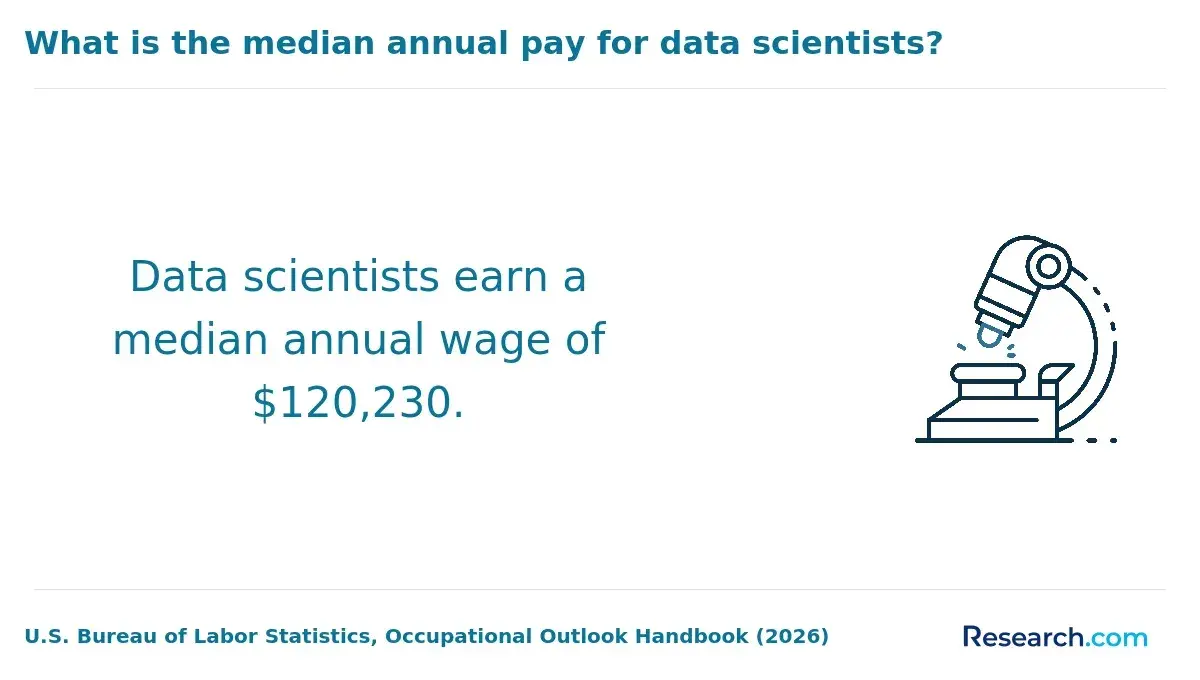
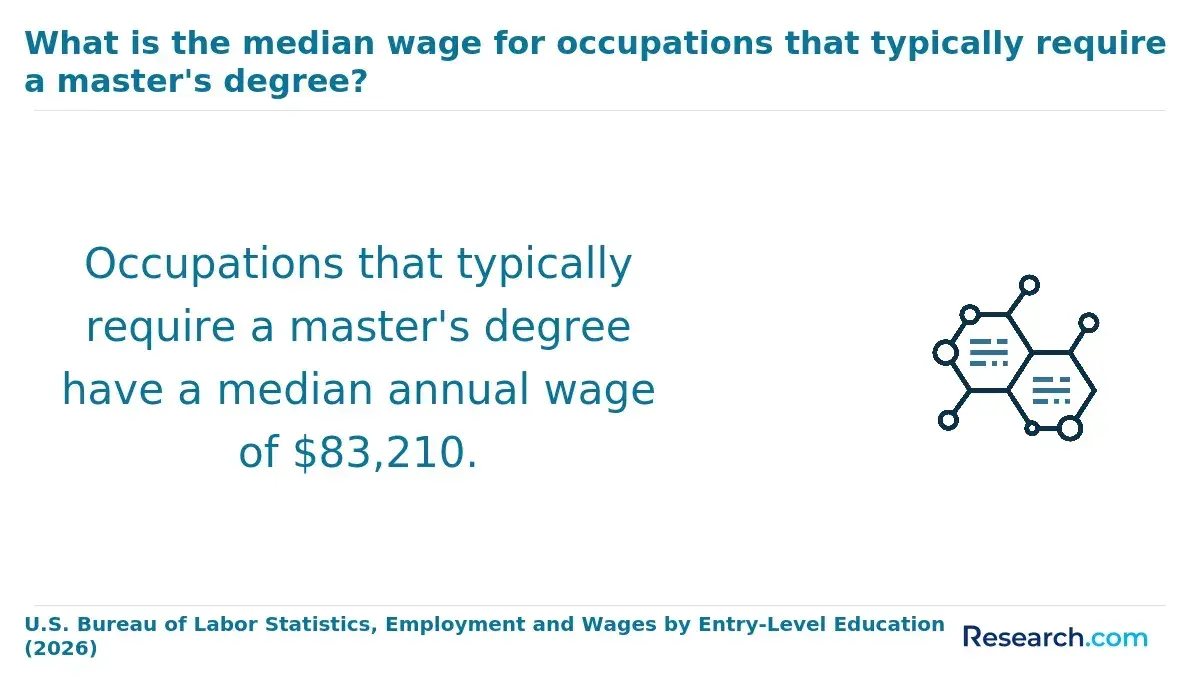
The U.S. Bureau of Labor Statistics reports a $120,230 median annual wage for data scientists in May 2025. That is a wage across workers in the occupation, not an expected starting salary for someone leaving academia. Prior experience, location, employer, and the role you secure will affect any offer.
BLS projects data scientist employment to grow 35% from 2025 to 2035. The projection indicates strong occupation-wide demand, but it does not measure the prospects of PhD career changers or graduates of a particular master's program. Use it as context, then examine postings for your intended role and region to see which skills employers currently request.
AI tools may change how teams perform analysis, making it particularly important to demonstrate sound problem formulation, validation, and communication rather than familiarity with a tool alone. When a school advertises employment or salary outcomes, check which graduates were surveyed, their prior experience, the response rate, and whether the reported figure is a salary level or an increase.
How Can You Choose an Accredited Data Science Master's Program?
First confirm that the institution holds recognized institutional accreditation, then evaluate the specific program against your transition goal. Institutional accreditation does not establish that a particular curriculum teaches the skills you need. Nor should a ranking substitute for evidence about projects, instruction, scheduling, and graduate support.
Before committing, ask each shortlisted program the same questions. Comparable answers will make the trade-offs clearer:
- Which required courses would develop skills I cannot already demonstrate from my PhD work?
- What applied project could I complete, and who would provide feedback on its technical and practical quality?
- What are the total required charges and realistic completion schedule at my intended enrollment pace?
- Which career services and employer connections are accessible to students in my delivery format?
- How does the program define and collect any published graduate employment outcomes?
Choose the program with the strongest evidence of closing your particular gaps at a manageable total cost. If none offers a meaningful advantage over targeted courses and projects, postponing another degree is a valid decision.
Other Things You Should Know About Data Science
Not without comparing the remaining time and cost of each path. An unfinished doctorate may still have value, and finishing it does not prevent a later transition. Discuss funding, exit options, and your target jobs before making an irreversible decision.
Often, yes - if you have permission to share the data and code. Explain the problem, your individual contribution, methods, and limitations in language an employer can understand. Remove confidential information and check publication or collaboration restrictions first.
Lead with skills and projects relevant to the target role, then use your PhD experience to show the depth of your research and domain knowledge. Translate discipline-specific terminology into clear descriptions of data, methods, collaboration, and results without overstating production experience.
No. You can describe it as applying established research skills to a different kind of problem. Be specific about why the role interests you and what you have done to prepare for its day-to-day work.
References
- Making strides in doctoral-level career outcomes reporting | nih.gov https://pmc.ncbi.nlm.nih.gov/articles/PMC12671987/
- 13 Top Data Science Careers: Key Insights | Syracuse University https://ischool.syracuse.edu/data-science-careers/
- Master's in Data Science: Program Overview | NYU CDS https://cds.nyu.edu/masters-in-data-science-overview/
- STEM OPT | Master of Science in Data Science | University of Connecticut https://masters.datascience.uconn.edu/stem-opt/
- MS in Data Science | columbia.edu https://datascience.columbia.edu/education/ms-data-science
- What You Can Do with a Master's in Data Science and Artificial Intelligence | Harvard Extension School https://extension.harvard.edu/blog/what-you-can-do-with-a-masters-in-data-science-and-artificial-intelligence/
- Hiring CS Graduates: What We Learned from Employers | acm.org https://dl.acm.org/doi/10.1145/3474623
- Data Science Careers Guide | Career Services https://careerservices.cns.utexas.edu/explore-careers/career-guides-industry/data-careers-guide
- What Can You Do with a Master's Degree in Data Science? | UCLA MSOL Data Science https://www.msol.ucla.edu/data-science-engineering/articles/what-can-you-do-with-masters-degree-data-science/
- Graduate Admissions: How to Apply - Mathematical Sciences https://math.utdallas.edu/graduate/how-to-apply/