2027 Master's in Data Science vs. Master's in Psychometrics: Choosing Your Graduate Path

Co-Founder and Chief Data Scientist
A master's in data science and a master's in psychometrics can both lead to quantitative work, but they prepare you to solve different problems. Data science emphasizes extracting insights from varied data and building predictive systems; psychometrics focuses on whether tests, surveys, and other measures produce meaningful, fair results. If you are choosing between them, the most useful question is not which title sounds more marketable. It is whether you want broad analytical flexibility or specialized expertise in measuring human abilities, attitudes, and behavior.
Key Things You Should Know
- Choose data science for broader analytical and machine-learning roles; choose psychometrics if designing, evaluating, or improving assessments is the work you want to do.
- The U.S. Bureau of Labor Statistics reports a $120,230 median annual wage for data scientists in May 2025. That is an occupation-wide figure, not a predicted salary for master's graduates or a direct comparison with psychometricians.
- Compare actual courses and projects before applying: a program's title alone will not show whether it teaches the measurement methods, computing skills, or domain experience your target role requires.
What is the difference between a master's in data science and psychometrics?
Data science asks what patterns in data can explain or predict an outcome. Psychometrics asks whether a measure captures what it claims to measure, for whom, and with what degree of reliability. Both use statistics and programming, but psychometrics concentrates on measurement questions that a general predictive model may leave unanswered.
The comparison below describes common emphases, not requirements shared by every university. Individual curricula may cross these boundaries.
| Decision factor | Data science master's | Psychometrics master's |
| Central problem | Analyze data, develop models, and communicate or operationalize results | Design and evaluate tests, surveys, scales, and scoring systems |
| Typical methods | Statistical modeling, machine learning, data engineering, and visualization | Reliability and validity analysis, item response theory, factor analysis, and test fairness |
| Typical project | Build and evaluate a model using an organization's data | Evaluate whether assessment items work as intended across groups |
| Best fit | Students seeking flexibility across data-rich industries | Students committed to assessment and measurement work |
Neither degree is inherently more rigorous. The relevant distinction is rigor for your intended task: a sophisticated prediction model does not establish that a test is valid, while advanced measurement theory may not provide enough preparation for a production data-science role.
Which degree offers better career opportunities and salary potential?
Data science generally offers a wider range of job titles and industries. The U.S. Bureau of Labor Statistics projects employment of data scientists to grow 35% from 2025 to 2035. That signals demand for the occupation, but it does not mean every graduate will qualify for those jobs or that a data science degree is required for each opening.
Psychometrics offers a narrower, more specialized path in organizations that create or use assessments. There is no directly comparable, authoritative national wage figure for "psychometrician" in the information available here. Comparing a data scientist median with a salary advertised for one assessment job would therefore be misleading. For either path, examine current postings in your target location, their required methods and experience, and the salaries employers disclose.
Choose based on the work you want to qualify for, not salary figures alone. Prior experience, employer, location, and role can affect pay substantially; a degree by itself does not cause a particular earnings outcome.
What careers can you pursue with a master's in data science or psychometrics?
A data science graduate might pursue data scientist, machine-learning, analytics, or applied research roles, depending on their technical skills and experience. A psychometrics graduate might pursue psychometrician, assessment researcher, measurement specialist, or test-development roles. Job titles overlap: some assessment teams hire data scientists, while some analytics roles require strong measurement knowledge.
The distinction becomes clearer when you inspect the work behind a job title. If you want to build models from clinical or operational healthcare data, data science may fit better; AI master's degrees for healthcare careers are another option to compare. If you want to evaluate the quality or fairness of a patient-reported outcome questionnaire, look for psychometrics or a data science program with substantial measurement coursework.
For an employer you hope to join, read several recent job descriptions and note whether they emphasize model development, data pipelines, test construction, validity evidence, or item-level analysis. That evidence is more useful than choosing by degree title alone.
What do you study in data science and psychometrics master's programs?
Data science curricula commonly combine statistics, programming, machine learning, databases, and communication of analytical results. Psychometrics curricula commonly emphasize measurement theory, research design, statistical modeling of responses, reliability, validity, and fairness. Programs vary, so treat these as subjects to look for rather than a guaranteed course list.
Pay particular attention to how deeply a subject is taught. A single lecture on survey data is not the same as a course in test construction or a project evaluating differential item functioning. Likewise, a psychometrics program that uses statistical software may not teach the data engineering or deployment skills sought in some data science jobs.
If building AI systems is your primary goal, compare the machine-learning depth of data science programs with online artificial intelligence degree programs. If assessment remains your goal, prioritize supervised measurement projects over an AI label.
What are the admission requirements for each master's degree?
Requirements depend on the institution. Data science programs may look for preparation in calculus, statistics, and programming; psychometrics programs may look for statistics, research methods, or relevant psychology or education coursework. Neither prior major automatically qualifies or disqualifies an applicant unless a particular program's policy says so.
Separate formal prerequisites from skills that would help you succeed. Relevant work, independent projects, or noncredit study can demonstrate preparation, but they do not necessarily satisfy a required credit-bearing course. Check each program's admissions page for prerequisite courses, accepted alternatives, application materials, and deadlines.
If application workload affects your shortlist, compare stated essay policies rather than assuming every program requires the same materials. Guidance on personal-statement requirements for online ML master's programs can help frame that comparison, though you must confirm the current rules for each data science or psychometrics program directly.
How long do these master's programs take, and how much do they cost?
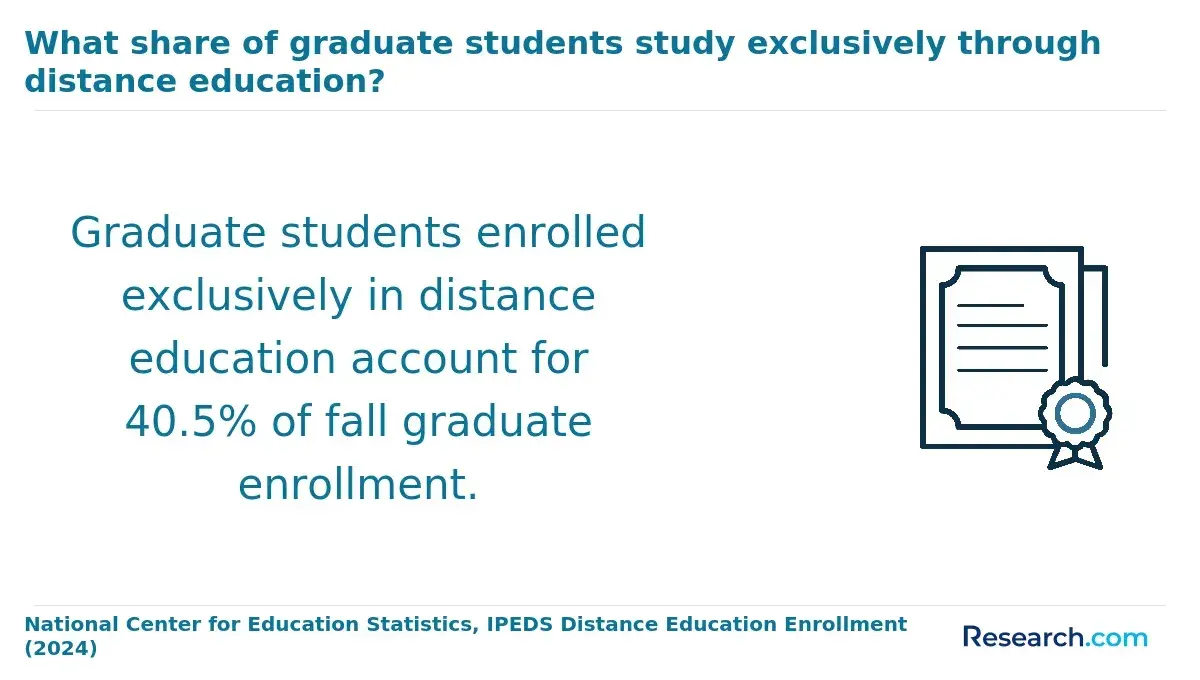
Neither degree has a standard duration or price. Completion time depends on required credits, course availability, full- or part-time enrollment, and any thesis, practicum, or capstone. Compare a school's published course sequence with the pace you can actually maintain; a stated minimum completion time may depend on taking a full load every term.
For cost, request an estimate for the entire degree, not just the advertised tuition rate. Include mandatory fees, materials, required travel, and any tuition differences tied to residency or study format. Working less while enrolled can also be a significant cost. These components vary too much by program to make a responsible universal price comparison.
Ask about scholarships, assistantships where available, employer tuition support, and federal aid eligibility before deciding how to pay. For a closer look at the options and trade-offs, see funding an online data science master's degree. Do not treat a higher occupational median salary as proof that a particular program will repay its cost.
Should you choose an online or campus-based graduate program?
Choose the format that lets you complete the work your career goal requires. Online study can make graduate school feasible while working, but check whether classes are live or asynchronous, how group projects are scheduled, and whether exams or residencies require travel. Campus study may offer easier access to faculty and local projects, but that benefit matters only if you can use it.
For psychometrics, ask how remote students obtain suitable assessment data and feedback on measurement projects. For data science, ask how they access computing resources and collaborate on substantial projects. In either format, compare the actual course rotation: limited access to a crucial elective can matter more than the delivery label.
If a short schedule is essential and AI is also a genuine career interest, AI master's options for a shorter study schedule provide another comparison point. A faster AI degree is not a substitute for psychometrics training simply because it covers statistical models.
What accreditation should you look for in either degree program?
First, confirm that the institution holds accreditation from an accreditor recognized by the U.S. Department of Education. Then determine whether a specialized accreditor or professional requirement applies to your specific career goal. Do not assume a standalone psychometrics master's needs the same accreditation as a clinical psychology program, or that institutional accreditation proves a particular curriculum meets an employer's needs.
If you may later pursue a licensed profession or doctoral study, ask the relevant licensing board or prospective doctoral program whether the master's coursework meets its requirements. Accreditation is an essential legitimacy check, not a substitute for reviewing courses, faculty expertise, and outcomes.
Do data scientists or psychometricians need licenses or certifications?
Data scientist and psychometrician are generally not licenses in themselves. Employers may value evidence of proficiency with particular tools or methods, but a voluntary certification is not a universal condition for either job title.
Be careful when a role crosses into regulated professional practice. A psychometrics degree does not, by itself, authorize someone to practice psychology, provide therapy, or perform activities a state reserves for licensed professionals. Requirements depend on the duties, setting, and state. Check the relevant state board before treating any program as a route to licensed practice.
How can you choose a reputable data science or psychometrics program?
Start with a target role, then test each program against the skills that role requires. This avoids the common mistake of choosing a broad program for specialized assessment work - or choosing a measurement program while expecting extensive engineering training.
Use these steps to turn a promising shortlist into a defensible enrollment decision:
- Compare required courses and recent project examples with several target job descriptions; identify important skills available only as electives or not offered at all.
- Ask who teaches and supervises work in your intended specialty, what data or computing resources students can use, and whether relevant courses run often enough for your planned schedule.
- Request the full degree cost and any available outcomes information, including how outcomes were collected; do not mistake selective testimonials or occupation-wide salaries for graduate results.
A strong final choice fits your intended work, provides credible opportunities to demonstrate that work, and has a total cost and schedule you can sustain. Choose data science when breadth and model-building are central; choose psychometrics when defensible measurement is central. If you want both, favor a program that documents substantial training and project opportunities in each rather than assuming you can add the missing specialty later.
Other Things You Should Know About Data Science
Potentially, but admission depends on the doctoral program's prerequisites, research fit, and application requirements. If doctoral research is your goal, ask prospective programs how they evaluate each master's curriculum and whether a thesis or research experience would strengthen your preparation.
No. Psychometrics studies how measures are developed and evaluated. Psychological assessment may involve selecting, administering, and interpreting measures for an individual, sometimes within a regulated professional role.
Yes, if the program permits the topic and suitable supervision and data are available. For example, a project could use computational methods to study how an assessment performs while still evaluating its measurement quality.
Use authorized public or simulated data, explain your methods, and report results without revealing protected items or participant information. Confirm any sharing restrictions with the data owner before publishing a project.
References
- DAPIP | Homepage - Office of Postsecondary Education (OPE) https://ope.ed.gov/dapip/
- Cost of Attendance (Budget) | 2025-2026 Federal Student Aid Handbook https://fsapartners.ed.gov/knowledge-center/fsa-handbook/2025-2026/vol3/ch2-cost-attendance-budget
- What preparations do I need for graduate education? | Statistics & Data Science Graduate Interdisciplinary Program https://stat.arizona.edu/what-preparations-do-i-need-graduate-education
- Item Response Theory | Columbia University Mailman School of Public Health https://www.publichealth.columbia.edu/research/population-health-methods/item-response-theory
- Masters in Data Science & Applied Statistics (MPS) | Cornell Bowers https://stat.cornell.edu/master-professional-studies-data-science-and-applied-statistics
- Data Science in Human Behavior - Master of Science in Psychology - UW-Madison https://datascience.psych.wisc.edu/
- Online Master of Education in Measurement, Evaluation, Statistics & Assessment | Online MESA https://mesaonline.ec.uic.edu/programs/master-education-measurement-evaluation-statistics-assessment/
- What You Can Do with a Master's in Data Science and Artificial Intelligence | Harvard Extension School https://extension.harvard.edu/blog/what-you-can-do-with-a-masters-in-data-science-and-artificial-intelligence/
- Measurement and Statistics | UW College of Education https://education.uw.edu/academics/program/measurement-and-statistics
- Psychology: Data Science in Human Behavior MS | Professional Degrees & Certificates https://pdc.wisc.edu/degrees/psychology-data-science-in-human-behavior-ms/