2027 Privacy-Preserving Machine Learning in an Online Data Science Master's: Courses, Projects, and Program Selection

Co-Founder and Chief Data Scientist
Choosing an online data science master's for privacy-preserving machine learning takes more than finding "privacy" in a course description. You need enough grounding in statistics and machine learning to build useful models, plus opportunities to test whether a privacy method actually limits disclosure. This guide is for prospective students comparing curricula and project options. It explains which skills matter, what substantive graduate-level work looks like, and how to decide whether a program fits your goals.
Key Things You Should Know
- Look for a progression from machine learning and statistics to privacy methods, security or governance, and a substantial evaluated project; a course title alone does not establish depth.
- A strong portfolio project reports both model performance and privacy-related limitations, rather than treating de-identification or encryption as a complete solution.
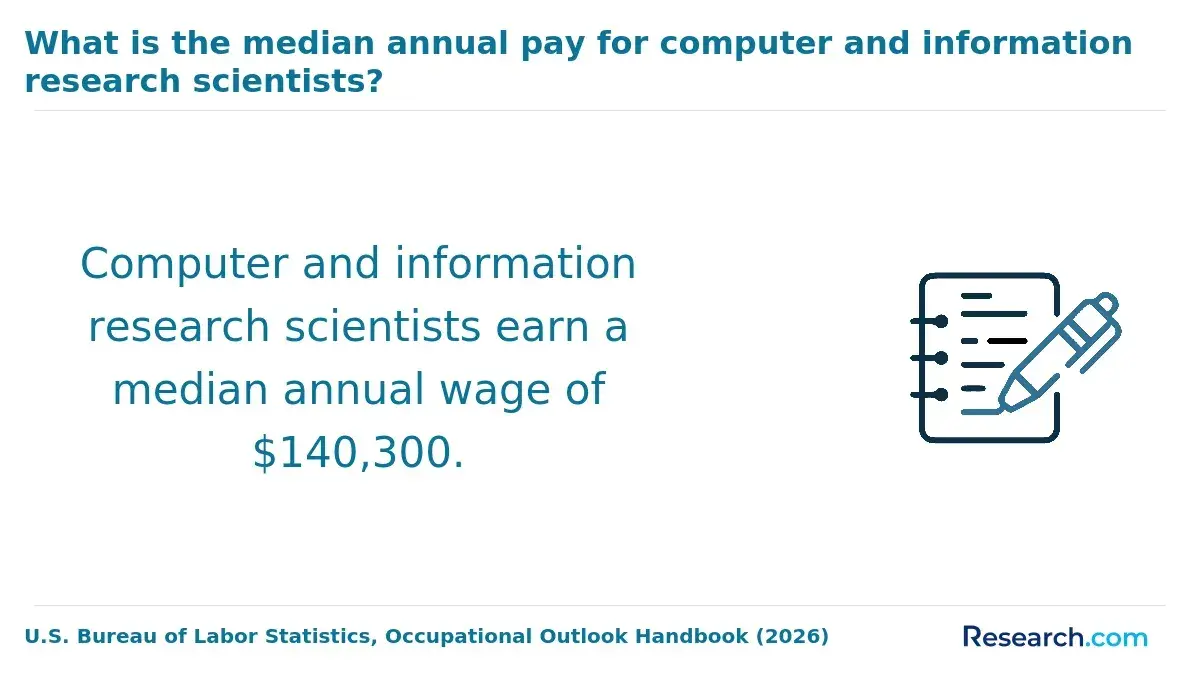
- The U.S. Bureau of Labor Statistics reports a $120,230 median annual wage for data scientists in May 2025, but that occupation-wide figure is not an expected salary for graduates or privacy specialists.
What Is Privacy-Preserving Machine Learning in Data Science?
Privacy-preserving machine learning (PPML) means designing, training, or using models while limiting what sensitive data can be revealed. The relevant threat might be exposure of training records, leakage through a released model, disclosure between organizations collaborating on training, or unauthorized access to model inputs. The method should match the threat: protecting a database at rest does not, by itself, prevent a trained model from revealing information.
Common approaches include differential privacy, which limits how much an individual record can affect an output; federated learning, which trains across separate data holders without routinely pooling their raw records; and cryptographic methods, such as secure aggregation, that restrict what participants can see during computation. None makes a system automatically private. Privacy guarantees depend on implementation, assumptions, parameter choices, and what an attacker can observe.
Graduate-level study should connect these methods to statistical utility and real system constraints. For example, adding more noise may strengthen a differential-privacy guarantee while reducing model accuracy; keeping data at separate organizations may reduce central collection while leaving updates or final outputs vulnerable to leakage. That is why a useful PPML education spans modeling, security, and careful evaluation rather than teaching a single tool.
Why Study Privacy-Preserving Machine Learning Online?
An online format can let working students apply privacy concepts to problems they already understand, such as sensitive customer, health, or financial data. It can also make graduate study possible without relocating. Neither benefit establishes that an online program offers the specialist supervision or computing resources needed for a strong PPML project.
Format matters most when projects require collaboration or sustained experimentation. Ask whether privacy-related electives are offered regularly, whether remote students can access suitable computing environments, and whether faculty will supervise a project using appropriately authorized data. If a faster timetable is your priority, compare online graduate AI programs with accelerated timelines, but check whether their pace leaves room for the mathematics, systems work, and project iteration PPML requires.
What Courses Cover Privacy-Preserving Machine Learning?
PPML may appear across a curriculum rather than in a course bearing that exact name. The foundation is probability, statistics, programming, and machine learning; advanced work may sit in electives titled data privacy, security, trustworthy AI, distributed systems, or responsible data science. Catalog descriptions and recent syllabi are more informative than titles alone.
The distinctions below show how to assess academic depth. They describe levels of coverage, not a claim that every program offers a dedicated PPML course.
| Level of coverage | What it typically demonstrates | Important limitation |
| Passing mention | Privacy appears as a modeling or ethics consideration. | Little evidence of technical implementation. |
| Single unit | Students encounter a method such as differential privacy or federated learning. | Time for testing assumptions may be limited. |
| Dedicated course or advanced elective | Methods, threat models, and utility trade-offs can be studied in depth. | A course title still does not prove what students build. |
| Substantial project experience | Students implement and evaluate a privacy approach on a defined problem. | Quality depends on supervision, data access, and evaluation standards. |
For appropriate graduate-level depth, look for assignments that require students to define an attacker's possible access, choose a method, explain its assumptions, and measure the resulting change in model utility. Differential-privacy work should address how its guarantee is specified and accounted for; federated-learning work should address what training participants and the server can still learn. An ethics discussion is valuable, but it is not a substitute for these technical tasks.
What Projects Build Privacy-Preserving Machine-Learning Skills?
A strong PPML project states what information needs protection, who might obtain it, and how success will be judged. It then compares a defensible baseline with a privacy-preserving approach. Projects using public, synthetic, or properly authorized data can demonstrate the skill without putting real people's records at risk.
The following project designs make different trade-offs visible and give prospective students concrete options to discuss with a program:
- Differentially private model: Train a baseline and a private version on an appropriate dataset; document the privacy guarantee and compare predictive performance, including results for relevant subgroups.
- Federated training simulation: Split data into realistic participating sites, compare results with centralized training, and evaluate what changes when sites have different data distributions.
- Protected collaboration: Prototype secure aggregation for a multi-party workflow and test its computational cost, failure conditions, and remaining disclosure risks.
In each case, the final report should make the experiment reproducible where possible and state what the chosen method does not protect against. A common weak portfolio claim is "the data is private" because raw records were not shared. A stronger claim identifies the precise protection, the evidence for it, and the risks that remain.
What Are the Admission Requirements for an Online Data Science Master's?
Admissions rules vary by institution, so do not assume that a particular undergraduate major, work history, or privacy background is universally required. For PPML study, the more consequential question is whether you can enter graduate statistics and machine-learning courses prepared to use programming, probability, linear algebra, and model evaluation.
Compare each program's published prerequisites with your transcript and experience, then ask admissions staff whether any gaps must be resolved before admission or can be addressed during the degree. Self-study and professional projects may improve readiness without formally satisfying a prerequisite. Application materials also differ: students trying to reduce application work can review essay-free application options for an ML master's, while confirming the current requirements of any program they plan to apply to.
How Long and How Much Does an Online Data Science Master's Take?
Completion time depends on required credits, course availability, prerequisites, and how many courses you can take while working. A short advertised timeline may be difficult to follow if the privacy-related elective you need is offered infrequently or a project requires approval before enrollment. Request a sample course sequence for your intended pace, including the semesters when relevant electives run.
For cost, compare the total amount you would pay, not one school's per-credit tuition against another school's headline program price. Include required fees, materials or computing expenses, and any travel requirements; ask whether tuition differs by residency and whether project work may require additional resources. If financing will affect your choice, examine aid options for data science master's students alongside employer assistance and each school's current aid policies. Without a current program-specific tuition schedule and your planned course load, a reliable total or payback estimate cannot be stated.
How Do You Verify Program Accreditation and Academic Quality?
Verify an institution's current accreditation through the accreditor or an official U.S. Department of Education recognition resource, and confirm that the online degree is offered by that institution. Accreditation is an important institutional check, but it does not establish that a particular program teaches PPML well. Students residing outside the school's state should also confirm that the institution can enroll them in its online program.
For subject-specific quality, request recent syllabi, the elective schedule, sample project expectations, and information about faculty who supervise privacy-related work. Ask whether online students have the same access to those courses and supervisors as other students. Be cautious if a program prominently advertises "responsible AI" but cannot identify technical assignments, a path to an advanced project, or when the relevant electives will next be available.
Which Careers Use Privacy-Preserving Machine Learning Skills?
PPML skills can contribute to work in data science, machine-learning engineering, applied research, and privacy or security engineering. The tasks differ: a data scientist may evaluate the usefulness of a privacy-constrained model, while an engineer may implement training infrastructure and assess leakage risks. Job titles alone are unreliable indicators, so read descriptions for the methods and systems a team actually uses.
Privacy expertise is particularly relevant where organizations must analyze sensitive information or collaborate without unrestricted data sharing. It remains a specialization layered onto broader modeling or engineering skills, not a stand-alone promise of employment. To compare broader role preparation alongside PPML depth, review data science programs aligned with data career demand and assess whether their core training matches the jobs you would pursue.
What Salaries and Job Outlook Can Data Science Graduates Expect?
The U.S. Bureau of Labor Statistics reports a $120,230 median annual wage for data scientists in May 2025. That is an occupation-wide measure, not a starting salary, a PPML-specific salary, or evidence that earning a master's causes a particular pay increase. Prior experience, location, employer, and job responsibilities all matter when interpreting an offer.
BLS projects 35% employment growth for data scientists from 2025 to 2035. The projection suggests a growing occupation, but it does not predict openings in a specific privacy niche or guarantee that graduates will obtain them. Evaluate a degree against the roles available to you and the skills those postings request, rather than using the national projection as a personal return-on-investment estimate.
How Do You Choose the Best Online Data Science Master's Program?
Choose the program that gives you a credible route from foundational skills to an evaluated privacy project at a cost and pace you can sustain. A program with a dedicated privacy elective may suit someone pursuing specialized research or engineering work; a broader data science program with strong modeling courses and flexible project supervision may be better if you are still deciding on a role.
Use the following checks before committing. They focus on evidence a program can provide rather than marketing labels:
- Map required courses and available electives to your current gaps in statistics, machine learning, and systems or security.
- Request a recent syllabus or assignment showing how students implement and evaluate a privacy method, not just discuss it.
- Confirm that an online student can secure a suitable project supervisor and use approved data and computing resources.
- Build a course-by-course schedule and obtain the current tuition and mandatory fee information for that schedule.
- Compare the resulting portfolio opportunity with target job descriptions, and ask what remains to learn independently.
If your main goal is AI training at the lowest feasible cost rather than a specific PPML project, affordable paths to an artificial intelligence degree may be a useful alternative to compare. Do not let a lower price, faster finish, or privacy-related course title decide the choice on its own: the decisive evidence is what you can learn, build, and explain by graduation.
Other Things You Should Know About Data Science
No. Public or synthetic datasets can support meaningful experiments. What matters is defining a realistic privacy threat and evaluating the method honestly; never place confidential records in a project environment without authorization.
No. Other fields may still identify people when combined, and a model can disclose information in ways that are not obvious from the input records. Follow the dataset's permissions and assess disclosure risks separately from direct identifiers.
There is no single certification required across PPML jobs. Employers set their own expectations; technical projects and relevant modeling or engineering experience may be more directly useful for roles focused on building systems.
Only with explicit permission and an arrangement that satisfies both employer and university rules. Check restrictions on storage, access, publication, and submission before starting; an approved synthetic substitute may be simpler.
References
- Privacy-Preserving Federated Learning for Scientific Research | Argonne National Laboratory https://www.anl.gov/cels/privacypreserving-federated-learning-for-scientific-research
- Threat Models for Differential Privacy | NIST https://www.nist.gov/blogs/cybersecurity-insights/threat-models-differential-privacy
- All Capstone Projects - Duke MIDS https://datascience.duke.edu/capstones/
- Master's in Data Science - University of Notre Dame https://datascience.nd.edu/masters/
- Tuition and Fees | Cincinnati State https://www.cincinnatistate.edu/tuition-fees/
- Tuition in Detail - One Stop Student Services https://onestop.utk.edu/billing-payments/tuition-detail/
- Data Science: Policy, Governance & Society (Online) | Brown University https://graduateprograms.brown.edu/graduate-program/data-science-policy-governance-society-online-scm
- Prerequisite Key Topics - UVA School of Data Science https://datascience.virginia.edu/pages/prerequisite-key-topics
- Master's in Data Science | utexas.edu https://cdso.utexas.edu/msds
- Master of Science in Data Science | CUNY SPS https://sps.cuny.edu/academics/graduate/master-science-data-science-ms