2027 Berkeley MIDS vs. Notre Dame Online MS in Data Science: Cost, Curriculum, Admissions, and Format

Co-Founder and Chief Data Scientist
Berkeley MIDS and Notre Dame's online MS in Data Science offer two different credentials for people who want to study data science without relocating. The consequential choice is not which university has the more familiar name: it is which curriculum, schedule, and full cost fit your experience and target role.
This comparison separates known program distinctions from details that can change by intake, so you can identify what to confirm before applying or committing to either degree.
Key Things You Should Know
- Berkeley awards a Master of Information and Data Science (MIDS); Notre Dame offers an MS in Data Science. Compare the courses and projects behind those titles, not the titles alone.
- Neither program's current total cost can be established from a degree name or a tuition-per-unit quote. Request an intake-specific estimate that includes required fees and any travel.
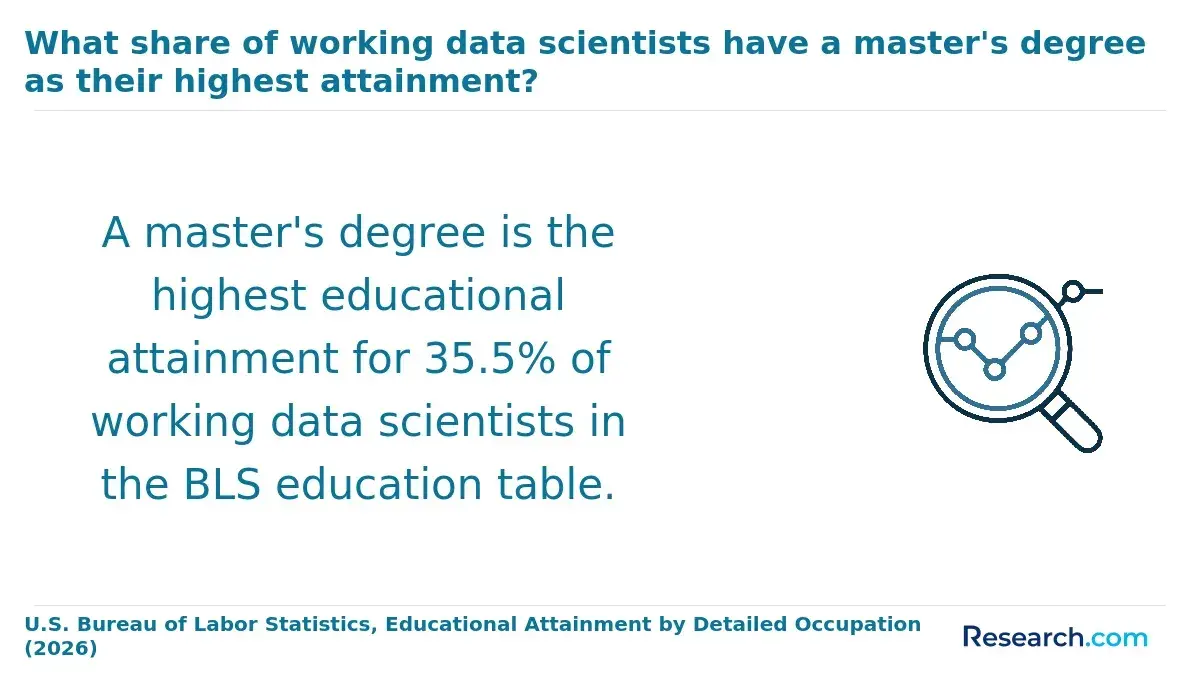
- The U.S. Bureau of Labor Statistics projects 35% growth in data scientist employment from 2025 to 2035, but that occupational forecast is not a placement forecast for either program.
How do Berkeley MIDS and Notre Dame's online MS in Data Science compare?
The clearest verified distinction is the credential: Berkeley's program is a Master of Information and Data Science, while Notre Dame's is a Master of Science in Data Science. The table separates that distinction from the questions that require current, program-specific confirmation before they can support a decision.
| Decision factor | Berkeley MIDS | Notre Dame online MS in Data Science |
| Degree | Master of Information and Data Science | Master of Science in Data Science |
| What to compare in the curriculum | Required work in statistics, computing, data systems, and applied projects | The same subjects, including how much depth is required rather than elective |
| What to confirm about format | Live-session times, group work, and any in-person requirement | Live-session times, group work, and any in-person requirement |
| What to confirm about price | Total charges for the intended start term, plus incidental costs | Total charges for the intended start term, plus incidental costs |
Neither degree title establishes that one program teaches more machine learning or better prepares students for a particular job. Ask each program for its current degree audit and course descriptions, then compare required courses against the work you want to do after graduation.
What are the curriculum differences between Berkeley MIDS and Notre Dame's data science master's?
Berkeley MIDS explicitly combines information and data science in its degree identity; Notre Dame's credential is an MS in Data Science. That difference is worth investigating, but it is not proof of a difference in technical depth. For each program, inspect which courses are required, which are electives, and whether your intended subjects are taught through substantial projects.
If you want machine learning work, look for statistical foundations, model evaluation, and opportunities to explain results - not just a course with "AI" in its title. If you want to build production data systems, compare database, pipeline, and deployment work. Readers weighing that specialization against another type of graduate degree can also review data engineering content in AI master's programs.
Request a recent project brief or syllabus from both schools. It will show more than a catalog summary about the tools students use, the independence expected, and whether a final project resembles the work you hope to show an employer.
How much do Berkeley MIDS and Notre Dame's online data science programs cost?
A reliable, like-for-like total for the intended 2026 intake cannot be established here from current tuition and fee schedules. Do not compare a Berkeley tuition quote with a Notre Dame figure that includes fees, or multiply a per-course price without confirming the courses required. Ask both programs for written estimates using the same start term and your likely pace.
The comparison should include tuition for all required coursework, mandatory university and program fees, materials or technology charges, and any required travel and lodging. Add financing costs if you expect to borrow. For working professionals, schedule changes or reduced paid hours can matter more than small differences in fees; employer tuition assistance can change the net cost.
Decision rule: Compare your estimated out-of-pocket totals, not advertised starting prices. Confirm whether published rates apply to your intake, how annual increases affect students already enrolled, and what happens financially if you need to pause or retake a course. Neither a lower sticker price nor a higher expected salary establishes a return on investment.
What admissions requirements does each online data science master's program have?
Both are graduate programs, but application materials, prerequisite policies, and testing rules can change. Before applying, check each program's current admissions page for degree eligibility, transcripts, recommendations, statements, test policies, and deadlines. Do not assume that professional coding experience substitutes for a stated academic prerequisite - or that a nontechnical bachelor's degree rules you out.
Evaluate your readiness separately from formal eligibility. For the courses you would take, identify evidence of programming, statistics, and quantitative problem-solving: coursework, reproducible projects, or work you can describe specifically. If you have gaps, ask admissions whether preparatory study is recommended, required for admission, or expected after enrollment. Applicants considering a different route can examine bridge pathways into an AI master's, but another school's bridge policy says nothing about admission to Berkeley or Notre Dame.
How long does each online data science master's program take to complete?
Neither school's completion time should be treated as a fixed promise for every student. Published timelines may assume a particular course load and uninterrupted enrollment. Request each program's current sample plan for your intended pace, including the number of terms, courses taken together, and the latest permitted completion date.
Then check whether prerequisites, course sequencing, or a project completed near the end could delay your preferred graduation date. A faster path is useful if you can sustain its weekly workload; a slower path may be better if keeping your job and avoiding an interrupted term matters more than finishing early.
How do the online formats compare between Berkeley MIDS and Notre Dame?
"Online" does not settle the scheduling question. For each program, confirm which activities are live, whether attendance is mandatory, how recordings may be used, and whether exams, group projects, or an immersion require fixed times or travel. Published format descriptions can change, so ask for the schedule and any residency rules that apply to your intake.
This matters most if you work shifts, travel regularly, or live several time zones from scheduled classes. Ask to see a typical term calendar rather than relying on the word "flexible." A program can be accessible from home yet still require evenings, coordinated team meetings, or time away from work.
What careers and job roles can graduates pursue after either program?
Graduates may pursue data scientist, data analyst, machine learning, or data-focused engineering roles, depending on their prior experience and the skills demonstrated in their coursework. A degree alone does not qualify every graduate for every title: an engineering-heavy vacancy, for example, may demand software and pipeline experience that differs from the evidence an analytical role requires.
Start with several real vacancies you would consider, identify their recurring requirements, and compare those with each program's required courses and available projects. If your goal is primarily reporting, experimentation, or business analysis rather than model development, examine broader data analytics graduate study choices before assuming either data science degree is the closest fit.
What salaries and job prospects can data science master's graduates expect?
The U.S. Bureau of Labor Statistics reports a $120,230 median annual wage for data scientists in May 2025. That is an occupational median across workers, not an entry-level salary, a master's-degree premium, or an outcome reported for either university. Your offer will depend on experience, skills, location, industry, and the role you secure.
BLS projects 35% employment growth from 2025 to 2035 for data scientists. Growth supports investigating the field, but it does not remove competition for individual jobs. When estimating the value of either degree, compare plausible roles with your current pay and borrowing needs rather than applying the national median to your personal budget. An industry-specific data science salary guide can help you frame that research without treating any industry figure as a guaranteed outcome.
Are Berkeley MIDS and Notre Dame's data science degrees accredited and recognized?
UC Berkeley and the University of Notre Dame are institutionally accredited universities: Berkeley by the WASC Senior College and University Commission and Notre Dame by the Higher Learning Commission. Institutional accreditation concerns the university; it should not be mistaken for a claim that either particular data science degree has separate, specialized accreditation.
Before enrolling, confirm that the degree named in the current program materials is the credential you will receive, and check any state-specific enrollment restrictions if they apply to you. For employment, recognition also depends on whether you can demonstrate the methods and projects relevant to the job - not accreditation or institutional reputation alone.
Which online data science master's program should you choose?
Choose Berkeley MIDS if its required coursework, project opportunities, and actual class schedule are a stronger match for your target role - and its full cost is workable for you. Choose Notre Dame if its current curriculum and delivery fit those same priorities better at a cost and pace you can sustain. The evidence does not support a universal winner based on the universities' names or the wording of their degrees.
Before paying a deposit, obtain the current degree plan, a typical term schedule, an intake-specific cost estimate, and a clear answer about any required travel from each school. Compare those documents against the same target jobs. A common mistake is to commit after comparing tuition alone while leaving an essential scheduling or curriculum question unanswered. If neither program offers the skills you need within your budget, AI master's tuition and career outcome comparisons may help you assess an adjacent option without assuming an AI degree is interchangeable with data science.
Other Things You Should Know About Data Science
Not for every job. Employers set their own education and experience requirements. Check the vacancies you want before deciding that graduate study is necessary for your next step.
Often, only with appropriate permission and safeguards. Check your employer's confidentiality rules and your program's project policies; a public, synthetic, or properly de-identified dataset may be safer.
It may help, but doctoral programs can expect substantial research preparation. If a PhD is your goal, ask how each master's supports faculty-guided research and whether its culminating work is research-oriented.
Choose by the work you want to do and the required courses, not the label. Compare statistics, data management, modeling, evaluation, and projects in the specific programs under consideration.
References
- Career and Technical Education (CTE) Course Catalog | sc.gov https://ed.sc.gov/instruction/career-and-technical-education/programs-and-courses/cate-programs/20-21-cte-course-catalog/
- School-Determined Requirements | 2024-2025 Federal Student Aid Handbook https://fsapartners.ed.gov/knowledge-center/fsa-handbook/2024-2025/vol1/ch1-school-determined-requirements
- Principles of Good Practice for Distance Education | texas.gov https://reportcenter.highered.texas.gov/agency-publication/miscellaneous/principles-of-good-practice-approved-oct-2023/
- Accreditation in the U.S. | ed.gov http://www.ed.gov/laws-and-policy/higher-education-laws-and-policy/college-accreditation/accreditation-in-the-us
- Department Expectations: Curriculum | New York State Education Department https://www.nysed.gov/college-university-evaluation/department-expectations-curriculum
- MS Data Science - Notre Dame financial aid https://financialaid.nd.edu/apply-or-renew/graduate-students/graduate-program-costs/ms-data-science/
- MIDS Tuition & Fees | UC Berkeley School of Information https://www.ischool.berkeley.edu/programs/mids/tuition
- Graduate Admission Requirements | University of Cincinnati Admissions https://www.admissions.uc.edu/apply/graduate/requirements.html
- Synchronous vs. Asynchronous Learning: Differences, Benefits & How to Choose the Right Format | University of Cincinnati https://www.online.uc.edu/blog/difference-between-synchronous-and-asynchronous-learning.html