2027 Research Experience vs. Industry Experience in Data Science Master's Admissions

Co-Founder and Chief Data Scientist
Research experience and industry experience can both strengthen a data science master's application, but neither is automatically more valuable. The better evidence depends on the program's prerequisites, whether it emphasizes a thesis or applied work, and the skills you can demonstrate. This guide helps prospective applicants - including students without formal experience - decide where to apply, which gaps to address, and how to present the work they have done.
Key Things You Should Know
- For admissions, demonstrated quantitative and programming readiness generally matters more than whether your experience came from a lab or an employer; confirm each program's actual prerequisites.
- Research experience is especially relevant to thesis-oriented study, while industry experience can be especially relevant to applied projects - but the quality and relevance of the work matter more than the label.
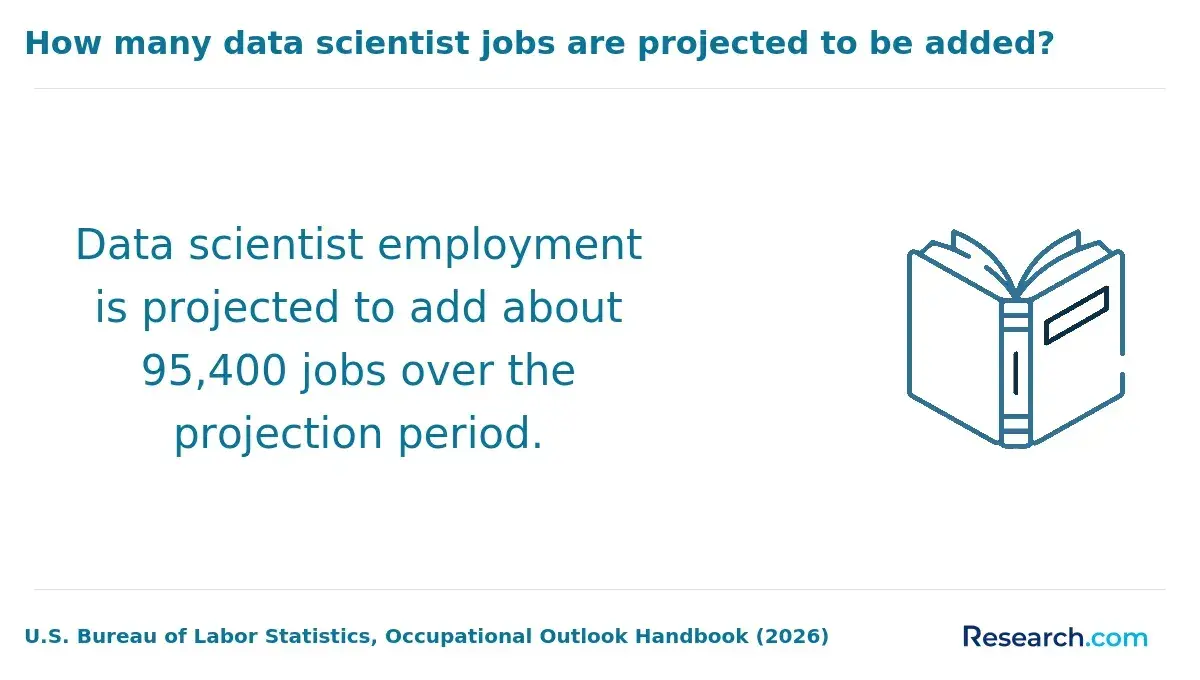
- The U.S. Bureau of Labor Statistics projects 35% employment growth for data scientists from 2025 to 2035. That outlook does not make admission or a job offer more likely for any individual applicant.
What matters more for data science master's admissions: research or industry experience?
Neither wins by default. An admissions reader needs evidence that you can handle graduate-level quantitative work, write and evaluate code, and use data to answer a well-defined question. Research may show that through study design and rigorous evaluation; industry work may show it through deployed analysis and decisions made under real constraints.
The distinction matters most when the program offers a thesis, an applied capstone, or a particular technical specialization. This comparison describes the evidence each setting can provide, not a universal admissions preference.
| Experience | Potentially persuasive evidence | Limitation to address |
| Research | Independent question formulation, statistical methods, reproducible analysis, and interpretation of uncertain results | A narrow topic may not show production coding or stakeholder communication |
| Industry | Data preparation, technical implementation, collaboration, and measurable use of an analysis | A job title may not reveal your individual contribution or mathematical depth |
Choose programs based on the work you want to do next, not the experience category you think sounds more impressive. A research assistant who only cleaned files and an analyst who only produced routine reports should both explain what they personally designed, tested, or improved.
Do data science master's programs require prior research or professional experience?
Do not assume either is a formal requirement. Requirements vary by program, and an application that invites applicants to describe experience is not necessarily requiring it. Check the current admissions page for explicit work-experience rules, required courses, test policies, and any separate expectations for a thesis track.
If a program describes experience as "preferred," ask whether relevant coursework or substantial projects can demonstrate the same capabilities. If it calls experience "required," confirm what qualifies before applying; an internship, academic lab role, and full-time job may be treated differently. Do not interpret an unpublished preference as a prerequisite - or a published prerequisite as optional.
How can applicants strengthen a data science master's application without experience?
An applicant without a research position or data science job can still demonstrate readiness. The strongest substitute is a project that makes your decisions inspectable, paired with evidence that you have met - or can meet - the program's academic prerequisites.
Before submitting applications, focus on a small number of substantial improvements rather than collecting unrelated course certificates:
- Compare your transcript with each target program's stated prerequisites and identify missing graded coursework.
- Complete a project with a clear question, documented data source, appropriate baseline, evaluation method, and discussion of limitations.
- Publish code or a technical write-up when permitted, and make your individual contribution easy to identify.
- Ask each program whether planned coursework or other preparation can satisfy any missing formal requirement before paying an application fee.
A short course or self-study can help you build skills, but it does not automatically fulfill a prerequisite that requires academic credit. Avoid presenting a polished model score without explaining data quality, leakage checks, or why the result is useful.
Which academic prerequisites do data science master's programs expect?
Expect programs to evaluate some combination of programming, statistics, calculus, and linear algebra, but check the exact courses and minimum grades required by each school. Some programs also expect preparation in algorithms or databases. Having a related degree title is not, by itself, proof that every requirement is met; having an unrelated title does not, by itself, rule you out.
Use course descriptions and your transcript to distinguish a formal match from a skills claim. For example, professional Python work may demonstrate fluency yet leave a graded linear algebra requirement unresolved. Conversely, a strong mathematics transcript may establish quantitative readiness while leaving a programming gap. If your goal is specifically advanced AI rather than broad data science, choosing an AI degree for your career goals can help frame which technical preparation to prioritize.
How should applicants present research and industry experience in statements and resumes?
Translate either type of experience into the same sequence: problem, your contribution, method, evaluation, result, and what you learned. Then connect that evidence to a specific feature of the program. This makes a research poster and a workplace project comparable without pretending they involved identical constraints.
In a statement, explain why the degree is the next step: perhaps you need stronger statistical foundations for applied work or advanced methodological training for research. On a resume, name tools only when you can explain how you used them. If results are confidential, describe the problem and your methods without disclosing protected data; do not invent an impact figure. Avoid claiming ownership of a team result when your role was limited to one part of it.
How do online and campus-based data science master's programs evaluate experience?
Delivery format alone does not establish an admissions standard. An online program may welcome working applicants without requiring employment; a campus program may value substantial professional work. Compare the published requirements and curriculum of the particular programs, not assumptions about their format.
Format does affect how useful your existing experience will be during study. A working applicant might want to test methods on permitted workplace problems, while an aspiring researcher might prioritize access to faculty projects. Ask whether part-time study, synchronous meetings, research supervision, and capstone partnerships are available in the format you would actually enroll in. For scheduling considerations, explore data science graduate programs for working students.
Which data science master's pathways best fit research and industry career goals?
Choose a thesis-capable pathway if you want sustained methodological investigation and can verify that suitable supervision is available. Choose an applied pathway if your priority is solving problems with stakeholders, communicating results, and producing work you can discuss with employers. Neither label guarantees a particular project or career outcome.
For applicants interested chiefly in machine learning or AI, inspect the actual course sequence rather than choosing by degree name. Some programs offer broad statistical and data-management training; others concentrate on AI methods. You can review online artificial intelligence degrees as a separate pathway, then compare prerequisites, electives, and project opportunities against data science options.
How do curriculum and capstone options differ between research and industry-focused programs?
A research-oriented option is most useful when it provides advanced methods, opportunities to investigate an open question, and appropriate faculty supervision. An industry-oriented option is most useful when it provides realistic data constraints, stakeholder interaction, and evaluation beyond model accuracy. These are features to verify in course descriptions and project rules, not promises implied by a program's marketing label.
Read the latest curriculum for required courses, elective availability, and whether students can choose a thesis, internship, or applied capstone. Ask who supplies project data, who evaluates the work, and whether you may retain a shareable portfolio artifact. If responsible deployment is central to your goals, AI master's degrees with ethics and governance tracks offer another curriculum feature to compare. A common mistake is choosing a program for a capstone option without checking whether that option is available in your format or during your expected enrollment period.
How do accreditation, costs, and program length affect data science master's choices?
Once a program fits your preparation and goals, check the institution's current accreditation status through the institution and its recognized accreditor. Do not assume institutional accreditation means the data science degree has separate programmatic accreditation. Confirm any employer or future academic requirements that matter to you.
Compare programs using the same cost and time assumptions: tuition for the credits you would take, mandatory fees, materials, possible travel, and the effect of studying part time on total expense. A thesis or internship may also affect your schedule and ability to remain employed. Published prices and policies change, so obtain a current program-specific estimate before deciding. Applicants weighing a less expensive technical alternative can compare total tuition for affordable ML master's programs, while checking whether those programs provide the preparation and project work they need.
What careers, salaries, and certifications can follow a data science master's degree?
A master's can support applications for data scientist, machine learning, analytics, or research-oriented roles, depending on your prior skills and the degree's curriculum. Research experience may be particularly useful when a role involves experimental design; industry experience may help when a role demands implementation and collaboration. Employers set their own qualifications, and a degree alone does not establish readiness for every role.
The U.S. Bureau of Labor Statistics reports a $120,230 median annual wage for data scientists in May 2025. That figure describes workers in the occupation - not master's graduates or entry-level offers - and should not be treated as the salary increase caused by a degree. Certifications may document proficiency with a particular tool or platform, but they are not a substitute for the mathematical, programming, and project evidence an employer requests. Evaluate a credential against your target job postings before paying for it.
Other Things You Should Know About Data Science
No universal publication requirement applies. An unpublished project can still show strong work if you can explain your question, methods, contribution, and findings. Check whether a specific program states otherwise.
Often, but verify the program's recommender rules. Choose someone who can describe your analytical work in detail; if academic recommendations are required, a manager's letter may not replace one.
Check the program's guidance first. Contact may be useful when supervisor fit affects admission or thesis availability, but unsolicited outreach is not a substitute for meeting application requirements.
Ask whether the program provides feedback, then identify a specific gap you can address - such as a prerequisite or a clearer account of your work. Reapplying without a meaningful change may not improve your case.
References
- How to Get Great Letters of Recommendation for Grad School | UW Professional & Continuing Education https://www.pce.uw.edu/news-features/articles/great-letters-recommendation-grad-school
- What You Can Do with a Master's in Data Science and Artificial Intelligence | Harvard Extension School https://extension.harvard.edu/blog/what-you-can-do-with-a-masters-in-data-science-and-artificial-intelligence/
- Research Statement - Cornell Graduate School https://gradschool.cornell.edu/career-and-professional-development/pathways-to-success/prepare-for-your-career/take-action/research-statement/
- Admissions - UVA School of Data Science https://datascience.virginia.edu/phd/admissions
- Thesis vs. Non-Thesis Master's Programs: Which is Right for You? | University of the Potomac https://potomac.edu/thesis-vs-non-thesis-masters/
- Research Experiences to Prepare for Grad School | umich.edu https://me.engin.umich.edu/grad-school-guide/early-undergrad/research-experiences/
- Statement of Purpose Tips - The IDEAL Lab https://ideal.umd.edu/blog/statement-of-purpose-tips
- Comprehensive Admissions Review Criteria - Graduate School https://graduateschool.colostate.edu/comprehensive-admissions-review-criteria/
- Thesis-Based vs. Course-Based Master's Degrees | scholarshipscafe.com https://scholarshipscafe.com/blog-detail/thesis-based-vs-course-based-masters-degrees-which-one-is-right-for-you
- How PhD admissions committees assess applications | alvinwan.com https://alvinwan.com/how-phd-admissions-committees-assess-applications/