2027 Solar Output Forecasting Capstones: What to Look for in a Data Science Master's

Co-Founder and Chief Data Scientist
A solar output forecasting capstone can show whether a data science master's prepares you to solve a real energy problem - not just fit a model. If you hope to work in renewable energy, the important question is whether a program gives you access to suitable data, technical guidance, and enough project freedom to build a credible forecast. This guide explains what a strong capstone demonstrates and how to check whether a prospective program can support one.
Key Things You Should Know
- Look for a capstone that predicts measured solar generation at a defined site and forecast horizon, not one that treats irradiance estimates as though they were power output.
- A convincing project uses time-appropriate data, simple comparison models, realistic error testing, and a reproducible account of its limitations.
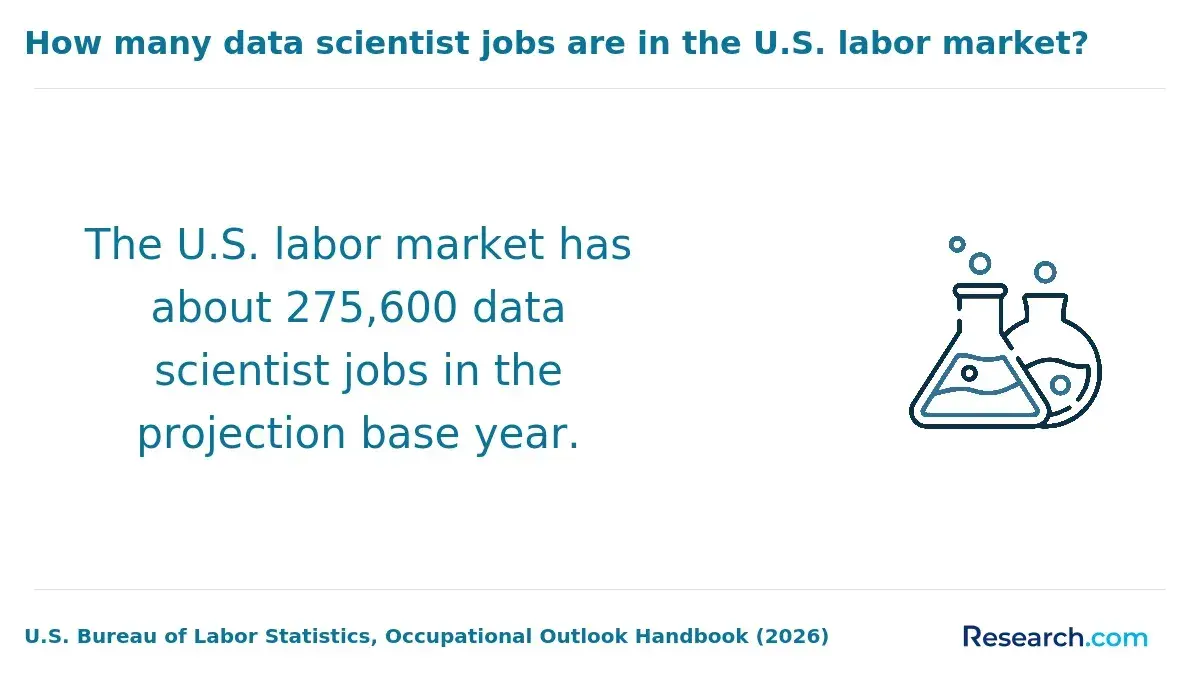
- Check project rules and data access before enrolling. The BLS projects 35% growth in data scientist employment from 2025 to 2035, but that occupation-wide figure does not measure solar-specific hiring.
What Is a Solar Output Forecasting Capstone in Data Science?
A solar output forecasting capstone predicts how much electricity a photovoltaic system will generate over a specified future period. A useful project defines the target precisely: for example, a plant's measured AC power for the next hour or its total energy production the following day. The horizon matters because a forecast used for near-term operations answers a different question from one used for day-ahead planning.
The distinction between solar resource and solar output is fundamental. Irradiance describes incoming sunlight; electrical output also depends on equipment capacity, temperature, shading, outages, curtailment, and other operating conditions. A project built only on irradiance can be valuable, but it should not claim to forecast measured generation unless it has generation observations or a clearly labeled simulation.
A strong capstone delivers more than an accuracy score. It states who would use the forecast, documents the observations available when each prediction is made, compares results with a practical baseline, and explains where the model fails. That combination gives an employer or project partner a way to judge whether the forecast could inform a decision.
Which Data Science Skills Should a Solar Forecasting Capstone Demonstrate?
The best portfolio evidence is a complete forecasting workflow: assembling timestamped generation and weather data, defining a prediction target, training models, and evaluating them as they would run in practice. Model complexity matters less than whether the student can prevent misleading results.
Forecast horizons change which inputs and errors matter. The table distinguishes common project designs; a student should select one that matches the data available and the intended user.
| Forecast target | Relevant information | What evaluation should reveal |
| Near-term site output | Recent measured power and weather observations | Performance during rapid changes, such as passing clouds |
| Day-ahead site output | Weather forecasts available before the prediction is issued | Errors across forecast hours, seasons, and weather conditions |
| Output across multiple sites | Site metadata, generation histories, and location-specific weather | Whether performance transfers to sites not used for training |
A credible evaluation separates training and test periods chronologically. It also compares the proposed model with a simple alternative, such as a recent-output or weather-based baseline. Randomly mixing timestamps can leak information about future conditions into training and make a forecast appear more accurate than it would be in operation.
Look for evidence of data engineering and judgment as well: consistent time zones, treatment of missing readings, clear handling of nighttime values, and documentation of outages or curtailment where that information exists. Error measures should be reported in units a stakeholder can interpret, with results broken down by conditions that matter. Code, data provenance, and a repeatable run procedure make the work easier to assess than a presentation alone.
How Do You Choose an Accredited Master's Program for Solar Forecasting?
Start by confirming the institution's accreditation through its official accreditation information and the recognized accreditor's records. Accreditation is an institutional check, not evidence that a program offers solar forecasting. Then examine the current catalog, capstone handbook, and project examples to see whether the degree permits an externally sourced energy project and provides appropriate supervision.
Ask a program representative the following questions before treating a possible capstone as a reason to enroll:
- Can students propose their own capstone topic, and who approves its scope?
- May a student work with a utility, developer, laboratory, or employer, and what agreements govern the data?
- Are faculty available to advise on time-series modeling, uncertainty, or energy applications?
- What must be submitted publicly, and can a project using confidential operating data satisfy that requirement?
- Do students receive access to computing resources and help with data acquisition, or must they arrange both independently?
Do not assume a past student's solar project proves that the same option will be available to you: advisers, partners, and project rules can change. Compare the answers alongside total cost and curriculum depth. If budget is a constraint, a list of low-cost online data science master's programs can help form a shortlist, but confirm each school's current charges and capstone policies directly.
What Coursework Prepares Students for Solar Energy Forecasting Projects?
Prioritize courses in statistical learning, time-series forecasting, data engineering, and model evaluation. A useful sequence lets students clean and join temporal datasets before attempting advanced models. Courses in optimization, uncertainty quantification, geospatial analysis, or energy systems can add value when they support the particular forecast and its intended use.
Read course descriptions and assignments, not just titles. A program that briefly mentions forecasting in a general machine-learning class offers different preparation from one where students build rolling forecasts, test them on later periods, and analyze uncertainty. Energy coursework is helpful for understanding why output differs from sunlight, but strong statistical and computing foundations may be more important than an energy-branded elective.
If you are comparing syllabi, look for work with imperfect, time-indexed data and explicit discussion of data leakage. A capstone adviser with relevant domain knowledge can help translate a statistically sound result into an operationally meaningful one.
Should You Choose an Online or Campus-Based Data Science Master's?
Neither format inherently produces a better solar forecasting capstone. An online program may suit a working student who can use approved employer data or collaborate remotely with an energy partner. A campus-based program may be preferable when access to a laboratory, local research group, or in-person partner is central to the project.
The decisive issue is how the capstone operates. Confirm meeting times, adviser availability, group-work requirements, computing access, and whether an internship or campus visit is required. A program with a compressed schedule may leave less time to secure permissions or collect a usable history of observations; compare the actual project calendar before choosing among data science master's programs with shorter timelines.
Choose the format that gives you a workable route from project proposal to usable data and sustained feedback. Convenience is less valuable if the program's project rules prevent the work you want to show employers.
What Are the Admission Requirements for a Data Science Master's?
Requirements vary by institution. Programs commonly assess prior quantitative study and programming readiness, but applicants should check each school's current prerequisites, application materials, and policies for completing missing coursework. An interest in renewable energy does not substitute for the mathematical and coding preparation needed to evaluate forecasts.
If your background is in engineering, environmental science, or another field, identify specific gaps rather than assuming your major qualifies or disqualifies you. Be ready to demonstrate programming, statistics, and work with real datasets through transcripts, professional work, or a portfolio, as the program permits. Independent study can improve readiness without necessarily fulfilling a formal prerequisite.
Applicants considering a broader machine-learning path after a different undergraduate major can also examine master's-level AI study after another major. For this capstone goal, however, confirm that the degree includes enough statistical evaluation and project flexibility - not simply AI coursework.
How Long and How Much Does a Data Science Master's Take?
Time to completion and total price depend on the school, enrollment pace, residency rules, and required project sequence. There is no reliable single cost or duration for data science master's programs. Compare each program's current tuition and mandatory fees against the credits you would actually take, then account for software or computing charges, travel requirements, and any extra term needed to finish a partner-based capstone.
For a solar project, timing has an additional cost: arranging data access or approval may take longer than fitting a model. Ask whether a student can begin proposing a project before the final term and what happens if a partner withdraws access. Check whether employer tuition support or institutional aid changes your out-of-pocket expense; explore financial aid for graduate data science degrees while verifying eligibility and current terms with each provider.
Do not compare one school's tuition-only figure with another's full estimated cost. Likewise, do not assume that finishing faster is cheaper if it requires taking time away from paid work or leaves too little time for the project.
Which Careers Use Solar Output Forecasting and Data Science?
Forecasting work can appear in renewable-energy analytics, utility operations, grid planning, energy trading support, and software products for solar asset management. Job titles differ by employer; a role may be called data scientist, forecasting analyst, energy analyst, or machine-learning engineer. Some positions involve deploying forecasts, while others emphasize interpreting them for planning or operations.
A solar capstone is most useful when its deliverables resemble the work behind your target role. An operations-oriented portfolio should make prediction timing and error consequences clear. A modeling-oriented portfolio should show careful baselines, validation, and reproducible code. If you want to assess the wider skill set employers may expect, use guidance on online data science education and career readiness alongside actual postings for the roles you want.
Domain knowledge can strengthen an application, but one capstone does not replace experience with production systems or electricity-market rules where an employer requires them. Choose a project whose limitations you can explain clearly in an interview.
What Salary and Job Outlook Can Data Science Graduates Expect?
According to the U.S. Bureau of Labor Statistics, the median annual wage for data scientists was $120,230 in May 2025. That is an occupation-wide median, not an entry-level offer, a salary caused by earning a master's, or a solar-forecasting pay estimate. Experience, employer, location, and job duties all affect an individual offer.
The BLS projects strong growth for data scientists overall, but its occupational figures do not isolate renewable-energy forecasting jobs. Use the broad outlook to understand potential career flexibility, then review current energy-sector postings to see which roles actually seek forecasting, power-systems knowledge, or deployment experience. A program's graduate salary claim deserves separate scrutiny if it does not disclose who responded, when they were surveyed, and what experience they had before enrolling.
Do Solar Forecasting Careers Require Certifications or Licenses?
Building forecasting models as a data scientist generally does not depend on a single solar-specific license. Employers may value evidence of coding, statistical judgment, and energy-domain experience more than an optional certificate. Requirements change when a job includes regulated engineering responsibilities: the applicable duties and state rules, not the capstone topic, determine whether professional engineering licensure matters.
Before paying for a certification, compare it with the postings you intend to pursue. If employers ask for demonstrated forecasting work, a well-documented project may be the stronger use of your time. If a position includes professional engineering sign-off or other regulated work, ask the employer and relevant state board about its specific requirements; a data science master's alone should not be assumed to meet them.
Other Things You Should Know About Data Science
Possibly, if the program accepts it. Label simulated output clearly and explain the assumptions behind it. Synthetic data can demonstrate modeling skills, but it cannot establish performance on an operating solar system.
Ask about publication and confidentiality rules before using the data. A program may permit a restricted submission, while a public portfolio could instead show permitted code, a methodology description, and results from separate public data.
That depends on university approval, employer permission, and ownership rules. Get those decisions in writing before building the project around workplace data or code.
No. Resource assessment characterizes available sunlight, whereas output forecasting predicts future electrical generation. The two can be related, but the target and claims in your final report should remain distinct.
References
- Evaluating epidemic forecasts in an interval format - PMC - NIH https://pmc.ncbi.nlm.nih.gov/articles/PMC7880475/
- A new metric to evaluate solar irradiance forecast models | sciencedirect.com https://www.sciencedirect.com/science/article/pii/S2352484725000770
- Capstone Projects | SCM https://scm.mit.edu/blog-category/capstone-projects/
- Solar Power Forecasting Using Deep Learning Techniques | rit.edu https://repository.rit.edu/cgi/viewcontent.cgi
- Why accurate day-ahead forecasting matters for solar production | Solcast™ https://solcast.com/blog/accurate-dayahead-solar-production-forecast
- A Review of Solar Forecasting Techniques and the Role of Artificial Intelligence | mdpi.com https://www.mdpi.com/2673-9941/4/1/5
- What is solar power forecasting? | gridX https://www.gridx.ai/knowledge/what-is-solar-power-forecasting
- Solar, meteorological, and environmental data | solargis.com https://kb.solargis.com/docs/solar-meteorological-and-environmental-data
- Research - SolarAnywhere - Solar Radiation Data, Solar Operations and Maintenance, Solar Forecasts https://www.solaranywhere.com/resources/research/