2027 Choosing an Online Ed.D. in Leadership and Learning in Organizations for Leadership in Community Health Nonprofits
Audited and Verified:
Our Editorial and Data Verification Process
Research.com uses government datasets, official education statistics and primary institutional information to support its career and degree guides. Our review process checks factual accuracy, occupational definitions, source dates and the requirements associated with the credentials discussed.
How This Article Was Fact-Checked
Our editorial team verifies salary estimates, employment projections, education requirements and program information against original data providers and official organizations. Salary figures are checked against the relevant occupational definitions and reporting periods. Information about licensure, accreditation and required in-person training is reviewed separately.
Fact-checked and verified on:

Co-Founder and Chief Data Scientist
Community health nonprofits need leaders who can develop staff, learn from residents, evaluate programs, and make decisions under tight funding constraints. An online Ed.D. in leadership and learning may strengthen those abilities, but it is a substantial commitment - and it may not address the skill gap you face most urgently.
This guide is for nonprofit professionals weighing doctoral study against health-focused degrees and shorter training. It explains what to examine in a program, what the degree can realistically support, and how to decide whether the investment fits your leadership goals.
Key Things You Should Know
- Choose a leadership-and-learning Ed.D. when your goal is to improve how a community health organization develops people, implements change, and uses evidence - not simply to acquire a health credential.
- Verify institutional accreditation, nonprofit-relevant coursework, the actual online schedule, and whether an approved applied project can involve your organization or a community partner.
- Budget for the full program rather than tuition alone. The U.S. Bureau of Labor Statistics reports a $133,000 median annual wage for training and development managers in 2025, but that occupational figure is not a nonprofit salary estimate or an Ed.D. earnings forecast.
What Is an Online Ed.D. in Leadership and Learning in Organizations?
An Ed.D. is a practice-oriented doctorate. Programs focused on leadership and learning in organizations generally examine how adults learn, how organizations change, and how leaders use evidence to improve practice. "Online" describes where much of the instruction occurs; it does not establish that classes are self-paced or that campus visits are unnecessary.
For a community health nonprofit leader, the appeal is organizational rather than clinical: improving volunteer preparation, strengthening supervisor development, or learning why an outreach initiative is difficult to implement. A program's title alone does not establish that it teaches public health, nonprofit finance, or clinical management.
The right credential depends on the work you want to lead. These pathways address different gaps and should not be treated as interchangeable.
| Pathway | Best-aligned objective | Potential limitation for this reader |
| Leadership-and-learning Ed.D. | Lead organizational learning, change, and practice-focused inquiry | May offer limited health-policy or clinical-operations coursework |
| MPH or MHA | Build public health or healthcare administration expertise | May provide less doctoral-level study of organizational learning |
| MPA or nonprofit-management study | Strengthen public-service management, governance, and budgeting | May not emphasize adult learning or applied doctoral research |
| Targeted certificate or employer development | Address a defined skill gap with a smaller commitment | Does not provide the breadth or doctoral award of an Ed.D. |
If your primary goal is producing original scholarship or pursuing a research-intensive academic career, compare the Ed.D. with a research-oriented PhD rather than assuming the doctorates have identical aims.
How Can an Ed.D. Prepare You for Community Health Nonprofit Leadership?
The strongest fit is a leader who already understands a community-serving setting and needs better ways to develop people, coordinate partners, and investigate persistent problems. Doctoral study could help a program director examine why referral procedures vary across sites, then design staff learning and evaluate whether practice changes. It cannot establish the cause of that variation without evidence.
Community health work also demands judgment beyond training design. Residents, staff, volunteers, funders, and partner clinics may define success differently. A useful Ed.D. should help you distinguish a knowledge gap from an obstacle caused by staffing, transportation, incentives, trust, or governance. Teaching a new procedure will not fix a process that workers lack time or authority to follow.
Ask whether the program lets you study an issue your organization can act on. A potential applied project might assess an outreach workflow or volunteer-development process, subject to faculty approval, organizational permission, appropriate data access, and any required ethical review. Neither employment at the nonprofit nor a supervisor's encouragement automatically satisfies those requirements.
How Do You Choose an Accredited Online Ed.D. Program?
Start by confirming that the university holds institutional accreditation recognized by the U.S. Department of Education or the Council for Higher Education Accreditation. Then check the institution's own materials for the exact degree awarded, curriculum, delivery format, graduation requirements, and any applicable programmatic accreditation. Institutional accreditation does not, by itself, make a degree eligible for professional licensure.
Compare programs against the work you expect to do in a community health nonprofit. Admissions staff and faculty should be able to clarify the following points before you commit:
- Applied-project fit: What final project is required, who approves the site and topic, and can an external nonprofit partner participate?
- Relevant learning: Are adult learning, organizational change, program evaluation, and ethical data use required courses or merely possible electives?
- Access and support: When are live meetings and campus convenings held, and what guidance is available for applied research?
- Evidence of outcomes: If completion or career results are published, what cohort, period, and definition do they represent?
Compare total charges and required travel across equivalent program requirements, not advertised tuition rates alone. Affordable doctoral education program comparisons can help you build a shortlist, but obtain a current, program-specific cost estimate from each university.
A relevant curriculum connects leadership decisions to adult learning and organizational evidence. Coursework may address learning transfer, organizational culture, change implementation, qualitative and quantitative inquiry, and program evaluation. Check the required sequence: a topic appearing in one elective is not proof of extensive preparation, and an advertised concentration is not necessarily a separately awarded credential.
In community health work, the useful test is whether you can apply those concepts responsibly. For example, improving community health worker onboarding calls for needs assessment, collaboration with experienced workers, accessible learning design, and measures of practice - not just a satisfaction survey. Evaluation courses should help you interpret limitations as well as results.
Prior graduate study may shape which courses feel familiar, but it does not automatically replace doctoral requirements. Applicants holding an education specialist degree can use education specialist to doctoral degree planning as a starting point, then request the target program's written assessment of eligibility and any applicable credit.
Requirements vary by university and entry term. Programs commonly evaluate prior graduate education, academic performance, professional experience, recommendations, and a statement explaining the applicant's goals; some add an interview or other requirements. Do not assume a master's in education, a particular job title, or a fixed number of nonprofit service years is universally required.
Show what you actually led: a service redesign, staff-development effort, partnership, or evaluation decision. Explain your responsibility, the evidence available, and what you still need to learn without claiming unmeasured impact. If you hope to use a nonprofit setting for doctoral work, ask whether partner access is required for admission or only later for a project.
Graduate credits that help establish admission eligibility are distinct from credits accepted toward the doctorate. Ask the program to evaluate transcripts and any proposed transfer credit in writing before assuming prior study will reduce cost or completion time.
Online delivery can let a nonprofit professional remain near their organization and community partners. Campus-based study may make in-person faculty interaction and peer collaboration easier. Neither format guarantees stronger research supervision or a better schedule; those depend on the program.
For an online option, obtain the actual timetable for live classes, group meetings, campus convenings, and project milestones. Compare it with grant-reporting periods, service hours, and evening or weekend commitments. Also ask what happens if your job changes or a project partner becomes unavailable.
If you previously completed substantial doctoral coursework without a degree, ABD education students comparing online doctoral pathways should confirm whether a completion pathway applies to their academic record. An ABD designation does not mean another institution will accept prior credits or waive its research requirements.
An Ed.D. is a multiyear commitment, but the credible timeline is the program's published course and project sequence - not a general estimate. Ask how often courses run, whether enrollment is cohort-based, what happens if you pause, and how long students have to finish the final project.
For a usable cost comparison, request the required credit total and current tuition and fee schedule. Add any required travel and lodging, books or technology, project-related expenses, and potential lost work time. If your nonprofit offers education assistance, check reimbursement limits, grade conditions, and repayment obligations before counting it as funding.
Choosing a lower-cost online Ed.D. is sensible only if the less expensive program still offers the curriculum, supervision, schedule, and project arrangements your goal requires. Compare the full cost with a shorter qualification that could address your immediate skill gap.
Possible paths include program director, workforce-development leader, volunteer-development director, evaluation leader, or executive leadership. Responsibilities differ: a program director coordinates services and budgets, while a workforce-development leader may design learning systems and support supervisors. An evaluation leader needs credible methods and data-governance skills. Executive roles also require demonstrated fundraising, governance, financial, and strategic experience.
An Ed.D. may support advancement when paired with a record of leading people and improving programs; it does not substitute for sector knowledge or hiring requirements. If you are moving from an adjacent field, seek responsibility for a cross-functional initiative and retain permissible evidence of your contribution. Professionals considering a move out of nonprofits can separately review organizational leadership doctoral options for college administrators; those roles have different governance and hiring expectations.
If your target job chiefly requires public health operations, fundraising, or financial management, experience and focused preparation in that function may be more valuable than a broadly framed doctorate.
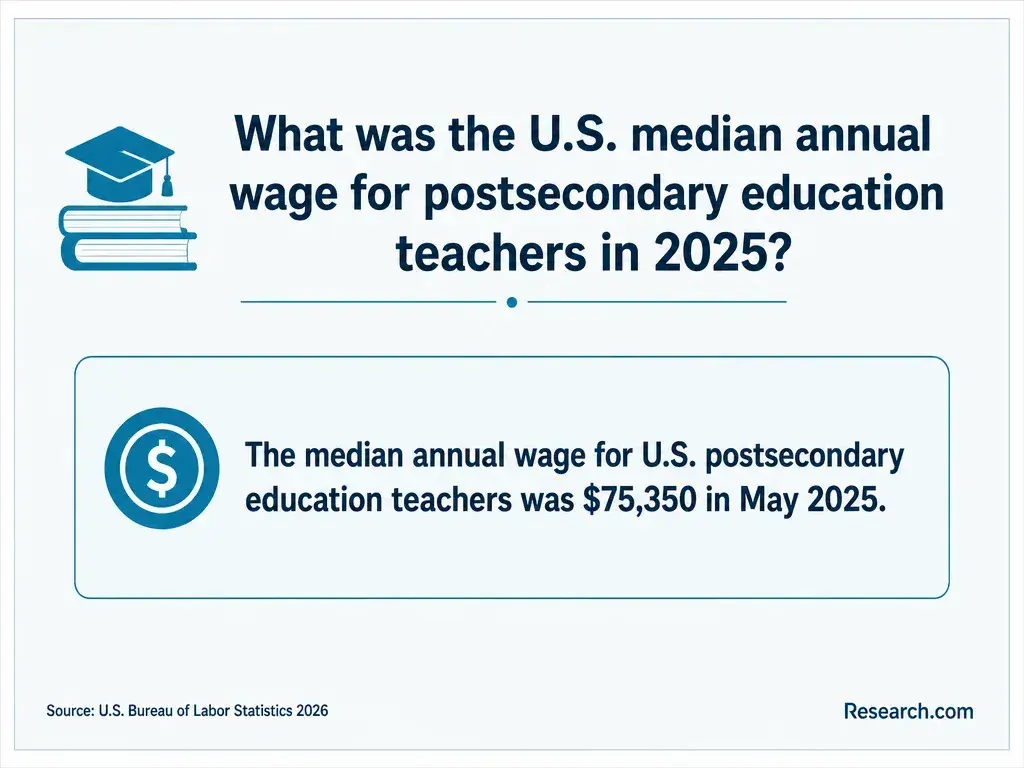
There is no reliable single salary for "nonprofit leaders with an Ed.D." Pay depends on role, organization size, funding, location, and prior responsibility. As a broad U.S. benchmark, the Bureau of Labor Statistics reports a 2025 median annual wage of $133,000 for training and development managers. That occupation includes employers beyond community health nonprofits and does not measure Ed.D. graduates' earnings.
For a personal decision, compare compensation posted for the specific roles and organizations you could realistically enter with your present experience. Weigh any plausible advancement against the full cost of study; do not budget around an assumed promotion or salary increase.
Do Community Health Nonprofit Leaders Need Licensure or Certification?
General nonprofit leadership roles do not acquire a universal professional license through an Ed.D. A leadership-and-learning doctorate also does not confer clinical, counseling, public health, or school-administrator licensure. If a position involves regulated services, check the relevant state authority and the employer's stated qualifications for that specific role.
Optional credentials in areas such as project management or evaluation may be useful when they match your duties, but they are separate from the doctoral degree. Before enrolling, distinguish the credential a job requires from the leadership abilities you hope to develop.
Other Things You Should Know About EdD Leadership
Possibly. Confirm that the program permits a multi-partner setting and that each organization agrees to its role, data access, and review responsibilities before defining the project.
Discuss a feasible needs assessment or prospective measurement plan with faculty. Do not present incomplete historical records as a valid baseline without examining their limitations.
Invite input on the problem, practical burden, and interpretation of findings through an appropriate advisory process. Confirm consent and oversight requirements before collecting identifiable information.
Contact your advisor promptly about approved changes in site, scope, or data collection. A backup idea is useful, but only the program can determine whether it meets degree requirements.
- Cost of Attendance (Budget) | 2025-2026 Federal Student Aid Handbook https://fsapartners.ed.gov/knowledge-center/fsa-handbook/2025-2026/vol3/ch2-cost-attendance-budget
- Partnering with Students to Develop a Capstone for a... - PMC https://pmc.ncbi.nlm.nih.gov/articles/PMC11732519/
- Harnessing the Power of Community Engagement for Population Health | cdc.gov https://www.cdc.gov/pcd/issues/2025/25_0189.htm
- Types of Financial Aid: Grants, Work-Study, and Loans | studentaid.gov https://studentaid.gov/understand-aid/types
- Human & Community Service Career Field | umn.edu https://cla.umn.edu/undergraduate-students/career-services/exploring-careers/options-career-field/human-community-service-career-field
- Funding Basics - UNC Graduate School https://gradschool.unc.edu/funding/basics/
- 2026 UNC Online EdD in Organizational Learning & Leadership https://online.unc.edu/online-doctoral-programs/online-edd-organizational-learning-and-leadership/
- What Topics Do EdD Students Research in the EdD Program? | Fairfield University https://www.fairfield.edu/news/insights/education-human-development/what-topics-do-edd-students-research.html
- Doctor of Education in Organizational Leadership, Culture and Change | Thomas Edison State University https://www.tesu.edu/degrees-programs/doctoral/edd.php
- Walden University's Guide to Doctoral Capstone Projects https://www.waldenu.edu/online-doctoral-programs/resource/guide-to-doctoral-capstone-projects