2027 Choosing a BS in Business Administration for Business Roles in Community Development Organizations
Audited and Verified:
Our Editorial and Data Verification Process
Research.com uses government datasets, official education statistics and primary institutional information to support its career and degree guides. Our review process checks factual accuracy, occupational definitions, source dates and the requirements associated with the credentials discussed.
How This Article Was Fact-Checked
Our editorial team verifies salary estimates, employment projections, education requirements and program information against original data providers and official organizations. Salary figures are checked against the relevant occupational definitions and reporting periods. Information about licensure, accreditation and required in-person training is reviewed separately.
Fact-checked and verified on:

Co-Founder and Chief Data Scientist
Community development organizations need people who can manage budgets, coordinate projects, support staff, and report responsibly to funders and residents. A BS in Business Administration can build those skills, but a general business degree is not automatically the best route into every role. This guide is for prospective students and working nonprofit professionals who want to compare coursework, applied experience, program costs, and realistic career outcomes before enrolling. It will help you identify the degree features that matter most for the work you hope to do.
Key Things You Should Know
- Choose a program for its accounting, operations, data, and applied-project opportunities - not its degree title alone. Community development employers also need evidence that you can work with residents, partners, and funding constraints.
- Entry routes include program and operations coordination, fundraising support, and finance or HR administration; managing major budgets or staff generally requires relevant experience.
- The U.S. median for budget analysts was $91,640 in May 2025, but that occupation-wide figure is not an expected starting salary or a nonprofit-specific wage.
What is a business administration degree for community development careers?
A BS in Business Administration is a broad undergraduate business degree, not a credential specific to community development. Its core may cover accounting, finance, management, marketing, operations, and quantitative analysis. Those subjects help organizations plan services, control costs, manage partnerships, and explain results to funders. The work also calls for knowledge that a business core may not teach: resident engagement, nonprofit governance, public funding rules, and the history and priorities of a particular community.
Compare the actual curriculum rather than assuming a BS, BBA, or BS in Management offers the same preparation. A general business degree can suit someone who wants flexibility across operations, finance, and administration. Someone focused on supervising teams might also examine organizational leadership bachelor's routes of three years or less, while a future housing-policy or planning specialist may need more field-specific study. A shorter advertised timeline matters only if the required courses, accepted credits, and practical experience fit the student's goals.
What careers can a business administration graduate pursue in community development organizations?
Start with the work you want to perform. A neighborhood nonprofit, community development financial institution, housing organization, or local development agency may use similar job titles for different responsibilities. The following comparison connects common entry routes to evidence an applicant could realistically develop; none is guaranteed by graduation.
| Role or entry route | Typical responsibilities | Useful evidence of readiness |
| Program or operations coordinator | Track schedules, vendors, service activity, and reports | Project tracker, process map, or supervised coordination experience |
| Development or fundraising assistant | Maintain donor records and help prepare proposals and reports | Careful writing, spreadsheet work, and data-handling experience |
| Finance or grants assistant | Monitor expenses, documentation, and reporting deadlines | Accounting coursework and an accurate sample budget |
| HR or administrative specialist | Support hiring, records, onboarding, or office systems | Relevant HR coursework and confidential-records practices |
For an early-career applicant, a supervised internship, volunteer assignment, or paid administrative role can show how business skills work under real funding and staffing limits. A career changer should first identify transferable experience - such as customer service, bookkeeping, logistics, or event coordination - then fill the gaps specific to a target posting. If HR is the clear destination rather than broad operations work, compare the curriculum and expense of a focused route using HR education costs and career planning.
What accreditation should a business administration program have?
First, confirm that the institution holds recognized institutional accreditation. Then check whether the business school or specific program has applicable AACSB, ACBSP, or IACBE accreditation. These are different layers of review: an institution's accreditation does not mean its business program holds specialized accreditation, and a business school's claim should be checked for its precise scope.
Ask admissions to identify the accreditor, the business program covered, and where to verify both claims. When reviewing American business schools offering online degree study, also check whether the online BS is the same accredited program described by the school. Accreditation is an important screening factor, not proof of internship access, affordable completion, or employment outcomes.
The strongest course plan pairs business fundamentals with the constraints of mission-driven work. Accounting and budgeting support expense tracking; operations and project management help coordinate services and vendors; statistics and spreadsheets support accurate reporting. Courses in organizational behavior, HR, business law, and ethics can strengthen decisions involving staff, residents, and sensitive information. Look for electives in nonprofit management, public finance, community economic development, or grant management if the school offers them.
Ask to see assignments, not just course titles. A useful applied project might be a proposed operating budget or a process map for an approved community partner. It should distinguish assumptions from observed results, use data the student is authorized to access, and protect resident and donor information. A student targeting complex project work can compare the business curriculum with value-focused project management degree choices; a project management class alone does not establish professional certification or experience managing a funded initiative.
Choose the format that lets you complete required work and build relevant relationships. Online study may reduce travel and accommodate employment, but courses can still require live meetings, group presentations, proctored exams, or fixed deadlines. Campus study may make local nonprofit contacts and supervised projects easier to arrange, though commuting and class schedules can limit access.
Before choosing among online colleges with accelerated business programs, request the schedule for upper-level courses and ask whether internships or capstones require daytime availability. An accelerated calendar does not reduce the work in a course. If you already work for a community organization, ask the faculty member and employer whether an appropriately scoped workplace project can be approved; employment alone does not make it eligible for academic credit.
Requirements vary by school and by whether you apply as a first-year, transfer, or returning student. Applicants generally need an acceptable secondary-school credential or prior college record, but GPA rules, testing policies, and entry into the business major differ. Some programs expect mathematics, accounting, or economics coursework before upper-level business classes; others allow students to complete it after admission.
Request the current catalog and ask admissions which requirements apply to your entry route. For a closer look at qualifying for a business administration college program, distinguish admission requirements from courses needed to graduate. Transfer applicants should obtain a degree audit showing where accepted credits apply; an accepted elective may not satisfy accounting, general education, or major requirements.
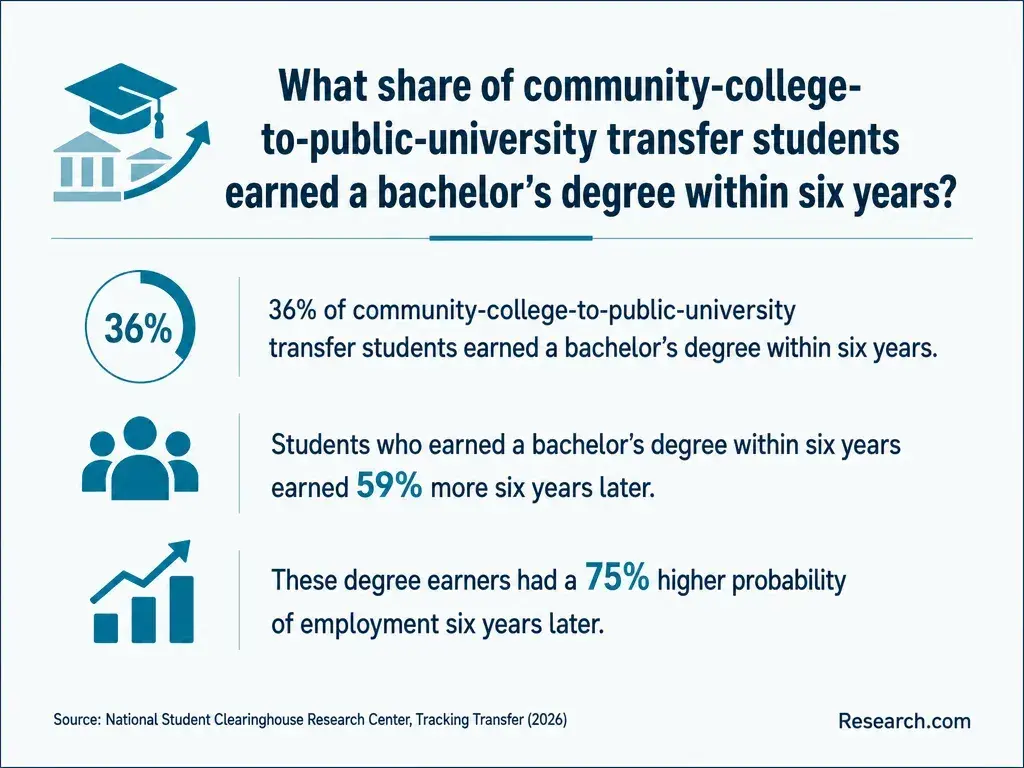
A full-time bachelor's pathway typically takes about four academic years from the start, but completion time depends on transfer credit, prerequisites, course availability, and enrollment pace. For a returning student, the useful number is not credits accepted alone: it is the remaining requirements on the school's official degree audit.
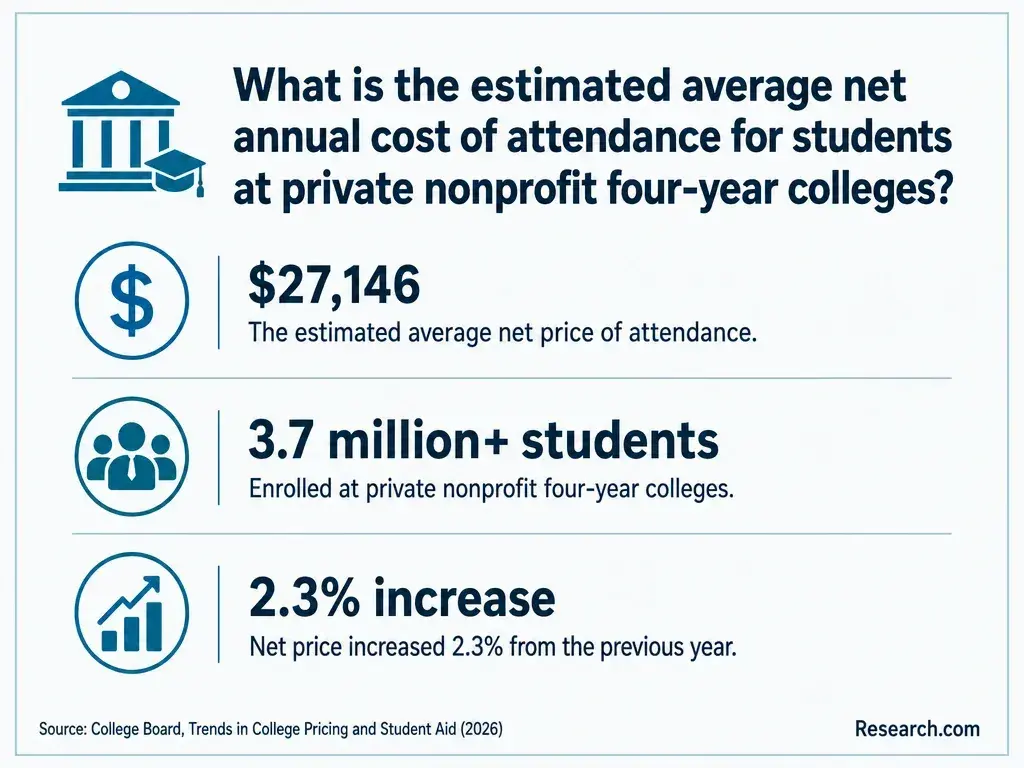
Compare total completion cost rather than a tuition rate in isolation. Include required fees, books or software, travel, financing costs, and earnings you may give up for an internship. Ask when employer reimbursement arrives and whether it depends on grades or continued employment. Schools with zero-cost college applications can reduce an initial expense, but an application-fee saving says little about the price of finishing the degree.
Pay depends on the occupation, employer, location, responsibilities, and experience - not simply on holding a BS in Business Administration. As one reference point, the U.S. Bureau of Labor Statistics reports a May 2025 median annual wage of $91,640 for budget analysts across industries. That is the occupation-wide midpoint, not an entry-level offer or a wage specific to community development organizations.
For a realistic comparison, collect pay ranges from local postings that match your experience and intended function, such as grants administration or operations coordination. Weigh those ranges against your remaining education cost and the value of experience you can gain while studying. Use inexpensive business administration degree options as a starting point for cost comparison, then verify each school's current charges and whether its curriculum supports the jobs you actually want.
There is no single federal job-growth forecast for all business jobs in community development organizations. BLS projects U.S. employment of project management specialists to grow 7% from 2025 to 2035, but that projection covers the occupation across industries. It does not predict hiring by neighborhood nonprofits or establish that graduates will qualify for specialist positions.
Local demand depends on funding, organizational budgets, and the mix of public, philanthropic, and earned revenue. Read postings to see whether employers want grant reporting, financial controls, resident-facing communication, or project delivery experience. Be cautious about treating a fast program or a broad job-growth figure as a return-on-investment forecast; when assessing low-cost shorter business administration programs, test their claims against relevant local openings and the experience those openings require.
Do community development careers require licenses or professional certifications?
Many coordination and administrative roles do not require a professional license, but requirements change with the function. Accounting, financial services, real estate, and certain housing-related activities can involve separate licensing or regulatory rules. Employers may value voluntary credentials in project management, HR, fundraising, or grant work, but a business degree does not award those credentials or automatically meet their experience requirements.
Check the exact job posting and, for regulated work, the responsible state authority or credentialing body before selecting courses. If your goal is HR and you already have college credits, transfer pathways into online human resources programs may be worth comparing with a general BS. Ask each school for an official credit evaluation and confirm separately whether any outside certification has education or experience prerequisites.
Other Things You Should Know About Business Administration
Yes, if you describe specific responsibilities and results you can document. Organizing schedules or maintaining records is more informative than listing volunteer hours alone.
Yes. Depending on the role, relevant experience or study in public administration, social work, accounting, planning, or another field may be more direct. Compare the requirements of your target jobs before pursuing another degree.
Ask who will supervise you, what work you may perform, whether the schedule is feasible, and what information you may use in academic assignments. Obtain faculty approval before assuming the placement earns credit.
Explain whose needs a proposal addresses, how stakeholders would be consulted, and where your evidence is limited. Use public or authorized information rather than presenting a classroom proposal as an implemented community result.
- MPA vs MBA: Which Fits a Nonprofit or Public Career? | Notre Dame de Namur University https://www.ndnu.edu/articles/business-management/mpa-vs-mba.html
- Business Administration vs. Business Management | Warner Pacific University https://www.warnerpacific.edu/blog/business-administration-vs-business-management/
- What is Experiential Learning and Its Importance | American College of Education https://ace.edu/blog/what-is-experiential-learning/
- Top 18 essential nonprofit management skills and development tips | Central Michigan University https://www.cmich.edu/blog/all-things-higher-ed/top-18-essential-nonprofit-management-skills-and-development-tips
- Nonprofit Careers: When Mission Matters | University of New Hampshire https://www.unh.edu/news/nonprofit-careers-when-mission-matters
- Nonprofit Management for Social Workers | Indiana Wesleyan University https://www.indwes.edu/articles/2025/05/nonprofit-management-for-social-workers
- Majors and Minors | Berea College https://www.berea.edu/academics/departments-programs/economics-and-business/eco-bus-majors-and-minors/
- Internship and Co-op Support - Careers | Coles College of Business https://campus.kennesaw.edu/offices-services/careers/students/internships-co-ops.php
- Two Approaches to Experiential Learning | AACSB https://www.aacsb.edu/insights/articles/2023/04/two-approaches-to-experiential-learning
- Internships and Co-Op Experiences | tcnj.edu https://business.tcnj.edu/academics/internships/