2027 Are Online Educational Policy Degrees Respected by Employers?

Co-Founder and Chief Data Scientist
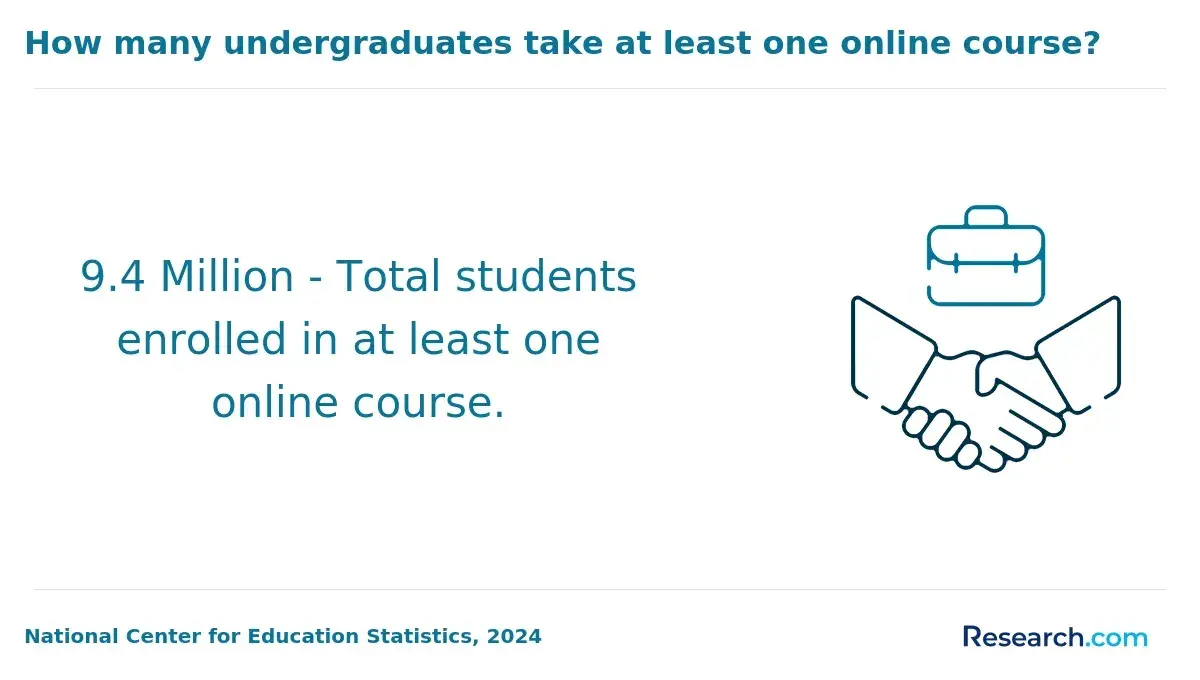
Online educational policy degrees have gained significant traction among students seeking flexible academic options. Recent studies show that over 40% of higher education students now enroll in at least one online course, reflecting this shift.
As online credentials become more common, evaluating employer perceptions of these degrees is essential. This article aims to clarify how employers currently regard online educational policy degrees and identify the factors that influence their acceptance.
Understanding these dynamics will help prospective students make informed decisions about pursuing advanced education through online programs, aligning academic goals with career expectations.
Key Benefits of Online Educational Policy Degrees Respected by Employers
- Employers increasingly value online educational policy degrees, with recent surveys showing over 70% of hiring managers consider them equivalent to traditional degrees from accredited institutions.
- Graduates gain critical skills in data analysis, policy formulation, and leadership, which are cited by 65% of employers as essential for advancing in education-related roles.
- Completing an online educational policy program significantly improves career prospects, with alumni reporting a 30% higher likelihood of promotion within three years compared to non-degree holders.
Which Accrediting Bodies Make an Online Educational Policy Degree Legitimate?
Accreditation plays a vital role in ensuring the quality, legitimacy, and employer recognition of online educational policy degrees. It guarantees that programs meet rigorous academic standards, which is essential for transferring credits, qualifying for financial aid, and securing employment in the education sector.
Understanding the relevant online education policy accreditation bodies can help prospective students choose programs that enhance their career prospects.
Key accreditation types to consider include:
Regional Accreditation
This is the most widely respected accreditation in the United States, granted by agencies such as the Higher Learning Commission (HLC), Middle States Commission on Higher Education (MSCHE), and Southern Association of Colleges and Schools Commission on Colleges (SACSCOC).
Regional accreditation confirms high academic standards, facilitates credit transfers between institutions, and is often necessary for graduate school admission and financial aid. Graduates from regionally accredited programs tend to have stronger employment opportunities and advancement within educational institutions and public agencies.
National Accreditation
Generally awarded to career, technical, or vocational schools by agencies like the Distance Education Accrediting Commission (DEAC). While nationally accredited degrees can be valuable, they often have limited acceptance for credit transfer and may be less recognized by employers in K-12 or higher education policy roles requiring advanced regional accreditation.
Programmatic Accreditation
This accreditation focuses on the quality of specific programs rather than the entire institution. Agencies such as the Council for the Accreditation of Educator Preparation (CAEP), National Council for Accreditation of Teacher Education (NCATE), and Network of Schools of Public Policy, Affairs, and Administration (NASPAA) provide this type.
It signals that the educational policy curriculum meets specialized standards for professional roles in education policy, administration, and evaluation, enhancing career outcomes in leadership and policy-making positions.
Choosing an online educational policy degree with recognized regional and/or programmatic accreditation ensures maximum credibility and career mobility. For those weighing options, exploring best paying 6 month online certifications may offer additional pathways to skill development and employment.
Does University Reputation Affect Employer Views of Online Educational Policy Degrees?
University reputation plays a crucial role in shaping employer perceptions of online degrees, especially in specialized fields like educational policy. Employers tend to view credentials from institutions with strong institutional prestige as more credible and reliable, which positively influences hiring decisions.
This dynamic is evident when considering university reputation and online educational policy degrees, where degrees from well-regarded schools tend to carry greater weight.
Several factors reinforce this perception, including accreditation status, alumni success, and partnerships with industry. Regionally accredited programs are generally preferred by employers due to their stringent quality standards compared to nationally accredited ones.
Furthermore, the proven success of alumni in relevant careers enhances a program's credibility, signaling that graduates possess practical knowledge and skills valued in the workforce.
Employers also appreciate institutions that maintain active partnerships with educational organizations and policy groups, as these connections often provide students with experiential learning and networking opportunities.
Despite the advantages conferred by attendance at highly ranked institutions, employer perception of top-ranked online educational policy programs is only one part of the employment equation.
Skills, practical experience, and demonstrated professional competence remain critical when securing jobs and advancing careers in educational policy. While a reputable university may open doors, a strong professional track record is often what keeps them open.
For those exploring career paths, it is helpful to consider programs that balance institutional prestige with opportunities to build relevant skills. Additionally, exploring easy certifications to get online that pay well can complement a degree and enhance employability in this competitive field.
Do Employers Treat Online and On-Campus Educational Policy Degrees Equally?
Employer perceptions of online educational policy degrees have improved significantly over the years. Whereas online education was once viewed with skepticism, many employers now consider online degrees to be comparable to traditional, on-campus credentials.
This change stems largely from the growing acceptance of online learning, with a substantial portion of higher education students engaging in at least one online course. Additionally, degrees from accredited and reputable institutions carry more weight, helping to reduce the stigma that previously surrounded online programs.
When comparing online and traditional educational policy degrees, hiring managers often assess factors such as accreditation, university reputation, and practical experience.
Degrees earned online from well-established and respected universities tend to be regarded positively, as these programs are seen to maintain academic rigor and adequately prepare students for professional roles.
However, some employers remain cautious about online degrees from for-profit or less recognized institutions, sometimes questioning the hands-on experience these programs provide.
Graduates of online educational policy programs can enhance their credibility by highlighting their self-discipline, time management abilities, and the quality of their institution.
Emphasizing these attributes can help candidates demonstrate that their online degree equips them with skills and knowledge equivalent to those of traditional graduates, improving their competitiveness in the job market.
AI-powered virtual classrooms significantly enhance the quality and credibility of online educational policy programs by integrating adaptive learning systems, virtual simulations, and AI tutors. Adaptive learning systems tailor coursework dynamically to each student's strengths and weaknesses, ensuring a more personalized and effective learning experience.
Virtual simulations immerse students in realistic policy analysis and decision-making scenarios, offering valuable hands-on practice that mirrors the complexities they will face in the field. AI tutors provide immediate feedback, helping students master advanced concepts and research skills essential for careers in educational policy.
These developments not only boost student engagement but also uphold academic rigor, which is crucial for gaining trust from both learners and potential employers.
Employer attitudes toward online educational policy degrees have evolved alongside these technological improvements. Surveys indicate that 71% of employers have hired graduates with online degrees in the past year, with 61% of HR professionals recognizing online learning as equal or superior in quality to traditional methods.
Many employers now prioritize the reputation and accreditation of the awarding institution over the mode of delivery. Despite this progress, some skepticism lingers, particularly regarding degrees from for-profit schools or programs without a physical campus presence.
Questions remain about graduates' ability to collaborate effectively and acquire hands-on experience online. Nonetheless, as AI-powered tools continue to enhance educational rigor and skill development, acceptance of online degrees in educational policy is likely to grow, especially among organizations valuing technological proficiency and self-management.
Graduates who earn their degree in online educational policy develop a robust blend of professional and durable skills that significantly enhance their competitiveness in today's education job market.
This combination of hard technical skills and essential soft skills ensures that these graduates meet the evolving demands of employers in education and related fields.
Understanding which employers value skills in online educational policy can help students focus their efforts effectively.
Below are the most in-demand skills online educational policy graduates typically develop, showing how these programs build competencies employers seek:
- Adaptability: Online learning requires students to manage time independently, adjust to new technologies, and navigate digital platforms, mirroring the dynamic environments found in modern workplaces.
- Collaboration: Virtual group projects and discussion boards teach effective communication and teamwork with geographically diverse peers. Employers look for strong collaboration skills to ensure policy initiatives are inclusive and implemented smoothly across different stakeholder groups.
- Communication: Programs emphasize clear writing and virtual presentations, helping graduates articulate complex policy ideas to various audiences. This capability addresses a common skill gap noted by employers and strongly affects employability in educational policy roles.
- Critical Thinking: Analyzing research and debating policy enhance graduates' ability to assess evidence and make informed decisions. Critical thinking is vital for employers who rely on problem solvers to drive innovation in education systems.
- Digital Literacy: Engaging with learning management systems, data tools, and collaboration software strengthens technical skills for online educational policy graduates, meeting employer expectations in a digitally-driven job market.
- Leadership: Leadership development often occurs through managing projects and peer feedback in online courses, preparing graduates to lead teams and policy projects. Leadership remains a key asset for career advancement in education-focused organizations.
- Personal Responsibility: Success in online programs depends on self-motivation and accountability, qualities that employers highly value as indicators of professionalism and long-term potential.
Prospective students interested in these skills might also consider cost factors, as understanding how much does it cost to get an associate's degree can help plan their educational journey effectively.
Earning professional certifications can significantly enhance the credibility of an online educational policy degree by showcasing mastery in specialized areas and a commitment to industry standards.
These certifications signal to employers that graduates possess practical competencies alongside academic knowledge, ensuring readiness for leadership and policy roles.
The following outlines key ways that professional certifications strengthen the value of online educational policy degrees in the eyes of employers:
- Education Policy Graduate Certificate: Certifications like those from the University of Missouri provide specialized analytical and conceptual tools essential for real-world policy work. Earning such credentials highlights expertise in evaluating policy issues and addressing challenges.
- School Leadership Certificates: Holding a leadership certificate demonstrates ethical decision-making, a commitment to diversity, and an ability to improve educational outcomes-qualities that employers in school administration highly value.
- Public Policy Certification: Graduate certificates offered by institutions like USC deliver advanced training in policy analysis, formulation, and implementation. These credentials stand out to educational organizations and government agencies seeking candidates with rigorous policy expertise beyond degree programs.
- Post-Master's Certificates in Educational Policy: Certificates such as Walden University's post-master's program reflect continued professional development and a comprehensive grasp of educational leadership and management principles. This ongoing education fosters increased employer trust in the depth of online credentials.
- Demonstrated Industry Competencies: Certifications validate critical skills in program evaluation, financial analysis, and governance that are vital for leadership roles. As noted by the Online Learning Consortium, career certifications enhance professionals' ability to design and deliver impactful learning experiences.
To illustrate these benefits, I recently spoke with a professional who completed an online educational policy program and chose to pursue a post-master's certificate in educational leadership. Initially, he faced skepticism from some hiring managers concerned about the rigor of online degrees.
However, attaining a recognized certificate helped him not only deepen his knowledge but also solidify his practical skills in policy implementation and ethical leadership. He described the certification process as challenging but rewarding-"It pushed me to apply theoretical concepts in real scenarios and built my confidence to lead effectively."
Ultimately, the certification was pivotal in gaining interviews and securing a leadership role, validating that professional certifications do indeed bolster the credibility and employment prospects of online educational policy graduates.
National data suggest that there is generally no significant salary difference between online educational policy graduates and those who earn their degrees on campus, especially when the degrees come from reputable, nonprofit institutions.
Research shows that the average salary for online vs traditional educational policy graduates is largely influenced by the quality and accreditation of the institution rather than the program delivery format itself.
Several key factors influence whether online graduates in educational policy achieve salary parity with their on-campus peers; these are outlined below.
- Type and Reputation of Institution: Graduates from nonprofit or well-ranked universities tend to have earning potential comparable to on-campus alumni. Many employers now view online degrees from respected institutions as equivalent, while degrees from less reputable or for-profit schools may lead to lower wage offers.
- Accreditation Status: Regional or specialized accreditation signals program quality to employers. Accredited online programs in educational policy ensure the degree meets industry standards, which helps maintain salary levels equivalent to traditional programs.
- Field Demand and Labor Market: Educational policy is a specialized field where salary depends on demand within school districts and government agencies. There is no evidence that online graduates are disadvantaged if their programs are properly accredited and recognized.
- Employer Perception: Hiring managers are increasingly accepting online degrees, focusing more on institutional reputation and candidate experience rather than delivery format. This shift has helped balance salary outcomes for online graduates.
- Networking and Student Background: While on-campus students might have more traditional networking options, many online programs now offer strong virtual networking and professional opportunities, helping online graduates compete effectively in the job market.
Prospective students interested in online educational policy degrees will find that selecting from online colleges that take financial aid can support their academic and financial goals while maintaining competitive salary potential.
Earning an online educational policy degree can significantly enhance long-term career advancement and increase promotion opportunities across education, government, nonprofit, and private sectors.
These programs provide graduates with specialized knowledge and leadership skills highly valued by employers, opening doors to a wide range of positions and leadership roles.
Building on this foundation, the following points highlight the key ways online educational policy degrees support professional growth and career elevation.
- Broadened Career Pathways: Graduates gain preparation for diverse roles such as policy analysts, program directors, advocacy leaders, and consultants in various sectors, boosting employability and access to upward mobility beyond traditional education jobs.
- Leadership and Decision-Making Skills: Curricula focus on organizational leadership, ethical choices, and change management, essential for promotion to supervisory and executive positions, enabling graduates to influence policy and lead teams effectively.
- Flexibility for Working Professionals: The online format allows students to balance full-time employment with studies, reducing career interruptions and enabling immediate application of new skills, which accelerates professional development.
- Enhanced Professional Networks: Access to faculty, peers, and alumni in online programs fosters mentorship and career opportunities through valuable connections and recommendations, supporting career advancement.
- Specialized Expertise Leading to Promotions: Advanced training in policy analysis and educational reform equips graduates to secure leadership and policymaking roles, particularly in K-12 and higher education settings.
- Positive Employer Perception: Increasing acceptance of online degrees from accredited institutions by employers, who prioritize skills and relevant experience, strengthens the competitive position of graduates in the job market.
In a recent conversation with a professional who completed an online educational policy program, she reflected on her journey balancing work, family, and study commitments.
Facing skepticism initially from some colleagues about the credibility of an online degree, she persevered and found that the program's rigorous curriculum and real-world applicability earned her respect and new responsibilities in her organization.
She shared, "The collaborative projects and leadership modules were game-changers for me; they helped me develop confidence to lead cross-department initiatives."
Within two years of completing the degree, she was promoted to a senior administrative role, attributing this to the strategic thinking and policy expertise strengthened during her studies.
Her experience underscores how an online educational policy degree can serve as a turning point for career growth and leadership opportunities in education and beyond.
Employers across various industries are increasingly open to hiring candidates with online educational policy degrees, recognizing the strong foundation in research, analysis, and policy development these programs provide.
This trend reflects a growing acceptance of remote and flexible educational pathways in professional hiring criteria. As opportunities for remote education policy jobs in the United States continue to expand, graduates find themselves well-positioned to enter diverse sectors.
Here are some examples of industries and companies that actively hire graduates from online educational policy programs:
- Government Agencies: These organizations typically employ graduates in roles such as policy analysts, education program managers, and administrative specialists. Their ability to navigate complex policy environments and contribute to evidence-based decision-making makes them valuable assets.
- Non-Profit Organizations: Education-focused non-profits recruit graduates to engage in policy research, advocacy, and program development. Strong analytical skills and stakeholder engagement capabilities developed through online educational policy programs help these professionals drive initiatives.
- Education Technology Companies: EdTech firms benefit from hiring graduates who can combine an understanding of educational frameworks with a strategic approach to curriculum design and policy compliance. These roles often involve consulting, product development, and market analysis.
- Research Institutions: Universities and think tanks frequently employ educational policy graduates as data analysts, researchers, and academic staff. Their ability to conduct rigorous research and create detailed policy briefs supports ongoing studies and informs public discourse on education reform.
For those interested in exploring potential career paths after completing an online educational policy degree, reviewing the best trade jobs can provide valuable insights into industries embracing remote and flexible work opportunities.
Technology, accreditation standards, and employer attitudes continue to evolve, significantly shaping how online educational policy degrees are viewed in the job market. These changes reflect increased trust and acceptance of online credentials among employers and learners alike.
As a result, several emerging trends are poised to further enhance the legitimacy and recognition of online educational policy programs, strengthening their value and impact.
Key trends expected to shape the future credibility of these degrees include:
- AI-Driven Learning Validation: AI is being used to assess student learning outcomes with personalized feedback and detailed data on skill mastery. This transparency assures employers and accreditors of academic rigor by providing evidence-based proof of graduates' competencies.
- Global Accreditation Collaboration: Accrediting organizations worldwide are joining forces to harmonize standards for online programs. This global cooperation helps boost consistency and trust in online educational policy degrees, making qualifications more transferable and reliable across countries.
- Increased Employer Partnerships: Universities are partnering directly with employers to co-create online curricula aligned with current workforce needs. Such collaborations integrate relevant policy challenges and job placement opportunities, enhancing employer confidence in graduates' preparedness.
- Skill-Based Hiring: Employers are focusing more on demonstrable skills rather than solely on traditional credentials. Online educational policy programs, with their emphasis on practical projects and flexible learning, equip students with the relevant competencies employers demand, expanding career prospects and degree value.
Here's What Graduates of Respected Online Educational Policy Programs Have to Say About Their Degree
- Aaliyah: "Completing my online educational policy degree opened doors I never thought possible, especially in terms of job stability and career growth. The flexibility of online learning allowed me to balance work and study, all while gaining cutting-edge knowledge that employers value highly. After graduation, I secured a role as a policy analyst at a state education board, where I contribute to shaping initiatives that directly impact student success across communities. This degree truly empowered me to turn my passion for equitable education into a tangible career path with long-term prospects."
- Christian: "Reflecting on my journey, obtaining an online educational policy degree was transformative both professionally and personally. It gave me the tools to understand systemic issues and advocate for change, which resonates deeply with my commitment to social justice. The program's real-world applications helped me land a leadership position in a nonprofit organization focused on education reform, where I collaborate with schools to implement inclusive policies. Pursuing this degree online also built my confidence in pursuing continuous professional development amid a busy schedule."
- Isabella: "My online educational policy degree was crucial in advancing my career within the public school system. The knowledge I gained helped me navigate complex administrative roles and contribute meaningfully to policy discussions and strategic planning. I appreciate the program for its accessibility and how it fostered connections with experts nationwide, which expanded my professional network significantly. This degree has not only boosted my expertise but also deepened my passion for improving educational outcomes for all students."
Other Things You Should Know About Respectable Online Educational Policy Degree Programs
Yes, if the degree comes from a regionally accredited institution and includes a capstone or practicum. Many policy analyst postings accept a master’s degree in education policy, public policy, or a related field, plus strong research and data-analysis coursework.
Employer preference can depend on perception of the delivery method's rigor, the school's reputation, and the relevance of the curriculum. While traditional degrees might still be favored for networking opportunities, many employers in 2027 recognize that online degrees can offer equivalent education, especially when accredited.
In 2027, employers largely perceive online Educational Policy degrees as equivalent in quality to traditional degrees, provided they are obtained from accredited institutions. Technological advancements and improved virtual learning environments have ameliorated employers' concerns regarding educational rigor and graduate preparedness. Now, here are four relevant questions and answers: 1. **Question** Are online Educational Policy degrees regarded the same way as traditional degrees in 2027? **Answer** In 2027, many employers regard online Educational Policy degrees similarly to traditional degrees, particularly when they are from accredited programs. The increase in remote work and digital skills has made employers more open to varied educational paths. 2. **Question** What factors influence employer perception of online Educational Policy degrees in 2027? **Answer** In 2027, factors such as accreditation, the reputation of the institution, and the curriculum's relevance to current industry needs significantly influence employers' perception of online Educational Policy degrees. Demonstrated skills and real-world applications in the candidate's resume also matter. 3. **Question** Does the mode of delivery affect the value of Educational Policy degrees in 2027? **Answer** By 2026, the mode of delivery (online vs. in-person) has less impact on the degree's value as long as the program is accredited. Employers focus more on the skills acquired and their applicability to job roles. 4. **Question** How has the increased prevalence of online learning affected job prospects for Educational Policy graduates in 2027? **Answer** In 2027, the widespread acceptance of online learning has broadened job prospects for Educational Policy graduates. Online programs have become robust, and graduates benefit from greater flexibility and diverse skill sets that align well with modern workforce demands.
- Accreditation Body | Education Accreditation | IEAC https://www.ieac.org.uk/
- The Rise of Skill-Based Education: Moving Beyond Traditional Degrees - Acacia https://acacia.edu/blog/the-rise-of-skill-based-education-moving-beyond-traditional-degrees/
- The Future Of Online Education In The Next 5 Years https://hallford.education/future-of-online-education-next-5-years/
- List of Online Colleges with National Accreditation https://www.onlineu.com/resources/accreditation/national-accreditation
- List of Accreditation Agencies for Distance Learning Universities - Asher University https://asheruniversity.com/list-of-accreditation-agencies-for-distance-learning-universities/
- Education Policy (Certificate) - Trinity Washington University | Washington, DC https://www2.trinitydc.edu/academic_program/certificate-in-education-policy-and-leadership/
- Online Accreditation - Institutional Services | European Association for Higher Education Advancement https://www.eahea.org/services/eahea-online-accreditation-2.html
- Accreditation for Online Learning Platforms https://www.accredit.org/blog/education/accreditation-for-online-learning-platforms/
- Full article: Online higher education: current landscape and future trends https://www.tandfonline.com/doi/full/10.1080/0309877X.2023.2200136
- How Employers View Online Degrees: Interviews with Nine Hiring Executives https://www.onlineeducation.com/features/how-employers-view-online-degrees