2027 Can You Complete an Online Educational Policy Degree Program While Working Full-Time?

Co-Founder and Chief Data Scientist
Full-time professionals pursuing an online educational policy degree often face significant challenges managing work responsibilities, family life, and demanding coursework. According to the National Center for Education Statistics, nearly 40% of graduate students in the U.S. study while working full-time. This reality highlights the need for effective time management and realistic expectations when considering such programs.
This article offers practical guidance to working adults assessing whether an online educational policy degree fits their schedule. By examining program flexibility, workload, and support resources, readers will gain insights to make informed decisions about balancing professional life and academic goals.
Key Benefits of Completing an Online Educational Policy Degree Program While Working Full-Time
- Flexible scheduling lets full-time workers balance coursework and employment, enabling steady progress in educational policy without sacrificing job responsibilities.
- Access to recorded lectures and online resources supports varied learning paces, helping professionals deepen knowledge in policy analysis and reform strategies.
- Networking with peers and faculty virtually fosters collaboration and career opportunities, crucial for educational policy roles focused on advocacy and institutional change.
How Long Does It Take to Complete an Online Educational Policy Degree While Working Full-Time?
Completion times for an online educational policy degree vary considerably depending on several individual circumstances and program structures. Working full-time typically extends the duration, requiring careful balance between job responsibilities and academic progress.
Several key factors affect how long it takes to finish an online educational policy degree while working full-time, including:
- Enrollment Status: Most working professionals enroll part-time, taking one or two courses per term to manage work obligations. This slower course load lengthens the degree duration compared to full-time enrollment.
- Course Format: Programs offering asynchronous or self-paced courses provide flexibility to fit study around employment. Accelerated tracks can shorten completion time but demand more weekly study hours, which may be challenging for full-time workers.
- Prior Academic Credits: Transfer credits or previously earned qualifications like an Educational Specialist (EdS) degree can reduce program length by up to a semester or more, helping students finish sooner.
- Work Schedule and Weekly Study Hours: The number of weekly hours dedicated to coursework greatly impacts how quickly students advance. Full-time employees often find the typical 10-20 study hours per course per week demanding, influencing overall duration.
- Program-Specific Requirements: Elements such as capstone projects, internships, and dissertations usually require substantial time and effort. These intensive components often extend timelines, particularly for working professionals.
For those exploring options, it is important to note that the 1 year master program format exists but may be less common or less feasible for full-time employed students. Overall, understanding the online educational policy degree duration for working professionals helps set realistic expectations and plan accordingly.
Most students complete their master's degrees in educational policy within 2 to 4 years while working full-time, and doctoral programs generally require 3 to 7 years, depending on dissertation and research demands. These timelines reflect common experiences of those balancing employment and study simultaneously.
Is an Asynchronous or Synchronous Online Educational Policy Program Easier for Students Working Full-Time?
Asynchronous online educational policy programs are generally easier for students working full-time because they offer greater flexibility in managing coursework alongside professional and personal responsibilities. This format allows students to access lectures, participate in discussions, and submit assignments on their own schedules, which reduces conflicts with work hours. The flexibility of asynchronous online educational policy programs for working professionals enables better time management and lowers stress, making it more feasible to balance busy work lives with academic demands.
Synchronous programs require real-time participation in virtual classes or webinars, presenting challenges for those with unpredictable work hours. However, they provide more immediate interaction with instructors and peers, fostering engagement and a strong sense of community. Asynchronous programs grant autonomy, allowing full-time professionals to study at convenient times, such as evenings or weekends. For example, an educator pursuing an educational policy degree can complete case studies asynchronously while a synchronous session might demand attendance during work hours. Both formats have merits, but asynchronous learning often suits full-time employees better. Students interested in maximizing their career advantages should explore options like online certifications that pay well, which often utilize these flexible program models.
What Time Management Strategies Help Online Educational Policy Students Working Full-Time?
Balancing a full-time job with an online educational policy program requires excellent time management to prevent overwhelm and maintain steady progress. Below are five practical strategies that help working students organize their studies effectively.
- Structured Weekly Scheduling: Set fixed study times each week using digital calendars, coordinating around work and personal commitments to establish consistent routines.
- Breaking Projects into Milestones: Divide assignments like research papers into phases such as researching, drafting, and revising to avoid last-minute pressure and improve quality.
- Pomodoro Technique: Work in focused 25-minute bursts followed by short breaks to sustain concentration, which enhances productivity during limited study windows.
- Use of Productivity Tools: Employ apps that block distracting notifications and social media during study sessions to maximize focus amid competing demands.
- Setting SMART Goals: Create clear, measurable, and timed objectives for coursework progress to stay motivated and track achievements step-by-step.
One student who completed her online educational policy degree while working full-time reflected that her biggest challenge was "finding consistent pockets of time amid unpredictable workdays." She shared how she relied heavily on detailed weekly planning but also learned to be flexible, adjusting her schedule when urgent work tasks arose. "I often revisited my milestones, breaking them down further when overwhelmed," she said.
Her methodical approach, combined with using apps to silence notifications, helped her "stay in the zone and reduce stress." Despite the challenges, she described the experience as rewarding: "Managing work and study forced me to build discipline and made the accomplishment feel truly earned." She advised others to remain patient and adapt plans as needed, emphasizing that perseverance and practical time management make finishing an online program possible even with a full workload.
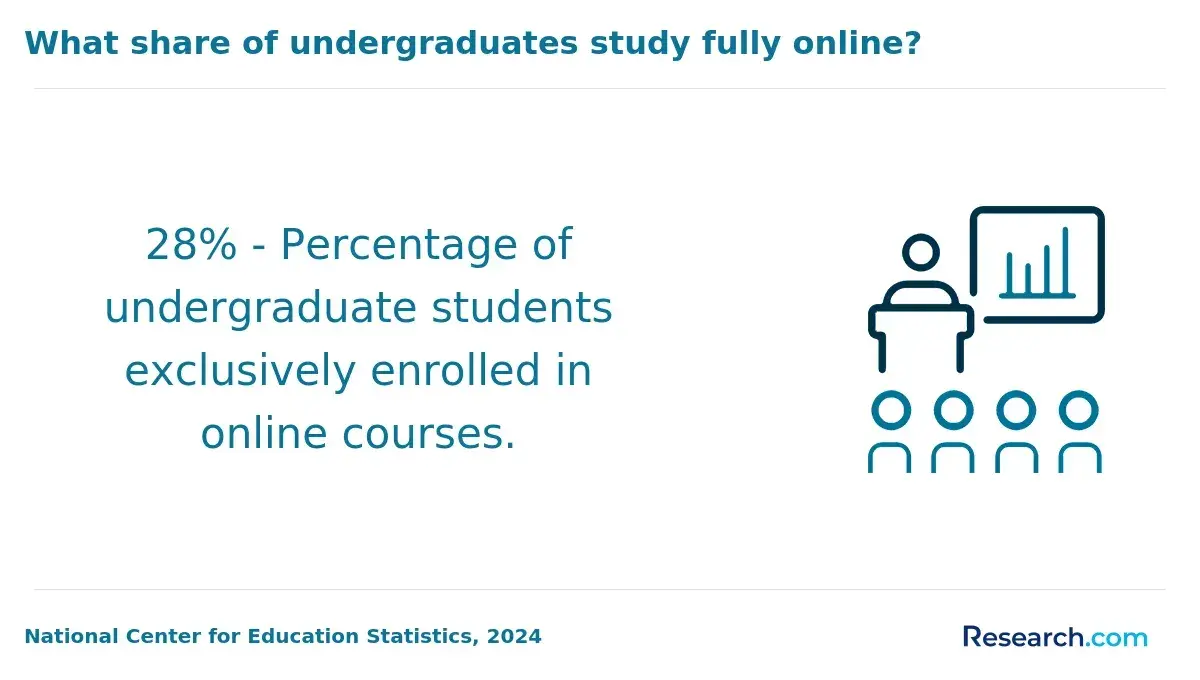
Breakdown of Public Fully Online Title IV Institutions

Balancing a full-time job with the demands of an online educational policy degree presents significant challenges for many professionals. With work hours often exceeding 40 per week, finding sufficient time and focus for academic tasks becomes difficult. The following are key obstacles commonly faced by full-time workers in these programs.
- Time management pressure: Managing a busy work schedule alongside coursework leaves little room for flexibility. This constraint can lead to delayed assignments, reduced participation in group work, and difficulties engaging deeply with policy materials, ultimately extending the time needed to graduate.
- Limited access to support services: Large-scale online programs may lack personalized academic and career assistance. Students pursuing educational policy often feel disconnected from faculty and miss out on mentorship and networking opportunities essential for advancing in policy-related careers.
- Financial and resource constraints: Many working students face funding challenges, as they may not qualify for standard financial aid. The pressure to maintain employment hours to support themselves reduces study time and mental bandwidth, increasing the possibility of program delays or dropout.
Balancing internships with a full-time job can be a major hurdle for many students pursuing online educational policy degrees, yet these practical experiences remain a core requirement. Programs understand this tension and offer solutions tailored to working professionals' schedules.
Here are five common methods online educational policy programs use to accommodate full-time workers during internships:
- Customized Internships: Internships are often adapted to each student's work hours and career interests, including remote or project-based options that complement their existing job roles. This ensures relevance and flexibility without disrupting professional commitments.
- Recognition of Prior Work: Some programs allow credit for current employment when it aligns with educational policy objectives, enabling students to count their job experience toward internship requirements. This approach accelerates progress while valuing real-world expertise.
- Remote and Flexible Projects: Students frequently have access to remote internships or policy-focused assignments that can be completed outside traditional office hours, removing barriers like commuting and fixed schedules.
- Staggered or Condensed Formats: Internship courses can be spread out over a semester or compressed into shorter periods, making it easier for working students to juggle coursework alongside their job demands.
- Dedicated Faculty Support: Academic advisors and mentors collaborate closely with students to design internships that meet program standards and accommodate professional responsibilities, providing essential guidance throughout the process.
When asked about how his program managed the internship for someone working full-time, a student pursuing an online educational policy degree shared, "Initially, I was concerned about fitting the internship into my already packed schedule. But my advisor helped craft a remote project tied directly to my job, which made the experience meaningful and manageable." He described feeling supported as the program allowed him to integrate work tasks with academic goals, saying, "It wasn't just about ticking a box; the internship became an extension of my professional growth, and that made all the difference."
For full-time professionals balancing demanding careers with online coursework, having the right technology is essential to manage time effectively and engage fully in an educational policy program. Without reliable tools, maintaining consistent communication with faculty and participating in virtual classes can be challenging. The following highlights key technology requirements for online educational policy programs that can help working students succeed.
- High-Speed Internet Connection: A stable broadband connection allows students to stream live lectures, join synchronous discussions, and submit assignments on time. Many educational policy courses rely on platforms like Zoom, Canvas, or Blackboard, which require consistent internet speed to work seamlessly for busy professionals.
- Modern Computer or Laptop: A device with updated software and sufficient processing power is necessary to run specialized analysis tools, video conferencing applications, and multitask efficiently. This supports both coursework and professional policy work, such as running statistical programs or engaging in policy research.
- Learning Management Systems (LMS): Systems such as Canvas, Blackboard, or Moodle organize course materials, assignment submissions, and peer interactions. For full-time workers, LMS platforms help track deadlines and access policy readings, discussion boards, and multimedia lectures in an organized manner.
- Web Conferencing and Collaboration Software: Tools like Zoom, Microsoft Teams, and Google Meet facilitate group projects, mentor meetings, and interactive simulations common in educational policy programs. They are crucial for maintaining engagement and collaboration without compromising work schedules.
- Educational Policy Research Tools: Access to academic databases such as JSTOR or ERIC, alongside citation management software like Zotero or Mendeley, supports comprehensive literature reviews and drafting research papers. These tools are indispensable for completing rigorous policy analysis and producing evidence-based work.
Choosing the best devices for working professionals in online educational policy degree programs ensures smooth participation and efficient study habits. Additionally, those exploring career advancement through education may find it helpful to explore the top money making majors that align with their interests and goals.
Financial aid is often a crucial consideration for full-time professionals balancing their jobs with the demands of an online educational policy degree. Access to financial assistance can significantly impact the decision to pursue or postpone further education. Here are key factors full-time workers should consider regarding financial aid eligibility while studying online.
- Accreditation and Program Eligibility: To qualify for most federal and state financial aid, your online educational policy degree program must be from an accredited institution and recognized under federal guidelines. Completing the Free Application for Federal Student Aid (FAFSA) is essential only if your program meets Title IV requirements.
- FAFSA Application: Federal aid such as Pell Grants, loans, and certain scholarships require FAFSA submission. Working full-time does not disqualify you; however, your income level can influence eligibility for need-based aid. For the 2024-25 academic year, Pell Grants may provide up to $7,395 to eligible students.
- Enrollment Status: Aid programs often require at least half-time enrollment, typically six credits per semester. Those working full-time who take part-time courses should verify their course load meets these criteria to preserve eligibility for federal loans or other assistance.
- Employer Tuition Assistance: Many employers offer tuition reimbursement or scholarships when employees pursue degrees related to their work. For example, a school district might cover part of your tuition for an online educational policy degree. This employer support can complement other financial aid sources.
- State and Institutional Aid: State financial aid rules vary, and some restrict online or distance education programs. While most states do not exclude online learners, a few, such as Pennsylvania, limit aid for predominantly online enrollment. It is important to check whether your program qualifies for state grants or scholarships.
Full-time professionals interested in financial aid for an online degree while working can find options by carefully assessing these factors. For a broader overview of options, see the list of online schools accepting FAFSA that support such students.
Employer support has become increasingly important for full-time professionals pursuing an online educational policy degree, as balancing work demands with academic progress is challenging. Workplace policies that enable flexibility and financial assistance directly impact a student's ability to succeed while maintaining job responsibilities. Here are key insights into how employers typically support or hesitate to support employees pursuing these degrees.
- Tuition assistance: Many organizations offer tuition reimbursement or direct billing options to cover online educational policy programs either upfront or after course completion. This form of employer tuition reimbursement for online educational policy degrees reduces financial barriers and encourages employees to seek advanced credentials without immediate out-of-pocket costs.
- Flexible work schedules: Flexible hours or remote work policies help employees balance their coursework with professional duties. Such flexibility is critical for working students, especially in demanding fields like educational policy where job and study commitments often overlap.
- Career advancement incentives: Some employers link degree completion to promotions or salary increases, providing motivation for employees to pursue and finish online educational policy degrees. This employer support for online educational policy graduate students creates a pathway for career growth aligned with educational achievements.
- Skepticism toward online degrees: In the U.S., only about 28% of employers view online and in-person degrees as equally credible, with 45% expressing disagreement. This skepticism can limit recognition and slow career advancement for graduates of online programs.
- Upfront payment barriers: Certain reimbursement programs require employees to pay tuition upfront before receiving reimbursement, which can discourage participation among those without financial reserves, reducing accessibility to employer-sponsored educational support.
For professionals interested in exploring career options compatible with educational policy studies, it can be helpful to review what are the best paying jobs for introverts.
Completing an online educational policy degree while working full-time can significantly impact salary, but this depends on factors such as industry demand, degree level, and employer views. For instance, policy analysts holding a master's or doctoral degree typically earn median salaries between $74,376 and $87,900, whereas school administrators with advanced qualifications may surpass $100,000 annually. Employers tend to favor candidates combining academic achievements with relevant work experience, which often leads to higher starting salaries and better chances for advancement. Experience gained alongside studies is especially important for roles like educational consultant, administrator, or researcher, where applying policy knowledge in practice is essential.
Continuing full-time work during the degree often boosts career growth by allowing real-time application of new skills, enhancing job security and promotion prospects. Some districts provide automatic pay increases or leadership opportunities for employees who earn a master's in educational policy, with raises ranging from $7,000 to $23,000 depending on position and location. However, outcomes are influenced by employer policies, local labor markets, and economic factors, so salary improvements are not consistent across all graduates or fields.
Choosing the right online educational policy program is crucial for full-time workers managing professional and academic commitments. A well-structured program provides the necessary flexibility and support, which greatly impacts a student's ability to finish their degree successfully. Consider these key factors when evaluating your options:
- Flexible Scheduling: Programs offering asynchronous classes or part-time options allow students to balance work and study efficiently. Accelerated tracks, like those at Florida State University, enable completion in as little as two years, fitting well into busy schedules.
- Cohort Model and Support Services: Cohort-based programs foster peer interaction and motivation, creating a network that supports persistence and learning throughout the curriculum.
- Relevant Curriculum: Coursework should cover current educational policy themes such as school finance and equity, ensuring what you learn applies directly to your career goals and professional challenges.
- Admission and Completion Requirements: Understanding prerequisites, GPA standards, and credit demands helps assess your readiness. Programs with shorter completion times, like Drexel's graduate certificate, offer quicker paths for working professionals.
- Faculty Expertise: Instructors with strong educational policy backgrounds enhance learning quality and expand networking opportunities within the field.
What Graduates Say About Completing an Online Educational Policy Degree While Working Full-Time
- Parker: "As a busy professional, pursuing an online educational policy degree was both a time and financial commitment, with costs averaging between $15,000 to $25,000. However, the program's design respected my schedule, allowing me to engage fully with the coursework and immediately apply insights to my role. It was a savvy investment that enhanced my policy understanding and leadership capacity. "
- Marvin: "Enrolling in an online educational policy program while working full-time gave me the chance to deeply reflect on my career goals and the future of education. Although the cost was a significant consideration, the ability to learn at my own pace made it a sustainable commitment. This journey helped me become more strategic in shaping educational reforms in my district. "
- Vance: "Balancing a full-time job while pursuing an online educational policy degree was challenging but incredibly rewarding. The flexible pacing allowed me to manage assignments around my work schedule, and investing around $20,000 proved worthwhile as I gained practical skills that elevated my career in education administration. This program truly transformed my professional outlook. "
Other Things You Should Know About Educational Policy Degrees
A realistic load is 6 to 9 graduate credits per term, or two courses, for most full-time workers. Many programs require 30 to 36 total credits, and part-time enrollment usually extends completion to 18 to 30 months, depending on transfer credit and course availability.
In 2027, online educational policy programs are designed with flexibility in mind for full-time workers, offering on-demand access to course materials and asynchronous learning options. This allows students to manage their study schedules around professional responsibilities at their own pace.
- Benefits and challenges of online learning for higher education - Online study Brunel https://onlinestudy.brunel.ac.uk/blog/benefits-and-challenges-of-online-learning-for-higher-education
- Types of Financial Aid for Online Colleges https://www.umassglobal.edu/blog-news/types-financial-aid-online-colleges
- Choosing An Online Degree Program: 9 Do's And Don'ts https://www.saintleo.edu/about/stories/blog/choosing-an-online-degree-program-9-dos-and-donts
- Benefit of Earning a Online Degree While Working Full-Time https://amityonline.com/blog/advantages-earning-degree-while-working-full-time
- Employer-provided education: A win-win for businesses and employees | InStride https://www.instride.com/insights/employer-provided-educational-assistance/
- MA Education (part-time, distance learning) https://www.bath.ac.uk/campaigns/ma-education-part-time-distance-learning/
- Online Learning at SFCC: Synchronous versus Asynchronous – Our Mission https://www.sfcc.edu/online-learning-at-sfcc-synchronous-versus-asynchronous/
- Education Technology MS https://www.mnsu.edu/academic-catalog/graduate/education-technology-ms/
- Master of Education in Educational Technology https://online.csuohio.edu/online-programs-and-courses-online-graduate-programs/educational-technology
- Asynchronous vs. Synchronous Learning | Unitek College https://www.unitekcollege.edu/blog/asynchronous-vs-synchronous-learning-whats-the-difference-and-which-is-right-for-you/