2027 Online Learning vs Independent Study: What's the Difference?

Co-Founder and Chief Data Scientist
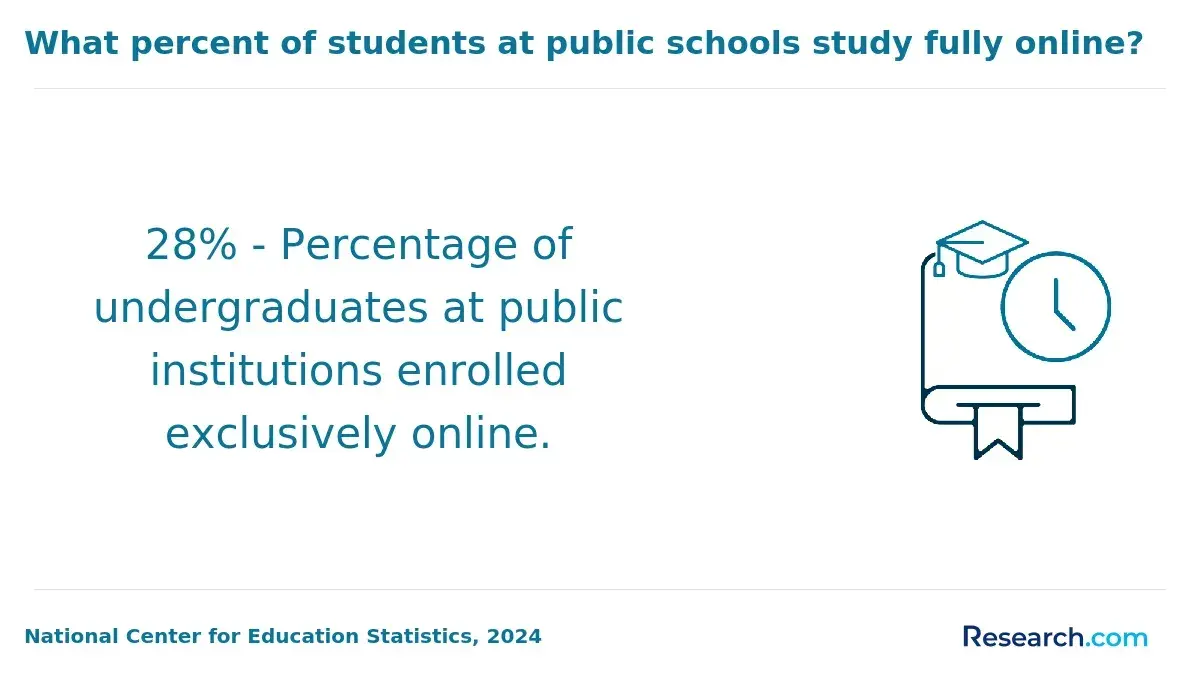
Choosing between online learning and independent study is really a decision about structure, credit, cost, and career value. NCES data released in 2024 show that more than 10 million U. S. postsecondary students took at least one distance education course in fall 2022, making online formats a mainstream option rather than a backup plan. This guide is for students, working adults, and career changers who want to understand what each path offers, where the risks are, and how to choose a credible route that fits their goals.
Key Things You Should Know
- Online learning usually means instructor-led courses delivered through a college, university, training provider, or platform; independent study is more self-directed and may or may not carry formal credit.
- For college credit, accredited online courses and approved independent study arranged through a school are safer than informal self-study, especially for transfer, financial aid, licensure, and employer recognition.
- Cost and payoff vary widely: College Board's 2024 data show published 2024-25 tuition and fees averaging $11,610 for in-state public four-year colleges and $43,350 for private nonprofit four-year colleges, so total program cost matters more than delivery format alone.
What is the difference between online learning and independent study?
Online learning and independent study overlap, but they are not the same thing. Online learning is a delivery format: instruction, assignments, discussion, assessment, tutoring, and faculty interaction happen mostly or fully through digital systems. Independent study is a learning arrangement: the student works through a topic, project, reading list, research plan, or competency pathway with much more autonomy.
The practical difference is accountability. Online learning typically has a syllabus, instructor, deadlines, grades, and institutional records. Independent study may be supervised by a faculty member, but it can also be informal self-teaching that does not create a transcript, credential, or transferable credit.
The table below summarizes the differences that matter most when you are deciding which path supports a degree, career move, or personal learning goal.
| Comparison point | Online learning | Independent study |
| Main purpose | Complete structured courses, certificates, or degrees remotely | Explore a topic or complete customized academic work with more autonomy |
| Instructor involvement | Usually regular instruction, feedback, grading, and office hours | Varies from faculty-supervised projects to fully self-directed study |
| Credit status | Often credit-bearing when offered by an accredited institution | Credit-bearing only if formally approved by a school |
| Best fit | Students who need structure, credentials, transferability, or financial aid eligibility | Motivated learners who need flexibility, specialization, or research depth |
| Main risk | Choosing an unaccredited or low-support program | Assuming self-study will count for credit or professional recognition |
If your goal is a credential that employers, graduate schools, or licensing boards can evaluate, online learning through an accredited provider is usually clearer. If your goal is mastery, portfolio development, or academic exploration, independent study can be powerful when you document outcomes well.
Is online learning or independent study better for college credit?
Online learning is usually better for college credit because accredited institutions already have systems for registration, grading, transcripts, transfer review, and financial aid. Independent study can also count for credit, but only when it is approved in advance by the institution that will record it on your transcript.
For students trying to finish a degree, transfer credits, or meet prerequisites, the safest approach is to choose credit-bearing courses first and use independent study only when it fills a clear academic gap. Credit recognition depends on institutional policy, not on how much time or effort you invest.
The main college-credit options fall into several categories. Understanding these categories helps prevent a common mistake: completing a course or self-study plan before confirming whether it will actually apply to your degree.
- Accredited online course: Usually the strongest option for transcripted credit because it has course numbers, grades, faculty oversight, and institutional records.
- Faculty-approved independent study: Can count toward a major, elective, honors requirement, capstone, or research project if approved before enrollment.
- Prior learning assessment: Some colleges award credit for documented work experience, military training, portfolios, or standardized exams, but policies vary sharply.
- Noncredit self-study: Useful for skill-building, test preparation, or portfolio work, but it usually does not transfer into a degree unless a school has a formal evaluation route.
A good rule is simple: if you need credit, ask the registrar, academic advisor, or transfer office before you enroll or begin the independent study. Admissions counselors can be helpful, but the office that controls degree audits and transfer evaluations is usually the one that matters most.
How do accreditation and licensing affect online programs?
Accreditation affects whether an online program is credible, transferable, and eligible for federal financial aid. In the U.S., institutional accreditation is especially important because it signals that a college or university has been reviewed for academic quality, student support, governance, finances, and learning outcomes.
Licensing is a separate issue. Some careers require state approval, exams, supervised practice, clinical hours, field placements, or programmatic accreditation. An online program can be accredited and still fail to meet the licensing requirements in your state if it was designed for a different jurisdiction or if it lacks required hands-on components.
The table below explains the key quality checks to make before enrolling in an online program, especially if your goal involves transfer, graduate school, financial aid, or regulated employment.
| Quality factor | Why it matters | What to verify |
| Institutional accreditation | Supports credibility, credit transfer, and federal aid eligibility | Confirm the school is accredited by an agency recognized by the U.S. Department of Education or CHEA |
| Programmatic accreditation | May be required or strongly preferred in fields such as nursing, counseling, education, engineering, and business | Check the accreditor named by employers, graduate schools, or licensing boards in your field |
| State authorization | Online colleges must be authorized to serve students in certain states | Ask whether the school can enroll students from your state and support required placements there |
| Licensure alignment | Required for regulated careers and varies by state | Ask for written confirmation about whether the program meets your state's educational requirements |
Do not rely on vague phrases such as "nationally recognized," "career-ready," or "licensed pathway" without checking the specific accreditor and state rules. For licensure fields, save written responses from the program because requirements can change and students are often responsible for confirming eligibility.
What program formats count as online learning?
Online learning is not one single format. It can range from scheduled live classes to self-paced competency programs, and the right choice depends on how much structure, interaction, speed, and support you need.
Most online programs use one or more of the following formats. Comparing them helps you avoid choosing a program that is flexible on paper but hard to complete in practice.
- Asynchronous courses: Students complete recorded lectures, readings, discussions, and assignments on a weekly schedule without attending at a fixed class time.
- Synchronous courses: Students attend live online sessions at scheduled times, which can create stronger interaction but less schedule flexibility.
- Hybrid or blended programs: Online coursework is combined with campus visits, labs, residencies, clinical placements, or fieldwork.
- Competency-based programs: Students advance by showing mastery of defined skills or outcomes, sometimes at a faster pace if they already know the material.
- Accelerated online programs: Courses run in shorter terms, often requiring strong time management because the same content is compressed into fewer weeks.
- Noncredit online courses: These may build skills quickly but usually do not lead to transcripted college credit unless tied to an institution's credit policy.
Be careful with searches for extremely fast or free doctoral options. Resources discussing 1-year PhD programs online free can help you understand what is realistic, but legitimate doctorates normally require advanced research, faculty supervision, and institutional review. If a program promises a doctorate with almost no time, tuition, or academic work, treat that as a red flag.
How does independent study work in degree programs?
Independent study in a degree program is usually a formal academic agreement between a student and a faculty member. It may involve advanced reading, research, a creative project, lab work, fieldwork, or a specialized topic that is not available as a regular course.
Independent study works best when it solves a specific academic problem: a required course is not offered soon enough, a student needs deeper preparation for graduate school, or a major allows customized research. It is less effective when students use it simply to avoid deadlines or classroom expectations.
Most colleges require several steps before an independent study can appear on a transcript. The exact process varies, but students should expect to document the plan clearly.
- Identify the academic reason for the independent study and how it fits your degree plan.
- Find a qualified faculty sponsor who has expertise in the subject and is willing to supervise the work.
- Write a proposal that includes learning objectives, readings, assignments, meeting schedule, grading criteria, and final deliverables.
- Get approval from the department, advisor, registrar, or dean if your school requires it.
- Register for the correct independent study course number before the add-drop deadline.
- Keep records of meetings, drafts, feedback, and final work in case you need proof for transfer, graduate school, or employers.
The biggest mistake is starting the work informally and asking for credit later. Most schools will not award retroactive credit unless they have a prior learning policy, and even then approval is not automatic.
What admissions requirements do online programs usually have?
Admissions requirements for online programs are usually similar to campus programs at the same academic level. The difference is that online applicants may also need to prove readiness for remote learning, technology use, and independent time management.
Requirements vary by credential level. The table below gives a practical overview of what U.S. students commonly encounter when applying to online certificates, associate degrees, bachelor's degrees, master's degrees, and doctorates.
| Program level | Common admissions requirements | What to watch for |
| Online certificate | High school diploma, prior college credit, work experience, or prerequisites depending on the field | Confirm whether it is for credit, noncredit, professional development, or licensure preparation |
| Associate degree | High school diploma or GED, placement process, transcripts, and sometimes program-specific prerequisites | Ask how credits transfer into a bachelor's degree |
| Bachelor's degree | High school transcript, GED, transfer transcripts, minimum GPA, essays, or test-optional review | Check residency requirements and limits on transfer credits |
| Master's degree | Bachelor's degree, minimum GPA, resume, recommendations, statement of purpose, and prerequisites | Ask whether online students receive the same faculty access and career services |
| Doctoral degree | Graduate degree or strong bachelor's record, writing sample, research fit, professional experience, and interviews | Confirm dissertation, residency, practicum, or licensure expectations before applying |
If you are not ready for a full degree, online certificates can be a lower-commitment way to test a field, build job-relevant skills, or meet prerequisites. Just confirm whether the certificate is academic, industry-recognized, or primarily a continuing education credential.
How long do online programs and independent study paths take?
Online programs are not automatically faster than campus programs. The timeline depends on credential level, transfer credits, course load, term length, clinical or fieldwork requirements, and whether the program allows self-paced progress.
Independent study timelines are even more variable because the student and faculty sponsor define the scope. A one-credit reading course may take a term, while a research project, thesis substitute, or portfolio assessment can require multiple months of sustained work.
The table below gives broad time ranges students often see. Use it as a planning tool, not a guarantee, because schools set their own calendar, pacing, and completion rules.
| Path | Typical time frame | What can extend the timeline |
| Noncredit online course | A few days to several months | Self-paced access limits, assessment schedules, or low weekly study time |
| Online certificate | Several weeks to one year | Prerequisites, cohort start dates, or required projects |
| Online associate degree | About two years full time | Part-time enrollment, remedial coursework, or limited course availability |
| Online bachelor's degree | About four years full time, less with accepted transfer credit | Changing majors, residency rules, or unmet general education requirements |
| Online master's degree | One to three years | Thesis, practicum, capstone, internship, or part-time pacing |
| Faculty-approved independent study | Usually one academic term | Research delays, approval steps, faculty availability, or unclear deliverables |
Students who need speed should ask two questions before enrolling: "How many credits can I realistically complete each term?" and "How many of my previous credits will apply to this exact program?" Transfer credit often has a bigger effect on completion time than whether the courses are online.
How much do online programs and independent study cost?
Online learning can reduce commuting, relocation, and some campus costs, but it is not always cheaper in tuition. Some schools charge the same online and campus tuition, while others use separate online rates, program fees, technology fees, proctoring fees, or per-course charges.
College Board's 2024 pricing data provide a useful baseline for understanding the U.S. tuition environment. These are published tuition and fee averages for 2024-25, not total attendance costs and not net prices after grants or scholarships.
- Public two-year in-district average published tuition and fees: $4,050
- Public four-year in-state average published tuition and fees: $11,610
- Public four-year out-of-state average published tuition and fees: $30,780
- Private nonprofit four-year average published tuition and fees: $43,350
Those figures matter because online students often compare programs across state lines. A fully online public university may offer a competitive flat online rate, but another may charge out-of-state tuition. Before assuming online is cheaper, calculate the full program cost from start to finish.
When comparing costs, include the items that affect what you will actually pay and how much debt you may need. Tuition is only one part of the calculation.
- Total credits required for the credential, not just cost per credit
- Transfer credits accepted toward the exact degree
- Technology, platform, lab, exam proctoring, graduation, and transcript fees
- Books, software, hardware, internet, and required subscriptions
- Travel for residencies, labs, practicums, clinical placements, or intensives
- Financial aid eligibility, employer tuition assistance, scholarships, and payment plans
- Opportunity cost if the program reduces your work hours
Students focused on lowering cost should compare affordable online degree programs by accreditation, transfer policy, graduation support, and total credits required, not by tuition alone. The cheapest advertised rate is not always the best value if many of your credits do not transfer or if the program lacks support for completion.
What careers and salaries come from online learning programs?
Online learning programs can lead to the same types of careers as campus programs when the credential is equivalent, accredited, and aligned with employer or licensing expectations. Employers generally care about the institution, major, skills, experience, portfolio, certifications, and work history more than whether every class met online.
Career outcomes depend heavily on the field. BLS May 2024 wage data show wide differences among occupations commonly reached through online degrees or certificates, so students should evaluate specific roles rather than asking whether online learning "pays" in general.
| Career area | Relevant online education path | Median annual wage from BLS May 2024 | Decision note |
| Computer support specialist | IT certificate, associate degree, or bachelor's degree | $61,550 | Certifications, labs, troubleshooting practice, and customer support skills can matter as much as the credential level. |
| Registered nurse | Accredited nursing bridge or bachelor's completion program | $93,600 | Licensure, clinical requirements, and state board approval are essential; fully online coursework does not remove hands-on requirements. |
| Accountant or auditor | Online bachelor's or master's in accounting | $81,680 | CPA eligibility varies by state, so students should check credit-hour and accounting-course rules before enrolling. |
| Management analyst | Online business, analytics, public administration, or MBA pathway | $101,190 | Experience, industry knowledge, and communication skills strongly influence advancement. |
| Software developer | Online computer science, software engineering, bootcamp, or portfolio-based path | $133,080 | Employers often review projects, coding ability, internships, and technical interviews in addition to credentials. |
Online learning may be especially useful for working adults because it lets them build credentials without leaving the labor market. Independent study can also support career growth when it produces a portfolio, research output, writing sample, technical project, or exam preparation plan.
AI and automation are changing the value of both paths. Students should prioritize programs that teach durable skills such as problem-solving, data interpretation, writing, ethics, technical fluency, project management, and communication. For readers who prefer focused, low-interruption work, some good paying jobs for introverts can align well with online learning because many roles reward independent analysis and deep concentration.
How do you choose a reputable online program or study path?
A reputable online program or independent study path should match your goal, produce verifiable outcomes, and avoid unnecessary risk. The best choice is not always the fastest, cheapest, or most heavily advertised option; it is the one that gives you recognized credit, relevant skills, and a realistic route to your next step.
Use the following process before committing money or time. These steps are especially important if you plan to transfer credits, use financial aid, pursue licensure, or change careers.
- Define the outcome first: degree completion, transfer credit, licensure eligibility, promotion, career change, graduate admission, or personal skill development.
- Check institutional accreditation and, when relevant, programmatic accreditation or state board approval.
- Ask how online students access advising, tutoring, library resources, disability services, career services, and faculty office hours.
- Confirm total program cost, transfer credit acceptance, refund rules, and whether fees differ for online students.
- Review course format, weekly workload, exam proctoring, group work expectations, and any in-person requirements.
- Ask for outcomes data that match your program, such as completion rates, licensure pass rates, internship access, job placement support, or graduate school placement.
- Compare at least three options before enrolling, including one lower-cost public option when available.
Red flags deserve close attention because they often appear before students lose time, credits, or money. The table below lists common warning signs and the safer alternative.
| Red flag | Why it is risky | Better alternative |
| No clear accreditation information | Credits may not transfer and employers may question the credential | Verify accreditation through recognized databases and the school's official disclosures |
| Pressure to enroll immediately | High-pressure sales can prevent careful cost and fit comparisons | Take time to review tuition, policies, outcomes, and alternatives |
| Promises of guaranteed jobs or salaries | Education can improve opportunity, but outcomes vary by region, experience, field, and employer | Use BLS data, local job postings, alumni outcomes, and employer requirements to assess fit |
| Unclear transfer policy | You may repeat courses or lose credits | Request a written transfer evaluation before enrolling when possible |
| Licensure claims without state-specific proof | You may finish a program that does not meet your state's requirements | Confirm requirements with the licensing board and get the school's answer in writing |
If you want a lower-stakes starting point, short credentials can help you explore a field before committing to a degree. Guides to easy certifications to get online can be useful, but "easy" should not be the only criterion; choose credentials that employers in your target field actually recognize.
Other Things You Should Know About
No. An online class is usually a structured course delivered digitally, while independent study is a customized or self-directed learning plan. Independent study counts for college credit only when a school formally approves and records it.
Possibly, but only if the independent study is part of an eligible program at an accredited institution and is properly registered for credit. Informal self-study, noncredit courses, and unapproved projects generally do not qualify for federal student aid.
Many employers accept online degrees when they come from accredited institutions and match the requirements of the role. The school's reputation, major, skills, experience, portfolio, internships, and licenses often matter more than the delivery format.
Online learning is usually better if you need structure, credit, and a recognized credential. Independent study can work well if you are highly self-motivated, already have a clear goal, and need flexibility for a specialized topic or portfolio project.
References
- Types of online education. Guide to modern learning formats https://seturon.io/blog/types-of-online-education
- Online Schools - Benefits for Independent Learners | Sora https://soraschools.com/blog/the-benefits-of-online-schools-for-independent-learners
- Studion | 6 Types of Online Learning Platforms https://gostudion.com/perspectives/six-types-of-online-learning-platforms/
- Role of Online Learning in Expanding Career Opportunities https://isbss-edu.org/the-role-of-online-learning-in-expanding-career-opportunities/
- How Much Does Online College Cost? https://www.affordablecollegesonline.org/financial-aid/online-college-degree-cost/
- The 9 Best Online Learning Platforms in 2026 https://www.ispring.com/knowledge-hub/best-online-learning-platforms
- Understanding the Distinction Between Licensing and Accreditation: QAHE's Institutional and Course Accreditation https://www.qahe.org/article/understanding-the-distinction-between-licensing-and-accreditation-qahes-institutional-and-course-accreditation/
- Can You Earn College Credit Online Without Attending Live Lectures? https://www.straighterline.com/blog/self-paced-can-you-earn-college-credit-online-without-attending-live-lectures
- What are the Admission Requirements for Online MSW Programs? https://www.onlinemswprograms.com/faqs/admission-requirements/
- Online Learning Formats Guide – Synchronous, Asynchronous https://www.commlabindia.com/blog/online-learning-formats-simple-guide