2027 How to Prepare for Online College Success

Co-Founder and Chief Data Scientist
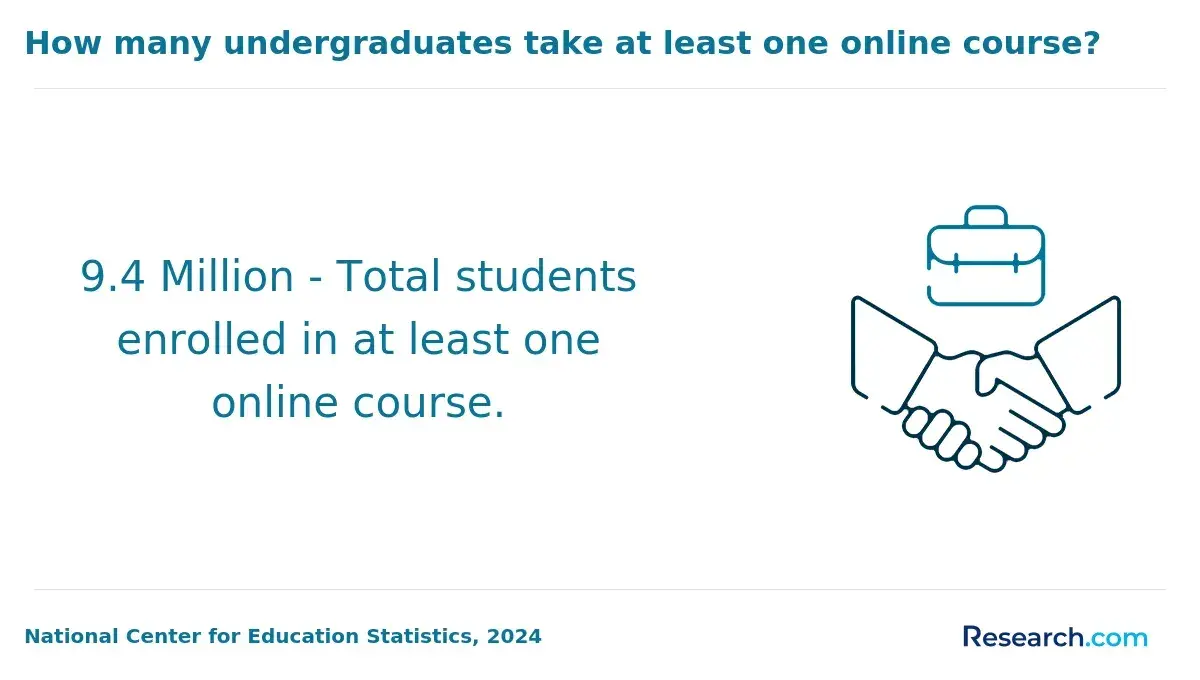
Online college can be flexible, but it is not automatically easier. The latest NCES distance-learning data published in 2024 show that 53% of postsecondary students took at least one distance education course in fall 2022, making online learning a mainstream choice rather than a niche option.
This guide is for first-time students, transfer students, working adults, military learners, and career changers who want to study online with fewer surprises. You will learn how to choose a credible program, build a realistic routine, control costs, and connect your degree to career goals.
Key Things You Should Know
- Online college success depends less on being "good with technology" and more on time management, proactive communication, self-direction, and choosing a program whose format matches your schedule.
- College Board's 2024 pricing data show published tuition and fees of $11,610 for in-state public four-year colleges and $43,350 for private nonprofit four-year colleges, so comparing total cost is essential before enrolling.
- Accreditation, transfer credit policies, student support, and career alignment matter as much as convenience because they affect financial aid eligibility, credit mobility, licensure preparation, and employer recognition.
How do you succeed in online college classes?
To succeed in online college classes, treat the program like a structured commitment rather than a set of videos you can watch whenever you have time. Most online courses require regular discussion posts, readings, quizzes, projects, and deadlines, even when there is no weekly classroom meeting.
The students who do best usually create systems before the semester becomes stressful. Use the following steps to turn a flexible format into a predictable academic routine:
- Read every syllabus in the first 48 hours and copy all exams, projects, discussion deadlines, and live meeting dates into one calendar.
- Block fixed study times each week, including shorter sessions for reading and longer sessions for writing, labs, or problem sets.
- Log in at least four days per week so you can catch announcements, feedback, and changes before they become urgent.
- Contact instructors early when you are confused, behind, or facing a work or family conflict instead of waiting until the deadline passes.
- Use campus support services such as tutoring, library databases, writing centers, disability services, career coaching, and advising.
- Build one backup plan for technology problems, such as a local library, campus testing center, mobile hotspot, or alternate computer.
If you work full time or manage family responsibilities, compare programs designed around adult schedules. Some online degrees for working adults offer shorter terms, generous transfer policies, or asynchronous coursework, but they still require weekly discipline and realistic planning.
A common mistake is choosing the fastest-looking program without checking weekly workload. An accelerated eight-week course may cover the same material as a 15-week course, which can be helpful for focused learners but overwhelming if your work schedule changes often.
What skills do online students need most?
Online students need a combination of academic, digital, and self-management skills. You do not need to be a technology expert, but you do need to be comfortable learning new platforms, asking for help, and managing independent work.
The most important skills are the ones that help you stay visible, organized, and accountable when no one is physically reminding you to attend class. Focus on building these skills before and during your first term:
- Time management: Break assignments into smaller tasks and schedule work before deadlines rather than relying on last-minute motivation.
- Written communication: Online classes often rely on emails, discussion boards, essays, and project documents, so clear writing affects both grades and collaboration.
- Self-advocacy: Ask instructors, advisors, financial aid staff, and technical support for help early, especially when policies or instructions are unclear.
- Digital literacy: Learn the learning management system, video meeting tools, file-sharing platforms, citation tools, and library databases used by your school.
- Critical reading: Many online courses require more independent reading than lecture-based campus classes, so note-taking and source evaluation matter.
- Focus and distraction control: Create boundaries around phone use, household interruptions, and multitasking during study sessions.
AI tools have made digital judgment even more important. Many colleges now allow limited use of AI for brainstorming or grammar support but prohibit submitting AI-generated work as your own. Always read the course policy before using AI tools, keep drafts and notes, and cite or disclose assistance when required.
If you want a shorter credential before committing to a degree, compare the best online certificate programs with degree programs in your field. Certificates can make sense for targeted skill development, while degrees are often better for roles that require broad education, licensure preparation, or long-term advancement.
How should you set up an online study routine?
A strong online study routine should protect your attention, reduce decision fatigue, and make deadlines visible. The goal is not to study all day; it is to study consistently enough that assignments do not pile up.
Start by estimating the weekly workload for each course. Many colleges use the federal credit-hour framework, where one credit generally reflects one hour of instruction plus about two hours of student work per week during a standard term. That means a three-credit course may require roughly nine hours per week, although reading-heavy, writing-intensive, lab, and accelerated courses can require more.
Use this weekly setup process at the beginning of every term and repeat it each Sunday or Monday:
- List every course and identify the weekly rhythm, including discussion deadlines, quizzes, readings, labs, and major assignments.
- Create two or three fixed study blocks for each course rather than leaving all work for the weekend.
- Schedule demanding tasks when you have the most energy, not merely when you have leftover time.
- Reserve one catch-up block each week for unexpected work shifts, family needs, illness, or technical issues.
- Review grades and instructor feedback weekly so you can correct problems while there is still time.
Your study environment matters, but it does not have to be perfect. A quiet corner, headphones, a stable internet connection, and a visible calendar are often enough. What matters most is consistency: studying in the same place and time helps your brain treat online coursework as a real appointment.
One red flag is a routine built entirely around motivation. Motivation rises and falls, especially during midterms, work deadlines, or family obligations. Systems such as recurring calendar blocks, phone reminders, accountability partners, and weekly planning sessions are more reliable.
What technology do you need for online college?
Most online college programs require a reliable computer, stable internet access, webcam, microphone, updated browser, productivity software, and the ability to upload, download, edit, and share files. A phone can help you check messages, but it is usually not enough for writing papers, taking proctored exams, completing spreadsheets, or using specialized software.
Technology requirements vary by major. Business, education, psychology, and general studies programs may use standard office and video tools, while nursing, engineering, computer science, design, and data programs may require simulations, statistical software, coding environments, or higher computer specifications.
Before enrolling, ask the school or department for a written technology checklist. The most important items to confirm are:
- Minimum computer specifications, including operating system, memory, webcam, microphone, and browser requirements.
- Whether exams require online proctoring, identity verification, a private room, or a separate testing fee.
- Whether your program uses specialized software and whether the school provides free or discounted access.
- Whether live class sessions are required and what time zone the program uses.
- What technical support hours are available, especially during evenings and weekends.
Online proctoring is one area students often underestimate. Some systems monitor video, audio, screen activity, or browser access during exams. If privacy, internet reliability, or room availability is a concern, ask whether the school offers alternative testing arrangements.
Do not buy expensive equipment until you confirm official requirements. A basic laptop may be enough for many programs, while a low-cost device may not handle design software, virtual labs, or secure exam platforms. The best choice is the least expensive setup that reliably meets your program's documented requirements.
How do online classes compare with campus classes?
Online and campus classes can lead to the same degree when they are offered by the same accredited institution, but the learning experience can feel very different. The better choice depends on your schedule, learning style, support needs, commute, major, and career goals.
The table below compares common differences that affect student decision-making. Use it to identify which format fits your life rather than assuming one format is always better.
| Factor | Online classes | Campus classes | Best fit |
| Schedule | Often asynchronous or partly flexible | Usually fixed class meeting times | Online fits students with work, caregiving, military, or commute constraints |
| Interaction | Discussion boards, video meetings, email, group platforms | Face-to-face lectures, labs, office hours, campus events | Campus may fit students who want daily in-person structure |
| Learning style | Requires independent reading, planning, and written communication | Provides more immediate classroom cues and live explanations | Online fits self-directed learners; campus fits students who need physical structure |
| Hands-on requirements | May use simulations, local placements, intensives, or hybrid labs | Often easier for labs, studios, clinics, and performance courses | Campus or hybrid formats may fit programs with heavy in-person practice |
| Cost considerations | May reduce commuting, housing, relocation, and parking costs | May include higher living or transportation costs depending on location | Online can reduce indirect costs, but tuition and fees still need careful review |
Online learning is not inherently lower quality, but quality depends on instructional design, faculty engagement, student services, and accreditation. A well-supported online program can be rigorous and career-relevant, while a poorly designed program can leave students isolated.
Campus learning may be better if you need frequent in-person labs, networking events, peer accountability, or direct access to facilities. Online learning may be better if your main barrier is time, geography, employment, caregiving, or relocation cost.
How do you choose an accredited online college?
Choosing an accredited online college means confirming that the institution is recognized by an accrediting agency accepted by the U.S. Department of Education or the Council for Higher Education Accreditation. Accreditation affects eligibility for federal financial aid, transfer credit, graduate school admission, employer recognition, and, in some fields, licensure preparation.
Institutional accreditation is the baseline. Programmatic accreditation may also matter for fields such as nursing, counseling, social work, education, business, engineering, and public health. If your goal involves licensure, always check state board requirements before enrolling because online availability does not automatically mean the program meets requirements in every state.
Use this process before submitting an application fee or signing an enrollment agreement:
- Search the school in the U.S. Department of Education's Database of Accredited Postsecondary Institutions and Programs.
- Confirm whether your specific program has any required programmatic accreditation for your career goal.
- Ask whether the program is authorized to enroll students in your state.
- Review transfer credit policies, including maximum credits accepted, expiration rules, and whether prior learning or military credit is evaluated.
- Compare graduation, retention, loan repayment, and student support information when available.
- Speak with an advisor about practicum, clinical, student teaching, internship, or residency requirements before enrolling.
Military learners should also examine credit for military training, deployment flexibility, tuition assistance policies, and veteran support services. Comparing military friendly online colleges can help narrow the list, but you should still verify accreditation and program fit directly with each school.
Red flags include pressure to enroll immediately, vague accreditation claims, no clear tuition and fee page, limited student support information, unrealistic job promises, or refusal to provide written answers about licensure and transfer credit.
What are the admission requirements for online programs?
Online program admission requirements are usually similar to campus program requirements at the same academic level. The format may be online, but colleges still evaluate whether you are prepared for the coursework and whether you meet program-specific standards.
Requirements vary by degree level, selectivity, and field. The table below summarizes common expectations so you can prepare documents early and avoid application delays.
| Program level | Common admission requirements | Important considerations |
| Online certificate | Application, proof of prior education, sometimes work experience or prerequisite courses | Some certificates are undergraduate-level, while others require a bachelor's degree |
| Associate degree | High school diploma or equivalent, placement information, transcripts | Community colleges may offer open admission but still require placement into math or writing courses |
| Bachelor's degree | High school transcripts, transfer transcripts, minimum GPA, personal statement in some programs | Transfer students should request a credit evaluation before committing |
| Master's degree | Bachelor's degree, transcripts, minimum GPA, resume, statement of purpose, recommendations in some programs | Some programs require prerequisite coursework or professional experience |
| Doctoral degree | Graduate degree or bachelor's degree depending on the pathway, writing sample, resume, recommendations, interview in some programs | Research, dissertation, clinical, or residency expectations should be reviewed carefully |
Test requirements have become more flexible at many institutions, but "test optional" does not mean "admission guaranteed." Competitive programs may still weigh GPA, prerequisites, professional experience, writing quality, interviews, portfolios, or prior academic performance.
Before applying, gather official transcripts from every college you attended, not just the school where you earned the most credits. Missing transcripts can delay admission, financial aid, transfer credit evaluation, and degree planning.
A common mistake is assuming online programs have easier admissions. Some do, especially open-access associate programs, but selective nursing, counseling, teaching, computer science, business, and graduate programs can have strict prerequisites, minimum grades, background checks, or placement requirements.
How much do online college programs cost?
Online college costs vary widely by institution, degree level, residency status, program fees, transfer credits, and course load. Tuition is only one part of the total price; technology fees, proctoring fees, books, software, clinical placement expenses, graduation fees, and lost work time can also affect affordability.
College Board's 2024 pricing data provide useful benchmarks for comparing online tuition with broader U.S. college costs. Published tuition and fees for the 2024-25 academic year averaged $11,610 for in-state students at public four-year institutions, $30,780 for out-of-state students at public four-year institutions, and $43,350 at private nonprofit four-year institutions.
The table below shows the main cost categories to compare before enrolling. It is especially useful because two programs with similar tuition can have very different total costs.
| Cost factor | Why it matters | Question to ask |
| Tuition rate | May be charged per credit, per term, or by residency status | Is the online rate the same for in-state and out-of-state students? |
| Mandatory fees | Can include technology, student services, distance learning, proctoring, or graduation fees | What fees are charged every term and which are one-time fees? |
| Transfer credits | Accepted credits can reduce both time and cost | How many credits will count toward my specific degree plan? |
| Books and software | Some programs require subscriptions, lab kits, access codes, or specialized software | What are the estimated course material costs per term? |
| Clinical or fieldwork expenses | Nursing, education, counseling, and social work programs may require travel, background checks, or placement fees | Are placements arranged near my location, and are extra fees required? |
| Financial aid eligibility | Federal aid usually requires an eligible institution and qualifying enrollment status | Is the program eligible for federal financial aid, employer tuition support, or military benefits? |
Graduate students should be especially careful because per-credit tuition can rise quickly. If your goal is advanced study, comparing an affordable master degree option with higher-priced alternatives can clarify whether the extra cost is tied to stronger outcomes, specialized accreditation, or simply brand preference.
To lower costs, request a transfer evaluation, apply for federal aid through the FAFSA, ask about employer tuition assistance, compare public university options, consider community college for lower-division credits, and avoid borrowing for expenses that can be paid from current income. Do not choose solely by sticker price; choose the lowest-cost accredited program that credibly supports your academic and career goal.
How long does an online degree usually take?
An online degree can take the same amount of time as a campus degree, but the actual timeline depends on transfer credits, course load, term length, prerequisites, fieldwork, and whether the program is self-paced, cohort-based, accelerated, or part time. Flexibility can help you move faster, but it can also make it easier to delay progress if you do not follow a plan.
The table below summarizes typical completion patterns. These are general planning ranges, not promises, because individual timelines depend on school policies and student availability.
| Credential | Typical full-time timeline | Timeline factors |
| Certificate | A few months to one year | Credit load, professional requirements, and whether courses stack into a degree |
| Associate degree | About two years | Placement courses, transfer credits, and part-time attendance |
| Bachelor's degree | About four years from first year or shorter for transfer students | Accepted credits, major sequencing, general education requirements, and course availability |
| Master's degree | One to three years | Program length, capstone, thesis, practicum, and full-time or part-time enrollment |
| Doctoral degree | Often three or more years | Dissertation, clinical hours, research milestones, residencies, and committee timelines |
Accelerated online programs can be useful if you have transfer credits, strong study habits, and a predictable schedule. They may not be ideal if you are returning to school after a long break, working unpredictable shifts, or balancing heavy caregiving responsibilities.
Doctoral students should look closely at dissertation support, residency expectations, faculty availability, and total program cost. Comparing affordable online doctoral programs can be a practical starting point, but you should also ask how long students typically take to complete the dissertation or final project.
A smart timeline is one you can sustain. Taking one fewer course per term may be better than repeatedly withdrawing, failing, or borrowing more because the pace is unrealistic.
What jobs can an online degree lead to?
An online degree can lead to many of the same jobs as a campus degree when the institution is accredited and the program aligns with the field. Employers typically care about the credential, relevant skills, experience, licensure when required, and whether you can perform the work. Some diplomas do not state that the program was completed online, but policies vary by institution.
BLS 2024 data show that workers age 25 and older with a bachelor's degree had median usual weekly earnings of $1,543, compared with $930 for workers with only a high school diploma. This does not mean every degree pays off equally, but it shows why credential level, field of study, and labor market demand should be part of your decision.
The table below connects common online degree areas with possible career directions. Use it to think about fit, not as a guarantee of employment or salary.
| Online degree area | Possible career paths | What to verify |
| Business | Operations coordinator, project coordinator, human resources specialist, analyst roles, management-track positions | Internships, analytics coursework, industry tools, and employer partnerships |
| Computer science and information technology | Software developer, systems analyst, cybersecurity analyst, network administrator, data-related roles | Portfolio projects, labs, certifications, coding experience, and technical interview preparation |
| Healthcare administration | Clinic coordinator, healthcare operations roles, medical office management, compliance support | Healthcare experience requirements and whether the program is administrative rather than clinical |
| Nursing and allied health | RN-to-BSN advancement, healthcare leadership, specialized clinical pathways where eligible | Licensure status, clinical requirements, state authorization, and programmatic accreditation |
| Education | Teaching, instructional design, curriculum support, education administration depending on credential level | State licensure requirements, student teaching placements, and certification reciprocity |
| Psychology, counseling, and social services | Case management, behavioral health support, human services roles, graduate study pathways | Whether the role requires a graduate degree, supervised hours, or state licensure |
Online students can improve career outcomes by building experience while studying. Internships, practicums, volunteer projects, freelance work, portfolios, certifications, and professional networking can make the degree more useful in the job market.
The biggest career mistake is choosing a major only because it is available online. Start with the job you want, identify the required credential and licensure rules, review job postings in your region, and then choose the program that builds the right skills at a sustainable cost.
Other Things You Should Know About
No. Online college may be more flexible, but it is not necessarily easier. Students still complete readings, assignments, exams, projects, and discussions, often with more responsibility for managing their own time.
Yes, many students do, but the course load must be realistic. A part-time schedule may be better if your job has unpredictable hours, required travel, overtime, or high stress during certain seasons.
Employers are more likely to respect an online degree from an accredited institution with a relevant program of study. Career outcomes also depend on experience, skills, licensure, portfolio quality, and how well the degree matches the job.
Verify accreditation, confirm total cost, request a transfer credit evaluation, review technology requirements, ask about support services, and check whether the program meets licensure or certification requirements in your state if your career requires them.
References
- Advantages of Online Learning vs. Classroom | University of Phoenix https://www.phoenix.edu/articles/online-college/advantages-of-online-learning-vs-traditional-classroom.html
- What Technology and Devices Are Needed for Online School? https://www.connectionsacademy.com/support/resources/article/technology-and-devices-needed-for-online-school/
- Essential Skills for Online Learning https://tssw.tulane.edu/essential-skills-online-learning
- Online vs in-person study: which one is right for you? https://www.ube.ac.uk/whats-happening/articles/online-vs-in-person-learning/
- Online Vs On-Campus - What Are The Pros and Cons? https://notgoingtouni.co.uk/blogs/online-vs-on-campus-what-are-the-pros-and-cons-322
- How an Online Degree Can Help You Switch Careers in 2025 https://collegevidya.com/blog/how-an-online-degree-can-help-you-switch-careers/
- Creating an Effective Study Schedule for Online School Students https://www.minervavirtual.com/news/creating-an-effective-study-schedule-for-online-school-students
- Essential Skills for Online Learners to Succeed https://www.sophia.org/blog/student-success/essential-skills-for-online-learners/
- 10 Best Online Degrees to Get In 2025 https://potomac.edu/best-degrees-to-get-online/
- Careers - OnlineDegree.com https://www.onlinedegree.com/careers/