2027 How to Choose an Online Program That Fits Your Schedule

Co-Founder and Chief Data Scientist
Choosing an online program is really a scheduling decision: can you keep up without putting work, caregiving, or income at risk? NCES reported in 2024 that 53% of undergraduates took at least one distance education course in fall 2022, showing that online learning is now mainstream rather than a backup option.
This guide is for working adults, parents, career changers, and returning students who need flexibility. You will learn how to compare formats, workload, accreditation, costs, support, and outcomes so you can pick a program that fits your life instead of forcing your life around school.
Key Things You Should Know
- The best schedule fit depends on format first: asynchronous courses suit unpredictable schedules, synchronous courses work better if you want live interaction, and self-paced or competency-based programs require strong time management.
- Flexible does not always mean light: a 3-credit online course often requires several hours of weekly reading, assignments, discussions, and assessment work, especially in accelerated 5- to 8-week terms.
- Cost and time should be evaluated together: College Board's 2024 pricing data lists average 2024-25 tuition and fees at $11,610 for in-state public four-year institutions and $43,350 for private nonprofit four-year institutions, before program fees, books, technology, and aid.
How do you compare online program formats to find one that matches your schedule?
To compare online program formats, start with how the program controls time. "Online" can mean anything from live evening classes to fully asynchronous modules with weekly deadlines, so the label alone tells you very little about whether the program will fit your schedule.
The table below summarizes the main format types and the scheduling trade-offs behind each one. Use it to narrow your search before comparing schools, tuition, or rankings.
| Online format | How scheduling usually works | Best fit | Main trade-off |
| Asynchronous online | Coursework is completed on your own time, usually with weekly due dates. | Working adults, parents, shift workers, and students in different time zones. | You need discipline because there may be fewer live reminders. |
| Synchronous online | Classes meet live by video at fixed times. | Students who want direct instructor access and real-time discussion. | Less flexibility if your work schedule changes often. |
| Hybrid or blended | Online coursework is combined with required campus, lab, clinical, or residency sessions. | Students in hands-on fields or programs with licensure-related requirements. | Travel and fixed meeting dates may limit flexibility. |
| Self-paced | You move through materials at your own pace within a larger completion window. | Independent learners who can study consistently without weekly class meetings. | Progress can stall if there are no firm milestones. |
| Competency-based | You advance by proving mastery of defined skills or outcomes. | Adults with prior work experience or existing knowledge in the field. | Not every employer, graduate school, or licensing board evaluates these programs the same way. |
The safest way to compare formats is to look at actual course delivery details, not marketing terms. Before you apply, ask for a sample syllabus, the course calendar, exam rules, and any required live sessions.
Use this sequence when comparing programs so you do not overlook schedule constraints hidden in the fine print.
- Identify whether each course is asynchronous, synchronous, hybrid, self-paced, or competency-based.
- Check whether assignments are due weekly, daily, at module checkpoints, or only by the end of the term.
- Confirm whether exams require live proctoring, a testing center, a webcam, or a fixed time window.
- Ask whether group projects, presentations, labs, practicums, or clinical hours have required meeting times.
- Compare term lengths because a 7-week course can feel very different from a 15-week course even if both are online.
A strong program match is one where the calendar, pacing, and assessment style fit the hours you can reliably protect each week. If your schedule changes often, avoid programs that depend heavily on fixed live sessions unless recordings and alternative participation options are clearly allowed.
What time commitment and weekly workload should you expect from an online program?
The weekly workload in an online program depends on credits, term length, course difficulty, and your academic background. Online courses are not automatically easier than campus courses; they usually shift more responsibility to the student because reading, discussion posts, projects, and exams are often managed through a learning platform.
A practical planning estimate is to treat each course as a recurring appointment. The table below shows how different enrollment patterns can affect your weekly schedule.
| Enrollment pattern | Typical course load | Schedule impact | Who it usually fits |
| One course at a time | Usually 3 credits | Most manageable for full-time workers or caregivers. | Students who need steady progress with a lower risk of overload. |
| Part-time | Often 6 credits per term | Requires multiple study blocks each week and careful deadline tracking. | Adults who can study several evenings or weekend blocks. |
| Full-time | Often 12 or more undergraduate credits per term | Can resemble a major part-time job in weekly time demand. | Students with flexible work hours or strong outside support. |
| Accelerated term | Same credits compressed into fewer weeks | Workload is more intense because readings and assignments move faster. | Students who can focus deeply for short periods. |
If you are returning to school after a long break, start conservatively. A lighter first term gives you time to learn the learning management system, understand faculty expectations, and see how school fits with your job and home responsibilities.
When reviewing workload, pay special attention to these details because they often determine whether a program is realistic.
- Weekly assignment rhythm, including discussion boards, quizzes, papers, labs, and projects.
- Expected reading volume and whether textbooks, simulations, or outside software are required.
- Availability of recorded lectures, transcripts, captions, and mobile-friendly course materials.
- Group work requirements, especially if classmates are spread across time zones.
- Exam windows and whether proctored tests must be completed during business hours.
Students looking for a lighter academic path sometimes compare majors as well as formats. If your priority is manageability at the undergraduate level, a guide to the easiest online bachelor's degree options can help you understand which majors may have fewer lab, math, or fieldwork demands, though "easy" still depends on your strengths and career goals.
How can you tell if an online program is truly flexible or self-paced?
A truly flexible online program gives you meaningful control over when you learn, when you complete work, and how quickly you progress. A program is not necessarily flexible just because it is online; it may still require live attendance, daytime advising, fixed exam times, or in-person components.
Use the school's own documents to verify flexibility. Admissions pages can be helpful, but the catalog, syllabus, academic calendar, student handbook, and proctoring policy usually reveal the real constraints.
Before enrolling, ask these questions and request written confirmation when the answer affects your ability to participate.
- Are live classes required, optional, or recorded for later viewing?
- Are assignments due on one weekly deadline, multiple weekly deadlines, or at the end of each module?
- Can students pause enrollment for a term without reapplying or losing good standing?
- Does the program allow part-time enrollment, and is there a minimum number of credits per term?
- Are internships, labs, clinicals, residencies, or practicums required, and can they be completed near your location?
- What happens if work travel, illness, military duty, or caregiving disrupts your schedule?
Common red flags include vague phrases such as "flexible online learning" without a sample schedule, required weekday daytime meetings, mandatory group projects with no scheduling support, and strict proctoring windows that conflict with work hours. Another red flag is a program that advertises self-paced study but still locks most assessments behind instructor-set dates.
Self-paced programs can be powerful for motivated students, but they are not ideal for everyone. If you procrastinate without external deadlines, a structured asynchronous program with weekly milestones may be more flexible in practice because it keeps you moving without requiring live attendance.
What accreditation and quality standards should flexible online programs meet?
Accreditation is one of the most important quality checks for any online program. It helps determine whether your credits are transferable, whether you can access federal financial aid, whether employers recognize the credential, and whether the degree can support licensure or graduate study.
For most students, the first requirement is institutional accreditation from an accreditor recognized by the U.S. Department of Education or the Council for Higher Education Accreditation. Programmatic accreditation may also matter in fields such as nursing, counseling, social work, education, business, public health, engineering, and allied health.
The table below shows which quality signals matter most and why they affect your decision.
| Quality standard | Why it matters | What to verify |
| Institutional accreditation | Supports credit transfer, financial aid eligibility, and general degree recognition. | Confirm the accreditor and current institutional status. |
| Programmatic accreditation | May be required or preferred for licensure, certification, or specialized employment. | Check whether your exact online program, not just the school, is covered. |
| State authorization | Determines whether a school can enroll online students in your state. | Ask whether your state is approved for enrollment and field placements. |
| Licensure alignment | Some programs prepare students for licensing only in certain states. | Contact the licensing board in the state where you plan to work. |
| Transparent outcomes | Helps you judge completion, employment, exam pass rates, or transfer value. | Look for program-level outcomes rather than broad schoolwide claims. |
Do not assume that a nationally known university, a low-cost provider, or a highly advertised online program automatically meets your needs. Accreditation confirms a baseline of recognition, but it does not prove that the schedule, faculty support, career services, or licensure fit is right for you.
If your target career requires licensing, get answers before you enroll. Requirements vary by state and field, and the burden is often on the student to confirm that the program meets local rules.
How do you align online program options with your career goals and timelines?
The right online program should connect directly to your career goal, not just your available evenings. A flexible schedule is valuable only if the credential helps you move toward a role, promotion, licensure path, salary range, or graduate program that makes sense for you.
Start by identifying your target outcome. Are you trying to enter a field, advance in your current field, qualify for a license, change industries, or build a specialized skill? Each goal points to a different type of program.
The table below compares common credential options and the career-timeline situations where each may be most appropriate.
| Credential option | Typical purpose | Best for | When to be cautious |
| Certificate | Builds targeted skills in a shorter timeframe. | Career changers testing a field or professionals adding a specific skill. | If the job you want requires a full degree or license. |
| Associate degree | Provides a lower-division college credential or transfer pathway. | Students seeking affordability, transfer credit, or entry-level preparation. | If credits do not transfer cleanly to a bachelor's program. |
| Bachelor's degree | Supports broad entry into professional roles and graduate study. | Students pursuing careers where employers commonly prefer a four-year degree. | If a shorter credential would meet the same immediate goal. |
| Master's degree | Builds advanced expertise or supports leadership, licensure, or specialization. | Professionals seeking advancement, career change, or specialized credentials. | If the program cost is high and the career outcome is uncertain. |
| Nondegree certification | Signals competency in a tool, platform, or job function. | Workers in technology, business, healthcare support, project management, or trades. | If the certification is not recognized by employers in your target market. |
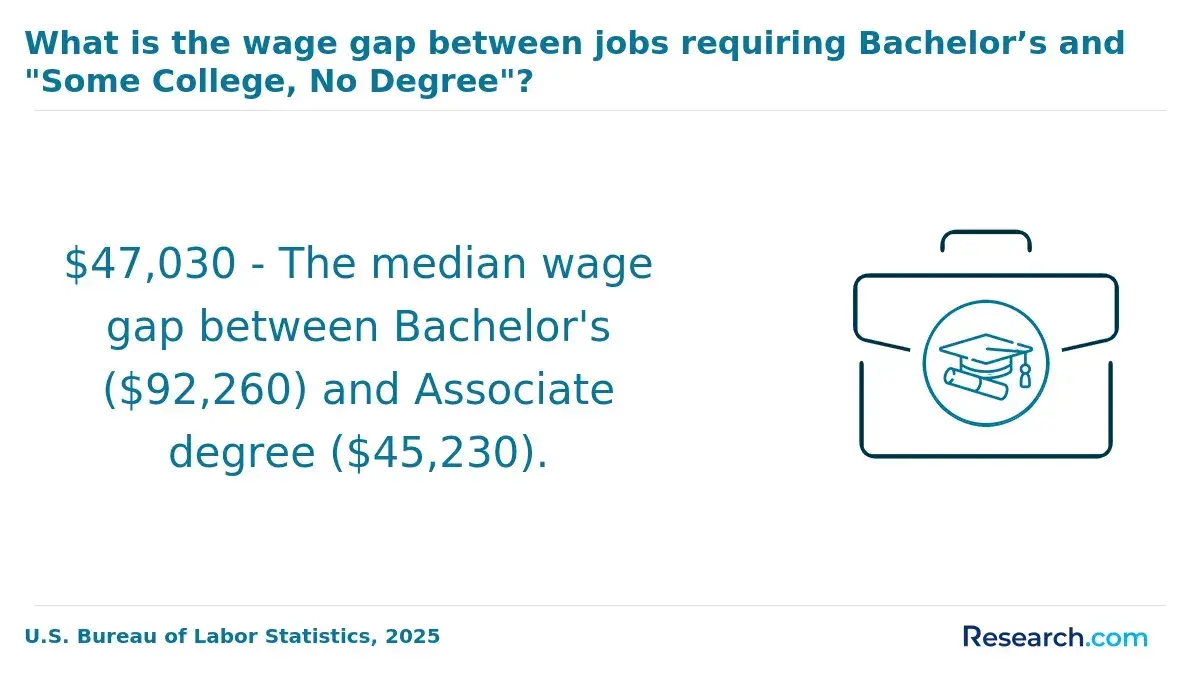
BLS 2024 education data shows that workers with a bachelor's degree had median weekly earnings of $1,543, while those with a master's degree had median weekly earnings of $1,840. That does not mean every degree pays off, but it does show why many students evaluate online programs through a long-term earnings and mobility lens.
For shorter routes, compare certificates and industry credentials carefully. Some certifications that pay well can be useful when they match employer demand, but they should not be treated as replacements for degrees in fields where licensure, accreditation, or a bachelor's degree is the standard requirement.
Avoid the common mistake of choosing a program because it sounds flexible, prestigious, or affordable without mapping it to job postings. Review several real postings for your target role and note the required degree level, preferred majors, software skills, certifications, experience, and location requirements.
What admission requirements and start dates work best for busy adult learners?
Busy adult learners usually benefit from admission processes that are clear, fast, and predictable. The best fit depends on how quickly you want to start, how much documentation you can gather, and whether you need transfer credit, credit for prior learning, or placement testing.
Many online programs use rolling admissions or multiple start dates, while others follow traditional fall, spring, and summer calendars. Frequent start dates can help if you do not want to wait months, but they can also compress the time you have to complete financial aid, transcript review, employer tuition paperwork, and childcare planning.
Expect to compare these admission and enrollment features before choosing a program.
- Application deadlines and whether the program has rolling admission, monthly starts, or weekly starts.
- Transcript requirements, including whether unofficial transcripts can be used for a preliminary review.
- Minimum GPA rules and whether work experience can strengthen the application.
- Transfer credit limits, residency requirements, and credit for prior learning options.
- Test score policies, especially for graduate programs or selective health, education, and counseling programs.
- Time needed for financial aid packaging, employer reimbursement approval, and course registration.
If speed matters, research online colleges with weekly start dates, but do not enroll solely because the next term begins soon. A quick start is only helpful if the program is accredited, affordable, transferable, and realistic for your schedule.
Adult learners should also ask how long transcript evaluation takes. A program that accepts more transfer credits may save more time than a program with an earlier start date, especially if you already completed college coursework, military training, professional certificates, or workplace learning.
How long do flexible online degrees typically take to complete, and can you accelerate?
Flexible online degrees can take less, equal, or more time than on-campus programs depending on transfer credit, course load, term structure, and whether you stop out. A flexible format helps only if you can sustain progress across multiple terms.
At a traditional pace, an associate degree is often planned around two years of full-time study, a bachelor's degree around four years, and a master's degree around one to three years depending on credits and field. Part-time students often take longer, while students with transfer credits or accelerated terms may finish sooner.
The table below explains the main timeline factors to compare. It is more useful than relying on advertised completion times because those are often based on ideal enrollment patterns.
| Timeline factor | How it can shorten completion | How it can lengthen completion |
| Transfer credits | Accepted credits reduce the number of courses remaining. | Credits may be rejected, expire for some majors, or count only as electives. |
| Accelerated terms | Shorter sessions allow more course starts per year. | Compressed workload can lead to dropped courses if your schedule is unstable. |
| Year-round enrollment | Summer or multiple annual terms help maintain momentum. | Continuous study can increase burnout without planned breaks. |
| Credit for prior learning | Work, military, exam, or certification credit may reduce requirements. | Portfolio review can take time and may carry fees or limits. |
| Required fieldwork | Early placement planning can keep you on track. | Clinical, practicum, student teaching, or internship availability can delay graduation. |
Acceleration makes sense when you have stable study time, relevant transfer credit, and a clear reason to finish quickly. It may not make sense if you are balancing unpredictable work hours, caregiving, health issues, or a field that requires supervised placements.
Graduate students should compare workload and admission fit just as carefully. If your goal is advancement with a manageable path, reviewing what counts as an easy online master's degree can help you identify programs that may be more compatible with your background, but the best choice is still the one that supports your career goal and meets quality standards.
How should you compare tuition, fees, and financial aid for schedule-friendly programs?
To compare tuition, fees, and financial aid, look beyond the advertised per-credit price. Schedule-friendly programs can still become expensive if they charge high technology fees, require paid proctoring, limit transfer credits, or force you into more credits per term than you can handle.
College Board's 2024 data lists average published tuition and fees for 2024-25 at $11,610 for in-state public four-year institutions, $30,780 for out-of-state public four-year institutions, and $43,350 for private nonprofit four-year institutions. These are not online-program prices, but they give you a useful benchmark for judging whether a quoted cost is unusually low, moderate, or high.
The table below shows cost categories that commonly affect the real price of an online program.
| Cost factor | Why it matters | What to ask |
| Tuition rate | May be charged per credit, per course, per term, or as a flat subscription. | Is the rate different for online, out-of-state, military, or part-time students? |
| Mandatory fees | Technology, student services, graduation, library, and course fees add to the total cost. | Which fees apply every term and which apply only once? |
| Books and materials | Digital resources, access codes, lab kits, and software can be significant. | Are materials included in tuition or billed separately? |
| Transfer credit policy | Accepted credits can reduce both time and tuition. | How many credits can transfer into the program and into the major? |
| Financial aid eligibility | Federal aid, scholarships, employer benefits, and military benefits can change net cost. | Is the program eligible for federal aid and does part-time enrollment qualify? |
Do not compare schools only by tuition per credit. A higher per-credit rate with generous transfer acceptance may cost less than a lower per-credit program that requires you to retake courses.
Use these steps to compare programs on net cost rather than sticker price.
- Request a written total-cost estimate for the full credential at your expected enrollment pace.
- Ask for a transfer credit evaluation before committing when possible.
- Complete the FAFSA if the program is eligible for federal aid and compare aid offers carefully.
- Check employer tuition assistance rules, including grade requirements and reimbursement timing.
- Calculate the cost of stopping out, repeating a course, extending the program, or losing part-time aid eligibility.
If affordability is your main constraint, a list of the cheapest online university options can be a useful starting point, but you should still compare accreditation, transfer policies, graduation requirements, and support services before enrolling.
What support services and technology do you need to succeed in a flexible program?
Flexible students need support that is available when they are actually studying. If you work during the day, services that operate only from 9 a.m. to 5 p.m. may not be enough, even if the classes are online.
Technology also matters more in online learning because the platform becomes the classroom. A reliable program should make it easy to access lectures, submit assignments, contact instructors, receive feedback, use library resources, and get help when systems fail.
Before enrolling, evaluate the support system in practical terms rather than assuming it exists because the website mentions "student success."
- Academic advising with evening, weekend, or virtual appointment options.
- Instructor response-time expectations stated in the syllabus or program policy.
- Online tutoring, writing support, math support, and library access.
- Career services that support online students, including resume help, interview preparation, and job search tools.
- Technical support hours that cover nights, weekends, and major assignment deadlines.
- Accessibility services, captioned content, disability accommodations, and mobile compatibility.
- Orientation for online learners, especially for adults returning after time away from school.
AI is also changing online education. Many programs now use AI-enabled tutoring tools, plagiarism detection, proctoring systems, writing feedback platforms, and career tools. These can help, but you should understand the school's academic integrity policy and whether AI use is allowed, restricted, or prohibited in specific assignments.
A common mistake is underestimating the technology burden. Before your first term, confirm your laptop, webcam, internet connection, browser, operating system, and required software meet program requirements. If your program uses remote proctoring, test the system before an exam week, not on exam day.
How can you evaluate student reviews and outcomes for online programs with flexible schedules?
Student reviews can help you understand flexibility, workload, and support, but they should not be your only evidence. Reviews often reflect individual experiences, and extreme satisfaction or frustration may be overrepresented.
Use reviews to identify patterns, then verify those patterns with objective outcomes and direct questions to the school. For example, repeated complaints about slow advising, unclear deadlines, or proctoring problems are worth investigating before you enroll.
The table below shows how to interpret different sources of information without overvaluing any single one.
| Information source | What it can reveal | Limitation |
| Student reviews | Real experiences with workload, faculty communication, and platform usability. | May be biased toward unusually positive or negative experiences. |
| Program outcomes | Completion, retention, licensure pass rates, employment indicators, or transfer success. | May be reported at the school level rather than the online program level. |
| Graduate testimonials | Examples of career paths and student fit. | Usually selected by the school and not representative of all students. |
| Employer or licensure requirements | Whether the credential aligns with real job or licensing expectations. | Requirements vary by state, employer, and specialty. |
| Admissions conversations | Details about scheduling, transfer credit, and support services. | Verbal answers should be confirmed in writing when they affect your decision. |
When reading reviews, focus on schedule-related evidence: Were deadlines predictable? Did instructors respond quickly? Were courses opened early? Did group work cause problems? Were exams available outside standard business hours? Did students feel supported while working full time?
Strong outcome data should be specific, current, and relevant to your program level. Be cautious when a school advertises broad employment claims without explaining the population measured, the time period, the response rate, or whether outcomes apply to online students in your major.
The best final decision comes from combining four signals: verified accreditation, realistic schedule fit, transparent net cost, and credible outcomes. If one of those is missing, pause and ask more questions before enrolling.
Other Things You Should Know About
Not necessarily. Online programs can be more convenient, but they often require strong reading, writing, time management, and self-direction. The difficulty depends on the subject, term length, instructor expectations, and your background.
Asynchronous online courses are usually the most practical for full-time workers because they do not require live attendance. However, you should still check weekly deadlines, exam windows, group projects, and fieldwork requirements.
Sometimes. Acceleration is possible through transfer credits, year-round enrollment, shorter terms, credit for prior learning, or competency-based formats. It works best when you have stable study time and do not need extensive in-person placements.
The biggest mistake is choosing based only on convenience or price. Always verify accreditation, total cost, transfer credit, licensure fit, support services, and whether the course schedule truly matches your life.
References
- How to Choose the Best Scheduling Software for Your Business https://timetap.com/blog/posts/how-to-choose-best-business-scheduling-software
- The Rise of Hybrid Accreditation Models for Virtual Learning https://iacde.org/iacde-insights/the-rise-of-hybrid-accreditation-models-for-virtual-learning/
- How to Compare Scheduling Software: An Expert Guide for 2026 https://kejoola.com/blog/compare-scheduling-software
- Is Self-Paced Learning Legit? https://www.onlineu.com/resources/college-planning/is-self-paced-learning-legit
- Meeting the Needs of Adult Students | Insight Into Academia https://insightintoacademia.com/meeting-the-needs-of-adult-students/
- How to Choose the Right Degree for Your Career Goals https://www.odljain.com/blog/how-to-choose-the-right-degree-program-for-your-career-goals.html
- Maximising success with IT support and maintenance services https://spyro-soft.com/blog/managed-services/maximising-success-with-it-support-and-maintenance-services
- Schedule Comparison Tool https://help.smartpm.com/schedule-comparison-tool
- Articles https://helpguide.simprogroup.com/articles/help-guide/schedule-comparison-report
- How to Know If Self-Paced Online College Is Right for You https://www.sophia.org/blog/student-success/how-to-know-if-self-paced-online-college-is-right-for-you/