2027 Is Online College Good for Busy Professionals?

Co-Founder and Chief Data Scientist
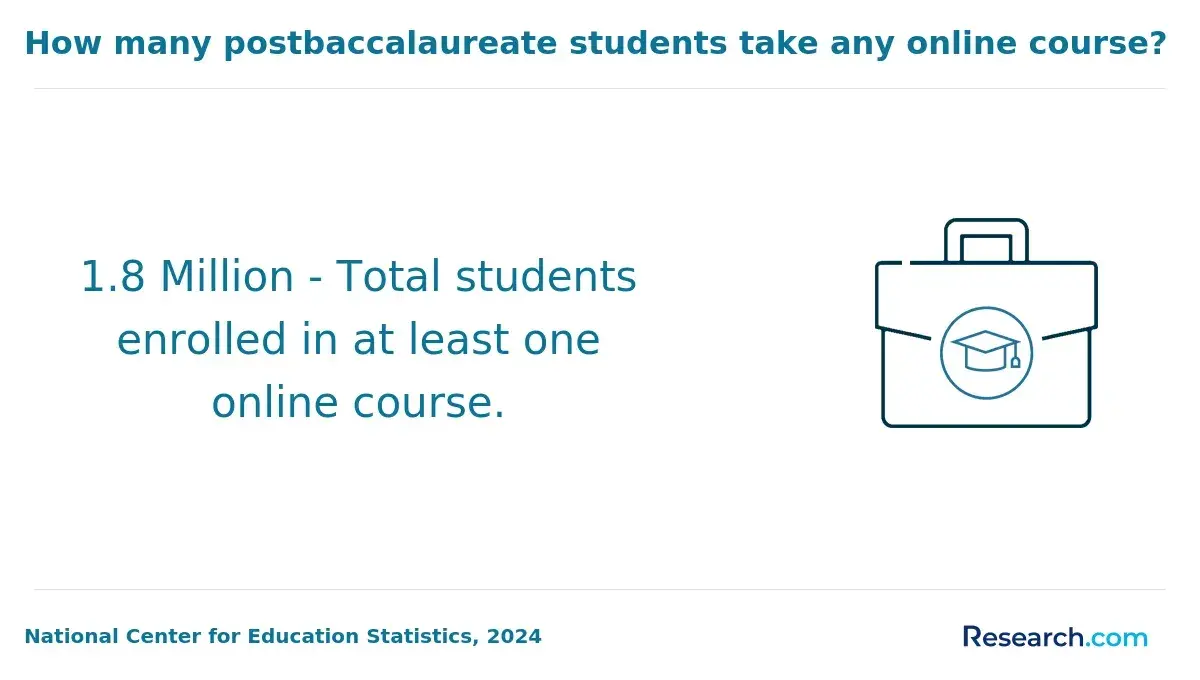
Choosing online college while working full time is a real trade-off: flexibility can open doors, but the wrong program can waste time and money. NCES data published in 2024 show that 53% of undergraduates took at least one distance education course in fall 2022, confirming that online learning is now a mainstream path rather than a backup option.
This guide is for working adults comparing online degrees, certificates, and campus programs. You will learn how to judge quality, cost, time commitment, career value, and fit before enrolling.
Key Things You Should Know
- Online college can be a strong choice for busy professionals when the school is institutionally accredited, the schedule is mostly asynchronous, and the program fits a specific career goal rather than a vague desire to "get a degree."
- Cost varies widely: College Board reported average 2024-25 published tuition and fees of $11,610 for in-state public four-year colleges and $43,350 for private nonprofit four-year colleges, so comparing total cost matters more than comparing online labels.
- BLS 2024 data show median weekly earnings of $1,543 for workers with a bachelor's degree and $1,840 for those with a master's degree, but outcomes depend on field, experience, location, employer, and whether the credential is relevant to the role.
Is online college a good option for busy working professionals?
Yes, online college can be a good option for busy working professionals, but it is not automatically the best option for everyone. It works best when the program is accredited, the coursework can be completed around work obligations, and the credential clearly supports a promotion, career change, licensure requirement, or salary growth strategy.
For adult learners, the main benefit is control over time. Instead of commuting to campus several evenings a week, many online students use early mornings, lunch breaks, weekends, or slower work periods to complete readings, discussion posts, assignments, and recorded lectures. That flexibility is especially valuable for parents, caregivers, shift workers, military students, and professionals who travel.
The table below summarizes when online college is likely to be a smart fit and when another format may be safer. Use it as a quick self-check before comparing schools.
| Situation | Online college may be a good fit if... | A different option may be better if... |
| You work full time | The program is asynchronous or offers evening-friendly deadlines. | The program requires frequent live attendance during your work hours. |
| You need a promotion | The credential aligns with job postings, internal promotion requirements, or professional standards in your field. | Your employer values experience, certification, or a portfolio more than another degree. |
| You are changing careers | The program includes advising, internships, projects, labs, clinical placements, or career support relevant to the new field. | The career requires hands-on training the online program cannot provide locally. |
| You need structure | The program has weekly deadlines, instructor feedback, tutoring, and proactive advising. | You struggle with self-paced study and the school offers little accountability. |
The biggest mistake is treating "online" as the main feature. The better question is whether the program is credible, affordable, manageable, and connected to your next career move. A convenient program that lacks accreditation, employer recognition, or student support is not a good investment.
How does online college compare to traditional campus programs for adult learners?
Online and campus programs can lead to the same degree when they are offered by the same accredited institution and meet the same academic standards. The difference is usually the delivery format, not the legitimacy of the credential. For adult learners, the decision often comes down to time, learning style, networking needs, and access to required hands-on experiences.
The comparison below focuses on practical differences that matter to working adults, not stereotypes about online or campus learning.
| Factor | Online college | Traditional campus program |
| Schedule | Often asynchronous, with weekly deadlines and occasional live sessions. | Usually tied to fixed class times and campus attendance. |
| Commute and location | Can reduce commuting time and expand access to schools outside your area. | Requires proximity to campus or relocation for many students. |
| Interaction | Uses discussion boards, video meetings, group documents, email, and learning platforms. | Relies more on in-person class discussion, office hours, campus events, and informal networking. |
| Hands-on learning | May use simulations, local placements, intensives, or hybrid labs depending on the field. | Often easier for lab-heavy, studio-based, clinical, or equipment-intensive programs. |
| Best for | Self-directed adults who need flexibility and can manage deadlines independently. | Students who benefit from face-to-face structure, campus resources, and local networks. |
For many busy professionals, online learning is not easier; it is more flexible. You still need to read, write, collaborate, take exams, and complete projects. The advantage is that you can often decide when the work happens. The risk is that work can expand into nights and weekends if you do not protect study time.
Campus programs may be better for students who need frequent in-person coaching, want a traditional college community, or plan to enter fields with extensive physical labs, clinical practice, or supervised training. Hybrid programs can be a useful middle ground because they combine online coursework with scheduled campus or field experiences.
What types of degrees and certificates can busy professionals earn online?
Busy professionals can earn many credentials online, from short certificates to doctoral degrees. The right option depends on whether you need fast skill development, a formal degree for advancement, a licensure pathway, or research-level preparation.
Think of online credentials in layers. Shorter programs can help you test a new field or add a job-specific skill, while longer degrees usually carry broader academic and employer recognition.
- Certificates and professional certifications can support targeted skills in areas such as project management, data analytics, cybersecurity, human resources, healthcare administration, bookkeeping, digital marketing, and cloud computing.
- Associate degrees can help students complete general education, enter technical roles, or prepare to transfer into a bachelor's program.
- Bachelor's degrees are often used for career entry, promotion eligibility, management preparation, or transition into fields that list a four-year degree as a common requirement.
- Master's degrees can support advancement into leadership, specialized professional practice, analytics, education, public administration, business, healthcare, or technology roles.
- Doctoral degrees can fit professionals pursuing senior leadership, advanced clinical practice, university teaching, research, or expert consulting roles.
If your goal is faster career movement without committing to a full degree, comparing certificates online can help you identify options that may build marketable skills in less time. Just remember that a certificate is not always a substitute for a degree, especially in fields with licensing rules or employer degree requirements.
The table below shows how common online credential types differ for working adults.
| Credential | Typical purpose | Good fit for busy professionals who... | Watch out for... |
| Certificate | Skill building or career specialization | Need targeted training quickly or want to test a field before pursuing a degree. | Programs that are not recognized by employers or do not map to real job skills. |
| Associate degree | Entry-level preparation or transfer | Want a lower-cost starting point or need foundational college credits. | Credits that may not transfer cleanly to a future bachelor's program. |
| Bachelor's degree | Career entry, advancement, or completion | Have some college credit and need a widely recognized undergraduate credential. | Taking more credits than necessary because transfer policies were not reviewed early. |
| Master's degree | Advanced specialization or leadership | Need graduate-level preparation for promotion, career change, or professional credibility. | Choosing a degree that is respected academically but not valued in your target job market. |
| Doctorate | Advanced practice, research, or executive preparation | Have a clear senior-level, academic, clinical, or research goal. | High cost and long timelines without a role that requires or strongly rewards the credential. |
How can I tell if an online college is properly accredited and reputable?
Accreditation is the most important quality check for online college. In the United States, institutional accreditation means a recognized accreditor has reviewed the school's academic quality, governance, finances, student services, and educational standards. It also affects federal financial aid eligibility, transfer credit, graduate school admission, and employer acceptance.
Working adults should verify accreditation before speaking with admissions, applying, or paying fees. Follow these steps to reduce the risk of enrolling in a weak or unrecognized program.
- Search for the school in the U.S. Department of Education's Database of Accredited Postsecondary Institutions and Programs.
- Confirm that the accreditor is recognized by the U.S. Department of Education or the Council for Higher Education Accreditation.
- Check whether your specific program needs programmatic accreditation, especially in nursing, counseling, social work, education, business, engineering, public health, and allied health fields.
- Ask whether online students earn the same degree and transcript notation as campus students.
- Review transfer credit, licensure disclosure, graduation, retention, and career support information before enrolling.
Programmatic accreditation matters when the profession is regulated or when employers expect a field-specific standard. For example, a school may be institutionally accredited, but a nursing, teaching, counseling, or engineering program may still need additional approval for licensure or professional recognition.
Be cautious if you notice any of the following red flags. These warning signs do not always prove a school is illegitimate, but they should prompt deeper research before you commit.
- The school pressures you to enroll immediately or pay before you can review accreditation and total cost.
- The admissions team avoids direct answers about transfer credits, licensure eligibility, or student outcomes.
- The program promises unusually fast degrees for little work or claims that career outcomes are guaranteed.
- The accrediting organization is unfamiliar and cannot be verified through recognized U.S. accreditation databases.
- The school advertises low tuition but adds substantial technology, proctoring, residency, course, or graduation fees later.
What admission requirements do online degree programs typically have for working adults?
Online admission requirements vary by degree level, school selectivity, and field. Many programs serving working adults are designed for applicants with job experience, transfer credits, military training, prior college coursework, or interrupted education histories. That can make online college more accessible, but it does not mean admission is automatic.
The table below summarizes common admission expectations and what they mean for working professionals.
| Program level | Common requirements | What working adults should prepare |
| Online certificate | Application, proof of education, and sometimes relevant work experience. | A clear goal and confirmation that the certificate matches employer expectations. |
| Associate degree | High school diploma, GED, or equivalent; placement information may be required. | Transcripts, transfer credit questions, and a plan for balancing general education courses. |
| Bachelor's degree | High school records, college transcripts, minimum GPA rules, and transfer credit review. | All prior transcripts, work or military training documentation, and questions about credit for prior learning. |
| Master's degree | Bachelor's degree, transcripts, resume, statement of purpose, recommendations, and sometimes prerequisites. | A focused explanation of career goals and evidence that you can handle graduate-level work. |
| Doctoral degree | Graduate degree or bachelor's degree depending on the program, resume, writing sample, recommendations, and research or professional goals. | A realistic time plan, funding strategy, and a clear reason the doctorate is necessary. |
Standardized tests are less common than they used to be in many adult-focused online programs, but some competitive graduate programs may still require or accept them. Prerequisites can also matter. A student applying to a data science master's program, for example, may need statistics, programming, or calculus preparation even if the program is online.
Before applying, gather the documents most programs request so you can avoid delays. The exact list will vary, but these items are common across adult-friendly online programs.
- Official transcripts from every college previously attended, even if you withdrew or earned low grades.
- High school diploma or GED documentation if you have limited college credit.
- Current resume showing professional experience, certifications, military training, or leadership responsibilities.
- Personal statement explaining why the program fits your career plan.
- Names of supervisors, professors, or colleagues who can write recommendations if required.
How long do online college programs usually take, and can I study part-time?
Online program length depends on credential level, transfer credits, course load, term structure, and whether the program is self-paced, cohort-based, or semester-based. Most busy professionals study part time, even when a school advertises a faster completion path, because work and family responsibilities can make full-time enrollment difficult to sustain.
The table below gives realistic timeline ranges to help you compare options. Actual completion time depends on your credits, schedule, and program policies.
| Credential | Common full-time timeline | Common part-time timeline | Best use case |
| Certificate | A few months to 1 year | 6 months to 2 years | Fast skill building or career exploration. |
| Associate degree | About 2 years | 3 to 4 years | Lower-cost start, transfer pathway, or technical preparation. |
| Bachelor's completion program | 1 to 2 years if many credits transfer | 2 to 4 years | Adults with prior college credit who need to finish a degree. |
| Full bachelor's degree | About 4 years | 5 to 6 years or more | Students starting with few or no college credits. |
| Master's degree | 1 to 2 years | 2 to 4 years | Career advancement, specialization, or leadership preparation. |
| Doctorate | 3 to 5 years or more | 4 to 7 years or more | Advanced practice, research, teaching, or executive leadership goals. |
Some schools offer accelerated terms, year-round enrollment, or competency-based formats. In competency-based programs, students progress by demonstrating mastery rather than simply sitting through a fixed semester, which can benefit experienced professionals who already know part of the material. If that model appeals to you, review how competency-based master's degrees work before assuming they are easier or cheaper.
Use a workload plan before choosing full-time or part-time study. These practical checks can prevent burnout.
- Ask how many hours per week students typically spend per course, not just how many credits the course carries.
- Start with one course if you have a demanding job, unpredictable shifts, caregiving responsibilities, or have been out of school for several years.
- Check whether dropping to part time affects financial aid, employer tuition reimbursement, scholarships, or program sequencing.
- Review whether courses are offered every term or only once a year, because limited scheduling can delay graduation.
- Build in time for exams, group projects, technology issues, and peak work periods.
What does coursework in online programs look like, and how flexible is the schedule?
Online coursework usually takes place in a learning management system where students access readings, lectures, assignments, quizzes, grades, instructor messages, discussion boards, and group work. The schedule may be asynchronous, synchronous, or a mix of both. Asynchronous courses let you complete most work on your own schedule, while synchronous courses require live attendance at set times.
Flexibility does not mean there are no deadlines. Many online courses use weekly modules with due dates for discussions, assignments, exams, labs, simulations, presentations, or peer responses. Graduate and professional programs may require longer papers, case analyses, research projects, client-based work, practicums, or capstones.
Current online programs are also changing because of AI tools, virtual collaboration software, remote proctoring, simulations, and analytics that flag students who may need support. This can improve access and feedback, but it also means students should understand academic integrity policies. Some instructors allow AI for brainstorming or editing; others restrict it. Always follow the course policy, especially for graded work.
Before enrolling, ask specific questions about course design instead of relying on the word "flexible." These questions help reveal whether the schedule will actually work with your life.
- Are lectures recorded, live, or both?
- How often are assignments due, and are deadlines fixed by time zone?
- Are exams proctored, and can they be scheduled outside standard business hours?
- Are there required campus visits, labs, intensives, field placements, internships, or clinical hours?
- How are group projects handled when students are in different time zones or work schedules?
- What tutoring, writing support, library access, technical help, and advising are available to online students?
A common mistake is enrolling in a program described as online without checking residency or placement requirements. This is especially important in nursing, teaching, counseling, social work, healthcare, laboratory science, and other fields where supervised practice may be required in your state or local area.
How much does online college cost, and what financial aid is available?
Online college costs vary by school, residency status, degree level, transfer credits, fees, books, technology, and how long you remain enrolled. Some online programs charge the same tuition as campus programs, while others use separate online rates. The lowest tuition is not always the best value if the school has poor support, weak transfer policies, or limited employer recognition.
College Board reported these average published tuition and fees for 2024-25. These figures are not online-only prices, but they provide a useful benchmark for judging whether a program's advertised cost is reasonable.
- Public two-year in-district colleges: $4,050
- Public four-year in-state colleges: $11,610
- Public four-year out-of-state colleges: $30,780
- Private nonprofit four-year colleges: $43,350
If affordability is your top constraint, comparing cheap online universities can be a useful starting point, but you should still calculate total program cost. For adult learners, transfer credits and time to completion can affect the final bill as much as tuition per credit.
The table below shows cost factors that busy professionals often overlook when comparing online programs.
| Cost factor | Why it matters | What to ask |
| Tuition per credit or term | Programs may charge by credit, course, term, or subscription period. | What is the full estimated tuition for the degree based on my transfer credits? |
| Fees | Technology, proctoring, graduation, course, lab, and distance learning fees can add up. | Which fees are mandatory for online students? |
| Transfer credit | Accepted credits can shorten the program and reduce cost. | How many of my prior credits apply to the degree, not just transfer as electives? |
| Books and materials | Some courses use expensive texts, software, kits, or access codes. | Are materials included in tuition or billed separately? |
| Residency or fieldwork | Travel, lodging, background checks, immunizations, or placement costs may apply. | Are any in-person requirements or local placement expenses required? |
Financial aid may include federal grants, loans, work-study, state aid, institutional scholarships, military education benefits, employer tuition assistance, and payment plans. For 2024-25, the maximum Federal Pell Grant is $7,395 for eligible students. That amount can reduce out-of-pocket cost, but eligibility depends on the FAFSA, enrollment intensity, school participation, and federal rules.
Before borrowing, compare the expected career value of the credential with the total debt you would need. A degree that helps you enter a regulated or higher-demand field may justify more investment than a general credential with unclear job relevance. Avoid assuming that online programs are automatically cheaper; some are, but others cost as much as campus-based options.
What career outcomes, salaries, and job growth can online graduates expect?
Online graduates can pursue many of the same career outcomes as campus graduates when the program is accredited, relevant, and accepted in the field. Employers usually care more about the institution, major, skills, experience, portfolio, certifications, licensure eligibility, and work history than whether every class was completed online. However, outcomes are never guaranteed.
BLS 2024 education-pay data show a strong association between education and earnings: workers with a bachelor's degree had median weekly earnings of $1,543, while workers with a master's degree had median weekly earnings of $1,840. This does not mean every person should pursue graduate school; it means advanced education can be valuable when the degree matches a labor-market need and the cost is manageable.
The table below lists examples of fields where online degrees are common. Salary and growth figures are national BLS benchmarks, so local pay and hiring conditions may differ.
| Career area | Common online credential | Related role example | BLS median pay or outlook context |
| Business and operations | Bachelor's or master's in business, management, analytics, or project management | Management analyst | BLS reported 2024 median pay of $101,190 for management analysts. |
| Technology | Bachelor's or master's in computer science, IT, cybersecurity, or data analytics | Information security analyst | BLS projects much faster-than-average growth for information security analysts over the 2024-34 period. |
| Healthcare administration | Bachelor's or master's in healthcare administration, public health, or health informatics | Medical and health services manager | BLS reported 2024 median pay of $117,960 for medical and health services managers. |
| Accounting and finance | Bachelor's or master's in accounting, finance, or taxation | Accountant or auditor | BLS reported 2024 median pay of $81,680 for accountants and auditors. |
| Education | Bachelor's, master's, certificate, or endorsement depending on state rules | Teacher, instructional coordinator, or education administrator | Licensure, state approval, and local salary schedules strongly affect outcomes. |
Graduate education can pay off best when it is tied to a specific advancement path, such as nurse leadership, analytics, cybersecurity, public administration, school leadership, business strategy, or healthcare management. If you are comparing graduate options, reviewing most valuable masters degrees can help you focus on programs with clearer labor-market relevance.
Skills matter as much as the credential. Busy professionals should look for programs that build evidence of ability through projects, portfolios, case studies, labs, internships, practicums, capstones, or employer-connected assignments. In fields affected by AI and automation, programs that teach data literacy, ethical technology use, communication, problem-solving, and domain expertise may offer stronger long-term value than programs focused only on memorizing tools.
How should busy professionals choose the best online college for their goals and lifestyle?
To choose the best online college, start with your goal and work backward. A good program for one professional may be a poor fit for another if the cost, schedule, support, credential level, or career relevance does not match. The best choice is the program that helps you reach a defined outcome with the least unnecessary risk.
Use this step-by-step process before applying or signing an enrollment agreement.
- Define the career outcome first, such as promotion, licensure, salary growth, career change, graduate school admission, or skill development.
- Verify institutional accreditation and any required programmatic accreditation.
- Confirm whether the program meets state licensure or certification requirements if your target career is regulated.
- Request a transfer credit evaluation before estimating cost or graduation date.
- Compare total cost, not just tuition per credit, including fees, books, travel, proctoring, and lost time.
- Ask whether online students receive the same advising, tutoring, library access, career services, disability services, and technical support as campus students.
- Review course format carefully, including live sessions, weekly deadlines, proctored exams, group work, and field requirements.
- Check employer recognition by comparing the program with job postings, professional associations, alumni outcomes, and conversations with managers in your field.
- Choose a realistic pace that protects your health, work performance, and family responsibilities.
Advanced degrees require extra caution because the time and cost are higher. If you are considering doctoral study, comparing affordable PhD programs can help you control cost, but affordability should be weighed against faculty fit, research expectations, dissertation support, completion rates, and career relevance.
Before enrolling, ask admissions or an academic advisor these questions. Strong schools should answer clearly and provide written documentation when policies affect cost, time, or eligibility.
- Will my transcript or diploma identify the program as online?
- How many credits will I need after transfer evaluation?
- What is the estimated total cost to finish, including required fees?
- What happens if I need to pause enrollment because of work or family responsibilities?
- Are there required campus visits, intensives, clinicals, practicums, internships, or local placements?
- Does the program meet licensure requirements in my state?
- What career services are available to online students before and after graduation?
- How often do instructors respond to questions, and what support exists if I fall behind?
The bottom line: online college is good for busy professionals when it removes access barriers without lowering academic quality or career relevance. It is not a shortcut. Treat it as a flexible investment, verify the school carefully, and choose the credential that directly supports your next professional step.
Other Things You Should Know About
Often, yes, especially when it comes from an accredited institution with a recognizable program and relevant curriculum. Employers may also consider your experience, skills, certifications, portfolio, and whether the degree aligns with the job.
Many students do, but success depends on course load and schedule. If your job is demanding or unpredictable, starting with one course can help you test the workload before increasing your pace.
Sometimes, but not always. Online students may save on commuting or housing, but tuition and fees vary widely. Always compare total program cost after transfer credits, financial aid, books, technology fees, and required in-person components.
The biggest risk is enrolling before verifying accreditation, total cost, schedule requirements, transfer credit, and career fit. A program can be convenient but still be a poor investment if it does not support your goal.
References
- Best Online Degree Programs for Working Adults https://www.scholaro.com/db/News/best-online-degree-programs-256
- Career Outlook for College Graduates in 2025 https://www.fastweb.com/student-news/articles/career-outlook-recent-college-graduates
- Career Opportunities After Online Degree: What You Need to Know https://www.pw.live/online-degree/exams/career-opportunities-after-online-degree
- Financial Aid Guide for Students at Online Colleges - OnlineColleges.net https://www.onlinecolleges.net/for-students/financial-aid-online-students/
- How to Choose the Right Online Business Program for Your Career Goals https://www.abms.ch/post/how-to-choose-the-right-online-business-program-for-your-career-goals
- The Advantages of Online Learning for Working Professionals https://www.tuw.edu/school-news/advantages-of-online-learning/
- Online, Hybrid, and More: Flexible Learning Options in College - ReUp Education https://reupeducation.com/blog/online-hybrid-and-more-flexible-learning-options-in-college/
- How to Choose the Right Online College https://www.straighterline.com/blog/goodie-how-to-choose-the-right-online-college
- What should I study to ensure I can get a job? https://personal.nedbank.co.za/learn/blog/courses-for-in-demand-jobs.html
- Estimate your college cost | USAGov https://www.usa.gov/estimate-college-cost