2027 What Type of Student Usually Thrives Online?

Co-Founder and Chief Data Scientist
Choosing online college is less about whether you are "good with computers" and more about whether the format fits how you study, plan, and ask for help. NCES reported in 2024 that about 54% of U. S. undergraduates took at least one distance education course in fall 2022, so online learning is now a mainstream pathway. This guide is for students comparing online and campus options. You will learn who tends to thrive online, what red flags to watch for, and how to choose a program that fits your goals, schedule, and support needs.
Key Things You Should Know
- Students most likely to thrive online are self-directed, deadline-conscious, comfortable communicating in writing, and willing to seek help before small problems become course failures.
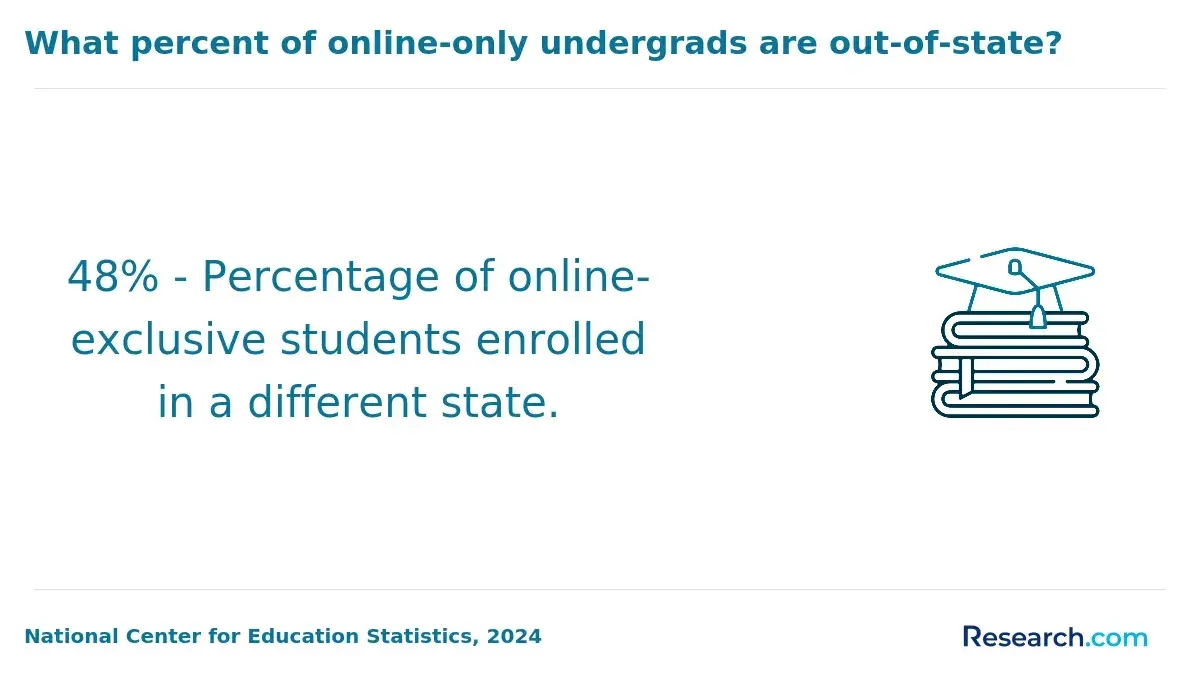
- Online learning is common but not effortless: NCES reported in 2024 that about 26% of U.S. undergraduates were enrolled exclusively in distance education courses in fall 2022.
- Program fit matters as much as personality; College Board's 2024 data show average published tuition and fees of $11,610 for in-state public four-year colleges and $43,350 for private nonprofit four-year colleges in 2024-25, so cost comparison should include transfer credits, fees, time to completion, and financial aid.
What personality traits and study habits help a student thrive in online programs?
The student who usually thrives online is not necessarily the one with the highest test scores. Online success often comes from consistent behavior: logging in regularly, reading instructions carefully, finishing work before deadlines, and communicating with instructors when something is unclear.
Because online courses remove many of the physical reminders built into campus life, the strongest online learners create their own structure. The table below summarizes the traits that tend to matter most and how they show up in day-to-day coursework.
| Trait or habit | What it looks like in an online course | Why it matters |
| Self-direction | Starts assignments without waiting for reminders | Online instructors may not prompt students as often as a classroom teacher would |
| Time awareness | Tracks weekly modules, discussion posts, exams, and project milestones | Missed deadlines can quickly compound in accelerated or asynchronous courses |
| Written communication | Asks clear questions by email, discussion board, or messaging tool | Much of online learning depends on text-based interaction |
| Persistence | Works through technical issues, confusing readings, or slow feedback without disengaging | Online students need to solve problems before they become reasons to stop out |
| Academic honesty and independence | Uses AI tools, tutoring, and study aids ethically while submitting original work | Many schools now use proctoring, plagiarism checks, and AI-use policies |
A good online student does not need to be naturally organized from birth. However, they do need to be willing to use calendars, reminders, checklists, and feedback loops. Students who dislike asking for help, rarely check email, or rely on last-minute studying may struggle unless they build new habits before enrolling.
Current online courses also require more active participation than many students expect. Discussion posts, peer replies, group projects, virtual labs, and recorded presentations can be graded as seriously as exams. Students who assume online learning means working alone with minimal interaction often underestimate the workload.
How can I tell if my learning style and motivation fit online college courses?
Learning style is useful to consider, but motivation is usually the stronger predictor. Online college fits students who can learn from reading, recorded lectures, interactive modules, practice exercises, simulations, or scheduled video sessions without needing daily in-person accountability.
If you are comparing online degrees, focus less on whether the major is labeled "easy" and more on whether the course format matches how you actually learn. A student who enjoys independent reading may do well in asynchronous humanities or business courses, while a student who needs live demonstration may prefer synchronous sessions, hybrid labs, or campus-based options.
Use the following self-check to evaluate your fit before committing to a full degree plan. These questions are especially helpful if you have been out of school for several years or are returning while working full time.
- Review one sample syllabus and identify every weekly deadline, required reading, discussion post, quiz, and project checkpoint.
- Block a realistic study schedule on your calendar for two weeks and test whether you can protect that time.
- Watch a recorded lecture or complete a free online lesson in your intended subject and note whether you stay engaged without live supervision.
- Write down why you want the credential, what job or academic goal it supports, and what would make you consider stopping.
- Ask an admissions or academic advisor how quickly students receive instructor feedback and what tutoring is available outside business hours.
Students who thrive online usually have a clear reason for enrolling. That reason may be career advancement, licensure preparation, a salary ceiling in their current role, military mobility, caregiving responsibilities, or the need to finish credits they already started. Motivation becomes the anchor when coursework feels repetitive, technology fails, or life gets crowded.
One warning sign is choosing online college only because it seems less intimidating than campus. Online courses can be more flexible, but they are not automatically lighter. If your main challenge is procrastination, anxiety about writing, or weak foundational math or reading skills, online learning can still work, but only if the program provides strong academic support and you use it early.
What technical skills and technology setup does a successful online student need?
A successful online student needs enough technical confidence to participate without losing study time to preventable issues. You do not need to be a programmer, but you should be able to use a learning management system, upload files, join video meetings, troubleshoot basic connection problems, and protect your login credentials.
The table below shows the core technology setup most online students should confirm before classes begin. Requirements vary by school and major, especially for proctored exams, design programs, healthcare simulations, and data-heavy courses.
| Technology area | Baseline expectation | Decision tip |
| Computer | Reliable laptop or desktop that can run the school's required software | A phone or tablet alone is usually not enough for papers, spreadsheets, exams, or presentations |
| Internet | Stable broadband connection for video, uploads, and testing | Identify a backup location such as a library, workplace, or campus testing center |
| Webcam and microphone | Needed for live classes, presentations, advising, or proctored exams | Check whether proctoring tools require a room scan or specific browser extension |
| Productivity tools | Word processing, spreadsheets, cloud storage, PDF tools, and presentation software | Ask whether software is included in tuition or charged separately |
| Cybersecurity basics | Strong passwords, multifactor authentication, and awareness of phishing attempts | School email accounts often contain financial aid, registration, and identity information |
AI is also changing what online readiness means. Many courses now allow limited use of generative AI for brainstorming, outlining, or practice questions while prohibiting it for final submissions unless cited or approved. Thriving students read the academic integrity policy carefully instead of assuming that all AI assistance is allowed.
Before enrolling, complete a technology readiness check. This short sequence can prevent avoidable frustration during the first week of class.
- Log in to the learning platform before the course starts and locate announcements, grades, assignments, messages, and technical help.
- Upload a test document, download a course file, and confirm that your browser works with required tools.
- Test your webcam, microphone, and internet speed in the same room where you plan to study.
- Install required software early and confirm whether your computer meets minimum specifications.
- Save the help desk phone number, chat link, and after-hours support instructions outside the learning platform.
Students who depend on shared computers, unstable Wi-Fi, or a phone-only setup can still succeed, but they should choose programs with flexible deadlines, mobile-friendly platforms, local testing alternatives, and accessible technical support. Technology gaps are manageable when planned for; they become serious when discovered during a timed exam.
Which types of degree programs and subjects work best in an online format?
Online education works best when the subject can be taught through readings, recorded lectures, discussion, digital projects, simulations, case studies, or supervised field experiences arranged locally. It is less straightforward when a program requires extensive hands-on labs, clinical rotations, studio practice, or equipment that students cannot access remotely.
Many strong online programs are in business, education, psychology, computer science, criminal justice, healthcare administration, data analytics, public administration, and communication. Shorter graduate options, including some 1-year masters programs, can fit students who already have the academic foundation and can handle an accelerated workload.
The table below compares common subject areas by online fit. Use it as a starting point, not a substitute for checking accreditation, licensure rules, internships, and employer expectations in your field.
| Program or subject area | Online fit | What to verify before enrolling |
| Business, management, accounting, marketing | Often strong | Faculty experience, career services, analytics tools, internship access, and accreditation when relevant |
| Computer science, IT, cybersecurity, data analytics | Often strong | Hands-on labs, cloud platforms, portfolio projects, certifications, and employer-recognized skills |
| Education | Strong when field placements are supported | State licensure alignment, student teaching requirements, background checks, and local placement help |
| Nursing and allied health | Varies by level and clinical requirement | Clinical placement policies, state authorization, licensure exam preparation, and in-person skills requirements |
| Engineering, laboratory science, fine arts | Mixed or hybrid-friendly | Lab access, equipment needs, studio critiques, residency requirements, and ABET or field-specific accreditation when applicable |
| General studies or liberal arts completion degrees | Often strong for returning students | Transfer credit policies, concentration options, writing support, and career pathway clarity |
The best online subject for you depends on the career outcome you need. For example, an online bachelor's in accounting may support entry-level accounting roles and CPA preparation only if it meets your state board's credit rules. An online education degree may be useful for teacher licensure only if it includes approved student teaching and aligns with your state's requirements.
Students should be cautious with programs that promise fast entry into regulated careers without explaining clinicals, licensure exams, state authorization, or supervised hours. Flexibility does not remove professional requirements. It simply changes where and how some coursework is delivered.
How do online students manage time, work, and family responsibilities effectively?
Online students often choose the format because they are balancing school with work, parenting, caregiving, military service, or a long commute. Flexibility helps, but it can also hide the true workload. A three-credit course commonly requires several hours of reading, assignments, discussion, and studying each week, and accelerated terms can compress that work sharply.
Cost and time are connected. Students comparing traditional graduate study with affordable online masters programs should look beyond tuition per credit and estimate the total cost of attendance, the number of credits required, employer tuition assistance, fees, books, software, and whether part-time enrollment affects financial aid eligibility.
The most successful online learners use a repeatable weekly system. The following steps are practical because they turn a flexible course into a predictable routine.
- Choose fixed study blocks before the term starts and treat them like work shifts or appointments.
- Read every syllabus during the first week and enter major deadlines into one calendar.
- Break large assignments into smaller milestones, such as topic approval, research, outline, draft, revision, and submission.
- Set a personal deadline at least 24 hours before the official deadline to protect against illness, family emergencies, or technology problems.
- Tell family members, roommates, or supervisors when you are unavailable for schoolwork and when you can be flexible.
- Use school support early, especially tutoring, writing help, advising, and financial aid counseling.
One common mistake is enrolling full time because online courses seem easier to "fit in." Full-time study can be the right choice for students with fewer outside obligations, strong academic preparation, and clear financial support. Part-time study may be smarter for working adults, caregivers, or students returning after a long gap, even if it extends the graduation timeline.
A good decision rule is to compare the schedule you want with the schedule you can sustain. If your work hours change weekly, look for asynchronous courses, generous assignment windows, and recorded sessions. If you need external accountability, consider synchronous online classes, cohort-based programs, or hybrid formats that create a regular meeting rhythm.
What admission requirements and academic readiness are expected for online degrees?
Online degree admissions requirements are usually similar to campus requirements at the same institution and academic level. For undergraduate programs, schools may ask for a high school diploma or equivalent, transcripts, placement information, prior college records, and sometimes test scores. For graduate programs, requirements may include a bachelor's degree, minimum GPA, professional experience, recommendations, essays, prerequisite courses, or standardized tests, depending on the field.
Students who are not ready for a full degree may consider certificates, transfer pathways, or nondegree courses first. In career-focused fields, some 6-month certificate programs that pay well can help learners build job-relevant skills faster, although pay outcomes vary by occupation, location, employer, and prior experience.
Academic readiness matters because online courses require independent reading, writing, quantitative reasoning, and digital organization. BLS Education Pays data for 2024 show that workers age 25 and older with a bachelor's degree had median weekly earnings of $1,543, compared with $930 for those with a high school diploma. That gap explains why many students pursue degrees, but it does not mean every program, major, or online format will produce the same return.
Before enrolling, check whether you meet the academic expectations for the level you want to enter. These are the readiness signals that deserve close attention.
- You can write organized paragraphs, cite sources, and revise work based on feedback.
- You can read academic material independently and identify what you do not understand.
- You can complete basic quantitative work required by your major, such as statistics, algebra, accounting, or data interpretation.
- You can manage multi-step assignments without daily reminders.
- You understand whether your target career requires licensure, certification, supervised hours, or a specific accredited degree.
Students with weak preparation should not automatically avoid online college. Instead, they should look for programs with placement support, bridge courses, tutoring, writing centers, math labs, academic coaching, and flexible pacing. The red flag is not needing help; the red flag is choosing a program that does not make help easy to access.
How does thriving online compare with success in campus-based college programs?
Thriving online and succeeding on campus require many of the same fundamentals: showing up, completing assignments, studying effectively, using feedback, and building relationships. The difference is where accountability comes from. Campus programs provide more built-in structure through physical classrooms, office locations, and peer visibility. Online programs require students to create more of that structure themselves.
The table below compares online and campus-based college in areas that commonly affect student success. The better choice depends on your responsibilities, learning preferences, major, support needs, and career goals.
| Decision factor | Online college | Campus-based college |
| Schedule | Often more flexible, especially in asynchronous courses | Usually fixed around class meeting times and campus activities |
| Accountability | Student must create routines and monitor deadlines closely | Class meetings and in-person reminders can provide external structure |
| Interaction | Often through discussion boards, email, video meetings, group documents, and virtual events | Often through classroom discussion, campus organizations, office visits, and informal peer contact |
| Hands-on learning | Strong when simulations, local placements, or remote labs are well designed | Often better for lab-heavy, studio-based, or equipment-intensive programs |
| Cost structure | May reduce commuting, housing, and relocation costs, but can include technology and online fees | May include commuting, parking, housing, meal plans, and campus fees |
| Best fit | Independent students balancing school with work, family, or location limits | Students who want in-person community, physical facilities, or frequent face-to-face support |
Online is not inherently easier or less rigorous when offered by an accredited institution with the same academic standards. In many courses, students must participate more visibly because discussion posts, peer responses, quizzes, and logged activities are documented. Students who are quiet in classrooms may actually benefit from having time to compose thoughtful written responses.
Campus may be the better choice for students who need immediate instructor access, hands-on facilities, a residential experience, or the social motivation of being surrounded by classmates. Hybrid programs can offer a useful middle ground by combining online coursework with labs, intensives, fieldwork, or occasional campus meetings.
What support services help online learners persist and graduate on time?
Support services are one of the clearest differences between a merely convenient online program and a program designed for student persistence. Successful online learners do not wait until they are failing to use support. They treat advising, tutoring, library help, and career services as part of the academic experience.
According to the National Student Clearinghouse Research Center's 2024 completion reporting, overall U.S. college completion remained uneven across institution types and student groups. For online learners, that means persistence should be evaluated before enrollment, not after a crisis. Ask how the school identifies students who miss assignments, whether advisors proactively reach out, and how quickly instructors are expected to respond.
Look for support services that match your real life, not just services listed on a website. The following resources are especially important for students who study at night, work full time, or attend from another state.
- Academic advising that helps with course sequencing, transfer credits, degree audits, and graduation planning.
- Online tutoring in writing, math, statistics, science, and major-specific subjects.
- Library access that includes research databases, citation help, and remote librarian appointments.
- Technical support with evening or weekend availability.
- Career services that offer resume reviews, mock interviews, job boards, internship guidance, and employer events for online students.
- Accessibility services for documented disabilities, including accommodations for online exams and course materials.
- Mental health, wellness, or student success coaching available remotely.
One common mistake is assuming that an online program's support is equal to the campus experience. Some schools provide excellent remote services; others expect online students to be highly independent. Before enrolling, ask for specific hours, response times, appointment formats, and whether online students can access the same resources as campus students.
Students should also ask how the school handles early alerts. A strong program may notify advisors when students stop logging in, miss assignments, or perform poorly on early assessments. That kind of intervention can help students recover while there is still time to pass the course.
How do successful online students leverage internships and networking for careers?
Online students thrive professionally when they treat career development as an ongoing project, not something to start after graduation. Because they may not walk past a campus career fair or chat casually with professors after class, online learners often need to be more intentional about networking.
Career outcomes depend on the program, field, labor market, experience, and student effort. BLS's May 2024 wage data placed the median annual wage for all U.S. occupations at $49,500, but occupations that require specialized education or technical skill often differ widely from that midpoint. Students should use wage data as context, then compare it with local job postings and employer requirements in their target field.
Strong online students build career momentum while enrolled. These actions help convert coursework into professional opportunity.
- Create a simple career target by identifying three job titles you want after graduation and collecting real job postings for each.
- Ask instructors which class projects can be turned into portfolio samples, writing samples, case studies, dashboards, lesson plans, or presentations.
- Meet with career services early to review your resume, LinkedIn profile, interview strategy, and internship search plan.
- Join virtual employer events, alumni panels, professional associations, and student organizations related to your field.
- Ask whether internships, practicums, clinicals, or field placements can be completed near where you live.
- Build relationships with faculty by asking specific questions, attending virtual office hours, and following up after major assignments.
Networking online can feel awkward at first, but it is a skill employers increasingly value. Remote and hybrid workplaces rely on clear writing, meeting etiquette, project management tools, and asynchronous collaboration. Students who practice those habits in online courses can turn them into interview examples.
Avoid choosing a program that has no clear pathway from coursework to experience. For fields such as counseling, education, healthcare, cybersecurity, analytics, and business, ask how students find supervised hours, internships, capstone projects, or employer-connected assignments. A flexible program is more valuable when it also helps you prove what you can do.
What should prospective students look for when choosing a reputable online school?
A reputable online school should be accredited, transparent about costs, clear about outcomes, and realistic about what online learning requires. Do not choose based only on ads, speed, or convenience. The safest choice is a program that fits your academic level, career goal, budget, schedule, and state requirements.
If you are trying to reduce upfront barriers, options such as online colleges free application lists can be useful starting points, but a no-fee application should not outweigh accreditation, transfer policy, total cost, support services, or program quality.
The table below outlines the most important factors to compare before applying. These questions help you avoid common mistakes such as choosing an unaccredited program, underestimating fees, or enrolling in a degree that does not match your career requirements.
| What to check | Why it matters | Question to ask the school |
| Institutional accreditation | It affects credit transfer, financial aid eligibility, employer recognition, and graduate school options | Which recognized accreditor accredits the institution? |
| Programmatic accreditation | Some fields require specialized accreditation for licensure or employer acceptance | Does this specific program meet accreditation expectations for my field? |
| State authorization and licensure alignment | Online students may live outside the school's state | Will this program meet requirements in the state where I plan to work? |
| Total cost | Tuition is only one part of the price | What are the full tuition, fees, books, software, exam, residency, and graduation costs? |
| Transfer credit policy | Accepted credits can reduce time and cost | How many prior credits can apply, and when will I receive an official evaluation? |
| Student support | Online learners need remote access to help | What tutoring, advising, technology support, and career services are available after work hours? |
| Outcomes transparency | Graduation, retention, licensure pass rates, and job placement data can reveal program strength | What outcomes data are available for online students in this program? |
Red flags include pressure to enroll immediately, vague accreditation claims, unclear tuition and fee pages, guaranteed salary promises, poor transfer transparency, and unwillingness to discuss licensure limitations. Be especially careful with programs in regulated fields that do not clearly explain state-specific requirements.
A smart final step is to compare three programs side by side. Include one public option, one private nonprofit option, and any employer-partner or community college pathway available to you. Institution type alone does not determine value; the better measure is whether the program helps you finish affordably and qualify for the next step you actually want.
Other Things You Should Know About
A student who is self-motivated, organized, comfortable reading and writing, and willing to ask for help early is most likely to succeed. Online success depends more on consistent habits than on being naturally tech-savvy.
It can be harder for students who need daily structure or face-to-face accountability. It can be easier to manage for students who need schedule flexibility and can study independently. The academic workload can be just as rigorous as campus-based coursework.
Yes, but they should choose programs that offer remote career services, employer events, internship guidance, and help arranging local placements when required. Online students often need to be more proactive about networking.
Students should be cautious if they lack reliable internet, rarely meet deadlines, dislike written communication, or need hands-on facilities every week. They may still succeed with a hybrid program, stronger support services, or a lighter course load.
References
- Online Degree vs. Traditional: Choosing the Right Path https://beal.edu/online-degree-vs-traditional/
- How does virtual learning impact students in higher education? | Brookings https://www.brookings.edu/articles/how-does-virtual-learning-impact-students-in-higher-education/
- Time Management Tips for Students: Balancing Studies and Life Responsibilities https://echo360.com/articles/time-management-tips-for-students-balancing-studies-and-life-responsibilities/
- Networking and Mentorship Through Internships https://www.deltainstitute.co/blog-delta-institute/networking-and-mentorship-through-internships
- 11 Habits of Effective Online Students | CCU Online https://www.ccu.edu/blogs/cags/category/online-learning-tips/11-habits-of-effective-online-students/
- Time Management for Online Learners: Balance Work, Study & Life https://ebsedu.org/blog/time-management-for-online-learners/
- Balancing Work, Family, And Online Study | Catholic International University https://catholiciu.edu/balancing-work-family-and-online-study-time-management-for-adult-learners/
- 15 Considerations When Choosing an Online School https://www.chsonline.org.uk/blog/15-considerations-when-choosing-an-online-school/
- Five Ways to Support Todayâs Online Learners â InsideTrack https://www.insidetrack.org/blog/5-ways-to-support-todays-online-learner
- Your Guide to a Smooth Start: Preparing for Online and Distance Degree Courses - BiYunik Academy https://www.biyunik.com/3345/your-guide-to-a-smooth-start-preparing-for-online-and-distance-degree-courses/