2027 Are Online Students Eligible for Scholarships?

Co-Founder and Chief Data Scientist
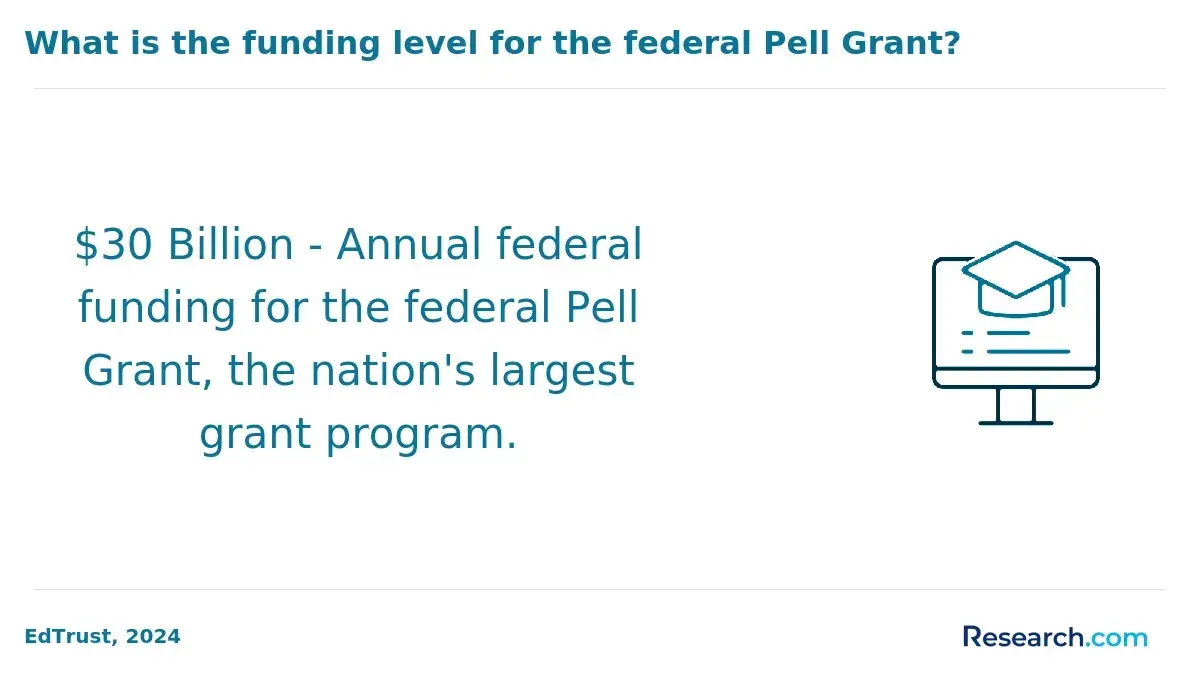
Online students often wonder whether choosing a remote program will limit scholarship access. The short answer is usually no, but eligibility depends on accreditation, enrollment status, degree level, and each award's rules. This matters because the 2024-25 maximum federal Pell Grant is $7,395, a meaningful amount for learners balancing tuition, work, and family costs.
This guide explains which scholarships online students can use, how FAFSA affects aid, what red flags to avoid, and how to build a smarter funding plan before enrolling.
Key Things You Should Know
- Online students are generally eligible for many of the same scholarships as campus students when they attend an accredited, Title IV-eligible institution and meet the award's enrollment, GPA, residency, major, or need-based criteria.
- Scholarships can materially reduce borrowing: for 2024-25, the maximum Pell Grant is $7,395, while College Board reported average published tuition and fees of $11,610 at public four-year in-state colleges and $43,350 at private nonprofit four-year colleges.
- The FAFSA now uses the Student Aid Index, and schools decide how outside scholarships interact with grants, loans, and institutional aid, so online students should ask each financial aid office about award stacking and displacement policies.
Are online college students eligible for the same scholarships as campus students?
Yes, online college students can often qualify for the same scholarships as campus-based students. Most scholarship committees care more about whether the student is enrolled in an eligible college, pursuing an eligible credential, and meeting the award's criteria than whether courses are delivered online or in person.
The key distinction is not "online versus campus." It is whether the program is part of an accredited institution, whether the student is degree-seeking, and whether the scholarship language excludes online learners. Some awards are open to all enrolled students, while others require full-time status, a specific major, state residency, demonstrated financial need, or participation in campus activities.
The table below summarizes how scholarship access typically compares by learning format. Use it as a screening tool before assuming an online program is automatically included or excluded:
| Scholarship factor | Online students | Campus students | What to verify |
| Institutional scholarships | Often eligible if admitted to the same college or university | Often eligible through the same aid office | Whether online-only programs have separate aid rules |
| Federal grants | Available at Title IV-eligible schools for qualifying students | Available at Title IV-eligible schools for qualifying students | FAFSA completion, enrollment intensity, and degree eligibility |
| Private scholarships | Usually eligible unless the award excludes online study | Usually eligible if award criteria are met | Fine print on school type, location, and program format |
| Campus activity awards | May be limited if participation must be in person | More likely to meet participation requirements | Whether virtual participation counts |
| State aid | May be eligible if residency and institution rules are met | May be eligible if residency and institution rules are met | State residency, approved institution lists, and credit load |
Online students should read award terms carefully because some scholarships use older language that assumes students attend on campus. When in doubt, ask the scholarship administrator in writing whether an accredited online degree program qualifies.
What types of scholarships and grants are available specifically for online students?
Online students can pursue both general awards and awards designed for distance learners, adult students, working professionals, caregivers, military-affiliated learners, transfer students, and career changers. The best funding plan usually combines several smaller awards instead of relying on one large scholarship.
It also helps to distinguish scholarships from grants. Scholarships may be based on merit, identity, major, employer affiliation, or community service, while grants are often need-based and may come from federal, state, or institutional sources.
The most common funding categories for online learners include the following options, each with different eligibility rules and renewal requirements:
- Institutional online student scholarships: Awards offered by a college specifically for students in online undergraduate, graduate, certificate, or degree-completion programs.
- Need-based grants: Federal, state, or school-based aid that depends on FAFSA information, enrollment intensity, degree level, and available funds.
- Adult learner and degree-completion scholarships: Awards for students returning to college after time away, often aimed at learners with work experience or previous credits.
- Employer tuition assistance: Workplace education benefits that may cover approved online programs, especially when the degree supports career advancement.
- Military and veteran education benefits: Scholarships, grants, or tuition support for service members, veterans, spouses, and dependents, subject to program approval rules.
- Major-specific scholarships: Awards tied to fields such as nursing, education, cybersecurity, business, accounting, social work, or public service.
- Community foundation and nonprofit awards: Local or mission-based scholarships that may support online students if the school is accredited and the student meets residency or service criteria.
Students comparing affordable online bachelor degree programs should look at both tuition and aid availability. A low sticker price can be valuable, but a moderately priced program with strong transfer-credit policies and renewable institutional scholarships may cost less overall.
What eligibility requirements do online students need to meet to qualify for scholarships?
Eligibility rules vary by scholarship, but most awards evaluate a few predictable factors. Online students should check these requirements before applying because a strong application can still be disqualified if it misses a basic rule.
The following criteria are especially important for online learners because they affect both scholarship access and renewal after the first term:
- Accredited enrollment: Many awards require attendance at an institutionally accredited college or a school approved for federal student aid.
- Degree-seeking status: Scholarships are often reserved for students pursuing a degree rather than taking individual courses for personal enrichment.
- Enrollment intensity: Some awards require full-time enrollment, while others allow half-time or part-time study, which is common among working online students.
- Academic standing: Merit scholarships may require a minimum GPA, test score, previous college record, or satisfactory academic progress.
- Financial need: Need-based awards may use FAFSA results, institutional aid forms, household size, income, assets, or special financial circumstances.
- Residency or location: State and local awards may require the student to live in a particular state, county, school district, or service area.
- Major or career goal: Some scholarships support specific fields, shortage areas, licensure tracks, or public-service professions.
- Citizenship or eligible noncitizen status: Federal aid has specific eligibility rules, while private scholarships may set their own policies.
- Renewal conditions: Awards may require annual applications, continued enrollment, minimum credits, GPA maintenance, or proof of progress toward the degree.
A practical way to protect your time is to create a checklist for every award before writing essays or requesting recommendations. If you are unsure about one requirement, contact the financial aid office or scholarship sponsor before applying.
How does accreditation of an online program affect scholarship and financial aid access?
Accreditation is one of the most important factors in scholarship and financial aid eligibility. For federal student aid, the institution must participate in Title IV programs, and students must enroll in an eligible program. Many private scholarships also require attendance at an accredited college, even when they do not specify online or campus delivery.
Institutional accreditation evaluates the college or university as a whole. Programmatic accreditation evaluates specific programs, such as nursing, counseling, education, business, or social work.
For many scholarships, institutional accreditation is enough; for licensure-related fields, programmatic accreditation may also matter because the degree must prepare students for state or professional requirements.
Before enrolling, online students should verify accreditation through official sources and ask targeted questions, reflected by the process below. This is especially important for career programs tied to licensing, certification, or employer screening.
- Confirm that the college is institutionally accredited by an agency recognized by the U.S. Department of Education or the Council for Higher Education Accreditation.
- Ask whether the specific online program is Title IV-eligible, because not every certificate or nondegree program qualifies for federal aid.
- For licensure fields, ask whether the program meets education requirements in your state, not only in the state where the school is located.
- Check whether the scholarship requires institutional accreditation, programmatic accreditation, or both.
- Be cautious if a school avoids clear accreditation answers, promises guaranteed aid, pressures you to enroll quickly, or claims credits will transfer everywhere.
Accreditation does not automatically make a program affordable or high quality, but it is a baseline protection. Without it, students may lose access to federal grants, federal loans, many scholarships, transfer credits, employer reimbursement, and some professional licensing pathways.
How do online students apply for scholarships and complete the FAFSA step-by-step?
Online students should treat scholarship applications and FAFSA completion as one coordinated process. The FAFSA determines eligibility for federal grants, federal loans, and many school-based awards, while separate scholarship applications can add funding from colleges, nonprofits, employers, and private organizations.
The process below gives online learners a practical order of operations. Starting early matters because institutional and state funds can be limited even when federal deadlines are later.
- Create your StudentAid.gov account and make sure every required contributor has their own account if needed.
- Gather basic records, including Social Security number if applicable, tax information, income details, asset information when required, and the list of schools you are considering.
- Complete the FAFSA and give consent for federal tax information transfer when prompted.
- Add every school you may attend, including online programs, so each institution can receive your FAFSA information.
- Review your FAFSA Submission Summary and Student Aid Index, then correct errors quickly if anything is inaccurate.
- Watch for each school's financial aid offer and compare grants, scholarships, work-study, and loans separately instead of focusing only on the total aid amount.
- Search the school's scholarship portal, department pages, state aid site, employer benefits portal, and reputable nonprofit scholarship databases.
- Build a calendar with deadlines, essay prompts, recommendation requests, renewal dates, and FAFSA priority deadlines.
- Submit scholarship applications with tailored essays, proofread documents, transcripts, and any required enrollment or financial-need verification.
- Ask the financial aid office how outside scholarships affect institutional grants, loans, and unmet need before accepting awards.
Students considering accelerated graduate options, including a shortest masters degree path, should be especially careful with timing. Shorter programs can reduce living costs and time out of the workforce, but compressed terms may affect credit load, aid disbursement schedules, and scholarship renewal windows.
What are common merit-based and need-based criteria used in online scholarship decisions?
Scholarship committees usually evaluate online students through the same broad lenses used for campus students: academic merit, financial need, personal background, field of study, service, leadership, and career alignment. The difference is that online learners often need to explain how their schedule, work responsibilities, or caregiving role connects to their educational goals.
The table below compares common scholarship criteria so applicants can decide where to focus their effort. It is not a formula, but it shows how awards are commonly reviewed.
| Criterion | Common evidence requested | Best fit for | Online student consideration |
| Academic merit | GPA, transcripts, honors, prior college performance | Students with strong academic records | Transfer students should clarify how previous credits and grades are evaluated |
| Financial need | FAFSA results, aid offer, household situation, financial hardship statement | Students with limited ability to pay | Part-time enrollment can affect grant amounts and disbursement |
| Career goal | Essay, resume, faculty recommendation, field-specific plan | Students with a clear professional direction | Working adults can connect current experience to future advancement |
| Community service | Volunteer record, leadership roles, service impact | Students with civic or nonprofit involvement | Remote service and local community work may count if documented well |
| Demographic or identity-based eligibility | Membership, background, affiliation, personal statement | Students who meet a foundation's mission criteria | Eligibility can vary widely, so read definitions carefully |
| Major or workforce shortage field | Declared major, program admission, licensure plan | Students in targeted high-need fields | Confirm that the online program meets any required professional standards |
A current trend affecting scholarship review is the increased use of digital application portals and automated screening. This does not mean essays are unimportant; it means missing a checkbox, uploading the wrong file, or using inconsistent program names can prevent a human reviewer from ever seeing the strongest parts of your application.
Which universities, nonprofits, and private organizations offer scholarships for online learners?
Scholarships for online learners come from several sources, and the right mix depends on the student's degree level, field, location, employment status, and background. Instead of looking only for awards with the phrase "online student," applicants should search for any award that accepts accredited distance learners.
The table below shows where online students commonly find funding and what each source is most likely to support.
| Scholarship source | Typical award focus | What online students should check |
| Universities and colleges | Merit, need, transfer students, adult learners, military students, specific departments | Whether the award applies to online programs and part-time enrollment |
| State grant agencies | Need-based aid, in-state attendance, workforce shortage fields | Residency rules and whether the online institution is approved by the state |
| Community foundations | Local students, county residents, returning adults, service-minded applicants | Whether residency can be met while attending an out-of-area online program |
| Professional associations | Major-specific awards in fields such as business, nursing, education, technology, and public service | Student membership rules and accreditation or licensure requirements |
| Employers and unions | Tuition reimbursement, employee scholarships, dependent scholarships, upskilling | Approved schools, grade requirements, repayment clauses, and annual caps |
| Private foundations and nonprofits | Identity-based, mission-based, first-generation, caregiver, veteran, or career-change support | Documentation requirements and restrictions on for-profit or nondegree programs |
Doctoral students should be especially strategic because tuition, research fees, and time-to-completion vary widely. Comparing the cheapest doctoral programs alongside assistantships, employer support, and dissertation-stage scholarships can give a clearer picture of total cost.
Can online students use traditional, major-specific, or demographic-based scholarships for their degrees?
Online students can often use traditional, major-specific, and demographic-based scholarships as long as the award does not restrict eligibility to campus-based students. Many scholarship rules focus on enrollment at an accredited institution, a declared major, GPA, financial need, community involvement, or personal background rather than course delivery format.
Major-specific scholarships can be especially useful for online students pursuing career-aligned degrees in fields such as accounting, healthcare administration, cybersecurity, education, human services, data analytics, or business. Students still need to verify whether the online program meets any award requirements tied to accreditation, licensure, clinical placements, internships, or professional association membership.
Demographic-based scholarships may support first-generation students, veterans, women in STEM, students with disabilities, single parents, rural students, minority students, adult learners, or members of specific communities. These awards can be legitimate and valuable, but students should avoid applications that request unnecessary sensitive information, charge fees, or make unrealistic promises.
Students still choosing a major should consider both interest and earning potential. Resources on majors that make money and are fun can help frame that decision, but scholarship fit should also include program quality, graduation requirements, and whether the field matches the student's long-term goals.
How much can online scholarships reduce total tuition costs and student loan borrowing?
The value of scholarships depends on tuition, fees, transfer credits, enrollment intensity, renewal rules, and how the school applies outside awards. A scholarship that looks small in isolation can still reduce borrowing meaningfully when combined with Pell Grants, state grants, employer benefits, and low-cost online tuition.
College Board reported average published tuition and fees of $11,610 for public four-year in-state students and $43,350 for private nonprofit four-year students in 2024-25. That shows why online students should compare net price rather than sticker price; a lower-tuition public online program may require fewer scholarships to become affordable, while a higher-cost program may need a larger aid package to make financial sense.
The table below uses simple examples to show how different award levels can affect out-of-pocket tuition before living expenses, books, fees, and loan interest. These are illustrations, not guaranteed aid outcomes.
| Annual tuition and fees example | Scholarship or grant amount | Remaining tuition and fees before other costs | Why it matters |
| $11,610 | $2,500 | $9,110 | A modest award can reduce the need for a first-year federal loan or lower monthly payment pressure |
| $11,610 | $7,395 | $4,215 | A maximum Pell Grant can cover a large share of average public in-state tuition and fees for eligible students |
| $43,350 | $7,395 | $35,955 | Need-based aid helps, but higher-cost programs may still require institutional scholarships, savings, employer aid, or loans |
| $43,350 | $15,000 | $28,350 | Larger institutional awards can help, but students should still compare net price against lower-cost alternatives |
Students should also understand scholarship displacement. Some schools reduce loans first when an outside scholarship arrives, which benefits the student directly. Others may reduce institutional grants or unmet need. Before accepting an award, ask the financial aid office to show how your total package changes in writing.
What strategies help online students maximize scholarship opportunities and avoid common mistakes?
The best scholarship strategy for online students is consistent, organized, and targeted. Applying to dozens of random awards can waste time, while a smaller list of well-matched scholarships can produce stronger applications and fewer missed requirements.
Use the following strategies to improve your chances and protect yourself from common funding mistakes:
- Start with the school's aid office: Ask for online-program scholarships, transfer awards, adult learner funding, department awards, emergency grants, and renewal rules before you enroll.
- Prioritize renewable awards: A one-time scholarship helps, but a renewable award can reduce costs across multiple terms if you maintain eligibility.
- Match awards to your real profile: Focus on scholarships tied to your major, employer, community, military affiliation, caregiving role, service record, or career plan.
- Build a deadline system: Track FAFSA priority dates, institutional scholarship deadlines, state grant deadlines, transcript requests, and recommendation due dates in one calendar.
- Customize essays: Explain why online learning fits your responsibilities and goals instead of submitting a generic personal statement.
- Document everything: Save award letters, emails, renewal terms, FAFSA confirmations, and proof of enrollment so you can resolve aid questions quickly.
- Avoid fee-based scholarship searches: Legitimate scholarship applications should not require you to pay for access to awards.
- Ask about stacking policies: Confirm whether outside scholarships reduce loans, unmet need, work-study, or institutional grants.
- Check transfer credits early: More accepted credits can reduce the number of terms you need to fund.
- Reapply every year: Many students stop searching after the first term, but new awards may open as you declare a major, earn credits, or improve your GPA.
Students should also connect scholarship choices to career fit. For example, someone exploring remote-friendly or independent work paths may want to compare degree options with resources on careers for introverts, then target scholarships that support those fields.
The biggest mistake is assuming that "online" automatically means either ineligible or cheaper. Online format can add flexibility, but the financial outcome depends on accreditation, tuition, fees, transfer credits, aid packaging, time to completion, and whether the program supports the student's actual career goal.
Other Things You Should Know About
Yes, qualifying online students can receive Pell Grants if they attend a Title IV-eligible institution, enroll in an eligible program, complete the FAFSA, and meet federal eligibility rules. The amount depends on financial need, enrollment intensity, cost of attendance, and remaining eligibility.
Sometimes. Many scholarships require full-time enrollment, but others allow half-time or part-time students, especially adult learner, employer, community foundation, and institutional awards. Always check the credit-hour requirement before applying.
It can. Schools must account for outside scholarships in the aid package, but they differ in how they adjust aid. Some reduce loans first, while others may reduce institutional grants or unmet need. Ask the financial aid office for a revised aid offer.
Some are, but eligibility is more limited than for degree-seeking students. Federal aid and many scholarships require enrollment in an eligible program, and noncredit or short-term certificates may not qualify. Check both the school's aid office and the scholarship rules.
References
- Scholarships - Finaid https://finaid.org/scholarships/
- Online Resources | Association for Nontraditional Students in Higher Education https://www.myantshe.org/online-resources
- What is the difference between need-based and merit-based scholarships for MBA programs? https://mentr-me.com/question/what-is-the-difference-between-need-based-and-merit-based
- Merit-Based Vs. Need-Based Scholarships: Differences, Pros and Cons, and Benefits https://www.unicaf.org/merit-based-vs-need-based-scholarships/
- Student Loan vs Scholarship: How are They Different? https://www.edvisorly.com/student-guides/student-loan-vs-scholarship-how-are-they-different
- 8 Strategies for Effective Online Learning - JAY HOLSTINE SCHOLARSHIP https://jayholstinescholarship.com/8-strategies-for-effective-online-learning/
- 6 Tips to Help Students New to Online Learning Succeed - School Pathways https://schoolpathways.com/6-tips-to-help-students-new-to-online-learning-succeed/
- 2026-27 FAFSA Checklist: What You'll Need to Complete Your Application https://www.fastweb.com/financial-aid/articles/fafsa-checklist
- Top Scholarship Organizations You Should Apply | Unigo https://www.unigo.com/scholarships/scholarship-organizations
- Overcoming Online Learning Challenges: Strategies for Student Success https://www.taotesting.com/blog/overcoming-online-learning-challenges-strategies-for-student-success/