2027 What to Do If Financial Aid Isn't Enough for Online College

Co-Founder and Chief Data Scientist
If your aid offer does not cover your online college bill, the right next move can save you from unnecessary debt or a poor-fit program. College Board reported average published tuition and fees of $11,610 for in-state public four-year colleges and $43,350 for private nonprofit four-year colleges in 2024-25, so even online learners can face serious gaps.
This guide is for students, parents, and working adults comparing funding options, appeals, loans, and lower-cost alternatives before committing to enrollment.
Key Things You Should Know
- The federal Pell Grant maximum is $7,395 for the 2025-26 award year, which can help but may not cover full tuition, fees, books, technology, and living costs for many online students.
- For loans first disbursed in 2024-25, federal Direct undergraduate loans carry a 6.53% fixed interest rate, so borrowing should be compared against expected earnings and repayment capacity before enrollment.
- The fastest way to close a funding gap is to verify your total cost of attendance, ask the financial aid office about a professional judgment appeal, and compare scholarships, payment plans, employer assistance, transfer credits, and lower-cost accredited programs.
What immediate steps can you take when your online college financial aid falls short?
When your online college financial aid falls short, treat the gap as a solvable budget problem rather than an automatic reason to borrow the full difference. Start by separating required costs, such as tuition and mandatory fees, from flexible costs, such as course materials, optional subscriptions, and living expenses.
Use the following sequence before you accept loans or pay a deposit. The order matters because some options, such as appeals and scholarships, may reduce what you need to borrow.
- Confirm the exact remaining balance with the billing office, not just the estimated cost of attendance shown on the aid letter.
- Ask whether all FAFSA-based aid, state grants, institutional grants, military benefits, transfer credits, and outside scholarships have been applied.
- Request a payment deadline extension if you are waiting on an appeal, employer reimbursement, scholarship decision, or third-party benefit.
- Identify the smallest amount you must cover to stay enrolled for the term, then decide whether to use savings, a payment plan, part-time work, or loans.
- Compare the same degree at at least two other accredited online programs before taking on new debt.
Working students should also check whether the program schedule is realistic before solving only the funding problem. If you need flexible terms, evening coursework, or year-round starts, comparing online degree programs for working adults can help you find options that better match both your budget and weekly availability.
A common mistake is accepting the full loan amount immediately because it is the quickest way to clear a bill. You can usually accept less than the offered amount, and borrowing only what you need reduces future interest and repayment pressure.
How can you appeal or request an adjustment to an insufficient financial aid package?
A financial aid appeal is a request for the school to reconsider your aid package because your FAFSA no longer reflects your financial reality or because important circumstances were not captured. Colleges often call this a professional judgment review, special circumstance appeal, dependency override, or budget adjustment request.
Appeals are most useful when your family income changed, medical bills increased, childcare costs rose, a parent or spouse lost a job, or your required education expenses are higher than the standard budget. Schools are not required to approve appeals, but they can adjust FAFSA data or cost of attendance when documentation supports the request.
Prepare your appeal like a financial case file. The goal is to make the aid officer's review easier and more accurate.
- Ask the financial aid office which appeal form applies to your situation and whether there is a deadline for the term.
- Write a short explanation of what changed, when it changed, and how it affects your ability to pay.
- Attach documentation such as termination notices, recent pay stubs, tax documents, medical bills, childcare invoices, separation paperwork, or proof of unusual required expenses.
- Request a specific review, such as income adjustment, additional grant eligibility, work-study consideration, or cost-of-attendance increase for required technology.
- Follow up politely after the school's stated review window and ask whether any temporary payment hold is available while the appeal is pending.
Do not exaggerate or submit incomplete documents. Aid offices must follow federal rules, and vague appeals are less likely to result in a meaningful adjustment. If the school cannot increase grants, ask whether it can reduce fees, apply emergency funds, allow a smaller payment plan down payment, or connect you with departmental scholarships.
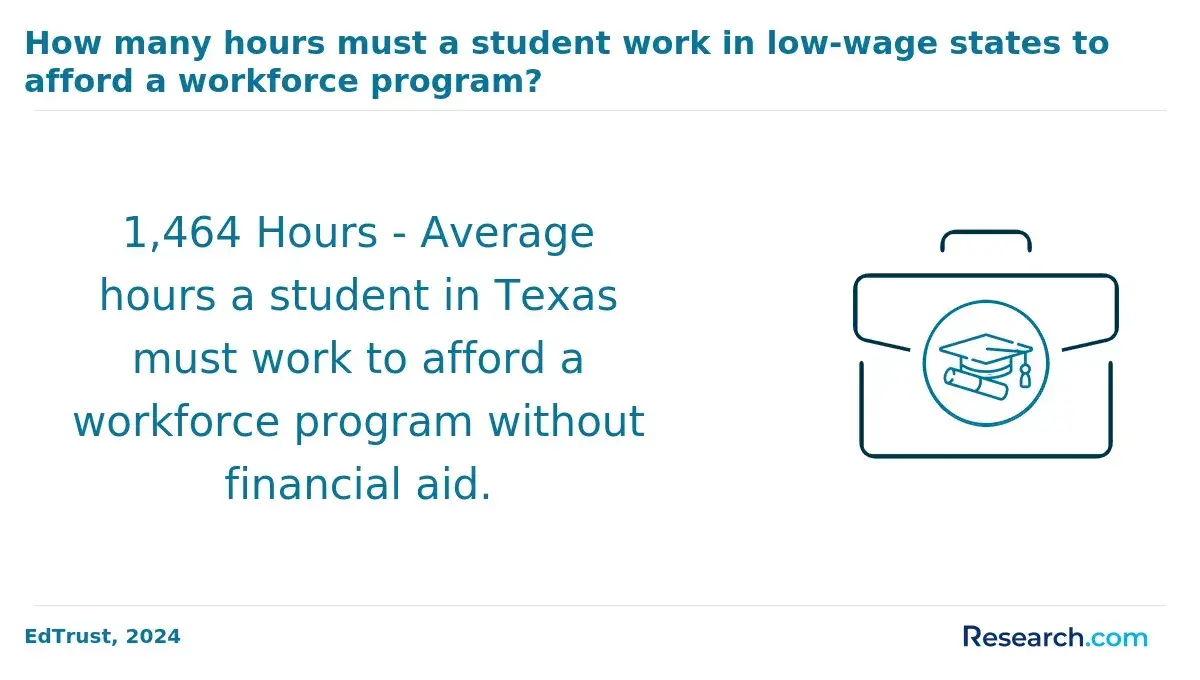
What scholarships and grants can help close funding gaps for online students?
Scholarships and grants are the best first-choice funding sources because they generally do not have to be repaid. For online students, the key is to look beyond freshman merit awards and search for funds tied to adult learners, transfer students, military affiliation, field of study, local residency, employer partnerships, and professional associations.
Start with funding sources that are most likely to recognize your enrollment status. Some awards require full-time attendance or campus participation, while others accept part-time and fully online students.
- Institutional scholarships from your online college, including transfer, adult learner, need-based, major-specific, and completion grants.
- State grants that allow online study, especially when the school is located in your state or participates in approved distance education agreements.
- Federal Pell Grants and Supplemental Educational Opportunity Grants, if you qualify and the institution participates in federal student aid programs.
- Professional association scholarships in fields such as nursing, accounting, cybersecurity, education, social work, business, and information technology.
- Local awards from community foundations, credit unions, civic groups, religious organizations, and workforce development boards.
- Employer, union, military, veteran, spouse, and dependent education benefits.
Shorter course formats may also help if they let you complete credits in smaller, more affordable blocks. Before enrolling in 5 week college courses online, confirm that the courses are part of an accredited program, are eligible for your aid, and will transfer or count toward your degree plan.
The biggest scholarship mistake is waiting until after the tuition bill arrives. Build a calendar with monthly deadlines, renewal requirements, essay prompts, and documentation needs. Small awards can still matter because a $500 book scholarship or technology grant can reduce the amount you borrow for a term.
When should you consider federal and private student loans to cover online college costs?
Student loans can make sense when they prevent a stop-out, fund a credential with clear labor-market value, or bridge a temporary gap that grants and payment plans cannot cover. They are riskier when used to attend an expensive program with weak completion rates, unclear accreditation, or no connection to your career goal.
Federal loans should usually be reviewed before private loans because they have fixed interest rates, income-driven repayment options, deferment protections, and potential forgiveness pathways for eligible borrowers. For 2024-25, the fixed interest rate for Direct Subsidized and Unsubsidized undergraduate loans is 6.53%, which means even modest balances can grow if you borrow term after term without a repayment plan.
This table compares major borrowing options at a high level so you can understand the trade-offs before choosing a funding source.
| Loan option | Typical borrower | Main advantage | Main risk |
| Direct Subsidized Loan | Undergraduate student with financial need | Interest subsidy during eligible in-school periods | Annual and lifetime borrowing limits may not cover the full gap |
| Direct Unsubsidized Loan | Undergraduate or graduate student | Broad availability through FAFSA-eligible schools | Interest accrues from disbursement |
| Parent PLUS Loan | Parent of a dependent undergraduate student | Can cover larger remaining costs after other aid | Parent is legally responsible for repayment |
| Graduate PLUS Loan | Graduate or professional student | Can help cover costs beyond unsubsidized loan limits | Higher rate and origination cost than undergraduate Direct loans |
| Private student loan | Student or co-signer with credit approval | May fill gaps when federal options are exhausted | Fewer federal protections and variable terms by lender |
Before borrowing, estimate your total debt at graduation, not just the amount needed for the next semester. If you are unsure, borrow for one term only, reassess your academic progress, and compare whether a lower-cost program would reduce the total amount needed to finish.
How do tuition payment plans, employer tuition assistance, and part-time work reduce costs?
Tuition payment plans, employer tuition assistance, and part-time work can reduce or delay borrowing, but they work best for students with predictable income and realistic schedules. These options are especially useful when your aid gap is manageable over several months rather than due all at once.
A payment plan spreads tuition across the term, usually through the school or a third-party servicer. It may charge an enrollment fee, but that fee can be far lower than the long-term interest cost of borrowing. Employer tuition assistance can be even stronger if your company pays upfront or reimburses you after passing a course.
Compare these non-loan options based on timing, restrictions, and workload. The right choice depends on when the money arrives and whether it affects your academic performance.
- Use a tuition payment plan if you can cover monthly installments without relying on credit cards or missing essential living expenses.
- Use employer assistance if the degree supports your current or future role and you understand grade, tenure, repayment, and approved-school requirements.
- Use part-time work if your course load leaves enough weekly study time and the job does not delay completion so much that it raises total costs.
- Use a combination of smaller tools, such as a payment plan plus a textbook grant plus reduced course load, when no single option covers the full gap.
Students who need maximum schedule control should compare best online self-paced colleges carefully. Self-paced formats can help working adults move faster through familiar material, but they require strong time management and may have different aid disbursement rules.
A red flag is using credit cards for tuition because the payment plan feels inconvenient. Credit card interest is often much higher than federal student loan interest, and balances can become unmanageable if a reimbursement, scholarship, or paycheck is delayed.
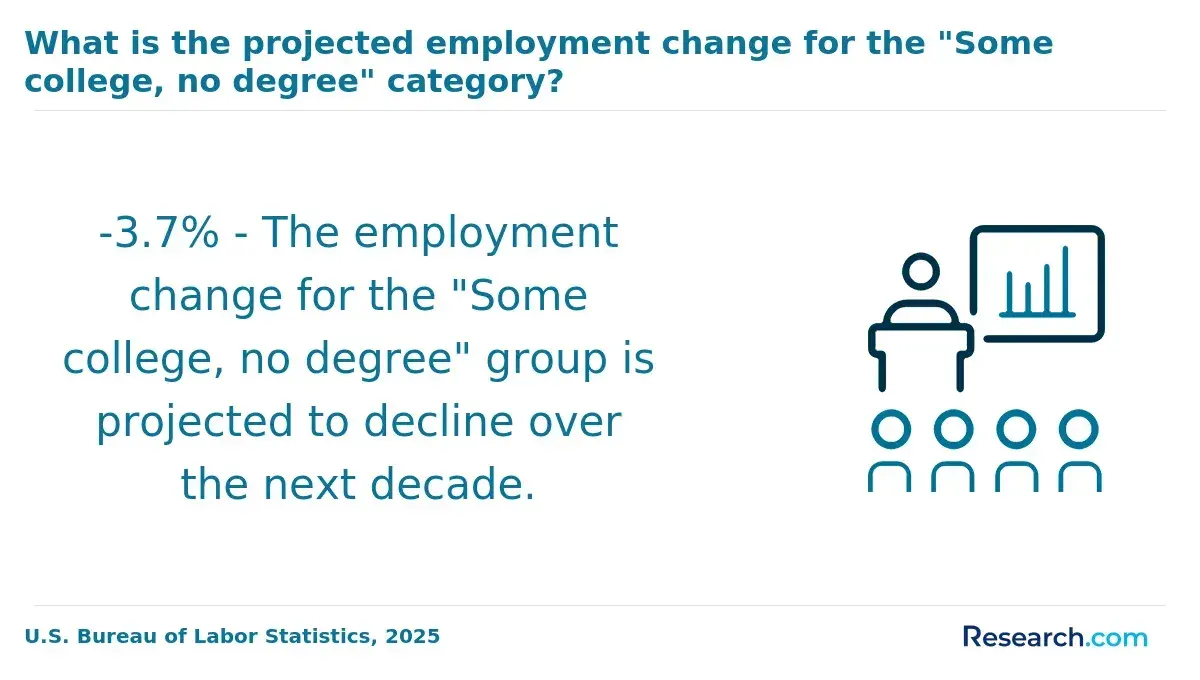
How can you reassess your online vs. campus options when financial aid isn't enough?
If your online financial aid is not enough, do not assume campus study is automatically more expensive or that online study is automatically cheaper. Online programs may reduce housing, commuting, and relocation costs, but they can still include technology fees, proctoring fees, out-of-state tuition, and limited institutional scholarships.
The better comparison is total net cost to completion. For some students, a local public campus with strong state aid may be less expensive than a private online program. For others, online study is financially stronger because it allows full-time employment, avoids relocation, and makes childcare schedules easier to manage.
This table shows how online and campus options often differ financially. Use it to identify which cost category matters most in your situation.
| Factor | Online program | Campus program | Why it matters |
| Housing and commuting | Often lower if you remain at home | Can be higher if relocation or daily travel is needed | Living costs can exceed the tuition gap for some students |
| Work schedule | May support continued employment | May require daytime availability | Lost income is part of the real cost of attendance |
| Fees | May include technology, online course, or proctoring fees | May include campus, lab, activity, or facility fees | Fee differences can change the final bill |
| Support services | Varies by school and format | May provide in-person tutoring, labs, or advising | Support affects completion, not just convenience |
| Program availability | Strong for many business, IT, healthcare administration, and general education programs | Often necessary for hands-on labs, clinicals, studios, or licensure placements | Some career goals require in-person components |
When comparing return on investment, look at career alignment rather than format alone. Researching online degrees that pay well can help you identify fields where a credential may connect more directly to available jobs, but salary outcomes still vary by experience, location, employer, and industry.
What role do accreditation and FAFSA eligibility play in maximizing online financial aid?
Accreditation and FAFSA eligibility are two of the most important filters when financial aid is not enough. Accreditation means an external accrediting agency has reviewed the institution or program against recognized standards. FAFSA eligibility means the school participates in federal student aid programs, which can include Pell Grants, federal loans, and other federal aid for eligible students.
For most degree-seeking students, institutional accreditation from an agency recognized by the U.S. Department of Education is essential. Programmatic accreditation may also matter in fields such as nursing, education, social work, counseling, engineering, and allied health, especially when licensure or certification is involved.
Check these items before you enroll or borrow. They can affect your aid, transfer credits, licensure eligibility, and employer recognition.
- Confirm that the institution is accredited by a recognized accreditor and that the accreditation status is current.
- Verify that the school participates in federal student aid if you plan to use FAFSA-based grants or loans.
- Ask whether the specific online program has any required programmatic accreditation for your intended career or license.
- Check whether online students have the same scholarship access, advising, library services, tutoring, and career support as campus students.
- Ask whether credits will transfer to public universities or graduate programs if you later change schools.
The most expensive mistake is enrolling in a low-cost program that is not recognized for your goal. A cheaper program can become more costly if credits do not transfer, employers question the credential, or a licensing board does not accept the coursework.
How can you compare total cost of attendance and net price across online programs?
Financial aid letters can be confusing because they often mix grants, loans, work-study, estimated costs, and optional borrowing in one document. To make a fair comparison, calculate the net price and the total cost to finish the credential.
Net price is the cost of attendance minus grants and scholarships. It is not the same as your bill, because cost of attendance may include estimated living expenses, transportation, books, and personal costs. The total cost to completion is broader: it includes how many credits you still need, whether your transfer credits apply, and how long you will be enrolled.
The table below summarizes cost categories that online students should compare across schools. It is designed to help you see hidden differences that may not appear in tuition-only comparisons.
| Cost category | What to compare | Why it can change your decision |
| Tuition rate | Per-credit, per-term, or flat-rate pricing | A low per-credit rate may not be cheapest if many credits are required |
| Mandatory fees | Technology, online learning, graduation, proctoring, and student service fees | Fees can make two similar tuition rates very different |
| Transfer credit acceptance | Number of credits accepted and how they apply to the major | Elective-only transfer credit may not shorten the degree |
| Books and materials | Open educational resources, digital access codes, lab kits, and subscriptions | Course materials can create recurring term-by-term costs |
| Time to completion | Remaining credits, course availability, and required sequence | Extra terms add tuition and may delay earnings gains |
| Residency or state pricing | In-state, out-of-state, online, and military rates | Public universities may price online programs differently by residency |
To compare programs accurately, ask each school for a degree audit, not just a brochure estimate. A degree audit shows which credits you still need, which requirements are satisfied, and whether you can graduate on the timeline advertised.
A common red flag is a school that highlights a low tuition rate but will not provide a clear total program estimate. If the program cannot explain fees, transfer rules, course availability, and aid renewal requirements, you do not yet have enough information to commit.
When does it make sense to switch programs, reduce course load, or delay enrollment?
Switching programs, reducing your course load, or delaying enrollment can be the smartest choice when the funding gap is too large or the program no longer matches your goal. These options may feel like setbacks, but they can prevent unnecessary debt and improve your chance of finishing.
Reducing your course load makes sense if you need to work more hours, manage caregiving, or avoid borrowing for living expenses. However, part-time enrollment can affect aid eligibility, time to graduation, and scholarship renewal, so ask the aid office how the change affects your package before dropping classes.
Consider changing your plan when one of these warning signs appears. These are not automatic reasons to quit, but they should trigger a serious reassessment.
- Your remaining balance requires private loans or credit cards every term with no realistic repayment plan.
- Your credits are not applying to the major, which increases the number of terms needed to graduate.
- The program is not required for your target role, and a certificate, associate degree, apprenticeship, or lower-cost bachelor's pathway would be sufficient.
- Your academic schedule is causing missed work, failed courses, or repeated withdrawals that add cost without progress.
- The school cannot document accreditation, licensure alignment, placement support, or transparent costs.
If speed is part of your budget strategy, compare accelerated degree programs carefully. Faster programs can reduce time away from higher earnings, but they may require heavier weekly workloads and may not be cheaper if tuition is charged at a premium rate.
Delaying enrollment can be reasonable if you need time to improve your FAFSA information, save money, complete cheaper general education credits, build employer tuition eligibility, or clarify your career target. The goal is not to postpone indefinitely; it is to re-enter with a funding plan that lowers your risk of stopping out.
How do funding choices for online college affect long-term debt, salary, and career outlook?
Your funding choices affect more than the next tuition bill. They influence monthly loan payments, credit options, job flexibility, and how quickly the degree pays off. A financially sound online college plan connects the amount you borrow to the credential's realistic career value.
Use salary data carefully. The U.S. Bureau of Labor Statistics reported that the median annual wage for workers in bachelor's-level occupations was higher than the median across all occupations in 2024, but that does not mean every bachelor's degree produces the same return. Field, location, experience, licensure, internships, and employer demand all shape outcomes.
Before using loans to close a gap, compare the debt against your likely career path. For example, borrowing may be easier to justify for a program tied to a licensed healthcare role, accounting pathway, teaching credential, data role, or technical field with clear hiring demand. It is harder to justify when the degree is expensive, broad, and not connected to a specific advancement plan.
Ask yourself these decision questions before finalizing your funding plan. They help connect short-term affordability with long-term value.
- What is the total amount I expect to borrow by graduation, including interest that may accrue while I am in school?
- Does this program lead to a role, promotion, license, or graduate school pathway that I can clearly identify?
- Would a lower-cost accredited school, transfer pathway, employer-funded option, or certificate help me reach the same goal?
- Can I maintain enough work, study, and personal time to complete the program without repeated withdrawals?
- If my income after graduation is lower than expected, would the loan payment still be manageable?
Current hiring trends also matter. Employers in many fields increasingly value job-ready skills, portfolios, certifications, internships, and applied projects alongside degrees. When choosing how much to borrow, favor programs that provide practical experience, career services for online learners, and clear evidence that coursework aligns with your target job market.
Other Things You Should Know About
Yes. You can contact the financial aid office and ask about an appeal, professional judgment review, emergency grant, scholarship reconsideration, or cost-of-attendance adjustment. Approval is not guaranteed, and you will usually need documentation.
A payment plan may be better for a small gap you can cover during the term. Federal loans may be more practical for a larger gap, but you should borrow only what you need and compare the long-term repayment cost.
Online students can qualify for FAFSA-based aid if they meet eligibility rules and attend a school that participates in federal student aid programs. The program must also meet enrollment and aid requirements set by the institution and federal rules.
Transferring can make sense if another accredited program accepts more of your credits, charges less, or offers stronger aid. Before switching, request a transfer evaluation and compare total cost to completion, not just tuition per credit.
References
- Tuition Reimbursement: How Do Employers Benefit from It? | KBI Benefits https://www.kbibenefits.com/tuition-reimbursement-benefits
- The Top 4 Best Ways to Pay for College – How to Fill the Funding Gap https://aacreditunion.studentchoice.org/the-top-4-best-ways-to-pay-for-college--how-to-fill-the-funding-gap/
- Does Going to College Make Financial Sense Anymore? https://www.wealthenhancement.com/blog/is-college-worth-it-financially
- Four Ways Scholarships and Financial Aid Can Make a Bigger Impact - Scholarship America https://scholarshipamerica.org/blog/four-ways-scholarships-and-financial-aid-can-make-a-bigger-impact/
- Does Debt Affect Career Choice? | HESA https://higheredstrategy.com/does-debt-affect-career-choice/
- When "Yes" Costs Too Much: Smart Strategies for Paying for College | ScholarshipOwl https://scholarshipowl.com/blog/paying-for-college/when-yes-costs-too-much-smart-strategies-for-paying-for-college/
- Estimate your college cost | USAGov https://www.usa.gov/estimate-college-cost
- Financial aid not enough? 6 Ways to close the college funding gap https://www.citizensbank.com/learning/what-to-do-not-enough-financial-aid.aspx
- 8-Step Guide to Paying for College When Your Financial Aid Isn’t Enough https://talk.collegeconfidential.com/t/8-step-guide-to-paying-for-college-when-your-financial-aid-isn-t-enough/3704372
- How to Get Your Employer to Pay for College With Tuition Assistance Programs https://www.umassglobal.edu/blog-news/get-your-employer-pay-college-tuition-assistance-programs