2027 How to Tell if an Online College Is Accredited

Co-Founder and Chief Data Scientist
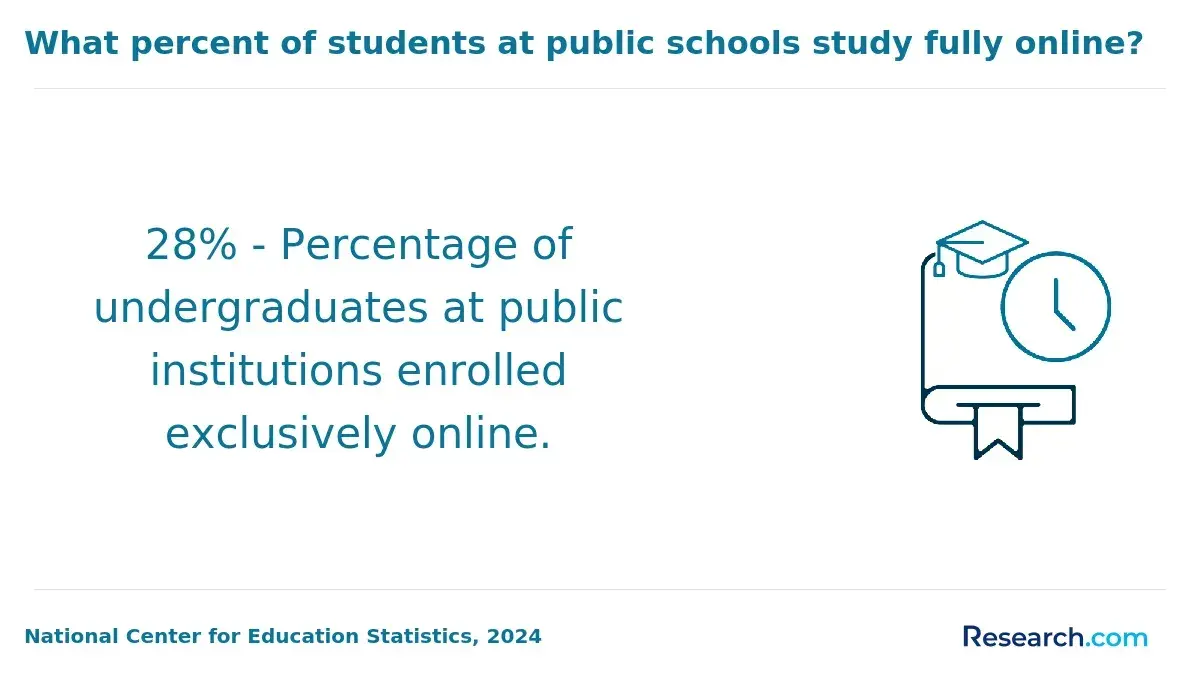
Choosing an online college can affect your tuition bill, transfer options, job prospects, and eligibility for federal aid. More than half of U. S. undergraduates took at least one distance education course in fall 2022, according to NCES reporting published in 2024, so accreditation checks now matter for a large share of students. This guide is for first-time college students, transfer students, working adults, and graduate applicants. You will learn how accreditation works, where to verify it, which red flags to avoid, and what to ask before enrolling.
Key Things You Should Know
- To verify an online college, check the school and accrediting agency in the U.S. Department of Education's Database of Accredited Postsecondary Institutions and Programs, then confirm the same status on the school's official accreditation page.
- Accreditation matters because federal student aid generally requires attendance at an institution accredited by a recognized agency; for 2024-25, the maximum Federal Pell Grant is $7,395.
- Do not rely on marketing language alone: regional institutional accreditation, national institutional accreditation, and programmatic accreditation serve different purposes for transfer, graduate admission, licensure, and employer screening.
How can I quickly verify whether an online college is properly accredited?
The fastest way to check an online college is to verify three separate facts: whether the school is accredited, whether the accreditor is recognized, and whether the status is current. A school can say it is "approved," "licensed," or "authorized" without holding the kind of accreditation that supports federal aid, transfer credit, or professional recognition.
Use this sequence before submitting an application fee, signing an enrollment agreement, or sharing financial aid information.
- Search the school's exact legal name in the U.S. Department of Education's Database of Accredited Postsecondary Institutions and Programs, often called DAPIP.
- Confirm the accrediting agency listed for the school and note whether the accreditation is institutional or programmatic.
- Check the accreditor's own public directory to confirm the school's current status, branch campuses, online delivery approvals, and any warnings, probation, show-cause actions, or teach-out notices.
- Review the school's official accreditation page and make sure the agency name, institutional name, campus locations, and degree levels match what appears in federal or accreditor records.
- If your program leads to licensure, check the state licensing board or professional board separately because institutional accreditation alone may not satisfy licensing requirements.
If any of these sources conflict, pause. Ask the college to explain the discrepancy in writing, then verify the answer with the accreditor or state agency rather than relying only on an admissions representative.
Why does accreditation matter for online degrees, careers, and financial aid?
Accreditation is a quality review process conducted by an outside agency. For online colleges, it helps verify that the institution has acceptable academic standards, qualified faculty, student services, financial stability, and processes for continuous improvement. It does not make every program equally strong, but it is often the baseline requirement for federal aid, transfer evaluation, employer recognition, graduate admission, and licensure review.
Financially, accreditation can be the difference between using federal aid and paying entirely out of pocket. For 2024-25, the maximum Federal Pell Grant is $7,395, which makes recognized accreditation especially important for lower-income students who depend on grants rather than private loans.
Accreditation also affects long-term academic mobility. If you plan to continue from a bachelor's degree into master's or PhD programs, graduate schools commonly review whether your previous institution was appropriately accredited and whether your coursework fits their admissions standards.
The table below summarizes how accreditation commonly affects major decisions. Policies vary by school, employer, and licensing board, so use this as a decision map rather than a universal rule.
| Decision area | Why accreditation matters | What to verify |
| Federal financial aid | Students generally must attend a school accredited by a recognized agency to use federal grants and loans. | Institutional accreditation and Title IV participation. |
| Transfer credits | Receiving colleges often evaluate whether credits came from a recognized institution and comparable course level. | Transfer policy, course equivalency, and minimum grade rules. |
| Graduate admission | Many graduate programs require prior degrees from accredited institutions. | Institutional accreditation and prerequisite coursework. |
| Licensure | Some fields require programmatic accreditation or board-approved coursework. | State board rules for your intended profession. |
| Employment screening | Employers may reject degrees from diploma mills or unrecognized institutions. | Accreditor recognition and degree relevance to the role. |
What are the main types of accreditation for online colleges in the U.S.?
The two broad categories are institutional accreditation and programmatic accreditation. Institutional accreditation reviews the college or university as a whole, while programmatic accreditation reviews a specific field such as nursing, business, education, social work, counseling, engineering, or public health.
Understanding the differences helps you avoid a common mistake: assuming that one accreditation label automatically covers every degree, every career path, and every licensing requirement.
| Accreditation type | What it reviews | Why it matters for online students |
| Regional institutional accreditation | The entire college or university, historically through regional accreditors. | Often widely accepted for transfer, graduate admission, and employer review. |
| National institutional accreditation | The entire institution, often including career, technical, religious, or specialized schools. | Can be legitimate, but transfer acceptance may vary by receiving institution. |
| Programmatic accreditation | A specific academic program or professional field. | May be essential for licensure, certification, clinical placement, or professional credibility. |
| State authorization | Permission to operate or enroll students in a state. | Important for online enrollment across state lines, but it is not the same as accreditation. |
Online delivery does not create a separate accreditation category by itself. A properly accredited university may offer campus, hybrid, online, accelerated, or competency-based master's degrees, but the delivery format should still be covered by the institution's approvals and any applicable programmatic standards.
How do I confirm that an accrediting agency itself is legitimate and recognized?
A legitimate accreditor should be recognized by the U.S. Department of Education, the Council for Higher Education Accreditation, or both, depending on the context. Recognition means the accreditor has been reviewed for its own standards and procedures. A fake accreditor may have an official-looking website, impressive seals, or global-sounding language but no recognized authority.
Before trusting an accreditation claim, check the accreditor using the following evidence-based steps.
- Look up the accrediting agency by its exact name in the U.S. Department of Education's recognized accreditor lists or DAPIP records.
- Compare the agency's name carefully because fake accreditors sometimes use names similar to legitimate organizations.
- Check whether the accreditor's scope includes the degree level, institution type, and program type you are considering.
- Review the accreditor's directory for the school's current status rather than relying only on a badge on the college website.
- Search for public sanctions, probation, show-cause orders, or loss-of-accreditation notices that may affect the school's standing.
Recognition has limits. It confirms that an accreditor is legitimate, but it does not guarantee that every program is the best fit, the most affordable, or accepted by every employer or licensing board.
What red flags suggest an online college or its accreditation may be fake?
Fake or low-quality institutions often make enrollment feel urgent, simple, and risk-free. Legitimate colleges can be flexible, but they should still have transparent admissions standards, faculty information, curriculum requirements, academic policies, student support services, and verifiable accreditation.
Watch for warning signs that point to a diploma mill, misleading accreditation, or a program that may not serve your goals.
- The school claims accreditation from an agency that does not appear in recognized accreditor directories.
- The website emphasizes "life experience degrees" with little or no coursework, assessment, faculty review, or documented learning outcomes.
- Admissions pressure is unusually aggressive, especially if the representative discourages you from contacting accreditors, state agencies, or other colleges.
- Tuition is presented as one flat fee for an entire degree with no clear explanation of credits, courses, refund rules, or academic calendar.
- The institution has no physical address, no faculty directory, vague leadership information, or unverifiable claims about employer acceptance.
- The school promises guaranteed employment, guaranteed licensure, automatic credit transfer, or guaranteed admission to graduate school.
- The accreditor's website lists very few schools, uses copied language, or appears to exist mainly to validate one institution.
A practical rule is to slow down whenever a school avoids specifics. Real colleges can explain who accredits them, what programs are covered, what students must complete, and how complaints or refunds are handled.
How does accreditation affect transfer credits, graduate school admission, and licensure?
Accreditation strongly influences whether your degree travels well, but it is not the only factor. Receiving schools, graduate departments, employers, and licensing boards make their own evaluations. That means an accredited online degree can still face limits if the course content, grades, clinical hours, or programmatic approvals do not match the next step.
The table below shows the most common downstream effects. It can help you decide when a general online degree is enough and when you need a more tightly regulated program.
| Goal | Accreditation factor | Common limitation |
| Transfer to another college | Institutional accreditation helps receiving schools evaluate academic legitimacy. | Credits may still be denied if courses do not match degree requirements or minimum grades. |
| Enter graduate school | Graduate programs often expect a degree from an accredited institution. | Competitive programs may also require prerequisites, GPA thresholds, exams, portfolios, or experience. |
| Become licensed | Programmatic accreditation or state board approval may be required in fields such as nursing, counseling, education, and social work. | Rules vary by state, and online programs may not meet every state's clinical or placement requirements. |
| Apply for professional certification | Some certifying bodies review the school, program, curriculum, and supervised experience. | Certification eligibility may depend on course topics, practicum hours, or post-degree experience. |
| Use employer tuition benefits | Employers may require recognized accreditation for reimbursement. | Some employers limit benefits to approved schools, degree levels, or job-related programs. |
If your goal involves licensure, contact the licensing board in the state where you plan to work before enrolling. Do not assume that a college's national advertising means the program satisfies every state's professional requirements.
What steps should I take to compare accreditation quality across online and campus programs?
Once you confirm that a school is accredited, the next question is quality and fit. Accreditation is a floor, not a ranking. Two accredited programs can differ significantly in cost, faculty access, student support, transfer policy, technology, clinical placements, and career alignment.
Use the following comparison process after you verify basic accreditation.
- Compare whether the online and campus versions lead to the same degree title, transcript notation, faculty oversight, and academic requirements.
- Review programmatic accreditation if your field has professional standards, especially for healthcare, counseling, teaching, engineering, business, and public service roles.
- Check student outcomes such as retention, graduation, licensure pass rates, and job placement disclosures when the school publishes them.
- Evaluate online student support, including tutoring, library access, career services, disability services, advising, and technical help.
- Compare total cost rather than tuition alone, including fees, books, exam proctoring, travel for residencies, clinical placement costs, and technology requirements.
- Ask how transfer credits, prior learning, military training, or professional certifications are evaluated before you enroll.
Students who need maximum flexibility should still avoid choosing only by convenience. Even an easiest online college option should be checked for accreditation, learning quality, transfer value, and alignment with the career or graduate program you want.
How can I use federal and state databases to research a school's accreditation status?
Federal and state databases help you separate marketing claims from official records. The most useful federal source is DAPIP, which lists accredited postsecondary institutions and programs recognized by the U.S. Department of Education. For consumer context, College Scorecard can also help you review federal aid participation, completion data, typical debt, and fields of study.
Use databases in a layered way because no single source answers every question. Federal records can confirm accreditation, while state agencies can confirm authorization to operate or enroll residents.
- Start with DAPIP and search the school's legal name, not just the brand name used in advertisements.
- Open the school record and review accreditor name, accreditation type, action dates, and institutional locations.
- Check College Scorecard to confirm the school participates in federal aid programs and to compare cost and outcome indicators.
- Visit your state higher education agency website to confirm whether the school is authorized to enroll online students in your state.
- If your program requires field placements, contact the school and state board to confirm whether placements can be completed where you live.
- Save screenshots or PDFs of accreditation and authorization records before enrolling, especially if the school is undergoing review or teach-out activity.
Database timing can matter. Accreditation status may change after a review, merger, closure, or sanction, so verify shortly before enrollment rather than relying on a search you completed months earlier.
How does accreditation influence tuition costs, financial aid options, and student protections?
Accreditation does not automatically make a college affordable, but it can determine whether you can use federal grants, federal loans, military education benefits, employer tuition assistance, or some scholarships. It also connects the school to oversight systems that can include complaint procedures, teach-out planning, and public disclosure requirements.
Cost comparison is especially important because accredited schools vary widely. College Board's 2024-25 data shows average published tuition and fees of $11,610 for in-state students at public four-year colleges and $43,350 at private nonprofit four-year colleges. Those figures are sticker prices, not your final net cost, but they show why students should compare aid packages and total expenses rather than assuming online automatically means cheap.
The table below summarizes cost and protection factors that accreditation can influence. Use it to understand what to compare before deciding whether a program is worth the investment.
| Factor | How accreditation affects it | What it means for students |
| Federal grants and loans | Recognized institutional accreditation is generally required for Title IV aid eligibility. | Students may have access to grants and lower-interest federal loans instead of relying only on private financing. |
| Employer tuition assistance | Many employers require recognized accreditation for reimbursement. | A nonrecognized school may make reimbursement unavailable even if the program is related to your job. |
| Scholarships | Some scholarship providers restrict awards to accredited institutions. | Accreditation can expand funding options, but each scholarship has its own rules. |
| Teach-out protections | Accredited institutions may be required to plan student completion options if they close or lose approval. | Students may have clearer pathways if a school shuts down, though disruption is still possible. |
| Complaint processes | Accreditors and state agencies may accept formal complaints after school processes are exhausted. | Students have more than one channel for unresolved academic or consumer issues. |
For graduate students comparing price-sensitive options, lists of the most affordable masters degrees online can be useful starting points, but accreditation, total cost, student support, and career fit should carry equal weight.
What questions should I ask admissions to confirm current accreditation and good standing?
Admissions staff should be able to answer accreditation questions clearly and provide written documentation. If answers are vague, inconsistent, or overly sales-focused, treat that as a reason to verify independently before enrolling.
Ask these questions by email so you have a written record of the school's responses.
- What is the school's current institutional accreditor, and is the accreditor recognized by the U.S. Department of Education or CHEA?
- Is my specific online program covered by institutional accreditation, programmatic accreditation, state approval, or a separate professional approval process?
- Has the school or program recently been placed on warning, probation, show-cause status, heightened cash monitoring, or teach-out review?
- Will my transcript and diploma identify the same institution as the accredited entity listed in federal and accreditor databases?
- Does this program meet licensure, certification, or clinical placement requirements in the state where I plan to work?
- What transfer credit policies apply if I later move to another college, and can you provide written course equivalency information?
- What refund, withdrawal, and complaint procedures apply if I enroll and then determine the program is not a fit?
Students with nontraditional academic records should ask the same accreditation questions before focusing on admissions flexibility. Even when researching online schools that accept low GPA, the priority should be a legitimate institution that supports your goals and protects your future options.
Other Things You Should Know About
Often, yes. Employers and graduate schools usually care more about whether the institution is legitimate, accredited, and relevant to the role or program than whether courses were online. Some fields may also require programmatic accreditation, clinical experience, licensure eligibility, or specific hands-on training.
No. State authorization means a school has permission to operate or enroll students in a state. Accreditation is a separate quality review by a recognized accrediting agency. A legitimate online program may need both, especially when enrolling students across state lines.
They can, but transfer is not automatic. Receiving colleges decide whether to accept credits based on accreditation, course content, grades, degree requirements, and institutional policy. Ask the college you may transfer to before assuming credits will count.
Contact the accreditor, state higher education agency, and financial aid office immediately. Ask about teach-out agreements, transfer options, refund rules, and how the change affects federal aid, licensure, and your transcript. Keep written records of all communications.
References
- The Higher Education Accreditation Guide for Small and Mid-Sized Schools https://corecampus.com/higher-education-accreditation-guide/
- Are Online Degrees Accredited? How to Identify Quality Distance Learning Programs https://www.umassglobal.edu/blog-news/online-degrees-accredited-identify-quality-distance-learning-programs
- What Is College Accreditation? How to Check If a School Is Legit https://abound.college/finishcollege/advice/accreditation-why-is-it-so-important/
- Real vs Fake Accreditation: How to Check If a College Is Legit? https://www.ieac.org.uk/86-Real-vs-Fake-Accreditation-How-to-Check-If-a-College-Is-Legit-blog.php
- Recognition of Accrediting Organizations | CHEA https://almanac.chea.org/recognition-accrediting-organizations
- Unaccredited Colleges: How To Spot Scams https://www.accreditedschoolsonline.org/resources/how-to-spot-unaccredited-colleges/
- Types of accreditation in higher education | January 2026 https://accreditationxpert.com/types-of-accreditation-higher-education/
- Navigating Your Options: The Importance of Accreditation in Online High Schools - California Online Public Schools https://californiaops.org/navigating-your-options-the-importance-of-accreditation-in-online-high-schools/
- Online College Accreditation https://www.onlineu.com/resources/online-college-accreditation
- Why Accreditation Matters | C-RAC https://www.c-rac.org/why-accreditation-matters