2027 How Flexible Is Online College Really?

Co-Founder and Chief Data Scientist
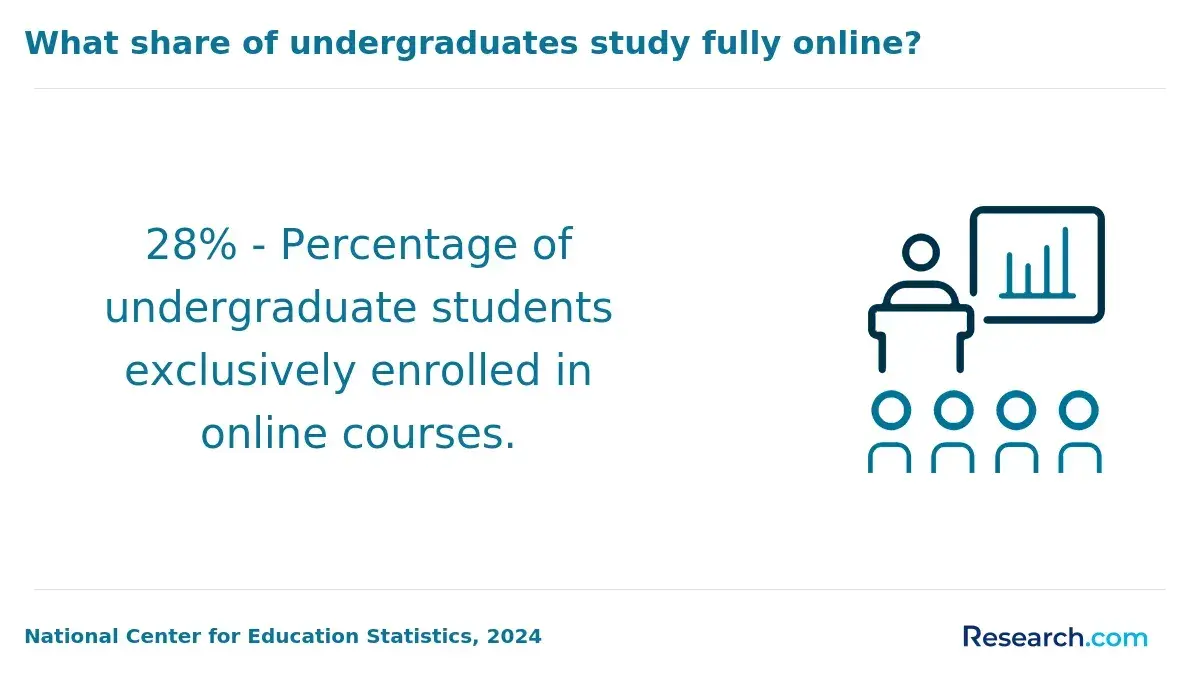
Online college sounds flexible, but the real question is whether it fits your job, family, budget, and career goal. NCES' Condition of Education data published in 2024 shows that 59% of undergraduates took at least one distance education course in fall 2021, making online learning a mainstream choice rather than a niche option. This guide explains where online programs are truly flexible, where they are not, and how to compare formats, costs, accreditation, timelines, and outcomes before enrolling.
Key Things You Should Know
- Online college is usually more flexible than campus study for location and weekly scheduling, but exams, discussion deadlines, clinical hours, labs, internships, and group projects can still require fixed times.
- Self-paced formats offer the most control, while cohort-based and synchronous programs offer more structure; choosing the wrong format is one of the main reasons working adults struggle.
- Cost flexibility varies widely. College Board's 2024 pricing data lists average 2024-25 tuition and fees at $11,610 for in-state public four-year colleges, but online students must still compare fees, books, technology, transfer credits, and aid eligibility.
How flexible are online college schedules compared with traditional campus programs?
Online college is most flexible in where you learn and when you complete weekly work. It is less flexible when a program includes live classes, exams at set times, required fieldwork, lab simulations, or state licensing rules. For many students, the practical question is not "Is online college flexible?" but "Which parts of this program can I control, and which parts are fixed?"
The table below compares common schedule features so you can see where online programs typically differ from campus programs. Use it to identify the format that fits your actual week, not just your ideal week.
| Feature | Online college | Traditional campus program | What it means for flexibility |
| Class location | Usually remote, with some exceptions for labs or residencies | Usually on campus | Online programs reduce commuting time and make relocation unnecessary for many students. |
| Weekly lectures | Often recorded or asynchronous | Usually scheduled in person | Online students may study before work, after children sleep, or on weekends. |
| Deadlines | Usually weekly or module-based | Usually tied to class meetings and term calendars | Online flexibility does not mean no deadlines; it means more control over when work happens before the deadline. |
| Exams | May use online proctoring, time windows, or testing centers | Usually scheduled in class or testing facilities | Some online exams still require a specific time block and a quiet, technology-ready space. |
| Hands-on work | Varies by major; may require local placements | Often completed through campus labs or partner sites | Fields such as nursing, education, counseling, and allied health are less schedule-flexible than fully digital majors. |
For students choosing between online and campus formats, the biggest trade-off is independence versus built-in routine. Online courses can remove the commute, but they also shift more responsibility to the student for time management, technology readiness, and self-advocacy.
Do online degree programs offer self-paced or fixed-term formats, and how do they differ?
Online degree programs generally use one of three pacing models: self-paced, fixed-term asynchronous, or synchronous/cohort-based. Each can be legitimate, but they serve different kinds of students. The best option depends on whether you need maximum schedule control, external structure, or regular interaction with instructors and classmates.
This comparison shows how common online formats differ. Pay close attention to pacing, because it affects stress level, completion speed, financial aid timing, and how realistic the program is with work or family responsibilities.
| Format | How it works | Best fit | Possible drawback |
| Self-paced | Students move through course material within a broad completion window. | Highly motivated students with unpredictable schedules or prior knowledge. | Students who need structure may procrastinate or lose momentum. |
| Fixed-term asynchronous | Courses follow an academic calendar, but students complete most work on their own time each week. | Working adults who need flexibility but also benefit from weekly deadlines. | Major assignments may cluster around busy work or family periods. |
| Synchronous online | Students attend live virtual class sessions at set times. | Students who want real-time interaction and a more traditional classroom feel. | Less flexible for shift workers, parents, caregivers, and students in different time zones. |
| Cohort-based | A group of students moves through the program together. | Students who value peer support, networking, and predictable sequencing. | Course order may be less customizable, and stopping out can delay progress. |
Certificates and short workforce programs can be even more flexible than degrees because they often focus on a narrower skill set. If your goal is fast job preparation rather than a full degree, comparing 6-month certificate programs can help you decide whether a shorter credential is enough for your career target.
One common mistake is assuming "asynchronous" means "complete work whenever you want." In most accredited online courses, asynchronous means you do not have to log in at a set lecture time, but you still need to meet deadlines, participate in discussions, submit assignments, and take exams during assigned windows.
Can you work full-time, parent, or care for family while enrolled in online college?
Yes, many students work full-time, parent, or care for family while enrolled in online college. The more important question is how many credits you can realistically handle. A full-time college load is commonly 12 or more credits per term at the undergraduate level, and that workload can feel like a second part-time job when readings, assignments, projects, and exams are included.
Online college tends to work best for busy adults when the schedule is planned before enrollment rather than after classes begin. The following steps can help you test whether a program is workable with your current responsibilities.
- Ask the school how many hours per week students typically spend per course, including reading, assignments, discussion boards, and exam preparation.
- Map your weekly non-negotiables first, including work shifts, commuting, childcare, caregiving, sleep, medical appointments, and household responsibilities.
- Start with a part-time load if your schedule is unstable, then increase credits only after you know how the platform, instructors, and deadlines work.
- Choose asynchronous courses when your work or caregiving schedule changes often, and choose synchronous courses only if the live meeting times are protected on your calendar.
- Confirm whether exams require proctoring, webcam monitoring, testing centers, or quiet time blocks that may be difficult at home.
Parents and caregivers should also ask about flexibility during emergencies. Some programs have strict late-work rules, while others allow limited extensions or instructor discretion. That policy difference can matter as much as tuition when life gets complicated.
A practical warning: do not build your plan around an unusually perfect week. If the program only works when nobody gets sick, your work schedule never changes, and you have no technology problems, it is probably not flexible enough for your real life.
How does accreditation affect the quality and transferability of online college credits?
Accreditation is one of the most important quality checks for online college. In the United States, institutional accreditation means an entire college or university has been reviewed by an accrediting agency recognized by the U.S. Department of Education or the Council for Higher Education Accreditation. Programmatic accreditation applies to specific fields such as nursing, teacher education, counseling, business, engineering, or social work.
The table below explains why accreditation matters beyond reputation. It affects credit transfer, financial aid, licensure, employer acceptance, and graduate school options.
| Accreditation issue | Why it matters | What to verify before enrolling |
| Institutional accreditation | Often required for federal financial aid and widely recognized credit transfer. | Confirm the school is listed by a recognized accreditor, not just "licensed" or "approved." |
| Programmatic accreditation | May be required or strongly preferred in licensed or regulated fields. | Check whether your specific program, not just the university, holds the relevant accreditation. |
| Transfer credits | Accreditation improves transfer odds but does not guarantee acceptance. | Ask for a written transfer evaluation before committing if you already have credits. |
| Licensure alignment | State boards may require specific coursework, supervised hours, exams, or approved placements. | Verify requirements with the licensing board in the state where you plan to work. |
| Employer recognition | Some employers screen for accredited degrees, especially in education, healthcare, government, and finance. | Review job postings in your field and ask whether the credential meets common employer expectations. |
Accreditation does not automatically make a program affordable, career-aligned, or well supported. It is a baseline quality filter, not the final decision. After confirming accreditation, compare graduation rates, student support, transfer policies, licensure disclosures, career services, and total cost.
Red flags include vague accreditation language, pressure to enroll immediately, refusal to provide written cost information, unclear faculty credentials, and promises of guaranteed employment. A reputable online college should be able to explain accreditation, costs, credit transfer, and licensing limitations clearly.
What admission requirements do online colleges have for associate, bachelor's, and master's degrees?
Online colleges usually have the same core admission standards as campus programs at the same institution, although the process may be designed for adult learners and transfer students. Requirements vary by school, selectivity, major, and degree level. Open-admission community colleges may require placement steps rather than competitive admission, while graduate programs may require prior coursework, professional experience, recommendations, or a minimum GPA.
The table below summarizes common admission requirements by degree level. Use it as a checklist, but always confirm the exact requirements with the school and department.
| Degree level | Common admission requirements | Flexibility considerations |
| Associate degree | High school diploma or equivalent, application, transcripts, placement assessment or advising. | Often the most accessible entry point for students with limited college history or uncertain goals. |
| Bachelor's degree | High school diploma or equivalent, transcripts, GPA review, test scores if required, transfer credit evaluation. | Adult-completion programs may accept substantial transfer credits and prior learning. |
| Master's degree | Bachelor's degree, undergraduate transcripts, statement of purpose, resume, recommendations, GPA minimum, possible prerequisite courses. | Some programs waive standardized tests, but selective or licensure-focused programs may be less flexible. |
| Doctoral degree | Master's or bachelor's degree depending on program, academic writing sample, resume, recommendations, interview, research or professional goals. | Online doctoral programs may still require residencies, dissertation milestones, practicums, or intensive advising schedules. |
Students with older credits, military training, professional certifications, or prior college coursework should ask for a formal credit review early. Transfer-friendly schools can shorten time to completion, but policies differ on maximum transferable credits, minimum grades, course age, and whether credits apply to the major or only to electives.
A useful admissions question is: "What could prevent me from graduating on time?" The answer may reveal prerequisite gaps, limited course availability, internship requirements, or sequencing rules that are not obvious from a program webpage.
How long does it typically take to finish an online degree, and what speeds completion?
Completion time depends on degree level, transfer credits, course load, academic calendar, and whether the program allows accelerated terms. Online learning can speed completion when it removes commuting barriers, offers year-round courses, accepts transfer credits, or uses competency-based progress. It can also slow completion if students take fewer credits to balance work and family.
The table below gives typical timeframes and the factors that most often change them. These are general planning ranges, not promises, because each school controls credit requirements and course sequencing.
| Credential | Common full-time timeline | What can speed completion | What can slow completion |
| Certificate | Several months to one year | Stackable courses, short terms, focused skills, no general education sequence. | Clinical placements, certification exam preparation, limited course starts. |
| Associate degree | About two years | Transfer credits, summer courses, accelerated terms, prior learning credit. | Part-time enrollment, developmental coursework, changing majors. |
| Bachelor's degree | About four years from the start, or less for degree-completion students | Large transfer-credit acceptance, year-round enrollment, competency-based courses. | Major prerequisites, limited upper-division course availability, work schedule conflicts. |
| Master's degree | One to three years | Continuous enrollment, no thesis requirement, employer-supported study time. | Practicums, capstones, research projects, prerequisite courses. |
If you are asking what degree can I get online in 6 months, it is important to separate true degrees from certificates, accelerated terms, and transfer-heavy completion paths. A full associate or bachelor's degree usually requires more than six months unless the student brings significant prior credits or completes an unusually intensive program structure.
Students who want to finish faster should focus on policies, not advertising claims. The most important policies to verify are transfer-credit limits, prior learning assessment, course availability every term, maximum credits per term, tuition model, academic advising access, and whether required courses are offered online every year.
What are the real costs of online college, and how does financial aid work online?
Online college can reduce costs by eliminating commuting, parking, campus housing, and relocation. However, it is not automatically cheaper. Some online programs charge the same tuition as campus programs, while others add technology fees, online course fees, proctoring costs, or higher per-credit rates for out-of-state students.
College Board's 2024-25 pricing data provides a useful baseline for comparing tuition and fees across institution types. These figures are averages, so your actual cost may be higher or lower depending on residency, school type, program, transfer credits, and aid.
- Public two-year in-district tuition and fees: $4,050
- Public four-year in-state tuition and fees: $11,610
- Private nonprofit four-year tuition and fees: $43,350
Those prices do not include all expenses. Online students should budget for books, software, a reliable computer, internet service, exam proctoring, background checks, lab kits, clinical requirements, travel for residencies, and lost work hours during intensive periods.
Financial aid works similarly for eligible online and campus students when the school is properly accredited and participates in federal aid programs. Students typically complete the FAFSA, review grants and scholarships first, compare federal loan options carefully, and ask whether enrollment intensity affects aid. Part-time study can preserve schedule flexibility, but it may also change aid amounts and lengthen the time before graduation.
For budget-focused students comparing full degrees, reviewing options for the cheapest bachelor degree online can be useful, but affordability should be measured by total completion cost rather than tuition alone. A low per-credit price may not save money if few credits transfer, required courses are unavailable, or the program does not match the career goal.
How do online and campus-based programs compare for hands-on training and licensing?
Online and campus programs can both prepare students for hands-on fields, but the format matters more in programs tied to licensure, certification, supervised practice, or lab competency. In many cases, the academic coursework can be online while clinical placements, student teaching, practicums, internships, or labs must be completed in person.
The table below shows how online delivery commonly works in hands-on fields. This can help you identify which programs are truly remote and which are hybrid even if they are marketed as online.
| Field | What may be online | What may require in-person work | Decision point |
| Nursing and allied health | Theory courses, care planning, some simulations, general education. | Clinical rotations, skills labs, background checks, immunizations, local site approval. | Confirm clinical placement support and state board eligibility before enrolling. |
| Teacher education | Education theory, lesson planning, assessment coursework. | Student teaching, classroom observations, state testing. | Verify the program meets licensure requirements in the state where you plan to teach. |
| Counseling and social work | Foundational coursework, ethics, theory, research methods. | Practicum, internship, supervised client hours. | Ask whether the school helps secure placements or expects students to find sites independently. |
| Information technology | Programming, networking theory, cybersecurity concepts, cloud coursework. | Usually fewer in-person requirements, though labs may be virtual or simulation-based. | Check whether the program includes portfolio projects, certification preparation, or employer-relevant tools. |
| Business and accounting | Most coursework can usually be completed online. | Internships may be optional or strongly recommended. | For CPA goals, confirm state-specific accounting credit requirements. |
Licensure is where students need to be especially careful. A program can be accredited and still not meet every state's licensing requirements. Before enrolling in nursing, teaching, counseling, social work, psychology, accounting, or another regulated field, contact the relevant state board and ask whether the program's coursework and supervised hours satisfy requirements.
A common mistake is choosing the most flexible online option without checking placement logistics. If a school cannot place you near your home or requires daytime clinical hours that conflict with your job, the program may not be flexible in practice.
What career paths, salaries, and job outlook can online college graduates expect?
Online college graduates can pursue many of the same career paths as campus graduates when the institution is accredited and the program fits the field. Employers typically care about the relevance of the degree, skills, experience, portfolio, license eligibility, and institution credibility. The transcript may not always indicate online delivery, but students should still be prepared to discuss projects, internships, certifications, and applied skills.
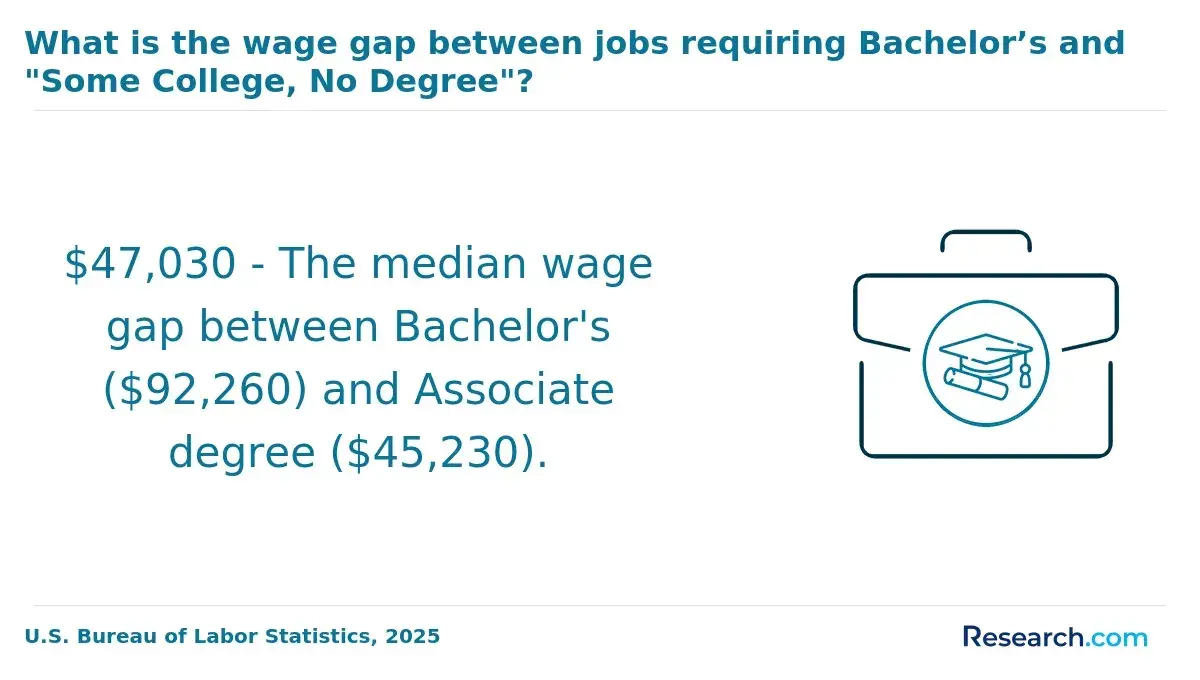
For salary context, the U.S. Bureau of Labor Statistics' Education Pays data published in 2024 shows median weekly earnings of $1,493 for workers with a bachelor's degree and $1,058 for workers with an associate degree. This does not mean a degree guarantees a specific income; it shows that higher education level is associated with higher median earnings across the labor market.
The table below gives examples of career areas that often align well with online programs. Salary figures are national medians from BLS occupational data updated in 2024 and should be used as broad benchmarks, not personal salary predictions.
| Career area | Common online education path | Example role | Median annual pay | Important note |
| Business | Associate or bachelor's in business, management, finance, or marketing. | Management analyst | $99,410 | Experience, industry, and analytical skills strongly affect advancement. |
| Accounting | Bachelor's in accounting or accounting-completion pathway. | Accountant or auditor | $79,880 | CPA eligibility depends on state-specific education and exam rules. |
| Technology | Degree or certificate in computer science, cybersecurity, data, or IT. | Software developer | $132,270 | Portfolios, projects, internships, and current tools can matter as much as coursework. |
| Healthcare administration | Bachelor's or master's in healthcare administration or management. | Medical and health services manager | $110,680 | Clinical background may be preferred for some leadership roles. |
| Education | Teacher preparation, endorsement, or graduate education program. | Kindergarten or elementary school teacher | $63,670 | Licensure requirements vary by state and grade level. |
AI and automation are changing what students should look for in an online program. Strong programs increasingly emphasize applied projects, digital collaboration, data literacy, ethical AI use, cybersecurity awareness, and communication skills. A flexible program that lacks current tools or practical assignments may be convenient but less valuable in a changing job market.
Students who need a faster workforce move may not always need a full degree immediately. Exploring short certificate programs that pay well online can make sense for career changers, entry-level job seekers, or workers who want a stackable credential before committing to a longer degree.
How can prospective students evaluate and choose a reputable, flexible online college?
Choosing a reputable, flexible online college requires more than reading rankings or scanning tuition. The right program should match your schedule, career goal, state requirements, budget, learning style, and likely completion timeline. A program that is excellent for a full-time student with no caregiving responsibilities may be a poor fit for a parent working rotating shifts.
Use the following steps before applying or enrolling. These actions help you move from marketing claims to evidence you can compare.
- Confirm institutional accreditation through a recognized accrediting agency and check whether your field also requires programmatic accreditation.
- Ask for a written total-cost estimate that includes tuition, fees, books, technology, proctoring, labs, placement expenses, and expected time to completion.
- Request a transfer-credit evaluation before enrollment if you have prior college credits, military training, professional certifications, or exam credits.
- Verify course format, including asynchronous work, live sessions, exam windows, group projects, residency requirements, and required login frequency.
- For licensed fields, confirm state eligibility directly with the licensing board where you plan to work.
- Review student support, including advising hours, tutoring, library access, technical support, disability services, career services, and placement help.
- Compare outcomes cautiously, including retention, graduation, job placement disclosures, licensure exam pass rates, and student debt, when available.
The table below highlights common red flags and better alternatives. It is especially useful when two programs appear similar on price or schedule flexibility.
| Red flag | Why it matters | Better alternative |
| The school pressures you to enroll immediately. | High-pressure tactics can prevent careful cost and accreditation review. | Choose a school that gives written information and time to compare options. |
| Accreditation language is vague. | Some schools use terms that sound official but do not indicate recognized accreditation. | Verify institutional and programmatic accreditation independently. |
| The program advertises extreme speed without explaining credit requirements. | Fast completion may depend on transfer credits, heavy course loads, or limited breaks. | Ask for a term-by-term degree plan based on your actual credits. |
| Licensure information is missing. | Students may finish coursework that does not qualify them for the license they need. | Confirm state requirements before enrollment and keep written records. |
| Total cost is unclear. | Fees, repeated courses, and low transfer acceptance can raise the real price. | Compare total program cost, not only per-credit tuition. |
Graduate students should apply the same scrutiny to advanced programs. For example, comparing cheapest PhD programs may help identify lower-cost options, but doctoral students should also evaluate faculty fit, dissertation support, residency requirements, funding, completion rates, and whether the degree supports their academic or professional goal.
The best flexible online college is not simply the one with the fewest live meetings. It is the one that lets you complete a credible credential at a sustainable pace, with support, transparent costs, and a clear connection to your next step.
Other Things You Should Know About
Not necessarily. Online college can be more convenient, but accredited courses usually require the same learning outcomes as campus courses. The main difference is that online students often need stronger time management and self-direction.
Often, the diploma and transcript list the institution and degree rather than the delivery format. Employer acceptance depends more on accreditation, program reputation, skills, experience, and whether the degree fits the role.
They can be, especially when earned from an institutionally accredited school, but transfer is never automatic. The receiving school decides which credits count, whether they apply to the major, and whether older courses are accepted.
Self-paced or competency-based programs are usually the most flexible, especially for students with unpredictable schedules. However, they work best for motivated learners who can stay on track without weekly class meetings.
References
- Flexible online colleges https://www.gatewayunj.org/student-stories/flexible-college-programs-making-it-possible-to-earn-your-degree-on-your-schedule
- How to Decide Between an Online and Onsite Degree https://www.indwes.edu/articles/2022/07/how-to-decide-between-an-online-and-onsite-degree
- Cost of Online Education vs. Traditional Education [2025]: Comparison https://educationdata.org/cost-of-online-education-vs-traditional-education
- Financial Aid For Online Colleges https://www.affordablecollegesonline.org/financial-aid/financial-aid-for-online-colleges/
- Accredited vs. Credit-Recommended vs. Transfer Policy: What It All Means for Your College Credits https://www.straighterline.com/blog/transfer-accredited-vs-credit-recommended-vs-transfer-policy-what-it-all-means-for-your-college-credits
- 10 Jobs With the Best Future Outlook for College Graduates https://www.honorsociety.org/articles/10-jobs-best-future-outlook-college-graduates
- Online College Costs: A Breakdown of Tuition and Fees | OnlineColleges.net https://www.onlinecolleges.net/for-students/online-college-costs/
- Online Vs On Campus Study: Which is Right For You? https://studee.com/guides/online-vs-on-campus-study-which-is-right-for-you
- Are Self Paced Online Degree Programs Worth It? https://expandinghorizonuniversity.com/self-paced-online-degree-programs-worth-it/
- Being a stay at home mom and taking online classes hard? - June 2023 Babies | Forums | What to Expect https://community.whattoexpect.com/forums/june-2023-babies/topic/being-a-stay-at-home-mom-and-taking-online-classes-hard-158869186.html