2027 How to Avoid Low-Quality Online Programs

Co-Founder and Chief Data Scientist
Choosing an online degree now means separating flexible, reputable programs from schools that overpromise, underdeliver, or leave students with unusable credits. NCES reported in 2024 that more than half of U.S. undergraduates took at least one distance education course in fall 2022, making online quality a mainstream concern rather than a niche issue.
This guide is for prospective students, career changers, working adults, and parents comparing online colleges. You will learn how to check accreditation, outcomes, costs, licensure fit, faculty quality, and red flags before you enroll.
Key Things You Should Know
- Start with accreditation: verify institutional accreditation through the U.S. Department of Education or CHEA databases, then check whether your field also requires programmatic accreditation for licensure or employer recognition.
- Use outcomes data, not marketing claims: compare completion, transfer, debt, earnings, and loan repayment indicators because the College Scorecard and IPEDS can reveal problems that polished ads do not.
- Education quality matters as much as tuition: College Board's 2024 pricing data put average published in-state tuition and fees at public four-year colleges at $11,610, so online programs charging far above market should prove stronger support, outcomes, or specialization.
What are the biggest red flags that signal a low-quality online degree program?
A low-quality online degree program is not simply a program that is inexpensive, accelerated, or fully remote. The problem is whether the school offers recognized credentials, credible instruction, transparent costs, reliable student support, and outcomes that match the career paths it advertises.
The biggest red flags usually appear before you apply. Watch for patterns rather than one isolated weakness, because predatory or poorly designed programs often combine aggressive recruiting with vague academic details.
- Accreditation is unclear, missing, or described in confusing language. Phrases such as "fully approved," "internationally recognized," or "licensed to operate" are not substitutes for recognized institutional accreditation.
- The admissions process is unusually rushed. If an advisor pressures you to enroll immediately, discourages comparison shopping, or asks for payment before answering academic questions, slow down.
- The program promises guaranteed jobs, salaries, licensure, or rapid promotion. Reputable schools discuss typical outcomes and limitations; they do not guarantee employment or income.
- Faculty information is missing or unverifiable. A legitimate program should identify instructors, credentials, research or industry experience, and how students interact with them.
- The curriculum looks generic. If course titles are vague and there are no syllabi, learning outcomes, projects, labs, clinical requirements, or capstone details, you may be looking at a weak academic product.
- Transfer credit policies are restrictive or hidden. Low-quality programs may accept many credits in but make it difficult for students to transfer credits out.
- Student services are thin. Online learners still need advising, tutoring, library access, disability accommodations, technical support, and career services.
One practical test is to ask the school to explain exactly how a student moves from enrollment to graduation, including advising touchpoints, major assignments, assessment methods, internship options, and career support. If the answer is mostly sales language, the program may not be built around student success.
This comparison summarizes common warning signs and what a stronger alternative looks like. Use it as a first-pass filter before spending time on applications or financial aid forms.
| Area to Check | Low-Quality Signal | Stronger Signal |
| Accreditation | Vague claims or unrecognized accreditor | Institution appears in recognized accreditation databases |
| Admissions | Pressure to enroll before reviewing costs or curriculum | Clear requirements, deadlines, and time to compare options |
| Curriculum | Few course details and no outcomes | Published courses, learning goals, projects, and assessments |
| Faculty | No instructor names or credentials | Faculty profiles with relevant academic or professional background |
| Career claims | Guaranteed jobs or salary promises | Transparent career pathways with limitations explained |
| Student support | Minimal advising, tutoring, or technical help | Online-specific advising, library, tutoring, and tech support |
How can I verify an online college's accreditation and avoid diploma mills?
Accreditation is the quality-control baseline for online colleges in the United States. Institutional accreditation means an outside recognized accreditor has reviewed the school's operations, academic standards, finances, faculty, and student services; programmatic accreditation applies to specific fields such as nursing, counseling, social work, education, business, engineering, and public health.
Diploma mills are organizations that sell credentials with little or no meaningful academic work. Some mimic real colleges with official-looking websites, seals, and "accreditation" from agencies that are not recognized by U.S. authorities.
Use a step-by-step verification process rather than relying on the school's own wording. These checks help you separate legitimate online programs from institutions that may produce credits or degrees that employers, graduate schools, licensing boards, or transfer institutions reject.
- Search the institution in the U.S. Department of Education's Database of Accredited Postsecondary Institutions and Programs.
- Confirm the accreditor is recognized by the U.S. Department of Education or the Council for Higher Education Accreditation.
- Check the school's name, campus, ownership, and accreditation status carefully because diploma mills sometimes use names similar to legitimate institutions.
- Look for recent accreditation actions, probation, warnings, teach-out plans, or closures that may affect students.
- For licensed fields, verify programmatic accreditation or state approval with the relevant licensing board before applying.
- Ask whether credits are generally transferable and request the policy in writing, but remember that transfer decisions are always made by the receiving institution.
NC-SARA's 2024 annual data continued to show large-scale participation in interstate distance education oversight, which matters because many online students enroll across state lines. However, participation in a state authorization system is not the same as academic accreditation; it helps with regulatory authorization, not necessarily program quality.
If a school cannot explain the difference between state authorization, institutional accreditation, and programmatic accreditation, treat that as a serious warning sign. Legitimate institutions are usually comfortable walking students through all three.
What signs show an online program won't support my career or salary goals?
An online program supports your career goals only if the credential, curriculum, reputation, and student services connect to the role you want. A degree can be accredited and still be a poor fit if it lacks the specialization, practical experience, licensing alignment, or employer recognition needed in your field.
Start by identifying the actual job title you want, not just the major that sounds interesting. Then compare the program against real job postings, licensing rules, graduate admissions expectations, and salary data.
- Job postings require skills the curriculum does not teach. For example, a data analytics program without SQL, Python, statistics, visualization, and portfolio projects may not prepare students for common entry-level analyst requirements.
- The program cannot name typical employers or roles. Schools should be able to describe realistic career paths without implying that every graduate reaches the same outcome.
- Career services are generic. Online students need resume reviews, interview preparation, networking events, internship guidance, and employer connections that work remotely.
- There is no experiential component when the field expects one. Education, nursing, counseling, social work, public health, cybersecurity, and business programs often benefit from fieldwork, labs, practicums, simulations, or applied projects.
- Salary claims are presented without context. Median wages vary by occupation, region, experience, industry, and credential level, so broad earnings claims should be used cautiously.
For salary context, the BLS reported a May 2024 median annual wage of $49,500 for all U.S. occupations. If a program claims unusually high income outcomes, compare those claims with occupation-specific BLS data and ask whether the figure reflects entry-level roles, experienced workers, local labor markets, or a small subset of graduates.
The right online degree should also match how you want to work. If your goal is location-flexible employment, compare programs that build digital collaboration, writing, data, project management, and technical skills; a guide to the best degree for remote work can help you think beyond the major name and focus on remote-friendly skill sets.
A good rule is to reject any program that asks you to make a large financial commitment before it can show how the curriculum maps to actual career requirements. The burden is on the school to demonstrate fit, not on you to hope the degree works out later.
How do I compare online vs campus programs to judge real academic quality?
Online programs are not automatically lower quality than campus programs. Many reputable universities use the same faculty, curriculum, learning outcomes, and accreditation for both formats; quality depends on design, delivery, support, and accountability.
Compare online and campus options by asking what changes when the format changes. The table below summarizes the quality questions that matter most when deciding whether online, campus, or hybrid learning is the better fit.
| Quality Factor | Online Program | Campus Program | What to Compare |
| Instruction | May be asynchronous, synchronous, or mixed | Usually scheduled in-person meetings | Faculty interaction, feedback speed, and class format |
| Hands-on learning | May use simulations, local placements, labs, or residencies | Often uses campus labs, studios, clinics, or field sites | Whether required practice experiences are accessible |
| Student support | Must be available remotely and across time zones | Often easier to access in person | Advising, tutoring, library, disability services, and tech help |
| Networking | May depend on virtual events and cohort design | May offer more informal peer and faculty contact | Employer events, alumni access, group projects, and mentoring |
| Flexibility | Often better for working adults and caregivers | Often better for students who need structure | Schedule, pacing, attendance rules, and workload |
A strong online program is intentionally designed for distance learning, not merely a recorded version of a campus class. Look for clear weekly modules, active discussion, timely instructor feedback, accessible materials, online library access, and meaningful assessments beyond multiple-choice quizzes.
Be careful with the phrase "easy." Some students search for easy degrees to get online, but the smarter question is whether the program is manageable for your schedule while still being academically credible, transferable, and useful for your goals.
Campus may be the better choice if you need intensive labs, studio work, close faculty mentorship, structured daily routines, or local networking. Online may be better if you are working full time, have caregiving responsibilities, live far from campus, or need a program that lets you apply coursework directly to your current job.
Which data and rankings should I use to evaluate an online program's outcomes?
Rankings can be helpful, but they should not be your only decision tool. The strongest evaluation uses a combination of public data, school disclosures, accreditation records, employer relevance, and your own cost-benefit analysis.
Start with objective datasets because they are harder to manipulate than marketing language. The College Scorecard, IPEDS, accreditation databases, state licensing boards, and school-level consumer information pages can help you identify risk before you apply.
Use the following categories to build a practical evidence file for each school. This is especially useful when two programs look similar on tuition or convenience.
- Completion and retention: Low continuation or graduation rates may suggest weak academic support, poor fit, or affordability problems, though open-access institutions may serve higher-risk student populations.
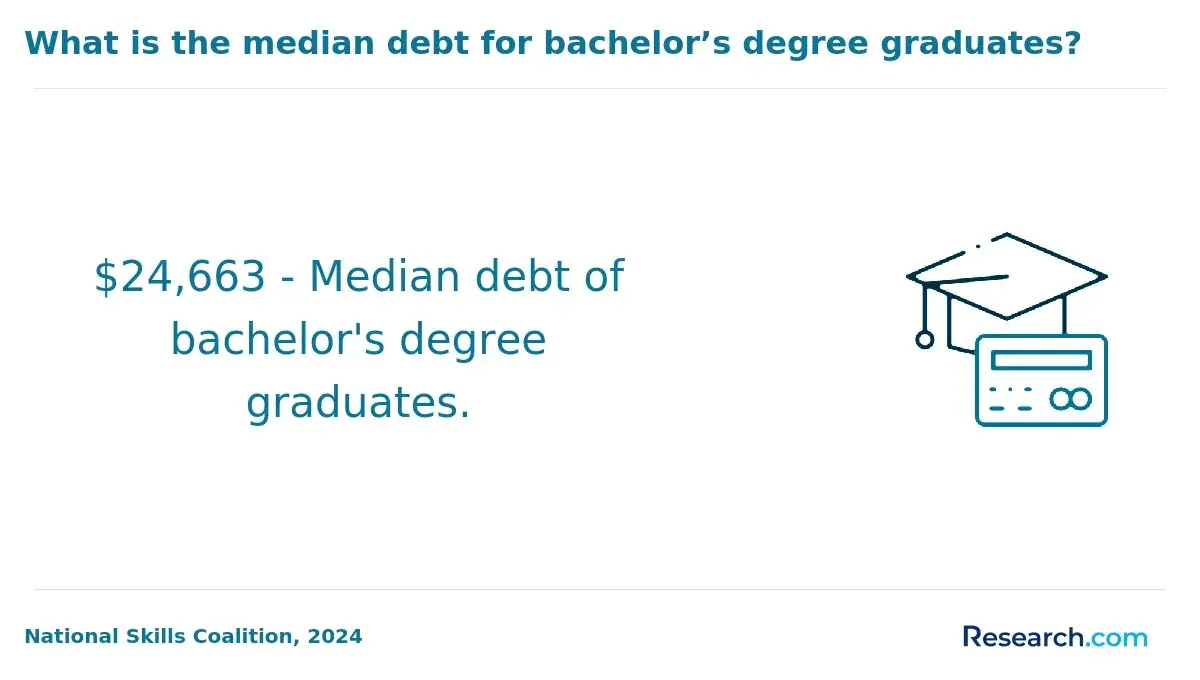
- Net price and debt: Compare what students actually pay after grants and scholarships, not only the advertised tuition rate.
- Loan repayment and default indicators: These can signal whether former students are managing debt, but they should be interpreted alongside program mix and student demographics.
- Earnings after attendance: Use earnings as context, not a guarantee, because outcomes vary by major, region, prior work experience, and economic conditions.
- Program-level accreditation and licensure pass rates: These matter most in regulated fields where graduates must qualify for state exams or credentials.
- Student support and online delivery evidence: Look for online tutoring, advising, accessibility services, career services, and technical support hours.
The U.S. Department of Education's 2024 Financial Value Transparency and Gainful Employment framework increased attention on debt and earnings outcomes for many programs. Even when a program is not covered in the same way as a career-training certificate, the underlying idea is useful: a credential should have a plausible relationship between cost, completion, and labor-market value.
Rankings can add perspective when they explain methodology and use transparent data. They are less useful when they rely mostly on reputation, advertising relationships, or undisclosed scoring. Treat rankings as a starting shortlist, then verify accreditation, program fit, total cost, and outcomes yourself.
How can I assess online program curriculum, faculty expertise, and learning design?
Curriculum quality is the heart of an online program. A polished website cannot compensate for outdated courses, minimal instructor engagement, weak assignments, or a degree plan that does not build skills in a logical sequence.
Ask for enough detail to understand how learning actually happens. A high-quality online program should be able to show what students read, practice, produce, discuss, and receive feedback on across the term. Check the following standards:
- Course sequence: The degree plan should move from foundations to intermediate skills to advanced application, not repeat broad survey courses.
- Learning outcomes: Each course should state what students will be able to do, not just what topics they will "cover."
- Assessment methods: Look for projects, papers, presentations, labs, exams, portfolios, case studies, simulations, or supervised practice appropriate to the field.
- Faculty expertise: Instructors should have relevant degrees, scholarship, licenses, certifications, or industry experience for the courses they teach.
- Interaction design: Strong online courses include discussion, feedback, group work, office hours, or live sessions when appropriate.
- Accessibility and technology: Materials should work for students using assistive technology and should not require expensive tools without advance notice.
Accelerated timelines deserve extra scrutiny. If a school advertises a master degree in 6 months, check whether the format is competency-based, whether prior graduate credit is required, how many hours per week are expected, and whether the credential is accepted by employers or licensing boards in your field.
AI is also changing what quality looks like. Strong programs now teach students how to use AI tools ethically, verify outputs, protect data, and demonstrate original competence; weak programs may either ignore AI completely or rely on automated content without meaningful faculty guidance.
Before enrolling, request a sample syllabus or course demo. If the school refuses to share any academic detail until after payment, that is a reasonable reason to keep looking.
What enrollment, marketing, and financial aid practices indicate a predatory program?
Predatory programs often reveal themselves through enrollment behavior. Reputable admissions teams answer questions, explain requirements, and give you room to decide; high-pressure sales teams focus on getting a deposit, signature, or financial aid authorization quickly.
Pay close attention to how the school communicates during the first phone call or chat. The following practices should make you pause and verify everything independently:
- Urgency tactics: Claims that a seat, scholarship, or application waiver will disappear unless you commit immediately.
- Financial aid confusion: Advisors who blur the difference between grants, loans, scholarships, employer benefits, and payment plans.
- Unclear refund rules: Policies that are difficult to find, hard to understand, or explained differently by different staff members.
- Scripted career promises: Repeated claims about job placement or high earnings without program-level evidence.
- Discouraging outside verification: Staff who tell you not to contact accreditors, licensing boards, current students, or other schools.
- Bundled fees without explanation: Charges for technology, materials, proctoring, graduation, subscriptions, or courseware that are not disclosed upfront.
The FTC continued to scrutinize deceptive education and career-training claims in 2024, reflecting a broader regulatory concern: students can be harmed when schools misrepresent costs, jobs, transferability, or credential value. That does not mean every heavily marketed program is bad, but it does mean you should demand written evidence for major claims.
Application fees are another small but revealing detail. Programs listed among online colleges with free applications may reduce upfront risk, but a waived fee is only useful if the school is accredited, transparent, and aligned with your goals.
Never rely on verbal promises. Save emails, screenshots, program pages, tuition sheets, transfer evaluations, and financial aid estimates. If a claim would affect your decision, ask the school to put it in writing.
How do I check licensing or certification eligibility for fully online degrees?
Licensure and certification are where many online students make costly mistakes. A fully online degree can be legitimate and still fail to meet the requirements for a specific state license, certification exam, school district, clinical placement, or employer credential.
This is especially important in regulated fields such as nursing, teaching, counseling, social work, psychology, law, accounting, engineering, public health, and some allied health professions. Requirements vary by state and can change, so you should verify with the authority that actually grants the credential.
Use this sequence before enrolling in any program connected to licensure or certification. It can prevent the common mistake of finishing a degree and then discovering that you are ineligible for the exam or supervised practice hours you need.
- Identify the exact license, certification, endorsement, or exam required for your target role and state.
- Find the state board or certifying organization that controls eligibility for that credential.
- Confirm whether the online program's accreditation, coursework, clinical hours, practicum, student teaching, or residency format meets the rule.
- Ask the school for a state-by-state licensure disclosure for your program, not a general statement about graduates.
- Verify placement support if the program requires clinicals, practicums, internships, labs, or supervised fieldwork in your area.
- Keep written documentation from both the school and licensing authority before you commit financially.
Do not assume that national accreditation, state authorization, or a school's physical location settles the issue. Your eligibility may depend on where you live, where you complete fieldwork, where you plan to work, and which version of the curriculum you complete.
If a program states that it "may" meet requirements or that students are responsible for determining eligibility, treat that as a signal to do deeper verification. In some fields, choosing the wrong program can delay licensure by months or require additional coursework after graduation.
What tuition, fees, and cost traps are common in low-quality online programs?
Low-quality programs often look affordable at first and become expensive later. The advertised tuition rate may exclude fees, proctoring, software, books, residency travel, clinical placement costs, repeated courses, graduation fees, transcript fees, or subscription-based course materials.
College Board's 2024 data reported average published tuition and fees of $11,610 for in-state students at public four-year institutions in 2024-25. Use that number as a rough market reference, not a strict cutoff; specialized, private, graduate, or out-of-state programs may cost more, but they should justify the price with quality, support, reputation, and outcomes.
The table below summarizes common online cost traps. It is meant to help you compare total cost, not just tuition per credit.
| Cost Area | Why It Matters | Question to Ask |
| Per-credit tuition | Small rate differences add up across 30 to 120 credits | Is tuition locked, and does it differ for online or out-of-state students? |
| Mandatory fees | Technology, online learning, proctoring, or student fees can raise total cost | What fees are charged every term or course? |
| Books and software | Some programs require expensive platforms or access codes | Are materials included, optional, reusable, or subscription-based? |
| Residencies and travel | Hybrid requirements can create lodging, travel, and time-off costs | Are any campus visits, labs, intensives, or orientations required? |
| Transfer credit limits | Poor transfer policies can force students to retake courses | How many credits can transfer, and will I receive an official evaluation before enrolling? |
| Repeated courses | Weak advising or rigid pacing can increase completion cost | What happens financially if I fail, withdraw, or pause enrollment? |
Financial aid can reduce upfront costs, but loans still have to be repaid. For the 2024-25 award year, the maximum federal Pell Grant remained $7,395, which can help eligible undergraduates but may cover only part of a year's total cost at many institutions.
Graduate students should be especially careful because federal borrowing limits and interest costs can make expensive programs risky. If you are comparing cheap doctoral programs, look beyond the headline price and examine dissertation fees, continuation enrollment, residency costs, faculty availability, and expected time to completion.
Before enrolling, create a total-cost worksheet for the full credential. Include tuition, fees, books, required technology, travel, lost work time, child care, loan interest, and the cost of switching schools if the program disappoints you.
How should I use reviews, student feedback, and complaints to vet online schools?
Reviews and student feedback can reveal problems that official data misses, but they can also be biased, outdated, or based on individual circumstances. Use them as signals to investigate, not as final proof that a program is good or bad.
The best approach is to look for repeated patterns across multiple sources. One angry review may not mean much; dozens of similar complaints about advising, billing, inaccessible instructors, or misleading recruiting deserve attention.
- Separate program reviews from institution-wide complaints. A university may have strong programs in one field and weak online support in another.
- Check dates. Online platforms, leadership, tuition, faculty, and accreditation status can change, so recent feedback matters most.
- Look for specific details. Useful reviews mention course design, grading, faculty access, billing, field placements, career services, or transfer experiences.
- Compare positive and negative themes. A school with excellent flexibility but weak advising may still work for self-directed students and fail students who need structure.
- Search formal complaint channels. State authorization agencies, accreditors, consumer protection offices, and the Better Business Bureau may show unresolved patterns.
- Talk to current students or alumni. Ask about workload, instructor responsiveness, hidden costs, and whether they would choose the program again.
When speaking with students or alumni, ask practical questions: How many hours per week does each course require? How fast do instructors respond? Were costs accurate? Did credits transfer? Did career services help with real opportunities? Were online students treated like full members of the university?
Reviews are most valuable when paired with documents. If students complain about surprise fees, compare the complaint with the tuition page and enrollment agreement. If students say a program did not support licensure, verify state disclosures and board rules. Evidence-based checking protects you from both unfair rumors and polished marketing.
Other Things You Should Know About
Verify the school's institutional accreditation in recognized U.S. accreditation databases, then check whether your specific field requires programmatic accreditation, state approval, licensure alignment, or supervised fieldwork.
Many are, especially when they come from accredited institutions with strong curriculum and relevant skills. Employer response depends on the school's reputation, the field, the role, your experience, and whether the program prepared you to demonstrate job-ready abilities.
It can be. Accelerated programs can be legitimate when they are competency-based or built for students with prior credits, but be cautious if the school promises a degree with little work, no assessments, or vague academic requirements.
Ask for total cost, accreditation details, transfer credit rules, graduation requirements, licensure disclosures, faculty access, student support, refund policies, and written evidence for any career or salary claims.
References
- The Web of Players and Practices Allowing Predatory For-Profit Schools to Flourish - Protect Borrowers https://protectborrowers.org/the-web-of-players-and-practices-allowing-predatory-for-profit-schools-to-flourish/
- Featured Reports https://pnpi.org/can-online-learning-bend-the-cost-curve-of-higher-education/
- Student Protections - National Association for College Admission Counseling (NACAC) https://www.nacacnet.org/advocacy/guiding-ethics/student-protections/
- OPMs: The Next Frontier of Predatory Practices in Higher Education — Project on Predatory Student Lending https://www.ppsl.org/news/opms-the-next-frontier-of-predatory-practices-in-higher-educationnbsp
- Top 5 Mistakes to Avoid When Choosing an Online Course https://dsuonline.com/resources/blogs/mistakes-to-avoid-choosing-online-course/
- signs that tell you that your career is in danger - Mckinsey University https://mckinseyuniversity.us/signs-that-tell-you-that-your-career-is-in-danger/
- Outcome Evaluation: Methods, Types & Continuous Practice https://www.sopact.com/use-case/outcome-evaluation
- Predatory Practices https://protectstudentsandtaxpayers.org/predatory-practices/
- Should Students Pay Full Price for an Online Education During the Pandemic? https://www.onlineu.com/resources/online-college-tuition-pandemic
- Online college courses are popular, why do they still cost so much? https://hechingerreport.org/as-online-higher-education-hits-a-milestone-why-does-it-still-cost-so-much/