2027 Best Online Degrees for Parents

Co-Founder and Chief Data Scientist
Parents choosing an online degree usually need one question answered first, will this program fit real family life while still improving career options? The stakes are high, BLS education-pay data released in 2024 shows workers with a bachelor's degree had median weekly earnings of $1,493, compared with $899 for those with only a high school diploma.
This guide is for working parents, caregivers, and adult learners comparing flexible degrees, costs, timelines, accreditation, support services, and career outcomes so they can choose a program with fewer surprises.
Key Things You Should Know
- The best online degrees for parents are usually flexible, career-aligned programs in business, healthcare administration, education, information technology, accounting, psychology, human services, and bachelor's completion pathways because they often offer asynchronous courses, transfer credit, and broad job applicability.
- Cost matters as much as convenience. College Board's 2024 pricing report lists average in-state tuition and fees at public four-year colleges at $11,610, while the federal Pell Grant maximum for 2024-25 is $7,395, making school choice and aid planning central to ROI.
- Parents should prioritize regional or national institutional accreditation, transparent transfer policies, part-time pacing, accessible advising, online tutoring, career services, and licensure alignment before relying on rankings or advertised speed.
What are the best online degrees for parents balancing school, work, and family?
The best online degrees for parents are not always the "easiest" degrees. They are programs that combine flexible scheduling, transferable skills, employer recognition, and a realistic path to completion. For many parents, the strongest choice is a degree that can use prior credits, fit around work shifts, and lead to roles with predictable demand.
Parents should start by matching the degree to the job they want, not just the subject they enjoy. If you are still comparing broad academic directions, reviewing high-value college majors can help you narrow options before speaking with admissions advisors.
The table below compares common online degree choices for parents. It focuses on fit, flexibility, and trade-offs rather than ranking one major as universally best.
| Online degree option | Best fit for parents who want | Typical flexibility strengths | Important trade-off |
| Business administration | Broad career mobility in management, operations, sales, HR, or entrepreneurship | Commonly available online, often accepts transfer credits, usually no clinical placement | May require internships, projects, or specialization to stand out |
| Healthcare administration | Healthcare careers without direct patient-care licensure | Strong fit for parents with healthcare work experience | Leadership roles may require experience beyond the degree |
| Information technology or cybersecurity | Remote-friendly technical roles and industry certifications | Often project-based and compatible with asynchronous learning | Requires consistent practice time outside class |
| Accounting | Structured business careers in bookkeeping, tax, audit, or corporate finance | Clear course sequence and strong online availability | CPA eligibility varies by state and may require more than a bachelor's degree |
| Education | Teaching, instructional support, or education administration pathways | Some coursework is online and predictable | Student teaching and licensure requirements usually require in-person placements |
| Psychology or human services | People-focused roles in case management, social services, or graduate school preparation | Often offered fully online at the bachelor's level | Clinical counseling or therapy careers require graduate education and licensure |
| Nursing RN-to-BSN | Licensed RNs seeking advancement | Designed for working nurses and often offered part time | Requires an active RN license and may include practice-based assignments |
| General studies or interdisciplinary studies | Fast bachelor's completion using many prior credits | High transfer-credit flexibility | Career value depends heavily on electives, experience, and advising |
A parent who needs the fastest route to a credential may benefit from a completion-focused program. A parent changing fields may need a more structured major, even if it takes longer. The best choice is the one that connects directly to a job target, uses past credits efficiently, and does not create schedule conflicts that make persistence difficult.
How do online degrees for parents compare to campus programs in flexibility and support?
Online degrees can be more practical than campus programs for parents because they reduce commuting, parking, childcare gaps, and fixed classroom times. However, online learning also requires strong time management, reliable internet access, and comfort asking for help remotely.
NCES distance education data released in 2024 confirms that online learning remains a normal part of U.S. higher education rather than a temporary pandemic measure. For parents, this matters because more institutions now support online advising, tutoring, library access, and career coaching that used to be primarily campus-based.
The comparison below shows where online and campus formats usually differ. Use it to identify which format matches your schedule, learning style, and family responsibilities.
| Decision factor | Online degree | Campus degree | What parents should consider |
| Schedule | Often asynchronous or evening-friendly | Usually tied to set class times | Online is better if childcare or work hours change often |
| Commute | No routine commute | Requires travel to campus | Saved commute time can become study time |
| Support services | Available remotely at stronger online programs | Often easier to access face to face | Ask whether tutoring, advising, and career services are available after business hours |
| Networking | Discussion boards, virtual groups, online alumni events | In-person clubs, faculty contact, campus events | Online students must be more intentional about networking |
| Hands-on requirements | May still require local placements, labs, practicums, or proctored exams | Typically integrated into the campus schedule | Check in-person requirements before enrolling |
| Learning style | Best for self-directed learners | Best for learners who need fixed structure | Parents who need accountability may prefer synchronous online or hybrid options |
Online is usually the better fit when a parent needs control over when and where coursework happens. Campus or hybrid programs may be better for degrees requiring labs, clinical practice, studio work, or frequent faculty interaction. The key is not whether a program is online, but whether its delivery model matches your weekly reality.
Which accredited online colleges offer the most parent-friendly policies and resources?
Parent-friendly online colleges are accredited institutions that design policies around adult learners, not just traditional full-time students. The strongest options usually combine flexible pacing, generous transfer review, predictable course rotations, clear tuition, and support services that can be accessed outside standard office hours.
Families comparing costs should look beyond advertised convenience and review institutions with transparent tuition and strong aid information. A useful starting point is a list of the most affordable online colleges, especially if you are trying to avoid excessive borrowing.
The table below identifies the policies and resources that tend to matter most for parents. These features are more useful than reputation alone because they directly affect completion.
| Parent-friendly feature | Why it matters | What to ask the school |
| Regional or recognized institutional accreditation | Supports transferability, financial aid eligibility, and employer recognition | Which agency accredits the institution, and is the program separately accredited if required? |
| Asynchronous courses | Allows study during early mornings, evenings, or weekends | Are lectures and assignments available on demand, or are live sessions required? |
| Part-time enrollment options | Reduces overload for parents working or caring for children | Can I take one course at a time and remain aid-eligible? |
| Transfer and prior learning credit | Can shorten the degree and lower total cost | How many credits can transfer, and when will I receive a written evaluation? |
| Eight-week or accelerated terms | Lets students focus on fewer courses at once | How often do courses start, and what happens if I need a break? |
| Online tutoring and writing support | Helps parents recover academically without campus visits | Are services available evenings or weekends? |
| Career services for online students | Connects coursework to job searches, resumes, and interviews | Do online students receive the same career coaching as campus students? |
| Emergency aid or hardship policies | Supports persistence when childcare, health, or job disruptions occur | Is emergency funding, leave, or reentry support available? |
Do not assume a college is parent-friendly because it advertises "flexible online learning." A truly supportive program can explain how transfer credits work, how often required courses run, what happens if you pause, and who helps when academic or family challenges interrupt your plan.
What admission requirements do online degree programs for parents typically have?
Admission requirements for online degree programs for parents are usually similar to campus programs, but adult learners may have more pathways into admission. Schools often review prior college credits, military training, professional experience, or associate degrees in addition to standard academic records.
Most applicants should prepare the items below before applying. Having these ready can speed up admission and help the school provide a more accurate transfer-credit estimate.
- Official high school transcript, GED record, or equivalent documentation for first-time college applicants.
- Official transcripts from every college previously attended, even if credits are old or incomplete.
- Completed application form and application fee or fee waiver request.
- Personal statement, resume, or work history if the program uses holistic or adult-learner review.
- Proof of licensure or certification for bridge programs such as RN-to-BSN or allied health completion degrees.
- Placement assessment or prerequisite coursework for math-heavy, science-heavy, or technical majors.
- FAFSA submission if the student plans to use federal grants, loans, or work-study.
Parents returning after a long break should not self-reject because of older grades. Many colleges have academic renewal policies, conditional admission, transfer pathways, or adult completion programs that evaluate readiness differently from first-year freshman admission.
The biggest mistake is applying before asking how prior credits will count. A school may accept you quickly but apply fewer credits than expected, which can increase both time and cost. Request a written degree audit before committing whenever possible.
How long do online degrees for parents take to complete, and can timelines be accelerated?
Online degrees for parents can take anywhere from several months for certificates to four or more years for a bachelor's degree, depending on transfer credits, enrollment intensity, course availability, and program requirements. For parents, the most important timeline question is not "How fast can this be finished?" but "What pace can I sustain without stopping out?"
The table below summarizes common completion timelines. These are typical planning ranges, not guarantees, because schools structure calendars and credit requirements differently.
| Credential or degree | Typical time for parents | Best use case | Acceleration options |
| Career certificate | 3 to 12 months | Skill upgrade, career pivot, or entry-level preparation | Self-paced modules, prior knowledge, employer-sponsored training |
| Associate degree | 2 to 4 years part time | Lower-cost starting point or technical credential | Transfer credit, summer courses, competency-based courses |
| Bachelor's completion degree | 1 to 3 years after transfer | Students with prior college credit or an associate degree | Generous transfer policies, prior learning credit, eight-week terms |
| Full bachelor's degree | 4 to 6 years part time | Students starting with few or no credits | Year-round enrollment, course overloads when feasible, CLEP or approved exams |
| Master's degree | 1.5 to 3 years part time | Advancement, specialization, licensure preparation, or leadership roles | Accelerated terms, transfer graduate credits, employer tuition support |
Parents who want to accelerate should focus on safe speed, not maximum speed. The following steps can reduce time without creating an unrealistic workload.
- Request a written transfer-credit evaluation before enrolling.
- Ask whether the school awards credit for military training, certifications, exams, portfolios, or documented professional learning.
- Choose programs with multiple annual start dates so a missed term does not delay progress for months.
- Take one course first if you are unsure about workload, then add credits after learning the rhythm.
- Confirm that required courses are offered frequently enough for part-time students to stay on track.
Accelerated formats can help motivated parents, but they can also compress reading, assignments, and exams into short windows. If your work schedule is unpredictable or childcare is limited, a slower, continuous pace may lead to a better completion outcome than an aggressive plan that causes burnout.
What does the curriculum in popular online degrees for parents usually include?
The curriculum in popular online degrees for parents usually combines general education, major courses, electives, projects, and career-focused assignments. The best programs make learning practical by connecting coursework to workplace problems, not just theory.
Parents should review curriculum details closely because two degrees with the same title can prepare students for different outcomes. The table below shows what commonly appears in flexible online majors.
| Degree area | Common curriculum topics | Career-relevant skills developed | Possible in-person requirement |
| Business administration | Management, marketing, accounting, finance, business law, operations | Budgeting, leadership, analysis, communication, project coordination | Usually none, though internships may be optional |
| Healthcare administration | Healthcare systems, ethics, finance, quality improvement, policy, health informatics | Compliance awareness, operations management, healthcare communication | Sometimes a practicum or capstone |
| Information technology | Networking, databases, cybersecurity, programming, systems analysis, cloud concepts | Troubleshooting, technical documentation, security basics, software tools | Usually none, but proctored exams may occur |
| Accounting | Financial accounting, managerial accounting, taxation, audit, analytics, business systems | Financial reporting, spreadsheet analysis, compliance, attention to detail | Usually none |
| Education | Child development, classroom management, assessment, instructional design, special education | Lesson planning, communication, assessment, learning support | Often student teaching or field experience |
| Psychology or human services | Human development, research methods, abnormal psychology, counseling foundations, social policy | Case documentation, ethical reasoning, interviewing, service coordination | Sometimes practicum for human services programs |
AI and automation are also changing curriculum expectations. Business, IT, healthcare, and accounting programs increasingly include data tools, analytics, cybersecurity awareness, and responsible technology use because employers expect graduates to work with digital systems even in nontechnical roles.
A strong curriculum should show a clear sequence from introductory courses to applied projects. Red flags include vague course descriptions, few major-specific electives, unclear practicum requirements, or a capstone that does not connect to career goals.
How much do online degrees for parents cost, and what financial aid can they use?
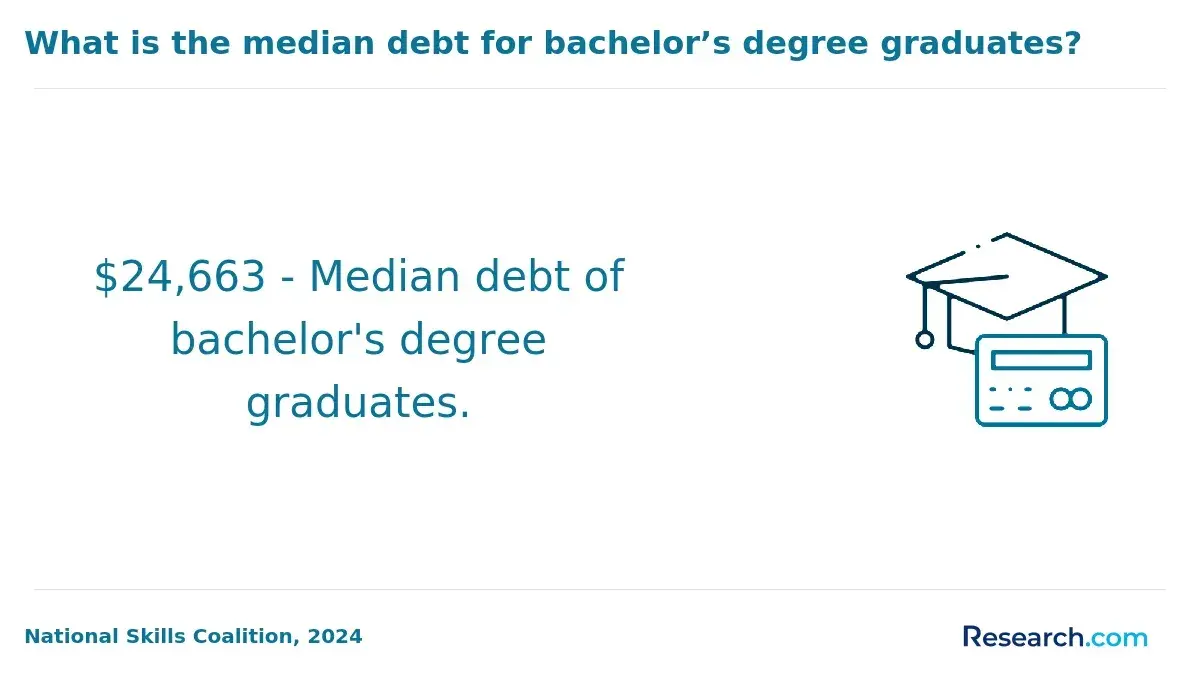
Online degree costs vary widely by school type, residency status, transfer credits, fees, books, technology requirements, and how long a student stays enrolled. Tuition is only one part of the decision; parents should calculate total cost, childcare coverage during study time, lost work hours, and loan repayment.
College Board's 2024 pricing report lists average published tuition and fees for public four-year in-state students at $11,610. This gives parents a useful benchmark, but online tuition may be charged per credit, per term, or through separate online program rates.
Common cost categories include the items below. Ask each school for a full cost estimate in writing before enrolling.
- Tuition per credit or per term.
- Online learning fees, technology fees, graduation fees, and transcript fees.
- Books, access codes, software, lab kits, or certification exam vouchers.
- Proctoring, background checks, immunizations, uniforms, or placement costs for certain programs.
- Childcare, transportation for any required placements, and reduced work hours during intensive terms.
- Loan interest and repayment costs if borrowing is needed.
Parents can reduce out-of-pocket costs by combining federal, state, institutional, employer, and tax-based support where eligible. The federal Pell Grant maximum for 2024-25 is $7,395, which can substantially lower net cost for qualifying undergraduate students, but eligibility depends on financial circumstances and enrollment status.
Potential aid sources include the following. Each option has rules, so confirm eligibility with the financial aid office rather than assuming it applies automatically.
- Federal Pell Grants for eligible undergraduate students.
- Federal Direct Loans, used cautiously and only after comparing repayment obligations.
- State grants for residents attending eligible institutions.
- Institutional scholarships for adult learners, transfer students, parents, or online students.
- Employer tuition assistance or reimbursement.
- Military and veteran education benefits, when applicable.
- Childcare assistance, emergency grants, or student-parent support funds at some colleges.
- Education tax benefits, if the student meets IRS requirements.
If a full degree is not immediately affordable, short-term online certification programs may help parents build marketable skills first, especially in IT, project management, bookkeeping, healthcare support, or data tools. A certificate should still be evaluated for employer recognition, stackability, and whether credits can later apply to a degree.
What career paths and job roles align best with flexible online degrees for parents?
The best career paths for parents are often those with flexible schedules, remote or hybrid possibilities, clear advancement ladders, and skills that transfer across industries. A degree can help, but experience, certifications, licensure, location, and employer expectations still shape outcomes.
The table below connects parent-friendly online degrees to practical job paths. It focuses on roles where online learning can align well with workplace needs.
| Degree area | Career paths that may fit | Why it can work for parents | What may be needed beyond the degree |
| Business administration | Operations coordinator, HR specialist, project coordinator, office manager, sales manager | Broad job market and transferable skills | Internships, industry experience, software skills, leadership examples |
| Healthcare administration | Clinic coordinator, medical office manager, patient services supervisor, health information manager | Stable healthcare demand and nonclinical pathways | Healthcare experience, compliance knowledge, sometimes certification |
| Information technology | Help desk analyst, systems support specialist, cybersecurity analyst, cloud support associate | Remote and hybrid options are more common than in many fields | Portfolio, labs, certifications, technical interview preparation |
| Accounting | Staff accountant, bookkeeper, payroll specialist, tax associate, budget analyst | Structured work and seasonal or remote opportunities in some roles | CPA planning for public accounting, Excel and accounting software skills |
| Education | Teacher, instructional aide, curriculum assistant, online learning support specialist | School-year schedules may align with family needs | State licensure, background checks, student teaching |
| Psychology or human services | Case manager, family support specialist, community outreach coordinator, behavioral health technician | Mission-driven work and community-based roles | Graduate degree for licensed counseling or clinical roles |
| RN-to-BSN | Charge nurse, care coordinator, public health nurse, nurse manager pathway | Designed for licensed nurses seeking advancement | Active RN license, clinical experience, possible specialty certification |
Parents with legal records or background-check concerns should research career restrictions before choosing healthcare, education, social services, finance, or licensure-based programs. The guide on what is the best degree for a convicted felon can help applicants think through background-sensitive fields before investing time and money.
To improve career outcomes, parents should treat the degree as one part of a broader plan. Build a resume during the program, save class projects as portfolio samples, ask faculty about industry connections, and pursue internships or applied projects that can be completed remotely or locally.
What salary expectations and job outlook can parents have with these online degrees?
Salary expectations vary by role, location, experience, industry, and credential level. Parents should use salary data as a planning tool, not a promise. A degree can improve eligibility for certain roles, but it does not remove the need for experience, networking, strong applications, and sometimes licensure.
BLS employment projections released in 2024 show especially strong demand in selected professional and technical fields. For example, medical and health services managers are projected to grow 29% from 2023 to 2033, which signals strong long-term demand for healthcare leadership skills but does not mean every graduate will enter management immediately.
The table below provides salary and outlook context for roles commonly connected to flexible online degrees. Figures reflect BLS occupational data published in 2024 and should be interpreted as national medians or projections, not individual outcomes.
| Role | Related online degree | Median pay or career context | Job outlook context |
| Medical and health services manager | Healthcare administration, business, nursing leadership | BLS lists median annual pay above many general management support roles | Projected 29% growth from 2023 to 2033 |
| Data scientist | Data analytics, computer science, information systems | Higher-paying technical role requiring strong quantitative and programming skills | Projected 36% growth from 2023 to 2033 |
| Software developer | Computer science, software development, IT | High median pay, but hiring often requires demonstrable coding ability | Projected 17% growth from 2023 to 2033 |
| Accountant or auditor | Accounting | Stable professional pathway with advancement potential | Projected 6% growth from 2023 to 2033 |
| Registered nurse | RN-to-BSN or nursing pathway | Pay varies significantly by state, setting, shift, and license level | Projected 6% growth from 2023 to 2033 |
| Human resources specialist | Business administration, HR management | Accessible business role for strong communicators | Projected 8% growth from 2023 to 2033 |
Parents should compare expected earnings against total program cost and time. A lower-cost degree with strong transfer credit may produce better personal ROI than a more expensive program with a famous brand, especially if both lead to the same licensure eligibility or job category.
Advanced degrees can be worthwhile when they are required for licensure, leadership, or a clearly defined salary step. Before enrolling in graduate school, compare program cost, employer tuition support, and career requirements; resources explaining what masters degrees are worth it can help parents avoid paying for credentials that do not match their goals.
How can parents evaluate and choose a reputable, high-quality online degree program?
Parents should evaluate online degrees with the same seriousness they would use for a mortgage, career move, or childcare decision. The right program should be accredited, affordable, flexible, transparent, and aligned with a realistic career goal.
Use the following steps before enrolling. They are designed to prevent the most common mistakes adult learners make when comparing online programs.
- Verify institutional accreditation through the school's accreditor and the U.S. Department of Education's recognized accreditation resources.
- Check programmatic accreditation when required for fields such as nursing, education, counseling, social work, accounting, or healthcare.
- Request a written transfer-credit evaluation and degree completion plan before paying a deposit.
- Ask whether courses are asynchronous, synchronous, hybrid, self-paced, or competency-based.
- Confirm whether any labs, practicums, clinicals, student teaching, internships, or proctored exams require in-person attendance.
- Compare total cost, not just tuition, including fees, books, technology, placement costs, and loan interest.
- Ask how often required courses are offered and what happens if you skip a term for family reasons.
- Review career services for online students, including resume support, interview practice, employer connections, and internship help.
- Speak with an advisor about part-time aid eligibility, satisfactory academic progress rules, and leave policies.
- Search for complaints, unclear refund policies, high-pressure sales tactics, or promises of guaranteed jobs.
The table below summarizes common red flags and better alternatives. Use it when comparing schools that sound similar in advertisements.
| Red flag | Why it matters | Better sign |
| The school will not provide a clear transfer-credit estimate | You may pay for courses you already completed elsewhere | A written audit shows accepted credits and remaining requirements |
| Admissions focuses only on speed | Fast programs may be too intense for working parents | The advisor discusses pace, workload, and stop-out options |
| Licensure language is vague | The degree may not meet state requirements | The program publishes state-by-state licensure disclosures |
| Fees are hard to find | Total cost may be higher than expected | Tuition, fees, books, and estimated aid are transparent |
| Online students have limited services | Lack of support can hurt persistence | Tutoring, advising, library access, and career services are available remotely |
| Job outcomes are presented as guarantees | No school can guarantee employment or salary | Career data is presented with context and limitations |
A reputable program should make it easy for you to understand accreditation, cost, schedule, support, and career alignment. If you feel rushed, confused, or pressured, pause and compare other schools before committing.
Other Things You Should Know About
The easiest degree depends on your strengths and prior credits. General studies, business administration, and interdisciplinary studies can be flexible, but the best choice is the one that uses your transfer credits and connects to a realistic job goal.
Accredited online degrees from recognized colleges are widely accepted, especially when the transcript and diploma come from the same institution as campus programs. Employer response may vary by field, school reputation, experience, and licensure requirements.
Yes, many parents do, but part-time enrollment is often more sustainable. One or two courses per term may be realistic for full-time workers, especially if childcare, shift work, or family responsibilities are unpredictable.
Choose a certificate first if you need a faster, lower-cost skill upgrade or want to test a field before committing. Choose a degree if your target roles require one, you need long-term advancement, or your credits can stack toward a credential.
References
- How to Choose an Online School? 14 Key Factors Parents Should Consider https://ibos.school/how-to-choose-an-online-school/
- Financial Aid For Online Colleges https://www.affordablecollegesonline.org/financial-aid/financial-aid-for-online-colleges/
- A Parent's Guide to Online Home Education Success https://queensonlineschool.com/online-home-education/
- Online School Reviews South Africa: How to Evaluate https://cambrilearn.com/blog/online-school-reviews-south-africa
- What are the Admission Requirements for Online MSW Programs? https://www.onlinemswprograms.com/faqs/admission-requirements/
- Types of Online Education: A Parent's Guide https://sunbeamworldschool.com/blog/types-of-online-education/
- The 5 Most Flexible Careers for New Parents https://www.learndirect.com/blog/the-5-most-flexible-careers-for-new-parents
- How Higher Education Can Meet Student-Parents Where They Are https://evolllution.com/attracting-students/customer_service/how-higher-education-can-meet-student-parents-where-they-are
- What Are the Best Degrees for Parents Going Back to School? https://www.snu.edu/blog/best-degrees-for-parents-going-back-to-school
- How Long Does It Take to Earn an Online Degree? https://www.grantapprovals.com/blog/how-long-to-earn-online-degree.html