2027 Online College vs Traditional College: Which Is Better?

Co-Founder and Chief Data Scientist
Choosing between online college and traditional college is now a practical career and financial decision, not just a lifestyle preference. NCES distance education data released in 2024 shows that more than half of U.S. postsecondary students took at least one online course in fall 2022, making online learning a mainstream option.
This guide is for students, working adults, parents, and career changers comparing flexibility, cost, quality, and outcomes. You will learn where online programs work best, where campus learning still has advantages, and how to choose the option with the strongest return for your goals.
Key Things You Should Know
- Online college is usually better for working adults, parents, military learners, and self-directed students who need schedule flexibility, while traditional college is often better for students who want in-person labs, campus life, structured routines, or high-touch networking.
- College Board's 2024 pricing report lists average 2024-25 tuition and fees at $11,610 for in-state public four-year students, $30,780 for out-of-state public students, and $43,350 for private nonprofit four-year students, before housing and other costs.
- Employer respect depends more on accreditation, school reputation, program quality, experience, and skills than on whether classes were online or on campus, the safest choice is a properly accredited program with transparent outcomes and strong student support.
What are the main differences between online college and traditional on-campus college?
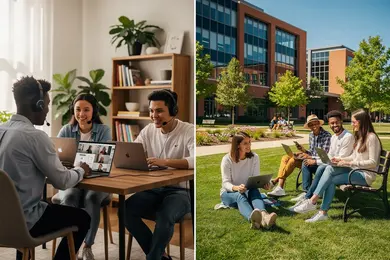
The main difference between online college and traditional college is how the learning experience is delivered. Online college uses a digital learning platform for lectures, assignments, discussion boards, exams, advising, and sometimes live video classes. Traditional college delivers most instruction in person, usually with scheduled class meetings, campus facilities, residential life, and face-to-face access to faculty and peers.
The right format depends on how much flexibility, structure, hands-on learning, and campus engagement you need. The table below summarizes the practical differences that most affect student success and total cost.
| Factor | Online college | Traditional on-campus college |
| Schedule | Often asynchronous or evening-based, with more flexibility for work and family obligations | Usually fixed class times, campus attendance, and a semester-based rhythm |
| Learning environment | Digital classrooms, video lectures, discussion boards, virtual advising, and remote exams | Classrooms, labs, libraries, residence halls, campus activities, and in-person office hours |
| Student support | Can include online tutoring, remote advising, digital library access, and virtual career services | Can include in-person advising, tutoring centers, faculty access, counseling, and campus career fairs |
| Best-fit programs | Business, IT, healthcare administration, education, psychology, criminal justice, and many general education pathways | Engineering labs, fine arts studios, health clinical training, research-intensive majors, and programs requiring specialized facilities |
| Social experience | More intentional and usually built through virtual groups, cohort projects, or local networking | More organic through residence life, clubs, athletics, events, and informal peer interaction |
If you are comparing schools, look beyond the format label. Some of the top online colleges offer structured advising, career support, and faculty interaction that can feel closer to a campus program than many students expect.
Is an online degree as respected by employers as a traditional college degree?
An online degree can be as respected as a traditional degree when it comes from a properly accredited institution with recognized academic standards. Employers typically care about whether the school is legitimate, whether the degree matches the role, whether the student has relevant skills, and whether the candidate can demonstrate experience through projects, internships, clinical placements, portfolios, or work history.
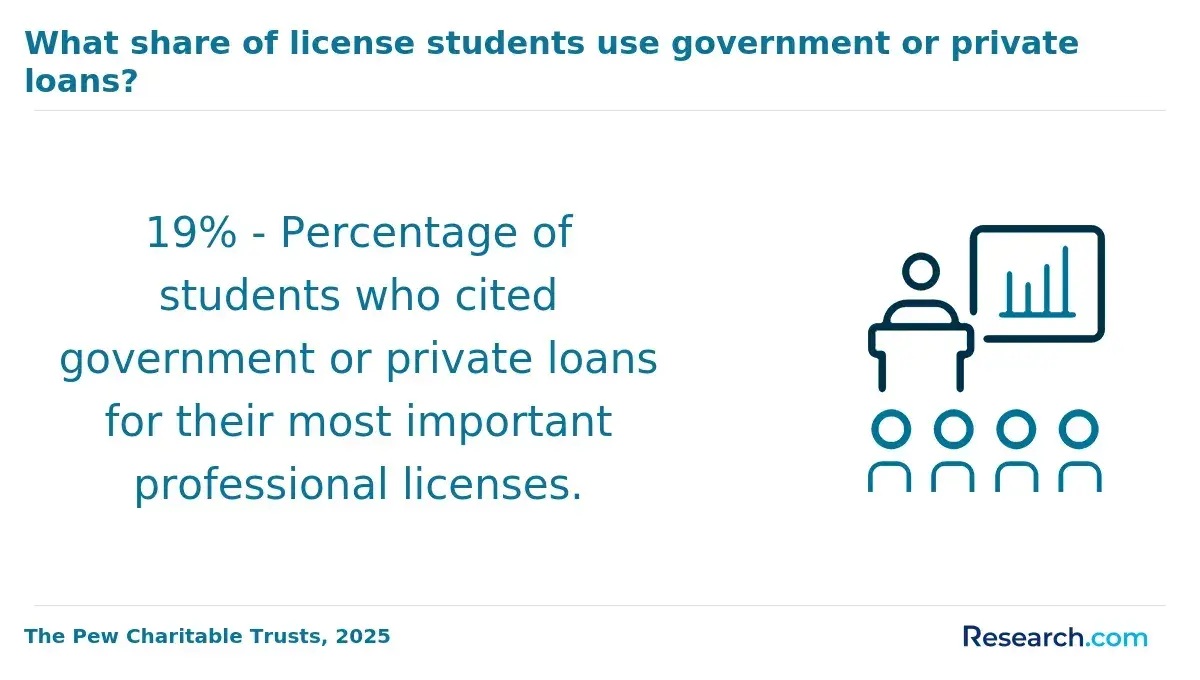
There are still situations where format matters. Some employers may scrutinize unfamiliar schools, for-profit institutions with weak reputations, or programs that do not clearly state accreditation. In fields with licensure, such as teaching, nursing, counseling, accounting, or social work, the key issue is not online versus campus; it is whether the program meets state and professional requirements.
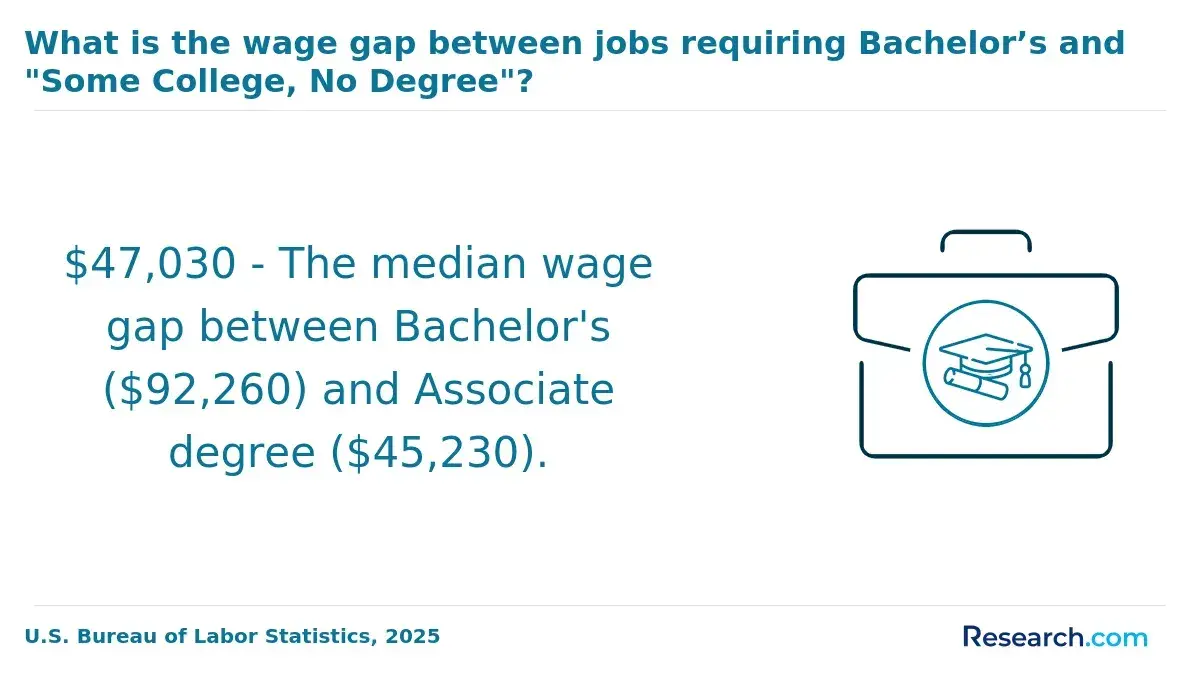
BLS education and earnings data updated in 2024 shows that workers with a bachelor's degree had higher median weekly earnings than workers whose highest credential was a high school diploma. This does not mean any degree automatically pays off, but it reinforces why program quality, major choice, and career alignment matter more than the delivery format alone.
Online degrees are generally strongest with employers when students can point to clear evidence of readiness. That evidence may include internships, supervised fieldwork, certifications, capstone projects, employer-aligned coursework, military or professional experience, and a portfolio that shows applied skills.
Which is more cost-effective over time, online college or traditional college?
Online college is often more cost-effective over time, but it is not automatically cheaper. Tuition varies widely by institution, residency status, degree level, and whether the school charges technology, course, or proctoring fees. The biggest savings often come from avoiding room and board, commuting, relocation, parking, and lost work hours.
College Board's 2024 report lists average 2024-25 tuition and fees of $11,610 for in-state students at public four-year colleges. For students who can attend an online public program while living at home and keeping a job, the financial advantage may come from reducing indirect costs rather than tuition alone.
When comparing online and campus options, separate direct costs from lifestyle costs. The categories below are the ones most likely to change your real out-of-pocket price.
- Tuition and mandatory fees: Compare per-credit costs, full-time flat rates, online program fees, and whether out-of-state online students receive a special tuition rate.
- Housing and meals: Campus students may need residence hall and meal-plan budgets, while online students may avoid these costs if they already have stable housing.
- Work opportunity cost: Online students may be able to keep full-time or part-time employment, while campus students may face more schedule constraints.
- Technology and exam costs: Online programs may require a reliable computer, webcam, software, internet access, and proctoring fees.
- Time to completion: Transfer credits, prior learning credit, and accelerated terms can reduce total cost if they shorten the path to graduation.
Students focused on affordability should compare accredited options, FAFSA participation, and total cost of attendance, not just advertised tuition. A starting point is this guide to the cheapest online college options that accept federal aid.
How do accreditation and quality standards compare between online and traditional colleges?
Accreditation is the strongest quality checkpoint for both online and traditional colleges. It means an outside accrediting body has reviewed the institution or program for academic standards, faculty qualifications, student support, financial stability, and continuous improvement. In the U.S., students should confirm that a school is accredited by an agency recognized by the U.S. Department of Education or the Council for Higher Education Accreditation.
Institutional accreditation applies to the whole college or university. Programmatic accreditation applies to specific programs, especially in fields tied to licensure or professional practice. For example, nursing, social work, counseling, education, business, engineering, and public health may have separate accrediting bodies that matter for employment, licensure, or graduate admission.
The table below explains the quality signals students should compare before enrolling. These indicators matter for both online and campus programs because a polished website or beautiful campus does not prove academic quality.
| Quality signal | Why it matters | Online and campus relevance |
| Recognized institutional accreditation | Supports credit transfer, federal aid eligibility, and baseline academic legitimacy | Essential for both formats |
| Programmatic accreditation | May be required or preferred for licensure, certification, or professional recognition | Especially important in regulated fields |
| Transparent faculty credentials | Shows whether instructors have appropriate academic or professional expertise | Important in any delivery model |
| Student outcome reporting | Helps students evaluate retention, graduation, licensure pass rates, and job placement where available | Useful for comparing similar programs |
| Support services | Advising, tutoring, library access, disability services, and career help can affect completion | Critical for remote learners and campus students |
A common mistake is assuming "online" means lower quality or assuming "campus" means high quality. The better question is whether the program is accredited, well-supported, transparent, and aligned with the career or graduate pathway you want.
What types of students and learning styles are best suited for online vs campus programs?
Online college fits students who can manage time independently, communicate clearly in writing, stay organized without daily in-person reminders, and troubleshoot basic technology. It is especially practical for adults balancing employment, caregiving, military service, transportation limits, or geographic constraints.
Traditional college often fits students who want a more structured environment, frequent face-to-face interaction, campus activities, and immediate access to labs, studios, libraries, and faculty. It can also be a better fit for younger students who benefit from a residential transition into adulthood or who want the social and developmental experience of campus life.
The most important fit factors are not personality labels but learning conditions. Use the following distinctions to think honestly about how you work best.
- Choose online if: You are self-motivated, comfortable with digital tools, need flexible study hours, and can ask for help before falling behind.
- Choose campus if: You learn best through live discussion, need external structure, want in-person labs or studios, or value a strong campus community.
- Be cautious with online if: You frequently procrastinate, lack reliable internet, need immediate face-to-face clarification, or are entering a program with heavy hands-on requirements.
- Be cautious with campus if: Relocation, commuting, fixed schedules, or housing costs would make it difficult to persist through graduation.
Some students do best in hybrid formats that combine online coursework with occasional campus meetings, labs, residencies, or clinical placements. Others may benefit from self-paced models, especially at the graduate level; for example, a competency-based master's can work well for experienced professionals who can prove mastery quickly.
How do admissions requirements differ for online colleges and traditional universities?
Admissions requirements can be similar across online and traditional programs, especially when both are offered by the same accredited university. Applicants usually submit transcripts, an application form, proof of graduation or prior college credit, and sometimes essays, recommendations, test scores, or placement assessments.
The differences are more common in selectivity, student profile, and enrollment model. Traditional residential universities may place more weight on high school GPA, course rigor, extracurriculars, essays, and first-year cohort deadlines. Online programs often serve more transfer students and adult learners, so they may emphasize prior college credit, work experience, rolling admissions, and readiness for independent study.
Admissions requirements vary by degree level and program type. The table below outlines the most common expectations students should prepare for when comparing online and campus options.
| Program type | Common online admissions requirements | Common traditional admissions requirements |
| Associate degree | High school diploma or GED, placement assessment, and open or less selective admission at many community colleges | Similar requirements, especially at public community colleges |
| Bachelor's degree | High school transcript, transfer transcript if applicable, minimum GPA, and sometimes prior credits for degree-completion programs | High school transcript, GPA, essays, recommendations, activities, and sometimes test scores depending on the institution |
| Master's degree | Bachelor's degree, resume, statement of purpose, recommendations, and field-specific prerequisites | Similar requirements, with some programs adding interviews, research fit, or standardized tests |
| Licensure-track program | Prerequisites, background checks, clinical or field placement eligibility, and state-specific disclosures | Similar requirements, often with local placement networks tied to campus partnerships |
Students should be careful with programs that advertise "easy admission" but do not clearly explain graduation requirements, transfer-credit rules, licensure eligibility, or academic support. Getting admitted is not the same as being set up to finish.
What are the typical program length, scheduling, and workload differences online vs on campus?
Program length depends more on credits required, transfer credits, enrollment intensity, and academic calendar than on whether the degree is online or on campus. A bachelor's degree commonly requires about 120 credits, while associate degrees often require about 60 credits and master's degrees vary widely by field.
Online programs may offer more scheduling options, including asynchronous courses, evening live sessions, eight-week terms, year-round start dates, or part-time pathways. Traditional programs more often follow standard semesters with daytime classes, although many campuses also offer evening, hybrid, and summer options.
The table below compares time and workload patterns. It can help you estimate whether a program fits your current work, family, and financial situation.
| Format | Typical scheduling pattern | Common workload implication |
| Full-time online | Multiple online courses per term, sometimes in accelerated sessions | Flexible location, but requires strong weekly time management |
| Part-time online | One or two courses per term, often used by working adults | Lower weekly load, but longer time to graduation |
| Full-time campus | Daytime classes, labs, and campus activities across a standard semester | More structure, but less flexibility for full-time work |
| Hybrid | Online coursework plus scheduled campus meetings, labs, or residencies | Balances flexibility with hands-on learning requirements |
Accelerated options can shorten completion time, but they compress assignments, exams, and reading into a tighter schedule. Students exploring fast track degree programs should confirm whether the pace is realistic alongside work and family obligations.
How do career outcomes, networking, and alumni connections differ between online and traditional colleges?
Career outcomes depend on field of study, school reputation, location, experience, internships, licensure, portfolio quality, and the student's ability to network. Format matters, but it is rarely the only factor. A campus student who never uses career services may have weaker outcomes than an online student who builds projects, completes internships, and actively connects with employers.
Traditional colleges may offer advantages in informal networking, campus recruiting, faculty research opportunities, alumni events, student organizations, and local employer pipelines. Online colleges may offer advantages for working adults because students can keep gaining experience while earning the credential.
BLS projections released in 2024 show that jobs typically requiring a bachelor's degree are expected to remain a major pathway into professional employment over the 2023-33 period. Students should use that as a broad signal, not a guarantee, and compare career outcomes by major rather than assuming any bachelor's program has the same payoff.
For career-focused students, the strongest programs usually include practical experience. Look for these features before enrolling.
- Career services for your format: Online students should have access to virtual resume help, interview practice, job boards, and employer events, not just campus-only services.
- Applied projects: Capstones, labs, case studies, simulations, and portfolios help demonstrate skills to employers.
- Internships or fieldwork: These are especially important in healthcare, education, social services, business, technology, and communications.
- Alumni access: A strong alumni network can help with informational interviews, referrals, mentoring, and industry insight.
If your main goal is labor-market return, compare majors and occupations carefully. This overview of bachelor's degrees job outlook can help you connect degree choice with realistic career demand and earnings context.
How do financial aid, scholarships, and hidden fees compare for online and traditional programs?
Financial aid rules are generally similar for online and traditional students when the institution is accredited and eligible for federal student aid. Students in eligible online programs may use the FAFSA for federal grants, loans, and work-study where available, just as campus students can. The important distinction is not the delivery format but the school's aid eligibility, enrollment status, satisfactory academic progress rules, and program length.
For the 2024-25 award year, the maximum Federal Pell Grant is $7,395. That amount can meaningfully reduce costs for eligible students, but it may not cover the full cost of tuition, fees, books, housing, technology, and living expenses.
Hidden costs differ by format, so students should ask for a full cost-of-attendance estimate before committing. The following items are easy to miss during the application process.
- Online-specific costs: Technology fees, remote proctoring fees, software subscriptions, webcams, high-speed internet, and course materials.
- Campus-specific costs: Housing, meal plans, parking, transportation, activity fees, lab fees, health fees, and relocation expenses.
- Program-specific costs: Clinical uniforms, background checks, certification exams, equipment, studio supplies, field placement travel, or licensure application fees.
- Policy-related costs: Fees for withdrawing, retaking courses, transferring credits, late payments, transcript requests, or exceeding program time limits.
Scholarships may also differ. Campus students may have access to residential, athletic, departmental, or honors scholarships, while online students may find adult learner, military, employer-sponsored, transfer, or workforce-development awards. Always ask whether scholarships apply to online students, part-time students, and accelerated terms.
What steps should students take to choose a reputable online or traditional college?
Choosing a reputable college should be a verification process, not a reaction to advertising. The best program is the one that is accredited, affordable for your situation, realistic for your schedule, and directly connected to your academic or career goal.
Use the steps below before enrolling. They are designed to help you avoid common mistakes such as choosing an unaccredited school, ignoring hidden fees, or assuming credits will transfer automatically.
- Confirm institutional accreditation using the U.S. Department of Education or CHEA-recognized accreditor databases, then check whether your specific program needs separate programmatic accreditation.
- Ask for the total cost of attendance, including tuition, fees, books, technology, housing, transportation, and any required exams or clinical expenses.
- Compare graduation, retention, licensure pass, and job placement information when the school publishes reliable program-level outcomes.
- Review transfer-credit policies before enrolling, especially if you have community college credits, military training, prior learning, or credits from another university.
- Verify whether online students receive the same advising, tutoring, library access, disability services, career services, and faculty access as campus students.
- For licensure fields, ask in writing whether the program meets requirements in the state where you plan to work.
- Talk to current students or recent graduates and ask about workload, instructor responsiveness, advising quality, and whether the program matched the admissions pitch.
Red flags include pressure to enroll immediately, unclear accreditation language, vague career promises, guaranteed salary claims, poor transfer transparency, and limited access to faculty or advisors. A reputable school should be willing to answer detailed questions before you sign an enrollment agreement.
Other Things You Should Know About
Not necessarily. Online college can be more flexible, but it often requires stronger self-discipline, written communication, and time management. The academic difficulty depends on the school, course level, instructor expectations, and program requirements.
Many colleges do not list the delivery format on the diploma, especially when the online program is offered by the same institution as the campus program. Policies vary, so students should ask the registrar or admissions office before enrolling.
Yes, if the school and program are eligible for federal student aid and you meet FAFSA and enrollment requirements. Students should confirm aid eligibility before applying because not every online program qualifies.
It depends on the student's needs. A first-time student who wants structure, campus life, and in-person support may prefer traditional college. A student with work, family, transportation, or location constraints may do better in a well-supported online or hybrid program.
References
- Costs of Online and Campus Colleges | University of Phoenix https://www.phoenix.edu/blog/comparing-the-costs-of-online-and-campus-colleges.html
- Quality Standards and Accreditation of Distance Education Programs in a Pandemic - OJDLA https://ojdla.com/articles/quality-standards-and-accreditation-of-distance-education-programs-in-a-pandemic
- Pathways to success: Leveraging LinkedIn data to map university alumni outcomes https://sloap.org/journal/index.php/ijbem/article/view/2336
- Guide to Financial Aid for Online Students https://www.onlineu.com/resources/financial-planning/financial-aid
- Cost of Online Education vs. Traditional Education [2025]: Comparison https://educationdata.org/cost-of-online-education-vs-traditional-education
- How to Maximize the Impact of Alumni Networks https://www.careeros.com/resources/how-to-maximize-the-impact-of-alumni-networks
- Online Degree vs. Traditional: Choosing the Right Path https://beal.edu/online-degree-vs-traditional/
- Do Online Classes Really Save Students Money? https://foresttrailacademy.com/blog-are-online-classes-cheaper-for-students/
- Online vs. Traditional Education: Which One Is Right For You? https://online.champlain.edu/blog/online-vs-traditional-education-which-one-is-right-for-you
- How to Choose the Right Online College https://www.straighterline.com/blog/goodie-how-to-choose-the-right-online-college