2027 How Grading Works in Online Classes

Co-Founder and Chief Data Scientist
Online grading can feel opaque until you know where points come from and how feedback is delivered. NCES data published in 2024 shows that 53% of U. S. degree-seeking postsecondary students took at least one distance education course in fall 2022, making online assessment a mainstream college issue rather than a niche concern. This guide is for students comparing online courses, certificates, or degree programs. You will learn how grades are calculated, what instructors evaluate, how exams are handled, and what policies to check before enrolling.
Key Things You Should Know
- Online classes usually use the same letter-grade, GPA, pass/fail, withdrawal, and incomplete systems as campus courses, but more of the grade is recorded through learning management system activity, digital submissions, timed quizzes, rubrics, and discussion participation.
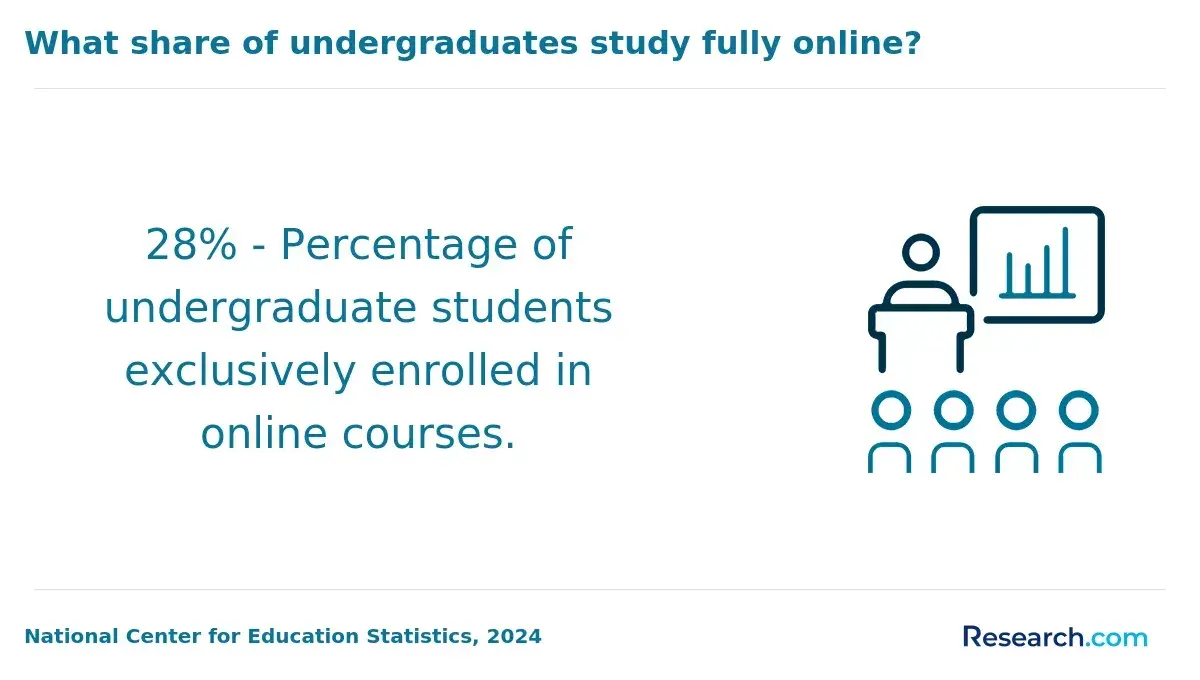
- According to NCES data published in 2024, 26% of U.S. degree-seeking postsecondary students were enrolled exclusively in distance education in fall 2022, so students should treat online grading policies as central to academic planning, not as an exception.
- Grades can affect financial aid and academic standing. Many colleges apply satisfactory academic progress rules that commonly require at least a 2.0 cumulative GPA and completion of about 67% of attempted credits, though exact policies vary by school.
How does grading in online classes work compared with traditional campus courses?
Grading in online classes is usually equivalent in academic weight to grading in traditional campus courses. The difference is not the value of the grade but the way learning is documented: instead of relying heavily on in-person attendance, paper exams, and classroom discussion, online courses typically track submissions, quiz attempts, discussion posts, timestamps, group activity, and instructor feedback inside a learning management system.
In most accredited online college courses, the syllabus explains the grading scale, assignment categories, late-work rules, exam requirements, participation expectations, and academic integrity policy. A final online grade may appear as a letter grade, numerical percentage, pass/fail result, competency rating, or satisfactory/unsatisfactory mark, depending on the institution and course format.
The biggest practical difference is visibility. Online students often see gradebook updates throughout the term, while campus students may receive fewer formal updates between major assignments. That can help self-directed students correct course quickly, but it can also expose problems early if a student misses discussion deadlines or underestimates weekly workload.
The table below compares common grading features in online and campus classes. Use it to understand which format fits your habits, schedule, and need for instructor interaction.
| Grading feature | Online classes | Traditional campus courses | What it means for students |
| Participation | Often graded through discussion boards, replies, peer comments, live sessions, or collaboration tools | Often based on attendance, in-class discussion, activities, or labs | Online participation is easier to document but easier to miss if you ignore weekly deadlines |
| Assignments | Submitted digitally through the LMS, plagiarism checker, portfolio, or cloud tool | Submitted in class, online, or through hybrid systems | Keep proof of submission and check file requirements before deadlines |
| Exams | May be timed, open-book, proctored, project-based, or automatically scored | Often scheduled in classrooms or testing centers | Confirm technology, ID, webcam, and proctoring requirements early |
| Feedback | Delivered through rubric comments, annotated files, audio/video notes, or LMS messages | Delivered in class, on papers, during office hours, or online | Online students need to actively read feedback rather than just look at the score |
| Grade tracking | Usually available continuously in the LMS gradebook | May be continuous or limited to major grade releases | Students can monitor risk earlier, especially before withdrawal deadlines |
Cost is also part of the decision because grading policies affect repeat courses, withdrawals, and time to completion. College Board's 2024 pricing data lists average published tuition and fees at $11,610 for in-state students at public four-year colleges and $43,350 at private nonprofit four-year colleges, so a failed or repeated course can be financially significant.
Students comparing flexible institutions may want to review accredited non profit online colleges alongside public options and evaluate total cost, transfer policies, and academic support rather than tuition alone.
What types of assignments and assessments are most common in online college classes?
Online college classes use a mix of low-stakes and high-stakes assessments. Low-stakes work, such as quizzes or discussion posts, helps students practice and stay engaged; high-stakes work, such as exams, papers, projects, or capstones, carries more weight in the final grade.
Common online assessments usually fall into a few categories. The exact mix depends on the discipline, course level, accreditation requirements, and instructor design.
- Auto-graded quizzes: Short quizzes may test reading comprehension, terminology, calculations, or foundational concepts and may allow multiple attempts.
- Written assignments: Essays, case studies, reflections, lab reports, and research papers are commonly graded with rubrics and instructor comments.
- Discussion posts: Students may be graded on original posts, replies, use of sources, timeliness, and contribution to class dialogue.
- Projects and presentations: Online courses may require slide decks, recorded presentations, portfolios, data analyses, business plans, lesson plans, or design projects.
- Exams: Midterms and finals may be timed, open-resource, proctored, oral, practical, or replaced by authentic assessments.
- Group work: Team projects may include shared deliverables, peer evaluations, milestone submissions, and collaboration logs.
A current trend is the shift toward authentic assessment, especially as generative AI tools make traditional take-home essays harder to evaluate in isolation. Instead of relying only on recall-based exams, many instructors now ask students to apply concepts to workplace scenarios, explain their reasoning, submit drafts, or present a process. This does not make online classes easier; it often means students are graded on both the final answer and the method used to reach it.
Students who want shorter, skills-focused learning should pay close attention to assessment format. If you are comparing what certifications can I get online, look for programs that use practical projects, simulations, portfolios, or industry-aligned exams rather than only passive video completion.
How are participation, discussion boards, and group work graded in online courses?
Participation is one of the most misunderstood parts of online grading. In an online course, participation does not simply mean logging in; it usually means contributing evidence of learning by posting, replying, attending required sessions, collaborating with peers, or completing interactive activities by the deadline.
Discussion boards are commonly graded because they replace part of the classroom conversation. A strong post usually answers the prompt directly, uses course materials, adds original analysis, and engages respectfully with classmates. A weak post may be late, overly brief, repetitive, unsupported, or disconnected from the week's learning objectives.
Online group work is graded in several ways. The instructor may evaluate the final product, individual contributions, peer reviews, meeting notes, file histories, or milestone submissions. This approach helps reduce the risk that one student receives the same grade as the group without contributing meaningfully.
Before the course starts, check how participation points are earned and lost. The following details matter because small weekly participation grades can add up quickly.
- Posting schedule: Some courses require an initial post by midweek and replies by the end of the week.
- Quality standards: Rubrics may require citations, examples, application of theory, or a minimum level of analysis.
- Reply expectations: Replies often need to extend the discussion rather than simply agree with a classmate.
- Late penalties: Participation credit may not be available after a discussion closes because the conversation has ended.
- Group accountability: Peer ratings, version histories, and instructor check-ins may influence individual grades.
A common mistake is treating online discussions as casual message boards. They are usually graded academic work. If discussion posts make up 15% to 25% of the grade, missing several weeks can create a deficit that is difficult to recover even if exam scores are strong.
How do online instructors use rubrics and grading criteria to evaluate student work?
Rubrics are scoring guides that explain how an assignment will be evaluated. They usually break a task into criteria, such as accuracy, analysis, organization, evidence, formatting, originality, or professional communication, and assign point values or performance levels to each criterion.
For online students, rubrics are especially important because they reduce ambiguity. Instead of guessing what the instructor wants, students can see how the grade will be built. A rubric also helps instructors grade consistently across large online sections, multiple graders, or accelerated course formats.
The table below shows how rubric criteria often translate into grading decisions. It can help students understand why two assignments with similar topics may receive different scores.
| Rubric criterion | What the instructor is evaluating | Common reason points are lost |
| Content accuracy | Whether the response uses correct concepts, calculations, facts, or procedures | The answer is partially correct but misses key course concepts |
| Analysis | Whether the student explains reasoning, applies ideas, and supports conclusions | The submission summarizes material without interpreting or applying it |
| Evidence | Whether claims are supported with course readings, data, examples, or credible sources | The work includes opinions without support or uses weak sources |
| Organization | Whether the response is structured logically and follows assignment directions | The work has relevant ideas but does not answer all parts of the prompt |
| Professional standards | Whether writing, formatting, citations, file type, or presentation quality meets expectations | The submission is late, incomplete, poorly formatted, or difficult to review |
Students should use rubrics before, during, and after completing assignments. The most effective approach is simple but requires discipline.
- Read the rubric before starting the assignment, not after writing the first draft.
- Turn each rubric criterion into a checklist item for your draft.
- Compare the final submission against the highest performance level before uploading it.
- Review instructor comments after grading and identify one improvement to apply to the next assignment.
One red flag is a course with major assignments but no clear grading criteria. That does not automatically mean the course is poor, but prospective students should ask whether rubrics, sample assignments, or grading expectations are available in the syllabus or LMS.
How are exams, quizzes, and proctored tests administered and graded in online programs?
Online exams and quizzes can be graded automatically, manually, or through a combination of both. Multiple-choice, matching, numeric, and true/false items are often auto-scored by the LMS. Essays, short answers, coding exercises, oral responses, lab work, and case analyses usually require instructor or evaluator review.
Proctored testing is used when a school wants stronger identity verification or exam security. Proctoring may happen through a live online proctor, recorded webcam session, browser lockdown tool, approved testing center, or instructor-supervised video meeting. Requirements vary widely, so students should not assume every online exam is open-book or unmonitored.
Before enrolling in a course with proctored exams, review the testing rules carefully. These details affect convenience, privacy, cost, and accessibility.
- Technology requirements: Check whether you need a webcam, microphone, stable broadband, specific browser, or lockdown software.
- Scheduling rules: Some proctored exams have narrow testing windows, while others allow appointments across several days.
- Identification requirements: You may need a government-issued ID, school login, room scan, or identity verification step.
- Permitted materials: Confirm whether notes, calculators, textbooks, scratch paper, or external websites are allowed.
- Retake and technical failure policies: Ask what happens if internet access fails, the platform crashes, or a proctor flags an incident.
Short-format programs can vary even more. Some 6-week online courses with certificates rely on frequent quizzes and projects instead of one heavily weighted final exam, which can benefit students who prefer steady assessment but can be challenging for those who fall behind.
A current trend is the movement away from purely surveillance-based testing toward more varied assessment design. Many instructors now combine timed quizzes with oral checks, applied projects, version histories, and reflection prompts. This reduces overreliance on one exam while still giving instructors evidence that the submitted work reflects the student's learning.
How do grading policies differ between asynchronous and synchronous online classes?
Asynchronous and synchronous online classes can use the same grading scale, but the timing of graded work is different. Asynchronous courses allow students to complete work within weekly or module-based deadlines, while synchronous courses require live attendance or real-time participation at scheduled meeting times.
The table below summarizes the grading trade-offs. It is useful for students deciding whether flexibility or real-time structure will help them perform better.
| Format | How grading usually works | Best fit | Potential drawback |
| Asynchronous online | Grades often come from weekly modules, discussion boards, quizzes, papers, projects, and self-paced activities within set deadlines | Students with work, caregiving, military, travel, or unpredictable schedules | Requires strong time management because there may be fewer live reminders |
| Synchronous online | Grades may include live attendance, in-class polls, breakout activities, presentations, exams, and real-time discussion | Students who want scheduled interaction and immediate instructor feedback | Less flexible if sessions conflict with work or time zone constraints |
| Hybrid online | Grades combine online assignments with required campus, lab, clinical, or live meeting components | Students in fields requiring hands-on demonstration or supervised practice | May not be fully remote despite being advertised as online or blended |
Accelerated online programs add another layer. A seven- or eight-week course may cover the same outcomes as a semester course but compress deadlines, feedback cycles, and exam preparation. That can be efficient for motivated students, but it can also make recovery from one missed week difficult.
Doctoral and graduate programs may use more qualitative grading, milestone evaluation, dissertation progress, comprehensive exams, or faculty review rather than frequent quizzes. Students exploring 1-year PhD programs online should confirm whether the timeline refers to coursework, dissertation completion, transfer credits, professional doctorate structure, or an individually accelerated path.
How is academic integrity monitored and addressed in online grading and assessment?
Academic integrity in online grading refers to the rules and systems used to ensure that submitted work is honest, original, properly cited, and completed by the enrolled student. Integrity policies apply to plagiarism, unauthorized collaboration, contract cheating, exam misconduct, falsified data, and misuse of AI tools.
Online programs monitor integrity through a combination of technology, course design, and instructor judgment. Common tools include plagiarism detection, identity verification, secure browsers, proctoring systems, writing comparisons, draft reviews, oral defenses, file metadata, and LMS activity logs. However, technology is not perfect; schools should use these tools alongside clear policies and fair review processes.
Generative AI has changed the integrity conversation. Many instructors now specify whether AI tools are prohibited, allowed for brainstorming only, allowed with citation, or required for certain activities. A student can lose credit if they use AI in a way that violates the course policy, even if the final answer is factually correct.
Students can protect themselves by following a few practical habits. These steps reduce the risk of accidental misconduct and make it easier to respond if a question arises.
- Read the course AI, citation, collaboration, and exam policies before the first graded assignment.
- Save drafts, notes, outlines, data files, and version histories for major projects.
- Ask the instructor before using AI tools, tutoring help, shared documents, or outside templates.
- Cite sources and tools according to the course's required format.
- Do not share quiz answers, exam screenshots, instructor materials, or graded work in group chats.
A major red flag is vague language such as "use AI responsibly" without examples. Better policies define permitted and prohibited uses, explain how students should disclose assistance, and describe the review process if work is flagged.
How can students track grades, feedback, and progress in a learning management system?
A learning management system, often called an LMS, is the online platform where students access course materials, submit work, take quizzes, view grades, and receive feedback. Common systems include Canvas, Blackboard, Moodle, Brightspace, and institution-specific platforms.
The LMS gradebook is useful, but students need to interpret it carefully. A current grade may exclude ungraded assignments, missing work, extra credit, weighted categories, or future exams. For example, a student may see a high grade early in the term because only small quizzes have been graded, even though a final project will carry much more weight later.
To track progress accurately, students should use the LMS as an academic planning tool rather than a passive dashboard. The following routine can help prevent surprises near the end of the term.
- Check the syllabus grade breakdown and identify the highest-weighted assignments.
- Review the LMS gradebook at least once a week and look for missing, late, or ungraded items.
- Read instructor comments, rubric details, and annotated feedback rather than only the score.
- Calculate how upcoming assignments could affect the final grade, especially before withdrawal deadlines.
- Contact the instructor quickly if a grade appears incorrect or feedback is unclear.
Many grade disputes are really documentation problems. If you upload the wrong file, miss a required attachment, or submit after the deadline because of a technical issue, the LMS may record the event automatically. Keep confirmation emails, screenshots, and copies of submitted files until final grades are posted.
Students planning remote careers should also treat LMS habits as workplace preparation. Many of the same skills used in online courses-tracking deadlines, responding to feedback, documenting work, and communicating asynchronously-are relevant to the best degrees for work from home jobs.
How do grading practices in online programs affect GPA, financial aid, and transfer credits?
Online course grades generally affect GPA the same way campus course grades do when the course is credit-bearing and offered by an accredited institution. A three-credit online course with a B usually carries the same GPA weight as a three-credit on-campus course with a B, unless the school uses a special grading model such as pass/fail, competency-based assessment, or noncredit continuing education.
Grades also matter for financial aid. Federal and institutional aid policies typically require students to make satisfactory academic progress, often measured by GPA, credit completion rate, and maximum time frame. A failed, withdrawn, repeated, or incomplete online course can affect eligibility, pace toward degree completion, and future borrowing needs.
Financial stakes are higher when students finance repeated coursework with loans. For federal Direct Loans first disbursed during the 2024-25 award year, the undergraduate fixed interest rate is 6.53%. That rate does not mean a single low grade will derail a student's plan, but it does make course repeats and delayed completion more expensive over time.
Transfer credit is another area where grading policies matter. A receiving school may require a minimum grade, commonly a C or higher, for transfer credit. Some programs may accept a course as elective credit but not apply it to a major requirement. Graduate programs, nursing programs, education licensure tracks, and business accreditation pathways may apply stricter rules.
The table below shows how common grading outcomes may affect academic planning. Exact consequences vary by institution, so students should verify policies before making decisions.
| Grade or status | Possible GPA effect | Possible financial aid or transfer effect | What to check |
| A through D letter grade | Usually included in GPA calculation | May count as attempted and completed credit, depending on program rules | Minimum grade needed for major, prerequisite, or transfer credit |
| F | Usually lowers GPA and does not earn credit | Can hurt completion rate and satisfactory academic progress | Repeat policy and whether the new grade replaces or averages with the old grade |
| W withdrawal | Usually not included in GPA | Often counts as attempted but not completed credit | Withdrawal deadline, refund schedule, and aid consequences |
| I incomplete | May temporarily delay final grade | Can affect progress if not resolved by the deadline | Completion deadline and required remaining work |
| Pass/fail | May not affect GPA if passed, but rules vary | May or may not meet major, prerequisite, or transfer requirements | Whether pass/fail is accepted for your degree plan or target school |
A common mistake is assuming "online" credits are treated differently from "regular" credits. The more important questions are whether the institution is accredited, whether the course is credit-bearing, what grade was earned, and how the receiving program evaluates that course.
What grading questions should prospective students ask when comparing online degree programs?
Prospective students should ask grading questions before enrolling, not after the first poor score. Clear grading policies are a sign of good course design and student support. Vague policies do not always mean a program is low quality, but they make it harder to judge workload, risk, and fit.
Use the following questions when comparing online degree programs, certificates, or individual courses. They are designed to reveal how grades are earned, how feedback works, and how much flexibility the program truly provides.
- Is the online course graded the same way as the campus version, and will the transcript identify the course as online?
- What percentage of the grade comes from exams, papers, projects, discussions, attendance, labs, or group work?
- Are exams proctored, and if so, what technology, fees, scheduling rules, and privacy policies apply?
- Are rubrics or sample assignments available before major projects are due?
- How quickly do instructors typically return grades and feedback?
- What is the late-work policy, and are extensions available for documented emergencies?
- How are AI tools, tutoring, citation support, and collaboration handled under the academic integrity policy?
- What happens if a student fails, withdraws, repeats, or takes an incomplete in an online course?
- Do grades from this program transfer to other institutions or meet prerequisite, licensure, employer, or graduate school requirements?
- What academic support is available online, such as tutoring, writing help, library access, advising, disability services, and technical support?
Students should also watch for red flags. Be cautious if a program promises easy A's, gives no syllabus access before enrollment, hides proctoring requirements, offers little instructor contact, lacks accreditation transparency, or cannot explain how online credits appear on transcripts.
The best grading system is not necessarily the easiest one. It is the one that is transparent, aligned with learning goals, fair across students, and realistic for your schedule. If you need maximum flexibility, asynchronous courses with frequent low-stakes assignments may fit.
If you learn best through live explanation and accountability, synchronous online classes may produce better results. If your goal is transfer, licensure, graduate school, or employer reimbursement, policy details matter as much as convenience.
Other Things You Should Know About
Not necessarily. Accredited online courses are usually expected to meet the same learning outcomes as campus courses. They may feel easier for organized students who like written instructions and flexible scheduling, but harder for students who need live reminders or immediate in-person support.
Often, no. Many colleges list the same course number, credits, and grade whether the class was online or on campus. However, transcript practices vary by institution, so students planning to transfer or apply to graduate school should ask the registrar.
Yes. Learning management systems commonly record logins, submissions, quiz attempts, timestamps, discussion activity, and file uploads. Instructors may use that information to verify participation, troubleshoot missing work, or review academic integrity concerns.
First, review the rubric, comments, syllabus policy, and submission record. Then contact the instructor politely with specific evidence, such as the assignment name, date submitted, screenshot, or rubric item in question. If the issue is not resolved, follow the school's formal grade appeal process.
References
- 5 Differences Between Asynchronous vs Synchronous Learning https://summitlearningcharter.org/resources/blog/asynchronous-vs-synchronous-learning/
- How to track student progress effectively - Academy21 https://academy21.co.uk/resource/blog/how-to-track-student-progress-effectively/
- Student Perceptions Of The Online Discussion Board https://www.hataso.com/journals%2Fmerj%2Farticles%2F775/pdf
- How Universities Ensure Academic Integrity in Online Programs? - Apporto https://www.apporto.com/how-universities-ensure-academic-integrity-in-online-programs
- What is a proctored exam and how is it supervised online? | Pedagoo https://pedagoo.com/what-is-a-proctored-exam-and-how-is-it-supervised-online/
- 5 Online Learning Systems That Track Students’ Progress https://finallms.com/kb/5-online-learning-systems-that-track-students-progress/
- Do Transfer Credits Affect GPA? The Impact on Your Academic Record https://www.edvisorly.com/student-guides/do-transfer-credits-affect-gpa
- No More Tests: Assessing Students in Asynchronous Online Courses https://dearbornhub.net/blog-post-no-more-tests-assessing-students-in-asynchronous-online-courses/
- What are proctored exams and how do they work? https://smowl.net/en/blog/proctored-exams-definition-how-they-work/
- Alternative grading in a six-week asynchronous course https://gradingforgrowth.com/p/alternative-grading-in-a-six-week