2027 Can You Study Psychology Online?

Co-Founder and Chief Data Scientist
Choosing an online psychology degree can be confusing because "online" may mean anything from flexible lectures to in-person clinical training. The decision matters: the U.S. Bureau of Labor Statistics projects psychologist employment to grow 7% from 2023 to 2033, faster than the average for all occupations.
This guide is for students comparing online psychology programs, career changers, and working adults. You will learn which degrees can be completed online, what accreditation to check, how licensure works, and how to judge whether the investment fits your goals.
Key Things You Should Know
Can you earn a psychology degree fully online from an accredited U.S. college?
Yes, you can earn a psychology degree fully online from an accredited U.S. college, especially at the associate, bachelor's, and many master's levels. In most cases, "fully online" means the academic coursework is delivered online; it does not always mean every graduation or licensure requirement can be completed from home.
The important distinction is between an online academic degree and a professional licensure pathway. A bachelor's degree in psychology can usually be completed online with no required campus visits. A master's in general psychology, applied psychology, industrial-organizational psychology, or research psychology may also be fully online.
However, degrees intended for clinical practice, counseling, school psychology, or psychologist licensure commonly include supervised field placements, practicums, internships, or residencies that must be completed in person.
For most students, the better question is not simply "Can I study psychology online?" but "Can this specific online program lead to the outcome I want?" Use the following checks before enrolling:
- Confirm that the college has recognized institutional accreditation from an accreditor accepted by the U.S. Department of Education or the Council for Higher Education Accreditation.
- Ask whether the transcript or diploma identifies the delivery format; many schools do not mark the degree as online, but policies vary.
- For licensure-oriented programs, ask the school to identify which state licensing requirements the curriculum is designed to meet.
- Review whether fieldwork can be arranged in your state and whether the school helps students secure approved sites.
- Compare total cost, transfer-credit rules, graduation rates, student support, and career services instead of judging the program only by tuition.
An online psychology degree is usually best for students who need scheduling flexibility, are comfortable learning independently, and want a broad behavioral science foundation. It may be a poor fit if you need frequent face-to-face mentoring, want a lab-heavy research experience, or are pursuing a clinical license through a program that cannot support your state's fieldwork requirements.
What types of online psychology degrees are available, from associate to doctoral?
Online psychology degrees are available at every academic level, but each level serves a different purpose. The right choice depends on whether you want a transfer pathway, an entry-level job, graduate study, a counseling career, research training, or eventual psychologist licensure.
The table below compares common online psychology degree levels so you can match the credential to your goal before committing time and money.
| Degree level | Typical online availability | Common purpose | Best fit | Important limitation |
| Associate degree in psychology | Common | Transfer preparation or general education foundation | Students planning to complete a bachelor's later | Usually limited career options without further education |
| Bachelor's degree in psychology | Very common | Broad preparation for human services, business, research support, or graduate school | First-time college students, transfer students, and career changers | Does not qualify graduates to work independently as licensed psychologists |
| Master's in psychology | Common, depending on specialization | Advanced study in applied, research, organizational, or counseling-related areas | Students seeking advancement, specialization, or doctoral preparation | Licensure eligibility depends heavily on program type and state rules |
| Doctoral degree in psychology | Available in hybrid or limited online formats | Preparation for psychologist licensure, research, teaching, or advanced clinical practice | Students seeking the highest level of professional psychology training | Often requires in-person residencies, supervised clinical hours, internships, and state licensure exams |
| Graduate certificate in psychology | Common | Focused skill development or prerequisite preparation | Professionals adding behavioral science knowledge | Not usually a substitute for a degree or license |
If you already have a bachelor's degree and want a fast graduate credential, an online master may be worth comparing with traditional two-year options. Just make sure a shorter format does not remove required practicum, thesis, internship, or licensure coursework you may need later.
As a decision rule, choose an associate degree only if transfer is the plan, a bachelor's degree if you want the broadest entry point, a nonclinical master's if you want applied expertise, and a licensure-focused graduate or doctoral program only after checking state requirements.
How does studying psychology online compare to traditional on-campus programs?
Studying psychology online can deliver the same core academic content as a campus program, but the learning experience is different. Online programs tend to reward self-management, written communication, and comfort with technology, while campus programs may offer easier access to labs, faculty offices, peer groups, and local internship networks.
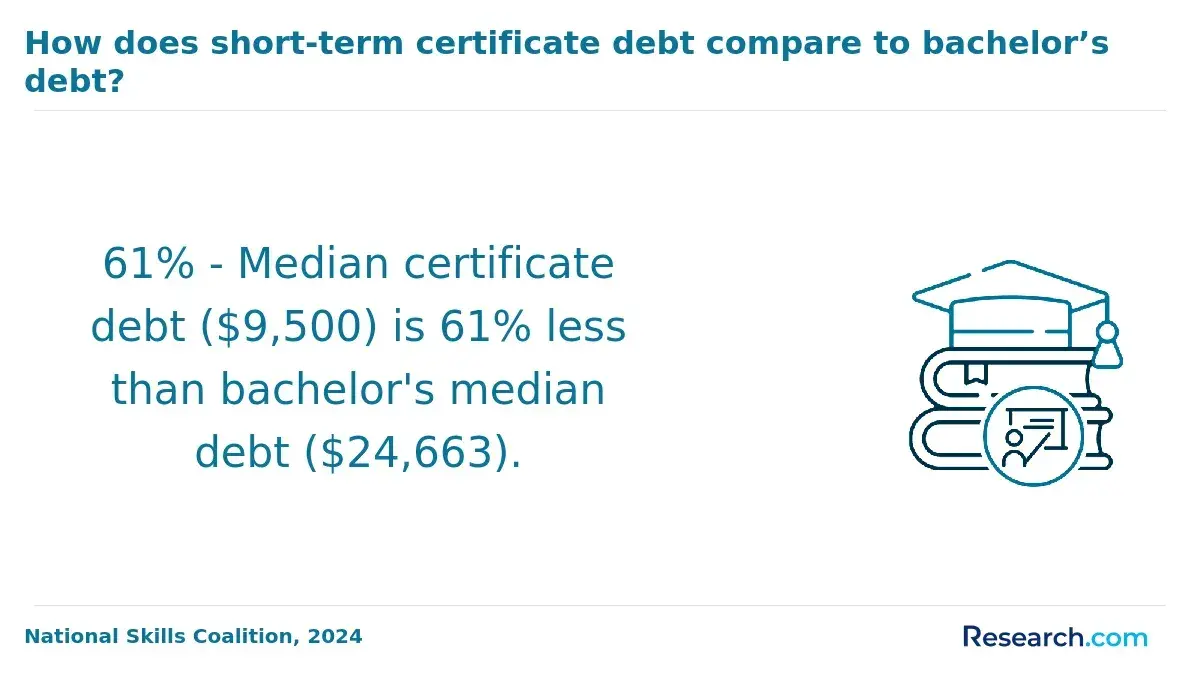
Cost is a major reason students compare formats. College Board's 2024-25 pricing data lists average published tuition and fees of $11,610 for in-state students at public four-year colleges and $43,350 at private nonprofit four-year colleges. These are not online-specific prices, but they show why students should compare total cost, not just format.
The table below summarizes the practical trade-offs that matter most when deciding between online and on-campus psychology study.
| Factor | Online psychology program | On-campus psychology program | Decision guidance |
| Schedule | Often asynchronous or evening-friendly | Usually tied to set class times | Online is stronger for working adults and caregivers |
| Interaction | Discussion boards, video meetings, email, virtual advising | In-person classes, office hours, student groups | Campus may fit students who need frequent live support |
| Research access | Varies by school; may include remote projects | Often easier access to labs and faculty research teams | Campus may be better for research-intensive doctoral preparation |
| Fieldwork | May be arranged near the student's location | Often tied to the school's local partners | Online students should confirm placement support before enrolling |
| Cost structure | May reduce commuting and housing costs | May include campus fees, relocation, parking, or housing | Online can be cheaper, but only if tuition and fees are competitive |
Students trying to minimize debt should compare tuition, mandatory fees, books, technology costs, transfer credits, and time to completion. Lists of cheap online colleges can be useful starting points, but affordability should be balanced with accreditation, student support, and whether the program matches your career goal.
Online study is not automatically easier. Psychology courses often require research papers, statistics, reading-heavy assignments, group projects, and ethical analysis. The best online students treat the program like a scheduled commitment rather than a side task.
What accreditation should an online psychology program have to be recognized and respected?
Accreditation is one of the most important quality checks for an online psychology program. It affects transfer credits, graduate school eligibility, employer confidence, federal financial aid access, and, in some cases, licensure eligibility.
At the college level, look first for recognized institutional accreditation. This means the whole institution has been reviewed for academic quality, governance, financial stability, student services, and learning outcomes. Without recognized institutional accreditation, credits may not transfer, graduate schools may reject the degree, and students may be ineligible for federal aid.
Programmatic accreditation depends on the type and level of psychology-related program. Use the following distinctions when evaluating a school:
- For bachelor's degrees in psychology, institutional accreditation is typically the key requirement because APA does not accredit undergraduate psychology programs.
- For doctoral psychology programs, APA accreditation is especially important for students pursuing licensure as psychologists, although state rules still vary.
- For counseling master's programs, CACREP accreditation may matter for licensure portability, employer expectations, and state board approval.
- For school psychology programs, NASP approval or APA accreditation may be relevant depending on the credential and state pathway.
- For applied or nonclinical psychology master's programs, programmatic accreditation may be less central than curriculum fit, faculty expertise, and employer relevance.
Red flags include unclear accreditation language, pressure-heavy admissions calls, promises of guaranteed licensure, refusal to disclose field-placement rules, and programs that imply a bachelor's degree alone qualifies you to provide therapy independently. A trustworthy program should clearly explain what the degree can and cannot do.
Before enrolling, verify accreditation directly through official accreditors or federal databases rather than relying only on marketing pages. If your goal involves licensure, contact the relevant state licensing board and ask whether the program's coursework and fieldwork structure can meet current requirements.
What courses and concentrations are typically offered in online psychology programs?
Online psychology programs usually combine foundational psychology courses, research methods, statistics, ethics, and electives. The goal is to help students understand human behavior, evaluate evidence, communicate clearly, and apply psychological concepts in real-world settings.
The table below shows common courses and concentrations and how each can support different academic or career goals.
| Area of study | What students typically learn | Common fit |
| Introduction to psychology | Major theories, research areas, and psychological concepts | All psychology students |
| Developmental psychology | Human development across childhood, adolescence, adulthood, and aging | Education, social services, counseling preparation |
| Abnormal psychology | Mental health conditions, diagnosis concepts, and treatment frameworks | Clinical, counseling, and human services pathways |
| Research methods | Study design, measurement, ethics, and evidence evaluation | Graduate school, research support, data-informed roles |
| Statistics for psychology | Quantitative analysis, interpretation, and reporting | Research, analytics, graduate preparation |
| Social psychology | Group behavior, attitudes, persuasion, prejudice, and social influence | Marketing, HR, community work, organizational roles |
| Cognitive psychology | Memory, learning, perception, attention, and decision-making | User experience, research, education, AI-adjacent work |
| Industrial-organizational psychology | Workplace behavior, selection, motivation, leadership, and performance | HR, talent development, organizational consulting |
Current technology trends are also shaping psychology education. Students increasingly encounter data analysis tools, telehealth ethics, digital assessment issues, user behavior research, and AI-related questions about privacy, bias, and decision-making. These topics are especially relevant for students interested in HR analytics, user experience research, behavioral health technology, or organizational psychology.
When choosing a concentration, start with the career or graduate program you want and work backward. The following approach can help you avoid picking electives that sound interesting but do not support your next step:
- Identify whether your goal is employment after graduation, graduate school, licensure, or career advancement.
- Review job postings or graduate admissions pages to see which courses, skills, or prerequisites appear repeatedly.
- Choose electives that build evidence-based skills, such as statistics, assessment, research design, writing, or applied behavior analysis.
- Ask whether the program offers capstones, internships, research projects, or faculty mentorship in your area of interest.
- Save syllabi and course descriptions because licensing boards or graduate schools may ask for documentation later.
How long does it take to complete an online psychology degree, and can you study part-time?
The time needed to complete an online psychology degree depends on your starting credits, enrollment intensity, transfer policy, term structure, and whether the program includes fieldwork. Online programs are often flexible, but flexible does not always mean faster.
The table below gives typical completion ranges for students who enter at the beginning of each degree level. Transfer students, accelerated students, and part-time students may finish outside these ranges.
| Program type | Typical full-time timeline | Typical part-time timeline | What can change the timeline |
| Associate degree | About 2 years | 3 or more years | Placement tests, transfer credits, course availability |
| Bachelor's degree | About 4 years | 5 to 6 or more years | Transfer credits, prior learning credit, course load, major requirements |
| Master's degree | 1 to 2 years | 2 to 4 years | Internship, thesis, practicum, cohort structure |
| Doctoral degree | 4 to 7 or more years | Varies widely | Dissertation, internship match, clinical hours, residency requirements |
Part-time study can be a smart choice if you are working, caring for family, or trying to pay as you go. The trade-off is that a longer timeline may delay salary gains, graduate school entry, or licensure progress. Full-time study may be faster, but it can increase short-term financial pressure and reduce your ability to work.
If you are worried about difficulty level, do not choose a major only because it appears easy. Psychology can be reading- and writing-intensive, and statistics courses can surprise students who expected only discussion-based classes. If workload is your main concern, it may help to compare psychology with guidance on what is the easiest bachelor's degree to get, but career fit should remain the bigger factor.
To estimate your timeline accurately, ask admissions or advising offices for a degree audit before enrolling. A strong audit should show which credits transfer, which courses remain, how often required courses are offered, and whether any capstone, internship, or practicum requirement could delay graduation.
What are the admission requirements for online psychology degrees at U.S. colleges?
Admission requirements for online psychology degrees vary by level and school, but most programs use similar categories: academic history, readiness for online learning, prerequisites, and sometimes professional or personal statements. Selective graduate programs may also evaluate research interests, field experience, writing ability, and fit with faculty expertise.
The table below outlines common admissions expectations by degree level so you can prepare the right materials before applying.
| Degree level | Common admission requirements | What applicants should prepare |
| Associate degree | High school diploma, GED, or equivalent; placement information may be required | Transcripts, placement scores if requested, financial aid documents |
| Bachelor's degree | High school diploma or transfer credits; minimum GPA may apply | Official transcripts, transfer-credit evaluation, application form |
| Master's degree | Bachelor's degree; minimum GPA; prerequisite psychology or statistics courses may be required | Transcripts, statement of purpose, resume, recommendations, writing sample if requested |
| Doctoral degree | Bachelor's or master's degree; strong academic record; research or clinical fit | Faculty-match statement, research experience, recommendations, interviews, writing sample |
Test requirements have become more flexible at many institutions, and some programs no longer require standardized exams. However, test-optional does not mean admission is automatic. Graduate psychology programs may still expect a focused statement of purpose, strong writing, prerequisite coursework, and evidence that your goals match the program.
Before applying, complete these practical steps to avoid delays:
- Request unofficial transcript reviews from each school so you can compare transfer-credit outcomes.
- Check whether psychology, statistics, biology, or research methods prerequisites are required before upper-level coursework.
- Ask whether online students receive the same advising, tutoring, library access, disability services, and career support as campus students.
- Confirm technology requirements, including webcam, proctoring software, learning platform access, and reliable internet expectations.
- For graduate programs, ask whether you need a thesis, capstone, practicum, or internship and how placements are approved.
A common mistake is applying to the fastest or cheapest program before checking whether credits will transfer or prerequisites will stack efficiently. A slightly higher tuition rate can sometimes cost less overall if the school accepts more credits and helps you graduate sooner.
What careers can you pursue with an online psychology degree, and do employers value it?
An online psychology degree can support many careers, but the job options depend heavily on degree level. A bachelor's degree is usually a broad behavioral science credential rather than a direct license to practice therapy. Graduate degrees can open more specialized roles, especially when they are aligned with counseling, school psychology, industrial-organizational psychology, research, or doctoral licensure pathways.
Employers generally care more about accreditation, skills, experience, and job relevance than whether courses were online. In many cases, your resume will list the degree and institution without identifying the delivery format. Still, you should be ready to show evidence of writing ability, data literacy, ethical judgment, teamwork, and applied experience.
The table below connects degree levels with realistic career directions and the type of work students may pursue.
| Credential | Possible career directions | Typical responsibilities | Career note |
| Associate degree or psychology coursework | Behavioral health aide, human services assistant, transfer student pathway | Client support, documentation, basic service coordination under supervision | Best used as a stepping stone to a bachelor's degree |
| Bachelor's in psychology | Case management, HR assistant, research assistant, social services, sales, customer insights | Interviewing, documentation, data collection, communication, program support | Experience and internships strongly influence job options |
| Master's in applied or I-O psychology | HR analytics, training, organizational development, research, consulting support | Survey design, assessment support, workforce analysis, program evaluation | Strong fit for students interested in workplace behavior |
| Master's in counseling-related field | Mental health counseling, substance use counseling, marriage and family therapy, school counseling | Assessment, treatment planning, supervised counseling, documentation | Licensure depends on state rules and supervised hours |
| Doctoral psychology degree | Licensed psychologist, professor, researcher, clinical director, assessment specialist | Testing, diagnosis, therapy, supervision, research, teaching | Usually requires licensure for independent clinical practice |
Students who want strong career mobility should plan beyond the major name. A psychology degree paired with internships, statistics, research tools, HR experience, social service experience, or technical writing can be more marketable than coursework alone. If you are deciding whether graduate school is worth the next investment, compare psychology pathways with broader lists of the most useful masters degrees for labor market demand and career flexibility.
The degree is most valuable when it is tied to a specific plan. For example, a student interested in therapy should choose courses and field experiences that prepare for licensure-oriented graduate study. A student interested in business should build analytics, HR, and organizational behavior skills. A student interested in research should seek methods courses, faculty projects, and data experience.
What is the salary outlook for psychology-related jobs requiring an online degree?
Psychology-related salaries vary widely because psychology graduates work in healthcare, education, business, government, nonprofits, research, and social services. Degree level, license status, location, employer type, and experience all affect pay.
The table below uses U.S. Bureau of Labor Statistics May 2024 median annual wage data for roles that may be relevant to psychology students. These figures describe occupations, not guaranteed outcomes for degree holders.
| Occupation | May 2024 median annual wage | Typical education or credential context | How psychology training may help |
| Psychologists | $94,310 | Doctoral degree and licensure commonly required for clinical roles | Assessment, research, diagnosis, therapy, behavioral science expertise |
| Substance abuse, behavioral disorder, and mental health counselors | $59,190 | Requirements vary; many roles require a master's degree and state licensure | Counseling foundations, abnormal psychology, ethics, human development |
| Social and community service managers | $78,240 | Bachelor's degree often required; master's may help for advancement | Program evaluation, client needs assessment, communication, leadership |
| Market research analysts | $76,950 | Bachelor's degree often required; quantitative skills are important | Survey design, consumer behavior, statistics, research methods |
| Human resources specialists | $72,910 | Bachelor's degree often required | Interviewing, employee behavior, training, motivation, workplace communication |
The highest-paying psychology pathway is usually not the shortest one. Clinical psychologist roles typically require doctoral education, supervised experience, exams, and licensure, while business and analytics roles may reward students who combine psychology with data skills. If salary is your main decision factor, compare psychology with other fields associated with the highest paying jobs before choosing a major.
Use salary data as a planning tool, not a promise. A bachelor's graduate entering a nonprofit support role may earn far less than a licensed psychologist or an experienced organizational consultant. The strongest return on investment usually comes from aligning the degree with an in-demand role, limiting debt, gaining supervised or internship experience, and building skills employers can verify.
How does an online psychology degree fit into licensure pathways for psychologists and counselors?
An online psychology degree can fit into licensure pathways, but the details depend on the profession, state, degree level, accreditation, coursework, supervised experience, and exams. The most important rule is simple: online coursework is not the problem by itself; failing to meet state licensing requirements is.
The table below explains how common psychology-related credentials connect to online study and licensure planning.
| Goal | Common education pathway | Licensure considerations | Online-program warning |
| Licensed psychologist | Doctoral degree in psychology, such as PhD or PsyD | State licensure, supervised hours, exams, and often APA-accredited doctoral or internship training | Many doctoral programs are hybrid rather than fully online because clinical training requires in-person components |
| Licensed professional counselor | Master's in counseling or closely related approved field | State-approved coursework, practicum, internship, supervised post-degree hours, and licensing exam | A general psychology master's may not meet counseling licensure requirements |
| Marriage and family therapist | Master's in marriage and family therapy or approved related field | State-specific coursework, clinical hours, supervision, and exam | Program title and curriculum must match board requirements |
| School psychologist | Specialist-level, master's-plus, or doctoral school psychology pathway | State education agency or board rules; supervised school-based training | Field placements must be approved and feasible in your location |
| Behavior analyst | Approved behavior analysis coursework and supervised fieldwork | Certification and state licensure rules vary | Psychology coursework alone may not satisfy behavior analysis credential requirements |
Before enrolling in any licensure-oriented online program, take these steps in order:
- Choose the exact license you want, such as psychologist, licensed professional counselor, school psychologist, marriage and family therapist, or behavior analyst.
- Find the licensing board for the state where you plan to practice and read its education, accreditation, coursework, practicum, internship, supervision, and exam requirements.
- Ask the program for a written statement explaining whether it is designed to meet that state's requirements.
- Confirm whether field placements can be completed in your state and whether the school has approval to place students there.
- Ask what happens if you move states before finishing the degree or before completing supervised hours.
Common mistakes include assuming all psychology master's degrees lead to counseling licensure, enrolling in a doctoral program without checking APA accreditation expectations, and overlooking supervised-hour rules. Because licensure rules change, students should verify requirements before enrollment and again before starting fieldwork.
Other Things You Should Know About
No. A bachelor's degree in psychology can prepare you for graduate study or entry-level human services roles, but independent therapy practice usually requires a qualifying graduate degree, supervised clinical hours, exams, and state licensure.
Employers are most likely to respect an online psychology degree when it comes from a recognized accredited institution and is supported by relevant experience, strong skills, and a clear career fit. Many diplomas do not indicate whether coursework was completed online.
Not necessarily. Online psychology programs often require substantial reading, writing, research, statistics, discussion participation, and independent time management. They can be more flexible, but flexibility should not be confused with lower academic expectations.
Often, yes. Many online psychology programs accept transfer credits from accredited colleges, but limits vary by school, course age, grade, residency requirement, and major requirement. Request a transfer evaluation before enrolling.
References
- 10 High-Paying Jobs with a BS in Psychology | University of Bridgeport https://www.bridgeport.edu/news/high-paying-jobs-with-a-bachelors-in-psychology-degree/
- Bachelor’s in Psychology Programs Online https://www.onlinemswprograms.com/careers/social-work-vs-counseling-vs-psychology/ba-psychology/
- Most Popular Online Psychology Degrees 2025 https://www.onlineu.com/degrees/psychology
- Fastest Growing Careers In Psychology | Psychology.org https://www.psychology.org/resources/fastest-growing-careers-in-psychology/
- Psychology Accreditation: What you need to know https://www.onlinepsychologydegrees.com/articles/accreditation/
- How to Become a Psychologist https://onlinecounselingprograms.com/mental-health-careers/how-to-become-psychologist/