2027 Is Online Learning Good for Introverts?

Co-Founder and Chief Data Scientist
Choosing between online and campus learning can feel personal if constant group activity drains your energy. Online learning matters because it is no longer a fringe option: NCES data released in 2024 show that more than half of U.S. undergraduates took at least one distance education course in fall 2022.
This guide is for introverted students comparing colleges, degree formats, workloads, participation expectations, and career outcomes. You will learn where online learning helps, where it can create new challenges, and how to choose a program that fits your energy, goals, and budget.
Key Things You Should Know
- Online learning is often a strong fit for introverts because asynchronous lectures, written discussions, and recorded materials allow more time to think before responding, but programs with heavy live participation may still feel socially demanding.
- Cost and format matter as much as personality fit. College Board reported average published in-state tuition and fees of $11,610 at public four-year colleges for 2024-2025, before housing, fees, technology, books, and lost work time are considered.
- Career outcomes depend on major, accreditation, experience, and location, for example, the BLS reported a May 2024 median annual wage of $105,990 for computer and information technology occupations, a field that often includes independent, analytical work.
How does online learning support the learning strengths and preferences of introverts?
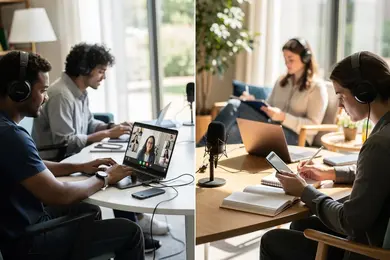
Online learning can be good for introverts when the course design gives students time to process information, communicate in writing, and manage social energy. Introversion does not mean shyness or lack of ambition, it usually means a person recharges through quieter, lower-stimulation environments and may prefer deeper thinking over rapid group interaction.
Many online programs match those preferences because they replace some spontaneous classroom demands with planned participation. Instead of answering immediately in a lecture hall, a student may review a recorded lecture, draft a discussion post, revise a project, or ask a professor a focused question by message.
The strongest fit usually appears when online courses include these features, because they let introverted learners show competence without relying only on live speaking speed:
- Asynchronous modules that allow students to watch lectures, take notes, and complete assignments during their most focused hours.
- Written discussion boards where participation is measured by thoughtful analysis rather than how quickly a student speaks up.
- Recorded sessions that reduce the pressure of absorbing everything in one live meeting.
- Smaller breakout groups or project teams with clear roles, deadlines, and expectations.
- Multiple communication channels, such as email, learning management system messages, office-hour appointments, and feedback comments.
Still, online learning is not automatically easy for every introvert. Some students find that home distractions, isolation, unclear instructions, or constant digital notifications create stress. The best online environment is not simply "less social"; it is structured, predictable, and academically supportive.
This comparison shows how common online learning features may affect introverted learners. Use it to identify whether a program's design matches how you concentrate, participate, and recover energy.
| Online learning feature | Why it can help introverts | Possible drawback |
| Asynchronous lectures | Students can pause, review, and learn without immediate performance pressure. | Requires strong time management and self-direction. |
| Discussion boards | Written responses allow more reflection before participating. | Frequent posting requirements can feel repetitive or artificial. |
| Recorded feedback | Students can revisit instructor comments privately. | Less real-time clarification if the instructor is slow to respond. |
| Live virtual sessions | Can create connection without commuting to campus. | Camera requirements and spontaneous participation may feel draining. |
| Independent projects | Supports deep work and focused research. | Less peer interaction may reduce informal accountability. |
Is online college generally better for introverted students than traditional campus programs?
Online college is often better for introverted students who value flexibility, privacy, and written communication, but it is not universally better than campus learning. The right choice depends on the student's major, need for hands-on facilities, social support, career goals, and ability to self-manage.
Traditional campus programs can be useful for introverts who want a structured routine, in-person tutoring, lab access, studio space, clinical placements, or a built-in community. Campus does not have to mean constant socializing; many introverted students thrive in smaller seminars, research labs, honors programs, or quiet academic departments.
Online programs may be a better fit when commuting, crowded lecture halls, unpredictable group work, or rigid schedules create unnecessary barriers. They can also help working adults, caregivers, military learners, and students in rural areas access programs that would otherwise be unavailable.
Before deciding, compare the learning environment rather than assuming one format is automatically superior. The table below summarizes where each option tends to work best for introverted students.
| Factor | Online college may fit better when... | Campus college may fit better when... |
| Energy management | You concentrate best in a quiet, controlled environment. | You need separation between home and school to stay focused. |
| Participation style | You prefer written discussion, scheduled meetings, and time to prepare. | You benefit from face-to-face questions, office visits, and spontaneous clarification. |
| Major requirements | Your field can be taught through digital tools, projects, readings, and remote collaboration. | Your program requires labs, clinical practice, studio equipment, or local field placements. |
| Support needs | You are comfortable asking for help through messages, appointments, and virtual tutoring. | You are more likely to use support when it is physically nearby. |
| Networking | You prefer intentional one-on-one outreach and professional online communities. | You want frequent in-person events, clubs, research groups, or employer visits. |
A good next step is to compare programs with recognized accreditation, clear student support, and transparent outcomes. If you are still building a shortlist, reviewing online accredited colleges can help you focus on institutions that meet baseline quality standards before you evaluate fit.
What types of online degree programs and majors tend to suit introverted learners?
Introverted learners often do well in online majors that reward analysis, writing, research, design, problem-solving, careful observation, or independent project work. However, personality should not be the only factor; students should also consider job outlook, licensure rules, internships, portfolio requirements, and whether the field's daily work actually matches their preferences.
Online degree choices generally fall into several practical categories. Some are highly independent, while others require more teamwork, presentations, fieldwork, or client interaction. The table below can help you compare majors by learning style rather than stereotype.
| Program area | Why it may suit introverted learners | What to check before enrolling |
| Computer science and information technology | Often emphasizes systems thinking, coding, troubleshooting, cybersecurity, and project-based work. | Look for hands-on labs, current software tools, employer-aligned projects, and internship support. |
| Data analytics and statistics | Rewards pattern recognition, independent analysis, and clear written interpretation of findings. | Check whether the curriculum includes SQL, Python, visualization tools, and applied datasets. |
| Accounting and finance | Involves detail-oriented work, rules, documentation, and structured problem-solving. | Confirm CPA-related course requirements if you plan to pursue public accounting. |
| Writing, communication, and technical writing | Allows students to build expertise through research, editing, documentation, and audience analysis. | Review portfolio opportunities and whether assignments mirror workplace deliverables. |
| Psychology, social science, and research-focused programs | Supports reflective reading, research design, analysis, and understanding human behavior. | Check whether graduate school, licensure, or supervised experience is needed for your target role. |
| Library science, information science, and instructional design | Often combines organization, technology, learning design, and user-focused problem-solving. | Confirm whether the degree level matches job requirements in your target setting. |
At the graduate level, introverts may appreciate programs centered on research, writing, and specialized expertise. Students considering academic, research, leadership, or advanced professional roles can explore online PhD programs, but they should compare dissertation expectations, faculty access, residency requirements, and whether the credential is respected in their field.
Programs that may be less comfortable for some introverts are not necessarily bad choices. Nursing, teaching, counseling, business administration, and public health can involve frequent interaction, but they may still fit introverts who value meaningful one-on-one communication, structured professional roles, or mission-driven work.
How do interaction and participation work for introverts in virtual classrooms and discussion boards?
Interaction in online classes usually happens through discussion boards, video meetings, group projects, peer reviews, instructor messages, and collaborative documents. For introverts, the key question is not whether interaction exists; it is whether the program gives students enough structure and preparation time to participate well.
Discussion boards are common because they document participation and encourage reflection. A strong discussion prompt asks students to apply readings, compare evidence, solve a problem, or respond respectfully to peers. A weak prompt simply asks everyone to "post once and reply twice," which can feel performative rather than meaningful.
Introverted students can make participation less draining by using a repeatable system. The following steps help turn online interaction into planned academic work rather than constant social pressure:
- Read the prompt early and identify what the instructor is actually measuring, such as analysis, evidence, reflection, or peer engagement.
- Draft your main response offline so you can revise your ideas before posting.
- Choose one or two classmates whose posts genuinely connect to your thinking instead of replying randomly.
- Ask specific questions in replies, such as "How would this apply in a workplace setting?" or "What evidence led you to that conclusion?"
- Schedule discussion time on your calendar so participation does not become a daily background stressor.
Live virtual classes can be more challenging. If cameras, cold calls, or breakout rooms are required, students should read the syllabus carefully and ask whether participation can include chat responses, prepared comments, polls, or follow-up reflections. The goal is not to avoid communication but to participate in a way that supports learning.
Group projects deserve special attention. Introverts often perform well when responsibilities are clear, but they may struggle when teams rely on vague coordination. Before a project begins, propose a shared task list, deadlines, preferred communication channels, and meeting schedule. This reduces social ambiguity and prevents last-minute conflict.
What should introverts look for when choosing an accredited online college or university?
Introverts should look for accredited online colleges with clear course formats, responsive faculty, strong advising, mental health support, transparent costs, and participation expectations that match their communication style. Accreditation is the first filter because it affects credit transfer, graduate school eligibility, employer recognition, and access to federal financial aid.
Institutional accreditation should come from an agency recognized by the U.S. Department of Education or the Council for Higher Education Accreditation. Some fields also require programmatic accreditation, such as nursing, education, counseling, social work, business, engineering, or public health. Requirements vary by profession and state, so students should verify them before enrolling.
For introverted students, program format is just as important as reputation. Some online programs are highly flexible, while others require frequent live attendance. If you need maximum control over pace and study time, researching self-paced colleges can help you compare options designed around independent progression.
Use this checklist when speaking with admissions advisors or program coordinators. These questions reveal whether the program's structure supports your learning style and long-term goals:
- Is the program institutionally accredited, and does my intended field require additional programmatic accreditation?
- Are classes asynchronous, synchronous, self-paced, cohort-based, or a mix of formats?
- How often are live meetings, camera use, presentations, or group projects required?
- What is the average instructor response time for questions and feedback?
- Are tutoring, writing support, library services, disability accommodations, and counseling available fully online?
- What technology, software, proctoring, lab, internship, or residency fees are not included in tuition?
- How many transfer credits are accepted, and how will they apply to major requirements?
- What career services are available for online students, including mock interviews, resume reviews, and employer events?
Common red flags include vague accreditation claims, pressure to enroll immediately, unclear tuition totals, limited faculty information, poor transfer-credit transparency, and programs that cannot explain how online students receive academic support. If a school avoids direct answers, keep comparing.
How do admission requirements and application processes differ for online programs that attract introverts?
Online admission requirements are often similar to campus requirements, but the process may be more flexible, more document-driven, and more convenient for students who prefer written communication. Many online programs also offer multiple start dates, rolling admission, or accelerated terms, which can help students begin when they are emotionally and logistically ready.
Typical undergraduate online admissions may require a high school diploma or GED, transcripts, an application form, identification, and sometimes placement testing or prior college records. Selective programs may request essays, recommendations, minimum GPA requirements, or prerequisite courses. Graduate programs commonly require a bachelor's degree, transcripts, resume, statement of purpose, recommendations, and field-specific prerequisites.
For introverts, the application process may feel easier because much of it can be completed privately and asynchronously. Still, applicants should not rush. Programs with fast start dates can be useful, but only if the student has confirmed accreditation, cost, workload, transfer credit, and support. If timing is a priority, compare online colleges starting this month while still applying the same quality checks.
Before submitting applications, follow a sequence that protects your time and money. This is especially important if you are applying to several programs with different calendars:
- Confirm that the school and program meet accreditation expectations for your goal.
- Request an unofficial transfer credit estimate before paying deposits when possible.
- Calculate total cost, including fees, technology, books, proctoring, and any required campus visits.
- Review the first two terms of the course plan to see whether the workload is realistic.
- Ask how participation is graded, including live attendance, discussion posts, presentations, and group projects.
- Submit the FAFSA if you plan to use federal aid and compare net cost instead of sticker price.
- Save all admissions, financial aid, and transfer-credit communications in writing.
A common mistake is choosing the fastest admissions process rather than the strongest academic fit. Quick acceptance can be convenient, but it should not replace careful evaluation of student outcomes, support quality, and whether the program prepares you for the career you want.
What is the typical length, format, and workload of online degrees for introverted students?
Online degree length depends on the credential, transfer credits, enrollment intensity, and academic calendar. Introverted students often appreciate the flexibility, but they should be realistic: online courses can save commuting time, yet they are not automatically easier or lighter than campus courses.
A full-time online bachelor's degree typically takes about four years for first-time students, while transfer students may finish sooner. Associate degrees often take about two years full time, master's degrees commonly take one to three years, and doctoral timelines vary widely by field, dissertation requirements, and professional practice components.
Workload is usually measured by credit hours. A three-credit course often requires several hours of reading, assignments, lectures, discussion, and study each week. Accelerated courses compress the same expectations into shorter terms, which can be efficient but intense.
The table below summarizes common online degree formats and the trade-offs introverted students should consider before choosing a pace.
| Format | Typical structure | Best fit | Main trade-off |
| Traditional semester | Courses run about 15 to 16 weeks. | Students who want more time to read, reflect, and manage energy. | Completion may take longer than accelerated formats. |
| Accelerated term | Courses run in shorter blocks, often with concentrated weekly deadlines. | Students with strong organization and a desire to finish faster. | Less recovery time between assignments and discussions. |
| Self-paced or competency-based | Students progress by completing assessments or modules. | Independent learners with prior knowledge or consistent study routines. | Requires high self-motivation and careful planning. |
| Cohort-based | Students move through courses with the same peer group. | Learners who want predictable community and structured deadlines. | Less schedule flexibility if life circumstances change. |
| Part-time enrollment | Students take fewer courses per term. | Working adults, caregivers, and students managing burnout risk. | Longer time to graduation can increase total living or opportunity costs. |
Students with substantial transfer credit may consider accelerated completion options, including a 1-year bachelor degree online. These paths can be practical for adults with prior credits, military training, professional certifications, or an associate degree, but they are rarely realistic for students starting from zero credits.
A useful planning rule is to match course load to your actual energy, not your ideal schedule. If you work full time or need quiet recovery time after long days, part-time enrollment may produce better grades, lower stress, and stronger retention than an overloaded accelerated plan.
How can introverts build career-ready skills and professional networks through online learning?
Introverts can build career-ready skills and professional networks online by using intentional, low-pressure strategies: portfolio projects, faculty relationships, virtual internships, career services, professional communities, and targeted one-on-one outreach. Networking does not have to mean large events or constant self-promotion.
Employers increasingly expect graduates to demonstrate skills, not just list courses. For online students, that means turning assignments into evidence: dashboards, writing samples, code repositories, case analyses, research posters, lesson plans, design portfolios, or project summaries.
Introverted students often network best through prepared, purposeful communication. The following actions help build relationships without relying on high-volume socializing:
- Ask one professor each term a specific question about your work, career path, or research interests.
- Use career services early for resume feedback, mock interviews, internship searches, and job-search planning.
- Create a simple portfolio that shows your best projects, the tools you used, and the problem each project solved.
- Join one professional association, online community, or student group related to your field instead of joining many inactive groups.
- Request short informational interviews with alumni or professionals using prepared questions and a clear time limit.
- Practice written professional communication, including concise emails, project updates, meeting agendas, and follow-up notes.
AI is changing what "career-ready" means. Many employers now value workers who can use AI tools responsibly, verify outputs, protect data privacy, and combine automation with human judgment. Introverted students can benefit from this trend by building technical fluency and showing how they use tools to improve analysis, writing, design, or workflow without misrepresenting their own work.
Internships and experiential learning still matter. If a program is fully online, ask whether internships can be completed locally or remotely, whether the school helps students find placements, and whether project-based capstones can substitute for field experience in your target industry.
What careers and salary outcomes are common for introverts who complete online degrees?
Introverts who complete online degrees commonly pursue careers in technology, analytics, accounting, writing, research, operations, design, information management, and some health or human-service roles. Salary outcomes vary by occupation, degree level, experience, location, employer, portfolio strength, licensure, and labor market conditions.
The BLS reported a May 2024 median annual wage of $105,990 for computer and information technology occupations, making technology one of the stronger salary categories for students who enjoy analytical and independent work. This figure is not a promise for any graduate; it is a broad occupational median that includes many roles, experience levels, and regions.
The table below connects introvert-friendly work patterns with common career paths. Use it as a starting point for research, not as a fixed personality test.
| Career area | Common responsibilities | Why it may fit introverts | Typical education path |
| Software development | Design, build, test, and improve applications or systems. | Offers deep problem-solving, project work, and measurable outputs. | Bachelor's degree in computer science, software engineering, or related field; portfolio often matters. |
| Data analytics | Clean data, build reports, identify trends, and explain findings. | Combines independent analysis with structured communication. | Bachelor's degree in analytics, statistics, business, economics, or computer science. |
| Accounting | Prepare records, analyze financial data, support audits, and ensure compliance. | Rewards accuracy, organization, and rules-based thinking. | Bachelor's degree in accounting or finance; CPA requirements vary by state. |
| Technical writing | Create manuals, guides, documentation, and instructional materials. | Emphasizes clarity, research, editing, and user-focused communication. | Bachelor's degree in English, communication, technical writing, or a technical field. |
| Cybersecurity analysis | Monitor systems, investigate threats, document incidents, and recommend protections. | Often involves focused investigation and structured response processes. | Degree in cybersecurity, IT, or computer science; certifications may help. |
| Instructional design | Design learning materials, courses, assessments, and training programs. | Blends analysis, creativity, technology, and planned stakeholder communication. | Bachelor's or master's degree in education, instructional design, or related field. |
Students should also consider advancement paths. An introvert may start in an individual contributor role and later move into senior specialist, analyst, architect, manager, consultant, or researcher positions. Leadership can still fit introverts when it relies on preparation, thoughtful communication, coaching, and strategic decision-making rather than constant public visibility.
The biggest salary mistake is assuming that an online degree alone determines earnings. Employers usually evaluate a combination of accredited education, skills, work samples, internships, certifications, communication ability, and relevant experience.
What strategies help introverted students thrive emotionally and academically in online programs?
Introverted students thrive in online programs when they create structure, protect recovery time, communicate early, and use support services before problems become emergencies. The goal is not to become more extroverted; it is to build systems that let your strengths show consistently.
Online learning can blur boundaries between school, work, and home. Without a commute or classroom schedule, students may feel like they should always be available. That can be especially draining for introverts who need quiet time to reset.
These strategies support both emotional energy and academic performance:
- Create a weekly study block schedule that includes reading time, assignment time, discussion time, and recovery time.
- Set communication windows so you are not checking course messages all day.
- Preview syllabi before the term starts and mark live sessions, major projects, exams, and group deadlines.
- Use office hours with prepared questions instead of waiting until you feel lost.
- Tell group members your preferred working style early, including response times and task preferences.
- Build a quiet, repeatable study setup with headphones, saved passwords, required software, and backup internet options when possible.
- Use counseling, advising, tutoring, or disability services if anxiety, burnout, attention challenges, or life stress interfere with learning.
There are also mistakes to avoid. Do not choose a program only because it requires less face-to-face interaction. Avoid disappearing from class when overwhelmed, because online silence can quickly turn into missed deadlines. Do not assume recorded lectures mean flexible deadlines. And do not ignore required presentations, proctored exams, residencies, labs, or internships until late in the program.
A healthy online learning plan should feel challenging but sustainable. If every course requires constant live meetings, unclear group work, or rapid-fire participation, the format may not match your learning style even if the program is technically online.
Other Things You Should Know About
It can be, especially when courses use written discussion, recorded lectures, and predictable deadlines. However, shy students should still expect some interaction through messages, group work, presentations, or live sessions depending on the program.
Yes. Most online classes grade participation in some form, often through discussion boards, peer replies, live attendance, quizzes, or collaborative projects. The advantage is that participation is often more structured and easier to prepare for than in-person discussion.
There is no single best degree for every introvert. Strong options often include computer science, data analytics, accounting, technical writing, cybersecurity, psychology, and information science, but the best choice depends on your career goal, strengths, and required credentials.
Yes. Introverts can network effectively through one-on-one faculty conversations, alumni messages, virtual career events, portfolio sharing, internships, and professional communities. Quality of contact usually matters more than the number of people contacted.
References
- 5 Tips for Engaging Introverted Students in a Virtual Setting - Tutored By Teachers https://tutored.live/5-tips-for-engaging-introverted-students-in-a-virtual-setting/
- Embracing Introversion: Ways to Stimulate Reserved Students in the Classroom https://www.edutopia.org/blog/introverted-students-in-classroom-tony-baldasaro
- An Introverts Guide to College https://www.ucumberlands.edu/blog/introverts-guide-college
- Career development for introverts https://the-wellness-cloud.com/career-development-for-introverts/
- Applying to College as an Introvert: Extracurricular Activities https://mercered.com/applying-to-college-as-an-introvert-extracurricular-activities/
- Understanding School-Related Stress for Introverted Students and How to Address It https://northlakebh.org/understanding-school-related-stress-for-introverted-students-and-how-to-address-it/
- Online Vs In-Person Classes: Is One Better Than The Other? https://unity.edu/articles/online-vs-in-person-classes/
- Why Online School is Ideal for Shy and Introverted Students https://foresttrailacademy.com/why-online-school-is-better-for-shy-and-introverted-students/
- About https://www.link-challenges.com/networking-strategies-for-introverts-building-meaningful-professional-connections-on-your-own-terms.html
- Helping Introverts Thrive in the Classroom https://gradelink.com/helping-introverted-students/