2027 Best Online Degrees if You Want to Keep Working

Co-Founder and Chief Data Scientist
Keeping a paycheck while earning a degree is often the smartest path, but only if the program fits your schedule, budget, and career goal. BLS education-pay data show full-time workers with a bachelor's degree had median weekly earnings of $1,543 in 2024, compared with $930 for workers with only a high school diploma.
This guide helps working adults compare online degrees, flexible formats, costs, accreditation, career outcomes, and red flags so they can choose a program that supports advancement without forcing them to quit work.
Key Things You Should Know
- The strongest online degree options for working adults usually combine flexible scheduling with clear labor-market value, especially in business, information technology, cybersecurity, data analytics, accounting, nursing, health administration, education, and human services.
- College Board's 2024 pricing data lists average published tuition and fees at $11,610 for in-state public four-year colleges and $43,350 for private nonprofit four-year colleges, so transfer credits, employer tuition benefits, and total fees matter as much as sticker price.
- Regional or institutional accreditation affects financial aid and credit transfer, while fields such as nursing, teaching, accounting, counseling, and social work may require state-specific program approval.
What are the best online degrees for working adults who want to keep their jobs?
The best online degrees for working adults are not simply the highest-paying majors. They are programs that match a realistic weekly study schedule, accept prior college credit when possible, and lead to roles that employers commonly hire for without requiring full-time daytime attendance. If you are still comparing fields, a broader look at the best college degrees for the future can help you connect today's program choice with long-term workforce demand.
The table below compares practical online degree options for people who want to keep working. Use it to narrow your choices by career fit, typical flexibility, and the kind of worker each degree serves best.
| Online degree area | Best fit for working adults who want to... | Common career directions | Important trade-off |
| Business administration | Move into supervision, operations, project coordination, sales management, or general management | Operations manager, business analyst, account manager, project coordinator | Broad degrees are flexible, but students should choose concentrations or electives tied to a specific career goal. |
| Information technology | Transition into tech support, systems administration, cloud support, or IT management | IT specialist, systems administrator, network support analyst, cloud support associate | Hands-on labs, certifications, and portfolio projects can matter as much as the degree title. |
| Cybersecurity | Build on IT experience or enter a security-focused technical career | Security analyst, compliance analyst, incident response associate | Many employers prefer experience; beginners may need help-desk, networking, or systems roles before security roles. |
| Data analytics or data science | Use math, software, and business data to improve decisions | Data analyst, business intelligence analyst, reporting analyst | Students need comfort with statistics, databases, and programming; a project portfolio is important. |
| Accounting | Prepare for bookkeeping, corporate accounting, audit, tax, or CPA-related coursework | Staff accountant, auditor, tax associate, payroll analyst | CPA rules vary by state and often require more credits than a bachelor's degree alone provides. |
| RN-to-BSN or nursing | Advance from registered nursing into broader clinical, leadership, or graduate-study pathways | BSN-prepared registered nurse, charge nurse, care coordinator | Clinical requirements and state authorization must be checked before enrolling. |
| Health administration | Move from clinical, administrative, or support roles into healthcare operations | Practice manager, health services coordinator, medical office manager | Leadership roles may require experience in addition to the degree. |
| Education | Enter teaching, complete teacher-licensure coursework, or advance as an educator | Teacher, instructional coordinator, paraprofessional-to-teacher candidate | Licensure depends heavily on state approval, field placements, and testing requirements. |
| Human services, psychology, or social work | Work in community programs, case management, behavioral health support, or nonprofit services | Case manager, social services assistant, behavioral health technician | Licensed counseling and clinical social work generally require graduate education and supervised experience. |
The right choice depends on your starting point. A working adult with healthcare experience may get more value from an RN-to-BSN or health administration program than from a general business degree, while someone already handling spreadsheets, reporting, or operations may find data analytics or business administration more immediately useful.
How does studying online compare to campus-based programs for full-time workers?
Online study can be better than campus study for full-time workers when the program is designed for adults, not merely a livestream version of daytime classes. The main advantage is control over when you complete readings, discussions, exams, and projects, especially if you work shifts, travel, care for family, or cannot commute several times per week.
The table below shows how online and campus-based programs usually compare for students who are already employed. It focuses on decision factors that affect your ability to stay enrolled while working.
| Factor | Online degree programs | Campus-based programs | Best choice if you work full time |
| Schedule | Often asynchronous, evening-based, accelerated, or self-paced | Often fixed class times, though evening and weekend options exist | Online is usually better when your work schedule changes. |
| Commute | No regular commute for most coursework | Requires travel to campus, parking, and time between classes | Online is usually better when time is the main barrier. |
| Interaction | Uses discussion boards, video meetings, group projects, and virtual advising | Offers face-to-face class time, campus events, and in-person faculty access | Campus may be better if you learn best through in-person structure. |
| Hands-on requirements | May require local practicums, labs, clinicals, student teaching, or proctored exams | Usually provides labs and placements through campus systems | Depends on the field; regulated programs need extra checking. |
| Self-management | Requires strong time management and comfort with learning platforms | Provides more built-in structure through scheduled attendance | Online works best if you can protect weekly study blocks. |
Many adult learners do best with asynchronous or self-paced formats because they reduce schedule conflict. If flexibility is your top priority, comparing the best self-paced online college options can help you identify programs that let you move faster through material you already know and slow down when work gets busy.
Online is not automatically easier. A realistic rule is to plan roughly 8 to 12 hours per week for each standard three-credit course, though workload varies by subject, school, and term length. The workers who succeed usually treat online courses like fixed appointments rather than optional tasks.
Which online degrees offer the strongest career outcomes, salary potential, and job security?
The strongest career outcomes usually come from degrees connected to growing occupations, clear employer demand, licensing pathways, or measurable technical skills. Salary should not be the only factor, but BLS 2024 wage and outlook data can help you compare options without relying on marketing claims from schools.
The table below summarizes several online degree paths with strong career relevance. The salaries shown are occupation-level medians, not promises for new graduates, and actual pay varies by experience, region, employer, credentials, and industry.
| Degree path | Relevant occupation example | BLS 2024 median pay | BLS projected growth, 2024-2034 | Why it can work for employed adults |
| Cybersecurity or information assurance | Information security analyst | $124,910 | 29% | Strong demand and online-friendly coursework, especially for students with IT experience. |
| Data science or analytics | Data scientist | $112,590 | 34% | Useful across finance, healthcare, retail, government, and technology employers. |
| Software development or computer science | Software developer | $133,080 | 15% | Project-based learning can be completed online, but portfolio quality matters. |
| Health administration | Medical and health services manager | $117,960 | 23% | Good fit for healthcare workers moving toward operations or leadership. |
| Accounting | Accountant or auditor | $81,680 | 5% | Stable professional pathway with clear advancement routes and certification options. |
| Nursing | Registered nurse | $93,600 | 5% | RN-to-BSN programs can support advancement for licensed nurses who keep working. |
| Business administration | Management analyst | $101,190 | 9% | Flexible degree for workers moving into analysis, process improvement, or management. |
Technology-related degrees are being reshaped by AI. That does not mean workers should avoid them; it means they should choose programs that teach durable skills such as problem framing, data interpretation, cybersecurity fundamentals, systems thinking, communication, and ethical use of automation tools. In business and healthcare programs, AI literacy is also becoming useful because employers increasingly expect professionals to work with analytics dashboards, workflow automation, and digital records.
Job security also depends on how closely your degree connects to real tasks. A cybersecurity program with labs, cloud security projects, and networking fundamentals is more career-relevant than a program built mostly around theory. A business degree with analytics, finance, operations, and project management coursework may be more useful than one with few applied assignments.
What admission requirements do online degree programs for working adults typically have?
Online degree admissions are often designed for adult learners, but requirements still vary by level, selectivity, and major. Bachelor's completion programs may expect previous college credits, while first-year online bachelor's programs may admit students directly from high school or GED completion.
Most working adults should prepare the following materials before applying. These items help schools determine placement, transfer credit, financial aid eligibility, and readiness for college-level work.
- Official transcripts from high school, GED programs, and every college previously attended.
- A completed application and, in some cases, a short personal statement or career-goal essay.
- Proof of English composition, college math, or placement readiness if the school requires it.
- Professional resume or work-history information for adult degree-completion, competency-based, or prior-learning programs.
- Program-specific documentation, such as an active RN license for RN-to-BSN programs or prerequisite science courses for some healthcare programs.
Test-optional policies are common, especially for adult and transfer students, but "test optional" does not mean "open admission." Selective programs may still evaluate GPA, prerequisite grades, professional experience, essays, interviews, or space limitations.
Transfer credit can be the biggest admissions advantage for working adults. Before applying widely, ask each school for an unofficial transfer review or degree audit so you can see how many credits apply to the program, not just how many credits the school accepts in general.
How long do online degree programs take and how flexible are class schedules?
Program length depends on the degree level, credits already earned, course load, and term format. A student entering with no prior credit usually needs more time than a returning adult who has completed general education courses, military training, industry certifications, or previous college coursework.
The table below gives practical timeline ranges for common online pathways. These are planning estimates, not guarantees, because schools use different calendars, credit requirements, and transfer policies.
| Program type | Typical time if studying part time | Typical time if studying full time | Best for |
| Certificate | 6 to 18 months | 3 to 12 months | Workers who need a focused skill upgrade without committing to a full degree. |
| Associate degree | 2.5 to 4 years | About 2 years | Students starting college, changing fields, or building toward a bachelor's degree. |
| Bachelor's completion program | 2 to 4 years | 1 to 2.5 years | Adults with substantial transfer credit who need to finish a four-year credential. |
| Full bachelor's degree | 4 to 6 years | About 4 years | Students with little or no prior college credit. |
| Master's degree | 2 to 4 years | 1 to 2 years | Professionals seeking advancement, specialization, or licensure-related graduate study. |
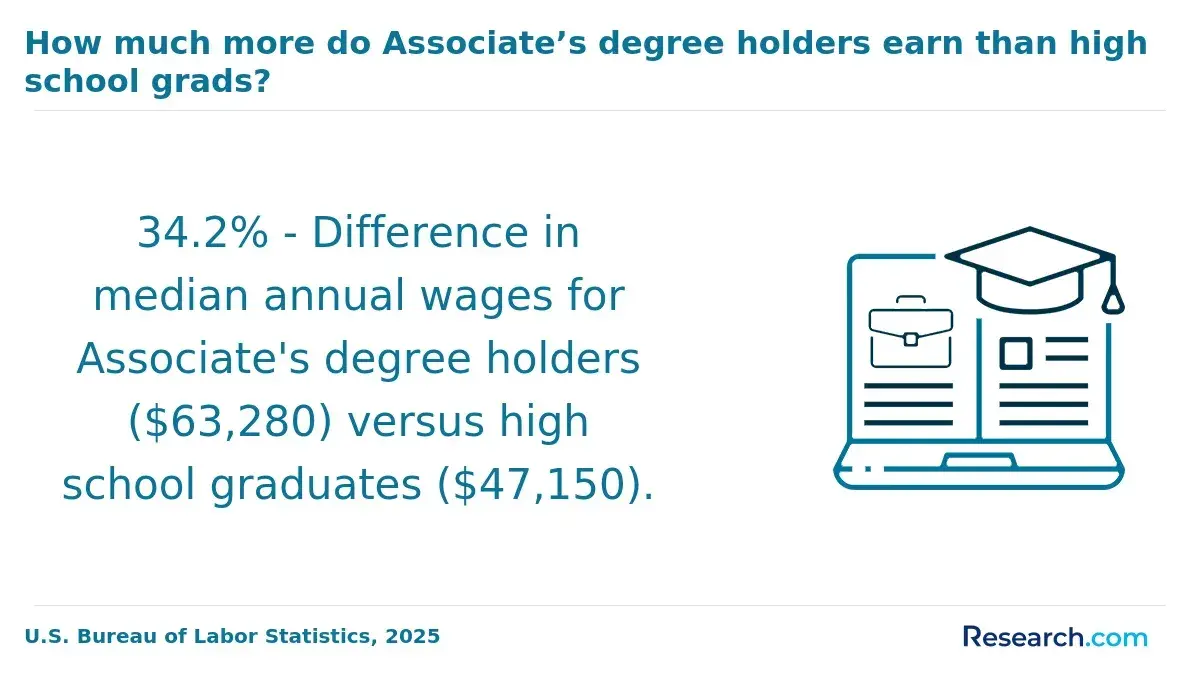
If you need a shorter starting point, an associate degree online may be useful for building transferable credits, qualifying for entry-level roles, or testing whether online learning fits your life before committing to a bachelor's program.
Flexible schedules come in several forms, and the differences matter. Asynchronous courses let you complete work by weekly deadlines; synchronous courses require live attendance at set times; accelerated courses compress work into shorter terms; competency-based programs may let you progress by proving mastery. The most flexible format is not always the easiest one, because shorter terms and self-paced models require discipline.
How much do online degrees cost, and what financial aid options are available?
Online degrees can reduce commuting and relocation costs, but tuition is only one part of the price. Working adults should compare total program cost, including technology fees, books, proctoring fees, clinical or field-placement expenses, graduation fees, and the cost of reducing work hours if that becomes necessary.
College Board's 2024 pricing data shows why school type matters: average published tuition and fees were $11,610 for in-state students at public four-year colleges, $30,780 for out-of-state students at public four-year colleges, and $43,350 at private nonprofit four-year colleges. These are sticker prices, so your net cost may be lower after grants, scholarships, employer benefits, and transfer credits.
Common ways to lower the cost include the following. Review these before enrolling, because many savings options must be approved before you start classes.
- Submit the FAFSA to determine eligibility for federal grants, federal student loans, and work-study options where available.
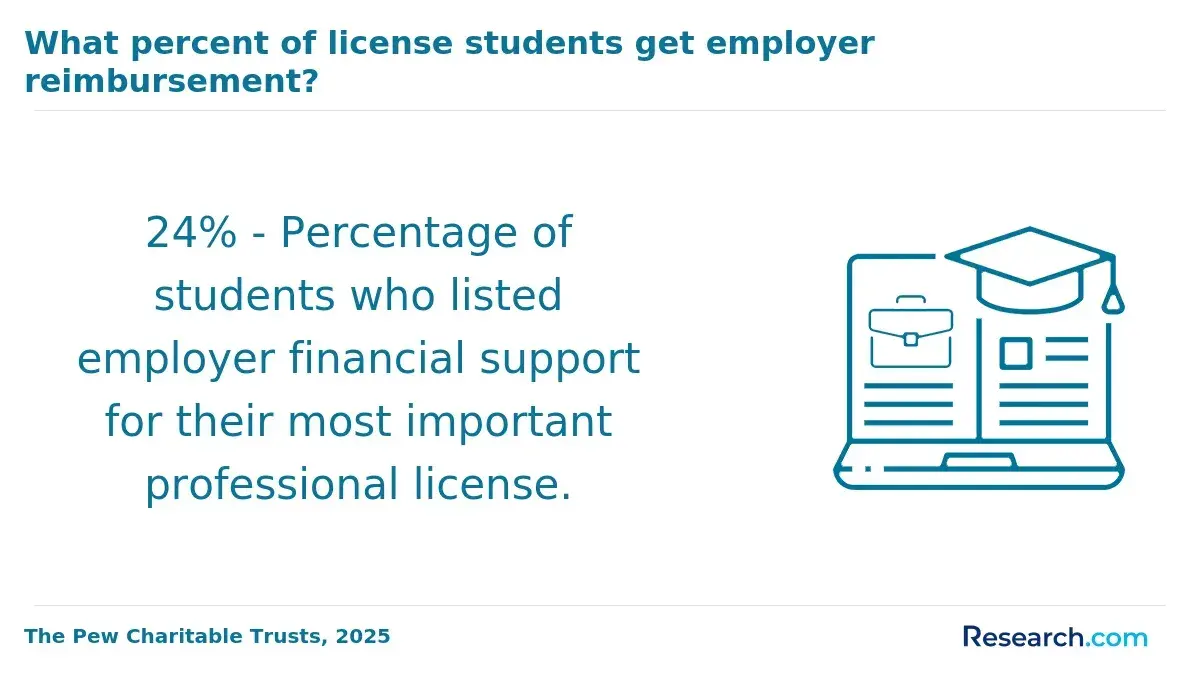
- Ask your employer about tuition reimbursement, tuition assistance, approved-provider lists, grade requirements, and service commitments after reimbursement.
- Choose a school with generous transfer-credit policies for prior college courses, military training, industry certifications, or standardized exams.
- Compare per-credit tuition with the full program cost, including mandatory online fees and course materials.
- Consider public universities, community colleges, and the best affordable online colleges if minimizing debt is a top priority.
- Avoid borrowing up to the maximum just because the loan is offered, base borrowing on the credential's realistic career value and your current obligations.
A lower-cost program is not automatically the better investment if it lacks accreditation, career support, required clinical placements, or transferability. A higher-cost program is not automatically better either. The best financial decision is usually the accredited program that gets you to the right credential with the fewest repeated credits, the clearest schedule, and the least unnecessary debt.
How can working adults evaluate accreditation and school quality for online programs?
Accreditation is one of the first quality checks for any online degree. In the U.S., institutional accreditation means a recognized accrediting agency has reviewed the school's academic quality, governance, finances, student services, and learning outcomes. It also affects federal financial aid eligibility and whether credits are likely to transfer.
Working adults should evaluate quality in a specific order. This prevents the common mistake of falling in love with a convenient schedule before confirming that the credential will be recognized.
- Confirm the school's institutional accreditation through the U.S. Department of Education or the Council for Higher Education Accreditation database.
- Check whether the program has specialized accreditation when the field expects it, such as nursing, business, education, counseling, social work, engineering technology, or public health accreditation.
- For licensed fields, verify state authorization and licensure alignment with the licensing board in the state where you plan to work.
- Review transfer-credit rules, course availability, graduation requirements, and whether online students have equal access to advising, tutoring, libraries, career services, and disability accommodations.
- Ask for outcome information such as retention, graduation, licensure exam pass rates, internship placement, or employment data, but interpret school-reported outcomes carefully.
Red flags include pressure to enroll immediately, vague accreditation language, unclear tuition pages, promises of guaranteed jobs or salaries, poor disclosure of fees, limited faculty information, and programs that cannot explain how online students complete required labs, clinicals, practicums, or student teaching.
Quality is not determined by online format alone. Many respected public and private nonprofit universities offer online programs, and some for-profit institutions are accredited as well. The safer question is not "What type of institution is this?" but "Is this specific program accredited, affordable for me, transparent, aligned with my goal, and supported well enough for working adults?"
What does the curriculum and coursework look like in top online degrees for professionals?
Top online degrees for professionals usually combine core theory, applied assignments, collaboration, and career-focused projects. A strong program should help you build proof of skill, not just complete quizzes. For working adults, the best coursework often connects directly to problems they see on the job.
The table below shows what coursework often looks like in popular online degree areas. Use it to compare whether the curriculum matches the skills employers will expect in your target role.
| Degree area | Common coursework | Applied learning to look for | Career skill developed |
| Business administration | Accounting, finance, marketing, operations, business law, management, strategy | Case studies, business plans, process-improvement projects | Decision-making, budgeting, leadership, communication |
| Information technology | Networking, operating systems, databases, cloud computing, scripting, cybersecurity basics | Virtual labs, troubleshooting simulations, certification-aligned projects | Systems support, technical problem-solving, infrastructure knowledge |
| Cybersecurity | Network security, risk management, incident response, digital forensics, governance | Security labs, threat analysis, policy projects, capture-the-flag exercises | Risk assessment, defensive security, compliance awareness |
| Data analytics | Statistics, SQL, Python or R, visualization, predictive analytics, business intelligence | Dashboards, data-cleaning projects, portfolio case studies | Data interpretation, reporting, analytical storytelling |
| Accounting | Financial accounting, managerial accounting, audit, taxation, accounting information systems | Spreadsheet models, tax cases, audit simulations | Financial reporting, compliance, analysis, documentation |
| Health administration | Healthcare finance, policy, quality improvement, ethics, informatics, operations | Healthcare process reviews, quality-improvement plans, capstone projects | Healthcare operations, compliance, leadership |
| Education | Learning theory, classroom management, assessment, instructional design, special education | Field observations, lesson plans, student teaching, teaching portfolios | Instruction, assessment, classroom practice |
For career changers, prerequisites matter. A data analytics master's program may expect statistics or programming experience; a nursing bridge program may require an active license; an accounting program may require specific upper-division credits for CPA preparation. Ask admissions advisors to separate "recommended background" from "required background" so you do not enroll in a program that assumes skills you have not yet built.
Working adults should also look for curriculum signals that support employability: capstones, portfolios, internship alternatives for employed students, employer-sponsored projects, certification preparation, and access to software tools used in the field. These features are especially valuable when you need to show career readiness without leaving your current job for a traditional internship.
Which online degrees align with licensing or certification requirements in regulated professions?
Some online degrees lead to careers where a degree alone is not enough. Regulated professions may require state approval, supervised practice, background checks, exams, fingerprinting, clinical hours, student teaching, or post-degree experience. This is where working adults need to be especially careful, because an otherwise legitimate online program may not meet requirements in every state.
The table below highlights common regulated pathways. Use it as a starting point, then verify requirements with the state board or agency where you plan to work.
| Field | Online degree that may apply | Common licensing or certification issue | What to verify before enrolling |
| Nursing | RN-to-BSN, BSN, MSN | RN licensure, clinical placements, board approval, state authorization | Whether the program is approved for your state and how clinical requirements are arranged. |
| Teaching | Bachelor's or master's in education | Teacher preparation approval, student teaching, state exams | Whether the program leads to initial licensure in your state and subject area. |
| Accounting | Bachelor's or master's in accounting | CPA education-credit rules, exam eligibility, ethics requirements | Whether courses meet your state board's credit-hour and subject-area requirements. |
| Social work | BSW or MSW | CSWE accreditation, supervised hours, state exams | Whether the degree is accredited and suitable for the license level you want. |
| Counseling | Master's in counseling | CACREP expectations in some states or employer settings, supervised experience, exams | Whether the curriculum, practicum, internship, and supervision hours match your state rules. |
| Healthcare administration | Bachelor's or master's in health administration | Some roles are not licensed, but nursing home administration and similar roles may be regulated | Whether your target role requires a state license, exam, or administrator-in-training experience. |
A common mistake is assuming national online availability means national licensure eligibility. Schools may be authorized to teach students in many states while only meeting professional licensure requirements in some of them. Before you apply, ask the program for a written licensure disclosure for your state and keep a copy for your records.
If you may move during or after the degree, choose carefully. A program that works for one state's teacher or counseling requirements may not transfer smoothly to another. In regulated fields, the safest enrollment decision is based on your intended state of practice, not just the school's reputation.
How should working adults choose a reputable online program that fits their career goals?
The best online program is the one that fits your career target, time constraints, budget, learning style, and credential requirements. Rankings can be useful, but they should not replace a personal fit analysis. A highly ranked program that does not accept your transfer credits or meet your state's licensure rules may be a poor choice for you.
Use the following process to compare programs before you enroll. It will help you avoid the most expensive and time-consuming mistakes.
- Define the job or promotion you want, then identify the degree level and major employers usually request for that role.
- Decide whether you need a certificate, associate, bachelor's, master's, or licensure-track program rather than assuming a full degree is always necessary.
- Confirm institutional accreditation, specialized accreditation, state authorization, and licensure alignment if your field is regulated.
- Request a transfer-credit review and ask how many credits will apply directly to your major and graduation requirements.
- Compare total cost after grants, scholarships, employer assistance, transfer credits, fees, and expected borrowing.
- Review the course format, weekly deadlines, live-session requirements, exam proctoring rules, and technology expectations.
- Ask how online students access advising, tutoring, career services, library support, faculty office hours, disability services, and technical support.
- Look for applied coursework such as capstones, portfolios, labs, practicums, simulations, or employer-connected projects.
- Speak with admissions, financial aid, academic advising, and the program department before committing; each office can reveal different information.
- Choose the program that gives you the clearest path to completion with the least unnecessary debt and the strongest connection to your career goal.
Different life stages may call for different options. A midcareer worker seeking advancement may prioritize a bachelor's completion or master's program, while an older worker exploring a second-act career or low-cost learning may want to compare open university free courses for over 60s before committing to a paid credential.
The final decision should be practical, not emotional. If a program requires live daytime attendance you cannot make, repeats credits you already earned, lacks licensure alignment, or leaves you with debt that does not match your career plan, keep looking. Good online programs are transparent about cost, workload, support, outcomes, and limitations.
Other Things You Should Know About
The easiest option depends on your strengths and prior credits. Many working adults find business administration, general studies, communication, or bachelor's completion programs manageable because they often offer flexible electives and fewer lab requirements. However, the best choice should still connect to a real career goal.
Yes, many employers accept online degrees when they come from accredited institutions. Employers usually care more about accreditation, program relevance, skills, experience, and whether the degree meets licensing or professional requirements than whether courses were online or on campus.
Many full-time workers start with one or two courses per term, especially if they have family responsibilities or unpredictable schedules. Taking too many classes can lead to dropped courses, lower grades, and burnout, so it is safer to begin with a sustainable load and increase later if your schedule allows.
An online degree can be worth it when it is accredited, affordable, aligned with your target career, and flexible enough to complete while employed. It may not be worth it if the program is too expensive, lacks required accreditation, does not meet licensure rules, or is unrelated to the role you want.
References
- 10 Best Online Degrees That Pay Well | Amber https://amberstudent.com/blog/post/best-online-degrees-that-pay-well
- 13 Best Degrees for Remote Work https://www.virtualvocations.com/blog/telecommuting-job-search-help/13-best-degrees-for-remote-work/
- Evaluating Online Education: Key Criteria for Genuine E-Learning Platforms https://elqn.org/evaluating-the-quality-of-online-education-key-criteria/
- How Long is a Typical Online Course? https://adjunctworld.com/blog/how-long-is-a-typical-online-course
- 2025 Most Affordable Online Colleges & Degrees https://www.onlineu.com/most-affordable-colleges
- Choose The Right Training Couse For Your Career Goals https://professionalcareers-training.co.uk/training-resources/how-to-choose-the-right-training-course-for-your-career-goals/
- Online Degree Programs for Working Adults https://thehorizonsunlimited.com/blog/online-degree-programs-for-working-adults
- How to Choose the Right Online Business Program for Your Career Goals https://www.abms.ch/post/how-to-choose-the-right-online-business-program-for-your-career-goals
- Online Vs On Campus Study: Which is Right For You? https://studee.com/guides/online-vs-on-campus-study-which-is-right-for-you
- How Much Does Online College Cost? https://www.affordablecollegesonline.org/financial-aid/online-college-degree-cost/