2027 Is Online Learning Easier Than In-Person Learning?

Co-Founder and Chief Data Scientist
Choosing between online and in-person learning is really a question of fit, not difficulty. NCES reported in its 2024 Condition of Education that 54% of U. S. undergraduates took at least one distance education course in fall 2022, showing how mainstream online study has become. This guide is for students comparing formats for a certificate, degree, career change, or return to school. You'll learn where online classes feel easier, where they are harder, and how to choose the option that best matches your schedule, budget, learning habits, and career goals.
Key Things You Should Know
- Online learning is usually more flexible, but not automatically easier; it often requires stronger time management because students must track deadlines, lectures, discussions, and exams with less day-to-day structure.
- Cost differences can be significant: College Board's 2024 pricing data lists average published 2024-25 tuition and fees at $11,610 for in-state public four-year colleges and $43,350 for private nonprofit four-year colleges, before housing and other expenses.
- Accreditation matters more than delivery format; an online degree from a properly accredited, recognized institution is generally evaluated by its school, program quality, field requirements, and student outcomes rather than by whether classes were online.
Is online learning actually easier than in-person classes for most students?
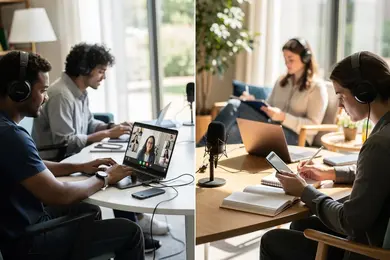
Online learning is easier for students who need flexibility, already work well independently, and are comfortable using digital tools. In-person learning is often easier for students who rely on scheduled class meetings, face-to-face accountability, immediate feedback, and hands-on practice. The better question is not "Which format is easier?" but "Which format removes the most barriers while still giving me the support I need to finish?"
The table below compares the main ways students usually experience "easy" or "hard" in online and campus-based classes. Use it to identify where you are likely to gain convenience and where you may need extra support.
| Factor | Online learning | In-person learning | What it means for students |
| Schedule | Often more flexible, especially asynchronous courses | Fixed class times and campus attendance | Online may be easier if work, caregiving, commuting, or military schedules make regular attendance difficult. |
| Accountability | More self-directed | More built-in structure through class meetings | Campus courses may feel easier if you need routine and social pressure to stay on track. |
| Communication | Usually through email, discussion boards, video meetings, and learning platforms | Immediate verbal and nonverbal interaction | Online students should be proactive about asking questions early. |
| Workload | Can include more reading, writing, discussion posts, and independent study | Can include more live lectures, labs, presentations, and in-class participation | The workload is often comparable, but it may feel different because online work is less visibly structured. |
| Hands-on learning | Strong for lecture-based, analytical, and computer-based subjects | Often stronger for labs, studios, clinical practice, and performance-based training | Students in applied fields should check whether the online program includes required in-person components. |
For many students, online classes feel easier at the start because they reduce commuting and scheduling conflicts. They can feel harder later if students underestimate the amount of independent planning required.
What factors make online courses feel easier or harder than campus-based programs?
Online courses usually feel easier when the course design is clear, the instructor communicates regularly, and the student has a predictable weekly study routine. They feel harder when students expect flexibility to mean fewer deadlines or less academic rigor.
Before enrolling, look closely at the factors below because they affect the day-to-day experience more than the word "online" itself.
- Course format: Asynchronous courses let you log in on your own schedule, while synchronous courses require live attendance at set times.
- Instructor responsiveness: Online learning becomes much harder when feedback is slow, office hours are limited, or expectations are unclear.
- Technology requirements: A reliable computer, stable internet, webcam, updated software, and access to the learning management system are basic needs, not optional extras.
- Assessment style: Online courses may rely heavily on written assignments, timed exams, projects, discussion boards, and proctored testing.
- Home environment: Students need a place to study with limited distractions, especially during exams, live sessions, or group projects.
- Support access: Tutoring, library services, writing help, advising, disability accommodations, and technical support should be available to online students.
A common mistake is choosing an online program only because it sounds convenient. Convenience helps you start; structure, support, and realistic weekly study time help you finish.
How do learning styles and self-discipline impact success in online versus in-person learning?
Learning style can influence comfort, but self-discipline usually has a bigger impact on online success. Visual and reading-oriented learners may adjust quickly to recorded lectures, slides, and written materials. Students who learn best through discussion, demonstration, or immediate coaching may prefer in-person or hybrid formats unless the online course offers live sessions, simulations, labs, or strong instructor interaction.
Online learning often works especially well for adults returning to school because they can fit coursework around employment, family responsibilities, or health needs. Students comparing degrees for older adults should pay close attention to advising, technology support, transfer credit policies, and flexible pacing.
Use this quick self-check to decide whether your habits match the demands of online study.
- You may do well online if you can plan a week in advance, meet deadlines without reminders, ask for help early, and stay engaged without physically attending class.
- You may do better in person if you need a fixed routine, learn best through live discussion, struggle with procrastination, or benefit from being around classmates and instructors.
- A hybrid format may be best if you want flexibility but still need labs, campus resources, scheduled meetings, or periodic face-to-face accountability.
Do not assume that being "good with technology" is enough. Successful online students usually combine basic digital confidence with planning, persistence, and a willingness to communicate.
Are online degree programs held to the same accreditation standards as on-campus programs?
Yes, online degree programs can be held to the same institutional accreditation standards as campus-based programs when they are offered by accredited colleges and universities. Accreditation is a quality review process conducted by recognized accrediting agencies. It affects transfer credit, federal financial aid eligibility, graduate school options, licensure pathways, and employer confidence.
The key is to verify the institution and, when relevant, the program. This is especially important in fields such as nursing, counseling, education, engineering, social work, business, and allied health, where programmatic accreditation or state approval may affect licensure or certification.
Students comparing public, private, and non profit universities should evaluate accreditation and outcomes rather than relying on institution type alone.
Before applying, complete these checks to avoid accreditation-related mistakes.
- Confirm that the institution is accredited by an agency recognized by the U.S. Department of Education or the Council for Higher Education Accreditation.
- For licensed professions, ask whether the online program meets educational requirements in your state.
- Check whether credits can transfer to other accredited colleges if you later change schools.
- Verify whether the diploma or transcript distinguishes online delivery from campus delivery, if that matters to your employer or graduate school plans.
- Avoid schools that pressure you to enroll quickly, make unrealistic job promises, or cannot clearly explain accreditation status.
Accreditation does not guarantee that a program is the best fit, but lack of recognized accreditation is a major red flag.
Do online and in-person programs cover the same coursework and academic requirements?
In many accredited programs, online and in-person students complete the same core coursework, credit requirements, learning outcomes, and graduation standards. The difference is usually how instruction is delivered, not whether the academic expectations are lower.
That said, requirements vary by degree level and field. A fully online bachelor's degree in business, psychology, computer science, or criminal justice may be straightforward to deliver remotely. A nursing, education, counseling, or engineering program may include online coursework plus supervised clinicals, student teaching, labs, practicums, or residencies.
At the doctoral level, format details matter even more because programs may include research milestones, comprehensive exams, residencies, capstones, dissertations, or applied projects. Students comparing accelerated options such as 1-year PhD programs online no dissertation USA should verify the credential type, accreditation, research expectations, residency rules, and whether the program fits their career goals.
The table below summarizes how coursework expectations often compare by program type. It can help you ask better questions before enrolling.
| Program type | Online coursework similarity | Common in-person or supervised components | Main question to ask |
| General associate or bachelor's degrees | Often very similar to campus coursework | Usually limited, depending on major | Are the same credits, general education requirements, and major courses required? |
| Business, IT, data, and many social science programs | Often highly compatible with online delivery | Projects, presentations, internships, or capstones may be included | How much live participation, group work, or proctored testing is required? |
| Health, education, counseling, and social work programs | Didactic coursework may be online | Clinical hours, field placements, labs, or student teaching are common | Does the program meet state licensure or certification requirements where I plan to work? |
| Doctoral and professional programs | Varies widely by institution and credential | Residencies, research defenses, internships, or applied projects may be required | What milestones must be completed, and how are they assessed? |
A practical rule: if a program leads to licensure, supervised practice, or hands-on technical competence, assume there may be in-person requirements until the school proves otherwise.
How do costs, financial aid, and total expenses compare for online and in-person degrees?
Online learning can reduce total expenses, but it is not always cheaper on tuition alone. The biggest savings usually come from avoiding campus housing, meal plans, relocation, commuting, parking, and some activity fees. Tuition policies vary: some schools charge the same tuition online and on campus, some discount online programs, and others add online technology fees.
College Board's 2024 Trends in College Pricing data shows why total cost matters. Average published tuition and fees for 2024-25 were $11,610 for in-state students at public four-year institutions and $43,350 at private nonprofit four-year institutions. Those figures do not capture the full difference in housing, transportation, books, fees, and lost work time, which can change the real affordability calculation.
The table below shows common cost categories and how they typically differ by format. Use it to calculate total cost, not just advertised tuition.
| Cost category | Online programs | In-person programs | Decision impact |
| Tuition | May be lower, equal, or higher depending on the school | Often based on residency and institution type | Compare per-credit cost and total credits required. |
| Housing and meals | Often avoidable if studying from home | Can be a major expense for residential students | Online may have a large advantage for students who can live at home. |
| Transportation | Usually lower | Commuting, parking, fuel, or relocation may apply | Working adults may benefit from reduced travel time. |
| Fees | May include technology, proctoring, or distance learning fees | May include campus, recreation, lab, and activity fees | Ask for a full fee schedule before comparing programs. |
| Work flexibility | Often easier to combine with employment | Fixed schedules may limit work hours | Lost income can be part of the true cost of attendance. |
Graduate students should be especially careful because master's programs can vary widely in per-credit pricing and credit requirements. If affordability is the priority, comparing a cheapest masters program list can be a useful starting point, but you should still verify accreditation, curriculum fit, fees, and completion support.
Students in eligible online programs may qualify for federal financial aid if the institution participates in Title IV aid programs and the student meets aid requirements. Always confirm eligibility directly with the financial aid office before assuming that an online program will qualify.
What admission requirements differ between online and campus-based programs?
Online and campus-based programs often have similar admissions requirements when they award the same credential. Applicants may need transcripts, a minimum GPA, test scores if required, recommendation letters, a resume, a personal statement, prerequisite coursework, or proof of English proficiency. The main differences usually involve technology readiness, scheduling expectations, and sometimes work experience for adult-focused or graduate online programs.
Admissions requirements can differ most in selective, cohort-based, clinical, or licensure-focused programs. Online programs may also ask applicants to complete an orientation, confirm access to required technology, or document that they can complete field placements in an approved location.
Ask admissions advisors these questions before applying so you do not discover a hidden requirement after enrollment.
- Are admission standards the same for online and campus students in this program?
- Are there prerequisites, placement tests, minimum GPA rules, or required professional experience?
- Does the program accept transfer credits, prior learning assessment, military training, or industry certifications?
- Are there required live sessions, campus visits, labs, clinical placements, or proctored exams?
- If the program leads to licensure, does it meet requirements in my state?
- What happens if I need to switch from full-time to part-time enrollment?
A common mistake is applying to the fastest or easiest-looking program without checking whether prerequisites, transfer limits, or residency requirements will delay graduation.
How do graduation rates, career outcomes, and employer perceptions compare for online degrees?
Graduation rates, career outcomes, and employer perceptions depend more on institution quality, student preparation, academic support, field of study, and labor market demand than on delivery format alone. It is difficult to make a clean national comparison between online and in-person outcomes because online students are often older, more likely to work, more likely to attend part time, or more likely to have transfer credits.
NCES reported in 2024 that the overall six-year graduation rate for first-time, full-time bachelor's degree students who began at four-year institutions in 2016 was 64%. This figure is not an online-versus-campus ranking, but it is a useful reminder that completion is a major outcome to evaluate before choosing any program.
Employer perceptions of online degrees have become more practical and less format-focused, especially when the school is accredited and recognized. Many employers care most about whether the degree matches the role, whether the student can demonstrate skills, and whether the program included relevant projects, internships, labs, portfolios, or fieldwork.
For career-focused learners who do not need a full degree right away, stackable credentials can sometimes be a lower-risk way to test a field or build job-ready skills. Comparing online certifications may make sense for students targeting IT, project management, analytics, healthcare administration support, or other skills-based roles.
When evaluating outcomes, look for evidence that is specific to the program you are considering.
- Program-level graduation or completion rates, not only institution-wide averages.
- Job placement information that explains methodology, sample size, and whether outcomes are verified.
- Licensure exam pass rates for fields where licensing is required.
- Internship, practicum, portfolio, capstone, or employer partnership opportunities.
- Alumni outcomes in your target location and industry.
Be cautious with schools that advertise impressive salary claims without explaining the data source. No program can guarantee a job, salary, promotion, or admission to graduate school.
In which fields is in-person learning clearly more effective than online formats?
In-person learning is clearly more effective in fields where students must practice physical techniques, receive immediate coaching, use specialized equipment, interact with patients or clients, or meet supervised experience requirements. Online coursework can still play a role, but fully online delivery may not be enough.
The table below highlights fields where face-to-face training, labs, studios, or supervised practice are especially important. It can help students avoid choosing a format that does not match the skill being developed.
| Field | Why in-person learning often matters | Online role that may still work |
| Nursing and allied health | Students need clinical practice, patient interaction, simulation, and hands-on assessment skills. | Lecture-based coursework, theory, and some exam preparation may be online. |
| Skilled trades and technical programs | Students must use tools, equipment, safety procedures, and supervised shop practice. | Codes, theory, math, safety modules, and business basics may be online. |
| Laboratory sciences | Students need lab technique, instrumentation, safety training, and experimental practice. | Some lectures, data analysis, and lab preparation can be remote. |
| Performing and studio arts | Students benefit from critique, rehearsal, studio time, equipment, and live performance feedback. | History, theory, portfolio planning, and some digital production courses can be online. |
| Education, counseling, and social work | Supervised fieldwork and direct interaction are often required for licensure or certification. | Foundational coursework and seminar discussions may be online. |
Students in these fields should not reject online learning entirely. Instead, they should look for hybrid programs that combine online convenience with properly supervised practical training.
How can students decide whether online or in-person learning is the better choice for them?
The best choice depends on your goal, schedule, support needs, field requirements, and budget. Online learning is usually better when flexibility is essential and the program can deliver the required skills remotely. In-person learning is usually better when hands-on practice, campus resources, live discussion, or structured accountability are central to success.
Follow these steps before choosing a format. They will help you compare programs based on fit rather than assumptions.
- Define your goal first: career entry, career change, promotion, licensure, graduate school preparation, personal enrichment, or skill building.
- Check whether your field requires labs, clinicals, internships, student teaching, residencies, or state approval.
- Verify institutional accreditation and any programmatic accreditation required for your career path.
- Calculate total cost, including tuition, fees, books, technology, transportation, housing, childcare, and lost work time.
- Compare course format: asynchronous, synchronous, hybrid, accelerated, part-time, or cohort-based.
- Ask how online students access tutoring, advising, library services, disability accommodations, career services, and faculty office hours.
- Review completion, licensure, placement, and alumni outcome data when available.
- Choose the format you can realistically sustain for the entire program, not just the first term.
A simple decision rule can help: choose online if flexibility is the main barrier and you can manage independent work; choose in-person if the learning experience depends on immediate feedback, specialized facilities, or consistent face-to-face structure; choose hybrid if you need both.
Also consider whether a full degree is necessary right now. For some career goals, a certificate, bootcamp-style program, employer training, or a shorter credential may be a smarter first step before committing to a long degree path.
Other Things You Should Know About
Not necessarily. Online college is often more convenient, but the academic work can be just as demanding. It may feel harder for students who struggle with time management, motivation, or written communication.
Many employers take online degrees seriously when they come from accredited, reputable institutions. Employer reactions may vary by industry, school reputation, program quality, and whether the applicant can demonstrate relevant skills.
Sometimes. Online students may save on housing, commuting, parking, and relocation, but tuition and fees vary by school. Always compare total cost of attendance rather than tuition alone.
Yes, students in eligible online programs may qualify for federal financial aid if the institution participates in federal aid programs and the student meets eligibility rules. Confirm this with the school's financial aid office before enrolling.
References
- Are Online Classes Harder Than In-Person Classes? | CCA https://ccaeducate.me/blog/are-online-classes-harder/
- Online College Tuition Comparison: Online vs. In-Person https://www.uagrantham.edu/blog/online-college-tuition-comparison-online-vs-in-person/
- In-Person Learning vs. Online Learning: Which Is Right for You? | ACE Blog https://ace.edu/blog/examining-in-person-instruction-from-a-virtual-mindset-what-can-we-improve/
- Why is Online School Better than In-Person? 10 Reasons Why the Future of Education is Online https://mountainheightsacademy.org/blog/why-is-online-school-better-than-in-person-10-reasons-why-the-future-of-education-is-online
- Combining Online and On-Campus Courses: A Comprehensive Look into Hybrid Programs https://www.onlinedegreetutors.co.uk/hybrid-programs-combination-of-online-and-on-campus-courses
- Studying Online vs On-Campus: Which Is Better for You? | UNF https://www.unfc.ca/blog/studying-online-vs-on-campus-which-is-better-for-you
- Online Learning and Self Discipline at QAS | QAS Blog https://www.qasonline.org/blog/online-learning-and-self-discipline
- Online Vs On Campus Study: Which is Right For You? https://studee.com/guides/online-vs-on-campus-study-which-is-right-for-you
- Online vs in-person study: which one is right for you? https://www.ube.ac.uk/whats-happening/articles/online-vs-in-person-learning/
- Self-Discipline & Time Management in Online Learning https://soraschools.com/blog/virtual-schools-fostering-independence-and-self-discipline-in-students