2027 Can Parents Succeed in Online College?

Co-Founder and Chief Data Scientist
Parents considering online college are usually asking one practical question: can this fit around work, childcare, bills, and real life? The answer is yes, but only with the right program structure and support system. NCES reported in 2024 that 53% of U.S. undergraduates took at least one distance education course in fall 2022, showing that online learning is now a mainstream college pathway.
This guide explains which programs fit busy parents, how to compare costs and accreditation, and how to build a realistic plan for finishing.
Key Things You Should Know
- Online college can work for parents when courses are flexible, accredited, transfer-friendly, and supported by advising, tutoring, childcare referrals, and predictable weekly deadlines.
- Affordability matters: the maximum Federal Pell Grant is $7,395 for the 2025-26 award year, but parents should compare total cost, fees, transfer credits, and loan needs before enrolling.
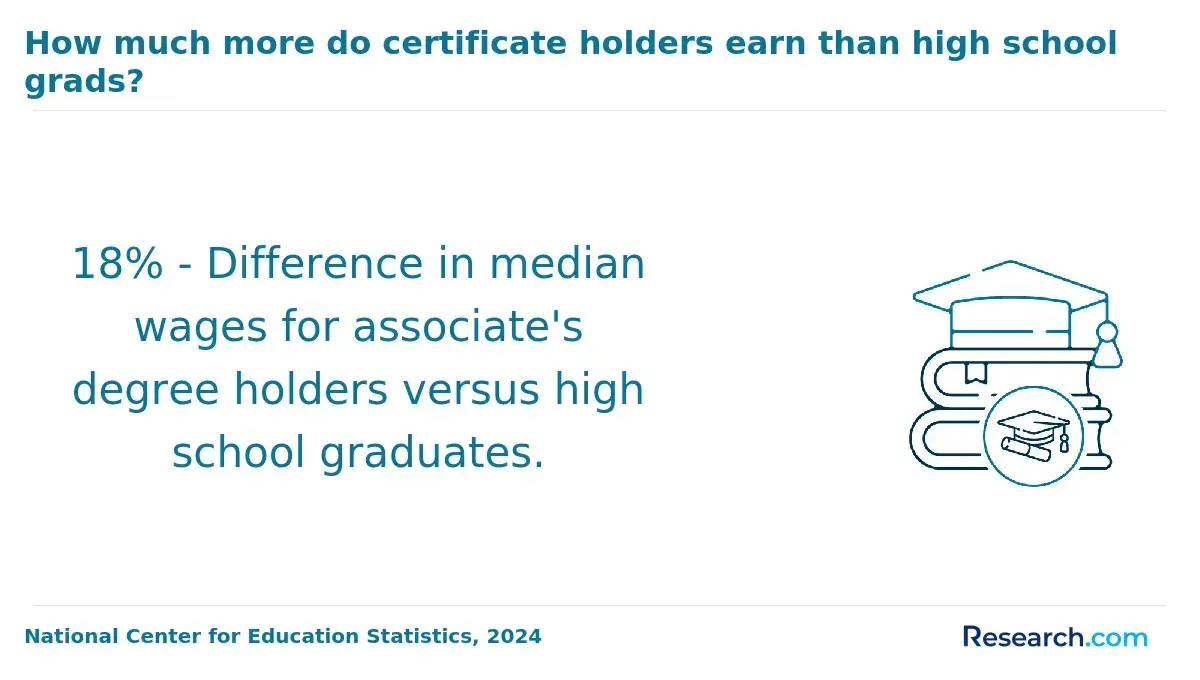
- The payoff depends on the credential and career goal: BLS 2024 data shows median weekly earnings of $1,543 for bachelor's degree holders compared with $930 for workers with only a high school diploma.
Can parents realistically succeed in online college while balancing work and family responsibilities?
Yes, parents can realistically succeed in online college, but success depends less on motivation alone and more on program design, household planning, and the number of credits taken at once. A parent working full time and caring for children may do better with one or two courses per term than with a traditional full-time load, especially in the first semester.
Online college is not automatically easier than campus-based college. It is usually more flexible, but it still requires reading, writing, exams, projects, discussion posts, and steady attendance in the learning platform. Parents should think of online school as a scheduled commitment, not something that can be squeezed in only after everyone else's needs are met.
For many adults, the most realistic path is a flexible or accelerated adult-completion model. Parents who already have college credits may want to compare accelerated bachelor's degree programs for adults, especially if the programs accept transfer credits, offer multiple start dates, and use shorter terms.
This comparison shows which enrollment patterns tend to fit different family and work situations. It can help parents avoid the common mistake of choosing a course load that looks efficient on paper but becomes unsustainable at home.
| Parent situation | Most realistic enrollment approach | Main trade-off |
| Full-time job and young children | Part-time study, often one course at a time | Slower completion but lower burnout risk |
| Part-time job or flexible work schedule | Two courses per term if weekly study blocks are protected | Faster progress but requires reliable childcare coverage |
| Some prior college credit | Degree-completion or transfer-friendly bachelor's program | Best value depends on how many credits the school accepts |
| Career change with no prior credits | Certificate, associate degree, or carefully planned bachelor's pathway | May need more time to explore careers before committing to a major |
The biggest red flag is enrolling as if life will suddenly become less demanding. A better approach is to start with a manageable load, track how many hours each course really takes, and increase credits only after the family routine holds up for a full term.
What types of online degrees and certificates work best for busy parents?
The best online programs for busy parents are usually practical, structured, and connected to a clear career outcome. Good options include certificates for quick skill building, associate degrees for lower-cost entry, bachelor's completion programs for career mobility, and master's degrees for advancement in fields where graduate education is valued.
Parents should choose based on their goal, not just the shortest timeline. For example, a certificate may be enough for a software, bookkeeping, medical coding, or project management skill upgrade, while teaching, nursing, accounting, social work, and many management roles may require a specific degree or licensure pathway.
The table below compares common online credential types by fit, timeline, and decision risk. Use it to narrow your options before speaking with admissions counselors.
| Credential type | Best fit for parents who need | Typical completion pattern | Key caution |
| Certificate | A focused skill upgrade or entry into a specific field | A few months to about one year | May not replace a degree for promotion or licensure |
| Associate degree | A lower-cost start or a stepping stone to a bachelor's degree | About two years full-time, longer part-time | Transfer rules matter if a bachelor's degree is the end goal |
| Bachelor's degree | Broader career mobility, management eligibility, or graduate school preparation | About four years full-time, shorter with transfer credits | Major choice has a major effect on ROI |
| Master's degree | Advancement, specialization, leadership roles, or professional credibility | Often one to three years depending on format | Worthwhile only when tied to a clear career or salary rationale |
Parents who want a manageable academic path should also consider major difficulty, course sequencing, and math or lab requirements. If flexibility and completion are the main priorities, comparing easy degrees can help identify majors that may be more compatible with work and parenting, as long as the degree still matches the intended career.
A common mistake is choosing a program because it sounds convenient without checking whether it leads to the desired job. Before enrolling, parents should ask whether the credential is accepted by employers, whether it prepares for licensure if required, and whether credits can transfer into a higher degree later.
How do online college programs compare to campus-based options for student parents?
Online college usually offers parents more schedule control, while campus-based college may offer more face-to-face structure and local support. Neither format is automatically better; the right choice depends on childcare, transportation, learning style, program requirements, and whether the student needs labs, clinical placements, or in-person networking.
The normalization of distance learning matters for parents because online programs are no longer unusual. With NCES reporting in 2024 that 53% of undergraduates took at least one distance education course in fall 2022, employers and colleges have become more familiar with online learning, especially when the institution is accredited and the program is comparable to its campus counterpart.
This table summarizes the major decision points for parents comparing online and campus options. Focus especially on time, support, and hidden costs rather than assuming one format is always cheaper or easier.
| Factor | Online college | Campus-based college |
| Schedule flexibility | Often stronger, especially with asynchronous courses | More fixed class times and commuting needs |
| Childcare logistics | Can reduce daytime childcare needs but still requires study time | May require regular childcare during class and commute hours |
| Accountability | Requires self-management and frequent platform check-ins | Built-in class meetings can create routine |
| Hands-on requirements | May still require local labs, practicums, or clinical placements | Often easier to coordinate in-person learning experiences |
| Costs beyond tuition | May reduce transportation and parking expenses | May include commuting, parking, and campus activity costs |
Parents should be cautious with fully self-paced programs if they struggle without deadlines. A structured online program with weekly due dates, instructor feedback, and proactive advising often works better than a program that leaves students entirely on their own.
What should parents look for in an accredited, reputable online college?
Parents should start with accreditation because it affects financial aid eligibility, credit transfer, graduate school admission, employer recognition, and licensure pathways. In the U.S., institutional accreditation should come from an agency recognized by the U.S. Department of Education or the Council for Higher Education Accreditation.
Programmatic accreditation may also matter. For example, nursing, education, counseling, social work, accounting, and healthcare programs may need specialized approval or state authorization. Parents should never assume that an online program automatically meets licensure requirements in their state.
Before applying, parents should verify a school using a short due diligence checklist. These steps reduce the risk of wasting time, aid eligibility, or credits on a program that does not fit the intended outcome.
- Confirm institutional accreditation through an official accreditation database, not only the school's marketing page.
- Ask whether the specific online program has programmatic accreditation if the career field expects it.
- Check state authorization and licensure alignment if the degree leads to teaching, nursing, counseling, social work, or another regulated profession.
- Request a written transfer credit evaluation before enrolling if you have prior college, military, or professional learning credits.
- Review graduation rates, retention data, job placement information when available, and student complaint patterns.
Parents should also examine the learning format. A reputable online college should clearly explain whether courses are asynchronous, synchronous, hybrid, competency-based, or self-paced. It should also disclose technology requirements, proctoring rules, course availability, and whether required classes are offered often enough to keep students on schedule.
Common red flags include pressure to enroll immediately, unclear tuition and fee disclosures, promises of guaranteed jobs or salaries, vague accreditation language, and refusal to provide transfer or licensure information in writing.
How can student parents finance online college, and what aid options are available?
Student parents can use many of the same financial aid options as other students, including federal grants, state grants, scholarships, employer tuition assistance, military benefits, institutional aid, payment plans, and federal student loans. The first step for most students is completing the FAFSA, because it determines eligibility for federal aid and often state or school-based aid as well.
For the 2025-26 award year, the maximum Federal Pell Grant is $7,395. That amount can make a major difference for eligible parents, but it may not cover the full cost of tuition, books, technology, fees, childcare, and reduced work hours, so parents should budget beyond the advertised tuition rate.
The table below outlines major cost categories that parents should compare before enrolling. Looking at total cost helps avoid choosing a school that appears affordable but becomes expensive after fees or lost transfer credits are counted.
| Cost factor | Why it matters for parents | Question to ask |
| Tuition per credit | Determines the base cost of each course | Is tuition different for online, in-state, or out-of-state students? |
| Fees | Technology, proctoring, graduation, and course fees can add up | What fees are required every term? |
| Transfer credits | Accepted credits can shorten time and reduce cost | How many prior credits will apply to my program requirements? |
| Books and materials | Some courses require expensive access codes or software | Are open educational resources or digital materials used? |
| Childcare and work impact | Study time may require paid care or fewer work hours | What schedule will I need during exams and major projects? |
Parents considering graduate school should compare program price carefully, because aid is more loan-dependent at the master's level. Lists of affordable masters degrees can be useful starting points, but the best value still depends on accreditation, employer recognition, program length, and career relevance.
To reduce borrowing, parents should pursue funding in a deliberate order. The goal is to use gift aid and cost-reduction strategies before taking on debt.
- Submit the FAFSA as early as possible and respond quickly to verification requests.
- Ask the school about grants, parent-focused scholarships, emergency aid, and completion grants.
- Check whether an employer offers tuition reimbursement or education benefits.
- Maximize transfer credits from prior college, exams, military training, or approved professional learning.
- Borrow only what is needed after comparing monthly repayment estimates with realistic post-graduation income.
What time management and study strategies help parents complete online courses on schedule?
The most effective strategy is to build a weekly school routine before the term starts. Parents should assume that a three-credit course may require several focused study blocks each week, with heavier weeks around papers, exams, labs, or group projects.
Online learning rewards consistency. Waiting until children are asleep every night may work briefly, but it often leads to exhaustion. A better plan combines predictable study blocks, backup childcare options, and early communication with instructors.
Parents can use the following sequence to create a realistic study system. Each step is designed to reduce last-minute stress and keep coursework visible to the whole household.
- Map every syllabus deadline into one calendar during the first week of class.
- Create two or three fixed study blocks each week and treat them like work shifts.
- Break large assignments into smaller tasks with personal deadlines at least two days before the official due date.
- Use short study sessions for reading, flashcards, discussion replies, or lecture review when longer blocks are not possible.
- Tell instructors early if a family emergency may affect an assignment instead of disappearing from the course.
- Review grades and missing work every week so small problems do not become course-ending problems.
Parents should also design around predictable interruptions. For example, exams may require a quiet room, stable internet, photo ID, and online proctoring software. If the course uses live sessions, parents should confirm whether recordings are available and whether attendance is mandatory.
Common time-management mistakes include taking too many classes in the first term, studying only after midnight, ignoring the syllabus until deadlines arrive, and assuming online courses can be completed entirely on a phone. A laptop or desktop, reliable internet, and a distraction-reduced workspace are usually worth planning for in advance.
What support services do colleges offer to help student parents succeed online?
Strong online colleges do more than provide course access. They offer academic, technical, financial, and personal support that helps parents stay enrolled when life becomes complicated. Student parents should ask about these services before applying, not after they are already overwhelmed.
Support services vary by institution, but several are especially valuable for parents. The table below explains what to look for and why each service matters in an online format.
| Support service | How it helps student parents | What to verify |
| Academic advising | Keeps course choices aligned with graduation and transfer requirements | Whether advisors work with online students and adult learners |
| Online tutoring | Provides help in writing, math, science, and major-specific courses | Evening or weekend availability |
| Career services | Supports resume updates, internships, job searches, and career changes | Whether services are available remotely |
| Technical support | Helps with learning platforms, proctoring tools, and access issues | Hours of availability during nights and weekends |
| Emergency aid or basic needs support | May help students facing short-term financial disruptions | Eligibility rules and application timelines |
| Parent or adult learner programs | Connects students with peers who understand caregiving responsibilities | Whether the school has dedicated student-parent resources |
Parents should also ask whether the school offers mental health counseling, disability accommodations, library access, writing center appointments, and success coaching for online students. These services can be especially important during midterms, finals, family illness, or changes in work schedules.
A warning sign is a college that says online students have "the same services" but cannot explain how those services are delivered remotely. Parents should ask for specific hours, appointment formats, response times, and emergency procedures.
How does earning an online degree as a parent impact career advancement and salary potential?
An online degree can support career advancement when it is accredited, relevant to the target role, and paired with experience or in-demand skills. Employers generally care more about the institution, credential, skills, and work history than whether every class was taken online, especially when the transcript and diploma come from a recognized college.
BLS 2024 data shows that workers with a bachelor's degree had median weekly earnings of $1,543, compared with $930 for workers whose highest credential was a high school diploma. This does not mean every parent will see the same increase, but it shows why degree completion can matter for access to roles with higher typical pay.
The value of a degree depends heavily on career alignment. A parent seeking advancement in business operations, healthcare administration, education, accounting, technology, or human resources should compare program outcomes against job postings in their local market or remote-friendly field.
This table summarizes common ways parents use online credentials for career mobility. It is not a salary guarantee, but it can help connect education choices to practical career moves.
| Education move | Possible career use | Best fit |
| Finish a bachelor's degree | Qualify for roles that list a bachelor's degree as preferred or required | Parents with prior credits and work experience |
| Earn a career certificate | Add a targeted skill such as data analytics, bookkeeping, coding, or project coordination | Parents testing a career shift before committing to a degree |
| Complete a master's degree | Prepare for leadership, specialization, or advancement in fields that value graduate education | Parents with a clear promotion path or employer support |
| Meet licensure education requirements | Move toward regulated roles in teaching, counseling, nursing, or social work | Parents who have verified state-specific rules before enrolling |
Some parents look for graduate options that are manageable alongside family responsibilities. Reviewing easy master's programs can help identify flexible pathways, but the best choice should still be based on accreditation, workload, career relevance, and employer expectations.
Current trends also matter. AI tools are changing many administrative, technical, and analytical jobs, so parents should look for programs that teach durable skills such as communication, data literacy, ethical technology use, project management, and problem-solving rather than relying only on narrow software training.
How long does it typically take parents to finish an online degree program?
Completion time depends on the credential, transfer credits, course load, term length, and whether the program is self-paced, cohort-based, or accelerated. Parents often take longer than traditional full-time students because they balance school with work and caregiving, but transfer credits and year-round terms can shorten the timeline.
The table below gives realistic planning ranges for common online credentials. Parents should use these as starting estimates and then ask each school for a personalized degree plan.
| Program type | Typical full-time timeline | Common parent-friendly timeline | What can shorten it |
| Certificate | Several months to one year | One year or less if courses are offered frequently | Prior skills, competency-based options, or multiple start dates |
| Associate degree | About two years | Two to four years part-time | Transfer credits and summer terms |
| Bachelor's degree | About four years from the beginning | Two to six years depending on transfer credit and course load | Prior college credits, adult-completion programs, and year-round study |
| Master's degree | About one to two years | Two to three years part-time | Accelerated terms, employer support, and focused program design |
Parents who need to finish quickly should compare accelerated formats carefully. The fastest online master's degree option may be useful for a focused professional goal, but shorter timelines usually mean heavier weekly workloads and less room for family disruptions.
The safest way to estimate completion time is to request a term-by-term plan before enrolling. Parents should ask which courses are offered every term, whether prerequisites can delay progress, how many credits transfer, and what happens if they need to stop out for a term.
How can parents prepare their family and household for the demands of online college?
Parents are more likely to persist when the household treats college as a shared project rather than a private burden. That does not mean children or partners carry the responsibility, but it does mean the family understands when study time happens, what support is needed, and why the degree matters.
Before the first term begins, parents should prepare the home environment and communication plan. These steps help prevent common conflicts around chores, childcare, noise, and last-minute deadlines.
- Explain the weekly school schedule to the household, including class meetings, study blocks, and exam periods.
- Create a visible family calendar that includes work shifts, childcare, school deadlines, appointments, and backup study times.
- Identify at least one quiet study location at home, in a library, or in another reliable space.
- Arrange backup childcare for exams, group projects, proctored assessments, and unexpected work conflicts.
- Reduce nonessential commitments during the first term until the workload is clear.
- Discuss how chores, meals, transportation, and bedtime routines will change during busy academic weeks.
Parents should also prepare emotionally for imperfect weeks. A sick child, work emergency, or technology problem can disrupt even a strong plan. The key is to communicate early, use school support services, and avoid turning one missed deadline into a full withdrawal unless an advisor confirms that it is the best option.
A useful final test is this: if no one in the household knows when you study, where you study, or what happens during finals week, the plan is not ready yet. Online college is flexible, but it still needs visible space in family life.
Other Things You Should Know About
It can be harder in terms of self-management, but easier logistically because parents can often avoid commuting and schedule coursework around family responsibilities. Structured online programs with weekly deadlines usually work better than completely self-paced formats for busy parents.
Many working parents start with one or two courses in the first term. After seeing the actual workload, they can decide whether to add more credits. Starting too aggressively is one of the most common reasons parents fall behind.
Employers are more likely to respect an online degree when it comes from an accredited, recognizable institution and matches the skills required for the role. Parents should avoid unaccredited programs and verify licensure alignment when entering regulated fields.
The biggest mistake is focusing only on convenience or speed without checking accreditation, total cost, transfer credit policies, support services, and career fit. A program should be flexible, but it also needs to lead to a recognized credential that supports the parent's goal.
References
- Student finance for undergraduates https://www.gov.uk/student-finance
- How to Pay for College Without Parents: A Comprehensive Guide | First Bank & Trust Company https://www.firstbank.com/resources/learning-center/how-to-pay-for-college-without-parents-a-comprehensive-guide/
- Benefits of a College Degree on Salary & Earning Potential | UMass Global https://www.umassglobal.edu/blog-news/how-college-impacts-salary-and-future-earning-potential
- How Long Does It Take to Earn an Online Degree | DeVry University https://www.devry.edu/blog/how-long-to-earn-an-online-degree.html
- How Long Is an Online Bachelor’s Degree https://online.maryville.edu/blog/how-long-is-online-bachelors-degree/
- Proven Ways to Support Student Parents College Success - Campus Mind https://www.campusmind.org/support-student-parents-college/
- How Online School Can Help Parents Balance… | Online School Blog https://internationalschooling.org/blog/how-online-school-can-help-parents-balance-work-and-family
- Alma Career – A better world of work for everyone https://www.almacareer.com/blog/how-does-a-university-degree-influence-pay
- Leveraging Policy to Support Student-Parents http://perspectives.acct.org/stories/leveraging-policy-to-support-student-parents
- A Parent's Guide to Online Learning https://www.melioeducation.com/blog/parent-guide-to-online-learning/