2027 IS a 3 3 GPA Good: What Students Need to Know for Admissions

Co-Founder and Chief Data Scientist
A 3.3 GPA can put students in a solid but not automatic admissions position, especially as colleges weigh course rigor, essays, recommendations, test scores, and context. The question matters because college costs remain high: College Board reported average published tuition and fees of $11,610 for in-state public four-year colleges in 2024-25. This guide is for high school, transfer, and graduate applicants who want to understand where a 3.3 is competitive, how to improve their profile, and how to build a smarter admissions and financial aid strategy.
Key Things You Should Know
- A 3.3 GPA is generally a B+ average and is above the latest NCES-reported national high school average GPA of 3.11, but it is usually below the typical profile for the most selective colleges.
- Many public universities, regional colleges, online programs, and some graduate programs consider a 3.3 competitive, especially when paired with rigorous courses, strong essays, recommendations, or relevant experience.
- A 3.3 can meet many merit-aid cutoffs, but need-based aid is different: the maximum federal Pell Grant for 2024-25 is $7,395 and is based mainly on financial need, not GPA at admission.
Is a 3.3 GPA considered good for college and graduate school admissions?
Yes, a 3.3 GPA is considered good for many admissions situations, but its strength depends on the school, program, applicant pool, and transcript context. On a standard 4.0 scale, a 3.3 usually reflects a B+ average, which signals that a student has generally performed well but may not be in the highest academic band for highly selective admissions.
For undergraduate admissions, a 3.3 is often competitive at many less selective and moderately selective colleges. It may be less competitive at top-ranked universities, direct-entry nursing programs, engineering colleges, honors programs, or campuses where admitted students commonly have much higher GPAs. For graduate school, a 3.3 is often above the minimum requirement because many master's programs set a minimum undergraduate GPA around 3.0, though competitive programs may expect stronger grades in the major.
The table below shows how admissions committees commonly interpret a 3.3 GPA across different application levels. Use it as a practical benchmark, not as a guarantee, because schools evaluate applicants differently.
| Application level | How a 3.3 GPA is usually viewed | What can make it stronger |
| Community college or open-access college | Generally strong and usually above minimum expectations | Clear placement scores, transfer plan, and academic consistency |
| Regional public or private four-year college | Often competitive, especially for non-restricted majors | College-prep courses, upward grade trend, and focused essays |
| Flagship or selective university | Possible but may be below the middle range for many admitted students | AP, IB, honors, dual enrollment, strong test scores if submitted, and distinctive activities |
| Highly selective college | Usually a reach unless the rest of the application is exceptional | Exceptional rigor, standout achievements, compelling context, and excellent recommendations |
| Master's program | Often meets basic GPA eligibility for many programs | Strong major GPA, work experience, prerequisite grades, writing sample, or test scores where required |
A key point is that admissions officers rarely read GPA alone. A 3.3 in advanced math, science, writing, or college-level courses can be more persuasive than a higher GPA in a less rigorous schedule. Likewise, a 3.3 with a strong upward trend can show maturity and readiness better than a flat transcript with no improvement.
How does a 3.3 GPA compare to national GPA averages in high school and college?
A 3.3 GPA is above the national high school average but not automatically above average in every applicant pool. The latest widely cited NCES high school transcript data reports an average GPA of 3.11, so a 3.3 places a student somewhat above the national benchmark. However, college applicants are not the same as all high school students; selective colleges often draw from students with stronger academic records.
College GPA comparisons are harder because the U.S. does not have one official national college GPA average covering every institution, major, and grading policy. In college and graduate admissions, a 3.3 is usually interpreted as solid academic performance, but committees often look more closely at major GPA, prerequisite grades, and performance in upper-division coursework.
The comparison below helps clarify what a 3.3 means in different academic contexts. This matters because the same number can look different depending on whether you are applying from high school, transferring, or pursuing graduate study.
| Benchmark | How 3.3 compares | Admissions takeaway |
| National high school average GPA | Above the NCES-reported 3.11 average | Generally positive for broad-access and moderately selective colleges |
| Standard 4.0 grading scale | Usually around a B+ average | Shows consistent performance, though not top-tier academic distinction by itself |
| Selective college applicant pools | May be below the middle range at many competitive schools | Needs support from rigor, essays, recommendations, or test scores |
| Graduate program minimums | Often above common 3.0 minimums | Can be viable if prerequisites and major grades are strong |
Students should also distinguish between unweighted and weighted GPA. A 3.3 unweighted GPA in a demanding schedule can be more impressive than a 3.3 weighted GPA built mostly from standard-level classes. When possible, compare your GPA to the admitted-student profile published by each college, not just to a national average.
Can you get into competitive or top-ranked colleges with a 3.3 GPA?
You can get into competitive colleges with a 3.3 GPA, but the odds depend heavily on how competitive the college is and what else appears in the application. At moderately selective colleges, a 3.3 can be a realistic academic profile. At highly selective institutions, it is usually a reach unless the application shows unusual strength, context, or achievement.
Top-ranked colleges often use holistic review, which means they evaluate grades alongside course rigor, essays, recommendations, activities, personal background, and institutional priorities. Still, holistic review does not mean GPA stops mattering. It means a 3.3 needs a clear explanation of readiness, especially if the school's admitted-student GPA range is much higher.
Applicants with a 3.3 should think carefully about where the GPA fits relative to the school's typical admitted class. The following table summarizes how to interpret competitiveness without relying only on rankings.
| School type | Admissions outlook with a 3.3 GPA | Best strategy |
| Open-admission or broad-access college | Strong chance if other basic requirements are met | Focus on affordability, transfer pathways, advising, and completion support |
| Moderately selective regional university | Often realistic | Apply early, highlight academic trend, and match major requirements |
| Selective public flagship | Mixed; major choice may matter significantly | Consider less-restricted majors, strong essays, and additional academic evidence |
| Highly selective private or public university | Usually a reach | Apply only as part of a balanced list and present a compelling academic or personal context |
| Impacted major within any college | May be more difficult than general admission | Check department-level GPA, prerequisite, portfolio, audition, or test requirements |
One common mistake is applying only to prestigious schools because a 3.3 "might be enough" under holistic review. A better approach is to include a mix of likely, target, and reach colleges so you preserve options for admission, cost, and major fit.
What admission requirements typically accompany a 3.3 GPA, like tests and recommendations?
A 3.3 GPA is rarely evaluated in isolation. Admissions offices usually look for evidence that the student can handle the specific academic environment, and that evidence may come from testing, recommendations, essays, interviews, portfolios, prerequisite grades, or work experience.
The most important accompanying requirements vary by level and program. Students should check each school's admissions page carefully because test-optional does not always mean test-blind, and a program-level requirement can be stricter than the university's general admission rule.
- Course rigor: Honors, AP, IB, dual enrollment, or advanced courses can show readiness even if the GPA is not near the top of the applicant pool.
- Standardized tests: SAT or ACT scores may help if they are strong for the college, while GRE, GMAT, or other graduate tests may still matter for some programs.
- Recommendations: Strong letters can explain work habits, growth, leadership, resilience, or readiness for a demanding major.
- Essays or personal statements: These should connect past performance to future goals rather than simply explaining grades.
- Prerequisites: Nursing, engineering, business, computer science, education, and health programs may require minimum grades in specific courses.
- Portfolio, audition, or interview: Arts, design, music, theater, architecture, and some professional programs may weigh demonstrated skill heavily.
For graduate applicants, a 3.3 is often workable when the rest of the application proves fit. A strong major GPA, relevant work experience, certifications, research, or a persuasive statement of purpose can offset a transcript that is good but not exceptional.
How does a 3.3 GPA affect eligibility for scholarships and financial aid programs?
A 3.3 GPA can help with some scholarships, but it does not automatically unlock the best awards. Many merit scholarships use GPA thresholds such as 3.0, 3.25, or 3.5, so a 3.3 may clear some cutoffs while missing others. Scholarship committees also commonly consider test scores, leadership, service, major, residency, financial need, first-generation status, essays, or talent.
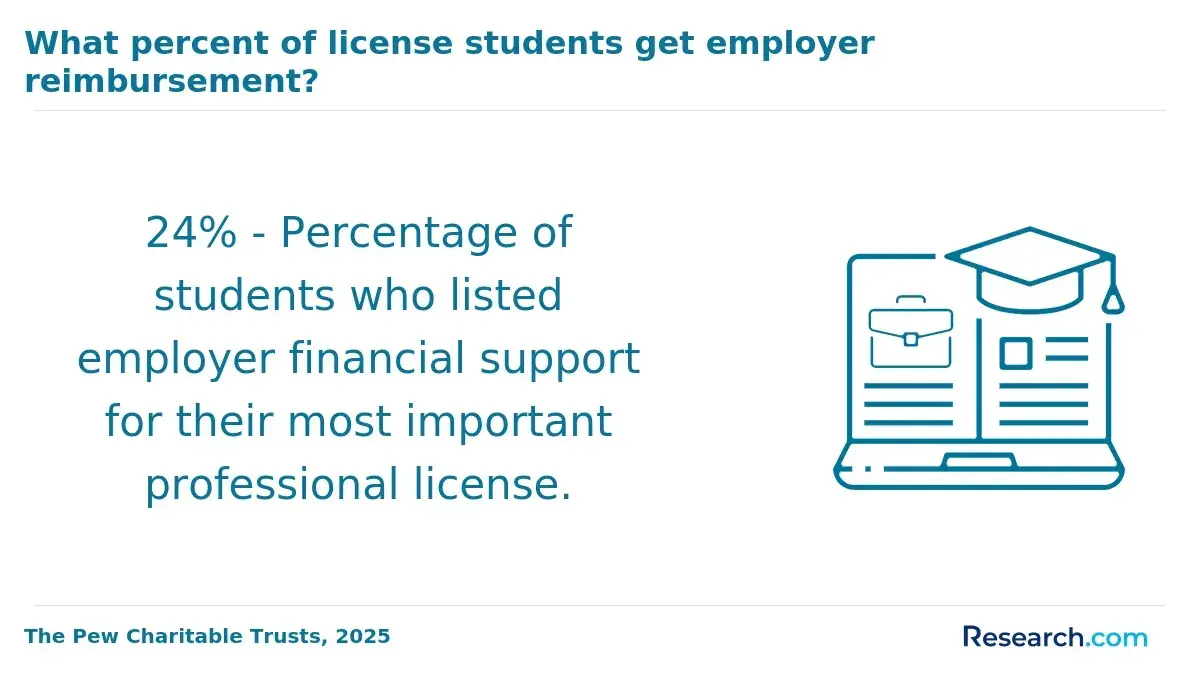
Need-based financial aid works differently. The maximum federal Pell Grant for 2024-25 is $7,395, and eligibility is primarily tied to financial need through the FAFSA rather than high school GPA. Once enrolled, however, students usually must maintain satisfactory academic progress to keep receiving federal aid.
Cost matters because a school that admits you but offers little aid may not be the best choice. College Board reported average published tuition and fees of $11,610 for in-state public four-year colleges and $43,350 for private nonprofit four-year colleges in 2024-25, so scholarship strategy can affect total debt as much as admissions strategy.
Students with a 3.3 GPA should prioritize scholarships where their profile is near or above the stated criteria. A practical scholarship plan should include several categories rather than relying on one large award.
- Automatic merit scholarships: Look for colleges that publish GPA-based grids and confirm whether test scores are optional or required for higher awards.
- Department scholarships: Ask whether your intended major offers awards for continuing students after the first year.
- Local scholarships: Community foundations, employers, civic groups, and school districts often have smaller applicant pools.
- Need-based grants: File the FAFSA and any institutional aid forms as early as possible because some funds are limited.
- Renewable awards: Check the college GPA needed to keep the scholarship, not just the GPA needed to win it.
A common red flag is choosing the college with the largest scholarship without checking net price, housing, fees, travel, renewal rules, and graduation timeline. The better comparison is total out-of-pocket cost over the full degree.
What majors and degree pathways are realistic options with a 3.3 GPA?
A 3.3 GPA leaves many major and degree pathways open, but students should pay close attention to programs with selective or capacity-limited admission. General admission to a university may be easier than admission to nursing, engineering, architecture, education licensure, business honors, or computer science pathways.
Students who want career-focused options may also compare traditional bachelor's degrees with shorter or more applied credentials. For some goals, researching quick degrees that pay well can help identify pathways where time, cost, and labor market demand are balanced more effectively.
The table below summarizes realistic pathways for students with a 3.3 GPA. It is meant to help you identify where to check extra requirements before applying.
| Pathway | Fit with a 3.3 GPA | What to verify |
| Liberal arts, communications, social sciences, humanities | Often accessible at many colleges | Internship access, writing support, advising, and career outcomes |
| Business | Usually realistic, but selective business schools may be tougher | Separate business school admission, accounting GPA rules, and internship placement |
| Computer science and data-related fields | Possible, but more competitive at high-demand campuses | Math readiness, programming prerequisites, and direct-admit rules |
| Engineering | Possible at some institutions, more challenging at selective programs | Calculus, physics, chemistry, and progression standards |
| Nursing and allied health | Potentially competitive because seats are limited | Science prerequisites, clinical placement, entrance exams, and accreditation |
| Education | Often realistic if minimum GPA and testing rules are met | State licensure requirements, field placements, and background checks |
| Graduate professional pathways | Viable for many master's programs | Major GPA, prerequisites, experience, licensing requirements, and accreditation |
The best major is not simply the one most likely to admit you. It should fit your skills, tolerance for quantitative or writing-heavy work, cost constraints, and career goals. If a program is highly competitive, ask whether students can enter later through a pre-major, transfer, or internal application route.
How does a 3.3 GPA influence your chances for online versus campus-based programs?
A 3.3 GPA can be just as useful for online programs as for campus-based programs, but the admissions process may feel different. Many accredited online programs are designed for adult learners, transfer students, working students, and students returning after a break, so they may place more weight on completed college credits, work experience, or readiness than on one GPA number.
If flexibility is a priority, an online bachelor's degree can be a strong fit when the program is accredited, transparent about costs, and aligned with your target career. The key is to compare outcomes and support services, not just convenience.
The table below compares online and campus-based options for students with a 3.3 GPA. Use it to decide which format better fits your schedule, learning style, and admissions profile.
| Factor | Online programs | Campus-based programs |
| Admissions flexibility | Often flexible, especially for transfer and adult students | Varies widely; residential programs may be more selective |
| Schedule | Better for work, caregiving, military service, or commuting limits | Better for students who want structured daily routines |
| Student support | Depends on online tutoring, advising, career services, and instructor access | Often includes in-person advising, labs, clubs, and campus networks |
| Hands-on requirements | May require local placements, labs, intensives, or proctored exams | Easier access to campus labs, studios, clinics, and faculty offices |
| Best fit | Self-directed students with time-management skills | Students who benefit from face-to-face accountability and campus engagement |
A major mistake is assuming all online programs are easier to enter or easier to complete. Before enrolling, verify institutional accreditation, programmatic accreditation if relevant, transfer credit policy, total cost, graduation rates, and whether the degree meets licensure requirements in your state.
In what ways can a 3.3 GPA shape long-term career opportunities and earnings?
A 3.3 GPA can influence early opportunities such as internships, first jobs, graduate applications, and competitive campus recruiting, but its long-term career effect usually decreases as work experience grows. Employers often care more about skills, projects, communication, reliability, internships, certifications, and job performance than the exact GPA once a graduate has a track record.
The broader value of completing a degree remains significant in the labor market. BLS reported that workers age 25 and older with a bachelor's degree had median weekly earnings of $1,543 in 2024, compared with $930 for those with only a high school diploma. That gap does not guarantee an outcome for any one student, but it shows why choosing a realistic, affordable, career-aligned degree can matter more than chasing prestige alone.
Students interested in flexible careers should also consider how major choice connects to remote-friendly skills. Researching degrees for work from home jobs can be useful if your goals include technology, business operations, analytics, design, writing, accounting, or other roles that commonly support remote or hybrid work.
A 3.3 GPA may be enough for many entry-level roles, but students should strengthen employability before graduation. The most useful career moves are practical and visible to employers.
- Build evidence of skills: Complete projects, portfolios, research, labs, writing samples, GitHub work, design samples, or case studies tied to your field.
- Pursue internships early: Even one relevant internship can make a transcript with a 3.3 GPA look more career-ready.
- Use certifications selectively: Choose credentials that employers in your field actually request, not certificates with unclear value.
- Develop professional references: Faculty, supervisors, and internship managers can speak to strengths that GPA cannot show.
- Explain the GPA only if needed: Focus on improvement, rigor, and accomplishments rather than apologizing for a solid academic record.
For some fields, GPA remains more important. Consulting, investment banking, competitive engineering roles, research assistantships, and some graduate fellowships may screen for higher GPAs. If you are targeting those paths, pair the 3.3 with strong networking, projects, test scores, and relevant experience.
What strategies help students raise a 3.3 GPA before applying to programs?
Raising a 3.3 GPA before applying is possible, but the strategy depends on timing. Students early in high school or college have more room to shift the cumulative average, while seniors and near-graduates may benefit more from showing an upward trend, improving prerequisite grades, and strengthening the rest of the application.
If time is limited, students should focus on the courses that matter most for admission. Those considering shorter timelines should compare accelerated degrees carefully because faster formats can be efficient but may leave less room to recover from weak grades.
The following steps can help students raise or strengthen a 3.3 GPA in a targeted way. Follow them in order so you do not waste effort on changes that have little admissions impact.
- Calculate your current GPA accurately: Separate weighted, unweighted, cumulative, major, and prerequisite GPAs so you know which number admissions offices will review.
- Identify high-impact courses: Prioritize classes tied to your intended major, graduation requirements, and any previous low grades that can be retaken under school policy.
- Meet instructors early: Ask what separates B-level work from A-level work and request feedback before major exams or projects.
- Use tutoring before grades drop: Academic support is most effective when used at the first sign of confusion, not after a failed exam.
- Reduce avoidable overload: A schedule packed with too many hard courses, work hours, or activities can hurt the GPA you are trying to improve.
- Document improvement: Save evidence of stronger grades, projects, research, or academic awards so essays and recommendations can highlight progress.
Common mistakes include taking easy classes that do not meet requirements, overloading on advanced courses to look impressive, ignoring mental health or time management, and waiting until the application deadline to ask for help. A controlled upward trend is usually more persuasive than a risky schedule that leads to another uneven semester.
How should students with a 3.3 GPA build a balanced college list and target schools?
Students with a 3.3 GPA should build a balanced college list rather than asking whether the GPA is simply "good" or "bad." A good list includes schools where admission is likely, schools where the profile is well matched, and a few reaches where other strengths may stand out.
Fit also depends on life circumstances. For example, students balancing caregiving, parenting, or work may want to compare flexible options such as online degrees for stay at home moms when campus attendance would make completion less realistic.
The table below shows a practical way to organize a college list with a 3.3 GPA. It helps keep ambition and risk in balance while protecting affordability and major access.
| Category | How to define it with a 3.3 GPA | Recommended purpose |
| Likely schools | Your GPA is at or above the school's typical admitted range, and the major is not highly restricted | Protect admission options and compare financial aid offers |
| Target schools | Your GPA is near the middle of the admitted range or meets program expectations | Find the best mix of fit, cost, major, and support |
| Reach schools | Your GPA is below the typical range or the program is highly selective | Apply only if the school is a strong fit and your application has other major strengths |
| Financial safety schools | The school is both admissible and affordable based on realistic net cost | Avoid being admitted to colleges you cannot reasonably pay for |
| Transfer-pathway options | Community college or partner pathways offer a route into a four-year degree | Create a backup plan that can improve GPA, save money, and preserve long-term goals |
Before finalizing the list, students should ask admissions and financial aid offices specific questions. These questions can prevent common surprises after acceptance.
- What was the GPA range for recently admitted students in my intended major?
- Is admission to my major direct, competitive after enrollment, or open after prerequisites?
- Are scholarships automatic, competitive, renewable, or tied to a higher college GPA?
- How many of my credits will transfer, and will they apply to major requirements?
- What academic support, tutoring, advising, internship access, and career services are available?
- What is the total estimated cost after grants, scholarships, fees, housing, books, transportation, and loan assumptions?
The best target schools are not always the highest ranked. They are the schools where a 3.3 applicant has a realistic path to admission, manageable cost, strong academic support, and direct access to the desired major or career pathway.
Other Things You Should Know About
No. A 3.3 GPA is generally a B+ average and is above the national high school average reported by NCES. It is a solid GPA for many colleges, though it may be less competitive for highly selective schools or restricted majors.
Yes, but scholarship competitiveness varies. A 3.3 can meet many merit scholarship thresholds, while other awards may require a higher GPA, strong test scores, leadership, talent, financial need, or a specific major.
Submit scores if they are strong compared with the college's admitted-student range and the school considers them. Strong scores can help demonstrate readiness, especially when your GPA is below the school's typical profile.
Often, yes. Many master's programs set minimum GPA requirements around 3.0, but competitive programs may expect strong grades in prerequisite or major courses, relevant experience, recommendations, and a clear statement of purpose.
References
- Does GPA Determine Post-Grad Success? - Madonna https://absn.madonna.edu/gpa-grad-sucess/
- Is a 3.3 GPA Good for College? GPA Meaning & Admission Chances https://legacyonlineschool.com/blog/is-a-3-3-gpa-good.html
- Building a Balanced College List: Unlikely, Reach, Target, and Safety Defined https://www.fineeducationalsolutions.com/blog-post/building-a-balanced-college-list-unlikely-reach-target-and-safety-defined
- 105 Colleges That Accept a 3.3 GPA https://empowerly.com/applications/colleges-that-accept-a-3-3-gpa/
- How to Get Started Building a Balanced College List https://www.raise.me/blog/best-fit-college/how-to-get-started-building-a-balanced-college-list/
- How to Calculate Your GPA https://www.princetonreview.com/college-advice/gpa-college-admissions
- How High School GPA Influences Future Income: Exploring the Connection Between Education and Earnings https://www.labmanager.com/new-research-shows-how-students-high-school-gpa-could-affect-your-income-13484
- Average GPA In High School & College https://www.magnetaba.com/blog/average-gpa-in-high-school-college
- Do Online Classes Affect My College GPA? - Top Ten Online Colleges https://www.top10onlinecolleges.org/faq/do-online-classes-affect-gpa/
- How To Raise Your High School GPA: 7 Proven Strategies https://www.c2educate.com/how-to-raise-your-gpa/