2027 Colleges with 100 Acceptance Rate: Complete Guide for College Applicants

Co-Founder and Chief Data Scientist
Choosing a college with a 100% acceptance rate can make higher education more accessible, but it does not automatically make every option affordable, high-quality, or career-aligned. College Board reported that published tuition and fees for 2024-25 averaged $4,050 at public two-year colleges and $43,350 at private nonprofit four-year colleges, so the financial stakes are real.
This guide is for applicants who want a realistic path into college, including first-generation students, adult learners, transfer students, and career changers. You will learn how open admission works, what to compare, and how to avoid costly mistakes.
Key Things You Should Know
- Colleges with 100% acceptance rates are usually open-admission institutions, meaning eligible applicants are admitted, but selective majors such as nursing, education, engineering technology, or allied health may still have separate requirements.
- Cost varies widely: College Board's 2024-25 figures show average published tuition and fees of $4,050 at public two-year colleges, $11,610 for in-state public four-year colleges, and $43,350 at private nonprofit four-year colleges.
- A 100% acceptance rate can be a smart choice if the school is accredited, transfer-friendly, affordable after aid, and aligned with your career goal; it is a weak choice if you enroll without checking completion support, program outcomes, or licensure rules.
Section 2
A 100% acceptance rate means a college reports admitting all applicants who meet its basic admissions conditions during a given reporting period. In practice, many of these schools use an open-admission policy, which means applicants with a high school diploma, GED, homeschool completion record, or equivalent credential are generally eligible to enroll.
That does not mean every student can enter every program immediately. The college may admit you to the institution while requiring placement testing, prerequisite courses, advising, immunization records, background checks, auditions, portfolios, or minimum grades before you can enter a specific major.
The distinction matters because "accepted to college" and "ready for the program you want" are different milestones. A student may be admitted to a community college, for example, but still need developmental math before starting a calculus-based engineering pathway or a competitive application before entering a nursing cohort.
For applicants, the best way to interpret a 100% acceptance rate is as a lower admissions barrier, not a guarantee of low cost, fast completion, strong job outcomes, or automatic transfer. The school still needs to be evaluated like any other college.
Section 3
The most reliable place to find colleges with 100% acceptance rates is among open-admission community colleges, public-access colleges, adult-serving universities, and online institutions built for flexible enrollment.
The table below shows examples of school types and institutions applicants often research when looking for broad-access admission. Always confirm current admission policies directly with the college because program rules can change.
| College or category | Typical format | Best fit | Important limitation |
| Local community colleges | Campus, hybrid, and online | Students seeking low-cost associate degrees, certificates, transfer pathways, or career training | High-demand programs may have competitive entry after general admission |
| Florida College System institutions such as Miami Dade College, Broward College, and St. Petersburg College | Campus, hybrid, and online | Students who want associate degrees and selected bachelor's options at access-focused public colleges | Bachelor's programs and health programs may require separate applications |
| University of Maryland Global Campus | Primarily online and hybrid for adult learners | Military-connected students, working adults, and transfer students seeking flexible bachelor's or graduate pathways | Graduate and specialized programs can have additional requirements |
| Western Governors University | Online, competency-based | Self-directed learners who want to progress by demonstrating mastery | Not ideal for students who need frequent in-person structure or traditional lectures |
| Thomas Edison State University and Charter Oak State College | Primarily online adult degree completion | Students with prior credits, military training, exams, or work-based learning to evaluate | Credit acceptance and degree planning must be reviewed carefully before enrollment |
These examples are not a ranking. They are starting points for comparison, especially if your priority is access, flexibility, transfer credit, or returning to college after time away.
Section 4
Colleges with open or near-open admission serve different student goals. The right choice depends less on the acceptance rate and more on whether the institution's academic structure matches your timeline, budget, and career plan.
Use the comparison below to decide which type of access-focused college is most likely to fit your situation:
| Type of college | Usually best for | Common credentials | When to be cautious |
| Community college | Students who want the lowest-cost start, transfer options, or local workforce training | Certificates, associate degrees, transfer pathways | If your credits will not transfer cleanly to your target bachelor's program |
| Public open-access four-year college | Students who want a bachelor's degree with broader admission access | Bachelor's degrees and some applied programs | If graduation rates, advising, or major availability are weak for your goal |
| Online adult-serving university | Working adults, military learners, parents, and students with prior credits | Bachelor's, master's, certificates | If you need in-person labs, campus life, or extensive face-to-face support |
| Competency-based college | Independent learners who can move quickly through material they already know | Bachelor's and master's degrees in selected fields | If you struggle with self-paced learning or need fixed weekly class meetings |
| Career or technical college | Students seeking job-focused training in trades, healthcare support, IT, or business operations | Certificates, diplomas, associate degrees | If accreditation, licensure alignment, or employer recognition is unclear |
If your goal is to enter the workforce quickly or build credits toward a bachelor's later, compare transfer-friendly and short-format options, including 1-year associate degree programs online, before committing to a longer route.
Section 5
Open admission reduces the likelihood of rejection, but it does not remove the need to prepare. Most 100% acceptance colleges still require documentation, advising steps, placement review, and sometimes proof that you are ready for college-level coursework.
Before applying, check the requirements that affect both admission and course placement. These steps can prevent delays after you receive an acceptance notice:
- Confirm the minimum credential required, such as a high school diploma, GED, recognized homeschool completion document, or equivalent record.
- Ask whether the school requires official transcripts from high school and all previously attended colleges, even if you do not plan to transfer credits.
- Find out whether placement testing, prior test scores, or high school GPA will determine your first English and math courses.
- Check whether your intended major has a second admissions process after general college admission.
- Ask if online students must meet technology requirements, attend virtual orientation, or complete identity verification before registering.
- Review deadlines for financial aid, priority registration, housing, health records, and program-specific documents.
For students with weaker academic records, a 100% acceptance college can be a practical reset. The key is to choose a school with tutoring, advising, degree maps, and early-alert support rather than simply choosing the easiest application.
Section 6
Acceptance rate does not determine affordability. A school with open admission can be inexpensive, especially at a public community college, or costly if tuition, fees, books, technology charges, and living costs add up quickly.
College Board's 2024-25 pricing data shows why the first two years of college can differ dramatically by institution type: average published tuition and fees were $4,050 at public two-year colleges, compared with $11,610 for in-state students at public four-year colleges. For students who are unsure about a major or need to minimize debt, starting at a lower-cost institution can reduce financial risk.
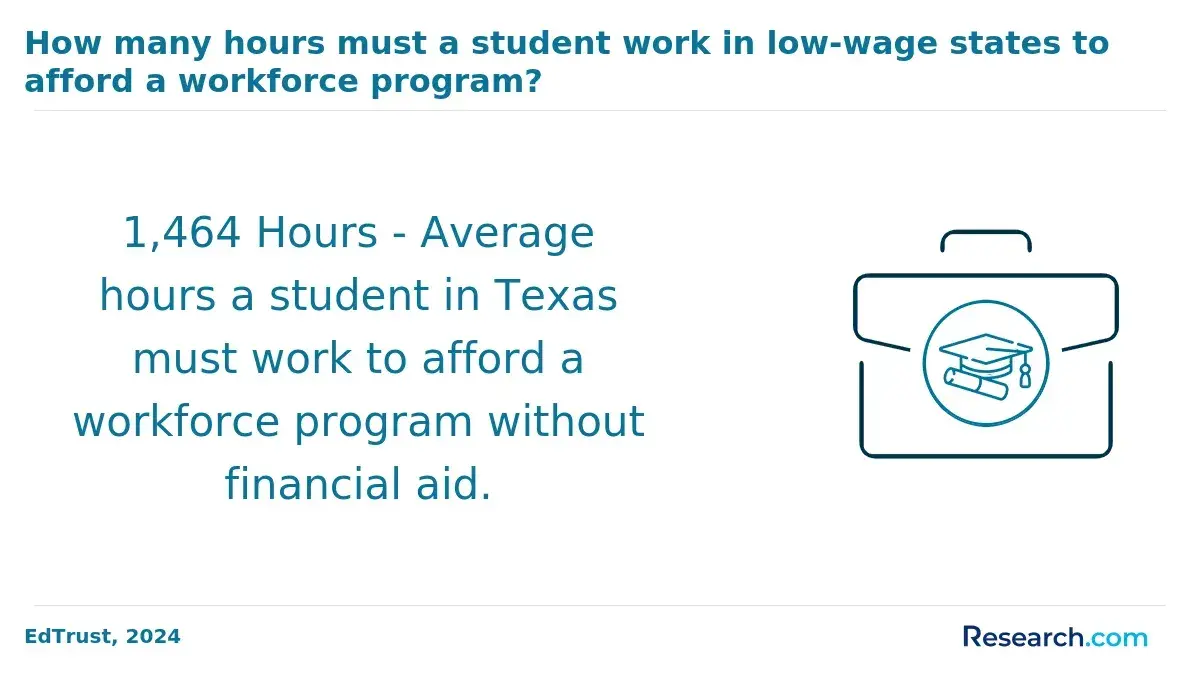
When comparing colleges, look beyond sticker price. The real question is what you will pay after grants, scholarships, transfer credit, employer tuition assistance, military benefits, and the number of terms required to finish.
Review these cost factors before enrolling because each one can change your total price:
- Net price: Use the school's net price calculator to estimate costs after grant aid, not just published tuition.
- Credit transfer: Ask for a written transfer evaluation if you have previous college credits, military training, AP, CLEP, or industry certifications.
- Program length: A cheaper per-credit rate may not save money if the program requires more credits than comparable options.
- Fees and materials: Online course fees, lab kits, textbooks, software, uniforms, testing fees, and clinical costs can materially affect affordability.
- Work schedule fit: A program that forces you to reduce work hours may cost more than the tuition bill suggests.
For students prioritizing cost control, comparing affordable online colleges can help identify programs where access, flexibility, and price are better aligned.
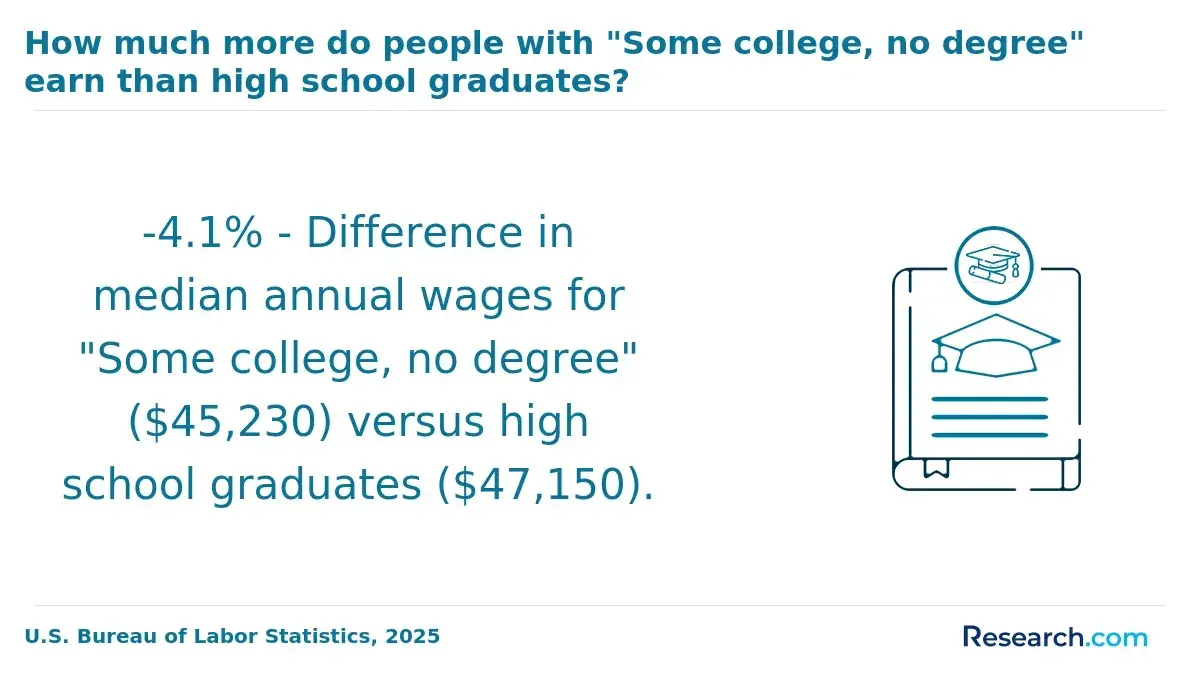
Return on investment should be evaluated carefully. BLS data released in 2024 shows that workers with bachelor's degrees had higher median weekly earnings than those with only a high school diploma, but that broad pattern does not guarantee a payoff from any specific college or major. Your outcome depends on field of study, completion, location, work experience, employer demand, and debt level.
Section 7
Many colleges with 100% acceptance rates are designed around flexibility. That can be a major advantage for students who work, care for family, serve in the military, or need to study part time. The trade-off is that flexibility requires more self-management.
Use format as a decision filter, not an afterthought. The same degree can feel very different depending on how courses are delivered.
| Format | Best for | Main advantage | Main trade-off |
| On-campus | Recent high school graduates, students needing labs, and learners who want in-person support | More direct access to facilities, classmates, and campus services | Less scheduling flexibility and possible commuting or housing costs |
| Online asynchronous | Working adults and students with unpredictable schedules | Coursework can often be completed around work and family obligations | Requires strong time management and comfort with independent learning |
| Hybrid | Students who want flexibility but still need some face-to-face instruction | Balances online convenience with campus interaction | Travel may still be required for labs, exams, or intensives |
| Accelerated | Motivated students who can handle condensed courses | May shorten time to completion | Faster pacing can be difficult if you work full time or need remediation |
| Competency-based | Experienced learners who can prove existing knowledge | Progress may be based on mastery rather than seat time | Not every student thrives without a traditional weekly class rhythm |
If finishing faster is a priority, explore accelerated degree programs, but compare workload, transfer rules, and support services before assuming a shorter timeline will be easier.
A current trend shaping this decision is the growth of flexible online and hybrid pathways for adult learners. More colleges now market rolling starts, shorter terms, and credit for prior learning, but students should verify that these features actually apply to their intended major.
Section 8
Accreditation is one of the most important quality checks for any college with a 100% acceptance rate. Institutional accreditation affects eligibility for federal financial aid, transfer credit recognition, graduate school admission, and employer confidence.
There are also programmatic accreditations for fields where professional standards matter. Nursing, teacher education, counseling, social work, engineering technology, business, and allied health programs may have specialized accreditation or state approval requirements.
Before enrolling, verify these quality and portability factors with the school and, when relevant, with your target transfer institution or licensing board:
- Institutional accreditation: Confirm the college is accredited by an agency recognized by the U.S. Department of Education or the Council for Higher Education Accreditation.
- Program approval: If your goal involves licensure, ask whether the program meets requirements in your state, not just the state where the college is located.
- Transfer articulation: Request written information showing which credits transfer and how they apply to your intended degree.
- Credit for prior learning: Ask whether the college accepts exams, military credits, industry certifications, portfolios, or workplace training.
- Graduate school readiness: If you plan to continue later, check whether graduate programs commonly accept degrees from the institution and format you are considering.
Students comparing flexible graduate routes should also examine how competency-based master's degrees handle accreditation, assessments, faculty support, and employer recognition.
Do not rely only on an admissions representative's verbal assurance. For licensure fields, requirements can vary by state and can change over time, so written confirmation is the safer basis for a decision.
Section 9
The best 100% acceptance college is not simply the one that admits you fastest. It is the one that gives you the clearest, most affordable route to your next goal, whether that goal is transferring, earning a credential, changing careers, or completing a degree you previously started.
Use this decision process to compare schools in a practical order. It keeps the focus on outcomes rather than marketing claims.
- Start with your goal: identify whether you need a certificate, associate degree, bachelor's degree, transfer pathway, licensure program, or graduate preparation.
- Eliminate schools that lack the accreditation, program approval, or state authorization required for your plan.
- Compare total net cost, not just tuition, including fees, books, supplies, commuting, housing, and lost work time.
- Ask how many of your previous credits will apply directly to the program, not just whether the college will "accept" them.
- Review course format, term length, start dates, and weekly workload to see whether the schedule fits your life.
- Look for support services such as advising, tutoring, career services, disability accommodations, transfer planning, and mental health resources.
- Request information about completion rates, job placement where available, licensure exam pass rates where relevant, and transfer outcomes.
If two colleges look similar, choose the one that offers clearer advising, stronger credit transfer, lower net cost, and better alignment with your intended major. A fast admission decision matters far less than a program plan that you can actually complete.
Section 10
Open-admission colleges can be excellent pathways, but applicants sometimes make decisions too quickly because the admissions process feels easy. The following mistakes are common, especially among students who are trying to start immediately.
Watch for these red flags before paying an application fee, signing an enrollment agreement, or borrowing loans:
- Choosing based only on acceptance rate: A 100% acceptance rate says little about affordability, support, credit transfer, or career outcomes.
- Ignoring accreditation: Unaccredited or poorly recognized programs can create problems with financial aid, transfer, employment, and licensure.
- Assuming every major is open: Competitive programs may require prerequisites, minimum GPAs, interviews, clinical clearance, or separate admissions.
- Comparing tuition instead of total cost: Fees, books, supplies, technology, transportation, housing, and extra terms can change the real price.
- Borrowing before using grant aid: Complete the FAFSA and school aid applications before deciding how much debt to take on.
- Skipping transfer planning: Credits that transfer as electives may not shorten your bachelor's degree if they do not meet major requirements.
- Trusting pressure tactics: Be cautious if a school pushes immediate enrollment, avoids written answers, or discourages comparison shopping.
A useful rule is to slow down whenever a school makes enrollment feel urgent. Good colleges should be able to explain accreditation, costs, program requirements, student support, and expected timelines clearly.
Section 11
If you are interested in colleges with 100% acceptance rates, start by treating them as access points rather than shortcuts. The smartest applicants use open admission to create opportunity while still comparing quality, cost, transfer value, and career fit.
Here is a practical next-step checklist you can use this week.
- Make a shortlist of three to five accredited colleges that offer your intended program in a format you can realistically complete.
- Request a degree plan showing required courses, estimated timeline, transfer credit application, and total expected cost.
- Complete the FAFSA and ask each school about grants, scholarships, payment plans, employer partnerships, and emergency aid.
- Speak with an academic advisor before registering, especially if you need developmental coursework or plan to transfer later.
- For licensure programs, contact the relevant state board or official program office to confirm that the degree meets current requirements.
- Compare support services and ask how the college helps students who are struggling academically or financially.
- Choose the school that gives you the strongest combination of affordability, legitimacy, support, and progress toward your goal.
If you already have a bachelor's degree and want a faster graduate credential after completing an access-focused undergraduate pathway, compare 12-month master's programs online with the same scrutiny: accreditation, workload, cost, admissions requirements, and career relevance.
The bottom line is simple: a 100% acceptance rate can open the door, but your decision should be based on what happens after you walk through it.
Other Things You Should Know About
No. Many are legitimate community colleges, public access institutions, and adult-serving universities. Quality depends on accreditation, program strength, student support, cost, transfer options, and outcomes, not acceptance rate alone.
You may be denied or delayed if you do not meet basic eligibility rules, submit required documents, or qualify for a specific selective program. General admission can be open while majors such as nursing or education remain competitive.
Many accredited open-admission colleges participate in federal financial aid, but eligibility depends on the institution, program, enrollment status, citizenship or eligible noncitizen status, and your financial aid application. Always confirm before enrolling.
Community college often makes sense for lower cost, transfer planning, or career certificates. A four-year open-admission college may be better if you know your bachelor's major, need upper-division courses immediately, or want one institution from start to finish.
References
- Benefits of a College Degree on Salary & Earning Potential | UMass Global https://www.umassglobal.edu/blog-news/how-college-impacts-salary-and-future-earning-potential
- Top Degrees in Demand for the Future: 2026 & Beyond https://skillifysolutions.com/blogs/career-growth/top-degrees-in-demand-for-the-future/
- The Real Cost of College and How to Pay It https://www.collegexpress.com/articles-and-advice/financial-aid/articles/financial-aid-admissions/real-cost-collegeand-how-pay-it/
- Ultimate List of College Admissions Test Requirements - MEK Review https://mekreview.com/list-of-college-admissions-test-requirements/
- Average Cost of College [2025]: Yearly Tuition + Expenses https://educationdata.org/average-cost-of-college
- 15 Best Open Enrollment Colleges Online [2021 List & Rankings] https://www.edsmart.org/accredited-online-colleges/open-admissions/
- Best Online Colleges with High Acceptance Rates https://www.degreesforgood.org/online-degrees/online-colleges-with-high-acceptance-rates/
- How Much Do Placement Test Scores for College Matter? https://www.st-agnes.org/news-detail
- New grads expect to earn over $100K right after college, on average—these are the top fields to achieve that https://www.nbcbayarea.com/news/business/money-report/new-grads-expect-to-earn-over-100k-right-after-college-on-average-these-are-the-top-fields-to-achieve-that/3851139/
- Acceptance Rate Calculator https://www.omnicalculator.com/everyday-life/acceptance-rate