2027 Wake Forest Supplemental Essays: Examples, Tips, and Common Mistakes

Co-Founder and Chief Data Scientist
Wake Forest applicants face a hard task: showing intellectual curiosity, character, and fit in very limited space. The stakes are real; Wake Forest reported more than 18,000 first-year applicants in its 2024-25 Common Data Set, making the essays an important way to add context beyond grades and activities.
This guide is for first-year, transfer, adult, and nontraditional applicants who want practical examples, stronger research habits, and clearer decision-making. You will learn how to tailor responses, avoid generic claims, and connect Wake Forest to academic, career, and personal goals.
Key Things You Should Know
- Wake Forest supplemental essays are not just writing samples; they help admissions readers evaluate fit, curiosity, values, and how you might contribute to a residential academic community.
- Recent Wake Forest applications have typically included a main "Why Wake Forest?" response plus several short-answer prompts; applicants should verify the exact current prompts in the Common App or Wake Forest applicant portal before drafting.
- Use outcomes data carefully: BLS 2024 data shows bachelor's degree holders had median usual weekly earnings of $1,543, but essays should connect education to purpose rather than imply guaranteed salary results.
What are the Wake Forest supplemental essays and how do they fit into the application?
Wake Forest supplemental essays are school-specific writing responses submitted in addition to the Common App or Coalition-style personal statement. Their purpose is to show why Wake Forest makes sense for you and why you make sense for Wake Forest. Unlike the main personal essay, which can focus broadly on identity or growth, the supplement should be more targeted: academic fit, community fit, personal values, and evidence that you understand the university.
These essays matter because Wake Forest uses a holistic review process. That means admissions readers consider academic preparation, course rigor, recommendations, activities, personal qualities, and context together. A strong supplement will not compensate for an application that lacks academic readiness, but it can clarify motivation, explain direction, and make the reader remember you as a specific person rather than a set of credentials.
The table below explains how the Wake Forest supplement usually fits with the rest of the application. Use it to decide what each component should accomplish so you do not repeat the same story in every answer.
| Application component | Main purpose | What Wake Forest readers may learn |
| Main personal statement | Shows a broader story about growth, identity, values, or perspective | How you think, what shaped you, and how you reflect on experience |
| Wake Forest "Why us?" essay | Explains academic and community fit | Whether your interests match specific Wake Forest programs, faculty, culture, and opportunities |
| Short-answer prompts | Reveals personality, intellectual range, humor, reading habits, or priorities | How you might contribute to classroom discussion and campus life |
| Activities list | Summarizes commitments and impact | How you spend time and what responsibilities you have taken on |
| Recommendations | Adds outside perspective | How teachers or counselors describe your habits, integrity, and readiness |
A practical way to think about the supplement is this: the main essay says, "Here is who I am," while the Wake Forest supplement says, "Here is why this specific place is where I can keep becoming that person."
How many Wake Forest supplemental essays are required and what prompts are offered?
The exact number of Wake Forest supplemental essays can change by application cycle, so the official source is always the Common App, the Wake Forest application portal, or the admissions office. In recent cycles, applicants have generally seen a required Wake Forest-specific section with a main fit-oriented response and multiple short-answer prompts. Some prompts may be optional or limited to certain applicant types, so do not rely on old prompt lists without checking your live application.
Most applicants should prepare for a mix of concise academic-fit writing and personality-driven short responses. The table below summarizes common prompt categories you may encounter and what each one is really asking:
| Prompt category | What it is testing | Weak response pattern | Stronger response pattern |
| Why Wake Forest? | Research, academic direction, and fit with campus culture | Generic praise about prestige, beauty, or small classes | Specific academic interests tied to courses, faculty, programs, and community habits |
| Intellectual curiosity | How you think outside required assignments | Listing favorite subjects without reflection | Explaining a question you pursued and what changed in your thinking |
| Books, media, or ideas | Reading habits, interpretation, and complexity | Naming impressive works without personal engagement | Showing how a text, film, artwork, or idea challenged your assumptions |
| Community and values | Contribution, empathy, and self-awareness | Claiming to be collaborative without evidence | Using a concrete moment that shows how you listen, lead, or learn from others |
| Short lists or quick answers | Voice, humor, priorities, and range | Over-polished answers that sound like a résumé | Specific, human details that reveal personality while staying appropriate |
Before drafting, copy the exact prompts and word limits into a working document. Then label each response by its job: fit, curiosity, contribution, or personality. This prevents repetition and helps you create a balanced supplement.
What are strong example responses to the main Wake Forest supplemental essay prompts?
Strong Wake Forest supplemental essay responses are specific, reflective, and restrained. They do not try to cover every interest. Instead, they choose one or two meaningful details and explain why those details matter. The examples below are not templates to copy; they show the level of specificity and reflection that makes a response feel authentic.
Example for a "Why Wake Forest?" prompt:
I am drawn to Wake Forest because I want a college where discussion is not limited to one discipline. My interest in public health began while volunteering at a food pantry, where I saw how transportation, housing, and preventive care shaped people's choices before they ever reached a clinic. At Wake Forest, I would hope to study health and human behavior through coursework that connects biology, sociology, and ethics, while also learning from community-based work in Winston-Salem. I am especially interested in an environment where professors expect students to defend ideas clearly, not just memorize them. The combination of a liberal arts foundation, pre-health advising, and a campus culture that values service would help me test whether medicine, policy, or community health research is the right path. I would bring curiosity, but also humility: the understanding that meaningful health work starts by listening before proposing solutions.
This response works because it connects a real experience to academic exploration. It names a direction without pretending the applicant has everything figured out, which is often more believable than a rigid career script.
Example for an intellectual curiosity prompt:
Last year I became interested in why people believe misinformation even when reliable evidence is available. I started by blaming social media algorithms, but the more I read, the more I realized the problem was also emotional. People often accept claims that protect belonging, identity, or fear. That changed how I approached conversations in my debate club. Instead of treating disagreement as a logic puzzle to win, I began asking what value or worry sat underneath a person's argument. I still care about evidence, but I now think persuasion requires empathy as much as accuracy. At Wake Forest, I would want to keep studying that intersection between psychology, communication, and civic life.
This answer shows a shift in thinking. Admissions readers can see the applicant moving from a simple opinion to a more nuanced understanding, which is exactly what many short-answer prompts are designed to reveal.
Example for a books, media, or ideas prompt:
One book that stayed with me is Never Let Me Go by Kazuo Ishiguro. At first, I read it as a dystopian story about science and ethics. By the end, I was more unsettled by its quietness than by its premise. The characters' tragedy is not only what society does to them, but how gradually they learn to accept limits others created. It made me think about the stories people inherit about class, ability, and opportunity, and how hard it can be to question a world that has always called itself normal. The book did not give me a political position. It gave me a better question: who benefits when some people are taught to expect less?
This example avoids summarizing the book. It interprets the work and connects it to a larger question, which makes the response feel mature without sounding artificial.
When adapting these examples to your own draft, follow a simple sequence. The order below keeps short responses focused while still allowing depth.
- Start with one concrete experience, question, text, or observation.
- Explain what you originally thought or expected.
- Show what complicated, challenged, or deepened that thinking.
- Connect the insight to Wake Forest only when the prompt asks for institutional fit.
- End with a forward-looking statement that feels specific rather than grandiose.
How should you research Wake Forest's academic programs to tailor your supplemental essays?
Researching Wake Forest well means going beyond the homepage. Admissions readers can quickly tell the difference between an applicant who copied attractive phrases and one who understands how the university's academic structure could support a real plan. Your goal is not to mention as many features as possible; it is to choose the few that directly connect to your interests.
Start by studying the academic area you are most likely to pursue, then examine related departments, advising, research opportunities, experiential learning, and student organizations. If your goals are interdisciplinary, show how Wake Forest would let you combine fields rather than force your interests into one narrow box.
Applicants who are comparing flexible degree models elsewhere can also review how a competency-based degree differs from a traditional Wake Forest pathway, especially if schedule flexibility or self-paced progress is a major priority.
Use the following research process before writing a Wake Forest-specific essay. It helps you gather details that are relevant enough to use and discard facts that sound impressive but do not support your story.
- Identify one academic question you genuinely want to explore, such as health equity, computational ethics, environmental policy, entrepreneurship, literature and memory, or neuroscience.
- Find the Wake Forest department, major, minor, or program that most closely matches that question.
- Look for two specific academic features, such as a course theme, research center, lab, advising model, seminar style, or experiential learning opportunity.
- Connect those features to something you have already done, read, observed, built, or questioned.
- Explain what you hope to do next at Wake Forest, using realistic language rather than exaggerated claims.
The strongest research details usually come from academic pages, course descriptions, faculty interests, program requirements, student organization descriptions, and admissions events. Rankings and reputation can be useful background, but they should not be the core of your essay.
A sentence like "Wake Forest is highly ranked" tells the reader almost nothing about your fit; a sentence about how a specific advising structure would help you test two career directions is far more useful.
How can you connect your career goals and salary expectations to Wake Forest in your essays?
Career goals can strengthen Wake Forest supplemental essays when they are presented as a thoughtful direction, not a guaranteed outcome. Admissions readers do not expect most applicants to have a fixed 30-year plan. They do expect you to understand why a Wake Forest education would help you build skills, test interests, and make better decisions.
Use salary data carefully. According to BLS 2024 data, workers with a bachelor's degree had median usual weekly earnings of $1,543, compared with $930 for workers whose highest credential was a high school diploma.
That gap can help explain why college remains a major investment decision, but it should not be used in an essay as if a Wake Forest degree automatically produces a specific income. Instead, connect career goals to skills such as research, writing, quantitative reasoning, ethical judgment, teamwork, and communication.
The table below shows how different career directions can be discussed in a Wake Forest essay without sounding transactional. It is not a salary prediction; it is a way to match goals with academic preparation.
| Career direction | Useful Wake Forest connection | Essay angle that feels authentic |
| Medicine or public health | Pre-health advising, science coursework, ethics, community engagement | Interest in patient care, health systems, prevention, or equity |
| Business or entrepreneurship | Business fundamentals, liberal arts thinking, communication, leadership opportunities | Desire to solve a problem responsibly rather than simply "be successful" |
| Law or public policy | Writing-intensive courses, debate, history, politics, philosophy, service | Commitment to evidence, justice, advocacy, or institutional change |
| Data, technology, or analytics | Quantitative coursework, ethics, research, interdisciplinary applications | Interest in using data to understand human or organizational problems |
| Education, nonprofit, or service leadership | Community-based learning, mentoring, social science, communication | Focus on listening, local impact, and long-term responsibility |
If you are deciding whether a degree or shorter credential better fits your goals, explore alternatives before using a career claim in your essay. Some students find that certificates I can get online are useful for skills-based preparation, while a Wake Forest degree may make more sense for students seeking a broader residential, academic, and professional network.
What strategies help you write about choosing between online and campus study at Wake Forest?
Most traditional Wake Forest undergraduate applicants are applying for a campus-based residential experience. However, some graduate, professional, adult, and continuing education applicants may be comparing online, hybrid, and campus-based options. If a prompt asks why a particular format fits you, do not simply say online is convenient or campus is better. Explain how the format supports your learning style, responsibilities, and goals.
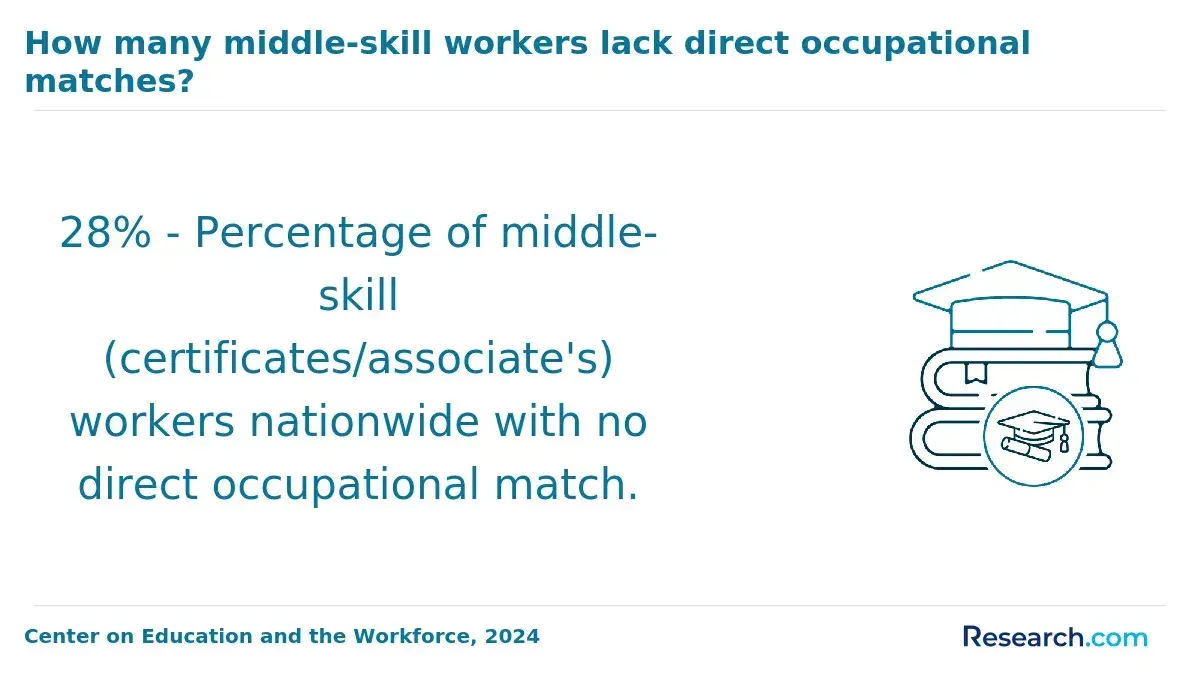
Online education is now a normal part of the U.S. higher education market, but the right choice depends on the program and the student. NCES data released in 2024 showed that millions of U.S. college students took at least one distance education course, which means applicants are increasingly expected to think clearly about format, not treat it as an afterthought.
For Wake Forest essays, the key is to show that you understand what you would gain and what trade-offs you would accept.
The table below compares the kinds of factors applicants should consider when discussing online versus campus study. Use it for decision support, not as language to paste into an essay.
| Factor | Campus study may fit when | Online or hybrid study may fit when |
| Learning style | You learn best through face-to-face discussion, labs, advising, and residential routines | You are self-directed and can manage deadlines without daily in-person structure |
| Work and family responsibilities | You can relocate or dedicate most weekdays to campus life | You need flexibility because of employment, caregiving, military service, or location |
| Networking | You want frequent informal contact with peers, faculty, and campus organizations | You need targeted professional networking tied to a working adult cohort |
| Program availability | Your intended major, lab work, studio work, or advising model is primarily campus-based | Your intended credential is designed for remote delivery and has appropriate support services |
| Cost structure | Residential costs are justified by access to campus resources and community | You may reduce relocation or commuting costs, though tuition and fees still need review |
If your long-term plan includes graduate study, mention format only when it directly affects your goals. For example, a working professional comparing a Wake Forest pathway with the fastest online master's degree options should explain whether speed, depth, cohort quality, accreditation, or career alignment matters most. The strongest essay answer is honest about trade-offs rather than assuming one format is automatically superior.
How can you use Wake Forest's accreditation, rankings, and outcomes data in your essays?
Accreditation, rankings, and outcomes data can improve a Wake Forest essay when they are used as background evidence, not as flattery. Accreditation tells you whether an institution or program meets recognized quality standards. Rankings offer a broad comparison, but they vary by methodology. Outcomes data can help you assess cost, completion, employment pathways, and postgraduate options, but it should never be treated as a personal guarantee.
Wake Forest University is institutionally accredited by the Southern Association of Colleges and Schools Commission on Colleges. Some professional programs may also hold specialized accreditation, depending on the field. This matters because accreditation can affect federal financial aid eligibility, transfer credit recognition, licensure pathways, graduate admissions, and employer confidence.
Use data in your decision-making before you use it in your essay. The following sources are worth checking, even if you do not name all of them in your response.
- Wake Forest's official admissions, financial aid, academic department, and program pages for requirements and opportunities.
- The Common Data Set for application volume, enrollment profile, graduation rates, and other institutional information.
- NCES College Navigator for federal data on cost, enrollment, retention, graduation, and net price.
- Program-specific accreditation pages for business, health, education, law, or other professional pathways when relevant.
- BLS Occupational Outlook Handbook and Occupational Employment and Wage Statistics for career salary and job outlook context.
If you mention rankings, keep the sentence modest and specific. A weak sentence says, "Wake Forest's ranking proves it is the best school for me." A stronger sentence says, "Wake Forest's national reputation drew my attention, but my fit became clearer when I saw how its liberal arts structure would let me combine economics, ethics, and public policy." That distinction matters because admissions readers want evidence of fit, not brand loyalty.
What common mistakes do applicants make in Wake Forest supplemental essays and how to avoid them?
Most weak Wake Forest supplemental essays fail for predictable reasons: they are too generic, too résumé-like, or too focused on impressing instead of revealing. The good news is that these problems are fixable if you revise with the reader's needs in mind.
The table below identifies common mistakes and what they usually signal to an admissions reader. Use it as a diagnostic tool after you have a full draft.
| Common mistake | What it may signal | Better approach |
| Praising Wake Forest without specific evidence | You may not have researched the university deeply | Connect one or two concrete Wake Forest features to your actual interests |
| Repeating the Common App essay | You may not understand the purpose of the supplement | Add new context, a different example, or a more Wake-specific angle |
| Listing achievements instead of reflecting | You may be using the supplement as a second résumé | Explain what an experience taught you or how it changed your thinking |
| Using career goals only to sound impressive | You may be focused on status rather than learning | Show the skills, questions, and experiences that connect your goal to Wake Forest |
| Writing what you think admissions wants to hear | Your voice may disappear | Include details that only you would choose, while staying mature and appropriate |
Applicants also make a strategic mistake when they assume a four-year degree is the only possible route to every career goal. If your essay claims that Wake Forest is essential for a specific job, make sure that is true.
In some fields, certificate jobs that pay well may offer a faster skills-based route, while Wake Forest may be the better fit for broader intellectual development, graduate preparation, leadership formation, or a residential college experience.
Before submitting, ask whether every essay answers three questions: Why this idea matters to me, why Wake Forest fits this direction, and what the reader learns about me that appears nowhere else in the application. If a sentence does not help with at least one of those questions, consider cutting it.
How do Wake Forest supplemental essays differ for transfer, adult, and nontraditional applicants?
Transfer, adult, and nontraditional applicants should approach Wake Forest supplemental essays differently from traditional first-year applicants. They often have more life experience, completed college credit, employment history, military service, caregiving responsibilities, or a clearer reason for changing institutions. The essay should not hide that complexity; it should organize it.
Transfer applicants need to explain academic and personal fit without sounding negative about their current or previous institution. A strong transfer essay usually clarifies what has changed: academic goals, program needs, advising needs, research interests, campus environment, or long-term direction.
Adult and nontraditional applicants should be equally direct about readiness, time management, and why the chosen format or program makes sense now.
Use the following approach if your path is not a straight line from high school to a traditional first-year application. It helps you turn complexity into a coherent narrative.
- Briefly state the context of your path, such as community college, work, family responsibilities, military service, a prior major, or a gap in enrollment.
- Explain what you learned from that path, especially skills such as persistence, focus, communication, maturity, or problem-solving.
- Identify what Wake Forest offers that your current situation does not, using specific academic or support-related details.
- Clarify how you will contribute to classrooms and campus life because of your experience, not despite it.
- Address practical readiness, including time, finances, transfer credits, or program format, when relevant to the application.
Nontraditional applicants considering advanced credentials should also compare alternatives honestly. For instance, someone researching 1-year PhD programs online no dissertation should understand that doctoral formats, accreditation, research expectations, and employer recognition vary widely.
In a Wake Forest essay, the point is not to claim the fastest path is best; it is to show that the selected path matches your academic purpose and professional reality.
How should you revise and proofread Wake Forest supplemental essays before submitting your application?
Revision is where most Wake Forest supplemental essays become competitive. A first draft usually explains what you want to say; a revised draft helps the admissions reader understand why it matters. Because many Wake Forest responses are short, every sentence has to earn its place.
Use a staged revision process rather than trying to fix everything at once. This sequence helps you improve substance before polishing grammar.
- Check prompt alignment: underline the exact words in the prompt and confirm that your response answers all parts of it.
- Remove generic claims: cut or revise phrases that could appear in an essay for any selective university.
- Add evidence: include one concrete experience, question, course interest, reading moment, community example, or Wake Forest detail.
- Strengthen reflection: explain what the example reveals about your thinking, values, or readiness.
- Reduce repetition: compare all supplemental answers side by side and make sure each one adds something new.
- Read aloud for voice: revise sentences that sound unnatural, inflated, or unlike how you would speak in an interview.
- Proofread last: check names, punctuation, word count, grammar, and whether any copied prompt text remains in the response box.
Ask one or two trusted readers for feedback, but do not let too many people rewrite your voice. The best outside reader can tell you where they were confused, where the essay sounded generic, and what they remembered after finishing. That feedback is more useful than line-by-line edits that make the essay sound like an adult wrote it for you.
Before submitting, paste each response into the application exactly as it should appear, then preview it if the platform allows. Formatting errors, missing words, and accidental truncation are surprisingly common. A final slow read can prevent a strong essay from being weakened by avoidable mistakes.
Other Things You Should Know About
Follow the word or character limits shown in your application portal. If no exact length appears in a planning document you found online, do not guess; verify the current prompt in the official application system.
You can mention reputation briefly, but rankings should not be the main reason you give. Specific academic programs, advising, community values, research interests, and personal fit make a stronger answer.
You can reuse your planning structure, but not the substance. A Wake Forest essay should include details that clearly belong to Wake Forest and connect directly to your goals or values.
A standout response is specific, reflective, and human. It shows what you care about, how you think, and why Wake Forest is a realistic match for your academic and personal growth.
References
- How to Write the Wake Forest University Supplemental Essays: Guide + Examples 2025/2026 | College Essay Guy https://www.collegeessayguy.com/blog/wake-forest-supplemental-essays
- ‘Telling Our Story:’ Wake Forest & the US News Rankings – Old Gold & Black https://wfuogb.com/21279/news/telling-our-story-wake-forest-the-u-s-news-rankings/
- How to choose between Online and On-Campus Study https://www.falmouth.ac.uk/study/choose-between-online-campus-study
- Studying Online vs On-Campus: Which Is Better for You? | UNF https://www.unfc.ca/blog/studying-online-vs-on-campus-which-is-better-for-you
- Wake Forest Supplemental Essays: 2024-25 Prompt Guide and Expert Tips https://www.collegeessayadvisors.com/supplemental-essay/wake-forest-university-supplemental-essay-prompt-guide-2024-25/
- Wake Forest University (WFU) https://www.princetonreview.com/college/wake-forest-university-1022830
- How to Decide Between an Online and Onsite Degree https://www.indwes.edu/articles/2022/07/how-to-decide-between-an-online-and-onsite-degree
- Unlock the Secrets to Writing Supplemental Essays That Work https://www.road2college.com/how-do-you-write-a-supplemental-essay/
- Three Killer Scholarship Essay Examples About Career Goals https://scholarshipowl.com/blog/apply-for-scholarships/scholarship-essay-examples-career-goals/
- Online vs. On-Campus: Which Mode of Learning Is Best for You? https://www.onlinemastersdegrees.org/student-resources/which-mode-of-learning-is-best/