2027 College Essay Topic Ideas: Examples, Tips, and Common Mistakes

Co-Founder and Chief Data Scientist
A college essay has to do more than sound polished; it has to help admissions readers understand who you are beyond grades, activities, and test scores. Common App reported more than 1.4 million distinct first-year applicants in the 2024-25 cycle, which means many students are competing in a crowded applicant pool.
This guide is for high school students, transfer applicants, counselors, and families who want practical topic ideas, examples, and revision strategies. You will learn how to choose a topic, shape it for your goals, avoid common mistakes, and make stronger application decisions.
Key Things You Should Know
- The strongest college essay topics are specific personal stories that reveal judgment, growth, curiosity, values, or contribution-not broad summaries of hardship, achievements, or future success.
- Common App gives applicants up to 650 words for the main personal essay, so a focused moment usually works better than trying to cover an entire life story.
- College ROI matters, but essays should connect career goals thoughtfully. BLS reported 2024 median weekly earnings of $1,543 for workers with a bachelor's degree, which shows why major and program fit are worth considering carefully.
What are the most popular and effective college essay topics for applications?
The most effective college essay topics are not necessarily the most dramatic. They are the topics that help a reader see how you think, what you notice, how you respond to challenges, and what you may contribute to a campus community.
A good topic usually answers three questions: What happened? Why did it matter? What does it show about the applicant now? The table below compares popular topic categories and when they tend to work best.
| Topic category | What it can reveal | When it works best | Risk to avoid |
| Personal growth | Maturity, reflection, resilience | The essay shows a clear before-and-after shift in perspective | Sounding like a generic lesson about "never giving up" |
| Intellectual curiosity | Love of learning, initiative, academic fit | The story shows how a question, project, book, problem, or experiment changed your thinking | Listing academic interests without a personal story |
| Community or family | Responsibility, empathy, cultural context, leadership | The focus stays on your role, choices, and insight | Writing only about another person instead of yourself |
| Creative passion | Originality, discipline, self-expression | The essay connects a craft, hobby, or project to a deeper value | Describing the activity without showing growth |
| Failure or setback | Accountability, adaptability, problem-solving | The applicant owns the mistake and explains what changed afterward | Overdramatizing the event or blaming others |
| Identity or background | Perspective, belonging, values, lived experience | The essay adds context that is not obvious elsewhere in the application | Trying to represent an entire group or culture in one essay |
Strong topic ideas often start small. A late-night robotics repair, a disagreement in a student council meeting, a family recipe, a quiet library routine, or a failed science fair prototype can become powerful if the essay explains why that moment shaped your choices.
Consider these topic angles if you are stuck and need a more concrete starting point:
- A moment when you changed your mind after encountering evidence, criticism, or a different lived experience.
- A responsibility you took on at home, work, school, or in your community that changed how you understand leadership.
- A problem you kept returning to because it genuinely interested you, even when no grade or award was attached.
- A small habit, place, object, or routine that reveals a larger part of your identity or motivation.
- A time when you failed to communicate well, repaired the situation, and learned how to collaborate better.
The best test is simple: if someone who knows you well reads the essay, they should recognize your voice; if someone who does not know you reads it, they should understand what kind of learner, roommate, classmate, or community member you might become.
How can I brainstorm unique college essay ideas that reflect my goals and interests?
Brainstorming works best when you stop asking, "What will impress admissions officers?" and start asking, "What story could only I tell this way?" Unique essays usually come from specific details, not from unusual events.
Start by mapping experiences to values. This keeps your essay from becoming a resume repeat and helps you identify stories that connect to your goals, interests, and personality.
- Write down 10 ordinary moments from the last two years when you felt challenged, proud, confused, useful, curious, or changed.
- Next to each moment, name the value it reveals, such as persistence, honesty, service, creativity, independence, faith, precision, or courage.
- Circle the stories where you made a decision, solved a problem, asked a question, or changed your behavior.
- Cross out any topic that mainly proves you are impressive but does not reveal how you think.
- Choose two finalists and draft a rough opening scene for each before deciding which has more energy.
Students often find better ideas by looking at patterns rather than milestones. For example, if you enjoy independent problem-solving, quiet focus, or deep one-on-one conversations, exploring career resources about introvert jobs may help you identify environments and values that belong in your essay without forcing a personality label.
Use the following prompts to move from vague themes to usable stories. The goal is not to answer every question, but to find one answer that feels honest and concrete.
- What is something you care about that most people around you underestimate?
- When did you feel responsible for something bigger than your own grade, score, or recognition?
- What problem do you notice repeatedly in your school, family, workplace, or community?
- What have you taught yourself without being assigned to learn it?
- What feedback was hard to hear but ultimately useful?
- What is a belief you hold now that you did not hold a few years ago?
After brainstorming, choose a topic that has tension. Tension does not need to mean trauma; it can be a question, conflict, uncertainty, mistake, contradiction, or decision. Without tension, an essay often becomes a description. With tension, it becomes a story.
What are strong examples of successful college essays and why do they work?
Successful college essays usually combine a focused scene with reflection. They do not simply report what happened; they interpret the meaning of the experience and connect it to the applicant's future behavior.
The examples below are not full essays to copy. They are topic models that show how a common experience can become distinctive when the writer makes the central insight clear.
| Essay concept | Why it can work | What the essay should emphasize |
| A student fixes a broken school microphone before a debate tournament | The story can show calm under pressure, service, and technical curiosity | The applicant's choices, not just the successful repair |
| A cashier learns to communicate with impatient customers during weekend shifts | Work experience can reveal maturity, empathy, and real-world responsibility | Specific interactions and how the applicant's assumptions changed |
| A student translates medical forms for a grandparent | The topic can connect family responsibility, language, advocacy, and future goals | The student's role and reflection, not private details that belong to someone else |
| A musician stops chasing perfect auditions and starts composing imperfect original songs | The essay can show creativity, vulnerability, and self-directed growth | The shift from external approval to personal expression |
| A future biology major becomes fascinated by mold on bread after a failed kitchen experiment | An ordinary observation can reveal scientific curiosity | The question that emerged and what the student did next |
A strong essay often has a structure like this: a specific moment, a complication, a choice, a consequence, and a reflection. That structure gives the reader enough story to care and enough analysis to understand why the story belongs in a college application.
Students with long-term academic plans can also use essays to show direction without pretending to have every step settled. For example, an applicant interested in research, policy, healthcare, analytics, or education might mention how undergraduate exploration could later connect to graduate options, including fields listed among the most useful masters degrees.
Here is a compact way to evaluate whether your example works before you draft the whole essay:
- The story includes a moment where you made an active choice.
- The essay reveals something not already obvious from your activities list.
- The reflection explains how the experience changed your thinking or behavior.
- The topic fits the prompt without sounding engineered only for admissions.
- The ending points forward without making unrealistic promises.
How should I tailor my college essay to different majors, programs, or career paths?
Tailoring a college essay does not mean rewriting your personality for every school. It means choosing details that help each reader understand why your interests fit the academic environment, major, program, or career path you are considering.
For the main personal statement, avoid making the entire essay about one college unless the platform specifically asks for a school-specific response. For supplemental essays, however, specificity matters. Mention actual academic interests, learning environments, research questions, communities, or career preparation features when they are relevant and true.
The table below shows how different academic directions can shape topic selection without making the essay feel like a cover letter.
| Applicant direction | Useful essay angle | What to avoid |
| STEM or engineering | A moment of experimentation, troubleshooting, design thinking, or curiosity | Listing advanced topics without explaining why they matter to you |
| Business or economics | A story about initiative, ethical decision-making, work experience, or resourcefulness | Reducing the essay to money, status, or vague entrepreneurship |
| Health or pre-med | A story about care, observation, responsibility, science interest, or service | Claiming certainty about a medical career without showing humility and learning |
| Education, social science, or public policy | A moment when you noticed a system, inequity, classroom dynamic, or community need | Speaking for a community without evidence of listening or involvement |
| Arts or humanities | A story about interpretation, voice, creative discipline, language, or meaning-making | Assuming passion alone is enough without showing craft or growth |
| Undecided | A story about curiosity, exploration, pattern recognition, or learning across interests | Sounding directionless; undecided should still feel intentional |
If you are comparing possible majors, it is reasonable to think about both interest and outcomes. Resources on majors that make money and are fun can help you reflect on fit, but your essay should still focus on the human reasons behind your choices rather than presenting a salary calculation.
When writing for a specific program, use this practical filter:
- If the prompt asks "Why major?" explain the origin of the interest, evidence of exploration, and questions you want to keep pursuing.
- If the prompt asks "Why us?" connect your goals to specific offerings, but avoid naming professors, labs, or courses you have not actually researched.
- If the prompt asks about community, show how you have contributed before and how that behavior could continue on campus.
- If the prompt asks about career goals, describe a direction and motivation while acknowledging that college may refine your path.
Applicants should also be careful with professional goals that involve licensure, such as nursing, teaching, accounting, counseling, or engineering. Requirements can vary by state, institution, and credential, so the essay should show informed interest rather than claiming that one undergraduate program automatically leads to a licensed career.
What writing strategies and revision tips help make a college essay stand out?
A standout college essay is usually the result of revision, not a perfect first draft. The first version helps you discover the story; later versions sharpen the focus, voice, structure, and meaning.
Use a revision process that separates big-picture decisions from sentence-level editing. This prevents you from polishing a paragraph that may not belong in the final essay.
- Check the core message by writing one sentence that starts with "This essay shows that I..." If the sentence is vague, the draft needs a clearer purpose.
- Cut resume repetition by removing details that already appear in the activities section unless they are needed to understand the story.
- Strengthen the opening by starting close to the action, image, decision, or question instead of using a broad quote or life summary.
- Balance scene and reflection so the reader sees what happened and understands why it mattered.
- Read the essay aloud to identify stiff language, confusing transitions, and sentences that do not sound like you.
- Revise the ending so it shows forward movement rather than restating the introduction.
Many essays improve when the writer replaces abstract claims with evidence. Instead of saying, "I became more resilient," show the specific behavior that changed: you asked for help earlier, redesigned the experiment, apologized to a teammate, kept a log of errors, or returned to a problem after embarrassment.
AI tools are now part of many students' writing environments, but they should be used carefully. They can help you generate questions, identify unclear sentences, or test whether a paragraph has a logical flow. They should not invent experiences, rewrite the essay into a generic voice, or create claims you cannot defend in an interview or follow-up conversation.
Before submitting, run this final quality check:
- The essay answers the prompt directly.
- The first paragraph creates a reason to keep reading.
- The middle includes a real choice, conflict, discovery, or change.
- The reflection is specific enough that it could not apply to any applicant.
- The language sounds like a polished version of you, not an adult or a template.
- The final draft fits the word limit and has no avoidable grammar, spelling, or formatting errors.
How do online application platforms (like the Common App) shape essay topics and requirements?
Online application platforms shape essay strategy because they standardize some requirements while allowing colleges to add their own. The Common App main essay, for example, has a 650-word limit, which encourages a focused personal story rather than a long autobiography.
Application platforms usually affect your writing in four ways: prompt choice, word limit, school-specific supplements, and reuse strategy. A strong essay plan accounts for all four before you draft too many versions.
| Platform feature | What it means for applicants | Decision point |
| Main personal essay | One essay may go to multiple colleges through the same platform | Choose a story broad enough to represent you across schools |
| Prompt options | Applicants can often choose among several themes | Pick the prompt that fits your strongest story, not the one that sounds most impressive |
| Supplemental essays | Colleges may ask about major fit, community, identity, values, or institutional interest | Research each school and avoid copy-paste answers that ignore the prompt |
| Character and word limits | Some responses may be extremely short | Answer directly and use concrete details instead of long introductions |
| Optional information sections | Applicants may explain circumstances affecting academics or activities | Use them for context, not as an extra essay unless the information is important |
Students applying to many colleges should build an essay tracker. This is especially useful when one school asks why you chose a major, another asks about community, and another asks for a short answer about intellectual curiosity.
A practical essay tracker should include the following fields:
- College name and application platform.
- Essay prompt and exact word or character limit.
- Submission deadline and priority scholarship deadline, if different.
- Draft status, reviewer status, and final proofreading status.
- Notes on school-specific details that are accurate and genuinely relevant.
Do not assume optional means unimportant. If an optional essay gives you a meaningful opportunity to explain fit, context, or contribution, it can strengthen the application. If you have nothing substantive to add, a weak optional essay may dilute a stronger application.
How can I connect my college essay to future salary potential and job outlook?
A college essay should not read like a salary report, but career awareness can make your application feel more intentional. Admissions readers are not expecting a guaranteed 20-year plan. They are looking for thoughtful evidence that you understand why a field, learning environment, or problem matters to you.
The economic context is still relevant because college is a major investment. College Board reported that average published tuition and fees for public four-year in-state students were $11,610 for 2024-25, before room, board, books, transportation, and personal expenses. That number helps explain why students should connect academic choices to realistic goals, financial planning, and program fit.
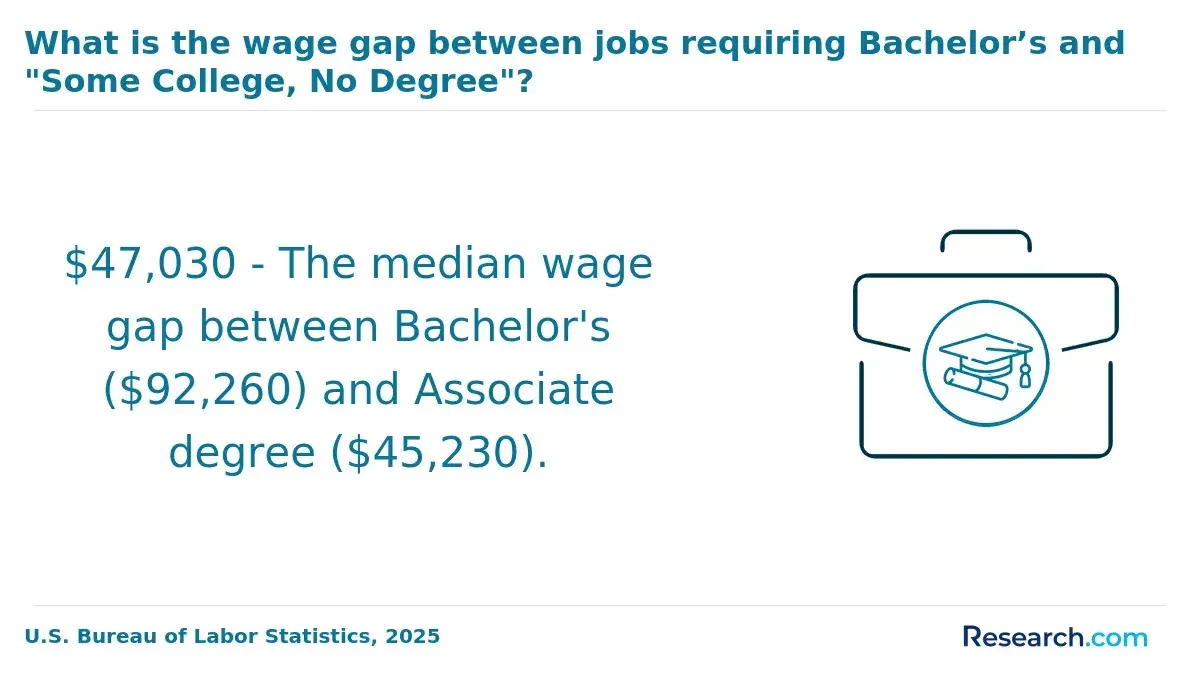
BLS education data can also help applicants understand the broader labor-market value of education without turning the essay into a financial argument. The table below summarizes 2024 national outcomes by education level and should be used as context, not a promise of individual results.
| Education level | 2024 median weekly earnings | 2024 unemployment rate | How applicants should use this context |
| High school diploma | $930 | 4.2% | Recognize why postsecondary planning can matter, especially when comparing cost and career pathways |
| Bachelor's degree | $1,543 | 2.5% | Think about how major, internships, location, and skills can affect outcomes within a broad credential category |
| Master's degree | $1,840 | 2.2% | Consider whether graduate study is necessary for the career path rather than assuming more education is always better |
If graduate school may be part of your plan, affordability should be considered early. Comparing options such as the cheapest masters degree programs can help with long-term planning, but an undergraduate essay should focus on motivation, readiness, and intellectual direction rather than simply minimizing cost.
To connect an essay to career goals effectively, keep the link personal and evidence-based:
- Explain the experience that introduced you to the field, such as a class, job, project, family responsibility, volunteer role, or independent question.
- Show what you did after the initial interest, such as reading more, shadowing, building something, interviewing someone, or taking a harder course.
- Name the skill or problem you want to keep developing in college.
- Avoid claiming a specific salary outcome or guaranteed job title after graduation.
- When relevant, acknowledge that college may help you refine the path through internships, advising, research, and coursework.
This approach shows maturity. It tells admissions readers that you are thinking beyond acceptance, while still leaving room for exploration and growth.
What role do authenticity, ethics, and avoiding exaggeration play in college essays?
Authenticity matters because admissions readers are evaluating a person, not just prose. An essay can be beautifully written and still fail if it feels exaggerated, overly packaged, or disconnected from the rest of the application.
Ethical writing starts with truthful representation. You can shape a story, choose details, and revise for clarity, but you should not invent hardships, inflate leadership roles, claim activities you did not meaningfully participate in, or let someone else replace your voice.
Some students worry that an ordinary life is not enough. In reality, authenticity often comes from precise observation. A sincere essay about tutoring one younger sibling every evening can be stronger than a dramatic essay that relies on vague claims about changing the world.
Be especially careful when discussing ambition. It is fine to value efficient pathways, flexible programs, or practical credentials, but saying you want only the easiest master's degree can sound shallow unless you explain the real academic, financial, family, or career context behind that preference.
Use these ethical guardrails before submitting:
- Do not disclose another person's private information unless it is necessary, respectful, and focused on your own growth.
- Do not exaggerate trauma, poverty, discrimination, illness, or family conflict to make the essay seem more powerful.
- Do not use AI-generated language that creates experiences, emotions, or achievements that are not yours.
- Do not let a parent, consultant, teacher, or editor rewrite the essay so heavily that it no longer sounds like you.
- Do not present uncertainty as certainty; thoughtful exploration is more credible than forced confidence.
Admissions essays do not require perfection. They require honesty, reflection, and enough detail for the reader to trust that the story belongs to you.
What are the most common college essay mistakes that hurt admissions decisions?
Common essay mistakes usually come from misunderstanding the purpose of the assignment. The essay is not a motivational poster, autobiography, activity list, or sales pitch. It is a focused piece of personal evidence.
The table below identifies frequent mistakes and stronger alternatives. Use it as a diagnostic tool after you have a complete draft.
| Mistake | Why it hurts the application | Better alternative |
| Writing a resume in paragraph form | It repeats information admissions readers already have | Choose one experience and explain its meaning in depth |
| Starting with a famous quote | It delays your own voice and often feels generic | Open with a specific moment, image, question, or decision |
| Focusing entirely on another person | The reader learns more about the parent, coach, teacher, or friend than about you | Explain how the relationship changed your choices or perspective |
| Using trauma without reflection | The essay may feel incomplete or emotionally manipulative | Focus on agency, support, boundaries, and what changed afterward |
| Trying to sound like an adult professional | The voice can become stiff, inflated, or unbelievable | Use clear language that sounds like a thoughtful student |
| Ignoring the prompt | Even a well-written essay can seem careless if it does not answer the question | Underline the prompt's core task and check the final draft against it |
| Overusing thesaurus language | Unnatural word choices distract from the story | Prefer precise, natural words over impressive-looking ones |
Another major mistake is choosing a topic only because it seems prestigious. An essay about winning a competition may be weaker than an essay about revising a small project ten times if the second essay reveals more humility, curiosity, and persistence.
Before submitting, ask yourself these questions:
- Would this essay still make sense if the admissions reader never saw my activities list?
- Does the essay reveal a quality I want colleges to remember?
- Could another applicant write nearly the same essay with only minor changes?
- Is there a sentence that tells the reader what changed in me?
- Have I removed any detail included only to impress rather than explain?
If the essay feels generic, do not just add adjectives. Add choices, consequences, sensory details, dialogue, questions, or moments of reflection that make the story unmistakably yours.
How should I get feedback on my college essay without losing my own voice?
Feedback can make a college essay clearer, but too much editing can erase the applicant's voice. The best reviewers help you understand how the essay is being received; they do not decide who you should become on the page.
Choose reviewers with different strengths. A teacher may notice structure and clarity, a counselor may understand admissions context, and a trusted friend may know whether the essay sounds like you. Avoid sending the draft to too many people at once because conflicting advice can create confusion.
Use a focused feedback request instead of asking, "Is this good?" Specific questions produce more useful comments.
- What do you learn about me from this essay?
- Where does the essay become confusing, slow, or too general?
- Which sentence or detail feels most authentic?
- Does the ending show growth without sounding forced?
- Are there any places where the language does not sound like a student my age?
After receiving feedback, look for patterns. If one reviewer dislikes a sentence, consider it. If three reviewers misunderstand the same paragraph, revise it. You do not need to accept every suggestion, especially edits that replace your natural phrasing with language you would never use.
A practical revision boundary is to let others comment, question, and suggest, but keep final authority over meaning and wording. Your essay can be polished and still sound like you.
Other Things You Should Know About
The best topic is a specific story that reveals how you think, what you value, and how you have grown. It does not need to be dramatic; it needs to be honest, focused, and reflective.
Only if the prompt or your strongest story points in that direction. The main personal essay can be about character, growth, identity, curiosity, or responsibility, while supplemental essays are often better places to discuss major fit.
You can use AI for brainstorming questions, organization, or clarity checks, but the experiences, insights, and final voice should be yours. Do not submit AI-generated claims or language that misrepresents you.
A topic may be too personal if it exposes private details you are not comfortable sharing, focuses more on trauma than reflection, or discusses someone else's experience without care. Choose a story that feels honest and safe to explain.
References
- Popular College Application Essay Topics (and How to Answer Them) https://www.princetonreview.com/college-advice/application-essay-topics
- 10 Examples of Unique and Successful College Essays https://empowerly.com/applications/3-examples-of-unique-and-successful-college-essays/
- How to Write a College Essay: The Ultimate Step-by-Step Guide | College Essay Guy https://www.collegeessayguy.com/blog/how-to-write-a-college-essay
- Best Common App Essay about a Job — TKG https://www.koppelmangroup.com/blog/2023/10/23/best-common-app-essay-about-a-job
- 5 Essay Writing Mistakes to Avoid https://www.collegedata.com/resources/getting-in/5-college-essay-writing-mistakes-to-avoid
- The Four Worst College Application Essay Mistakes https://writingcenterofprinceton.com/the-four-worst-college-application-essay-mistakes/
- 14 College Essay Examples From Top-25 Universities (2025–2026) — Shemmassian Academic Consulting https://www.shemmassianconsulting.com/blog/college-essay-examples
- Tips for Writing a Strong College Essay https://www.c2educate.com/tips-for-writing-a-strong-college-essay/
- Bad College Essay Examples: 5 Essay Mistakes To Avoid - Wordvice https://wordvice.com/blog/5-college-admissions-essay-mistakes-to-avoid/
- 2026-27 Common App Essay Prompts: Expert Guide and Tips https://www.collegeessayadvisors.com/portfolio-items/common-application-essay-prompts-guide/