2027 What College Has the Highest Acceptance Rate: Complete Guide for College Applicants

Co-Founder and Chief Data Scientist
If you want the best chance of getting into college, acceptance rate is a practical place to start-but it is not the whole decision. Common App reported continued applicant growth in the 2023-24 cycle, which means many students are applying more broadly and building safer college lists. This guide explains which colleges tend to have the highest acceptance rates, what "open admission" really means, and how to compare accessible schools by accreditation, cost, program format, outcomes, and long-term value.
Key Things You Should Know
- The highest acceptance rate is usually 100%, most often at open-admission colleges, community colleges, adult-serving online universities, and access-focused public institutions that admit applicants who meet basic eligibility rules.
- A high acceptance rate does not mean a school is low quality; College Board's 2024-25 data shows average published tuition and fees range from $4,050 at public two-year colleges to $43,350 at private nonprofit four-year colleges, so cost and fit can vary widely.
- Before enrolling, verify institutional accreditation, program-level accreditation if your career requires licensure, net price, transfer-credit rules, graduation outcomes, and whether the school supports your intended major or career path.
Which colleges have the highest acceptance rates?
The colleges with the highest acceptance rates are usually schools with open admission or near-open admission policies. In practical terms, that means they accept most or all applicants who meet basic requirements such as a high school diploma, GED, residency documentation when applicable, placement testing, or program-specific prerequisites.
There is no single permanent national winner because acceptance rates change by admissions cycle, applicant pool, reporting method, and program. However, the top end of the range is clear: colleges with 100% acceptance rates or open admission sit at the highest possible level.
The table below summarizes the main types of colleges where applicants are most likely to find the highest acceptance rates. Use it as a decision guide, not as a substitute for checking the school's current admissions page.
| College type | Typical acceptance pattern | Best fit for | What to verify before applying |
| Community colleges | Often open admission | Students seeking affordable associate degrees, transfer pathways, certificates, or career training | Transfer agreements, program seats, placement requirements, and total cost |
| Public access universities | Often high or near-open admission | Students who want a bachelor's degree with less admissions pressure | Major availability, academic support, graduation rates, and campus location |
| Adult-serving online universities | Often flexible or broad-access admission | Working adults, transfer students, military learners, and students needing asynchronous study | Accreditation, employer recognition, credit-transfer policy, and student services |
| Regional public colleges | Often less selective than flagship campuses | Students who want a traditional four-year college experience with stronger admissions odds | Net price, retention rates, commuting costs, and local internship access |
| Career and technical colleges | Often open admission for general entry, but selective for limited-seat programs | Students targeting healthcare, trades, IT, business, or applied associate degrees | Licensure approval, lab or clinical requirements, job placement support, and equipment fees |
Examples of institutions that commonly fall into high-access categories include community colleges, state college systems, regional public universities, and online universities designed for adult learners. Some well-known high-access options include Broward College, Utah Valley University, Weber State University, University of Maryland Global Campus, Western Governors University, and many local community colleges.
Always confirm the current acceptance rate and admissions policy directly with the institution because a school may be open admission overall but selective for nursing, teacher education, engineering, aviation, or other capacity-limited programs.
What does acceptance rate mean in college admissions?
An acceptance rate is the share of applicants a college admits during a specific admissions cycle. If a college receives 10,000 applications and admits 8,000 applicants, its acceptance rate is 80%. A 100% acceptance rate usually means the school accepts all applicants who meet stated eligibility requirements, not that every student is automatically placed into every major or course.
Acceptance rate is useful for estimating admissions difficulty, but it is limited. It does not tell you whether students graduate, whether credits transfer, whether the school is affordable after aid, or whether the program leads to your intended career. It also may not reflect program-level selectivity.
Here is how to interpret the most common admissions categories when building a college list.
| Acceptance rate category | What it usually means | How applicants should use it |
| Open admission or 100% | The school generally admits applicants who meet basic eligibility criteria | Treat it as a strong access option, but still check program requirements and completion support |
| High acceptance rate | The school admits most applicants but may still review GPA, transcripts, or test scores | Use it as a likely or target school if your profile fits the published requirements |
| Moderate acceptance rate | The school denies a meaningful share of applicants | Compare your GPA, coursework, and application strength with admitted-student profiles |
| Low acceptance rate | The school is highly selective and admits a small share of applicants | Consider it a reach school even if your grades and scores are strong |
A good application strategy includes a mix of schools: at least one affordable high-access option, several realistic target colleges, and any selective schools that match your goals. This approach protects you from overrelying on one admissions outcome.
Are high-acceptance-rate colleges easier to get into?
High-acceptance-rate colleges are generally easier to get into at the institutional level. However, "easier to get into" does not always mean "easy to finish," "cheap," or "right for your career." The most important distinction is between college admission and program admission.
For example, a college may admit most applicants to general studies while separately limiting entry into nursing, dental hygiene, radiologic technology, aviation, cybersecurity, education, or engineering technology programs. These selective programs may require prerequisite courses, minimum grades, entrance exams, background checks, interviews, portfolios, or clinical eligibility.
Use the following checklist to avoid confusing broad college access with automatic entry into your preferred major.
- Check whether the school has open admission for the college as a whole or only for certain student categories.
- Look for separate admission rules for your intended major, especially in healthcare, education, public safety, aviation, and technical fields.
- Ask whether admission to the college guarantees a seat in required labs, clinicals, internships, or upper-division courses.
- Review placement testing policies because some students may need developmental or co-requisite support before taking college-level math or writing.
- Compare student support services such as advising, tutoring, online help, career coaching, and transfer planning.
High-access colleges can be excellent choices for students who want a realistic entry point, need to improve their academic record, plan to transfer later, or want to reduce first-year costs. They may be less ideal if the school lacks your intended major, has weak support for online students, does not publish clear outcomes, or does not meet licensure requirements in your state.
How do accreditation and licensing affect school choice?
Accreditation is one of the most important quality checks when choosing a high-acceptance-rate college. Institutional accreditation indicates that a recognized accreditor has reviewed the college's academic quality, governance, resources, and student policies. It also affects federal financial aid eligibility and can influence transfer credit and employer recognition.
Licensing is different. Licensing rules are set by states or professional boards for regulated careers such as nursing, teaching, counseling, social work, accounting, engineering, and many healthcare roles. A college can be accredited and still have a program that does not meet a specific state's licensing requirements.
The table below shows the difference between institutional accreditation, programmatic accreditation, and licensure approval so you can ask the right questions before enrolling.
| Quality or approval check | What it means | Why it matters |
| Institutional accreditation | The college as a whole has been reviewed by a recognized accreditor | Often required for federal aid, credit transfer, graduate admission, and broad employer acceptance |
| Programmatic accreditation | A specific program has been reviewed by a field-specific accreditor | Important in fields such as nursing, business, engineering, counseling, and allied health |
| State licensure approval | A program meets requirements for a regulated occupation in a specific state | Critical if your goal requires a license, certification exam, supervised practice, or state board approval |
Before applying, confirm accreditation through official accreditor or federal databases, then ask the school whether your program meets licensing requirements in the state where you plan to work. This is especially important for online programs because state authorization and field-placement rules may vary.
What admission requirements do these colleges usually ask for?
High-acceptance-rate colleges usually ask for fewer admissions materials than selective universities, but applicants still need to complete the process carefully. Typical requirements include an application, proof of high school completion or GED, transcripts, residency information, and financial aid forms if the student wants aid.
Some schools also use placement tools to decide whether students should begin in college-level math and writing or take support courses. Test-optional policies are common, and many open-admission colleges do not require SAT or ACT scores for general admission.
Applicants should prepare the following materials before submitting applications. This helps prevent delays in admission, registration, financial aid, and transfer-credit evaluation.
- Official or unofficial high school transcript, GED record, or homeschool documentation, depending on school policy.
- College transcripts from any previous enrollment, even if the student did not complete a degree.
- Proof of identity, residency, military status, or immigration status when required for tuition classification.
- FAFSA submission details and any requested verification documents for grants, loans, or work-study.
- Program-specific materials such as prerequisite grades, entrance exams, background checks, immunization records, portfolios, or interviews.
If you want to lower upfront costs, compare colleges with free application fees before applying widely. Application fees can add up quickly, especially when students are building a balanced list of access, target, and reach schools.
What online and campus program options are available?
High-acceptance-rate colleges offer both online and campus-based programs, and the better option depends on your schedule, learning style, major, and career goal. Online learning is especially common at adult-serving universities, community colleges, and public institutions with degree-completion pathways.
The National Center for Education Statistics has continued to report strong distance education participation in U.S. higher education, reflecting how normal online enrollment has become for working adults, commuters, parents, and transfer students. For applicants, this means online options are no longer unusual-but they still require careful comparison.
The table below compares online and campus formats in the areas that matter most for high-access college applicants.
| Format | Best for | Potential advantages | Possible limitations |
| Fully online | Working adults, caregivers, military students, remote learners, and students with transportation barriers | Flexible scheduling, wider school choice, reduced commuting time, and possible accelerated terms | Requires self-discipline; may not fit programs with labs, clinicals, studios, or hands-on training |
| Hybrid | Students who want flexibility but still need campus labs, clinicals, or face-to-face support | Balances online coursework with in-person skill development | Campus visits may be required at fixed times |
| On campus | Recent high school graduates, students who want in-person community, and majors with hands-on facilities | Direct access to faculty, labs, student life, advising, and local internships | Less flexible for work schedules and may include housing or commuting costs |
Students who want flexible careers should also compare online degrees for remote jobs, especially in business, information technology, data, communication, project management, and healthcare administration. The best format is the one you can complete successfully while meeting your career and licensing requirements.
How long do programs take, and what do they cost?
Program length depends on the credential. Certificates may take a few months to a year, associate degrees usually take about two years of full-time study, and bachelor's degrees usually take about four years. Transfer credits, placement results, prior learning credit, course availability, and part-time enrollment can shorten or lengthen the timeline.
Cost varies even more. College Board's 2024-25 figures show average published tuition and fees of $4,050 for public two-year in-district students, $11,610 for public four-year in-state students, $30,780 for public four-year out-of-state students, and $43,350 for private nonprofit four-year students. These are sticker prices, not necessarily what a student pays after grants and scholarships.
The table below compares common credential routes by typical time commitment and cost considerations. Use it to narrow your options before requesting financial aid estimates.
| Credential | Typical full-time length | Common cost factors | Best fit |
| Certificate | Several months to one year | Tuition, tools, exam fees, uniforms, software, or lab supplies | Students seeking fast entry into a focused job skill or industry certification |
| Associate degree | About two years | In-district tuition, books, transportation, program fees, and transfer planning costs | Students seeking affordable career training or a transfer pathway to a bachelor's degree |
| Bachelor's degree | About four years | Tuition, fees, housing, technology, books, and opportunity cost of time in school | Students targeting careers that require or strongly prefer a four-year degree |
| Degree completion program | Often one to three years after transfer | Remaining credits, transfer acceptance, online fees, and prior learning assessment fees | Adults and transfer students with previous credits who want to finish a bachelor's degree |
If affordability and speed are your priorities, comparing the easiest associate degree to get can help you identify practical, lower-barrier programs. Still, "easy" should mean manageable for your strengths and schedule-not low value or unrelated to your goals.
What coursework and training do students complete?
Coursework depends on the credential and major, but most high-acceptance-rate colleges still expect students to complete a structured curriculum. Open admission changes the entry point; it does not remove academic standards for passing courses, completing labs, or earning a degree.
Associate and bachelor's programs usually include general education, major courses, electives, and applied learning. Career-focused certificates may have fewer general education courses but more technical training, labs, simulations, or certification preparation.
Students should expect a mix of the following academic and practical requirements. Understanding these categories helps you choose a program that matches how you learn best.
- General education courses in writing, math, science, humanities, social science, and communication.
- Major courses that build field-specific knowledge, such as accounting, psychology, criminal justice, information systems, biology, education, or healthcare administration.
- Applied assignments such as projects, case studies, presentations, coding labs, business plans, research papers, or portfolios.
- Hands-on training in programs that require labs, studios, clinical practice, fieldwork, practicums, internships, or supervised hours.
- Career preparation such as resume support, interview practice, certification exam preparation, transfer advising, or capstone projects.
One common mistake is choosing a school only because admission is easy while ignoring whether the curriculum fits the career. Review the course catalog, not just the admissions page. If a program has many electives but few career-aligned courses, ask an advisor how graduates use the degree and whether employers or transfer universities recognize the coursework.
What careers can graduates pursue after enrollment?
Career outcomes depend on the credential, major, local labor market, work experience, internships, certifications, and whether the student completes the program. A high-acceptance-rate college can be a strong starting point, but the career value comes from choosing the right program and finishing with marketable skills.
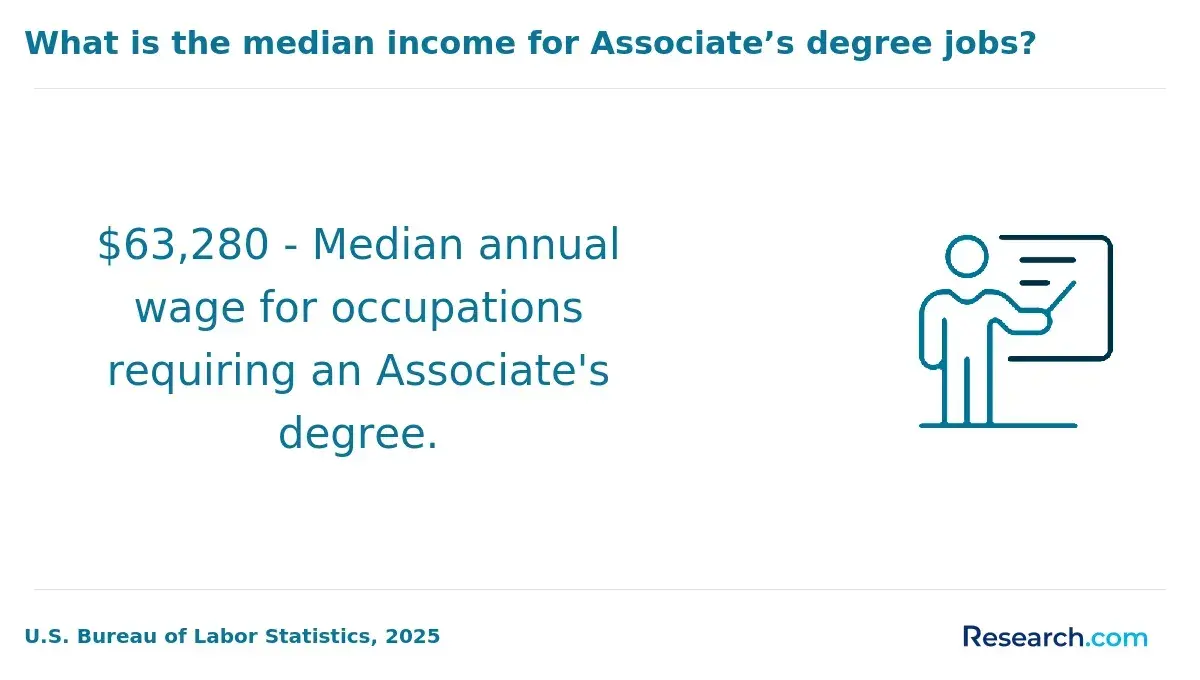
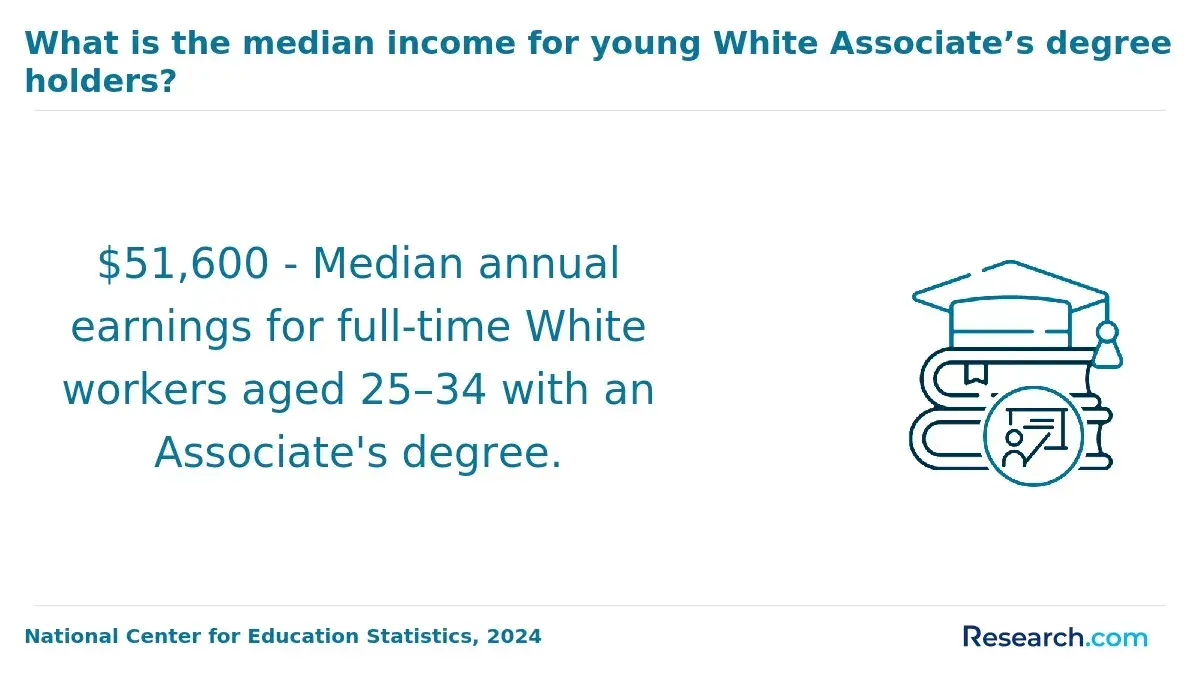
BLS data published in 2024 shows that workers with a bachelor's degree had median weekly earnings of $1,493 in 2023, compared with $1,058 for associate degree holders and $899 for workers with only a high school diploma. This does not mean every degree produces the same payoff, but it shows why credential level can matter when paired with an in-demand field.
The table below connects common high-access college pathways with career directions. It is not a salary guarantee; it is a planning tool for matching programs with realistic employment goals.
| Program area | Possible career directions | Credential considerations |
| Business and management | Administrative coordinator, operations assistant, sales representative, human resources assistant, project coordinator | Bachelor's degrees may support advancement; certificates can help with software or project tools |
| Information technology | Help desk technician, systems support specialist, junior network technician, cybersecurity support analyst | Industry certifications and hands-on labs can matter as much as the degree title |
| Healthcare and allied health | Medical assistant, radiologic technologist, nursing pathway student, health information technician | Licensure, certification exams, clinical placements, and program accreditation are often essential |
| Education and human services | Paraprofessional, childcare administrator, community service assistant, transfer student for teacher preparation | Teaching licensure requirements vary by state and grade level |
| Skilled technical fields | Automotive technician, HVAC technician, manufacturing technician, welding specialist, electrical trainee | Apprenticeships, certifications, tools, and safety training may be required |
| Liberal arts and transfer studies | Transfer student, generalist roles, public service support, communications assistant | Best when paired with a clear transfer plan or career-focused electives |
Students comparing long-term return on investment should review the most profitable degrees alongside their interests, academic strengths, and willingness to complete advanced coursework. A practical major you can finish is often better than a high-paying major that does not match your abilities or motivation.
How do you compare schools by outcomes and reputation?
Acceptance rate should be only one factor in your decision. A college that admits nearly everyone can still be a smart choice if it is accredited, affordable, transparent, supportive, and aligned with your career goal. A selective school may be less useful if it leaves you with unaffordable debt or does not offer the major you need.
Start by comparing net price, not just tuition. The maximum federal Pell Grant for 2024-25 is $7,395, which can significantly reduce costs for eligible students, but it may not cover the full cost of attendance. Housing, transportation, books, childcare, lost work hours, and program fees can change the real price of a degree.
Use the following steps to compare high-acceptance-rate colleges in a way that focuses on outcomes rather than marketing.
- Confirm institutional accreditation and, when relevant, programmatic accreditation or state licensure approval.
- Use the school's net price calculator to estimate your cost after grants and scholarships.
- Ask how many of your prior credits transfer and whether they apply to your major or only to electives.
- Compare retention, graduation, transfer, and loan repayment information from official school or federal sources.
- Review career services, employer partnerships, internship access, clinical placement support, and alumni networks.
- Check whether online students receive the same advising, tutoring, library, disability, and career services as campus students.
- Look for red flags such as unclear accreditation claims, pressure to enroll immediately, vague job placement claims, or refusal to provide total cost estimates.
If you are balancing speed, flexibility, and return on investment, reviewing online programs that pay well can help you compare practical alternatives. The strongest choice is usually the school that combines realistic admission, manageable cost, credible accreditation, and a program that clearly supports your next career step.
Other Things You Should Know About
Colleges with the highest acceptance rate usually have 100% or open admission policies. These are often community colleges, public access institutions, and adult-serving online universities that admit applicants who meet basic eligibility requirements.
No. A 100% acceptance rate means the school prioritizes access, not necessarily that it is low quality. The important checks are accreditation, program fit, cost, student support, graduation outcomes, and whether the program meets career or licensing requirements.
Yes, if the college is eligible for federal student aid and you meet aid requirements. Complete the FAFSA, compare net price estimates, and ask about grants, scholarships, work-study, payment plans, and transfer pathways that may reduce borrowing.
Choose an accessible college if it fits your academic record, budget, schedule, and career goal. Do not choose based only on admission odds; verify the program's quality, accreditation, total cost, transfer options, and outcomes before enrolling.
References
- Accreditation Roadblocks: Restrictive State Policies Can Limit School Choice Options for Families https://excelined.org/2025/10/07/accreditation-roadblocks-restrictive-state-policies-limit-school-choice/
- Career Paths After Graduation: Best Opportunities https://www.collegenirnay.com/articles/career-paths-after-graduation
- Online Learning https://www.fanshawec.ca/programs-and-courses/online-distance-learning
- What Do Colleges Look For in Students? https://www.collegedata.com/resources/getting-in/what-do-colleges-look-for-in-students
- How Long To Complete The Coursework | Diverse Trainers https://www.diversetrainers.co.uk/blog/how-long-does-it-take-to-complete-the-coursework-and-how-is-it-completed/
- Why Accreditation Matters in Private School Selection https://www.cardinaleducation.com/private-school-accreditation-guide-for-parents-why-accreditation-matters-in-school-selection/
- How Long Does a PhD Really Take? A Guide for 2026 https://www.applykite.com/blog/phd-guide-how-long-phd-take
- How long is a PhD UK? - UWS London https://www.uwslondon.ac.uk/blog/how-long-is-a-phd-uk/
- What is Coursework: Definition, Examples, Guide | Nerdpapers https://nerdpapers.com/blog/what-is-coursework
- Benchmarking law school rankings against expectations, performance, and rankings tactics — Excess of Democracy https://excessofdemocracy.com/blog/2025/4/benchmarking-law-school-rankings-against-expectations-performance-and-rankings-tactics