2027 Reach Target Safety Schools: Complete Guide for College Applicants

Co-Founder and Chief Data Scientist
Choosing reach, target, and safety schools is really about managing admissions risk, cost, and career fit at the same time. Common App reported more than 1.4 million distinct first-year applicants in the 2023-24 cycle, which shows how competitive and crowded college admissions has become. This guide is for high school students, transfer applicants, and families who want a practical way to build a balanced list. You will learn how to classify schools accurately, compare costs, avoid common mistakes, and choose colleges that support your academic and career goals.
Key Things You Should Know
- A strong college list usually includes 8 to 12 schools, with a practical mix of reaches, targets, and safeties based on academic fit, admission rate, affordability, and program availability.
- Sticker price can mislead applicants: College Board's 2024 pricing data lists average published tuition and fees at $11,610 for in-state public four-year colleges and $43,350 for private nonprofit four-year colleges in 2024-25.
- A safety school is only a true safety if it is likely to admit you, offers your intended academic path, is accredited, and is financially realistic after estimated aid.
How do reach, target, and safety schools differ in the college application process?
Reach, target, and safety schools differ by how your academic profile compares with recently admitted students and by how selective the college or program is. The labels are not judgments about school quality. They are planning categories that help you avoid applying only to highly uncertain options or only to schools that may not challenge you.
A reach school is one where admission is uncertain even for strong applicants. A target school is one where your grades, course rigor, and test scores, if submitted, are close to the middle range of admitted students. A safety school is one where your profile is stronger than the typical admitted student and the college has a realistic path for your major, cost, and enrollment goals.
The table below compares the three categories in decision-focused terms. Use it to understand what each type of school should do in your overall application strategy.
| Category | What it means | Best use in your list | Common mistake |
| Reach | Your profile is below, near, or even above the admitted-student range, but the school is highly selective or unpredictable. | Add ambition, specialized programs, strong networks, or distinctive academic opportunities. | Assuming strong grades make admission likely at colleges with very low admit rates. |
| Target | Your GPA, rigor, and other factors align well with recent admitted students. | Create the core of your list because these schools often offer the best balance of fit and possibility. | Ignoring major-level selectivity, such as engineering, nursing, business, or computer science. |
| Safety | Your profile is above the usual admitted-student range and the school is affordable and accredited. | Protect your options so you have places you would genuinely attend. | Calling a school "safe" without checking cost, program quality, housing, or accreditation. |
One important nuance is that selectivity can vary inside the same university. A college may be a target for liberal arts but a reach for nursing, architecture, computer science, or a direct-entry business program. Always classify the specific program you are applying to, not just the university as a whole.
How many reach, target, and safety schools should you apply to overall?
Most applicants should apply to about 8 to 12 colleges overall, but the right number depends on selectivity, budget, application time, and whether your major has extra requirements. A smaller list can work if it is carefully researched; a longer list may make sense if you are applying to many highly selective colleges or need to compare financial aid offers.
A balanced list often looks like this: 2 to 4 reach schools, 3 to 5 target schools, and 2 to 3 safety schools. If your family needs a very low net price, add at least one financial safety: a school that is both likely to admit you and likely to be affordable.
The table below shows how list size may change based on applicant goals. It is not a rule, but it gives you a practical starting point.
| Applicant situation | Suggested list size | Suggested mix | Why it works |
| Strong in-state public options | 6 to 9 schools | 1 to 2 reaches, 3 to 4 targets, 2 to 3 safeties | Public systems often provide reliable academic and cost options if deadlines are met. |
| Highly selective private colleges | 10 to 15 schools | 4 to 7 reaches, 3 to 5 targets, 2 to 3 safeties | Very selective schools remain unpredictable, so safeties and targets are essential. |
| Cost-sensitive applicant | 8 to 12 schools | 2 reaches, 3 to 5 targets, 3 to 5 financial safeties | Comparing aid offers may matter as much as admission odds. |
| Transfer or career-focused applicant | 5 to 8 schools | 1 to 2 reaches, 2 to 4 targets, 2 safeties | Program fit, credit transfer, and completion timeline often matter more than prestige. |
If you are open to starting with a shorter credential or transfer pathway, compare accredited online associate degree programs alongside four-year options. This can be useful when cost, schedule flexibility, or a faster start matters more than a traditional residential experience.
Do not apply to more schools simply because admissions feels uncertain. Each application requires essays, recommendations, fee planning, and careful financial research. A focused list of colleges you would actually attend is stronger than a long list filled with names that do not match your goals.
How can you accurately classify a college as reach, target, or safety?
To classify a school accurately, compare your profile against the most recent admitted-student data you can find, then adjust for program competitiveness, residency, financial need, and application plan. Do not rely on a friend's results, social media, rankings, or one admissions calculator.
Use the following process when you label each school. It keeps your list grounded in evidence rather than guesswork.
- Find the college's most recent Common Data Set, admissions profile, or institutional admissions page.
- Compare your unweighted GPA, weighted GPA if available, course rigor, and class rank context to admitted students.
- Check the middle 50% SAT or ACT range if you plan to submit scores, and do not treat test-optional policies as test-blind unless the school says so.
- Look up the admission rate for your specific major, college, or direct-entry pathway when available.
- Consider whether early action, early decision, rolling admission, or priority deadlines change your odds or financial flexibility.
- Check whether the college is affordable using a net price calculator, not just the published tuition.
- Reclassify the school if any factor creates risk, such as a capped major, audition, portfolio, limited clinical seats, or uncertain aid.
Applicants trying to reduce upfront costs can also compare online colleges free application options, especially when building a list that includes flexible or nontraditional programs. Application fees should not drive your whole strategy, but avoiding unnecessary fees can help when you are comparing several accredited options.
A good classification is conservative. If a school seems like a target academically but is very expensive, lacks your intended major, or admits few students into your program, treat it as riskier. The best lists account for admission probability and real-world enrollment feasibility.
What admission requirements and selectivity factors affect your reach, target, and safety list?
Admission requirements and selectivity factors affect whether a school belongs in your reach, target, or safety category. Colleges may review your transcript, course rigor, essays, recommendations, test scores, extracurriculars, demonstrated interest, interviews, portfolios, auditions, residency, and major choice.
Grades in challenging courses usually matter most because they show how prepared you are for college-level work. However, many colleges use holistic review, which means they evaluate your academic record in context rather than relying on one number. For applicants, this means a high GPA does not erase weak course rigor, and excellent activities do not fully compensate for missing required coursework.
The table below summarizes common admissions factors and how they can change a school's classification. Use it to spot hidden risks before submitting applications.
| Factor | How it affects classification | What to verify |
| Course rigor | A school may become more reachable if your transcript includes strong preparation in core subjects. | Recommended or required years of math, science, foreign language, and advanced coursework. |
| Major selectivity | A target university can become a reach for competitive majors. | Separate admission rules for engineering, nursing, computer science, business, music, art, or architecture. |
| Testing policy | Test-optional schools may still value strong scores when submitted. | Whether the school is test-optional, test-free, test-flexible, or requires scores for scholarships. |
| Residency | Public universities may be more selective or more expensive for out-of-state students. | In-state preference, tuition residency rules, and major-specific seat limits. |
| Portfolio, audition, or interview | These can make admission less predictable even when academic metrics are strong. | Deadlines, required formats, review criteria, and supplemental fees. |
One common red flag is missing a prerequisite. For example, a student interested in engineering may have strong grades but lack the expected calculus or physics preparation. In that case, the school may be academically riskier than its overall admit rate suggests.
How do GPA, test scores, and extracurriculars shape your school list strategy?
GPA, test scores, and extracurriculars shape your list by showing both academic readiness and contribution to campus life. The strongest strategy is not to chase schools where one part of your profile barely fits. It is to build a list where several schools match your full profile, including your academic strengths, interests, and personal context.
Your GPA should be evaluated in relation to your school's grading system and course options. A 3.8 GPA from a school with few advanced courses is read differently from a 3.8 GPA with multiple AP, IB, dual-enrollment, or honors classes. Admissions offices usually care about whether you challenged yourself appropriately based on what was available.
Use these profile checks to adjust your list before applying. They help you avoid overestimating admission chances based on only one strength.
- If your GPA is below a school's typical admitted range, move that college toward the reach category unless you have a strong contextual factor or exceptional program fit.
- If your GPA is within range but your course rigor is lighter than expected, treat the school as a high target or reach.
- If your test score is above the middle range at a test-optional school, submitting it may strengthen your application, but it does not guarantee admission.
- If your activities show sustained commitment, leadership, work responsibility, research, caregiving, or community contribution, explain the impact clearly rather than listing many unrelated clubs.
- If your intended major requires demonstrated preparation, such as coding projects, lab experience, art portfolios, or healthcare exposure, make sure your activities support that path.
Extracurriculars matter most when they reveal depth, initiative, and alignment. A student who worked 20 hours a week, cared for siblings, or led a small community project may show responsibility just as meaningfully as a student with traditional clubs or awards. The key is to present the activity in a way that explains what you did, why it mattered, and what skills it developed.
How should you balance online, hybrid, and campus-based options in your college list?
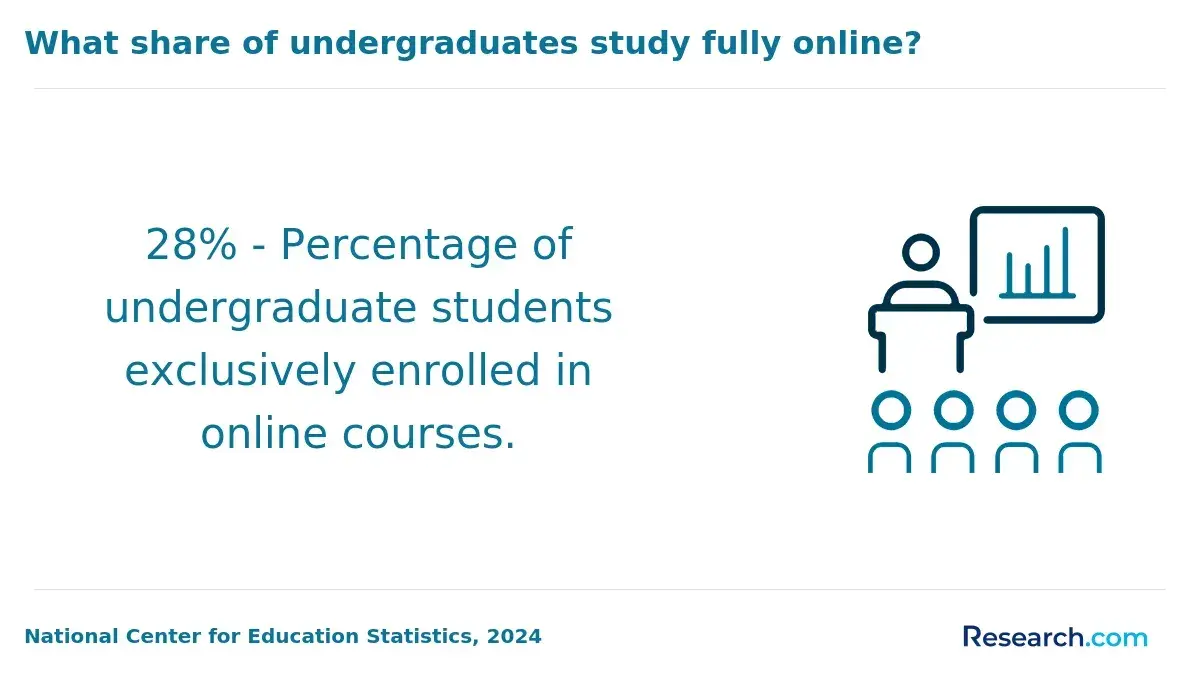
Online, hybrid, and campus-based options can all belong in a reach, target, and safety list, but they serve different needs. The right format depends on your schedule, learning style, budget, major, and need for campus resources such as labs, studios, athletics, housing, or in-person networking.
Online education has become a normal part of college planning, especially for working students, adult learners, military learners, caregivers, and students seeking lower relocation costs. If flexibility is a priority, review accredited best online degrees by program outcomes, support services, and transfer policies rather than assuming every online option is equally useful.
The table below compares formats from a decision-making perspective. It can help you decide whether a flexible program should be a target, a safety, or a better alternative to a residential reach school.
| Format | Best fit | Trade-off to consider | Questions to ask |
| Online | Students who need schedule flexibility, lower relocation costs, or part-time enrollment. | May offer fewer in-person networking, lab, or campus-life experiences. | Are classes asynchronous, synchronous, or mixed? Are exams proctored? What support services are available? |
| Hybrid | Students who want flexibility but still need labs, clinicals, studios, or campus access. | Travel requirements can create hidden costs. | How often must students come to campus, and are required sessions predictable? |
| Campus-based | Students who value residential life, in-person mentoring, research, athletics, or hands-on facilities. | Housing, transportation, and meal costs can raise total cost. | What academic, career, mental health, and advising resources are included? |
For lab-heavy, studio-based, clinical, or licensure programs, format is especially important. A fully online program may be convenient, but it may not satisfy clinical placement, student teaching, supervised fieldwork, or lab requirements in your state. Always verify format requirements before treating an online program as a safety.
How does accreditation impact which colleges you include as target and safety options?
Accreditation should be a nonnegotiable filter for target and safety schools. It signals that a college or program has been reviewed against recognized quality standards, and it can affect federal financial aid eligibility, transfer credit, graduate school admission, licensure, and employer acceptance.
There are two main levels to understand. Institutional accreditation applies to the college or university as a whole. Programmatic accreditation applies to specific programs, especially in fields such as nursing, education, counseling, social work, engineering, business, architecture, and allied health.
The table below shows why accreditation matters for different applicant goals. It is especially useful when comparing less familiar schools, online programs, or career-focused colleges.
| Goal | Accreditation issue to check | Why it matters |
| Use federal financial aid | Institutional accreditation by an agency recognized by the U.S. Department of Education. | Federal grants and loans generally require attendance at an eligible accredited institution. |
| Transfer later | Whether credits are accepted by likely transfer destinations. | Accreditation helps, but transfer is never automatic and depends on receiving-school policy. |
| Enter a licensed profession | Programmatic accreditation or state board approval. | Some licenses require graduation from an approved or accredited program. |
| Apply to graduate school | Institutional and sometimes program-specific accreditation. | Graduate programs may reject degrees or prerequisites from nonrecognized institutions. |
Before adding a college as a target or safety, take these practical steps. They can prevent expensive enrollment mistakes.
- Search the college in the U.S. Department of Education's Database of Accredited Postsecondary Institutions and Programs.
- Confirm the accreditor listed on the school website matches the official database.
- For licensure fields, check the state licensing board or professional accreditor, not only the college's marketing page.
- Ask whether online, hybrid, branch-campus, or accelerated versions of the program share the same approval status.
- Get transfer and licensure answers in writing when possible.
A common mistake is assuming that "accredited" always means "approved for my goal." A college may be institutionally accredited while a specific program lacks the programmatic approval needed for licensure, certification, or employer preference.
How do tuition, financial aid, and net price influence reach and safety choices?
Tuition, financial aid, and net price can change the value of every reach, target, and safety school on your list. A college is not a real safety if it is unaffordable, and a reach school may become realistic if it offers strong need-based aid or merit scholarships.
College Board's 2024 Trends in College Pricing data shows that average published tuition and fees for 2024-25 were $11,610 at in-state public four-year colleges, $30,780 at public four-year colleges for out-of-state students, and $43,350 at private nonprofit four-year colleges. These are sticker prices, not what every student pays, so your net price after grants and scholarships is the more important comparison.
The table below summarizes major cost categories. Use it to compare total cost instead of focusing only on tuition.
| Cost factor | Why it matters | How it can change your list |
| Tuition and fees | This is the largest visible academic charge. | A lower tuition school may become a strong financial safety. |
| Housing and meals | Residential costs can make a lower-tuition college more expensive overall. | A commuter or online option may become more attractive. |
| Books, technology, and supplies | Costs vary by major, especially in art, design, science, and health programs. | Programs with required equipment should be compared carefully. |
| Travel and transportation | Distance affects flights, commuting, parking, and family visits. | A distant reach may be less realistic than it first appears. |
| Lost work time | Full-time enrollment can reduce earnings for working students. | Part-time, online, or employer-supported programs may offer better fit. |
If graduate study is part of your plan, compare undergraduate debt carefully before enrolling. Students considering advanced credentials can also review cheapest online masters options later to understand how undergraduate borrowing may affect long-term affordability.
To make cost decisions practical, run the net price calculator for every school before applying or immediately after admission. Then compare grants, scholarships, loans, work expectations, renewal rules, GPA requirements, and housing costs. The best financial safety is a school where you can enroll without depending on uncertain scholarships, risky borrowing, or unrealistic family contributions.
How can you align your school list with career goals, salary potential, and job outlook?
Your school list should connect to career goals, salary potential, and job outlook without treating college as only a paycheck decision. A strong college choice should help you build skills, complete the right credential, access internships or clinical placements, and graduate with manageable cost relative to likely opportunities.
Salary data can help you compare pathways, but it should be used carefully. For example, the U.S. Bureau of Labor Statistics reported a May 2024 median annual wage of $105,990 for computer and mathematical occupations, but that figure covers many roles, industries, locations, and experience levels. It does not mean every computer science graduate will earn that amount, especially in an entry-level role or a lower-cost region.
The table below shows how career goals should influence your reach, target, and safety choices. Use it to test whether each school supports the outcome you actually want.
| Career goal | School-list priority | What to verify |
| Licensed healthcare role | Program approval, clinical placement access, exam pass-rate transparency. | State board eligibility and supervised practice requirements. |
| Engineering or computing | ABET accreditation when relevant, labs, internships, project experience, employer connections. | Major admission rules and whether students can enter the major directly. |
| Business or finance | Internship pipelines, alumni network, career services, analytics and communication coursework. | Placement support by major, not just university-wide outcomes. |
| Education | State-approved teacher preparation, student teaching placements, licensure exam preparation. | Whether the program meets the rules in the state where you want to teach. |
| Creative fields | Portfolio development, faculty mentorship, studio access, industry exposure. | Graduate portfolios, internship opportunities, and real production experience. |
Career fit also includes work environment. Students who prefer independent, focused, or lower-social-intensity work may want to explore high paying careers for introverts while comparing majors and campuses. This can help you avoid choosing a school based only on prestige when another option offers better preparation for the way you actually want to work.
A common mistake is using average salary as the only return-on-investment measure. Better questions include: Will I need graduate school? Does this program offer internships? Are career outcomes reported by major? Can I afford the debt if my first job pays less than expected? Does the location give me access to employers in my field?
How do program-specific licensing or certification requirements affect your college choices?
Program-specific licensing or certification requirements can completely change which colleges should be on your list. This matters most in fields where the degree alone is not enough to work legally or competitively, such as nursing, teaching, counseling, social work, accounting, engineering, architecture, aviation, and many allied health fields.
Licensure rules are usually set by state boards, and they can vary by state. A program that works well for one student may not qualify another student who plans to move after graduation. Online and out-of-state programs require extra checking because clinical placements, student teaching, supervised hours, and exam eligibility may depend on where you live.
The table below highlights common fields where licensing or certification can affect your college choices. It is meant to help you know what to verify, not to replace state-board guidance.
| Field | Requirement to check | Why it affects your list |
| Nursing | State board approval, clinical placements, NCLEX eligibility, program outcomes. | A nonapproved program may not qualify you for licensure in your state. |
| Teaching | State-approved educator preparation, student teaching, licensure exams. | Teacher certification is state-specific, so out-of-state programs need careful review. |
| Accounting | CPA education-hour requirements and state board rules. | A bachelor's degree may not provide enough credits for CPA eligibility in some states. |
| Engineering | ABET accreditation for many licensure pathways. | Program accreditation can matter for the FE exam, PE licensure path, and employer expectations. |
| Counseling or social work | Accreditation, supervised hours, field placements, state licensure rules. | Graduate-level requirements often determine whether the undergraduate pathway is sufficient. |
Before you classify a school as a target or safety for a licensed field, complete these checks. They can help you avoid enrolling in a program that does not lead to your intended credential.
- Identify the state where you plan to work after graduation.
- Find the official licensing board for that state and profession.
- Confirm the exact degree, accreditation, coursework, exam, and supervised-hour requirements.
- Ask the college whether the program meets those requirements for your state.
- Check whether online or hybrid students receive approved local placements.
- Save written documentation from the school and the licensing board when possible.
The safest approach is to build your list backward from the credential you need. If a college is prestigious but does not meet your licensing path, it may be a poor fit. If a less famous school has strong approval status, placements, exam preparation, and affordability, it may be a better target or safety.
Other Things You Should Know About
A practical mix is 2 to 4 reach schools, 3 to 5 target schools, and 2 to 3 safety schools. Add more financial safeties if affordability is a major concern.
Usually not for most applicants. If a college admits a very small share of applicants, it remains unpredictable even for students with top grades, strong scores, and impressive activities.
No. A true safety must be likely to admit you, offer your intended program, be accredited, and be affordable enough that you would realistically enroll.
Often, yes, but it depends on the college and program. If your score is below the middle range and the school is test-optional, focus on strengthening your transcript, essays, activities, and recommendations.
References
- How to Align Career Goals with Your Life: 8 Considerations https://blackstone.edu/how-to-align-career-goals-with-your-life/
- Finding Your Path: How to Align Studies with Career Goals https://www.alfabetaglobal.com/blogs/finding-your-path-how-to-align-your-studies-with-your-career-goals
- The College Affordability Gap: Insights and Impact on Families https://www.encoura.org/resources/wake-up-call/the-college-affordability-gap-insights-and-impact-on-families/
- Why Extracurriculars Are the New GPA in University Admissions: Shaping Holistic Student Profiles https://www.deltainstitute.co/blog-delta-institute/why-extracurriculars-are-the-new-gpa-in-university-admissions-shaping-holistic-student-profiles
- Understanding University Accreditation and Its Impact on Your Education https://www.qahe.org.uk/understanding-university-accreditation-and-its-impact-on-your-education/
- How to Build a Balanced List of Colleges to Apply To https://riseglobaleducation.com/blogs/how-to-build-a-balanced-list-of-colleges-to-apply-to
- Learning Framework: Effective Strategies for College Success, Beyond Academics, Chapter 15: Planning for Your Career https://oercommons.org/courseware/lesson/25872/student/266275
- How to Make Sure Your Degree Leads to Licensure in Your State — Higher Education Licensure Pros https://www.higheredlicensurepros.com/blog/updated-top-5-things-to-know-about-licensure-before-you-choose
- Reach, Match, Safety...How many of each? https://talk.collegeconfidential.com/t/reach-match-safety-how-many-of-each/488700
- How many colleges should I apply to? How many reaches? Safety schools? https://www.unigo.com/admissions-advice/how-many-colleges-should-i-apply-to-how-many-reaches-safety-schools